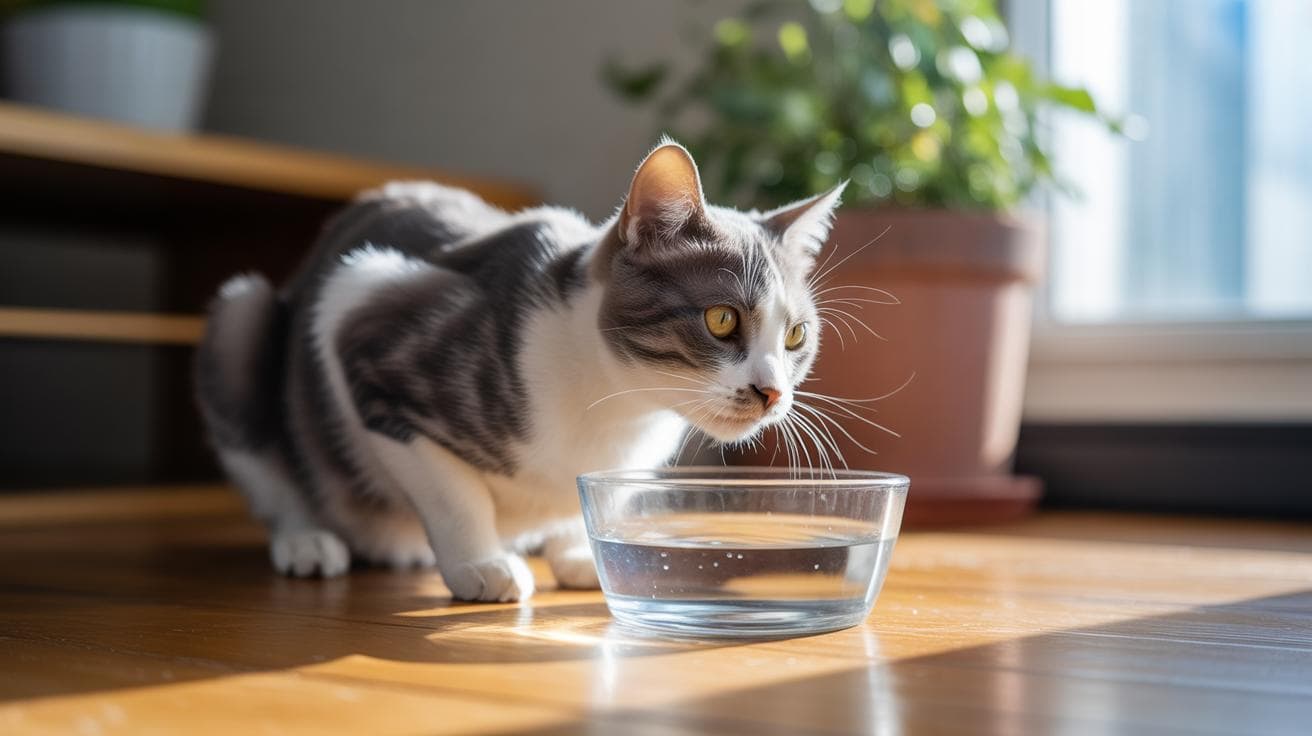
Is your cat really getting enough water? Ever watch those tiny, earnest slurps at the bowl and wonder if it’s enough? Water needs can be sneaky. Some cats sip barely anything, while others drink like champs.
Adult cats should drink about 50 to 60 ml per kg per day (ml = milliliter – a small measure of liquid; kg = kilogram – a unit of weight). That’s roughly 1 ounce per pound. So a 10-pound cat will usually drink about 7 to 9 ounces a day. Easy rule to use right now.
Quick notes: if your cat eats mostly wet food, they get extra moisture from their meals and may drink less. If they eat dry food, expect more drinking. Kittens often drink more per pound because they’re growing, and seniors can drink more or less depending on health. If you see sudden changes in drinking, fewer litter-box visits, or your cat seems tired, call your vet, hydration can change fast.
Keep an eye on those tiny slurps. It’s one of the quickest ways to keep your kitty feeling feline fine.
Daily water guideline for cats (precise amounts by weight)
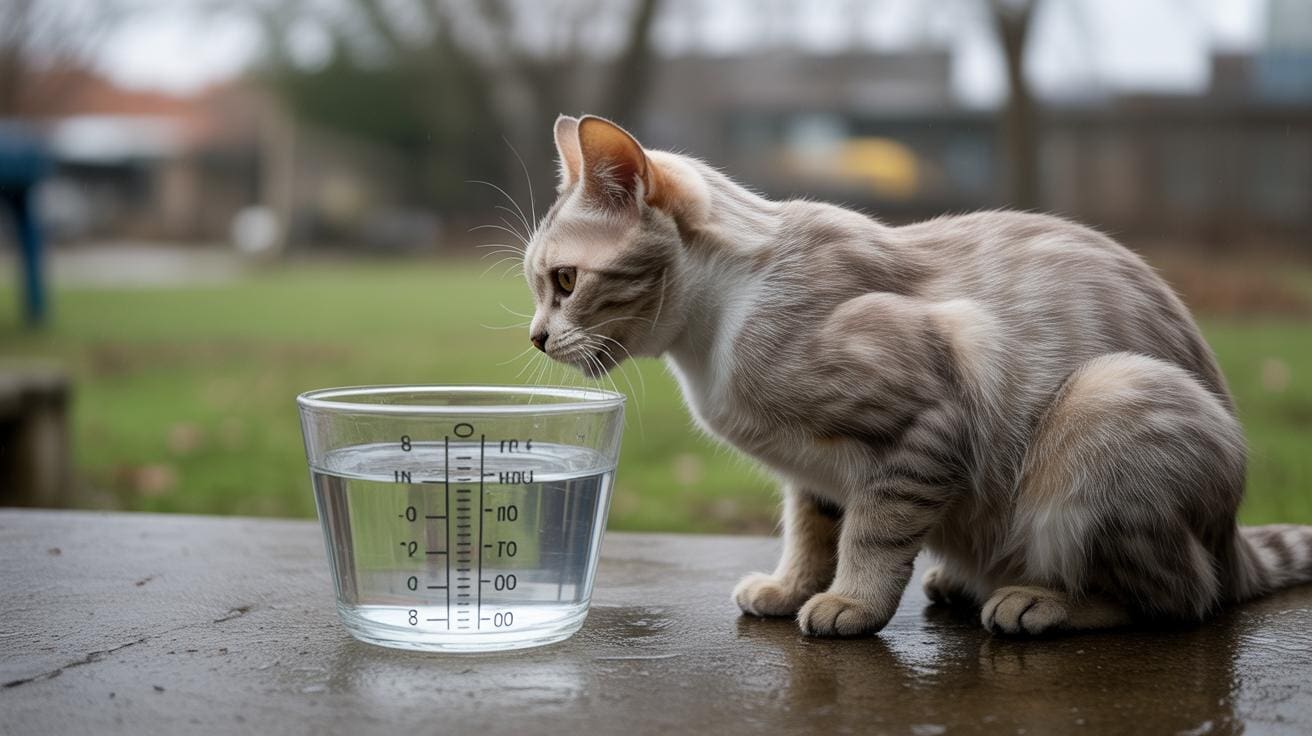
If you’re wondering how much water your cat should drink each day, here’s an easy rule: about 50 to 60 ml per kg per day (ml means milliliter – a small measure of liquid; kg means kilogram – a unit of weight). Multiply your cat’s weight in kg by 50-60 to get milliliters. That’s roughly 1 ounce per pound (oz means ounce – about 30 ml), so a 10-pound cat usually drinks around 7 to 9 ounces daily. Think of these as baseline guidelines for adult cats, quick checks before you tweak for your cat’s life and health.
| Weight (kg) | Weight (lb) | Recommended ml/day | Recommended oz/day |
|---|---|---|---|
| 1.4 | 3.1 | 70 | 2.4 |
| 2.7 | 6.0 | 135 | 4.6 |
| 4.0 | 8.8 | 200 | 6.8 |
| 4.5 | 9.9 | 225-270 | 7.6-9.1 |
| 6.0 | 13.2 | 300 | 10.1 |
For a worked example: a 5 kg adult cat drinks 5 kg × 50-60 ml/kg = 250-300 ml/day (about 8.5-10.1 oz/day). Easy math. Ever watched your kitty sip slowly, then suddenly race to the bowl? Hydration can change day to day.
Remember to treat these as starting points. Diet (wet vs dry food), age, activity, weather, and medical issues all change real needs. Kittens and seniors usually need different amounts, and some health problems call for more water or stricter limits. In later sections we cover diet tweaks, kitten and senior adjustments, and medical factors so you can tailor this to your own furball.
How food type (wet vs dry) affects how much water a cat drinks
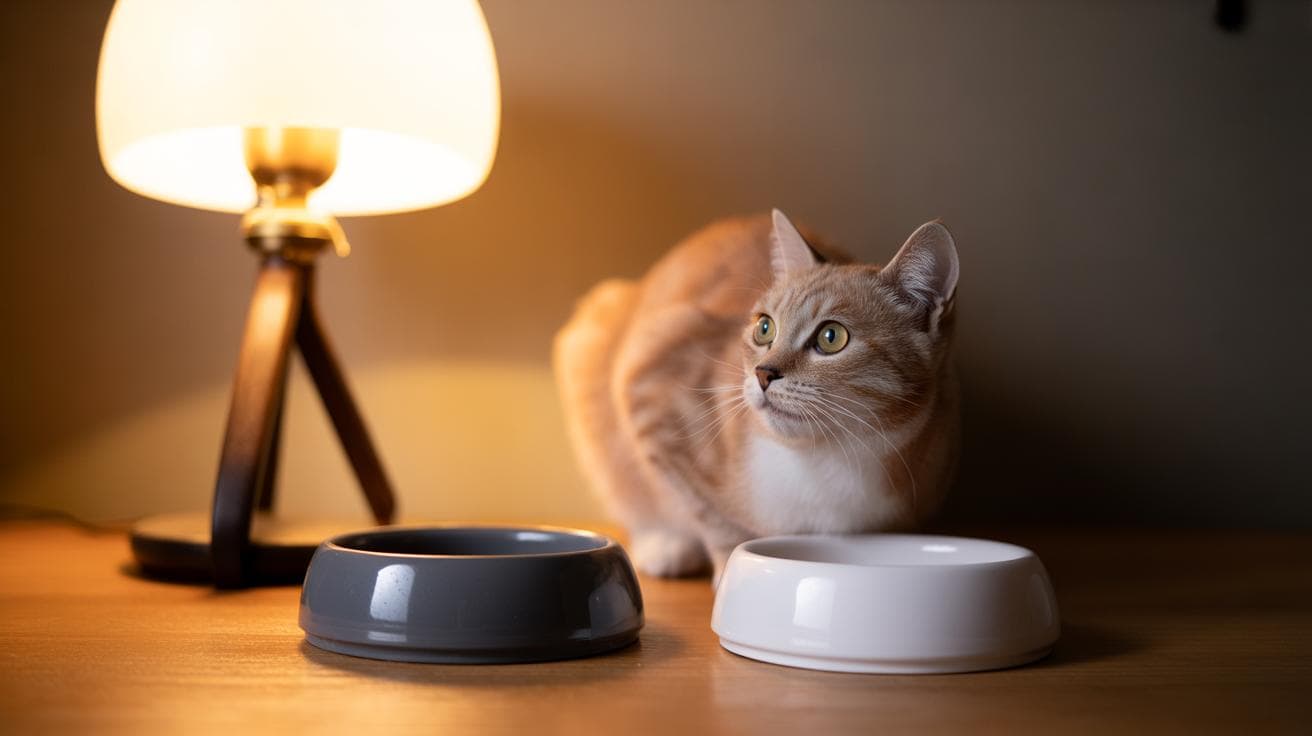
Wet food (canned or pouch food) gives your cat a lot of built-in water, while dry food or kibble (dry, crunchy cat food) has very little. That means a cat eating mostly wet food usually sips far less from a water bowl than a cat on dry food. Ever watched your kitty drink after batting at a soggy pouch? It’s a subtle thing, but it adds up.
Food moisture content matters when you do the math. Moisture content (the percent of the food that’s water) is typically about 8% for dry food and around 80% for wet food. To turn grams of food into milliliters of water, multiply the food weight by the moisture fraction , grams × moisture percent as a decimal = ml water (1 gram of water ≈ 1 ml). If the package doesn’t list moisture, use 8% for dry and 80% for wet as a rule of thumb.
Quick example: 100 g of wet food at 78% moisture gives 100 × 0.78 = 78 ml of water. Take that food-provided water and subtract it from the total daily need listed in "Daily water guideline for cats" to find how much extra bowl water your cat should have.
How to calculate water provided by food
- Convert food grams to water ml using moisture % (moisture content = percent of the food that’s water).
- Use the baseline total daily need in "Daily water guideline for cats" as the amount your cat should get.
- Subtract the food-provided ml from that baseline to get the additional bowl water required.
Simple, right? For busy days, toss an unbreakable water bowl out before you leave , that’s peace of mind and hydrated whiskers.
Estimating water needs by weight and age (kittens, adults, seniors)
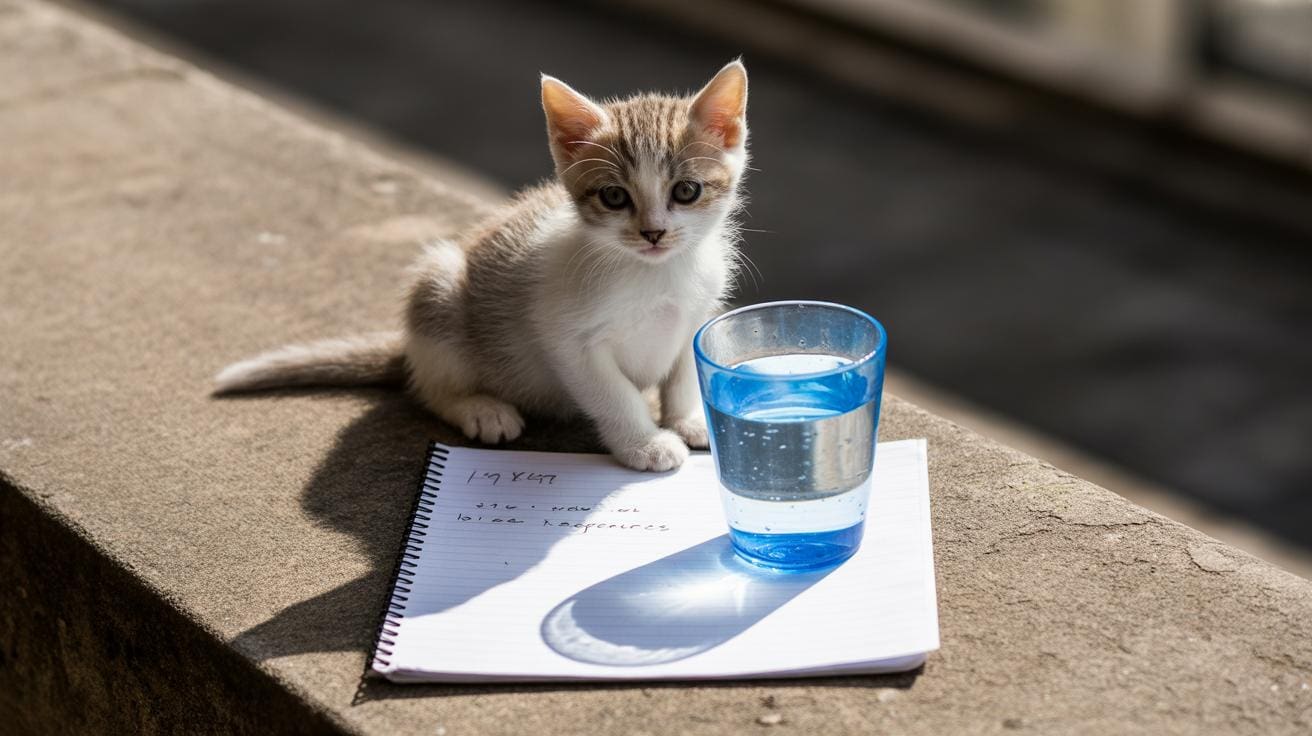
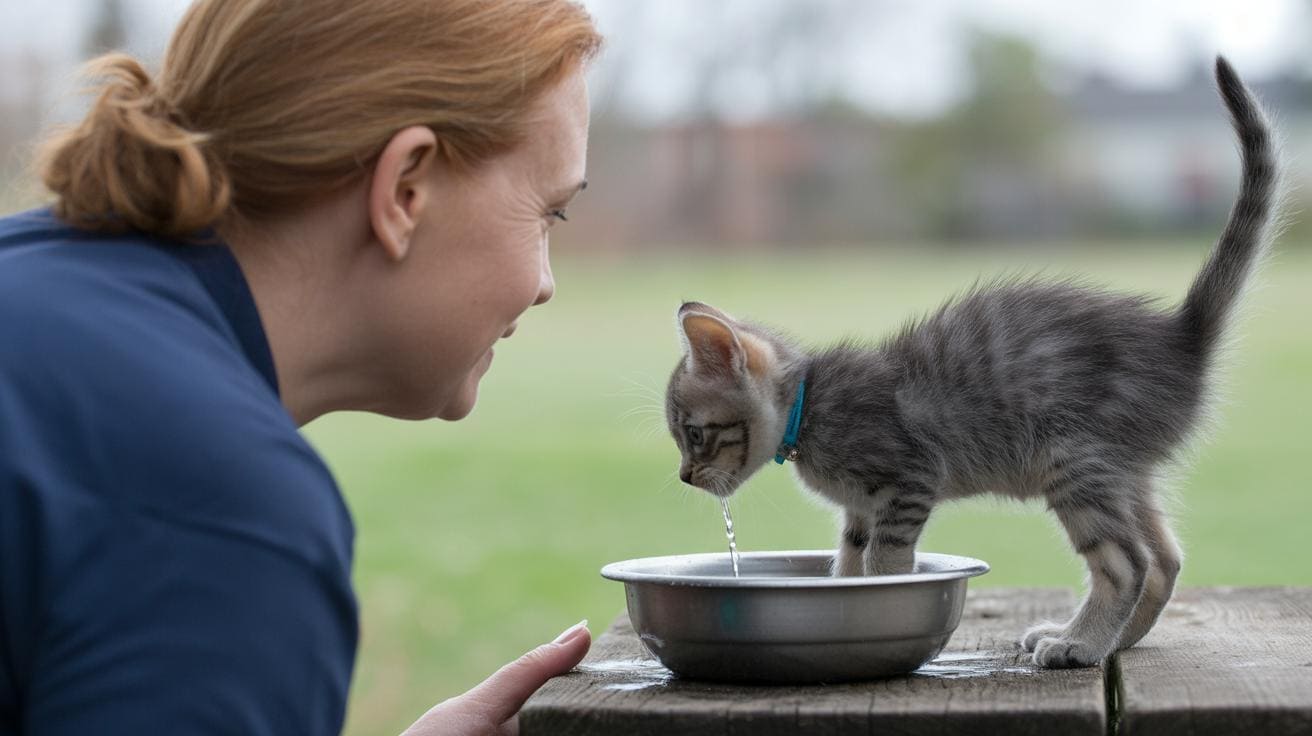
Kittens need more water per kilogram than adults. Use the same 50 ml per kg figure from the main guideline and apply it to kittens (ml = milliliters, kg = kilogram, about 2.2 pounds). Ever watched a kitten lap water like a tiny fountain? Here’s a quick worked example: 1.4 kg × 50 ml/kg = 70 ml/day, quick and simple.
| Age/Weight | Estimated water need (ml/day) |
|---|---|
| Kitten , 1.4 kg (about 3.1 lb, up to ~3 months) | 70 ml/day |
| Kitten , 2.7 kg (about 5.9 lb, ~6 months) | 135 ml/day |
For adult calculations and a worked adult example, see the "Daily water guideline for cats" section. And if you want to subtract water already in food, check "How food type (wet vs dry) affects how much water a cat drinks" instead of redoing that math here.
Older and overweight cats can hide dehydration (when the body lacks enough water) and their thirst signals may be weaker, so watch for subtle shifts. You might notice your cat skipping bowls, taking tiny hesitant sips, or just seeming less thirsty than usual.
Watch these cues closely:
- slowed skin-tent return (skin takes longer to fall back after a gentle pinch; a simple dehydration check)
- sticky or dry-feeling gums (gums should feel moist)
- reduced frequency of drinking or long gaps between drinks
If you spot any of these signs, check drinking patterns more often and talk with your vet if the changes stick around. Keeping a quick log of when and how much your cat drinks can be really helpful.
Worth every paw-print.
Measuring and tracking your cat’s daily water intake
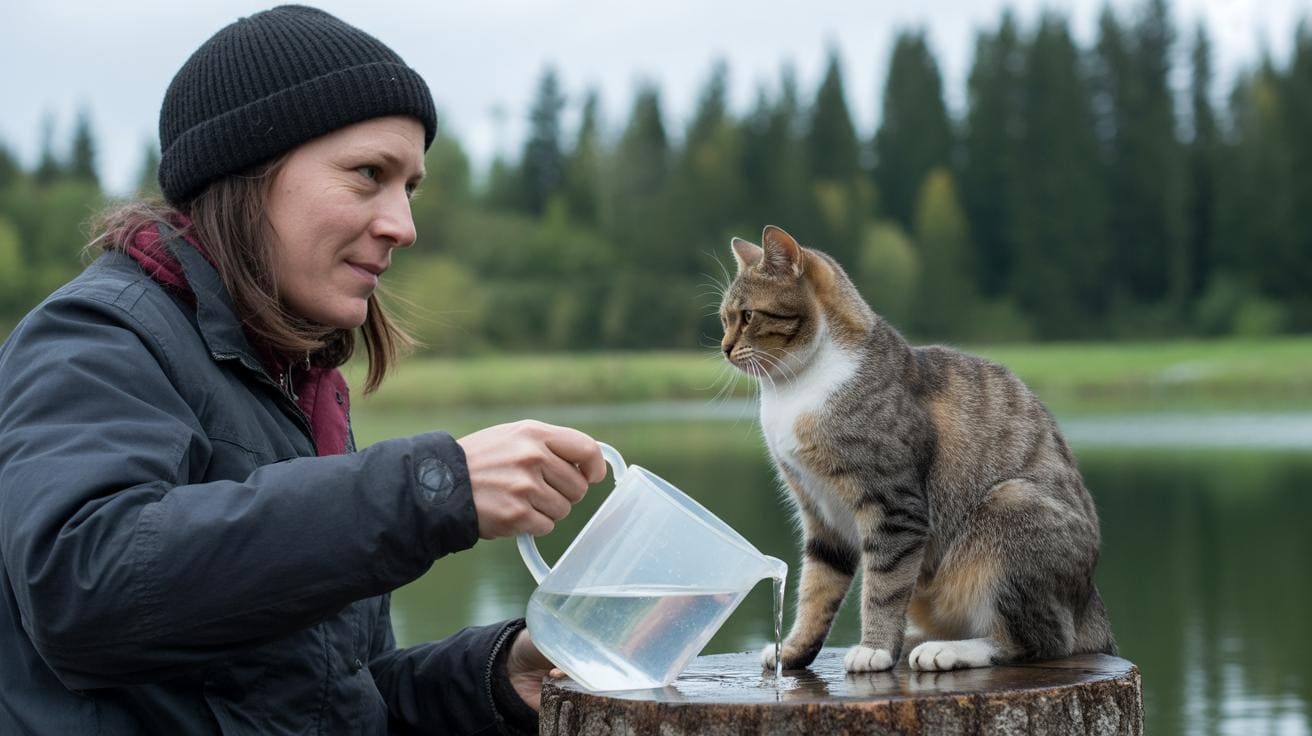
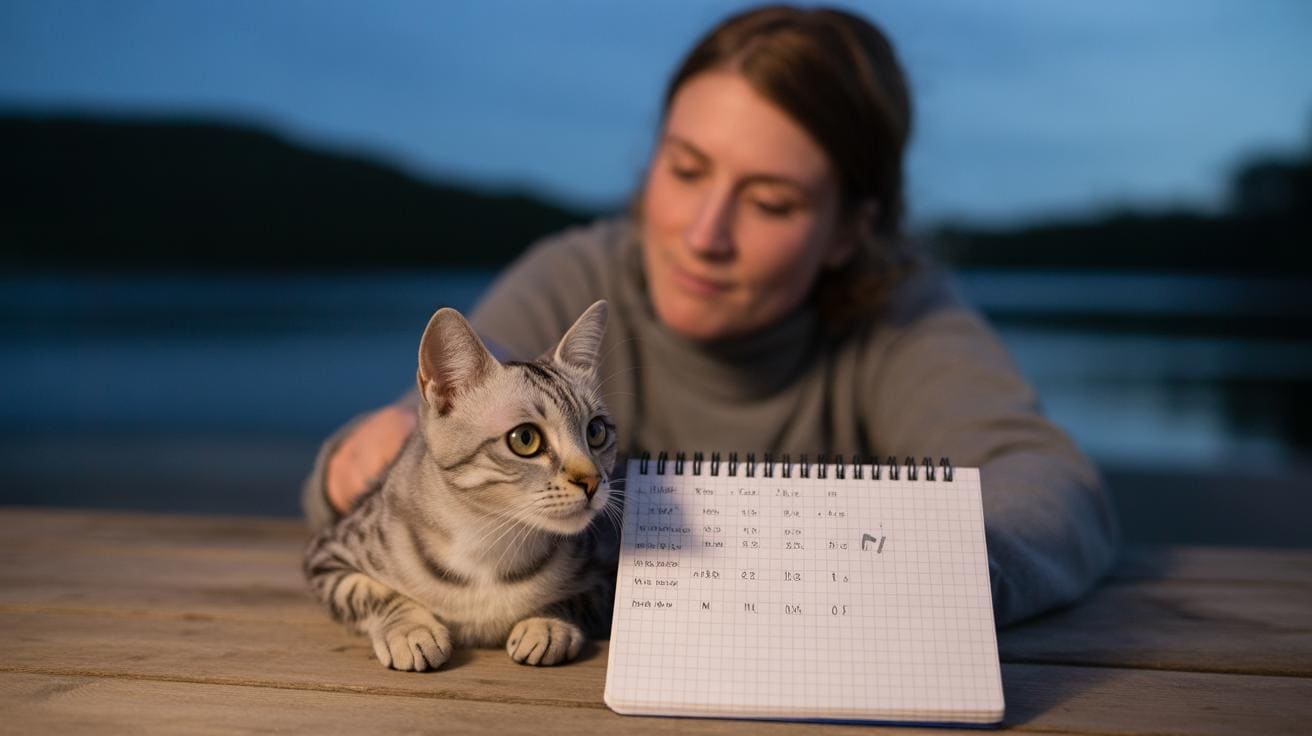
Keeping a short log makes it easy to spot slow changes in drinking, and it answers the big question: how to measure how much water your cat drinks without guessing. A week of simple daily checks gives you a realistic average. That average is what you’ll compare to the "Daily water guideline for cats." Small shifts can mean a big health change, especially for seniors or cats with medical issues.
Here’s an easy way to measure. At the start of a 24-hour period, pour a known amount of water from a measuring jug (marked in milliliters, milliliters (ml) are small units for liquid volume) into your cat’s bowl and write down the start ml. After 24 hours measure what’s left, then subtract: start ml minus end ml equals consumed ml. You can use a digital kitchen scale instead (grams, grams (g) are weight units; for water 1 g = 1 ml). Repeat this each day for seven days and note any changes in food type or bowls. Want less fuss? Try a smart fountain or app (automatic trackers that log frequency, time, and ml).
When you have seven days of numbers, find the daily average and compare it to the guideline in "Daily water guideline for cats." Watch for big swings, steady declines, or sudden spikes. If your average is well below the guideline, or you see abrupt changes plus other signs, check the Recognizing dehydration section or contact your vet. Better safe than sorry.
Ever watched your kitty sneak a sip and act like it was secret mission? Those tiny behaviors matter. Add quick notes like food moisture percent, bowl swaps, or if your cat spent the day hiding , all of that helps explain odd numbers later.
Tools and practical setup for tracking
- Measuring jug (clear ml markings; good for pouring an exact start amount)
- Digital kitchen scale (measures grams for people who prefer weighing over pouring)
- Notebook or spreadsheet (simple logging; a few columns is all you need)
- Smart fountain or app (hands-off tracking, handy for busy days but may confuse results if pets share bowls)
Tracking log template (copy for one week):
| Date | Start ml | End ml | Consumed ml | Food moisture % | Notes |
|---|---|---|---|---|---|
A week’s worth of this makes a great handoff for your vet or a clear snapshot for you. Worth every paw-print.
How Much Water Should a Cat Drink a Day?
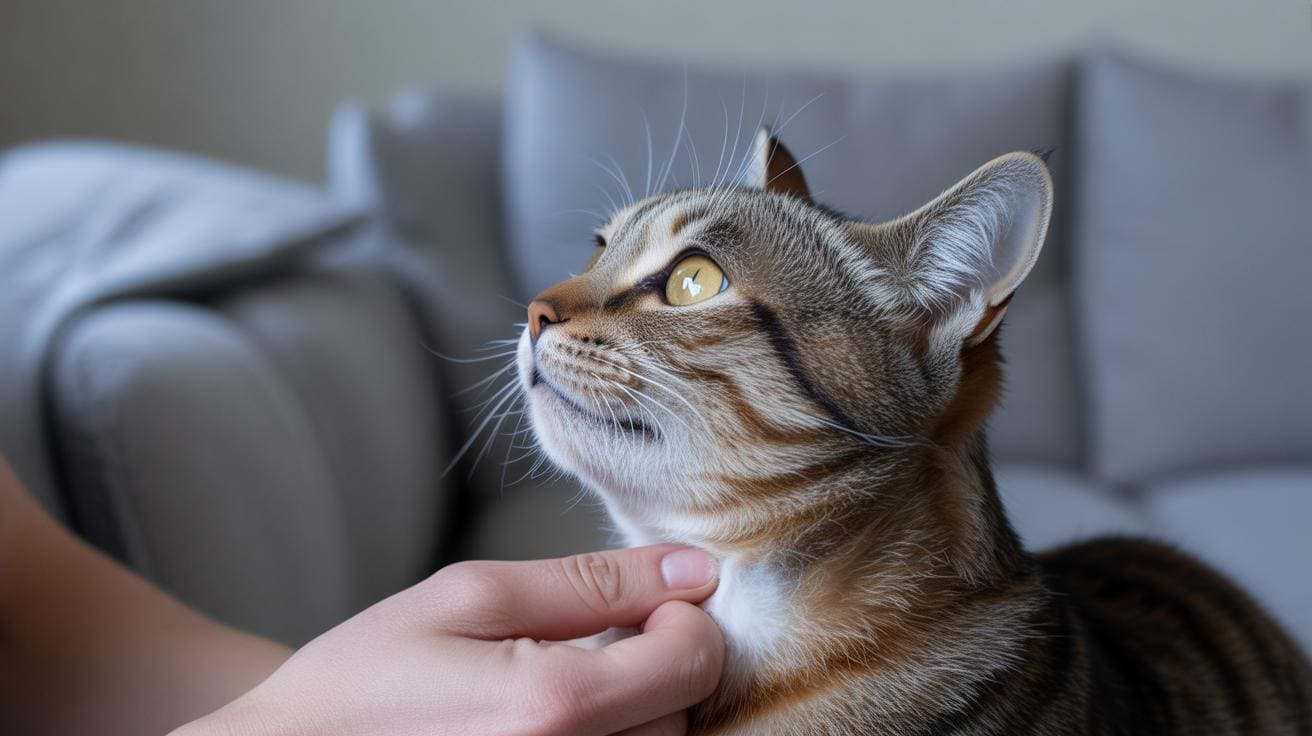
Dehydration in cats can be sneaky. You might notice your kitty acting quiet, eating less, or just not being her usual spunky self. Those small changes are early signs of dehydration and worth paying attention to fast.
Acting quickly matters because low body water changes how organs work and can get serious. If you see several signs together, don’t wait to see if it clears up. A vet visit is the smarter move.
Common signs of dehydration in cats include:
- Lethargy or weakness; your cat moves slowly or hides more than usual.
- Gums that feel tacky, sticky, or dry when you touch them.
- Reduced skin elasticity; skin that stays up instead of snapping back.
- Sunken eyes or a dull, tired gaze.
- Less interest in food or skipping meals.
- Fewer urine spots in the litter box, or darker urine.
- Faster breathing or a racing heart after little activity.
- Sudden changes in drinking , either drinking a lot, or oddly stopping.
- Swelling, coughing, or trouble breathing can mean too much fluid and need urgent vet care.
Want a simple at-home check? Try the skin tent (pinch test). Gently pinch a small fold of skin at the back of the neck or between the shoulder blades, lift to make a tiny tent, then let go. If the skin snaps back right away, hydration is probably fine. If it takes several seconds to return, that suggests dehydration.
Check the gums too. Press a fingertip on the gum until it turns pale, then watch how color and moisture come back. The gums should feel moist, not sticky, and color should return quickly. These are quick, rough checks , not replacements for veterinary exams.
Numeric red flags to watch: drinking over 100 ml per kg per day on a mostly dry diet, or over 50 ml per kg per day on a mostly wet diet, is considered polydipsia (excessive drinking) and should prompt a vet consultation. ml per kg means milliliters per kilogram of body weight. For example, a 10 pound cat (about 4.5 kg) hitting 100 ml per kg would be drinking roughly 450 ml a day on a dry-food diet. Also call the vet if your cat suddenly stops drinking or shows several clinical signs at once.
Too much fluid is a risk too, so be aware of overhydration signs like swelling, coughing, or breathing trouble and seek prompt care if you see them. In truth, small changes in drinking or behavior are often the first clue that something’s off.
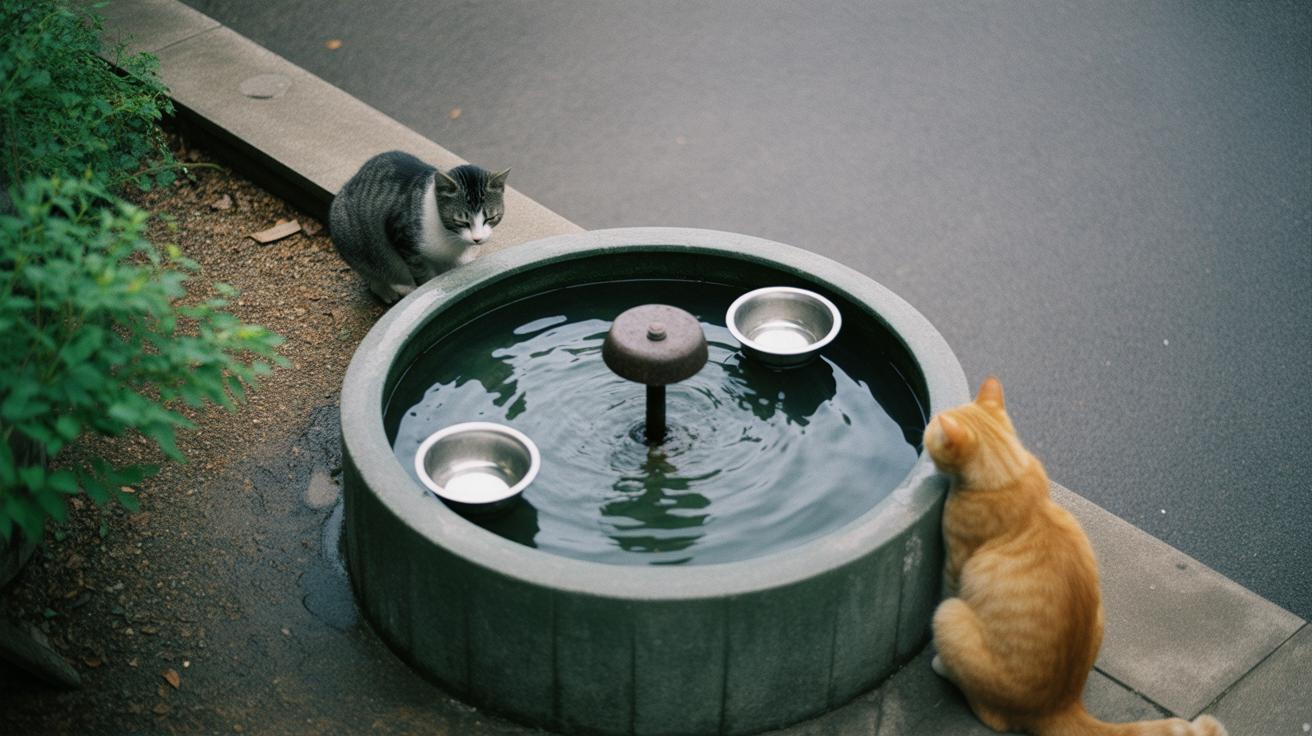
Quick tip: wet food is an easy way to boost water intake, and a pet fountain can spark curiosity and sips. Ever watched your cat lap happily from a fountain? It’s oddly satisfying.