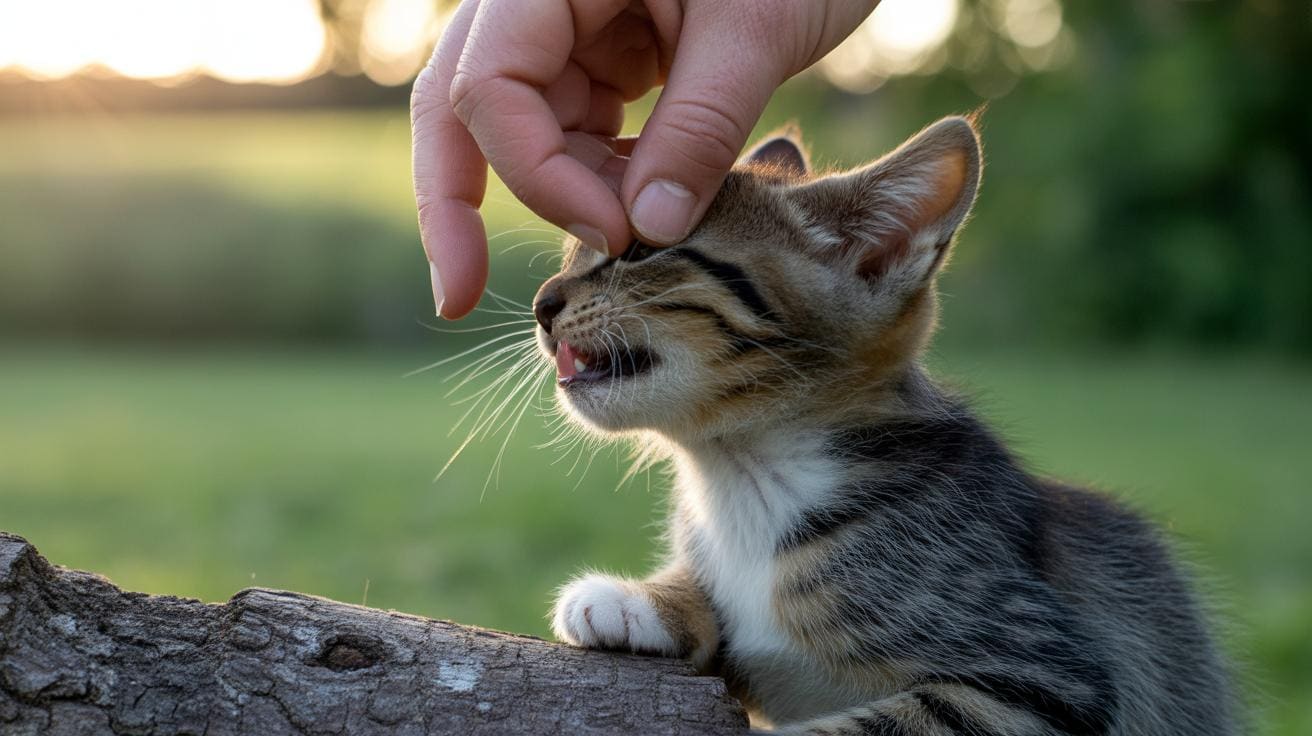
Think kitten bites are just part of the adorable package? Not really. Those tiny teeth can sting like little pinpricks, and if you let the behavior slide it quickly becomes a habit that wrecks playtime.
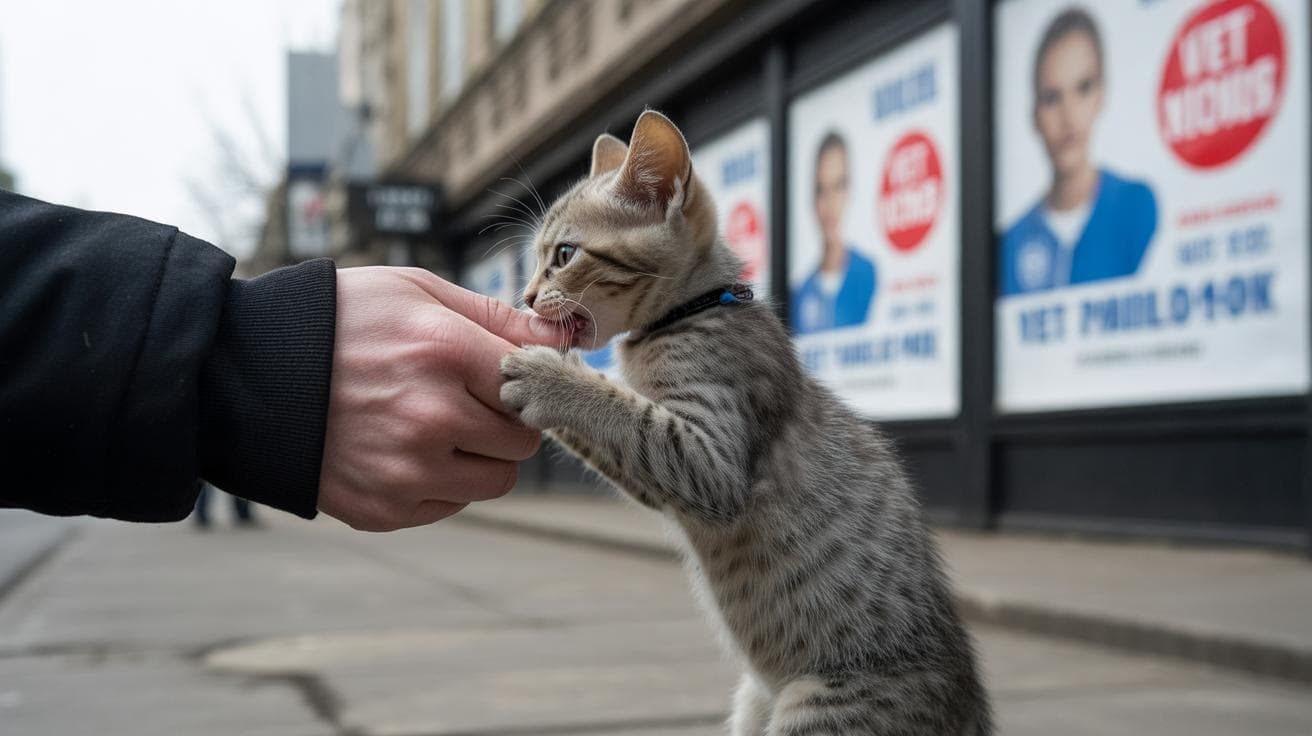
Here’s a quick, safe script you can use right away. Say "Ouch!" in a clear voice, then freeze (stop moving so your kitten loses interest). Slide your hand back slowly, and offer a chew toy (a toy made to be bitten) so they learn toys are for nibbling, not fingers.
If your kitty gives a hard latch (a firm bite that won't let go), stay calm. Don’t yank your hand. Instead, gently wiggle your fingers free or lure them off with the toy, then give a calm-down time (short timeout to relax) of about five minutes in a safe spot. Simple rewards like a soft "Good calm" and a tiny treat help teach gentle play.
Keep it consistent and patient. Praise calm paws, replace hands with toys during rough play, and soon you’ll see more playful pounces and fewer painful nips. Ever watched your kitty chase shadows? It’s oddly glorious.
Quick, practical steps to stop a kitten from biting
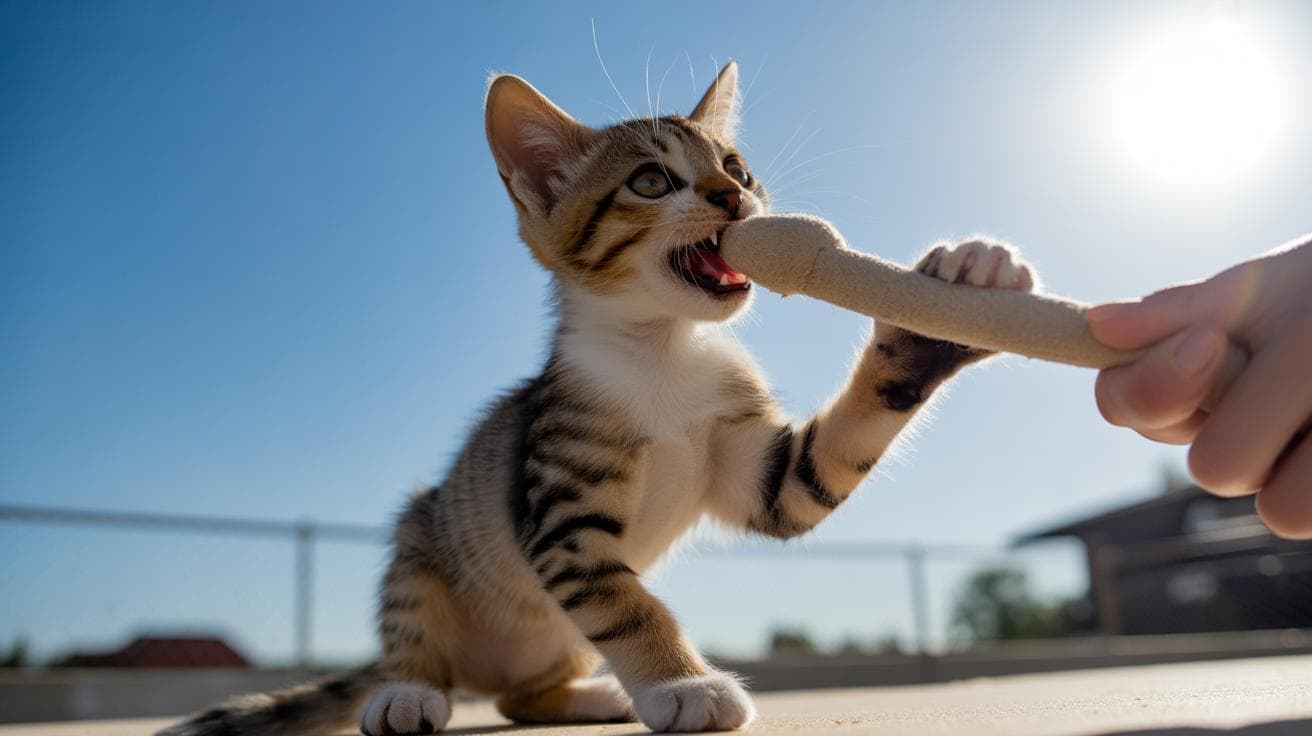
Quick, safe moves you can do right away: give a short vocal cue, stop moving calmly, offer a toy to redirect play, and if needed use a short time-out (brief calm-down break). Say "Ouch!" (short, single-syllable) to startle the kitten, then gently offer a toy while saying "No bite."
- Say “Ouch!” (short, sharp) and freeze movement.
- Withdraw your hand slowly, slide it back and close fingers gently; do not jerk.
- Offer a designated bite toy (a soft chew or plush toy) and say “No bite, bite this.”
- If the kitten keeps biting, put them in a quiet room or a carrier (secure pet carrier with familiar bedding) for about 5 minutes, then return calmly.
- For a hard latch (a strong hold with teeth), follow the safety tips above and seek veterinary care (veterinarian) if the wound breaks skin or shows signs of infection.
- Reward calm behavior and resume play when the kitten is relaxed; cross-link these items to the on-page anchors for more detail.
When you pull your hand back, freeze first so the kitten doesn’t see a moving target and start chasing. Then slide your hand back slowly and close your fingers gently; don’t yank or slap. Ever watched your kitty chase shadows? Same idea, movement invites pouncing.
For time-outs, use a safe, quiet room or a secure carrier with familiar bedding for about five minutes, then come back calmly and act like nothing dramatic happened. It’s just a short reset.
If a kitten locks on hard, don’t pull. Hold still and gently roll the kitten’s muzzle (muzzle means the nose and mouth area) to break the grip, or wrap a soft damp cloth around the mouth and slide your hand free. Seek veterinary care for bites that break skin, swell, or show redness or pus. Get immediate vet help for severe pain, bleeding that won’t stop, swollen limbs, trouble breathing, collapse, or repeated severe latches.
See Training Scripts, Play Plan, and Troubleshooting below. This quick guide doesn’t include the full scripts, full schedules, toy lists, blanket method details, or extended troubleshooting , those are in the sections that follow.
Why a kitten bites: play, teething, overstimulation and attention-seeking
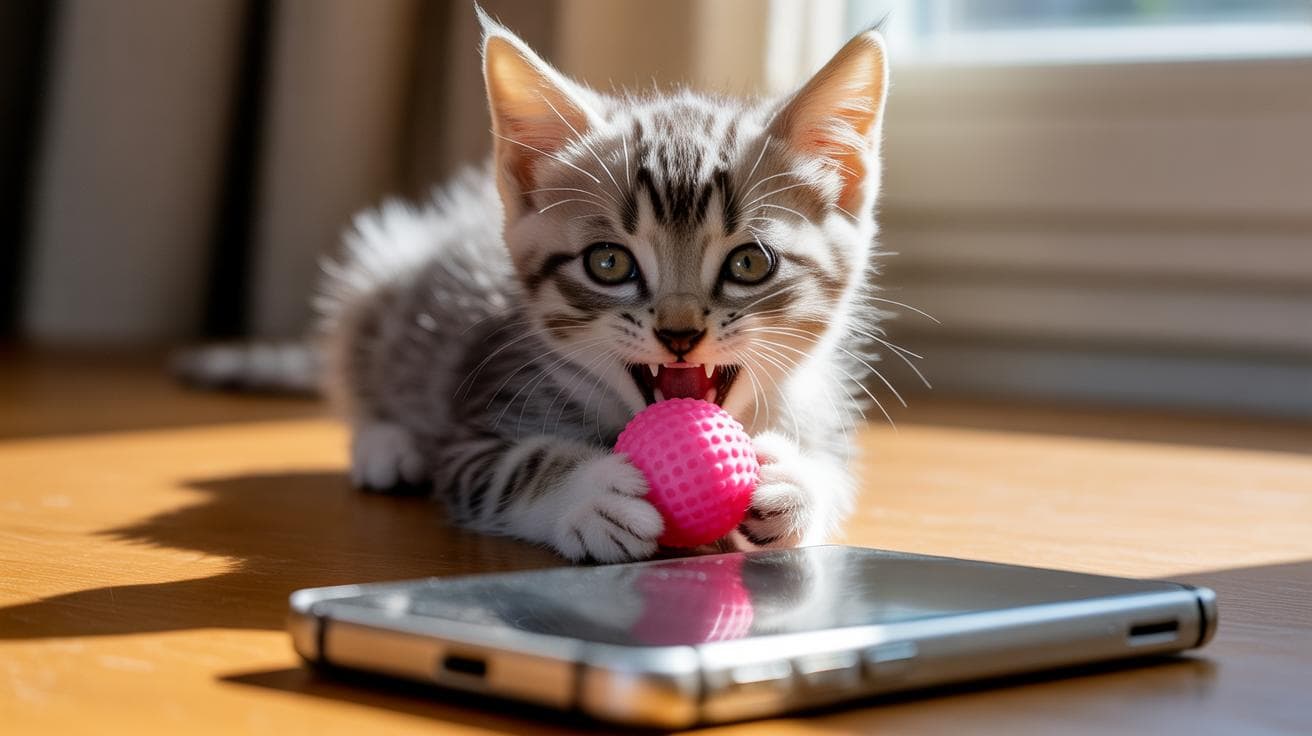
Kittens start practicing hunting and mouthing as early as about 4 weeks old, so you’ll see them watch, stalk, pounce, and give tiny nips while they learn to catch prey. Play-bites usually come with a loose, wiggly body and soft nibbles, not meant to hurt. Fear or aggressive bites have a stiff body, flattened ears, and loud yowls, so read the body language before you react. Ever watched whiskers twitch right before a pounce? Cute and useful info.
Teething (when baby teeth fall out and adult teeth push in) adds a fizzy urge to chew. Baby teeth usually come out around 3 to 4 months, and adult teeth are often in by about 6 months. Biting and object-play tend to peak between 4 and 6 months, so extra toys and short, guided play sessions during that window help a lot. Think safe chew toys or soft fabric mice to save your hands.
Other common reasons are bored energy, petting that goes too far, or plain attention-seeking when the kitten wants play or food. If you want quick fixes for an immediate nip, see the lead: Quick, practical steps to stop a kitten from biting. Little tip – a ten-minute chase session before you leave can buy you calm time.
Common causes at a glance:
- Play and hunting practice – learning to pounce and grab
- Teething (baby teeth fall out around 3–4 months; adult teeth by ~6 months)
- Overstimulation from petting – sudden tail flicks or skin ripples are signs
- Attention-seeking or frustration – wants play, food, or interaction
- Pain, fear, or illness – sudden nips or withdrawn behavior
Worth every paw-print.
Use daily play and enrichment to stop a kitten from biting hands and feet
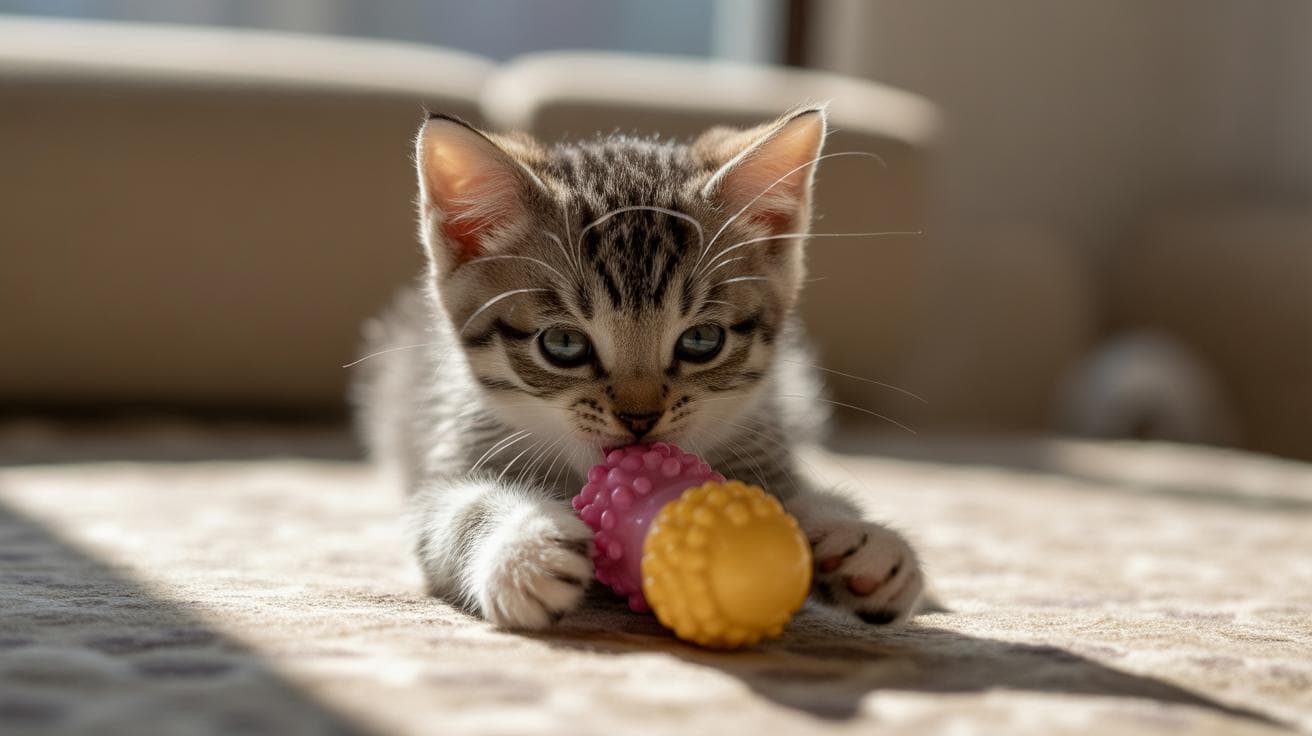
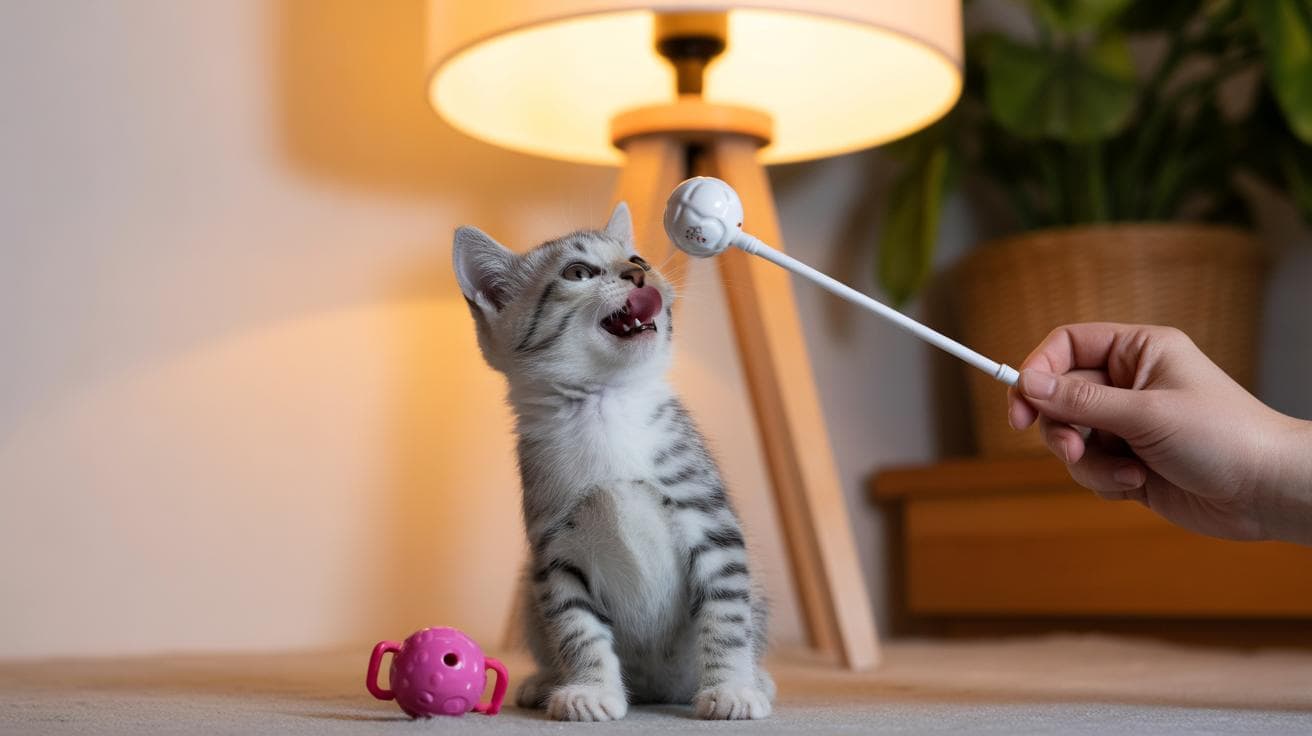
Turn your kitten’s hunting urge into short, focused play so your fingers and toes stay off-limits. Try this simple schedule: three 15-minute sessions a day – morning (right after you wake), mid-afternoon (an energy-slap breaker), and just before bed (to tire them out). Use a wand toy to mimic prey, end each session while the kitten is calm, and let them actually catch a toy at least once so they feel successful. Ever watched a whisker-twitching pounce? That little win matters.
Here are the toys to keep on hand:
- wand feather toy (long stick with feathers that move like prey)
- kicker toy (soft, long plush for biting and bunny-kicking)
- crinkle ball (small ball that crunches and bounces in odd ways)
- plush mouse (tiny, soft toy made for grabbing and chewing)
- tunnel (fabric tube for hiding, pouncing, and quick sprints)
- food puzzle (a feeder that dispenses kibble when the cat works it)
| Toy Type | Why it works |
|---|---|
| wand feather toy | Keeps stalking and pouncing safe. Teaches chase mechanics while keeping your hands back. |
| kicker toy | Made for biting and kicking. Lets your kitten practice the grab-and-kick without hurting you. |
| crinkle ball | Crunchy sound and weird bounces hold attention and trigger hunting instincts. |
| plush mouse | Small and soft for carrying and chewing – great for that post-catch chew session. |
| tunnel | Creates surprise spots for ambushes and gives room to sprint, which tires them fast. |
| food puzzle | Makes eating feel like hunting. Slows feeding and stretches play into a rewarding task. |
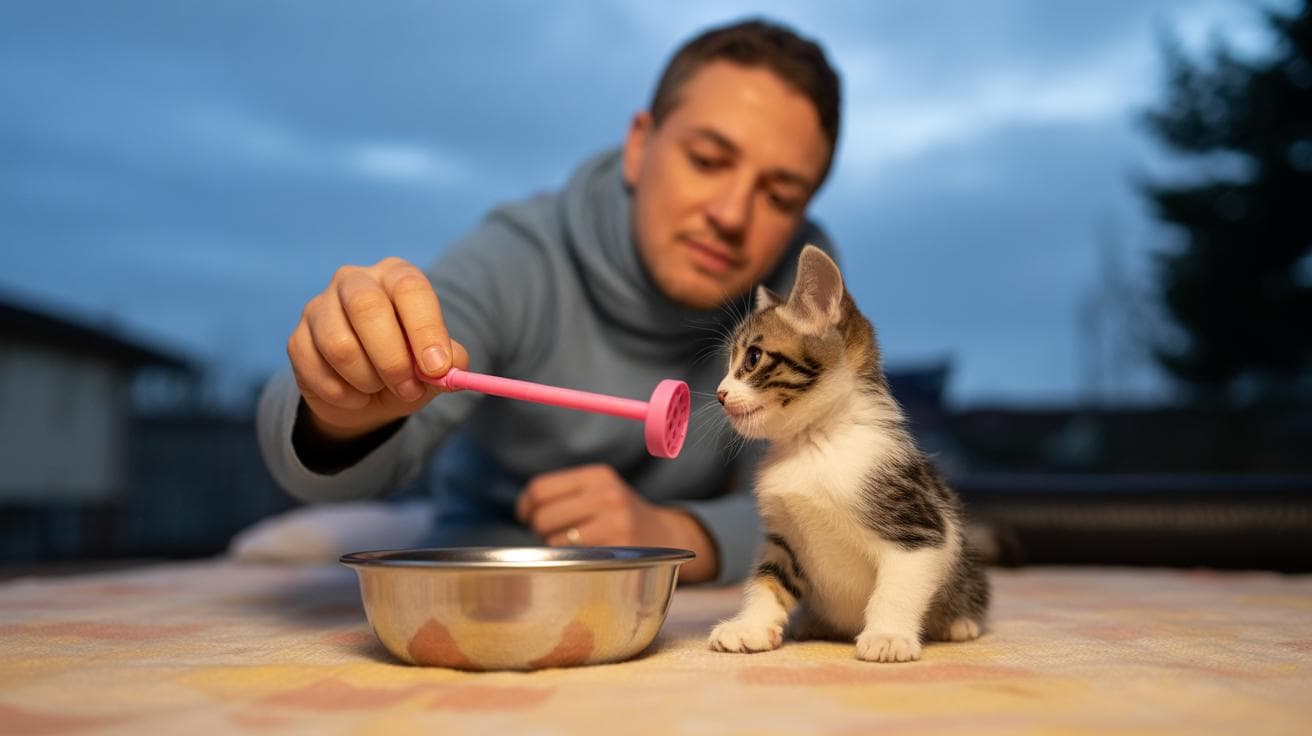
After a real catch, give a tiny reward to mimic hunt-then-eat satisfaction. Play 10-15 minutes, let them catch, then offer 1-2 tablespoons of kibble or a small treat. Rotate toys in two sets – set A for three days, then set B for three days – to keep things novel. If your kitten gets overaroused, pause for a minute, switch to a slow-moving toy, or end the session early. If they ignore toys, try changing how you move the toy, add a scent or a pinch of catnip, use a food puzzle, or refresh wand bits – check DIY replacement attachments for teaser wands for ideas. Replace toys that shred or lose stuffing.
Worth every paw-print.
Teaching bite inhibition and safe handling for kittens (with sample scripts)
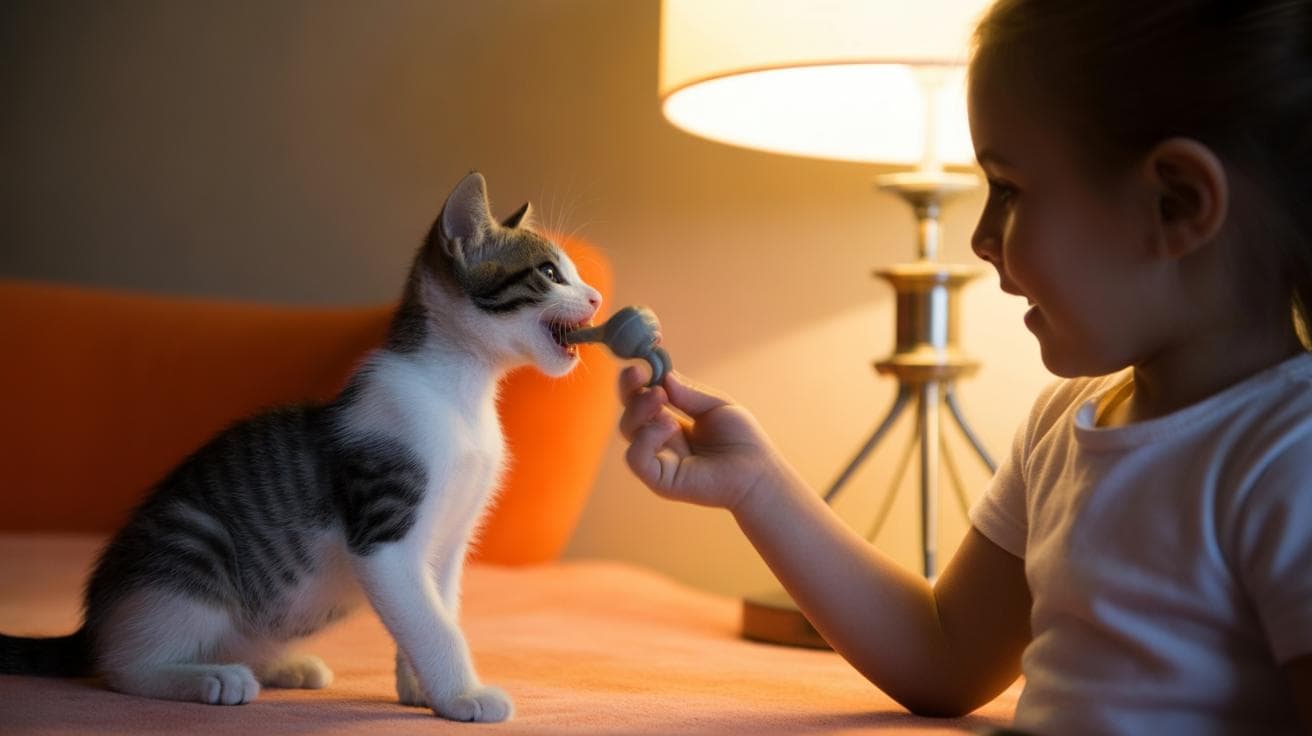
The idea is simple and friendly: make biting stop the fun so your kitten learns to use a softer mouth. Play short drills where you let the kitten catch a toy, then if a nip happens give a calm cue and pause the game. Keep sessions brief, about 5 to 10 minutes, so the lesson sinks in without wearing anyone out.
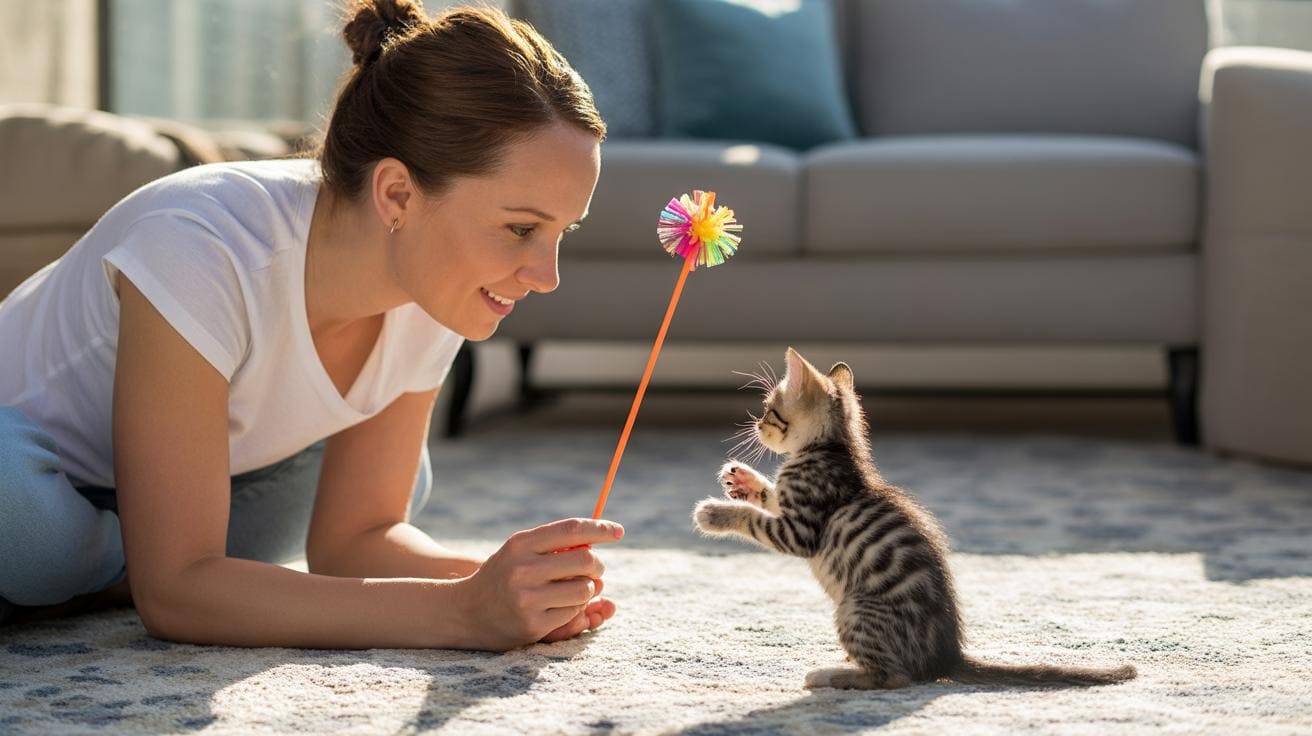
Ever watched your kitty chase shadows? Great, use that same playful energy. Start lively with a wand toy, let the kitten win sometimes, and finish on a calm note with a treat. That helps the kitten learn that gentle play gets rewards.
If a kitten locks on hard, stay calm. Hold still and cup the muzzle (nose and mouth area) with one hand, then gently roll the kitten’s head toward its shoulder with the other hand to ease the bite. If that doesn’t work, slide a soft, damp cloth around the mouth to break contact without jerking. Don’t use the blanket-over-head trick if the kitten panics, has breathing issues, or is especially fearful. The blanket trick means briefly covering the head with a lightweight towel to reduce stimulation, but you must watch breathing and never leave the kitten covered.
Sample Scripts and Cues
- “Ouch. That’s too hard.”
- “No bite, toy time!”
- Child-friendly: “No teeth! Use the feather.”
- Time-out cue: “Calm time.” (place kitten in a quiet room or carrier for about 5 minutes)
- Reintroduction cue: “Play nice.” (offer the toy and give gentle praise)
- Set the tone: play lively for 5 to 10 minutes using a wand or teaser, let the kitten catch the toy, and end calmly with a treat.
- On a nip: give a short, firm cue, stop moving, and wait 3 to 5 seconds before offering the toy again.
- Hard latch: stay still, cup the muzzle (nose and mouth area), try rolling the head, or use a damp cloth; get vet care if the skin breaks or looks infected.
- Time-out: put the kitten in a safe, quiet room or carrier for about 5 minutes, then return calmly and offer the toy again.
- Reward calm: praise softly and give a tiny treat or a bit of kibble after gentle, toy-only bites; keep short, regular sessions.
A few quick tips: use soft toys that won’t hurt tiny teeth, avoid hands-as-toys, and supervise kids so play stays safe. Worth every paw-print.