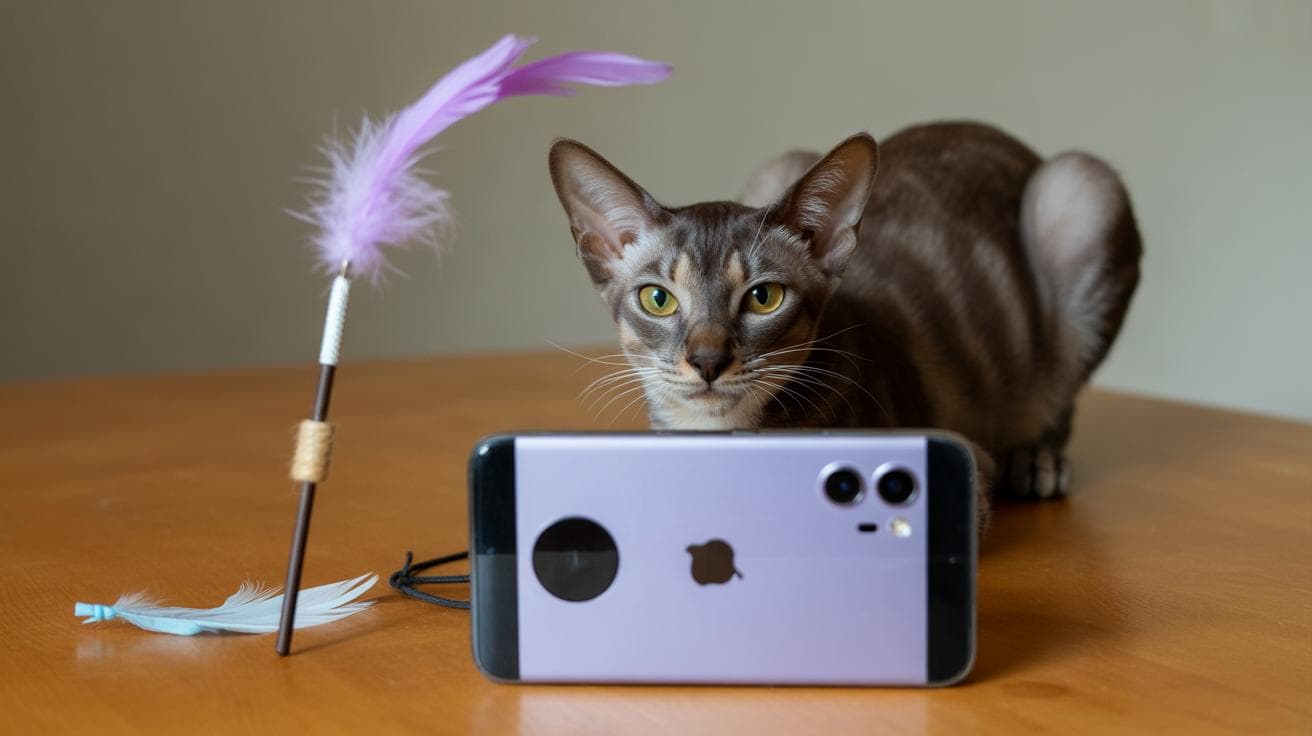
Oriental Shorthair: energy levels and best toys

Think Oriental Shorthairs are just lazy lap cats? Think again. They’re sleek, chatty athletes who usually need two 15-20 minute interactive play sessions a day (ever watched your kitty’s whiskers twitch as they pounce?), with kittens wanting more short bursts and seniors preferring gentler games.

I’ll map energy by life stage and show the best toys so you can match play to their speed and smarts. Try teaser wands (a stick with a dangly lure, like a fishing rod for cats) for stalking practice, cat trees (tall climbing towers for jumping and napping) for vertical play, fetch balls (small rolling balls for chase sessions) for bursts of speed, and puzzle feeders (food-dispensing toys that make them think) for brainy rewards. Short, lively sessions for kittens, structured chase for adults, slow, low-impact play for seniors. Worth every paw-print.

Oriental Shorthair energy levels owners need to know
- Oriental Shorthair energy levels owners need to know.jpg

Oriental Shorthairs are high-energy cats. Expect two 15–20 minute interactive play sessions each day. Kittens need more frequent short bursts; adults and seniors adjust as they age. These cats are social and vocal, with a lean, athletic body that loves attention and play. Picture whiskers twitching as they stalk a feather or the satisfying thud when they land after a leap.

Kittens are tiny dynamos: curious, fast learners, and happiest with short, frequent games that build coordination and confidence. Think of a teaser wand like a fishing rod for cats, just add feathers. Ever watched a kitten somersault for a ribbon? Cute and chaotic, and great for muscle and brain development.

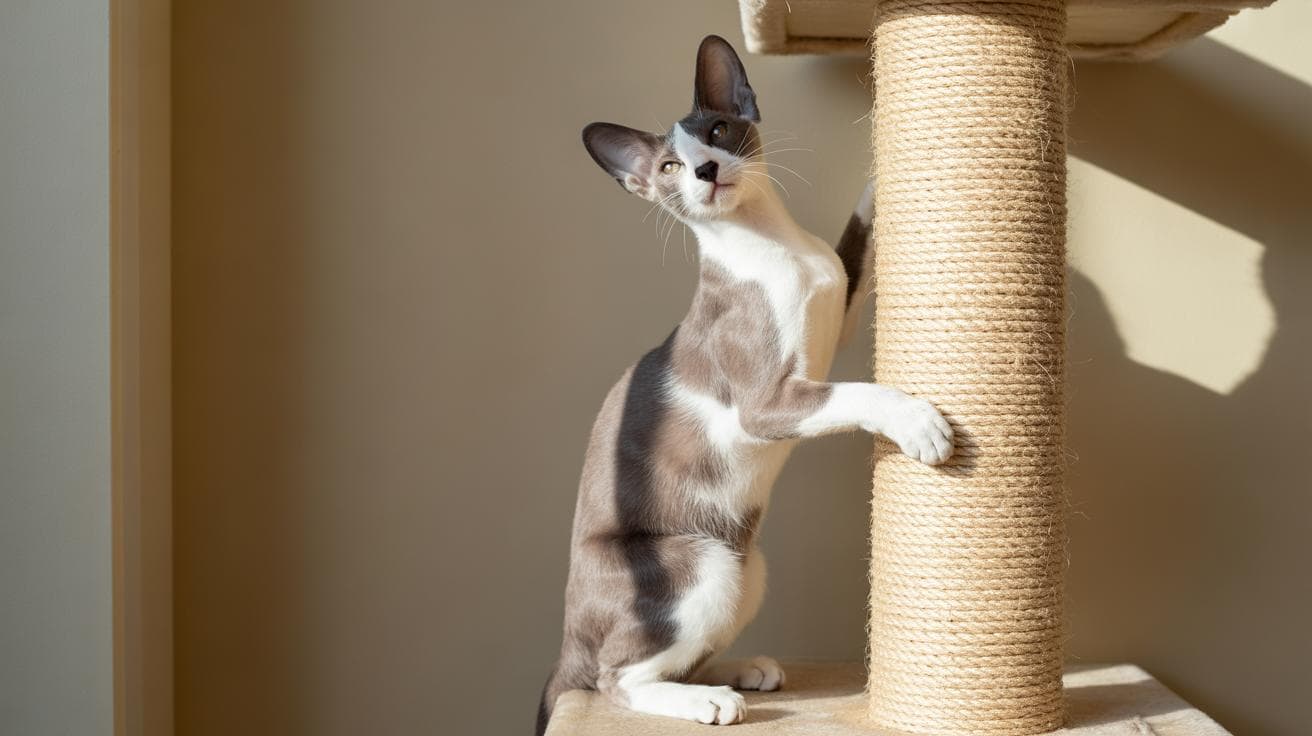
Most adults stay very active. Many prefer interactive puzzles, games of fetch, and climbing to burn energy. Add vertical space, cat trees and wall shelves, and you’ll see them sprint, leap, and survey their kingdom. Seniors slow down, though. Gentle, lower-impact play keeps joints moving and minds sharp without overtaxing them.

The exact daily play target for oriental shorthair energy levels is two 15–20 minute interactive sessions each day. This is the single source-of-truth for timing in the article. Other sections will reference this paragraph when they give timing guidance; see Energy section for exact targets. Use simple cues, play enthusiasm, rest patterns, and how they act after a session, to fine-tune intensity.

Typical adult weight is about 8–12 pounds (3.6–5.4 kg), a slim, muscular frame built for speed and leaping. Health problems that can lower activity include dental disease (gum or tooth pain), respiratory issues (breathing trouble tied to facial shape), hypertrophic cardiomyopathy (heart muscle thickening), progressive retinal atrophy (slow vision loss), and amyloidosis (protein buildup in organs). If your cat pants heavily, hides, or seems unusually tired after play, shorten sessions and check with the vet.

These cats do well in apartments when you give them vertical territory and scheduled play. Toss in short interactive sessions before you leave for work for ten minutes of safe, tiring fun. Worth every paw-print.

Best toys for Oriental Shorthair: categories that match their high energy
- Best toys for Oriental Shorthair categories that match their high energy.jpg

This is your go-to toy catalog for Oriental Shorthairs. These cats are lean, jumpy, and chatty, so pick toys that invite chasing, leaping, stalking, and clever problem solving. Keep their minds and muscles busy. See this Best Toys list when a later section says "refer to Best Toys."

Durability matters with athletic cats. Choose puncture-proof fabric (tight-woven, tear-resistant cloth), polymer (a tough plastic), or fiberglass (like a strong fishing-rod core) in moving parts. Look for toys with replaceable attachments or sealed seams. Check toys often for loose bits, frayed threads, or exposed stuffing so nothing can be swallowed.

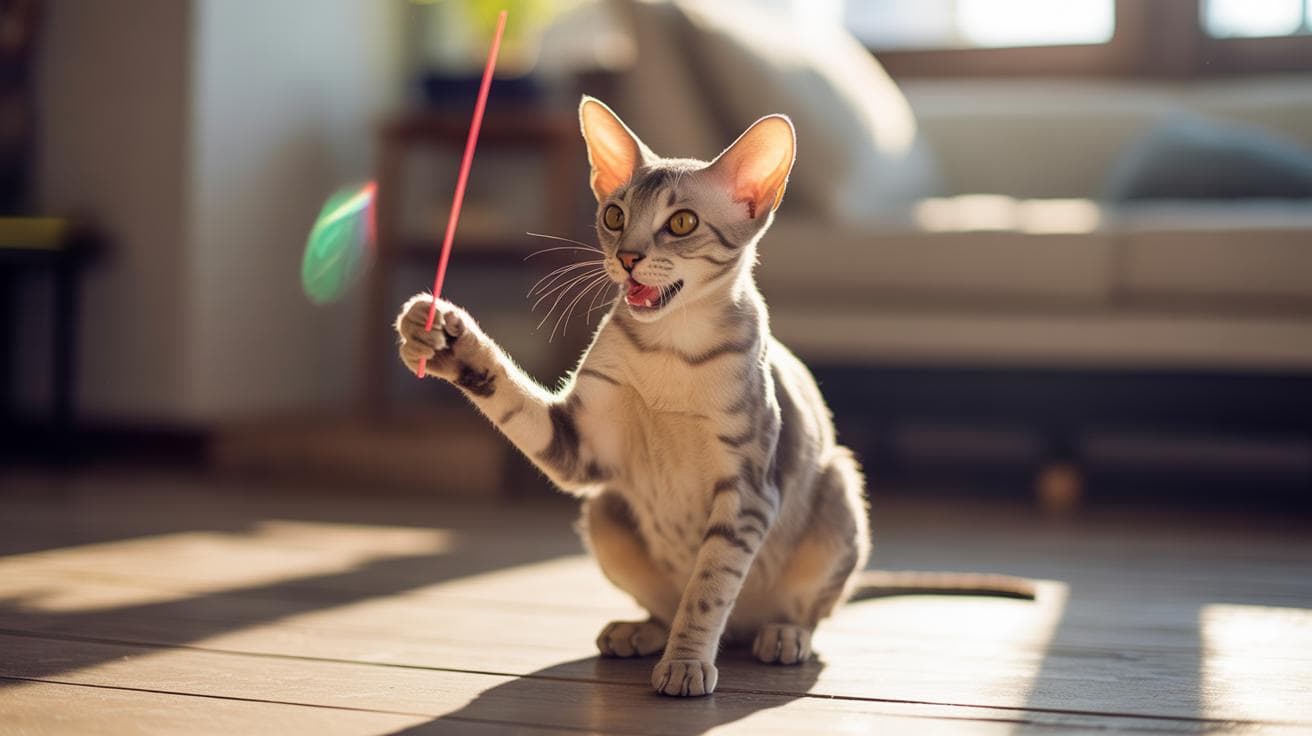
  • Feather wands / teaser poles: Great for leap-and-pounce sessions and bonding time. They mimic prey and get that high, snappy chase going, your cat’s whiskers will twitch, guaranteed.
  • Laser pointers and electronic moving mice: Perfect for the nonstop chaser who loves sprinting. Pair them with a catchable toy so your cat gets a satisfying win at the end.
  • Puzzle feeders and treat-dispensing toys: Mental work plus snacks equals happy, tired kitties. Good for clever cats who like to problem solve. See how to use feeder toys for slow feeding for tips.
  • Ball tracks and rolling balls: Continuous motion invites stalking and batting. Ideal for cats that chase the same thing over and over, almost hypnotic to watch.
  • Cat tunnels and boxes: Short ambush corridors for the hunter and the explorer. Sprint, hide, pop out, simple and irresistible.
  • Tall cat trees, wall shelves, and climbing structures: Vertical territory for surveying and leap practice. They support natural climbing instincts and make great nap lookout spots.
  • Plush kick / wrestler toys: Stuffed toys made tough for wrestling and kicking. Perfect for the cat that loves to grab and hug a prize with their back legs.
  • Fetch-friendly lightweight balls: Easy to toss and retrieve; many Oriental Shorthairs pick up fetch fast. Great for quick play when you’ve got a minute.
  • Sturdy scratch posts: Heavy-duty posts that stand up to hard climbs and sharp claws. Helps keep furniture safe and supports claw care.
  • Crinkly or bell-textured toys: Toys with sound and strange textures that spark curiosity. Awesome for attention-seekers and vocal players.

Quick tip: rotate toys every few days to keep things fresh. Your cat will act like they just discovered the best thing ever. Worth every paw-print.

Oriental Shorthair toys by life stage: kittens, adults, and seniors
- Oriental Shorthair toys by life stage kittens, adults, and seniors.jpg

This section just tweaks the Best Toys list for kittens, adults, and seniors. I won’t repeat full categories or timing here. See Energy section for exact targets.

Kittens

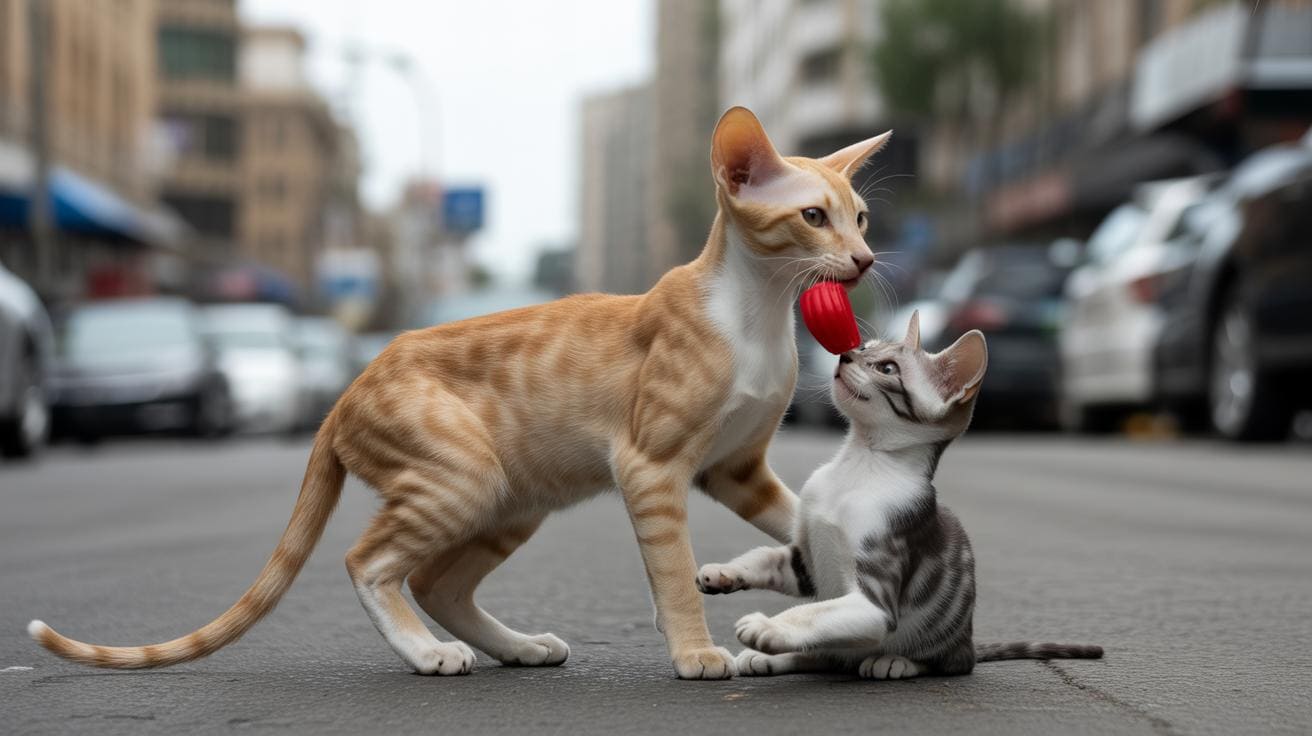
Go small and light. Think tiny wands with soft feathers that tickle whiskers, little plush mousers, and mini balls that won’t bruise tiny paws. Use replaceable attachments (small parts that snap on and off) so you swap worn bits without tossing the whole toy. Feed kitten-formulated meals in small, frequent portions to fuel short bursts of play; timing meals can help steer peak energy before a session. Aim for lots of brief play rounds and watch for overexcitement or quick fatigue.

Adults

For grown cats go tougher and smarter. Choose durable interactive toys and vertical structures (cat trees and shelves) that encourage climbing and stalking. Add training goals like fetch or simple tricks to channel curiosity and brainpower, rotate puzzle difficulty or change climb heights with the seasons and your cat’s health. Use treats and praise when teaching cues, and lower intensity if any medical flags pop up. It keeps play fresh and mentally satisfying.

Seniors

Make everything gentler and easier to reach. Opt for soft plush kickers, easy-to-manipulate puzzle feeders (food-dispensing toys), and lower perches to cut joint strain. Put toys close to favorite naps spots and stick to slow, gentle chase games, short sessions work best. Watch for stiffness, panting, or quick tiring and shorten play as needed. Worth every paw-print.

Daily routines and high-energy games for Oriental Shorthair
- Daily routines and high-energy games for Oriental Shorthair.jpg

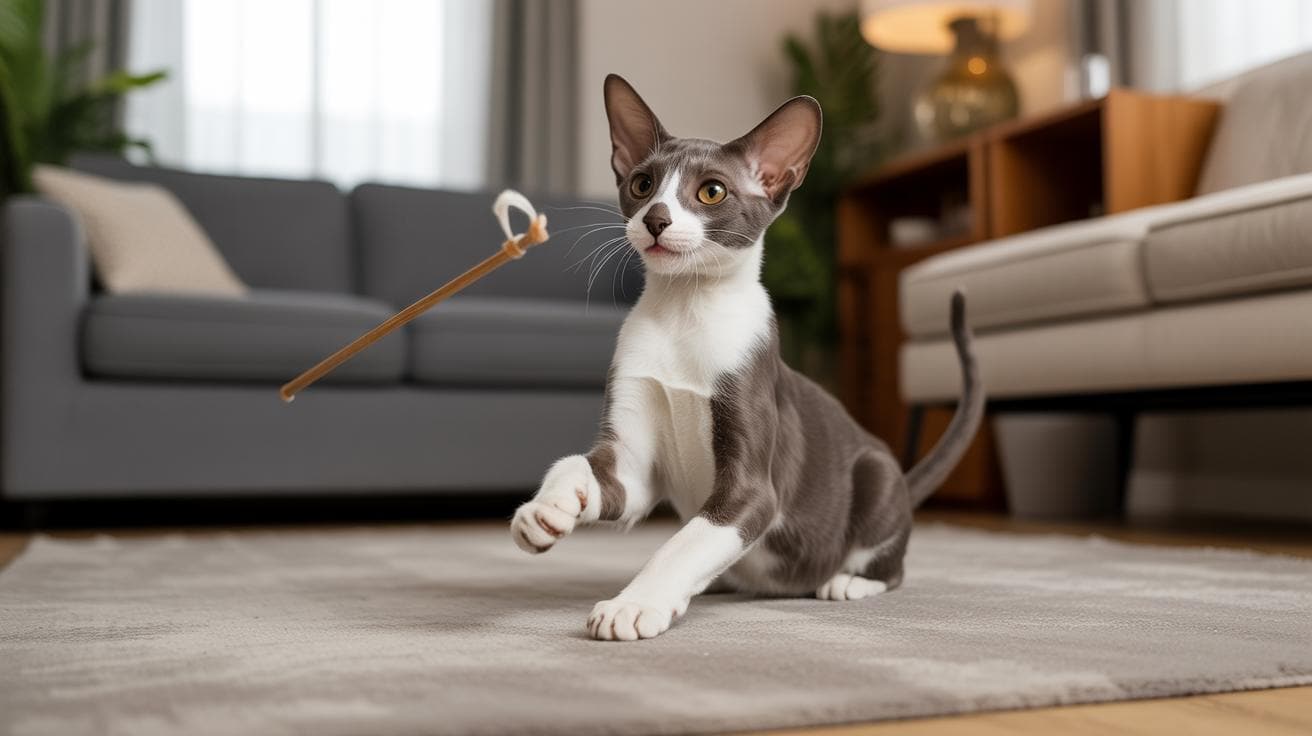
A steady routine wires play into your cat’s day and copies the real hunt: tease, chase, catch, snack. Start with a gentle warm-up, build up to a fast chase, and finish with a satisfying capture so your kitty doesn’t feel cheated. See the Energy section for exact session lengths and targets.

Mix short interactive bursts with solo enrichment so your cat gets both company and independent activity. Teach simple trick cues during interactive hunts , sit, fetch, spin , to channel brainpower and keep things interesting. And if you use laser play, always end by letting them catch a physical toy or a treat so the hunt feels complete.

Here’s a simple daily plan you can try. Adjust times and intensity to the Energy section recommendations.

  1. Morning interactive session – an active hunt near a sunny window or a climbing spot (cat tree) using feather wands or teaser poles (a long stick with feathers). Follow with a small food reward.
  2. Mid-day solo enrichment – leave a ball track or a treat-dispensing puzzle (a toy that releases food when nudged) on a low shelf or in a quiet room for independent play and mental work.
  3. Evening interactive hunt – a higher-energy chase using tunnels, electronic mice (battery-powered moving toys), or fetch-friendly balls in a hallway or open space. Add short training cues for tricks.
  4. Post-play reward – a puzzle feeder (a slow feeder that makes them work a bit for food) or a favorite treat in the feeding area to simulate a successful hunt and encourage calm.
  5. Bedtime calm-down – low-impact play, brushing, or gentle grooming near their sleeping spot to settle them before lights-out.

See the Energy section for exact targets and session lengths.

Sample interactive session script

  1. Warm-up: slow, flirty wand movements to get attention and a few soft pounces.
  2. Escalate: quick, unpredictable dashes and short bursts to mimic prey. They’ll sprint, skitter, and zoom.
  3. Allow capture: switch to a plush toy or a treat-dispensing item (puzzle feeder) so they can grab something. Let them feel victorious.
  4. Praise/reward: soft words, a gentle pet, and a small treat for successful catches. Positive vibes.
  5. Cool-down: slower motions and gentle batting to lower arousal.
  6. Quiet time: brief grooming or a cuddle to finish, so they drift off content.

Ever watched your kitty stalk a sunbeam? Use that same rhythm , tease, chase, catch, reward , and you’ll have a happier, tuckered-out Oriental Shorthair. Worth every paw-print.
Solo play and automatic toys: what works for Oriental Shorthair

- Solo play and automatic toys what works for Oriental Shorthair.jpg

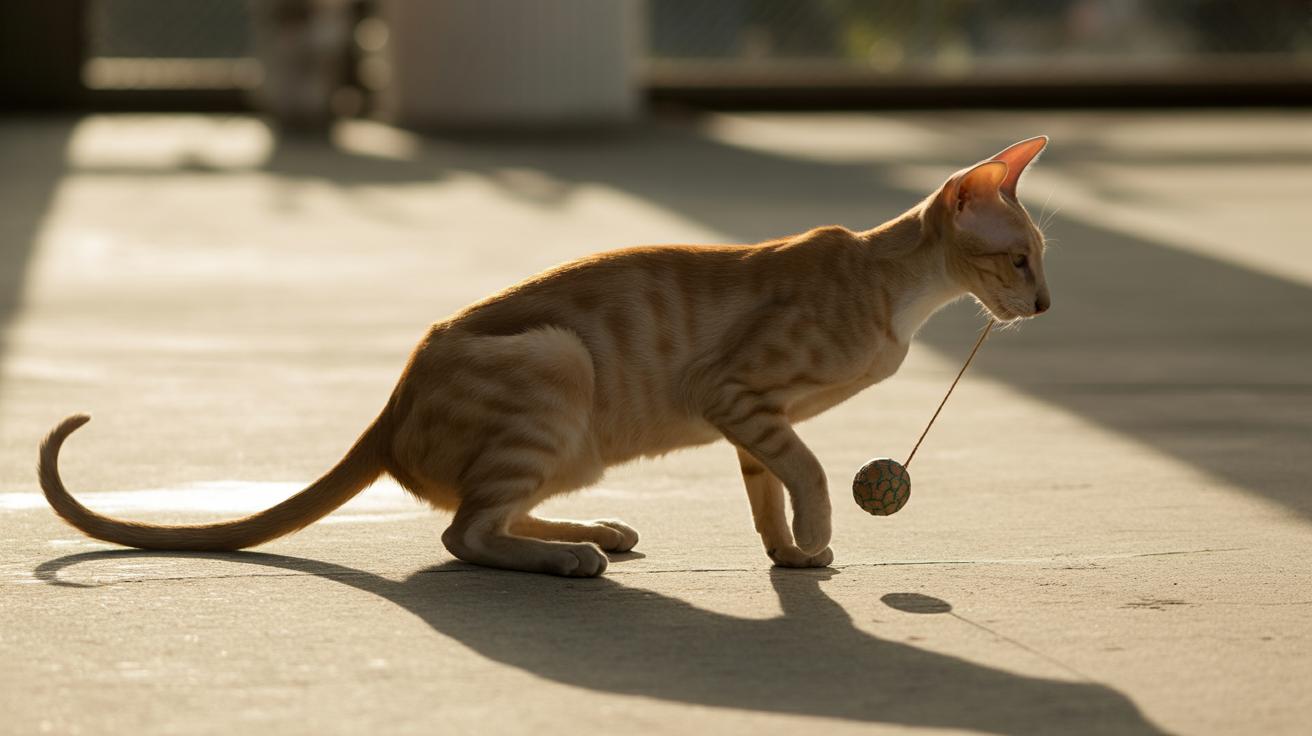
Automatic toys are a real lifesaver on busy days. Durable ball-track toys and battery-operated electronic mice (battery-powered moving toys) keep an Oriental Shorthair chasing, thinking, and burning energy when you can’t play. Timed treat dispensers (machines that drop a snack on a schedule) add a tasty puzzle. The soft hum of a running track or the quick dart of a motorized mouse gives your cat a healthy outlet for those famous zoomies.

Lasers are a bit trickier. Automatic lasers (small projectors that move a red dot) light up a cat’s hunting instincts, but laser-only sessions can frustrate a hunter because there’s nothing to catch. That frustration can turn into obsessive circling or overstimulation. Also, in multi-cat homes a single dispenser or toy can become guarded by the alpha cat, which sparks competition or stress. Ever watched one cat hog the treat slot? Yeah, not cute.

So, bring in the rules. Introduce automated toys slowly. Supervise the first few plays so you can spot stress signs fast and stop before it becomes a habit. Keep laser-only time short. And always finish a laser session with a real capture , a treat or a plush toy , so the hunt feels complete and your cat doesn’t get laser-obsessed.

Mix solo devices with human-led play and rotate toys from your Best Toys list to keep things fresh. For care tips, see Safety section for maintenance, cleaning, and rotation steps. For how long to play each session, see Energy section for exact session-length guidance. Worth every paw-print.

Safety, maintenance, and toy-rotation strategies for Oriental Shorthair

- Safety, maintenance, and toy-rotation strategies for Oriental Shorthair.jpg

Start every play session with a quick safety scan. Think of it like a once-over, look for anything small or loose that your cat could swallow. Remove toys with tiny detachable bits, loose bells, or anything that pulls off easily. Choking hazards are real, and a minute now can save a vet trip later.

Never leave ribbon or string toys unsupervised; they’re like candy to a curious cat. Supervise ribbon play and put strings away when you’re done. Cut away frayed threads and retire chewed pieces. Pick toys made from tight-woven puncture-proof fabric (fabric that resists tearing) or polymer (tough plastic) for moving parts so claws don’t turn fun into a hazard.

Cleaning and electronics need a simple routine. Machine-wash soft plush when the care label allows, use mild detergent, and air-dry so the stuffing stays sealed. Wipe hard toys with warm water and mild soap. For electronic toys, follow the manufacturer’s cleaning steps to disinfect surfaces safely. Check batteries every few weeks, keep spare batteries in a dry spot, and remove any leaking or swollen batteries right away, dispose of them according to local rules. See the Solo Play section for rules about unsupervised use; this part focuses on maintenance.

Before you hand a toy back to your cat, do this quick tick-off:

  • Frayed fabric or threads that pull away
  • Exposed stuffing or foam
  • Loose or missing parts (bells, eyes, clips)
  • Motors that stutter or jerky movement in electronic toys
  • Any sign of battery leakage or corrosion
  • Bite or chew punctures in plastic parts
  • Weakened seams or split stitching

Rotate toy sets every 1 to 2 weeks. Bring a stored group back only after a full inspection and any repairs. Keep a repair/retire list and toss toys when seams split, stuffing shows, or mechanisms fail. Regular checks save teeth, tails, and your peace of mind. Worth every paw-print.

DIY, hands-on projects and budget-friendly builds for Oriental Shorthair

- DIY, hands-on projects and budget-friendly builds for Oriental Shorthair.jpg

Hands-on builds give you tough, low-cost toys that survive an Oriental Shorthair’s zoomies. Keep things pet-safe and simple, choose projects with replaceable parts, and always test a toy before your cat gets full access. These five mini-recipes focus on strength, easy fixes, and saving money.

Feather-wand replacement attachment

  • Materials: wooden dowel (a straight stick), screw-eye (a small metal loop screw), feathers, fishing line (thin strong nylon thread), non-toxic craft glue.
  • Steps: screw the screw-eye into the dowel tip, bundle the feathers and tie them with fishing line, knot the bundle through the screw-eye and add a tiny dab of glue, then wrap the join with tape or heat-shrink for extra grip. The feathers will give a fun flutter and chase moment. See DIY replacement attachments for teaser wands for a fuller how-to.

Sewn kick-toy (kick-stick)

  • Materials: heavy-weight fabric (thick, sturdy cloth), heavy-duty thread (strong sewing thread), polyfill stuffing (soft pillow stuffing that’s pet-safe).
  • Steps: cut two rectangles, sew three sides with tight reinforced stitches, stuff firmly so it has a satisfying thud when kicked, then finish the last seam with a double stitch. Tug the seams hard to make sure it won’t open during a wrestling match.

Toilet-roll puzzle feeder

  • Materials: empty toilet rolls, tape, small dry treats, a small box.
  • Steps: fold the ends of each roll to make little treat pockets, tuck treats inside, arrange and glue or tape the rolls into the box in a mixed pattern, and leave openings so paws can fish treats out. It’s cheap, clever, and great for slow-foraging play.

Reinforced cardboard hide box

  • Materials: corrugated cardboard (cardboard with wavy inner layers), packing tape, box cutter.
  • Steps: cut entrance holes and peek-windows, tape seams and corners heavily, and stack smaller boxes inside to make tunnels and layers. The rustle and peek-holes make hide-and-pounce super tempting.

Simple treat-bottle dispenser

  • Materials: clean plastic bottle, scissors, small dry treats, wooden dowel or stopper.
  • Steps: cut small, bite-size holes so treats fall out sometimes, sand the edges smooth so no sharp bits remain, insert a dowel or cap to slow the treat flow, then fill and test. Roll it and watch your cat bat it for a tasty payoff.

Safety first. Inspect every DIY toy before your cat plays: no sharp edges, no loose bits, seams must hold, and any glue should be labeled non-toxic. Pull toys out of rotation if chewing exposes stuffing or small parts, and replace worn pieces as soon as you spot them. For how long to play with these, see Energy section for exact targets.

Final Words

in the action , this guide gives one clear energy target (two 15–20 minute interactive sessions daily), life-stage tweaks, a master toy list, routine ideas, solo-play rules, safety checks, and DIY builds.

Use the Best Toys list and see the Energy section for exact targets before you plan sessions.

Keep toys clean, swap sets every 1–2 weeks, retire damaged pieces, and try a few sturdy DIY options.

You’ve now got the plan for Oriental Shorthair: energy levels and best toys, so happy pouncing and many playful days ahead.

FAQ

Frequently Asked Questions

Are Oriental Shorthairs high in energy?

Oriental Shorthairs are high in energy. Expect two 15–20 minute interactive sessions daily; kittens need more frequent short bursts, adults stay active with regular exercise, seniors slow down.

What toys are good for cats with energy?

Toys good for high-energy cats are feather wands, laser pointers, puzzle feeders, ball tracks, tunnels, tall cat trees, plush kick toys, fetch balls, sturdy scratch posts, and electronic mice. Pick durable materials and replaceable parts.

Do Oriental cats like to be held?

Oriental cats like social contact but vary in how much holding they accept. Many prefer short, secure holds and active play to long cuddles. Watch body language and stop if stressed.

What health issues affect Oriental Shorthair activity?

Oriental Shorthair health issues that affect activity include dental disease, respiratory problems, hypertrophic cardiomyopathy, progressive retinal atrophy, and amyloidosis. Regular veterinary checks help catch problems early.

What should I know about Oriental Shorthair kittens?

Oriental Shorthair kittens are extremely playful. Favor lightweight wands, small soft mousers, and frequent short bursts of play. Feed high-quality kitten food to support energy and growth, and monitor fatigue.

How much do Oriental Shorthairs cost and where can I buy one?

Oriental Shorthairs can be found through reputable breeders, breed rescue groups, and some shelters. Prices vary widely by pedigree and location; check local rescues for lower-cost options and ask about health clearances.

Author

  • Nathaniel Price is a retired construction manager turned LLM writer, where he combines his years of experience managing complex projects with his love for crafting precise, engaging content.

    His work thrives on meticulously researching and writing about all things related to cats, from behavior to care, ensuring that every piece is informative and well-researched.

    When he’s not writing, Nathaniel enjoys fishing, which offers him a peaceful escape. He also has a deep appreciation for nature, often reflecting on his belief that “happiness is found in the quiet moments.”

    View all posts

Similar Posts