Field Note

How to Stop Cat Aggression Towards Humans: A Safer Play and Behavior Plan

Stop cat aggression towards humans with safer handling, trigger tracking, better play routines, and clear warning signs that need veterinary help.

To stop cat aggression towards humans, first make everyone safe, then work out why the aggression is happening. Do not punish, wrestle, yell, or use your hands as toys. Pause direct contact, track the trigger, schedule safer play before the usual attack time, and call your veterinarian if the aggression is sudden, severe, painful, escalating, or breaking skin.

Cat aggression toward people can come from play, fear, pain, petting overstimulation, redirected arousal, territorial stress, maternal behavior, or a mix of causes. The plan that helps an ankle-ambushing kitten may be wrong for a painful senior cat or a cat that just saw an outdoor cat through the window. The useful goal is not to label the cat as bad. The goal is to reduce injury risk, stop rehearsing the unwanted behavior, and give the cat safer ways to move, hunt, retreat, and calm down.

Start With Safety, Not Discipline

If a cat is actively attacking, give space. Move slowly, use a barrier such as a door, chair, blanket, or piece of cardboard if needed, and avoid grabbing the cat with bare hands. If two animals are fighting, do not put your hands between them. Once the cat is separated, let the arousal drop before trying to pet, pick up, train, or examine them.

Physical punishment is a poor tool for cat aggression. Cornell Feline Health Center warns that punishment can increase fear or anxiety and worsen aggression. Best Friends Animal Society also advises avoiding punishment because it can damage trust and make aggression more likely. For the owner, the practical rule is simple: if the response makes the cat more frightened, more aroused, or more likely to defend themselves, it is not a fix.

Use management first. Close blinds if outdoor cats are a trigger. Give the cat a safe room when visitors arrive. Stop petting before the cat’s tolerance runs out. Keep children away from a cat with a bite history unless an adult can actively supervise. Put wand toys, string toys, and fragile toys away after play so they do not become a new hazard.

Get a Veterinary Check for Sudden or Serious Aggression

A medical check matters because pain and illness can change behavior fast. ASPCA lists painful conditions, thyroid problems, neurological issues, sensory decline, trauma, and other medical problems as possible contributors to aggression. Cornell similarly notes that hyperthyroidism, osteoarthritis, dental disease, and central nervous system problems can cause or contribute to aggressive behavior.

Book a veterinary exam promptly if the aggression is new, worse than usual, directed at a normally trusted person, associated with hiding or appetite changes, linked to touch on a certain body area, or causing puncture wounds. A toy routine can help normal rough play, but it should not be used to explain away pain.

Seek urgent professional help if your cat repeatedly breaks skin, attacks children or vulnerable adults, remains highly aroused for long periods, or seems dangerous to handle. A qualified feline behavior professional or veterinary behaviorist can build a plan around the specific trigger instead of guessing.

Identify the Type of Aggression

Before changing toys or routines, write down what happened in the 30 minutes before each incident. ASPCA recommends looking at who was targeted, where it happened, what was happening beforehand, and what was about to happen to the cat. That log can reveal patterns you will miss from memory alone.
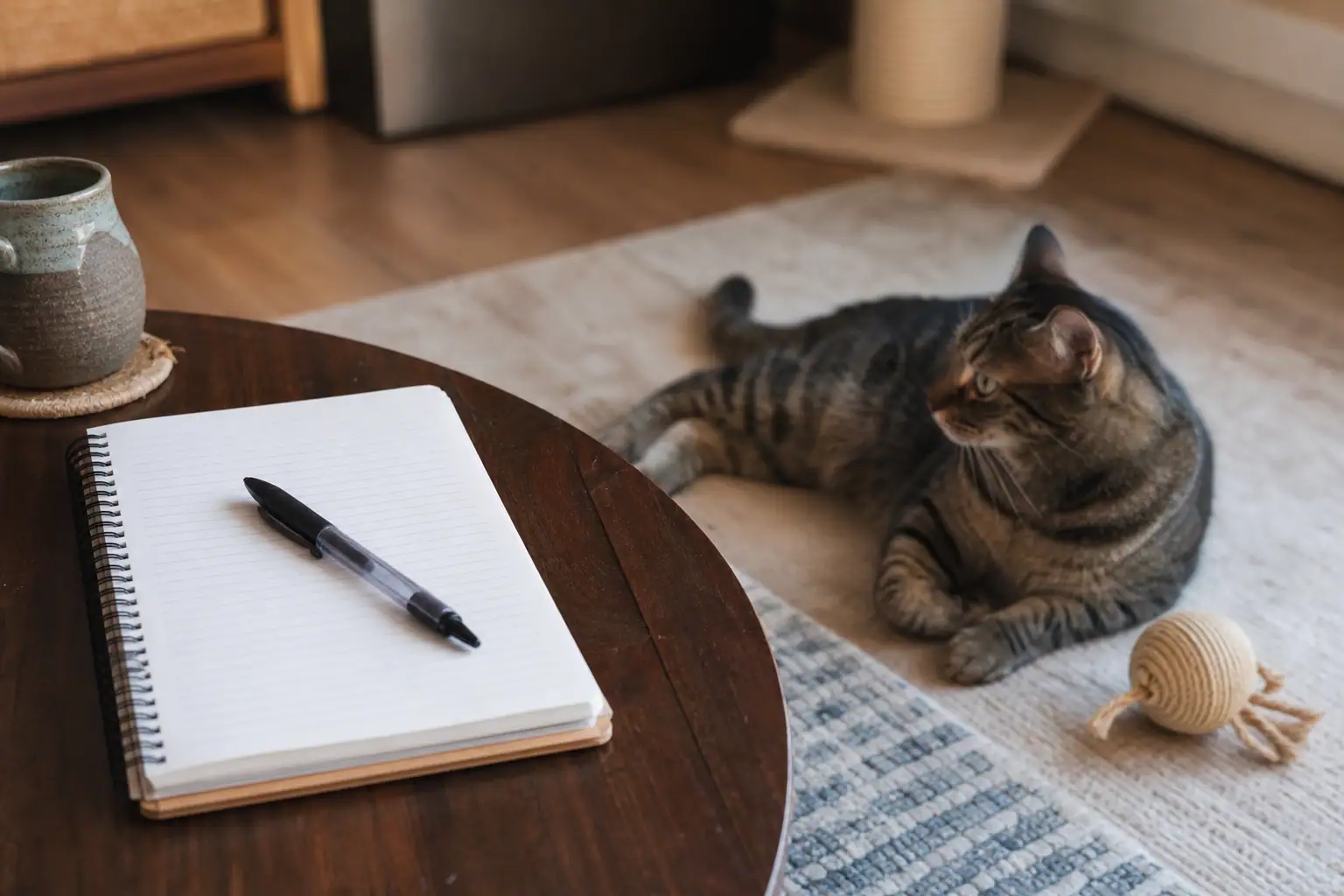
Notebook for tracking cat aggression triggers beside a calm cat
A simple incident log helps separate play attacks from fear, pain, petting intolerance, and redirected aggression.

Use these common patterns as a starting point:

  • Play aggression: stalking ankles, ambushing from corners, grabbing hands, pouncing with little or no hissing, often around high-energy times.
  • Petting-induced aggression: biting or swatting after a period of touch, often after tail twitching, skin rippling, head turning, flattened ears, or restlessness.
  • Fear aggression: hissing, crouching, hiding, flattened ears, defensive swatting, or biting when approached, cornered, picked up, or exposed to a scary trigger.
  • Redirected aggression: a cat becomes aroused by something else, such as an outdoor cat, a loud noise, or a fight, then attacks the nearest person or pet.
  • Pain-related aggression: sudden intolerance of handling, guarding a body part, biting when lifted, or reacting around joints, mouth, ears, abdomen, or tail.

Today’s Veterinary Practice notes that redirected aggression is a major owner-directed category and can be hard for owners to identify because the first trigger may be out of sight. That is one reason a diary is useful: it helps connect attacks with windows, noises, visitors, another pet, feeding time, or handling routines.

Build a No-Hands Play Rule

Many owner-directed bites start as normal hunting behavior aimed at the wrong target. If your cat stalks feet, launches at sleeves, or grabs hands during games, stop using body parts as prey. This is especially important with kittens. What feels cute at twelve weeks can become painful when the cat is stronger and faster.

Use distance toys instead. A wand or stick toy lets you move the lure like prey without putting fingers in the strike zone. A longer kicker toy gives the cat something legal to bite and rake with the back feet. A food puzzle or foraging setup can move the cat into a calmer finish after the hunt.

Cat playing with a wand toy at a safe distance from human hands
Distance matters. Wand and kicker toys let the cat chase, catch, bite, and kick without practicing on skin.

For a deeper toy-specific plan, pair this article with Titan Claws guides to cat toys for play aggression, cat stick toys, and durable cat toys. The short version is: chase at a distance, let the cat catch a real toy, keep hands still and boring after mistakes, and inspect the toy when the session ends.

Free Checklist

Free checklist: 30 ways to enrich your indoor cat's life.

Practical, printable, no fluff. Get the complete Indoor Cat Enrichment Checklist delivered to your inbox.

Use a Predictable Play Routine

Play aggression often improves when the cat gets structured outlets before the usual ambush window. Many cats are most active in the morning and evening. If your cat attacks ankles at 8 p.m., start play at 7:50 p.m. rather than waiting for the pounce.

  1. Warm up for two minutes. Move a wand lure slowly along the floor, behind a chair leg, or around a box. Let the cat stalk.
  2. Chase for five minutes. Move the toy away from the cat in short bursts. Do not wave it into the cat’s face.
  3. Catch and kick for three minutes. Let the cat land on a longer kicker toy. Keep your hands out of reach.
  4. Repeat with lower intensity for three minutes. Let the cat win again, but slow the movement.
  5. Cool down for two minutes. Offer a few pieces of kibble to forage, a puzzle feeder, or quiet distance. Do not immediately pet a cat that is still in hunt mode.

This routine gives the cat a complete sequence: stalk, chase, catch, bite, kick, and settle. Laser-only sessions can leave some cats frustrated because there is no physical catch. If you use a laser, end with a toy or food target the cat can actually reach.

Redirect Early, Then Make Attacks Boring

Timing is the difference between redirecting and rewarding. If you see pre-pounce signs such as crouching, tail swishing, wide pupils, corner hiding, or a focused stare at your feet, move play onto a toy before contact happens. Toss a safe toy away from your body or move a wand lure along the floor so the cat turns toward the legal target.

If the cat has already bitten or grabbed you, avoid producing the most exciting toy as an instant prize. Freeze if you can, calmly disengage, step behind a barrier if needed, and give a short reset. Restart structured play after the cat has settled. The lesson should be that toys start games; biting people ends them.

Everyone in the home needs the same rule. One person wrestling with hands can keep the problem alive for everyone else. Children should be taught to use wand toys from a safe distance or to leave play to adults until the cat has a reliable routine.

Reduce Fear, Frustration, and Overstimulation

Not every aggressive cat needs more play. Some need fewer forced interactions and better control over their space. A cat that lashes out when cornered, picked up, petted too long, or approached by guests may need predictable handling, escape routes, and shorter sessions below their threshold.

Try these changes:

  • Let the cat approach instead of reaching into hiding spots.
  • Pet briefly, then stop before the tail starts twitching or the head turns toward your hand.
  • Give the cat vertical space, hiding spots, scratching surfaces, and quiet resting areas.
  • Block window views or outdoor-cat access if they trigger redirected aggression.
  • Use food rewards for calm behavior and voluntary approach.
  • Separate pets during high-arousal periods and reintroduce slowly if conflict is part of the pattern.

Today’s Veterinary Practice frames treatment around identifying triggers, rebuilding a positive relationship, providing enrichment and tools, using behavior modification, and adding medication when needed. Most owners can start with the first three: know the trigger, make interactions predictable, and give the cat better outlets.

Choose Toys That Can Handle Rough Redirection

When toys are part of the behavior plan, durability and safety matter. A toy used to redirect aggression may be bitten harder than a casual toy. It needs to be large enough, easy to inspect, and free of weak decorative parts.

  • Use long kicker toys for cats that grab, bite, and bunny-kick. The toy should take the back feet instead of your arm.
  • Use wand toys only under supervision if they include string, feathers, elastic, or detachable lures.
  • Avoid tiny plush toys for cats that chew or swallow pieces.
  • Inspect electronic toys for battery doors, cords, moving pieces, and cracked plastic.
  • Retire damaged toys early when stuffing, loose seams, frayed cords, or small parts appear.
Hands inspecting a cat toy for loose seams after rough play
Rough play needs inspection. Retire toys with open seams, loose parts, exposed stuffing, or chewed cords.

For cats that destroy ordinary toys, read Titan Claws on cat chew toys for aggressive chewers and DIY cat enrichment toys. Homemade enrichment can be useful, but rough players need stricter supervision around cardboard, tape, paper tubes, string, and small parts.

Free Enrichment PDF

Want the full enrichment checklist?

30 things you can do this week to make your indoor cat's life better. Free PDF, straight to your inbox.

When to Stop the Home Plan and Get Help

Stop relying on home management alone if the attacks break skin, the cat stalks or attacks people outside play contexts, the aggression is sudden, the cat cannot calm down, another pet is being injured, or you feel unsafe. Also get help if your cat is older and newly irritable, because pain and sensory changes can show up as aggression.

A veterinarian should rule out medical causes first. After that, a certified feline behavior consultant, certified applied animal behaviorist, or veterinary behaviorist can help with desensitization, counterconditioning, safety setup, and medication when appropriate. Medication is not a substitute for environment and behavior work, but it can help some cats become calm enough to learn.

Quick Checklist

  • Separate safely during active aggression; do not grab with bare hands.
  • Do not punish, yell, spray, or wrestle.
  • Book a vet exam for sudden, severe, painful, or escalating aggression.
  • Track each incident: time, place, target, body language, trigger, and what happened afterward.
  • Use wand and kicker toys instead of hands and feet.
  • Schedule play before the usual ambush window.
  • Redirect before contact; make successful attacks boring.
  • Reduce triggers such as outdoor cats, forced handling, long petting, noisy rooms, and pet conflict.
  • Inspect and retire rough-play toys before they become ingestion hazards.
  • Bring in a qualified professional when safety risk is high or progress stalls.

The best plan to stop cat aggression towards humans is calm, specific, and consistent. Rule out pain, identify the trigger, stop using people as prey, give the cat better outlets, and keep toys safe enough for the way your cat actually plays. You are not trying to overpower the cat. You are changing the setup so the safer behavior is easier to choose.

Sources

Source: How to Stop Cat Aggression Towards Humans: A Safer Play and Behavior Plan