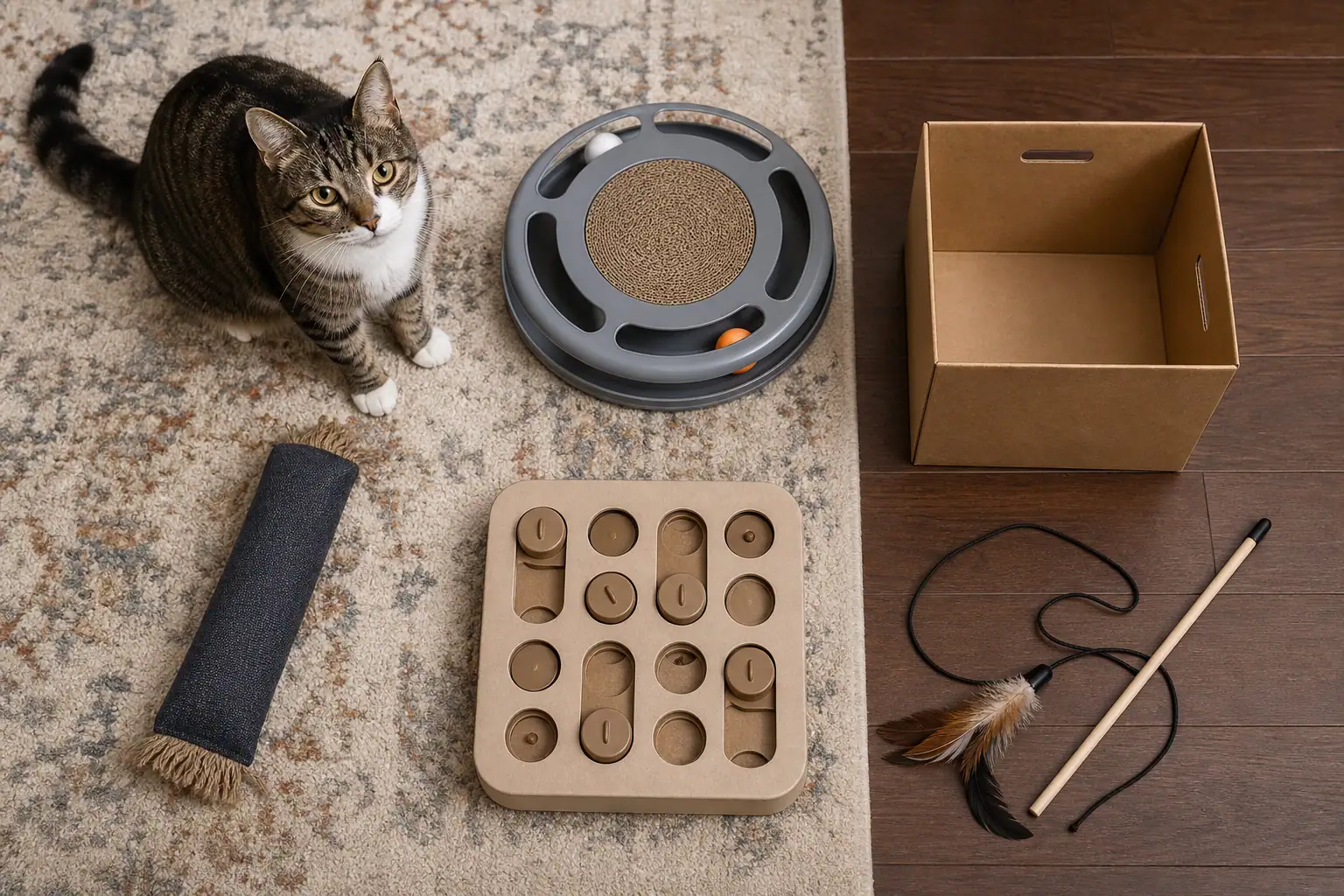
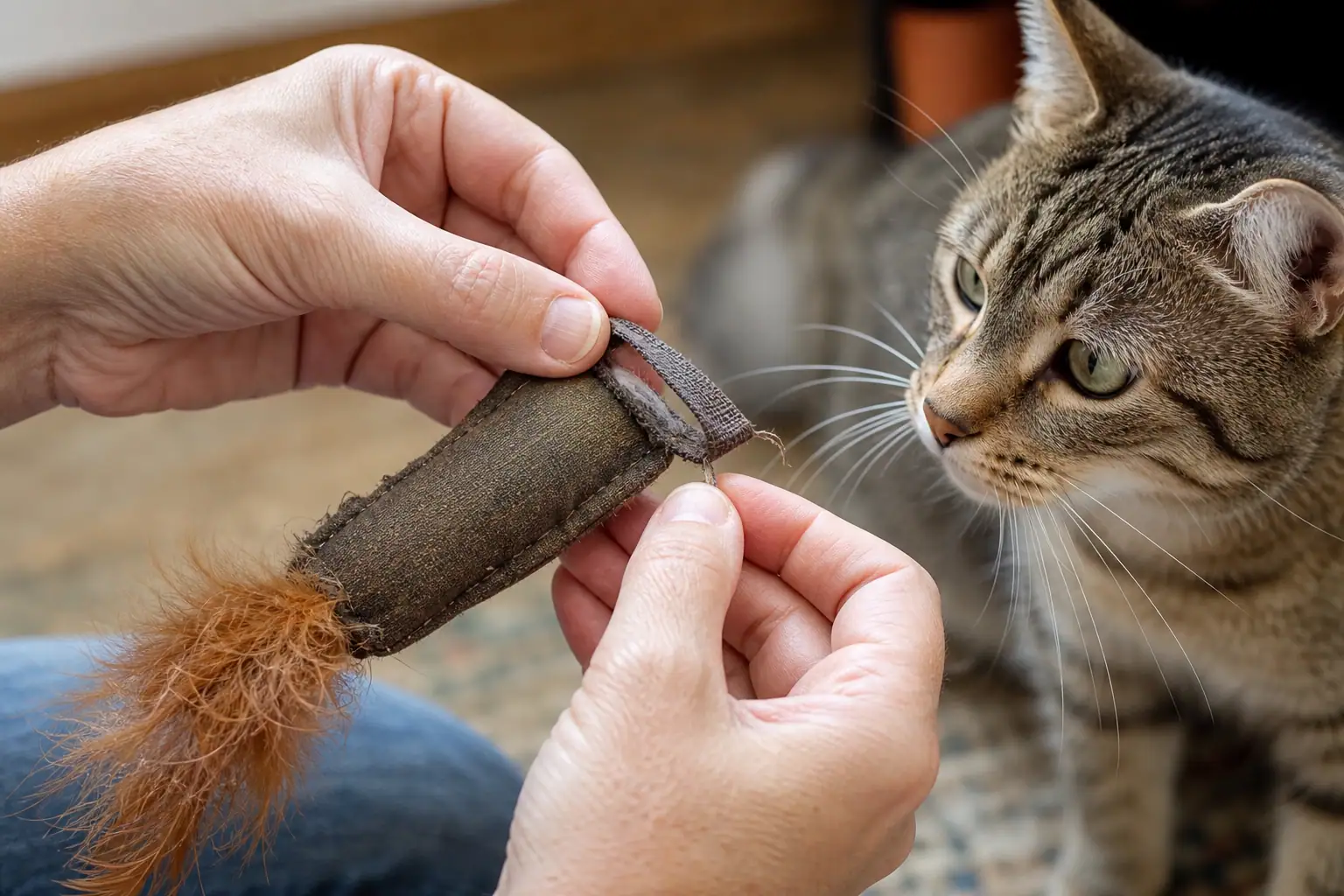
Durable cat toys are toys that hold up longer under teeth, claws, kicking, batting, and repeated play without quickly shedding parts. They are not magic, and they should not be treated as indestructible. For a cat that destroys ordinary plush mice, the better goal is a toy that matches the cat’s play style, has fewer weak points, can be inspected easily, and gets retired before damage turns into a safety problem.
The best durable cat toy for one cat may be wrong for another. A heavy kicker can be perfect for a bunny-kicker but boring for a stalk-and-pounce cat. A wand can be excellent for exercise but unsafe if the string is left out. A rubber chew toy may last longer than fabric, but only if the cat actually uses it and cannot bite off small pieces. Use this guide to choose tougher toys without falling for impossible claims.
What Makes a Cat Toy Durable?
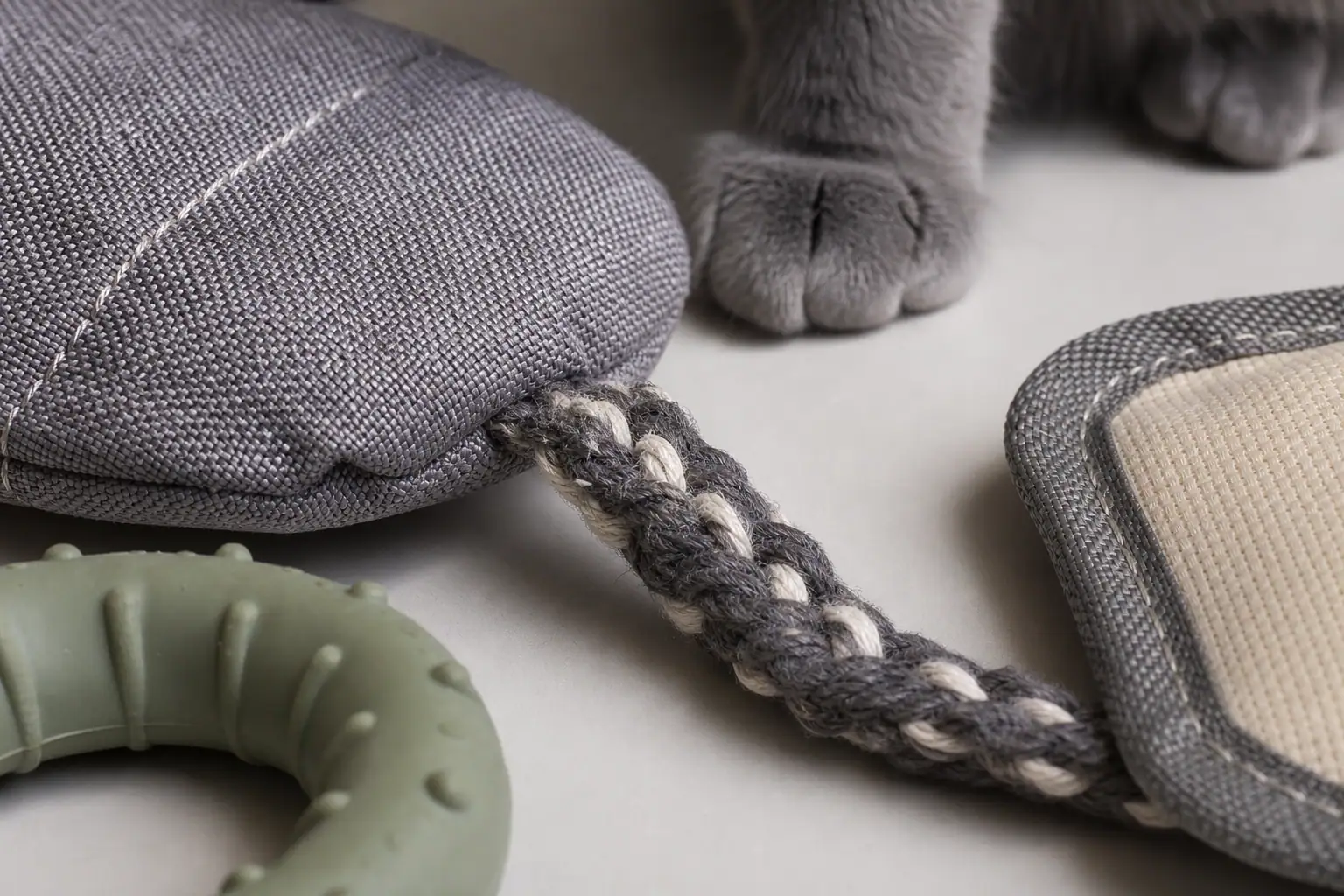
Durability comes from the whole design, not one marketing word. A toy lasts longer when the material, shape, seams, attachments, and size all fit the way your cat plays. If any one of those pieces is weak, a rough cat will usually find it.
Look for these signs first:
- Dense outer material: tightly woven fabric, heavy canvas-style covers, durable fleece, flexible rubber, or silicone-like materials tend to survive longer than thin plush.
- Reinforced seams: double stitching, covered seams, bar-tacks, or molded one-piece construction are better than single stitching or glued decorations.
- Simple shapes: fewer bells, beads, feather plugs, plastic eyes, tails, ribbons, and glued-on pieces means fewer parts to pull loose.
- Correct size: the toy should not fit fully inside your cat’s mouth, and it should be large enough for the way the cat grabs or kicks it.
- Inspectable construction: you should be able to see the seams, cover, openings, battery door, and attachment points after each play session.
- Cleaning instructions: washable or wipeable toys last longer because drool, catnip dust, hair, and dirt do not stay embedded in the toy.
If you want a deeper material breakdown, Titan Claws has a separate guide to materials that make cat toys tougher. For shopping decisions, also compare candidates against the unbreakable cat toy checklist, while remembering that “unbreakable” should be treated as a goal, not a guarantee.
Match the Toy to Your Cat’s Failure Mode
Before buying another toy, write down how your cat usually destroys the last one. The failure pattern tells you what to avoid.
- Seam rippers: choose larger kickers, tighter fabric, fewer stuffed corners, and seams that are hidden or reinforced.
- Chewers: avoid tiny appendages, feathers, yarn, exposed foam, soft plastic pieces, and toys with glued-on parts.
- String hunters: keep wand toys for supervised sessions and store them behind a closed door afterward.
- Back-foot kickers: choose long toys that let the cat hug and rake without reaching your hands.
- Hard batters: look for sturdy balls, tracks, tunnels, and chase toys that do not crack when slammed into furniture.
- Electronic-toy attackers: inspect battery doors, charging ports, moving attachments, motor covers, and any replaceable parts after every session.
This is where many ranking product lists fall short. They name popular toys, but they do not separate gentle swatters from cats that chew off feathers or open seams in one night. For Titan Claws readers, durability starts with the way your cat breaks things.
Safer Durable Toy Types
No category is automatically safe, but some toy formats are easier to fit to rough play than others.
Large kicker toys
Kickers are often the best first upgrade for cats that grab, bite, and rake with the back feet. Choose a toy long enough that your hand is not part of the game. Dense fabric, firm stuffing, and reinforced ends matter more than cute details. Retire the kicker when stuffing appears, seams open, or your cat starts eating fabric instead of just biting and kicking.
Sturdy chase toys and balls
For cats that love batting across the floor, durable balls, enclosed ball tracks, and rolling toys can be useful. Avoid anything small enough to swallow whole. Very hard toys can also be a problem if they chip teeth or slam into fragile objects, so match weight to the cat and the room.
Wands and teaser toys
Wands are excellent for active play because they let you move the toy like prey. They are not leave-out toys for cats that chew string, feathers, elastic, or ribbon. Use them, let the cat catch the lure sometimes, then put the wand away. If the lure frays or the connector bends, replace it before the next session.
Puzzle and food toys
Puzzle feeders can reduce boredom and turn part of a meal into work. For rough cats, choose designs without small removable caps or brittle pieces. Start easy so the cat does not get frustrated, and wash food-contact surfaces regularly.
Electronic and automatic toys
Automatic toys can help start movement, but they add failure points: motors, ports, battery compartments, moving lures, and small replacement attachments. If your cat pries, chews, or carries toys away, treat electronic toys as supervised until you have seen how they hold up. Titan Claws’ automatic cat toys guide covers those moving-part checks in more detail.