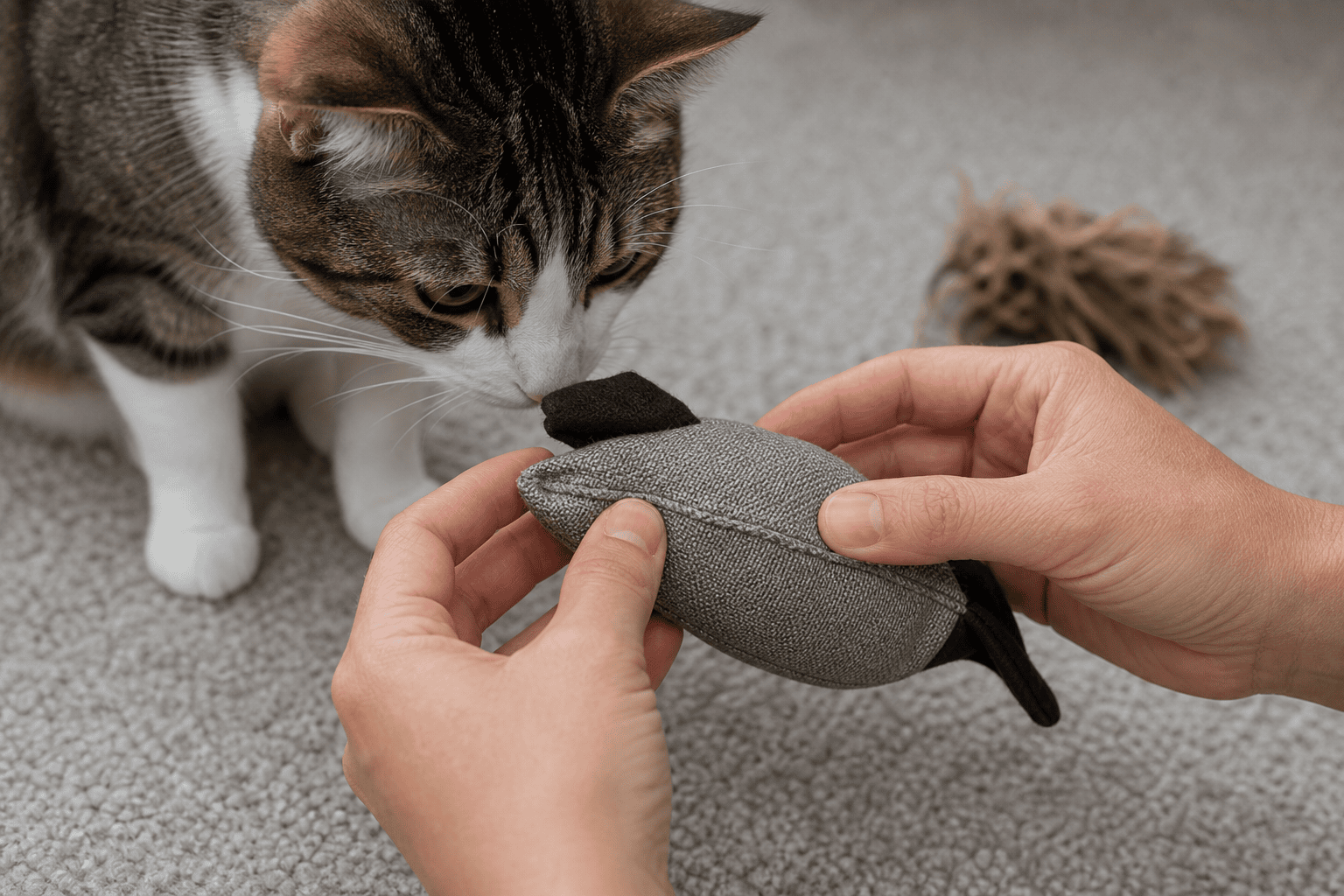
Good cat enrichment activities let an indoor cat hunt, chase, scratch, climb, sniff, solve small problems, and rest in secure places. The best routine is not a pile of random toys. It is a repeatable mix of short active play, food-finding work, vertical space, scent novelty, and safe solo options that match your cat’s energy and bite strength.
For cats that destroy ordinary toys, enrichment also has to include durability and inspection. A toy can be exciting and still be a bad fit if it sheds pieces, exposes wire, has loose bells, or turns into a swallowing hazard after one hard session. Use the ideas below to build variety without treating any toy as chew-proof or safe without supervision.
Start With the Instinct, Not the Toy
Most enrichment lists begin with products. A better starting point is the behavior you want to satisfy. Cats are built for short bursts: watching, stalking, chasing, pouncing, grabbing, biting, bunny-kicking, eating, grooming, and resting. If your routine gives them only one piece of that sequence, many cats get frustrated or bored quickly.
Build each day around a few behavior categories:
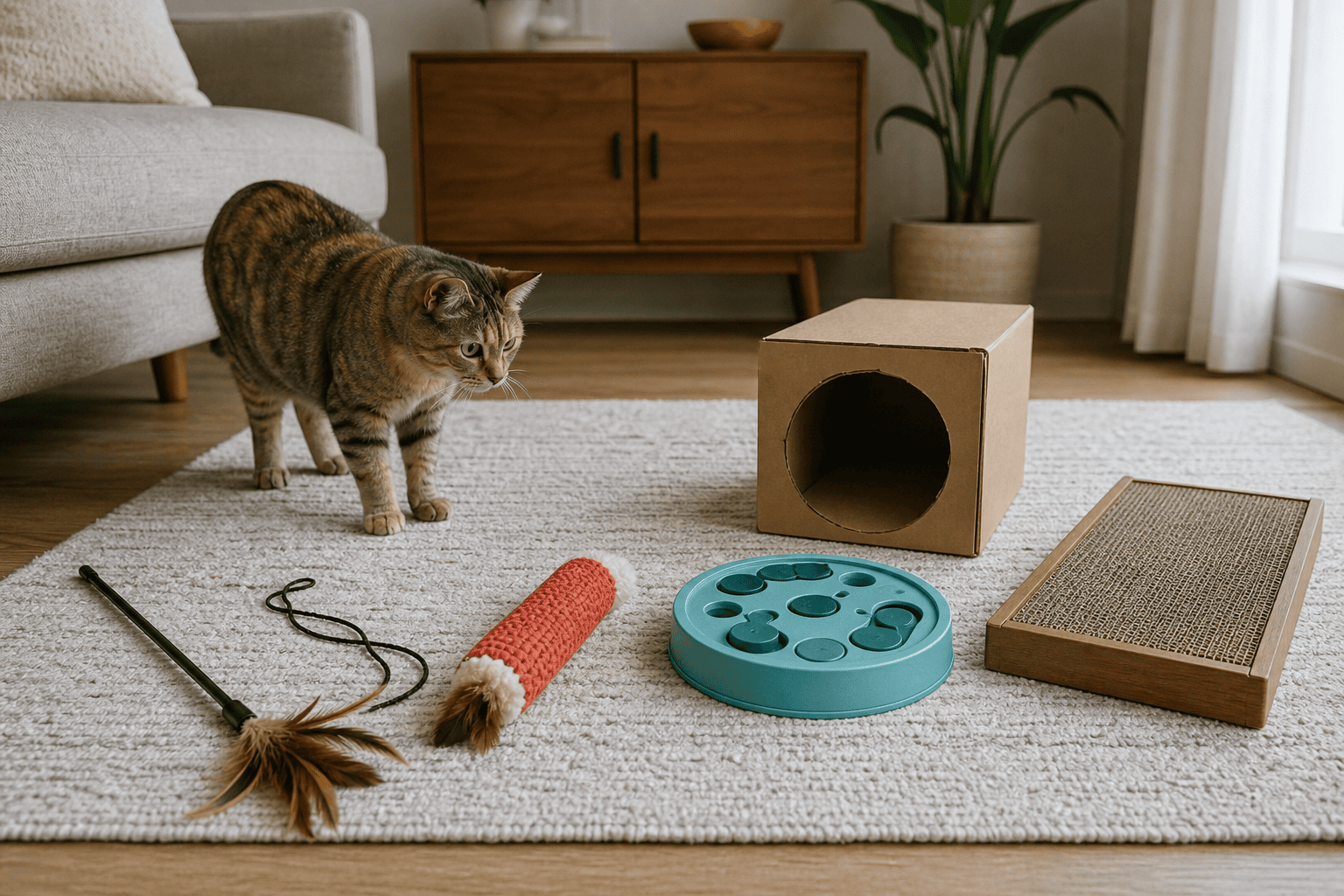
- Chase and pounce: wand toys, lure toys, rolling toys, and tossable soft toys.
- Grab, bite, and kick: larger fabric kickers or plush toys sized so the cat can hold them without reaching your hands.
- Forage and solve: puzzle feeders, treat hunts, snuffle-style mats made for pets, or small portions hidden around a room.
- Scratch and stretch: vertical and horizontal scratchers with stable bases.
- Climb and watch: cat trees, shelves, window perches, and safe high resting spots.
- Sniff and explore: cat-safe herbs, rotated toys, paper bags with handles removed, boxes, tunnels, and new textures.
This is why a cat may ignore a new toy but spend ten minutes hunting a kibble under a towel. Enrichment is about giving the cat a job that feels natural.
A 20-Minute Daily Enrichment Routine
You do not need to entertain your cat all day. Most households do better with predictable, short sessions. A practical routine for a high-energy indoor cat looks like this:
- Two minutes of setup: put away damaged toys, choose one chase toy, one bite-safe toy, and one food activity.
- Five to seven minutes of chase: move the wand or lure like prey. Let it hide behind furniture, pause, dart away, and get caught.
- Three minutes of capture: switch to a kicker or soft toy the cat can bite and rake without contacting your hand.
- Five minutes of food work: place part of a meal in a puzzle feeder, scatter a few pieces in safe hiding spots, or toss single kibbles down a hallway.
- Two minutes of cool-down: let the cat eat, groom, and settle near a perch or bed.
If your cat is older, nervous, recovering from illness, or has mobility limits, shorten the active portion and ask your veterinarian what level of activity is appropriate. Enrichment should leave the cat satisfied, not panting, limping, hiding, or irritated.
Best Cat Enrichment Activities by Need
Use this section as a menu. Pick two or three activities, then rotate them instead of introducing everything at once.
For bored indoor cats
Try a morning food hunt, a window perch with safe outdoor viewing, and one evening wand session. If your cat already has many toys but ignores them, read our guide to cat toys for bored cats; the issue is often rotation and play style, not the number of toys.
For rough players
Use bigger toys that keep teeth and claws away from your skin. Kicker toys, dense fabric toys, and supervised chase sessions are better than letting the cat wrestle hands or feet. Our cat kicker toy guide explains how to size a toy for cats that grab and rake hard.
For food-motivated cats
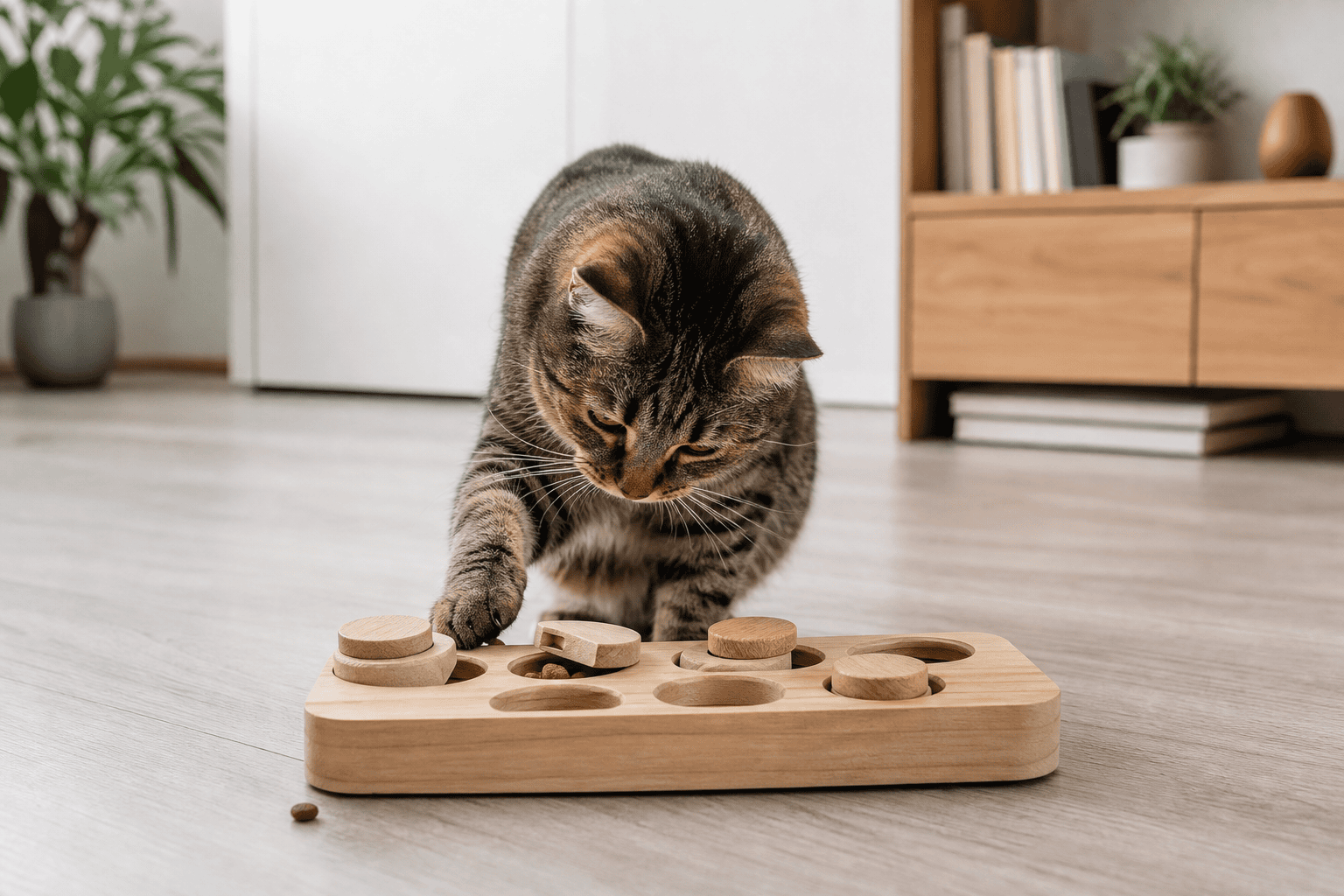
Replace one bowl meal with a puzzle feeder or scatter-feeding session. Start easy: put visible food in shallow wells or an open egg carton, then increase difficulty only after the cat understands the task. Food puzzles should not block access to enough calories, water, or prescribed diets.
For cats that need more exercise
Use short, frequent sessions. Toss a toy up stairs only if the stairs are safe and your cat moves comfortably. Drag a lure away from the cat rather than waving it in the cat’s face. Give real captures so the game has an ending.
For smart cats that get bored fast
Hide the same toy in a box, under tissue paper, behind a chair leg, or inside a tunnel. Novelty can come from the setup, not constant buying. Rotate toys out of sight for several days so they return with some freshness.