The best interactive cat toys for indoor cats are the toys that make your cat move, think, stalk, pounce, catch, bite, and then settle. For most homes, that means a small system: one owner-led chase toy, one physical capture toy, one puzzle or food toy, one safe solo toy, and a rotation plan that keeps the set fresh.
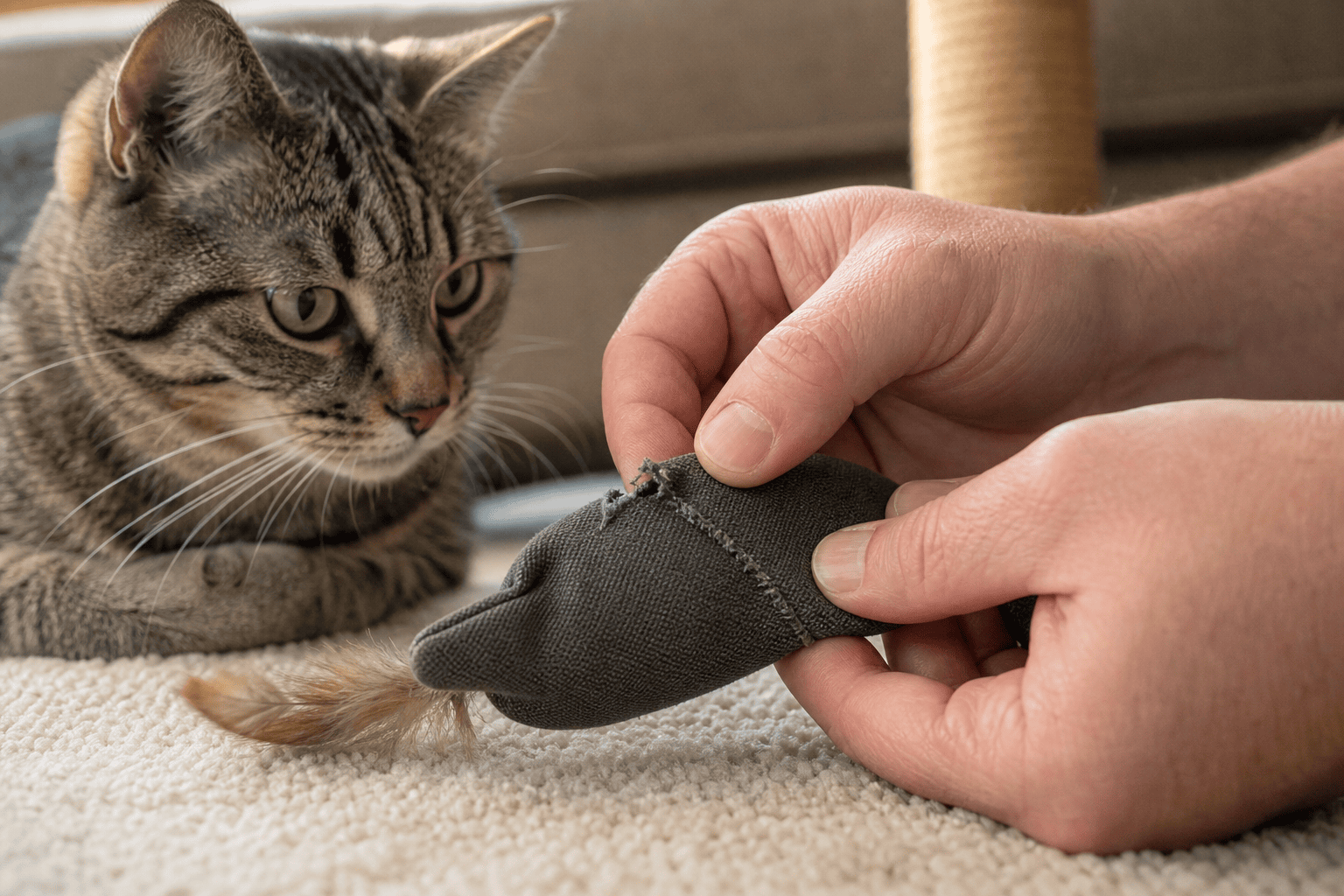
If your cat destroys ordinary toys, interactive play needs an extra layer of judgment. Skip the fantasy of an indestructible toy. Choose toys by behavior, supervise strings and moving parts, inspect seams after rough sessions, and retire anything with loose pieces before it becomes a swallowing hazard.
What interactive cat toys should do
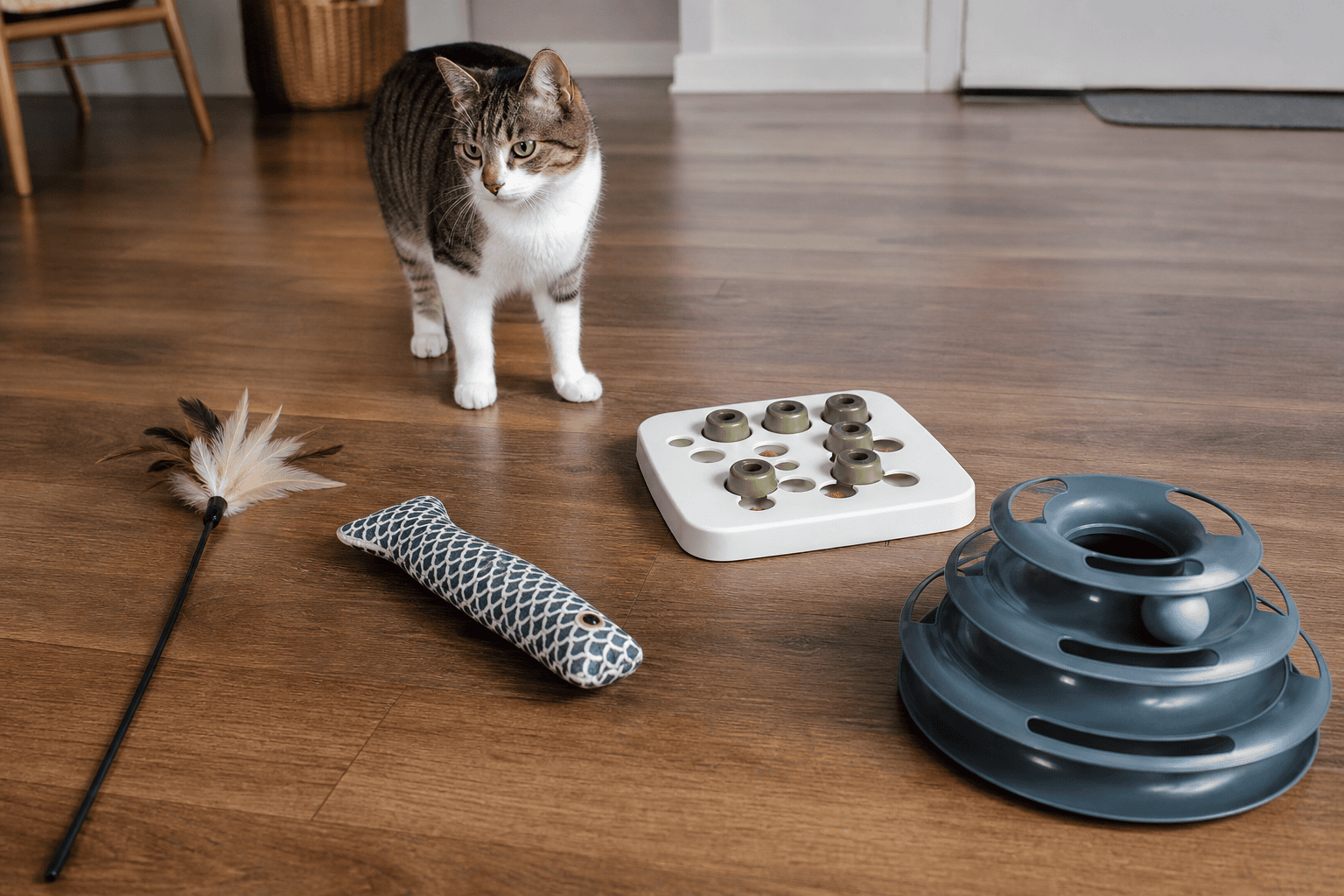
An interactive toy should give your indoor cat a job. A wand can create a chase. A kicker can give the cat something to grab and rake. A puzzle feeder can turn part of dinner into a foraging task. A track toy can add safe solo batting. A tunnel can create ambush points that make the same lure feel new.
This is where many ranking pages fall short. Shopping pages list electronic mice, laser toys, tunnels, and feather wands, but they often do not explain how those toys fit together. A good play setup is not a pile of gadgets. It is a routine that lets the cat start the hunt, make choices, catch something physical, and then wind down.
Cornell Feline Health Center describes toys as useful for exercise and cognitive enrichment because they encourage cats to stalk, pounce, and problem solve. That is the buying standard: pick the toy that supports a real behavior, not the toy with the loudest packaging.
The four toy roles most indoor cats need
Before buying another toy, decide which role is missing. Most indoor cats benefit from four categories.
- Chase toys: Wand toys, teaser rods, rolling balls, tunnels, and some motion toys that get your cat tracking movement and sprinting in short bursts.
- Capture toys: Kicker toys, larger plush prey toys, and rugged fabric toys that your cat can grab, bite, and bunny-kick after the chase.
- Puzzle toys: Treat balls, slow feeders, puzzle boards, snuffle-style mats, and hidden kibble searches that make food more mentally active.
- Solo toys: Track toys, sturdy balls, safe springs, scratchers, window perches, and timed electronic toys that can add interest while you are busy.
For a broader rotation system, Titan Claws has a companion guide to cat toys for enrichment. If boredom is already causing ankle attacks, night zoomies, or furniture trouble, start with cat toys for boredom and use this article to choose the interactive pieces.
Best choices by play style
Your cat’s best interactive toy depends on how the cat already tries to hunt. Watch one or two play sessions before you shop.
| What your cat does | Try this first | Watch for |
|---|---|---|
| Ambushes from behind furniture | Wand toy plus tunnel or box | Do not leave strings, ribbons, or elastic out after play. |
| Grabs toys and kicks hard | Long kicker or large fabric prey toy | Check seams, stuffing, tags, and stitched-on pieces. |
| Gets bored with bowls | Beginner puzzle feeder or scattered kibble search | Use measured food from the normal meal, not unlimited treats. |
| Bats objects alone | Track toy, larger ball, spring, or sturdy solo toy | Avoid tiny parts your cat can swallow or chew apart. |
| Needs motion while you work | Timed electronic toy or motion-activated toy | Inspect battery covers, wheels, cords, charging ports, and fabric covers. |
| Stares at birds or windows | Window perch, bird-safe viewing station, wand play nearby | Move play away if outdoor cats trigger stress or marking. |
Rough players usually need a stronger capture toy after the chase. The Titan Claws cat kicker toy guide explains sizing, seams, and failure points for cats that bite and rake with force.
How to run a better play session
A short session with a clear sequence usually beats a long session where the toy wiggles randomly until the cat loses interest. Think like prey: appear, hide, pause, move away, get caught, and then end calmly.
- Start with attention. Move the toy at the edge of your cat’s vision, not directly into the cat’s face.
- Let the cat stalk. Drag the lure behind a chair leg, under paper, around a corner, or through a tunnel.
- Create short chases. Use quick bursts with pauses. Many cats prefer several small sprints over one exhausting run.
- Offer a real catch. Let your cat pin the wand lure briefly, then trade to a kicker or plush toy if teeth and back claws come out.
- Finish with food or calm. Use a small part of dinner in a puzzle feeder, a treat, or a quiet reset so the session does not stop at peak arousal.
The AAFP and ISFM feline environmental needs guidelines recommend opportunities for play and predatory behavior, including toys and feeding activities that let cats express parts of the hunting sequence. That supports a practical rule: do not make your cat chase forever without a capture.