The best cat toys for bored cats are not one magic gadget. They are a small rotation of toys that let your cat stalk, chase, pounce, wrestle, scratch, forage, and then rest. For most indoor cats, boredom improves when play feels more like a hunt and less like a pile of random toys left on the floor.
If your cat is knocking things down, ambushing ankles, shredding weak plush toys, over-grooming, begging constantly, or sleeping all day and then exploding at night, the toy problem may really be a routine problem. Start with two short interactive sessions per day, add one independent toy that fits your cat’s play style, and inspect everything your cat can chew.
This guide is built for owners of bored indoor cats, especially cats that play rough and destroy ordinary toys. It covers which toy types to use, how to rotate them, when automatic toys help, and when a bored-cat problem needs more than another shopping cart.
What Bored Cats Actually Need From Toys
Cats are not built to entertain themselves with the same object forever. The 2013 AAFP and ISFM feline environmental needs guidelines describe play and predatory behavior as a core environmental need. In plain owner terms, a cat needs chances to notice, stalk, chase, catch, bite, kick, eat, groom, and sleep.
That does not mean every cat needs a complicated electronic toy. It means each toy should have a job. A wand starts the chase. A kicker gives the bite-and-bunny-kick moment. A puzzle feeder makes food feel earned. A scratcher lets the cat stretch, mark, and reset. A tunnel or box creates hiding and ambush angles.
The Cornell Feline Health Center also points out that toys can encourage exercise and cognitive enrichment by motivating cats to stalk, pounce, and problem-solve. Cornell specifically recommends rotating toys to help prevent boredom, which is one of the cheapest upgrades you can make.
The Best Toy Types for Bored Cats
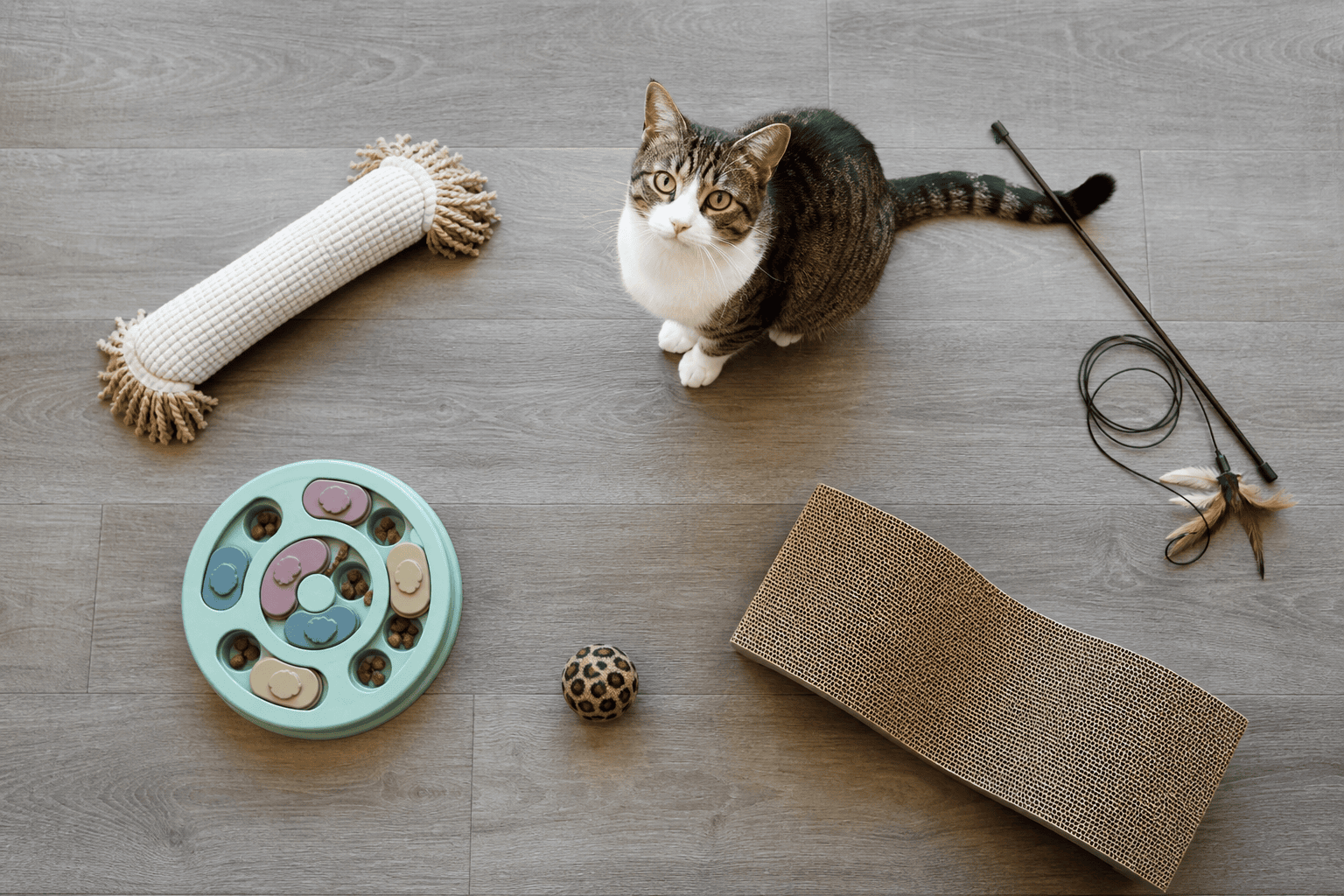
Instead of buying five toys that all do the same thing, build a mix. A bored cat usually needs variety across movement, texture, difficulty, and owner involvement.
1. Wand Toys for Chase and Timing
Wand toys are often the fastest way to wake up a bored cat because the owner controls the prey movement. Drag the lure behind a chair leg, pause behind a corner, let it twitch, then move away. Avoid waving it in the cat’s face like a metronome. Prey tries to escape; it does not hover over the mouth.
For rough players, put wand toys away after the session. String, ribbon, feathers, and elastic parts should not become unsupervised chew toys. If your cat loves this style, the Titan Claws guide to choosing and using a wand cat toy safely goes deeper on lures, storage, and inspection.
2. Kicker Toys for Wrestling
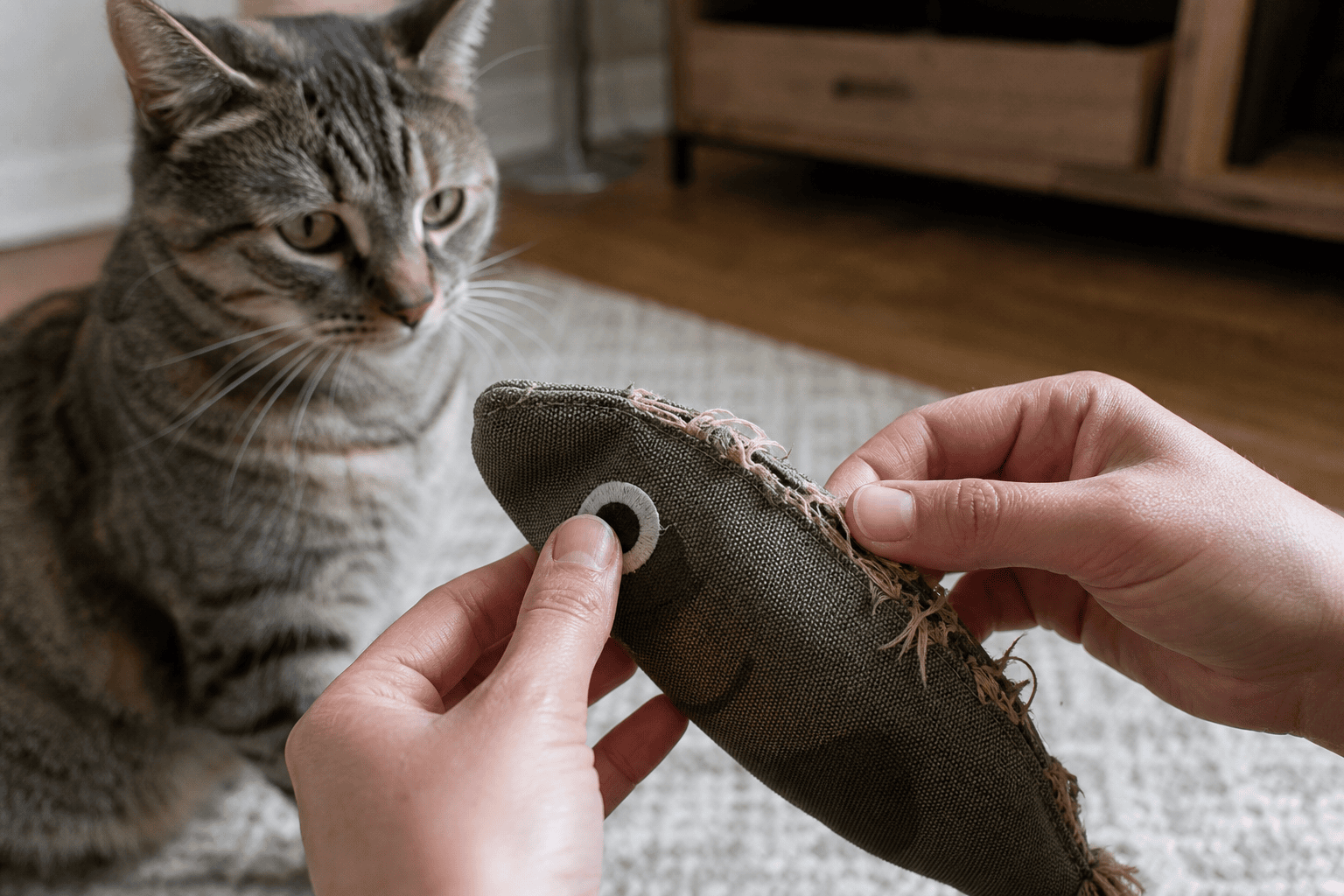
A bored cat that grabs arms or attacks blankets may need a legal wrestling target. A good kicker toy is long enough for front paws and back feet, firm enough to resist collapsing, and stitched well enough to handle biting and kicking. This is the toy type to offer when your cat wants contact and force.
Choose thicker fabric, reinforced seams, and minimal add-ons. Skip glued-on eyes, bells, thin tails, and feather trim for cats that chew hard. For more detail, see the Titan Claws cat kicker toy guide.
3. Puzzle Toys and Food Toys for Foraging
Food puzzles help bored cats use their brain when you cannot run another wand session. Start easy: visible kibble in a shallow tray, a rolling treat ball with a wide opening, or a simple puzzle feeder. If the first puzzle is too hard, many cats decide the object is pointless.
Use part of the normal meal rather than adding unlimited treats. The Titan Claws guide to puzzle cat toys explains how to introduce difficulty, clean wet-food puzzles, and inspect hard plastic for cracks or loose pieces.
4. Chase Toys for Short Bursts
Springs, balls, crinkle toys, and lightweight mice can be excellent for cats that like batting and sprinting. The problem is size and durability. A toy that is fun to smack across the floor may be too small for a cat that carries, chews, or tries to swallow pieces.
Choose chase toys that are too large to swallow, easy to find under furniture, and simple enough to inspect. If your cat crushes plastic springs or peels fabric mice apart, move those toys into supervised sessions or retire them.
5. Scratchers, Tunnels, and Boxes for Environmental Play
Not every boredom fix has to be a toy in the narrow sense. A horizontal scratcher, vertical post, tunnel, paper bag with handles removed, or sturdy cardboard box can change how a cat uses a room. These objects create routes, hiding places, scent-marking spots, and ambush points.
This matters because some bored cats ignore loose toys but come alive when the room has structure. Put a scratcher near a window, a tunnel beside a play path, or a box near the end of a wand chase so the cat has somewhere to disappear and spring from.
A Simple Rotation That Works Better Than a Toy Pile
A toy pile becomes furniture. Rotation makes old toys feel new and prevents the strongest toy from being chewed to failure because it is always available.
Try this one-week bored-cat rotation:
- Daily interactive toy: one wand or chase session in the morning and one in the evening.
- Daily independent toy: one puzzle, track toy, sturdy kicker, or scratcher setup left out when appropriate.
- Two rest toys: safe plush, kicker, or scratcher options your cat can access without strings or loose parts.
- One novelty change: move a tunnel, open a box, swap rooms, or add a small amount of catnip or silvervine if your cat responds to it.
- One inspection day: check every active toy for cracks, loose seams, exposed stuffing, frayed cords, and missing parts.
Keep three to five active toys available and store the rest. After three or four days, swap one or two items. If a toy only comes out for a high-energy play session, put it away while it still feels valuable.
How to Run a Better Play Session
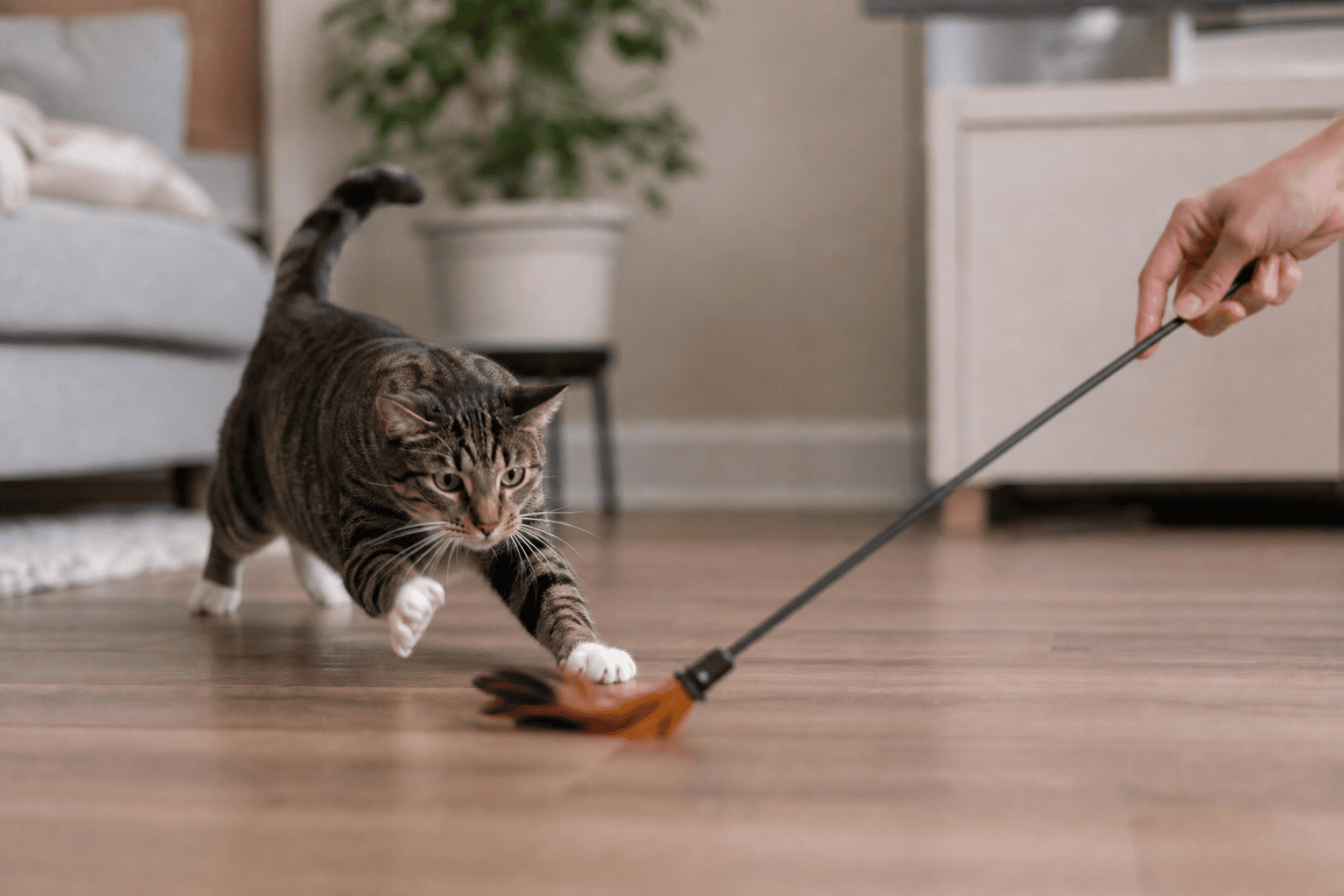
Many bored cats are not rejecting toys. They are rejecting boring movement. The same wand toy can fail or succeed depending on how it moves.
- Start low and slow. Move the lure along the floor, around furniture, or partly behind a box.
- Use pauses. Let your cat watch, calculate, and creep closer.
- Vary the prey. Some cats like skittering bugs, some like fluttering birds, and some like a slow injured mouse pattern.
- Let the cat catch it. Constant failure creates frustration. Build in real catches.
- Finish with a bite or food moment. Offer a kicker, a few pieces of measured food, or dinner after the final catch.
- Stop before collapse. Panting, hiding, flattened ears, or sudden irritation means the session is too intense or too long.
Five focused minutes can beat thirty minutes of lazy toy waving. For a high-drive cat, two short sessions every day are usually more useful than one long weekend play marathon.