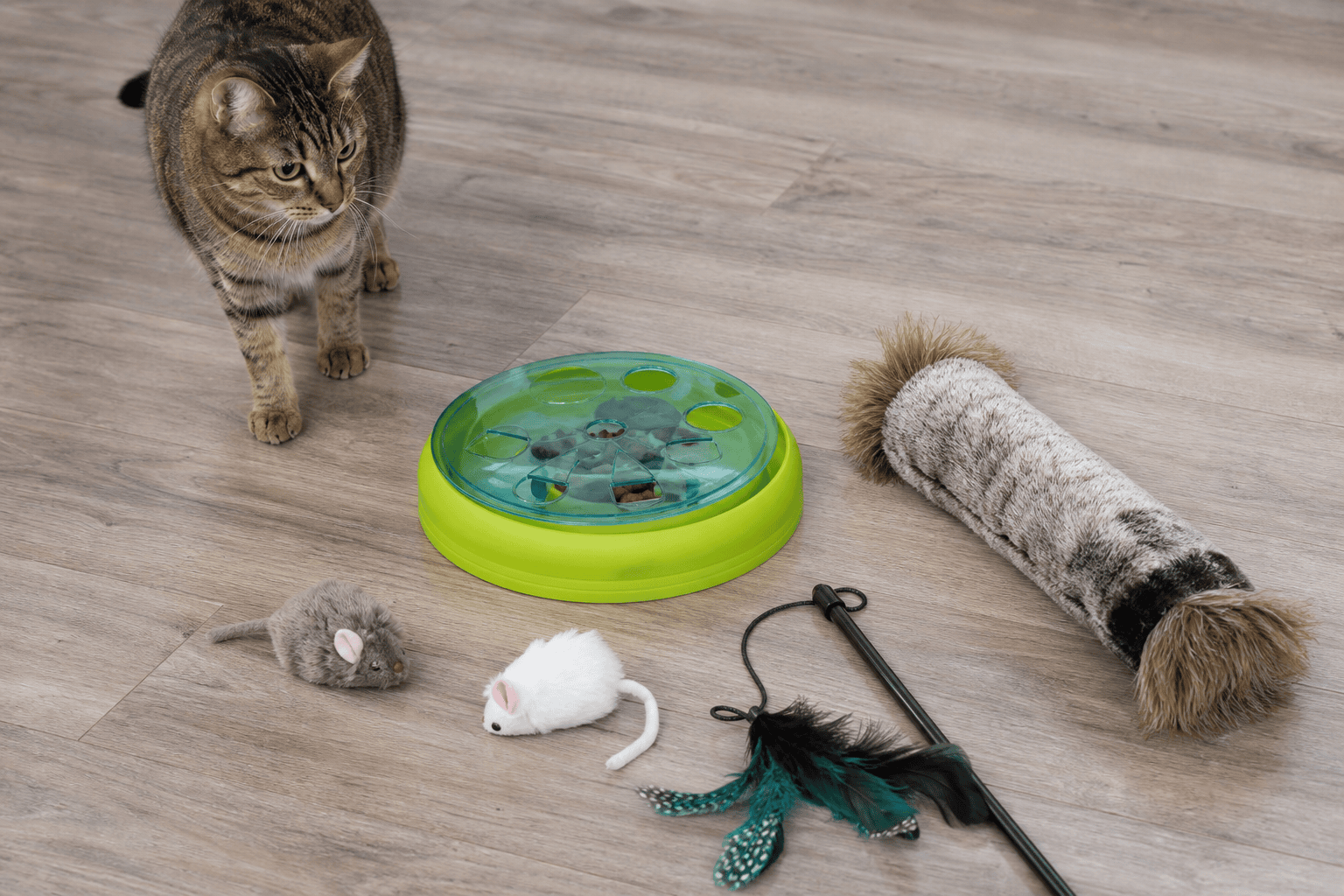
Good cat toys for hunting are not just toys that move. They help an indoor cat run through a safer version of the prey sequence: watch, stalk, chase, pounce, grab, bite, kick, and sometimes eat a treat afterward. The best setup usually combines a wand or teaser for active chase, a kicker or plush prey toy for the catch, and a puzzle or food toy for the final reward.
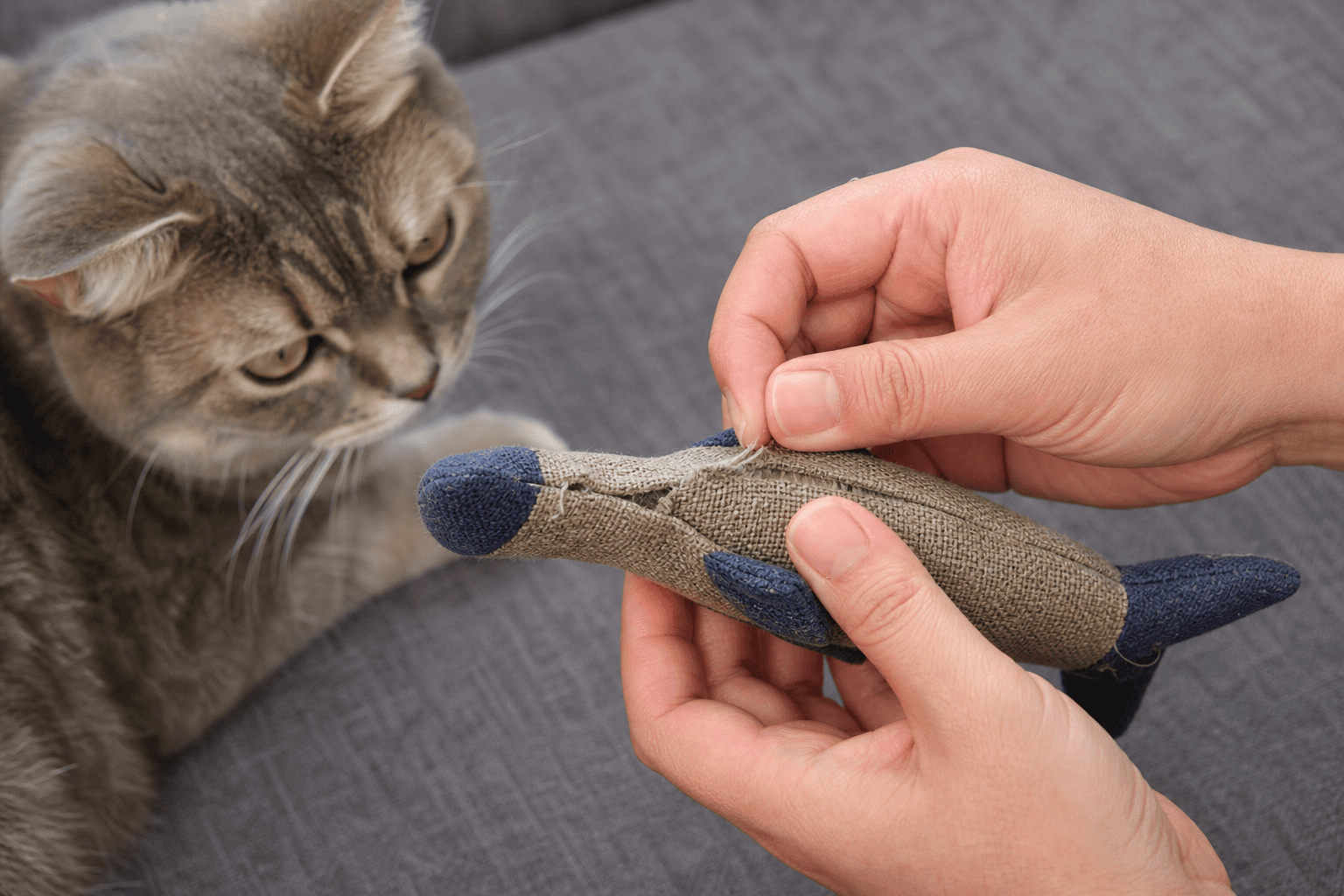
For Titan Claws readers, the durability question matters too. A cat with a strong hunting drive may hit toys with full claws, teeth, and bunny kicks. That does not mean you need to chase an impossible “indestructible” label. It means choosing toys that match the way your cat attacks, supervising higher-risk play, and replacing toys before seams, strings, bells, or stuffing become hazards.
What hunting-style play should actually do
A hunting toy should give your cat a job. It should move away from the cat like prey, pause long enough for stalking, then offer a clean capture. That capture matters. VCA Animal Hospitals notes that predatory games should use toys the cat can eventually catch and “kill,” not human hands or feet. The AAFP and ISFM environmental needs guidelines also recommend play that mimics flying or ground prey, lets the cat capture the toy, and uses toy rotation to prevent boredom.
That is where many generic toy lists fall short. They name feather wands, toy mice, lasers, and electronic toys, but they rarely explain how to combine them into a routine that satisfies a cat instead of winding the cat up. A laser that never turns into a physical catch can frustrate some cats. A wand toy left on the floor can become a string-ingestion risk. A plush mouse may be perfect for one cat and too small for another cat that swallows loose parts.
The best cat toys for hunting by prey style
Start by watching what your cat naturally targets. A cat that launches upward at feathers wants different play than a cat that crouches behind furniture and ambushes ground movement.
- Bird-style hunters: Use a supervised wand cat toy with controlled swoops, short flights, and landings. Avoid endless overhead circles that make the cat jump awkwardly or miss every time.
- Mouse-style hunters: Drag a lure along baseboards, around chair legs, or under the edge of a blanket. Let it freeze, twitch, and escape in short bursts.
- Insect-style hunters: Try springy wire toys, small crinkle balls, or quick skittering movements. Our Cat Dancer toy guide covers that style in more detail.
- Wrestlers and biters: Add a larger cat kicker toy so the cat has something long enough to grab with the front paws and kick with the back legs.
- Food-motivated hunters: Use puzzle cat toys, treat balls, or scattered kibble games so the cat has to search, paw, and work for part of the meal.
A simple hunting routine for indoor cats
You do not need a complicated training plan. Use a short, repeatable routine that lets the cat succeed.
- Warm up with stalking. Move the toy slowly at the edge of your cat’s attention. Let your cat watch and plan before you ask for speed.
- Create one clean chase. Move the lure away from the cat, not into the cat’s face. Prey generally flees; it does not attack head-on.
- Let the cat catch it. Every few passes, make the toy available. Let your cat pin it, bite it, or kick it.
- Switch to a bite-safe object. If the cat grabs the wand lure hard, trade to a kicker or plush prey toy before teeth reach string, wire, or feathers.
- End with food or calm. A small treat, part of dinner in a puzzle feeder, or a quiet grooming session can help finish the hunt instead of stopping at peak arousal.
Many cats do well with several short play sessions instead of one long marathon. VCA notes that cats often have short bursts of play followed by rest, and that morning and evening often match natural active periods. If your cat only plays hard for five minutes, that can still be a real session.