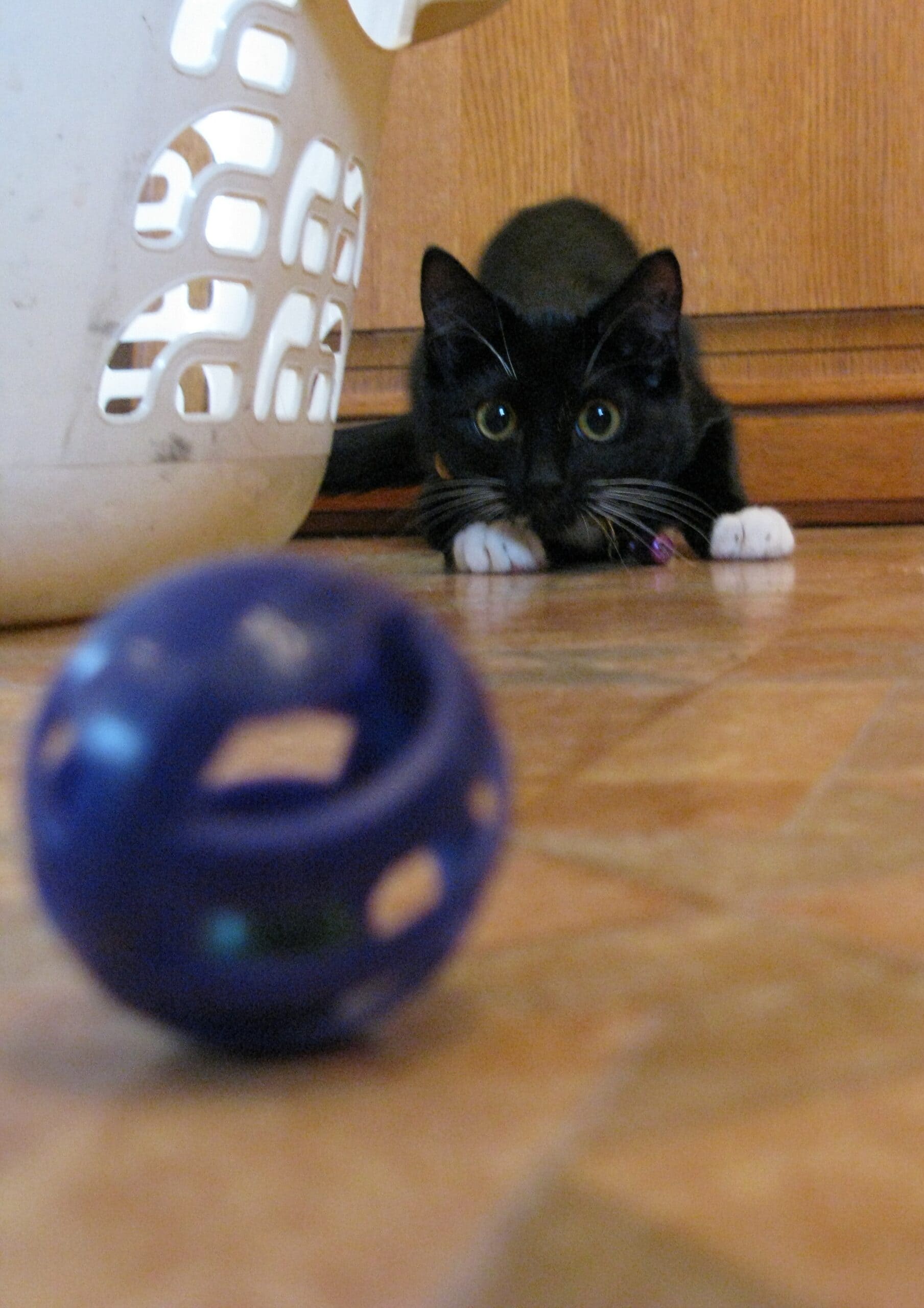
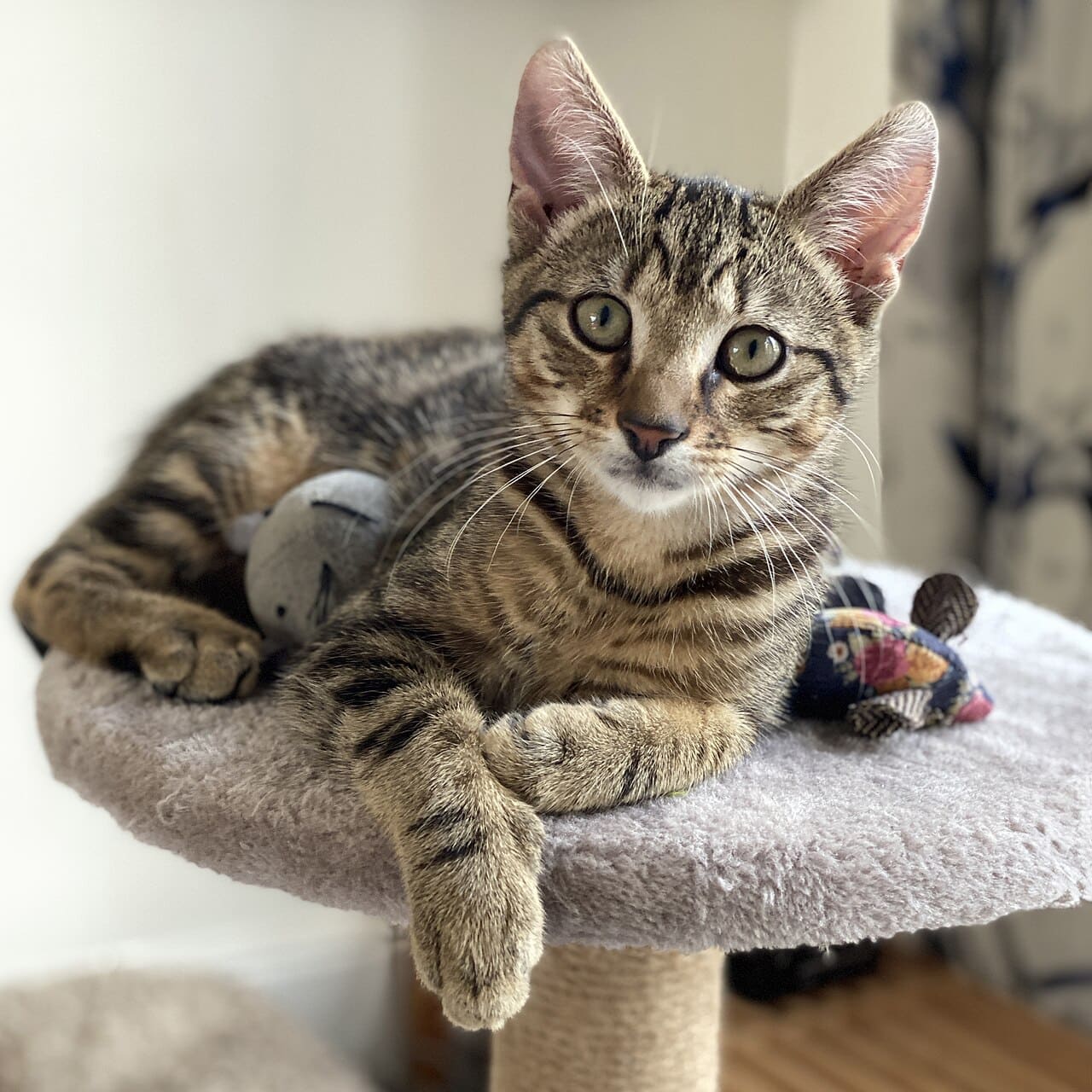
Cat toys for enrichment should do more than keep a cat busy for a few minutes. The best toys help an indoor cat stalk, chase, pounce, bite, rake, solve problems, scratch, sniff, and rest in a rhythm that feels natural. For many cats, that means using a small rotation of toy types instead of leaving one overflowing toy bin on the floor all week.
If your cat destroys ordinary toys, enrichment also needs a safety filter. Choose toys that match how your cat actually plays, inspect them after hard sessions, and separate fragile chase lures from tougher toys your cat is allowed to grab. A good enrichment setup is not an indestructible promise. It is a routine that gives your cat a satisfying hunt while reducing loose strings, swallowed stuffing, cracked plastic, and boredom.
What enrichment toys are supposed to do
Enrichment means giving a cat useful outlets for normal cat behavior. The AAFP and ISFM feline environmental needs guidelines describe play and predatory behavior as one of the core pillars of a healthy feline environment. Their guidance includes owner-led play, toys cats can manipulate, feeding devices that make cats work for food, and toy rotation to prevent habituation.
That matters because a cat toy is not just an object. It is a job. A wand gives distance and moving prey. A kicker gives the bite-and-rake finish. A puzzle feeder turns part of a meal into problem-solving. A scratcher lets claws, shoulders, and scent marking work together. A tunnel or box creates hiding and ambush space. A window perch or safe video gives visual stimulation when the cat is not in a high-energy mood.
The mistake many owners make is buying ten versions of the same toy. If every toy is a feather lure, the cat gets chase but not a safe catch. If every toy is a plush mouse, the cat may get a bite target but not enough movement. A stronger enrichment plan covers several behaviors across the day.
The five-toy enrichment rotation
Start with five categories. You do not need expensive gadgets in every category, and you do not need all five available at once. Keep two or three out, put the rest away, and swap them before they become background clutter.
- Chase toy: A wand, rolling ball, moving mouse, or fabric lure that gets your cat tracking and sprinting.
- Capture toy: A kicker, durable plush, or tough fabric toy your cat can grip, bite, and rake after the chase.
- Food puzzle: A puzzle feeder, treat ball, snuffle mat, or simple DIY feeder that makes food more active.
- Scratch and stretch station: A sturdy vertical post, horizontal scratcher, sisal surface, or cardboard scratch pad.
- Sensory or environment toy: A tunnel, box, perch, bird-viewing window, cat-safe scent toy, or crinkle object.
This mix closes the biggest gap in many product roundups: enrichment is not a ranking list. It is a sequence. A cat that stalks a wand for five minutes should also get a physical toy to catch. A cat that inhales meals may need a food puzzle more than another electronic mouse. A cat that attacks ankles in the evening may need predictable owner-led play before the household winds down.
Match toys to your cat’s play style
Watch one normal play session and label your cat’s strongest habit. Most cats use more than one style, but one or two usually dominate.
- Stalkers crouch, stare, wiggle, and wait. They often like hidden-motion toys, tunnels, boxes, and wand lures that disappear behind furniture.
- Sprinters need open lanes, rolling toys, fetch games, and short chase bursts. They may ignore slow puzzles until after exercise.
- Wrestlers grab with front paws and kick with back legs. They need larger capture toys and should not be asked to wrestle thin strings or fragile feathers.
- Chewers focus on seams, tags, elastic, and corners. They need tougher materials, closer inspection, and fewer plush electronics.
- Problem-solvers paw, pry, tip, and repeat. They are good candidates for puzzle feeders and treat searches.
- Watchers may seem uninterested, but watching can be part of hunting. Use slower movement, hiding places, and short sessions instead of forcing frantic play.
For rough players, build the session around a handoff: use the wand or moving toy to create the chase, then offer a tougher kicker or fabric toy for the catch. Titan Claws’ guide to unbreakable cat toys for aggressive chewers is useful here because it focuses on failure points, size, and supervision instead of treating every toy as equally safe.