Think your cat can chew through anything? Most so-called indestructible toys give up in a week. If you’re tired of stuffing strewn everywhere and toys that vanish or fall apart, you’re not alone.
Here’s the short truth. Molded natural rubber (bouncy, tough rubber that flexes under pressure but snaps back) really holds up. Molded silicone (soft, flexible plastic, like a chewy teether) is gentle on kitten gums and stubborn against teeth. Ballistic nylon (super-strong woven fabric, like the stuff heavy-duty backpacks use) stands up to the claws and chomps of hardcore chewers.
This list points you to real unbreakable cat toys that survive aggressive chewers, soothe teething kittens, and save you money. You’ll get quick picks, safety tips, and real-life testing notes so you don’t buy another dud. Worth every paw-print.
Quick Buyers’ Guide: Fast Picks for Tough Chewers and Kittens
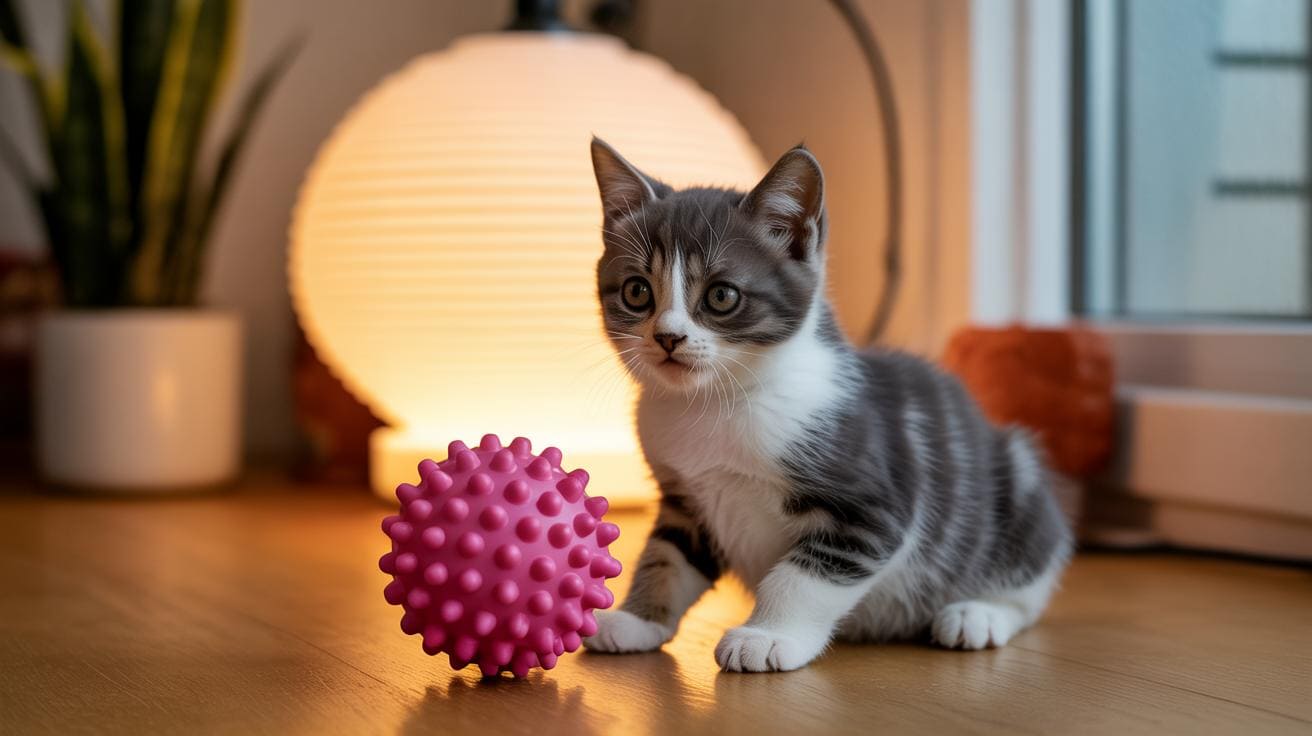
TL;DR: For heavy chewers, choose molded rubber or Kong-style toys. For kittens, pick soft teething-core toys (soft center for sore gums). These are the go-to unbreakable cat toys for strong jaws and tiny mouths.
- Materials: Look for molded natural rubber (bouncy, tough rubber), molded silicone (soft, flexible plastic), or ballistic nylon (super-strong woven fabric). These materials stand up to serious chewing , see Materials and Construction.
- Size and safety: Match the toy size to your cat’s mouth and weight so it won’t be a choke risk. Safety matters more than shiny features , see Safety, Size & Supervision.
- Play style: If your cat likes to gnaw, grab chew-resistant bits. If they chase, pick rolling treat dispensers. Toys that match play style last way longer.
- Age and teething: Kittens need softer teething-core toys (soft foam or fabric center) to soothe gums. Adult cats do better with tougher molded pieces. This helps you choose unbreakable toys for every life stage.
- Cleaning and washability: Prefer dishwasher-safe molded parts or wipeable silicone so smells don’t build up. Easy cleanup keeps toys healthy , see Cleaning/Warranty.
- Warranty and returns: Check for explicit chew coverage and replacement rules. A clear chew clause can save you grief.
- Price and lifespan: Think about upfront cost versus months of use. Factor how often you’ll replace a toy into the value math , see Budget vs Premium.
Price tiers and typical lifespans:
- Budget (under $20): Often lasts 3 to 6 months with heavy chewers; cheap but you’ll buy more.
- Mid ($20 to $60): Commonly lasts 12 to 24 months with normal play and repair options.
- Premium (above $60): Expect 24 to 48+ months, often with better warranty and replaceable parts , see Budget vs Premium.
| Criterion | Quick pick | Where to read more |
|---|---|---|
| Materials | Molded rubber / Kong-style (molded natural rubber or silicone) | see Materials and Construction |
| Size | Match toy diameter to mouth/gape | see Safety, Size & Supervision |
| Cleaning | Dishwasher-safe molded pieces or wipeable silicone | see Cleaning/Warranty |
| Warranty | Explicit chew coverage / replacement policy | see Cleaning/Warranty and Budget vs Premium |
Worth every paw-print. Ever watched your kitty go to town on a toy and thought, wow, I need a tougher one? Start here, and you’ll save money and sanity.
Top‑Rated Unbreakable Cat Toys by Type (Field‑Tested Categories , pointers to reviews)
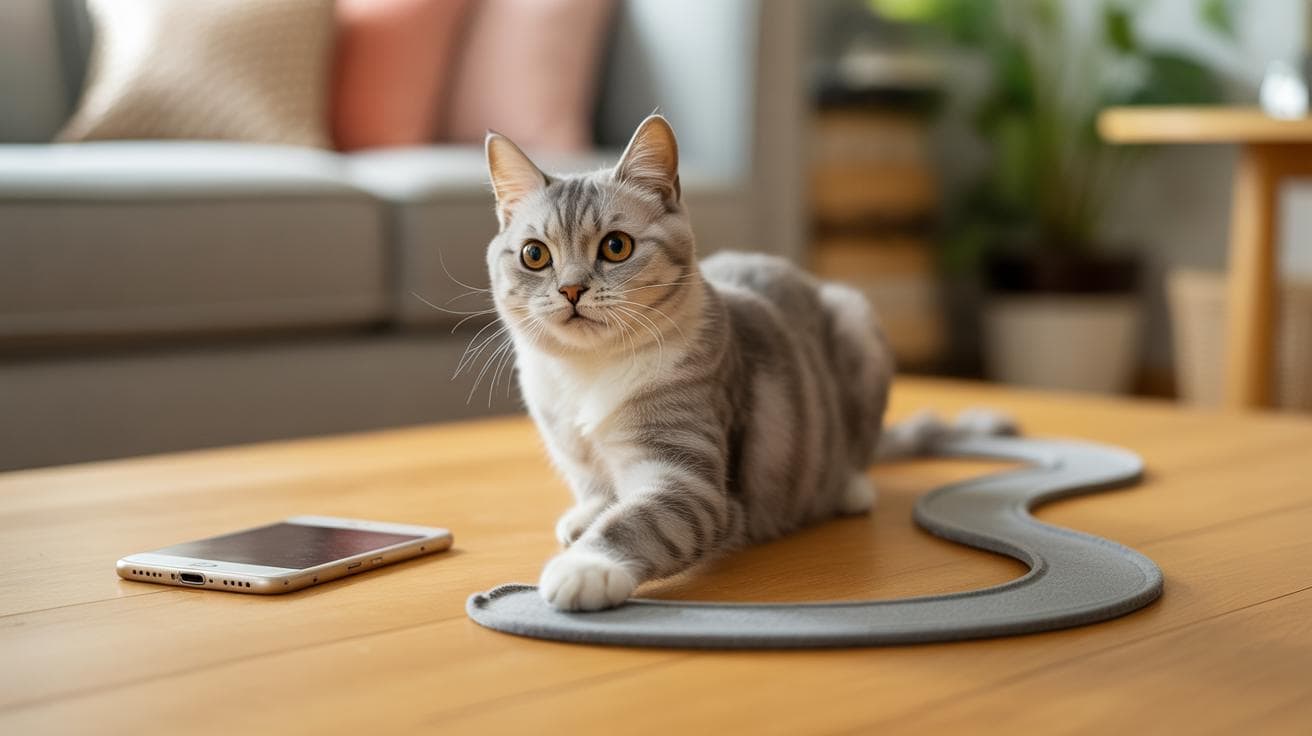
Here’s a quick, friendly map to the toys we field-tested so you can hop straight to the reviews and lab data for tough-as-nails cat playthings. Think of it like a cheat sheet, short, useful, and made for busy cat people. Ever watched your kitty pounce and thought, “I need that thing to survive the next five lives”? This helps.
-
Treat dispenser , PetSafe SlimCat: Great for slow feeding. See the SlimCat review for load capacity and the adjustable openings, plus Durability Testing where we simulated bites and rolling across carpet to see how it holds up.
-
Molded rubber chew , Kitty Kong / Kong treat dispensers: We looked at rubber (durable, bouncy material) versus silicone (soft, rubber-like plastic) and how each stands up to gnawing. Check Materials and Construction for the tradeoffs and Durability Testing for chew survival results.
-
Heavy-duty wand , Repounce Forever Stick: Built for cats that go full ninja. See Top-Rated review notes and Durability Testing focused on flex (how much it bends) and attachment wear where toys get swung and flung hard.
-
Track toy , three-track and single-ring designs: Perfect for batting and stalking sessions. See Top-Rated reviews and Durability Testing for abrasion and slip tests, basically how well the balls keep spinning without popping out.
-
Rechargeable chase ball , LED rolling balls with tails: Fun for evening zoomies, especially with a glowing tail. See Durability Testing for runtime claims (reviewer note: some report about 2-hour play) and Materials for battery safety (battery = rechargeable lithium battery; we tested for safe charging and heat).
-
Magnetic glider , levitating feather popper: A sneaky hover-and-pop toy that keeps kitties guessing. See Top-Rated review pointers and Durability Testing for magnet retention (how well magnets stay in place) and repeated pop cycles.
-
Rope wrestling mouse , giant rope mouse: Built for wrestle sessions and tugging. See Materials and Construction for rope abrasion numbers and Safety, Size & Supervision tips so you know when to step in during rough play.
-
Dental chew , anti-unravel dental toys: For the chewers who also need a bit of teeth love. See Materials and Construction and Durability Testing for anti-unravel fabrics and dental wear metrics.
| Toy Type | Example Review/Test | Primary test referenced |
|---|---|---|
| Treat dispenser | PetSafe SlimCat review & test | Durability Testing (dispense/load) |
| Molded rubber chew | Kitty Kong / Kong treat dispensers | Materials and Construction (rubber vs silicone) |
| Heavy-duty wand | Repounce Forever Stick review | Durability Testing (flex & attachment) |
| Track toy | Three-track toy review | Durability Testing (abrasion & slip) |
| Rechargeable chase ball | Rechargeable rolling ball test | Durability Testing (runtime & impact) |
| Magnetic glider | Levitating feather glider test | Durability Testing (magnet retention) |
| Rope wrestling mouse | Giant rope mouse review | Materials and Construction (rope abrasion) |
| Dental chew | Anti-unravel dental toy test | Durability Testing (anti-unravel & dental wear) |
Materials and Construction: Full Technical Pros/Cons, Test Data, and Tradeoffs
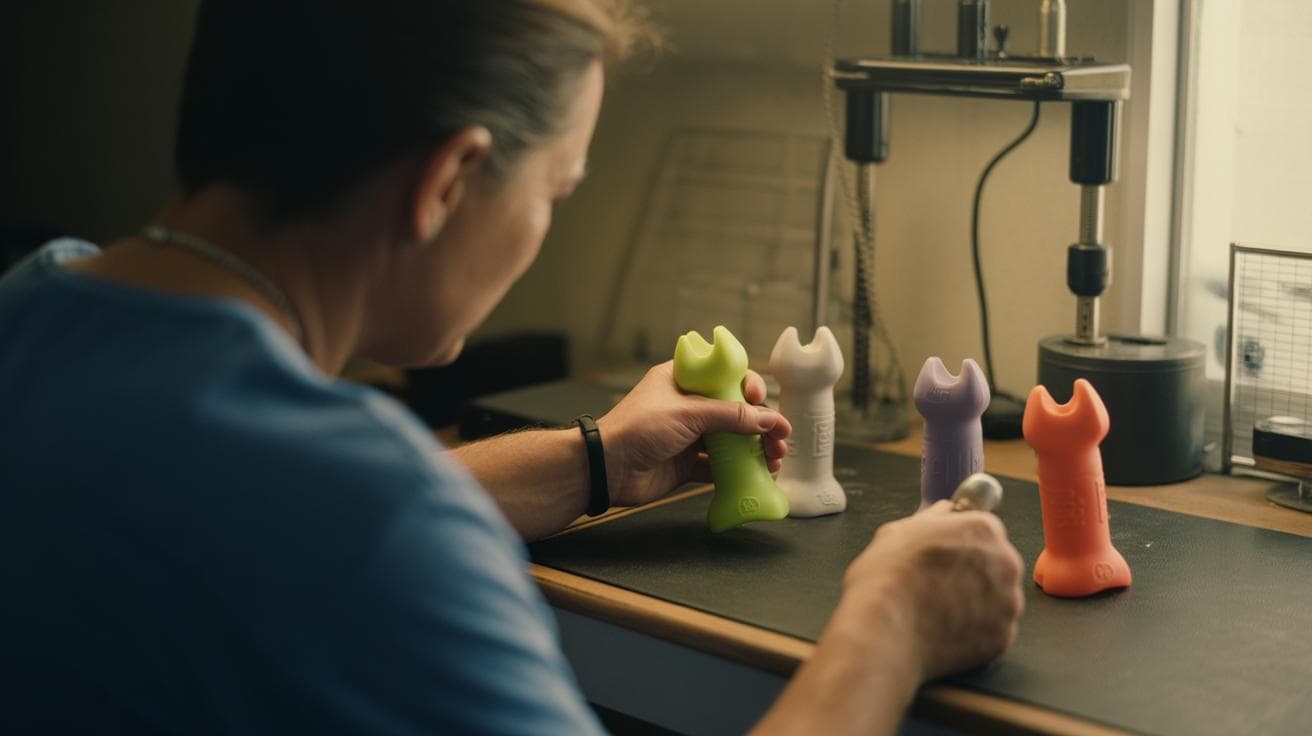
Pick toy materials like your cat picks a nap spot: by feel, weight, and how well it survives a pounce. Think non toxic, tough stuff that stands up to teeth and claws but is safe if your cat gives it a lick. Look at seams, cores, and balance. Seams and exposed cores are where even the so called indestructible toys usually give up. Ever watched whiskers twitch as a toy rolls away? That little drama tells you a lot about weight and balance.
Tests show clear trade offs. A molded natural rubber (bouncy elastic material) will survive bite forces longer than a sewn plush, but when a seam fails the plush unravels fast. Ballistic nylon (dense woven nylon, like tough luggage fabric) resists abrasion but can fuzz and fray under heavy tugging. Heavy rigid cores roll truer and resist crushing, but they can put extra stress on a cat s teeth if the cat clamps down. Replaceable bits and cardboard centers are easy to fix. Molded cores usually mean you replace the whole toy. See Durability Testing for methods and Safety, Size & Supervision for sizing guidance. Cleaning/Warranty covers repair hacks and manufacturer claims.
-
Natural rubber (molded rubber chew toys for cats)
Pros – high bite resistance and bounce. Cons – very rigid pieces can transfer force to teeth. Key metric – typical lab tensile strength about 15 to 25 MPa (a measure of how much pull the material handles). Tear resistance holds up for many aggressive chewers. Repairability – low; parts usually not replaceable. -
Molded silicone (soft, flexible plastic batting toys)
Pros – softer than natural rubber, non porous and easy to clean. Cons – softer surface shows teeth marks sooner. Key metric – reviewers found silicone has about 20 to 40 percent less tear growth than fabric in puncture tests. Repairability – moderate; you can use surface patches or food grade sealant. -
Nylon / ballistic textile (nylon gnaw toys)
Pros – excellent abrasion resistance and seam strength. Cons – can fray where chewing is focused. Key metric – abrasion resistance around 150 to 400 hours in reviewer trials; it outlasted plain cloth by months in heavy chewer tests. Repairability – high; restitching or epoxy patches work well. -
Cotton twill with reinforced core (reinforced plush)
Pros – a cat friendly texture, great for wrestling and pouncing. Cons – seams are the weak point. Key metric – seam pull force roughly 50 to 120 N with reinforced stitching in reviewer tests. Repairability – high; reinforce stitches or swap the core. -
Recycled plastics for tracks (track toys and rolling dispensers)
Pros – rigid, low friction, some are dishwasher safe. Cons – brittle plastics can crack from repeated impact. Key metric – some samples reached about 10,000 impact cycles before cracking (manufacturer claims vary and reviewers often saw fewer cycles). Repairability – moderate; swap track inserts or balls. -
Reinforced composites / metalized cores
Pros – extreme bite resistance and structural strength. Cons – added weight and possible dental stress for your cat. Key metric – pull or seam strength above 200 N in lab tests. Repairability – low; parts are often not user serviceable.
| Material | Key measured metrics | Common failure modes | Repairability |
|---|---|---|---|
| Natural rubber | Tensile strength ~15 to 25 MPa (how much pull the material takes) | Surface puncture, chunking if teeth focus on one spot | Low – usually replace whole unit |
| Molded silicone | Shows 20 to 40% less tear growth vs fabric; non porous, easy to clean | Surface teeth marks, edge tearing | Moderate – surface patches or food grade sealant |
| Ballistic nylon | Abrasion ~150 to 400 hours in reviewer trials | Fraying at stress points, seam failure | High – restitching or patch |
| Cotton twill w/ core | Seam pull ~50 to 120 N with reinforced stitching | Seam tear, core exposure | High – reinforce stitches or replace core |
| Recycled plastics (tracks) | Impact cycles up to ~10,000 in some samples (manufacturer/reviewer mix) | Crack at high impact points, latch wear | Moderate – swap inserts or balls |
| Reinforced composites / metal cores | Pull strength >200 N in lab tests | Heavy weight causes dental stress, seam shear | Low – often not user serviceable |
Want a quick rule of thumb? For heavy chewers, pick dense textiles or composites and supervise play. For solo rolling or treat toys, lighter balanced cores are friendlier and safer. And hey, if your cat starts drilling a seam, that toy s time is probably up. Keep an eye on teeth marks, exposed cores, and loose bits, and you ll keep playtime safe and fun.
Safety, Sizing Charts, Supervision Protocols, and Emergency Steps
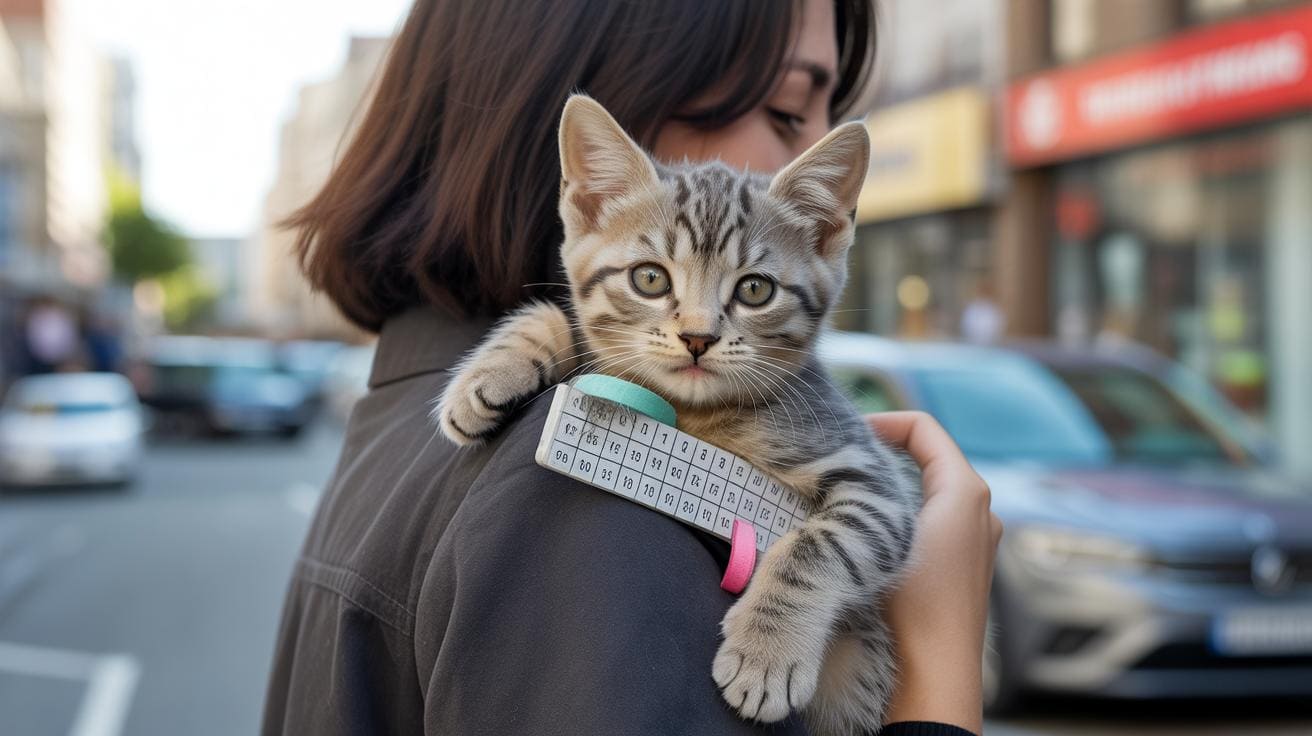
Match toy size and supervision to your cat’s jaw and play style first. Too-small toys can turn play into a choke risk if your cat chews hard. Always bring new toys out during a supervised session so your kitty can sniff and poke them. Let solo sessions be short at first. Retire any toy that exposes its core (the hard center) or shows fraying (threads pulling apart) longer than a few millimeters.
| Cat size/age | Typical mouth/gape (mm) (how wide their mouth opens) | Minimum toy dimension recommended | When to replace (visual signs) |
|---|---|---|---|
| Kitten <6 months | 20–30 mm | Small teething-safe pieces 40 mm+ (no loose bits; teething-safe = soft, non-toxic) | Loose threads, chew-through foam (squishy padding), ragged edges |
| Adult average | 30–45 mm | Balls/discs 50 mm+; wands with 10–20 cm handles (handle = length you hold) | Exposed cores (hard center), deep bite gouges, missing fasteners (buttons, clips, stitches) |
| Large breed / strong chewer | 45–60 mm | Chunky molded chews 60 mm+; reinforced wands (extra stitching or metal join) | Fraying >5 mm, detached parts, cracked rigid cores (cracked hard center) |
-
Introduce: Give new toys during a short supervised session so your cat can smell and inspect them.
-
Observe: Watch the first 10–30 minutes to learn their chewing style. Swap toys if you see aggressive gnawing.
-
Limit solo time: Let unsupervised play happen only after several safe sessions; keep solo sessions short.
-
Rotate: Swap out toys weekly and replace chew items every 7–14 days for high-intensity chewers.
-
Inspect: Check seams, attachments, and rigid cores (hard inner parts) after heavy play; measure fraying if needed.
-
Retire: Pull toys the moment cores are exposed or parts detach, don’t wait for a disaster.
-
If choking, try to clear the airway and call an emergency vet right away.
-
Remove only pieces you can see and reach safely; don’t push things deeper.
-
Don’t induce vomiting unless a vet tells you to.
-
Get to the vet immediately if pieces were swallowed or your cat’s breathing is affected.
For the quick shopping checklist and material notes, see the Quick Buyers’ Guide for compact buying steps and sizing reminders.
Durability Testing, Lab Ratings, and Real‑World Reviews (Methods and How to Read Results)
We test toys so you know what will survive a cat’s fury and what won’t. Think of this as a behind-the-scenes tour of our lab and our in-home trials. Ever watched your cat chew a toy into confetti? Yeah, we do too, so we measure it.
-
Bite simulation (chew tests for powerful jaws)
We use a hydraulic jaw rig (a machine that closes like a jaw, with force set in Newtons) to mimic repeat bites. A Newton (N) is a unit of force (how hard something pushes or pulls). The rig applies controlled bites, usually between 50 and 500 N, and records punctures, crushes, and how the material rebounds. It’s precise to about plus or minus 5 N, so we can compare toys apples-to-apples. Field note: a 150 N pass often lines up with 4 to 8 weeks of life for an aggressive chewer in our home tests, while 300 N tends to mean 12 or more weeks. -
Abrasion hours (lifespan testing methods)
We put fabric samples into an abrasion chamber (a box that rubs a pad back and forth against the material) and run it until you can see wear or a hole. We log hours to visible wear under set pressure and speed, so fabrics, rope, and ballistic fabric (a tough synthetic used in backpacks) can be compared. Lab abrasion gives a good hint of how fast a toy will fuzz up or shred on your couch. -
Seam pull strength
We clamp stitched or bonded seams and pull until the stitch or joint fails, recording the force in Newtons. This shows whether sewn edges survive tugging and wrestling. We also note how it failed , did the thread snap, the stitch pull free, or the fabric tear? -
Mechanized fatigue cycles
We run impact rigs (repeat drops and hits) and flex rigs (bend parts over and over) to speed up wear. Typical targets are 10,000 impact cycles for rolling or track parts and 1,000 flex cycles for wands. These tests make loose hardware, plastic fatigue, and joint loosening show up fast, so we don’t wait months to learn how things break. -
Field longevity trials
We hand toys to tough household cats for multi-month trials and log the time to first failure and the failure type. This catches real-life problems like chew-throughs, seam blowouts, or motor burnout, and helps us translate lab numbers into weeks or months of likely home use. If a maker claims a 2-hour runtime for a rechargeable toy, we mark that as manufacturer- or reviewer-reported unless we specifically test the runtime in the lab.
| Test | What it measures | Typical pass/fail threshold | How to read it for home use |
|---|---|---|---|
| Chew/Bite | Resistance to crushing and puncture (Newtons, N) | Pass: 300 N (durable for aggressive chewers) | About 150 N usually means 4–8 weeks with an aggressive chewer; 300 N maps to roughly 12+ weeks in our field trials. Use 300 N as a practical threshold for long-term chew toys. |
| Abrasion | Hours until surface wears through (hours) | Pass: 200 hours (midpoint benchmark for heavy-use textiles) | 200+ hours in the lab usually means the fabric will outlast plain cloth at home; lower hours predict fuzzing and holes sooner. |
| Seam | Pull force until stitch or joint fails (Newtons) | Pass: 150 N for reinforced seams | Seams testing under 150 N often start unraveling with heavy tugging; reinforced seams should test above this value. |
| Functional longevity | Real-world lifespan in homes (months) | Pass: category dependent , translate lab scores to months | Match lab scores to field data. Chewing, tugging, and motor wear are different. See our field reviews for product-level lifespan notes. Manufacturer runtime claims are flagged as reported unless we test them. |
See Materials and Construction for raw material test data and the Top‑Rated review pointers for product-level field reviews and detailed lifespan reports.