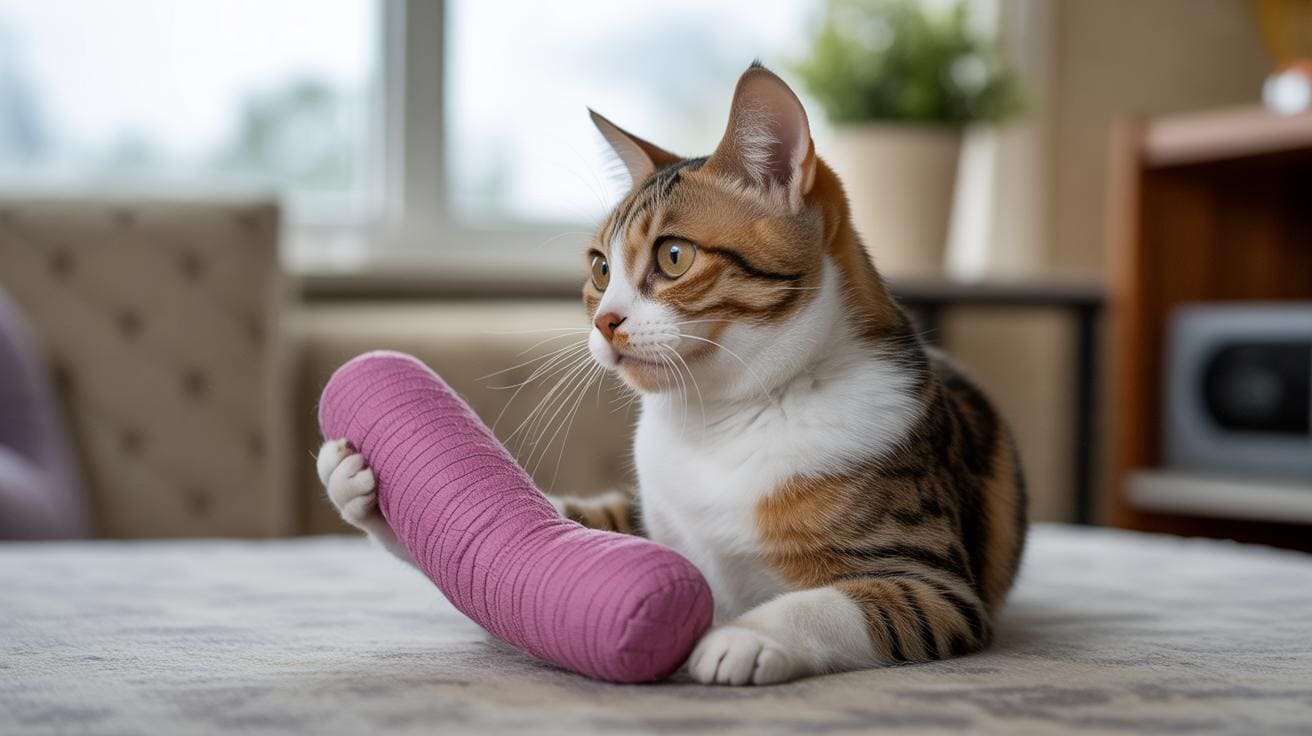
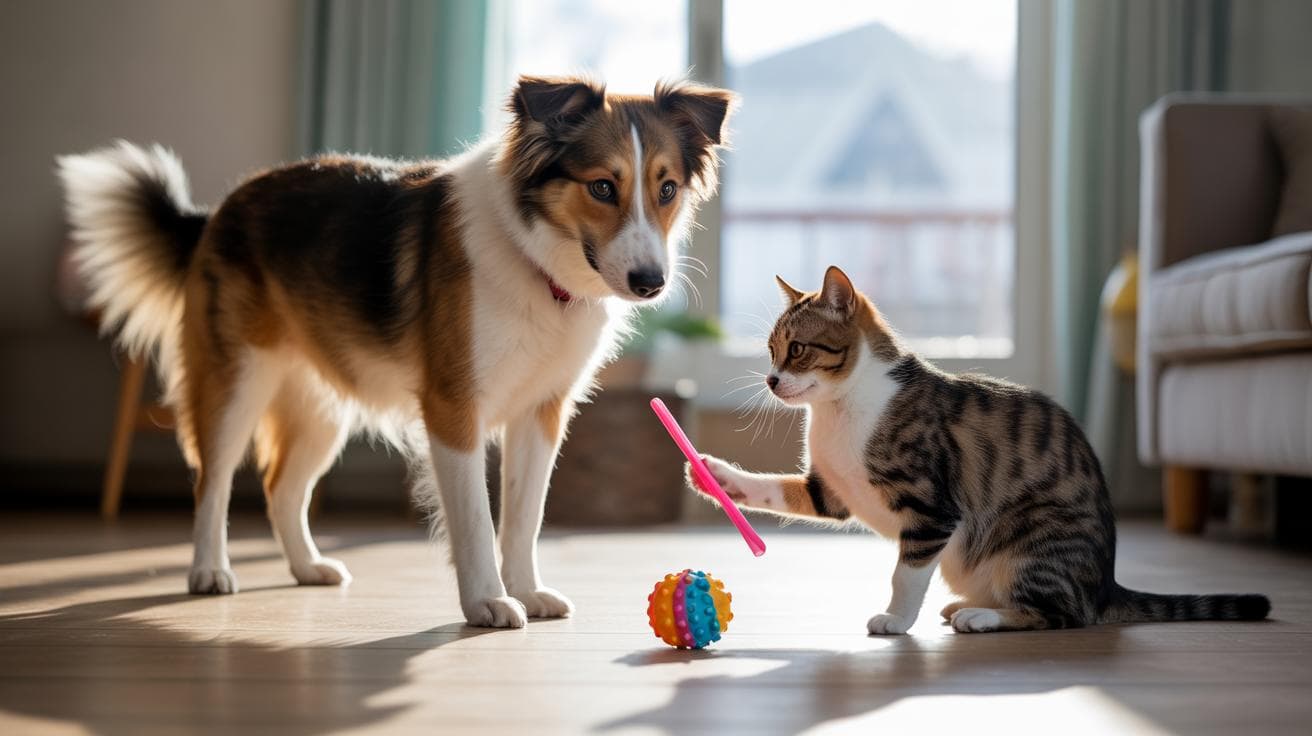
Most toys labeled indestructible are marketing puffery. Your cat will test that claim fast, and you’ll end up with stuffing everywhere. Not fun.
Before you shell out cash or click buy, think safety first. Swallowed bits can mean vet bills and real danger, so let’s keep playtime fun and safe. Ever watched your kitty make a toy disappear under the couch? Yeah, not worth the risk.
Here’s a quick sniff test you can use in-store or online. Think of it like a fast checklist before you let your kitty give it a whirl.
- Check the material. Look for polymer (a tough plastic), ballistic nylon (extra-strong nylon used in luggage), or puncture-resistant fabric (fabric treated to resist holes and tears). These stand up better to teeth and claws.
- Feel the seams. Double or reinforced stitching (extra thread where pieces meet) beats single seams every time. Tug gently to see if threads pull.
- Skip toys with loose bits. Bells, plastic eyes, ribbons, and glued-on decorations come off. If it can be chewed free, it will be chewed free.
- Watch the attachments. Wand tips, feathers, and strings should be secured with metal crimps or sturdy stitching, not just glue.
- Size matters. If a toy fits entirely in your cat’s mouth, it’s a swallowing hazard. Bigger is often safer.
- Think core strength. Toys with a solid inner core or reinforced center resist squish-and-tear better than hollow ones. Fiberglass (like a strong fishing-rod core) or thick rubber cores are good signs.
- Test the bounce. Toss the toy. If it breaks, unravels, or spits out stuffing, pass. A satisfying thud or rollicking roll means fun without instant destruction.
- Machine-washable is a plus. Washable fabrics let you keep toys clean without shredding them to bits.
A few quick tips: rotate toys so they don’t get shredded from nonstop play, and retire any toy with loose stuffing or holes. For busy days, give a sturdy toss-and-chase toy before you head out, ten minutes of safe play can save your furniture and your nerves.
Worth every paw-print.
How to Choose Unbreakable Cat Toys
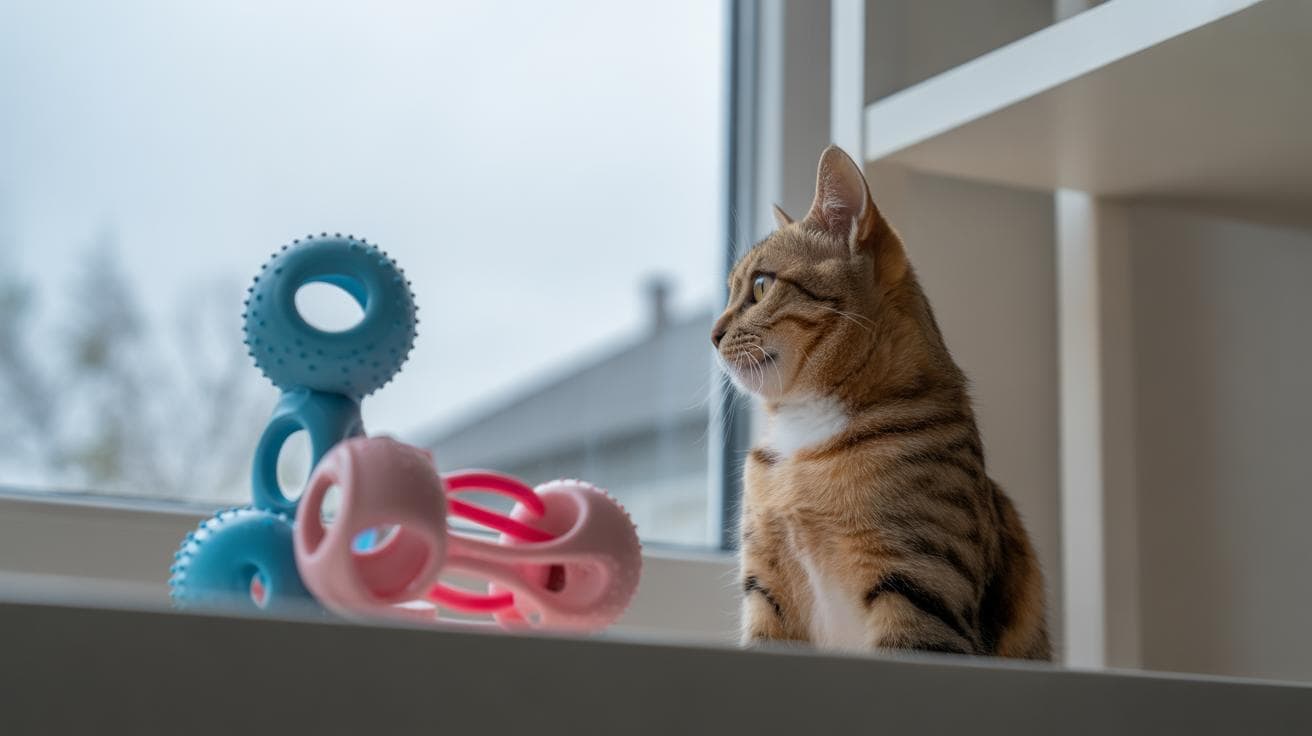
Here’s a short, practical checklist you can use on product pages or in-store to spot toys that actually survive rough play. Think of it as a quick sniff test before you let your kitty take the toy for a spin.
- Declared material: does the tag say rubber (stretchy, bouncy material), silicone (soft, flexible plastic-like material), nylon (a tough synthetic fabric), or stainless steel (rust-resistant metal)? Pass if it’s listed clearly. Fail if the description is vague or says just "plastic."
- Non-toxic / certification claims: does the product note ASTM (US testing standard) or CPSIA (consumer product safety law), or say it was vet-tested? Pass if you can verify the claim. Big red flag if a chew toy has no safety claims.
- Seams and attachments: are seams reinforced, molded as one piece, or finished with visible bar-tacks (short, heavy stitches)? Pass if reinforced. Fail if it’s single-stitched or glued only.
- Size and weight match: can the toy NOT fit entirely in your cat’s mouth, and does the weight suit your cat’s size? Pass if dimensions are listed and the item looks safe. Red flag if it could fit whole-mouth.
- Replaceable or modular parts: are spare attachments or replaceable ends available? Pass if replacement parts are sold. Fail if pieces are single-use and disposable.
- Washable and waterproof: does the listing say how to clean it, and give temps or machine settings? Pass if it’s machine-washable or clearly wipeable with care instructions. Fail if cleaning guidance is missing.
- User durability reports: are there dated reviews or hours-of-use notes from real customers? Pass if you see recent, specific reports. Fail if reviews are only vague praise.
- Warranty and returns: is warranty length and the return policy spelled out? Pass if the info is clear. Fail if there’s no warranty or return details.
- No small parts or magnets: are there no exposed magnets, beads, bells, or loose bits? Pass if none are visible. Red flag if tiny pieces or magnets are present, since those can be swallowed and cause serious harm.
- Lab tests or retailer durability claims: does the seller show test methods or cycle counts (how many times it was stressed in tests)? Pass if methods and numbers are disclosed. Fail if it’s just marketing language.
See Materials comparison table (Materials section) for technical abrasion and puncture metrics.
How to use this checklist: score each line (Pass = 1, Fail = 0). Treat safety-related fails (size, small parts, exposed magnets) as automatic disqualifiers, even if the toy scores well elsewhere. Tally the totals to rank your candidates. Then double-check the "Declared material" item against the Materials comparison table (Materials H2) to compare abrasion and puncture numbers before you make a final pick.
Quick tip: imagine your cat’s whiskers twitching as the toy skitters across the floor. If you wouldn’t let your kitten chew it for ten minutes unsupervised, maybe pass. Worth every paw-print to keep them safe.
materials comparison: abrasion, puncture, cleaning and safety metrics for rubber, silicone, nylon, stainless and natural fibers
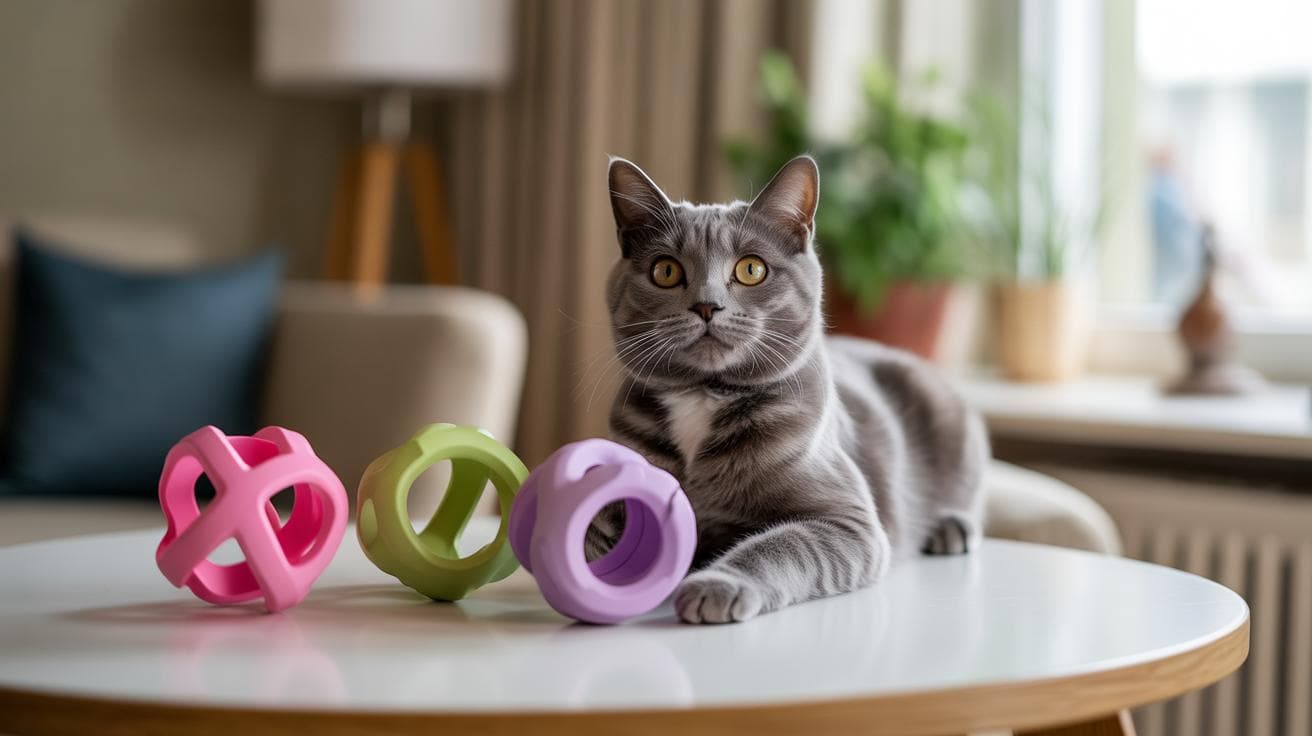
Before you buy, check checklist item #1 (Declared material) against this table so you know what to expect when your cat goes full ninja. Think of it like matching your kitty’s battle style to the right armor.
The table lists easy-to-check product metrics: Abrasion resistance (wear from repeated rubbing), Puncture resistance (ability to resist point pressure like teeth), typical failure modes, cleaning method and max safe temperature, estimated heavy-use lifespan (hours), and basic safety or chemical notes. When sellers cite test data, look for named test methods (ASTM or ISO), lab report numbers, sample sizes or cycle counts, and any veterinary toxicology notes when available , those details matter more than fluffy marketing.
| Material | Abrasion resistance (1-10) | Puncture resistance (1-10) | Typical failure modes | Cleaning (method & max temp) | Estimated heavy-use lifespan (hours) | Safety/chemical notes |
|---|---|---|---|---|---|---|
| Natural rubber (elastic sap-based rubber) | 7 | 6 | Surface cuts, tearing at thin points, seam pull | Soap & warm water; air dry; max ~60°C (140°F) | 200–600 | Can contain latex proteins; check for food-grade or vulcanized labeling |
| Silicone (flexible inert polymer) | 8 | 7 | Deep gouges from sharp teeth, edge nicks | Dishwasher-safe or boiling; max ~120°C (248°F) | 500–2000 | Highly inert; low leach risk if medical/food-grade |
| Ballistic / high-density nylon (woven synthetic fiber, like seatbelt material) | 9 | 7 | Fraying, seam stress, abrasion wear | Hand wash or gentle machine; max ~40°C (104°F) | 300–1000 | Very strong but can melt at high heat; watch stitched joins |
| Stainless steel (rust-resistant metal) | 10 | 10 | Denting, finish wear; rare breakage | Dishwasher-safe; high-temp safe | 2000+ | Inert and easy to sanitize; watch weight for small cats |
| Reinforced canvas / plush (heavy woven fabric) | 5 | 3 | Seam separation, zipper failure, stuffing escape | Machine wash gentle; max ~60°C (140°F) | 50–300 | Use tight stitching and non-toxic dyes; replace stuffingable parts |
| Sisal / wool (natural fibers) | 6 | 4 | Unraveling, fiber pull-out, ingestion risk if frayed | Spot clean or cold wash; max ~30°C (86°F) | 100–400 | Natural and biodegradable; fibers can snag claws and fray |
Pick materials by matching your cat’s attack pattern. Heavy chewers need high puncture and abrasion scores, think stainless, medical-grade silicone, or ballistic nylon. Bat-and-chase players do great with durable but lighter options like nylon or reinforced canvas. Kittens or mouthy cats do better with softer, inert rubbers or fabrics that tolerate low-temp washing.
When you read product claims, make sure the seller lists test methods (ASTM or ISO numbers), sample size or cycle counts, or links to veterinary toxicology notes. Those citations build real confidence more than vague buzzwords. And double-check checklist item #1 (Declared material) against this table before you run at-home tests or buy extras. Worth every paw-print.
construction, sizing rules and real examples of failure modes (what to inspect)
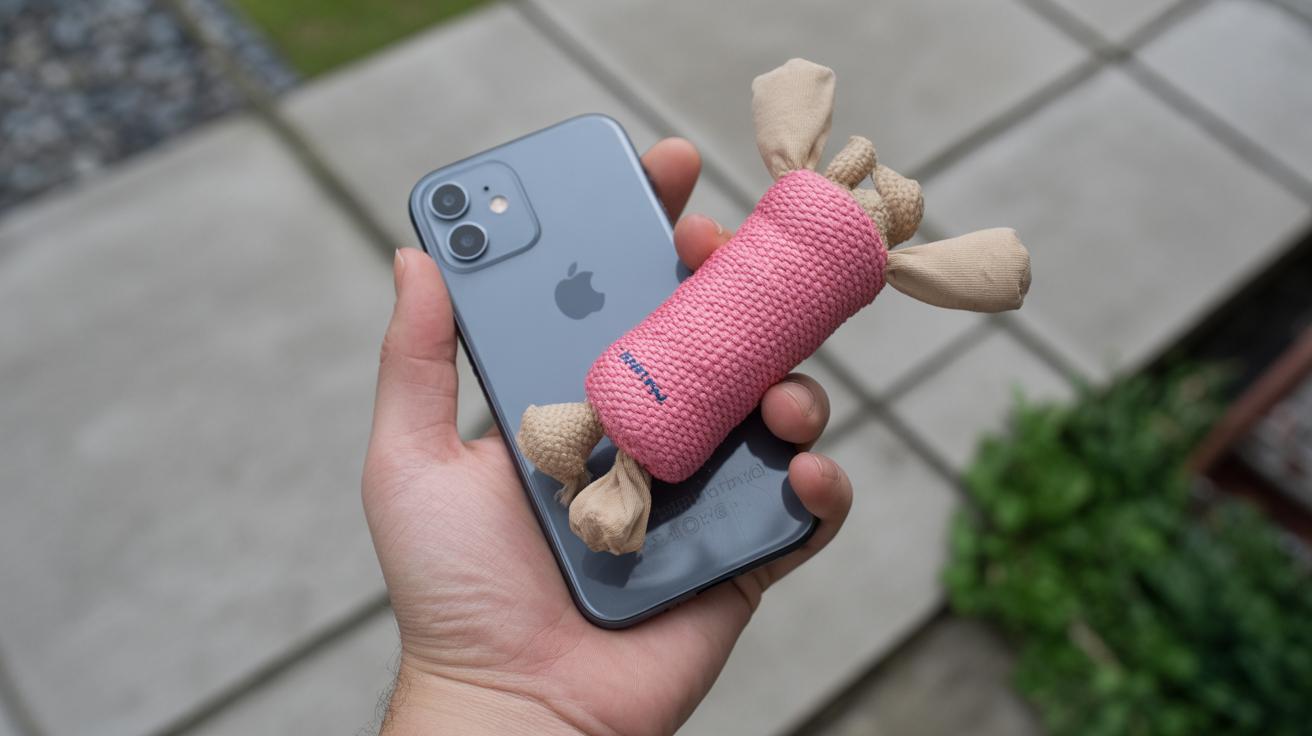
When you see a toy on a shelf or a product page, look for construction details you can actually check. Think like a cat: where will claws, teeth, and a frantic bat of the paw test the weakest joint? If it looks like it would fail the paw-and-mouth test, keep walking.
Look for molded single-piece construction or welded/molded joints , these beat glued or multi-piece bonds for long-term strength. Seams should be double-stitched and have bar-tacks (short, heavy stitches) at corners and pull points. Fasteners should be visible screws or rivets (rivets = small metal fasteners), not just glue. Wide or weighted bases help stop tipping. Smooth, rounded edges cut down on peel-away bits. And the fewer detachable parts, the lower the choking risk.
Common failure modes to watch for: seam separation at zipper lines, rivet shear when something pulls sideways, puncture patterns in rubber from premolar teeth (premolars = the cheek teeth cats use to gnaw), and axle wear in rolling toys that eventually exposes fasteners. You might see stuffing sneaking out, or a wheel wobbling until the axle shows. Not great.
Seams, stitching and replaceable parts
Check for reinforced seams and internal bar-tacks at corners and stress points. Replaceable modules should snap into molded sockets or attach with screws/rivets, not glued tabs that peel off. Failure stories often start with stitch-line pull-apart or unstitched seam gaps where stuffing or small bits escape. Oops, and that’s when you get a vet trip or a shredded favorite toy.
Sizing, weight and choke-risk mitigation
Use a simple visual rule: a toy should be larger than your cat’s open mouth. Try the "mouth-fit" test by imagining the main body fitting inside an open cat mouth , if it would, that’s a no-go. For kittens and tiny breeds, pick small-but-not-swallowable pieces and always supervise the first play sessions.
Watch weight and motion. Feather-light parts that spin or flutter can be inhaled or swallowed. Heavy items can hurt small cats. Red flags: the toy fits fully in the mouth, loose rotating caps, tiny exposed magnets, or parts that can unscrew mid-chase. If you spot any of those, skip it and find something safer.
Worth every paw-print if it lasts.
home durability testing protocols and record templates (safe, repeatable methods)
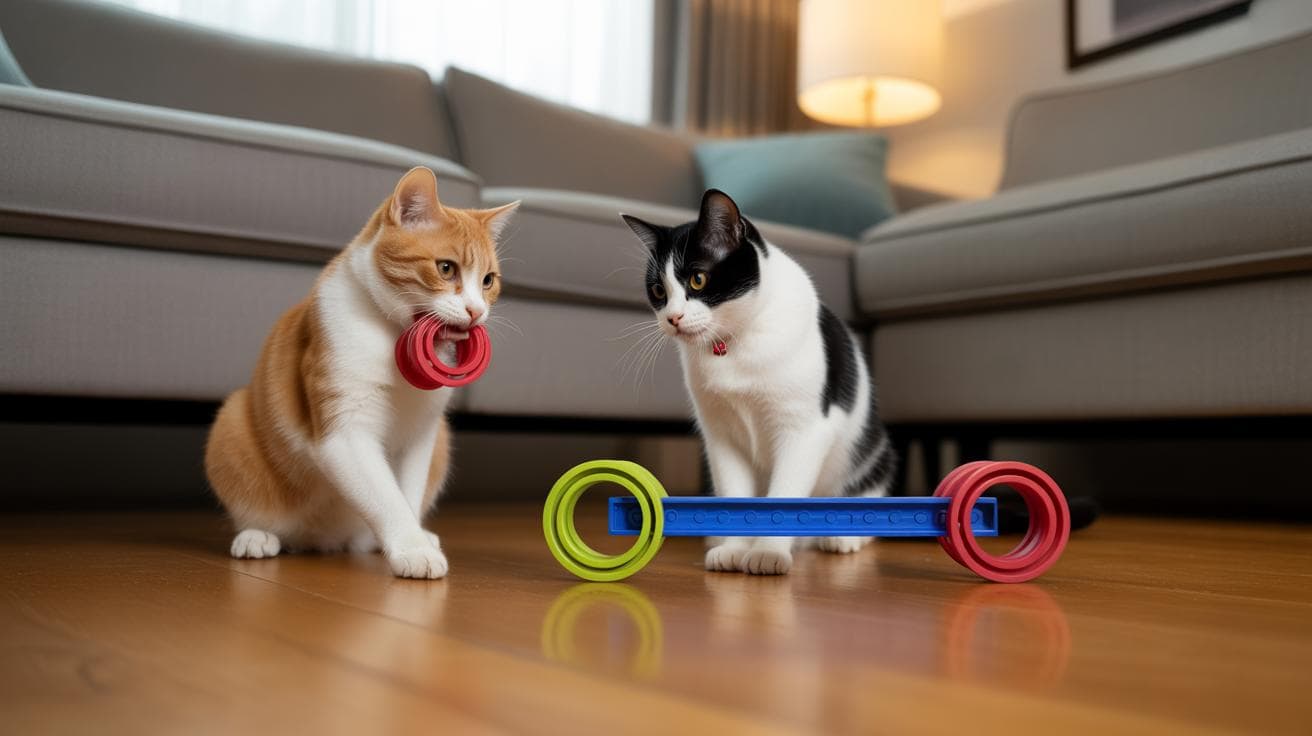
Always start with a safety checklist before you run any endurance drills. If a toy fails a safety item , seams (stitched joins), size, small parts, or exposed magnets (small magnetic pieces) , stop testing and retire it. Use the checklist every time so you can compare models week to week. Link each test to the checklist item: seams/attachments → bite-pull test; declared material → puncture and abrasion tests; washable → water exposure check. Score and log every run using the failure-code taxonomy below so results stay comparable.
Quick note: Ever watched your cat tug a toy like it’s a tiny dinosaur? That’s the kind of force we want to simulate. Keep a stopwatch and a helper if you can.
Step-by-step protocols (keep things simple and repeatable)
-
Controlled bite/pull test (seams & attachments)
- Clamp the toy body in a vise (tool that holds stuff steady) or hold it securely; use pliers or a spring scale (a pull gauge) to tug an attachment at a 45 degree angle.
- Apply a steady pull to about 20–30 N (newtons; roughly 4.5–6.7 pounds of force), hold for 2 seconds, then release.
- Repeat up to 50 pulls or until the toy fails. Record cycles to first seam gap or thread pull and mark S for seam failure. It’s satisfying to watch, but don’t cheer too loud.
-
Puncture test (rubber/silicone)
- Use a blunt probe or safety awl (a dull, safe poking tool, not a sharp needle) and place the toy on a firm block.
- Press the probe at a fixed spot with about 10–20 N (roughly 2.2–4.5 pounds) for 10 presses per spot.
- Test 5 spots, repeat twice. Log the cycle or press count when the first puncture appears and mark P.
-
Abrasion test (fabrics)
- Rub a 120 grit sandpaper patch (coarse sanding paper) over the same 10 cm area with a back-and-forth motion.
- Count passes; run up to 500 passes or stop when fraying or nap loss appears. Note cycles to visible wear. Fabrics will often show small fuzz first.
-
Impact / tumble test
- Drop the toy onto hard flooring from 1 meter (about 3 feet) and from 0.5 meter (about 1.5 feet).
- Do 10 drops per height and check for cracks, detached parts, or exposed fasteners. Log cracks as C and detached parts as D. Some toys survive the first few drops, others don’t.
-
Rotating-load test for moving parts
- Mount the moving part on a drill or hand-turned axle at low speed (~60 RPM – rotations per minute) as a proxy.
- Run for 500 cycles and inspect for axle wear, wobble, or detached pieces. Mark D or C as needed.
-
Electronics endurance cycle
- Power the toy on for 30 minutes, off for 15 minutes; repeat for 100 cycles, or run continuously for 8 hours while checking seals.
- Log any power loss, overheating, or seal breach and mark E for electronics failure. Don’t stress lithium batteries (rechargeable power cells) too much , they can be dangerous if overworked.
Safety and documentation
Wear cut-resistant gloves and eye protection for puncture and drop tests. Keep pets and children out of the test area. Photograph each failure, timestamp your notes, and always confirm checklist safety items before running endurance tests. Use the same tools and force proxies each round so results are comparable. Oh, and label your photos clearly , future you will thank present you.
| Product | Test date | Test type | Cycles | Failure code(s) | Time-to-first-failure (min or cycles) | Photos (Y/N) | Notes |
|---|---|---|---|---|---|---|---|
| Example Toy | 2025-01-15 | Bite/Pull | 50 | S | 18 pulls | Y | Seam started to fray at bar-tack |
Legend – Failure codes: S = seam/stitch failure, P = puncture, D = detached part, C = crack/structural break, E = electronics failure.