Field Note

Cat Toys for Exercise: Build a Better Workout for Indoor Cats

Use cat toys for exercise with safer chase, capture, jumping, puzzle feeding, and inspection routines for indoor cats that play hard at home.

The best cat toys for exercise are the ones that make your cat move through a complete mini-hunt: watch, stalk, chase, pounce, grab, bite, kick, eat, and rest. For most indoor cats, that means a small rotation of wand toys, tossable toys, kicker toys, tunnels, puzzle feeders, scratchers, and safe climbing or jumping setups. The goal is not to exhaust your cat. The goal is to give short, repeatable outlets for movement and hunting behavior.

If your cat destroys ordinary toys, exercise play needs an extra safety layer. A toy that gets your cat sprinting is not a good choice if it sheds string, exposes wire, cracks plastic, or turns into swallowable pieces after one hard session. Use the routines below to build better activity while keeping supervision and inspection part of the workout.
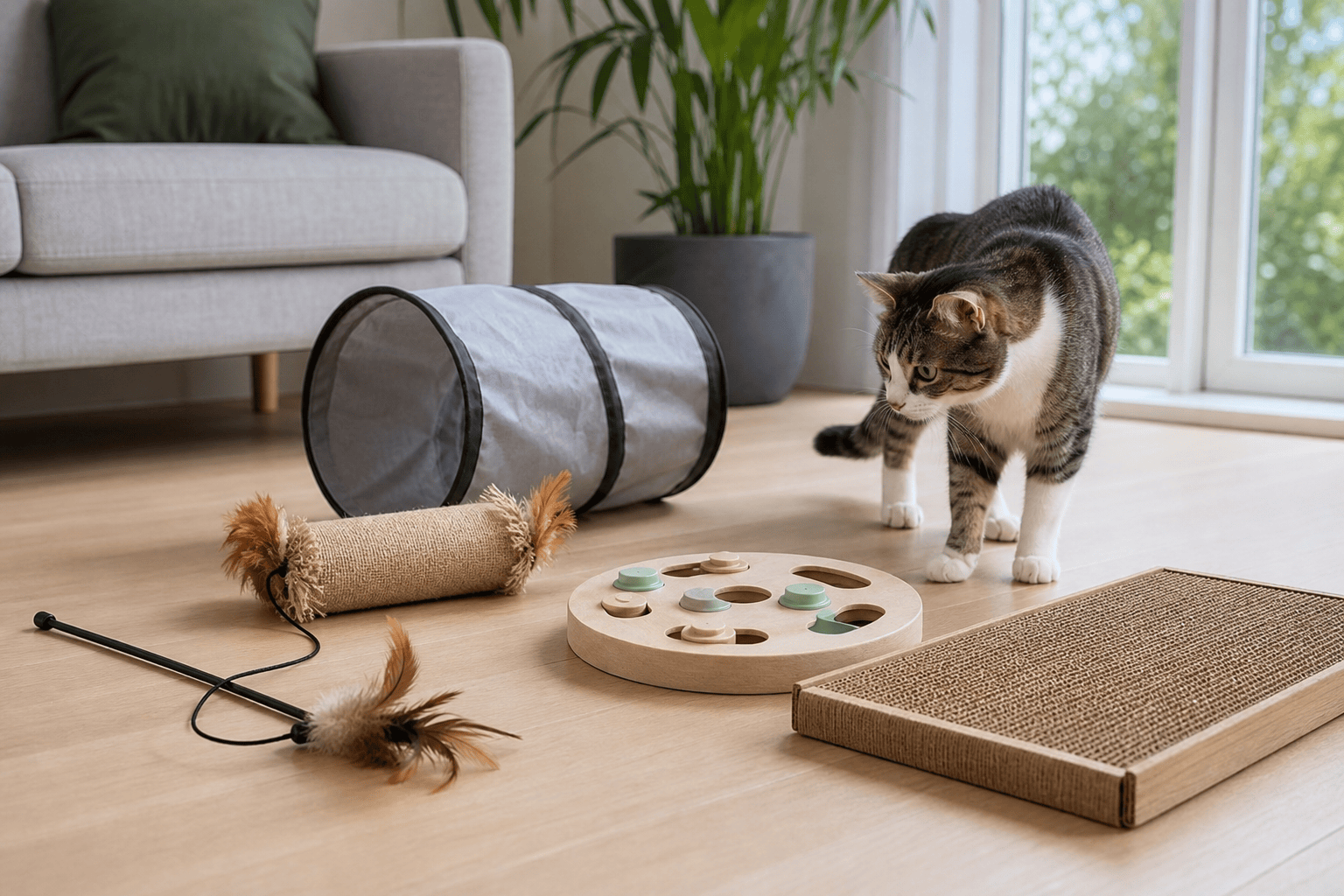
Cat exercise toy setup with wand toy, kicker toy, tunnel, puzzle feeder, and scratcher
A good exercise setup covers several movement jobs: chase, jump, grab, kick, forage, scratch, and cool down.

What Counts as Exercise for a Cat?

Cat exercise does not look like dog exercise. Most cats are built for short bursts, not long steady workouts. A good play session might be only five to fifteen minutes, but it should include real movement: stalking around furniture, sprinting after a lure, jumping from a stable surface, wrestling a larger toy, batting a rolling object, climbing to a perch, or working food out of a puzzle.

The Cornell Feline Health Center describes toys as a way to encourage exercise and cognitive enrichment by letting cats stalk, pounce, and problem solve. That is the standard to use: the toy should ask your cat to do something natural, not simply sit in a pile on the floor.

A practical exercise routine should cover four jobs:

  • Chase: wand toys, lures, rolling toys, and moving toys that travel away from the cat like prey.
  • Capture: larger toys the cat can grab, bite, and bunny-kick after the chase.
  • Forage: puzzle feeders, treat balls, scatter feeding, and hidden food searches that turn eating into work.
  • Climb, stretch, and reset: scratchers, shelves, cat trees, tunnels, boxes, and perches that change the room.

Why Product Lists Miss the Point

Many ranking pages for cat exercise toys are useful product roundups. They mention wands, lasers, wheels, tunnels, balls, puzzle toys, and electronic toys. The gap is that product type alone does not tell you how to use the toy, when to stop, or whether it fits a cat that bites through fabric and strings.

A wand toy can be excellent exercise, but it becomes risky if the string is left out for chewing. A laser can make a cat sprint, but it can also frustrate some cats if the game never ends with a physical catch. A cat wheel can help a cat who chooses to use it, but it is not a cure for boredom by itself. A kicker can be perfect for a rough player, but only if it is large enough and inspected after use.

Think of toys as tools inside a routine. If boredom is the main problem, pair this guide with Titan Claws’ article on cat toys for boredom. If your cat needs a fuller daily setup, our cat enrichment activities guide covers the broader mix of play, food work, climbing, scent, and rest.

A 15-Minute Cat Exercise Routine

Use this routine once or twice a day, especially near dawn or dusk if that is when your cat is naturally active. Keep it short enough that your cat finishes interested, not panting or irritated.

  1. Two minutes of warm-up: drag a wand lure slowly around furniture, a box, or a tunnel. Let your cat watch and stalk before asking for speed.
  2. Five minutes of chase: move the lure away from your cat in quick bursts. Let it hide, pause, and escape. Avoid waving it directly in your cat’s face.
  3. Three minutes of jumping or climbing: use low, controlled jumps over a rug or direct the toy up a stable cat tree. Skip jumps if your cat is older, recovering, heavy, limping, or unsure.
  4. Three minutes of capture: switch to a kicker or tough soft toy so your cat can grab, bite, and rake something physical.
  5. Two minutes of food work and cleanup: end with a small portion of the normal meal in a puzzle feeder or hidden in easy spots, then store string toys and inspect anything your cat chewed.

PetMD’s veterinarian-reviewed exercise guidance also emphasizes short sessions and notes that play should stop if a cat pants or breathes too heavily. That is a useful rule for owners who feel pressure to make an inactive cat work hard. Build conditioning gradually and ask your veterinarian before changing activity for a cat with obesity, arthritis, heart or breathing concerns, recent surgery, or sudden changes in play behavior.
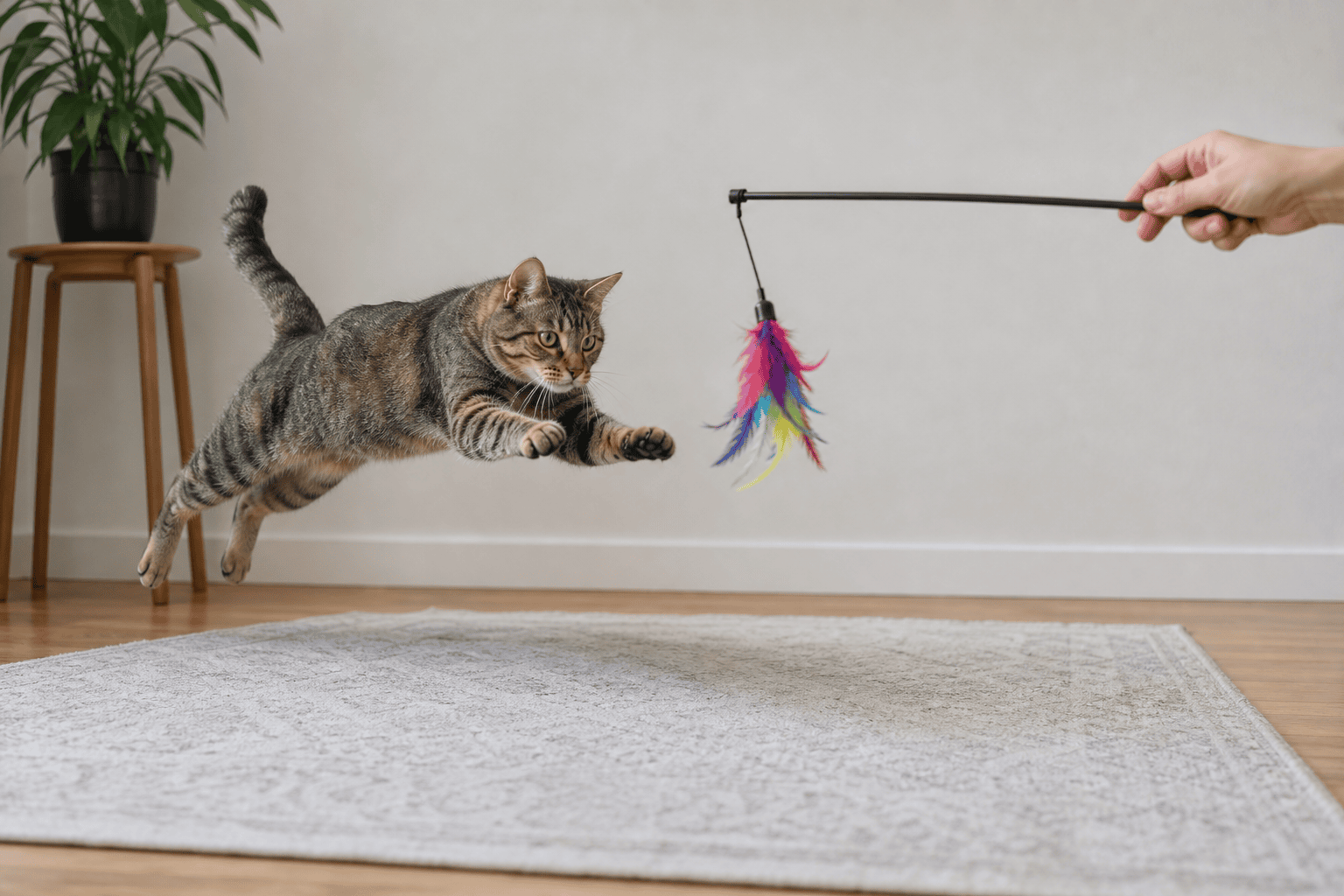
Indoor cat leaping safely after a wand toy on a rug
Use short bursts and soft landings for jumping games, especially with young, heavy, older, or less conditioned cats.

Best Exercise Toy Types by Movement Goal

Instead of buying every toy with the word exercise in the listing, choose the movement you need first.

Movement goal Toy types that help How to use them well
Short sprints Wand toys, lures, rolling balls, remote or automatic movers Move the toy away from the cat, add pauses, and give real catches.
Jumping and agility Wands, feather lures, tunnels, low platforms, cat trees Keep jumps low and landings stable. Avoid slick floors and clutter.
Wrestling and kicking Kicker toys, larger plush toys, dense fabric toys Use after chase so the cat can complete the hunt without biting hands.
Food-motivated movement Puzzle feeders, treat balls, slow feeders, hidden kibble searches Use part of the normal meal and start with an easy puzzle.
Solo batting Track toys, sturdy balls, springs, tunnels, safe self-play toys Leave out only toys that are safe for your cat without strings or loose parts.
Stretching and climbing Scratchers, cat trees, shelves, window perches Place them near play zones so the cat can reset between bursts.

For cats that love grabbing and raking, a capture toy is not optional. It keeps teeth and claws away from your hands and gives the exercise session a satisfying end. Titan Claws’ cat kicker toy guide explains how to size and use that style of toy for cats that play with force.
Free Checklist

Free checklist: 30 ways to enrich your indoor cat's life.

Practical, printable, no fluff. Get the complete Indoor Cat Enrichment Checklist delivered to your inbox.

How to Exercise a Cat That Seems Lazy

A cat who seems lazy may be bored, under-conditioned, overweight, stressed, sore, older, or simply uninterested in the toy style you keep offering. Start with easy wins instead of trying to force a workout.

  • Lower the difficulty: use slow ground movement before jumps, and make food puzzles easy enough to solve.
  • Change the timing: try short sessions before meals or during your cat’s normal active windows.
  • Use hiding and corners: many cats chase harder when the toy disappears behind a box, rug edge, or chair leg.
  • Reward small movement: one hallway chase or two puzzle-feeder minutes is progress for a sedentary cat.
  • Check health first: sudden low activity, limping, hiding, appetite changes, or reluctance to jump deserve veterinary attention.

Do not label a cat lazy and keep escalating toy intensity. If a cat wants to play but quits quickly, the issue may be fitness, pain, fear, slippery flooring, or a toy that asks for the wrong kind of movement.

Laser Pointers, Wheels, and Electronic Toys

Laser pointers can create movement, but they need an ending. Use a laser briefly, never shine it in eyes, and finish by directing your cat to a physical toy or food reward. Both PetMD and product-review competitors note the same practical issue: a red dot cannot be caught, so the session can feel incomplete for some cats.

Cat exercise wheels can be useful for cats who voluntarily enjoy them, especially energetic indoor cats in smaller homes. Choose a stable wheel sized for your cat’s stride, introduce it slowly, and do not force use. Watch for overexcitement, slipping, fear, or repeated jumping off.

Electronic and automatic toys can add movement while you work, but they should not replace human-led play. Inspect battery doors, charging ports, detachable tails, feathers, strings, and cracked plastic. Our automatic cat toys guide goes deeper on what to avoid when a toy runs without your hand on it.

Safety Rules for Rough Exercise Play

Exercise toys create speed and impact. That makes safety checks more important, especially for cats that chew seams, pull feathers, swallow bits, or slam toys into furniture.

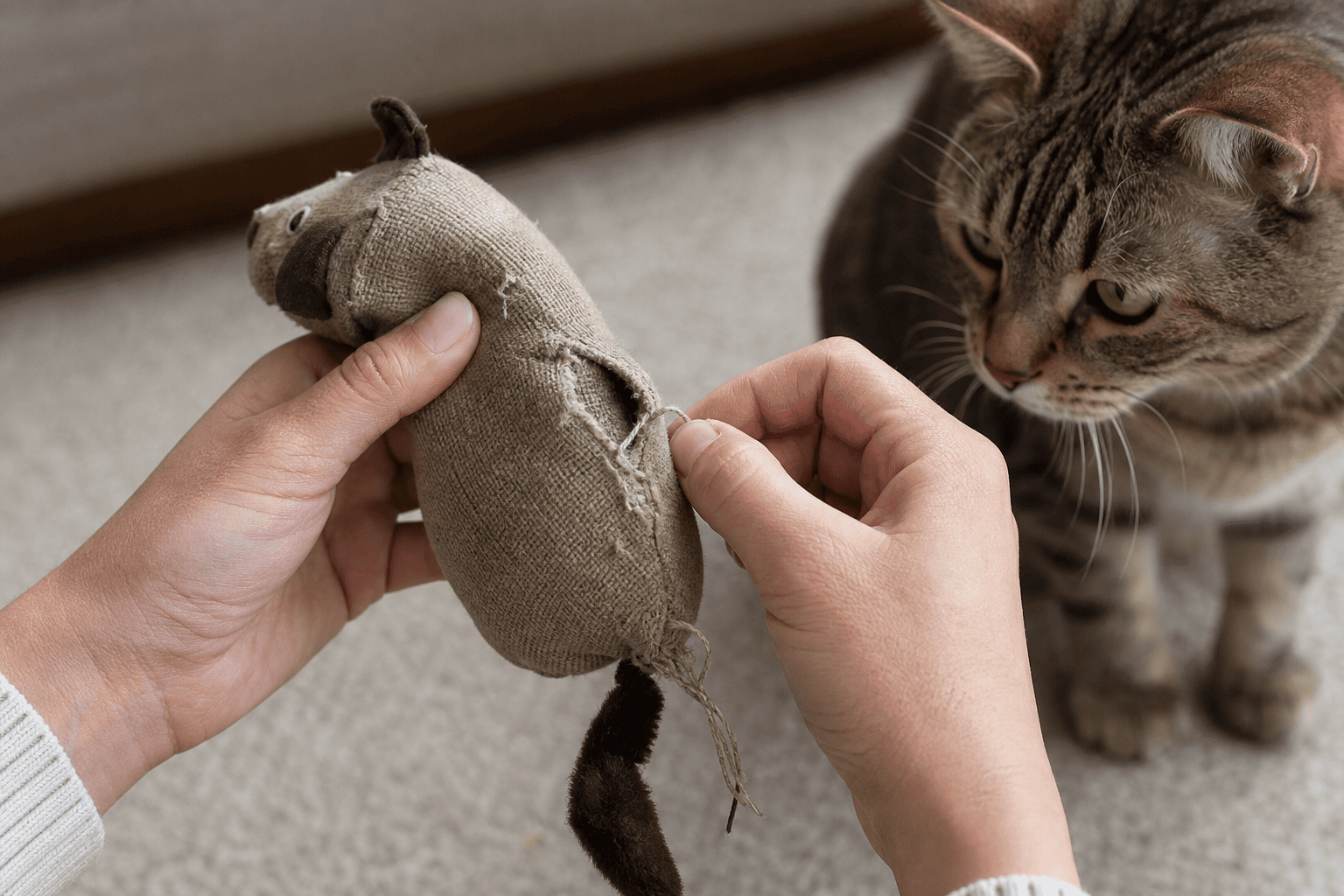
Hands inspecting a cat toy seam after rough exercise play
For rough players, the workout is not finished until strings are stored and chewed toys are checked.
  • Put away wand strings, ribbons, yarn, elastic cords, and feather lures after every supervised session.
  • Retire toys with exposed wire, loose bells, torn seams, leaking stuffing, cracked plastic, sharp edges, or detached pieces.
  • Avoid toys small enough for your cat to swallow whole.
  • Use rugs or carpet for chase and jump games if hard floors make your cat slide.
  • Keep exercise routes clear of glass, unstable lamps, sharp furniture corners, and shelves with objects that can fall.
  • Do not use hands or feet as prey. Use a wand or larger toy to create distance.
  • Separate cats if one cat guards food puzzles or overwhelms the other during chase games.

The AAFP and ISFM feline environmental needs guidelines recommend opportunities for play and predatory behavior, including wand play, food-containing toys, large soft toys for raking and biting, hidden toys, and rotating toys to prevent boredom. That same logic supports a Titan Claws-style rule: exercise should satisfy the hunt, but the toy still has to survive inspection well enough to remain safe.

Free Enrichment PDF

Want the full enrichment checklist?

30 things you can do this week to make your indoor cat's life better. Free PDF, straight to your inbox.

How Often Should You Use Cat Toys for Exercise?

Most households should start with one or two short sessions per day. High-energy kittens and young adults may want more brief rounds. Seniors, overweight cats, and cats with medical concerns may need gentler, shorter sessions with more rest. Consistency matters more than one intense weekend workout.

A realistic weekly plan can be simple:

  • Daily: one wand chase, one capture toy, one food puzzle or hidden-food search.
  • Three times a week: add tunnel play, low jumping, or a short climbing route.
  • Weekly: wash washable toys, rotate stale toys out, and retire damaged ones.
  • Monthly: reassess whether your cat is moving better, tiring too fast, or avoiding certain surfaces or jumps.

If your cat already has plenty of toys but does not use them, rotation may matter more than shopping. See Titan Claws’ guide to cat toys for enrichment for a broader rotation framework.

Quick Checklist Before You Buy

  • Which movement does this toy support: chase, jump, capture, forage, solo batting, scratching, or climbing?
  • Can your cat catch something physical at the end of the session?
  • Does the toy have strings, feathers, bells, small parts, batteries, charging ports, or weak seams?
  • Can you inspect, clean, and store it easily?
  • Is it large enough for your cat’s bite and kick style?
  • Will it work on your actual floor surface without causing sliding or frustration?
  • Does it add a role your current toy rotation is missing?

The Bottom Line

Cat toys for exercise work best as a routine, not a random product pile. Use chase toys to start movement, kicker toys to finish the hunt, puzzle feeders to make food active, and scratch or climb outlets to let your cat reset. Keep sessions short, watch your cat’s breathing and body language, and end before the game turns frantic.

For cats that destroy ordinary toys, durability is only part of the answer. The better habit is supervised play, toy roles that match the cat’s real bite strength, and a post-play inspection every time. That gives your indoor hunter more movement without pretending any toy is indestructible.

Source: Cat Toys for Exercise: Build a Better Workout for Indoor Cats