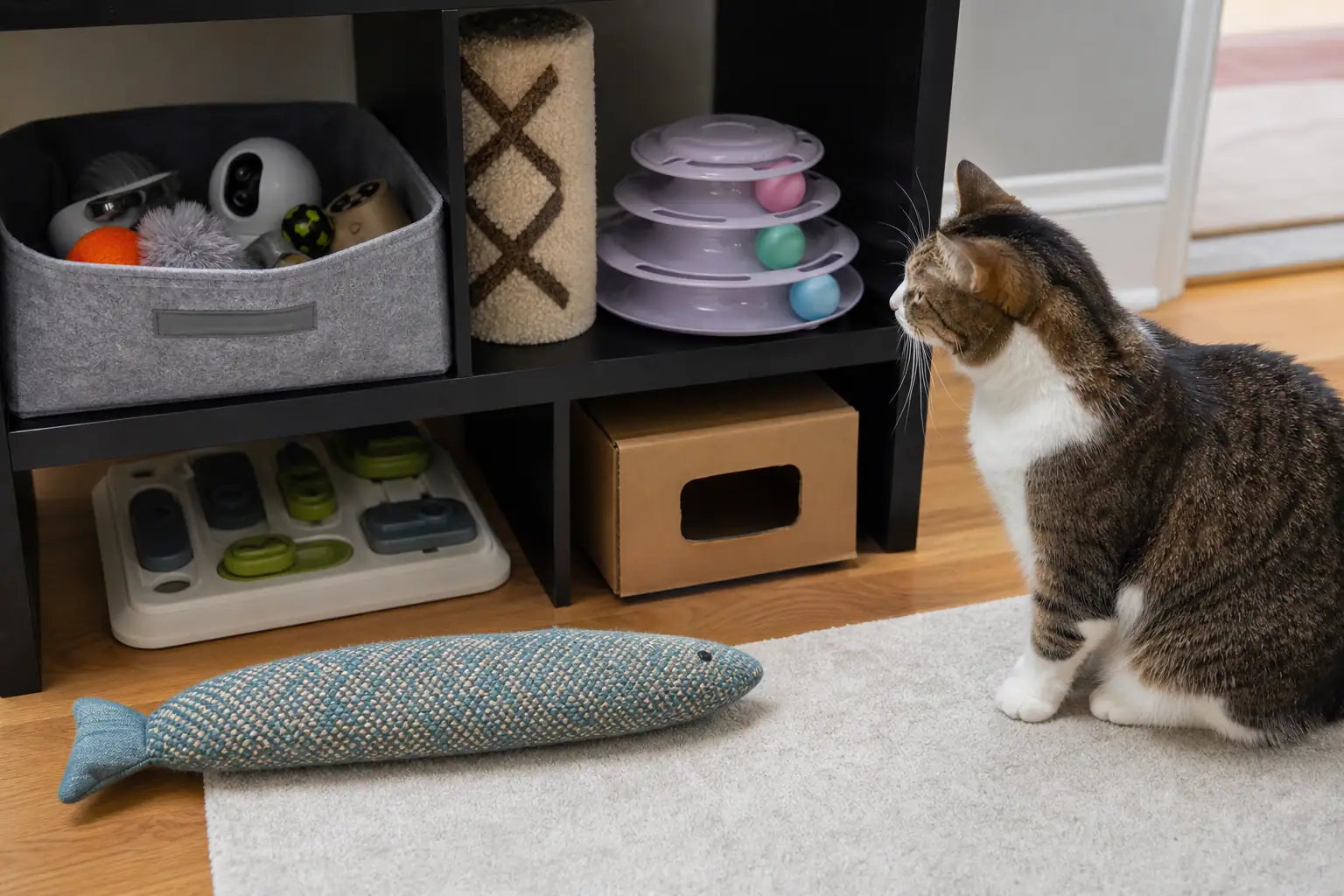
Potaroma cat toys are popular because they solve a real indoor-cat problem: many cats ignore still toys but wake up for motion, noise, feathers, crinkle, catnip, or a toy they can kick with their back feet. The catch is that the best Potaroma toy for a gentle swatter may be a poor choice for a cat that chews feathers, cracks plastic, opens battery doors, or destroys plush seams.
Use this guide as an independent buying and safety checklist. Potaroma’s lineup includes electronic toys, flapping bird and fish toys, 3-in-1 hide-and-seek toys, crinkle kickers, catnip plush toys, and replacement attachments. Some can be useful enrichment tools. None should be treated as indestructible, and several are best used only when you can supervise.
What Potaroma Cat Toys Are Known For
The ranking results for Potaroma cat toys are mostly Potaroma product pages, Amazon storefront listings, Chewy pages, YouTube videos, and owner discussions. That makes the search intent mixed: some people want the official store, some want instructions or replacement parts, and many want to know whether a specific toy is worth buying.
Potaroma’s official 3-in-1 automatic toy is a good example of the brand’s appeal. The product combines a random feather that pops out of holes, a fluttering butterfly attachment, and track balls. Potaroma says the toy can run from AA batteries or USB power, stops after about five minutes when left alone, stays in touch-activation standby for about four hours, and can use replacement feather or butterfly parts. Those features are useful, but they also create the exact inspection points rough-cat owners need to think about: attachments, holes, moving parts, power supply, battery access, and whether the cat tries to chew the feather or butterfly instead of just batting it.
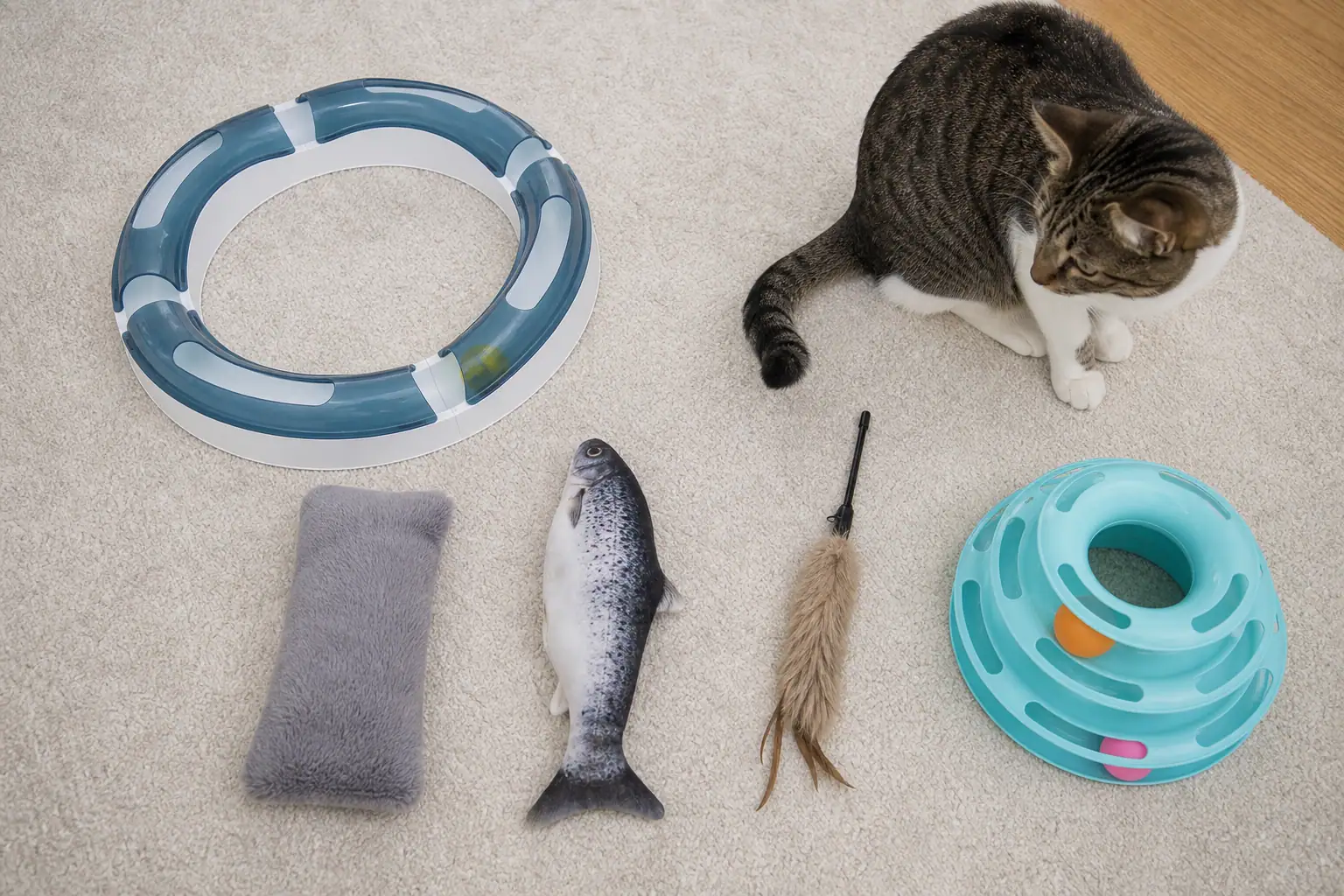
Other Potaroma toys are simpler: plush crinkle kickers, catnip-filled toys, flopping fish or bird-style motion toys, and chew/kicker products. For Titan Claws readers, the question is not “Is Potaroma good?” The better question is “Which Potaroma format matches my cat’s failure mode?”
Best Fits by Cat Play Style
Start with your cat, not the product page. A toy that works beautifully for a cautious cat can become a teardown project for a determined rough player.
- For cats that stalk and bat: The 3-in-1 style can be engaging because the motion changes location and height. Watch whether your cat swats the moving target or tries to pin and chew the attachment.
- For cats that kick and wrestle: Plush kickers, fish-style toys, and larger soft toys are usually a better physical match than small feather pieces. Choose a size your cat can hug without your hand getting pulled into the game.
- For cats that need exercise: Automatic motion toys can start movement, but they should not replace human play. Pair them with chase games from Titan Claws’ cat toys for exercise guide.
- For cats that get bored fast: Potaroma’s changing motion can help, but rotate it with boxes, puzzle feeders, wand play, and scent toys. The broader plan matters more than one powered toy.
- For cats that chew strings, feathers, or plush: Treat feather, butterfly, bird, fish, and crinkle pieces as supervised toys until proven otherwise. Inspect every session.
If you are mainly shopping for motion, compare this article with Titan Claws’ guides to automatic cat toys, electronic interactive cat toys, and cat toys that move. Those guides cover battery doors, moving attachments, noise, motor access, and leave-out decisions in more detail.
Safety Checks Before You Buy
Cornell Feline Health Center advises avoiding toys with small pieces or linear parts such as feathers and string that can detach and be swallowed, especially when chewed. Cornell also recommends considering the play environment and rotating toys to prevent boredom. That advice applies directly to Potaroma toys because many of the most exciting models use motion, feathers, fabric, battery compartments, charging cables, or replaceable parts.
Before buying, read the toy as if your cat already broke it. Ask these questions:
- What is the smallest piece my cat can reach, bite, or pull?
- Can the feather, butterfly, tail, plush cover, bell, catnip pouch, or refill part detach?
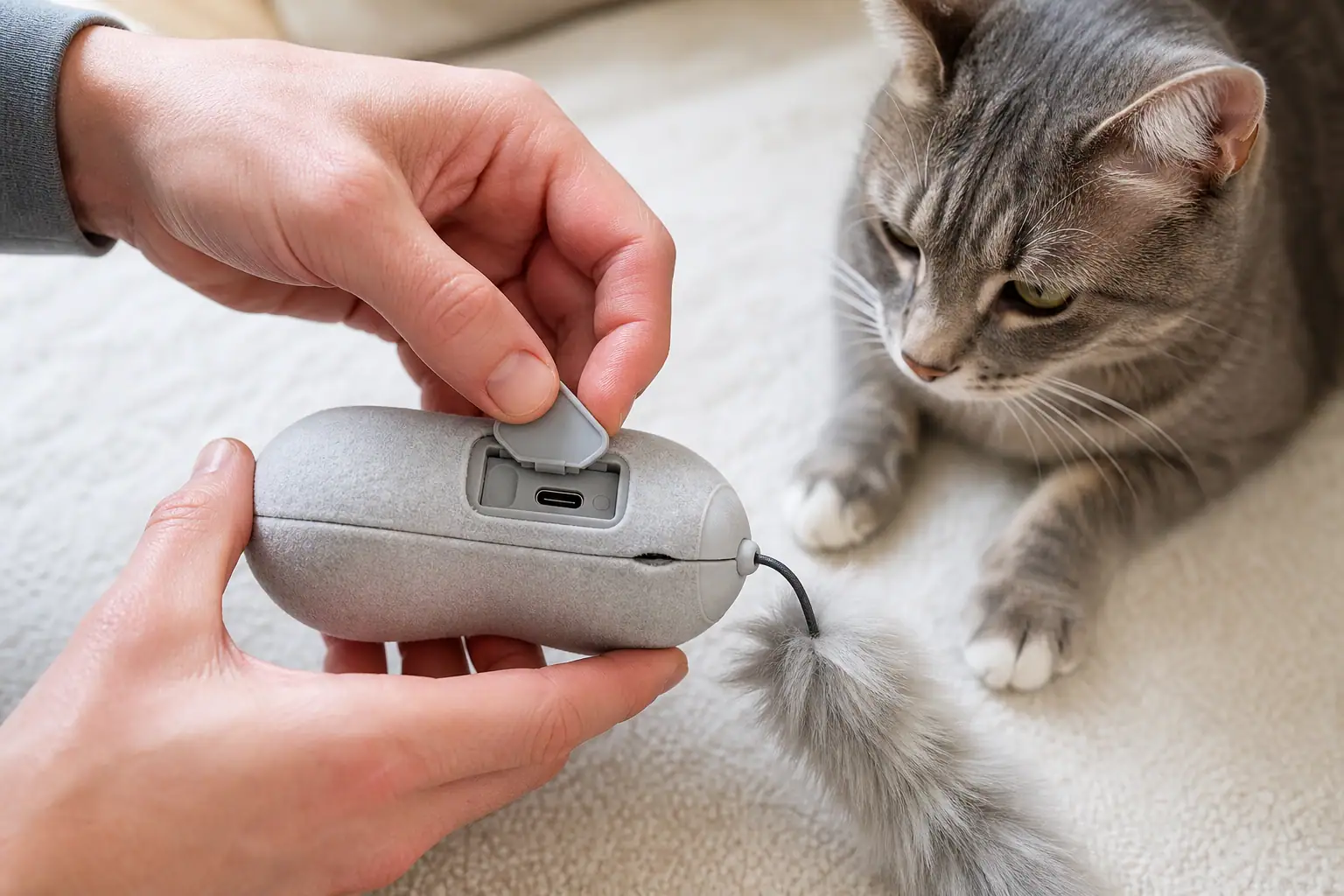
- Is there a battery door, USB charging port, or motor insert my cat can access?
- Does the toy need batteries, a charging cable, or wall power, and can my cat reach the cable?
- Are the holes, tracks, seams, and edges smooth enough for paws and claws?
- Would low-star reviews matter for my cat’s specific habit, such as chewing feathers or ripping seams?
The AAFP/ISFM environmental needs guidelines recommend play that mimics prey movement, lets the cat catch the toy, uses food or treat rewards after play, and rotates toys to prevent habituation. Potaroma-style motion toys can fit that routine, but the guidelines also point to a missing piece in many product pages: cats need a complete play sequence, not just a gadget running in the room.