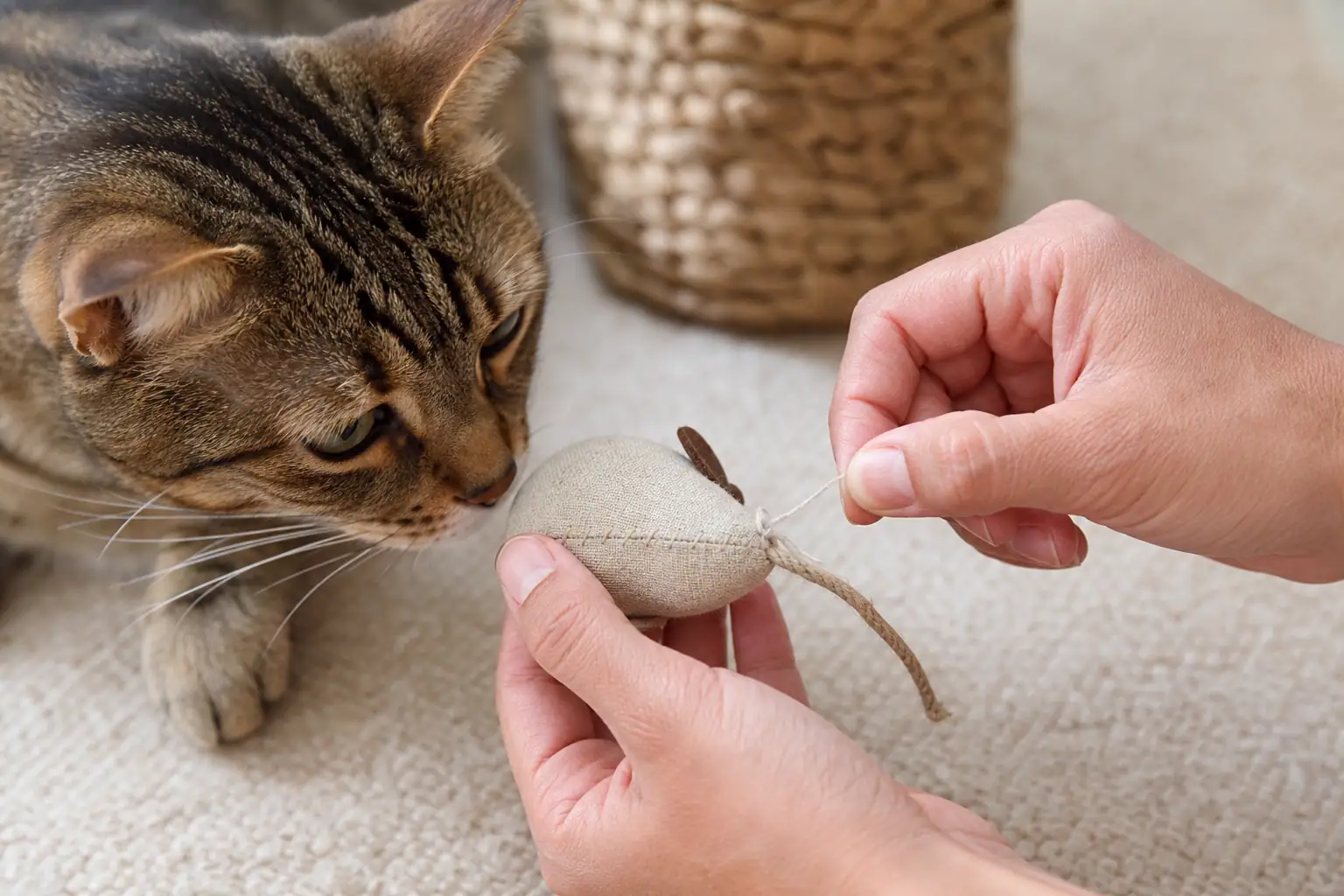
Natural cat toys are toys made mostly from materials such as wool, cotton, hemp, sisal, cardboard, wood, silvervine, catnip, or other plant- and animal-derived materials instead of plastic-heavy trim and synthetic stuffing. They can be a good choice for owners who want fewer plastics, clearer material lists, and toys that feel closer to prey textures. But natural does not automatically mean safe, durable, organic, non-toxic, or right for a cat that destroys ordinary toys.
The better question is not, “Is this toy natural?” It is, “Can my cat play with this material, shape, and construction without pulling off pieces, swallowing strands, cracking hard parts, or opening seams?” For Titan Claws readers with cats that bite, kick, and shred, natural materials need the same rough-play inspection as any other toy.
What Counts as a Natural Cat Toy?
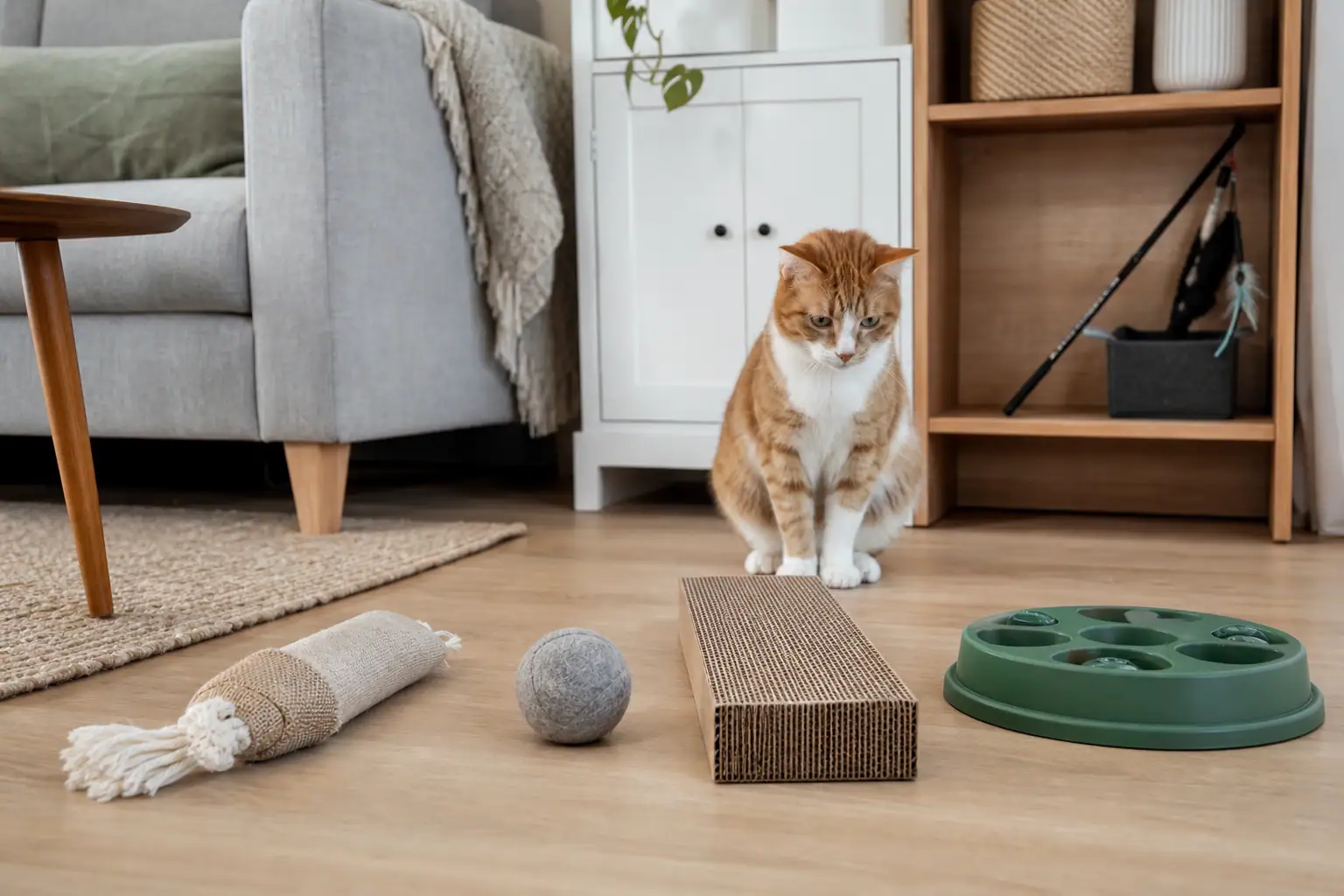
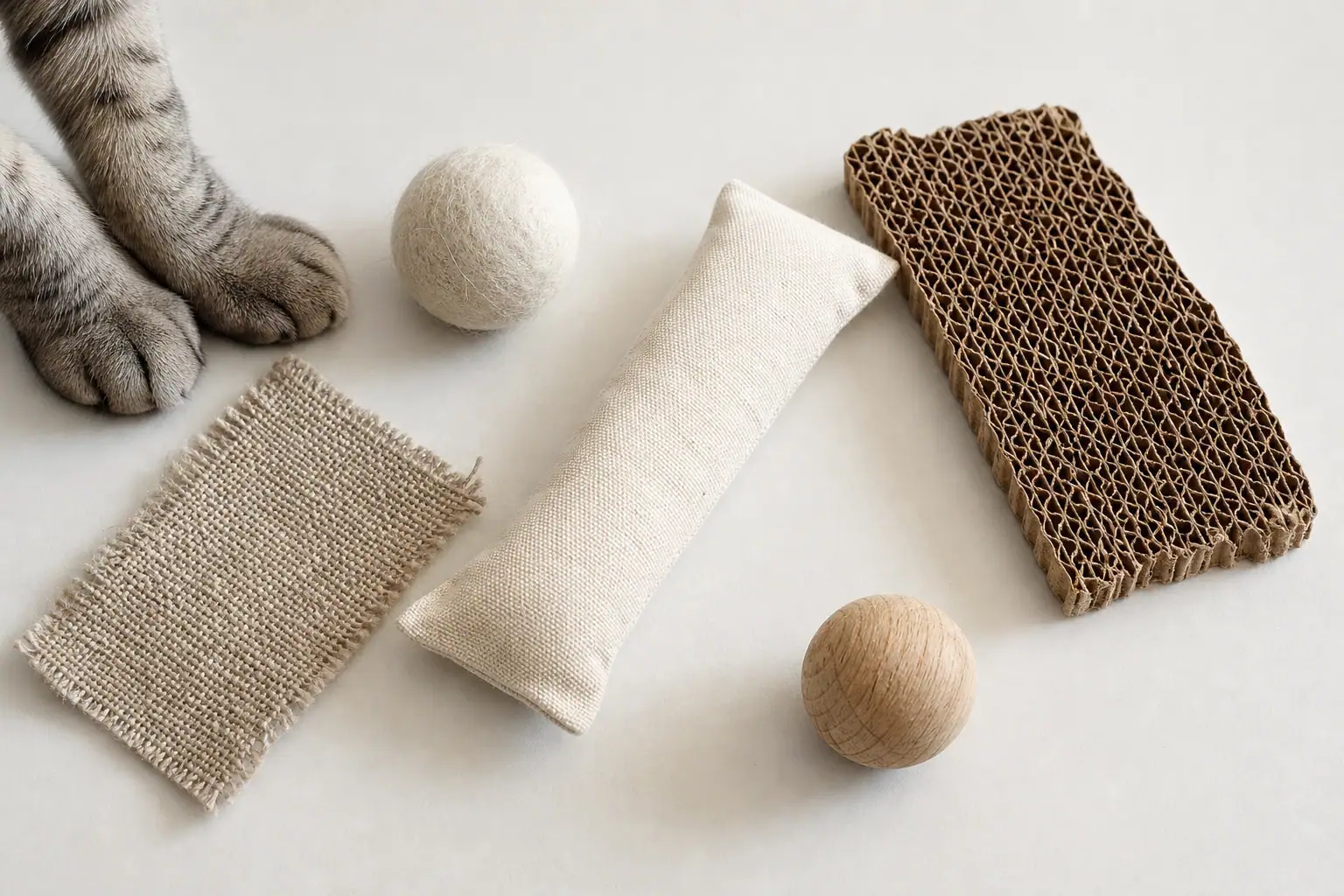
Most natural cat toys fall into a few material families. Each has strengths, weak points, and cats it suits best.
- Wool: felted wool balls, mice, mats, and cave-style toys can be appealing because of texture and scent. Choose tightly felted pieces that are too large to swallow, and retire them if your cat starts eating fibers.
- Cotton canvas and hemp: dense fabric kickers and small pillows can work well for cats that grab and bunny-kick. Check seam density, corner strength, and whether the filling is also listed.
- Catnip and silvervine: these are attractants, not durability features. They can make a toy more exciting, which also means some cats bite harder.
- Cardboard: scratchers, puzzle boxes, and simple boxes can be excellent enrichment. Remove handles, staples, tape, and loose plastic film before play.
- Sisal and rope: useful for scratching surfaces, but loose rope strands are not ideal for cats that chew and swallow string-like material.
- Wood: smooth wooden balls, tracks, and furniture can last well, but cracked, splintered, coated, or very small pieces are not safe for rough play.
Ranking pages for this keyword are mostly store collections. They show useful product categories, but many stop at broad claims such as natural, eco-friendly, non-toxic, or organic. A stronger buying process looks past the label and asks how the toy is built, how it fails, and how your cat actually attacks it.
Natural Does Not Mean Risk-Free
A natural toy can still be unsafe if it has small parts, long strands, brittle pieces, weak seams, loose stuffing, heavy dyes, or a shape that fits too far into your cat’s mouth. A wool mouse with glued-on eyes can be riskier than a plain synthetic kicker with reinforced stitching. A cardboard box can be safer than an expensive toy if the box has no handles, tape, staples, or swallowable pieces.
Cornell Feline Health Center recommends avoiding cat toys with small pieces or linear strand-like parts, including feathers and string, that can separate when chewed and be ingested. That warning applies just as much to natural fibers as it does to synthetic ribbons. The AAFP and ISFM environmental needs guidelines also advise putting away toys with string or other potentially ingestible parts after play and avoiding small ingestible parts or bells for unsupervised access.
Use the label as a starting point, not a permission slip. If a toy says organic cotton, look for seam construction. If it says wool, look for fiber shedding. If it says dye-free, check for hard parts and size. If it says handmade, inspect consistency from one toy to the next.
Best Natural Materials by Play Style
The safest natural toy is the one that matches the way your cat plays. Start with your cat’s failure pattern.
For cats that bunny-kick
Choose a long cotton canvas, hemp, or tightly woven fabric kicker that lets your cat hug the toy and rake with the back feet without reaching your hand. Look for reinforced ends and minimal decoration. Catnip can help, but it should not be the main reason to buy the toy.
For cats that chew
Choose larger, simpler shapes with no glued-on eyes, bells, yarn tails, thin rope, or exposed stuffing. Watch the first sessions closely. If your cat removes and swallows fibers, the toy is wrong for that cat even if the material is natural.
For cats that chase and bat
Wool balls, smooth wooden balls, and sturdy cardboard tracks can be useful. Size matters: avoid anything your cat can swallow whole. Check wood for cracks or splinters, and remove wool balls when they flatten, shed heavily, or become small enough to mouth deeply.
For cats that scratch and scent-mark
Cardboard and sisal scratchers can satisfy clawing and scent-marking. Choose stable scratchers that do not tip, shed staples, or expose adhesive. Recycled cardboard is common, but the sturdiness of the structure matters more than the eco claim.
For cats that need active hunting play
Natural feather, fur, cotton, or wool wand lures can be excellent during supervised sessions. They should not be floor toys after play. Store them behind a door or in a closed bin because string, elastic, and feather shafts are exactly the kind of parts destructive cats may chew apart.
If your cat specifically breaks fabric toys, compare natural options with Titan Claws’ guide to durable cat toys. If your cat likes to gnaw, read the chewy cat toys guide before choosing a soft natural toy.