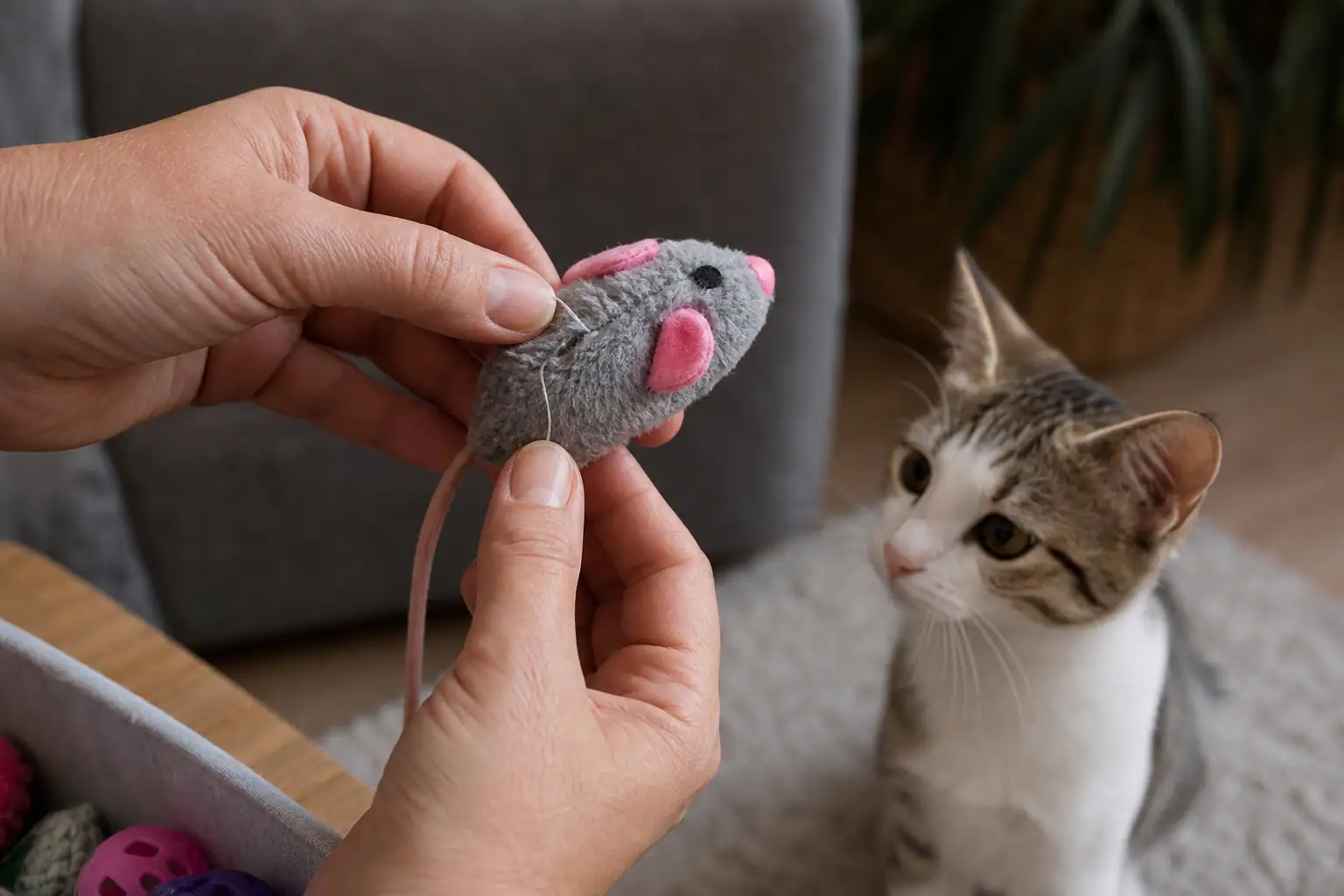
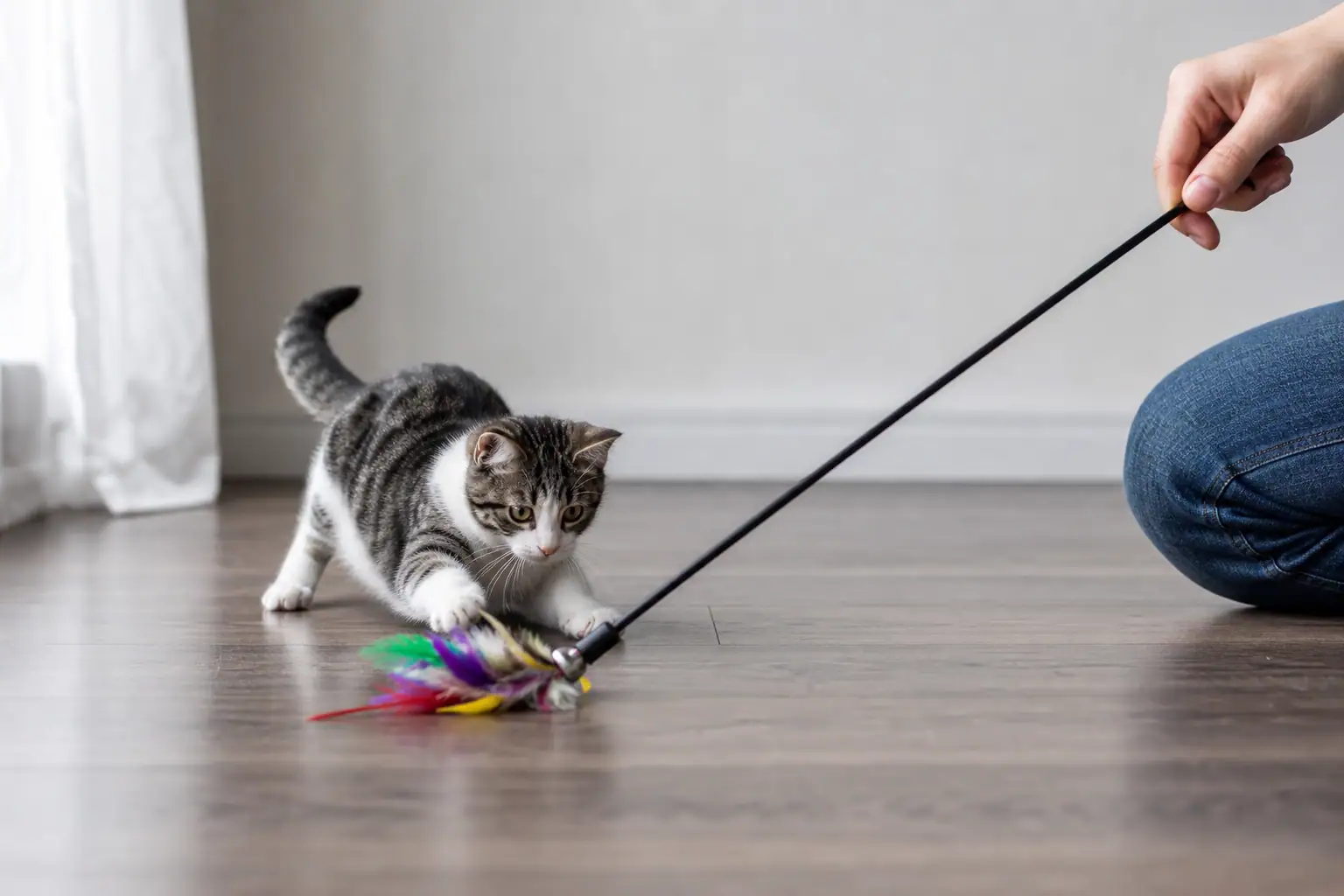
Tinker Toy was not a cat toy. Tinker Toy was the name of the smallest cat on record, according to Guinness World Records: a male blue point Himalayan-Persian who measured 7 cm tall and 19 cm long when fully grown at 2.5 years old. He was born on December 25, 1990, lived in Taylorville, Illinois, and died in November 1997 at age six.
That answers the main search question, but it also raises a practical one for cat owners: if a cat is unusually small, should the toys be unusually small too? Sometimes yes, but not always. A toy that looks proportional in a photo can still be a choking, chewing, or string-ingestion risk. For a tiny adult cat, a kitten, or any cat with a delicate frame, the best toy is sized for safe play behavior, not just for cuteness.
This guide separates the Tinker Toy record from online confusion, then turns the lesson into a safer toy-sizing checklist for small cats, kittens, and rough players.
Who Was Tinker Toy the Cat?
Guinness World Records identifies Tinker Toy as a male blue point Himalayan-Persian owned by Katrina and Scott Forbes in Taylorville, Illinois. Guinness lists his full-grown size as 7 cm, or 2.75 inches, tall and 19 cm, or 7.5 inches, long. He was the runt of a litter of six kittens.
Those details are why the keyword “cat tinker toy” often brings up record pages, trivia posts, and photo discussions instead of actual toys. Searchers are usually trying to confirm whether Tinker Toy was real, what breed he was, how small he was, or whether a viral image is authentic.
The short answer is clear: Tinker Toy was real, and the official record is about a specific Himalayan-Persian cat, not a miniature cat breed or a product for sale.
Why Tinker Toy Photos Cause Confusion
Many tiny-cat images online are reused without context. Some show other cats. Some are edited. Some are attached to names like Mr. Peebles, which creates another layer of confusion. ThatsNonsense has covered one popular smallest-cat image and explains that the pictured cat was not Tinker Toy, while also pointing back to Guinness for the Tinker Toy record.
That matters because tiny-cat content can make extreme smallness look normal or desirable. It is not a shopping category. It is not proof that a cat is a special mini breed. And it should not encourage owners to seek the smallest possible cat or the tiniest possible toys.
If you are researching Tinker Toy because your own cat is very small, focus on health, body condition, and safe daily care. A small adult cat can be perfectly healthy, but sudden weight loss, poor growth, weakness, dental pain, vomiting, diarrhea, or appetite changes deserve a veterinarian’s attention.
Does a Very Small Cat Need Tiny Toys?
A very small cat may need lighter toys, lower-impact play, and smaller grip surfaces. That does not mean the toy should be tiny enough to disappear into the mouth. Small cats can still swallow small parts, chew off string, tear seams, and get overexcited during chase play.
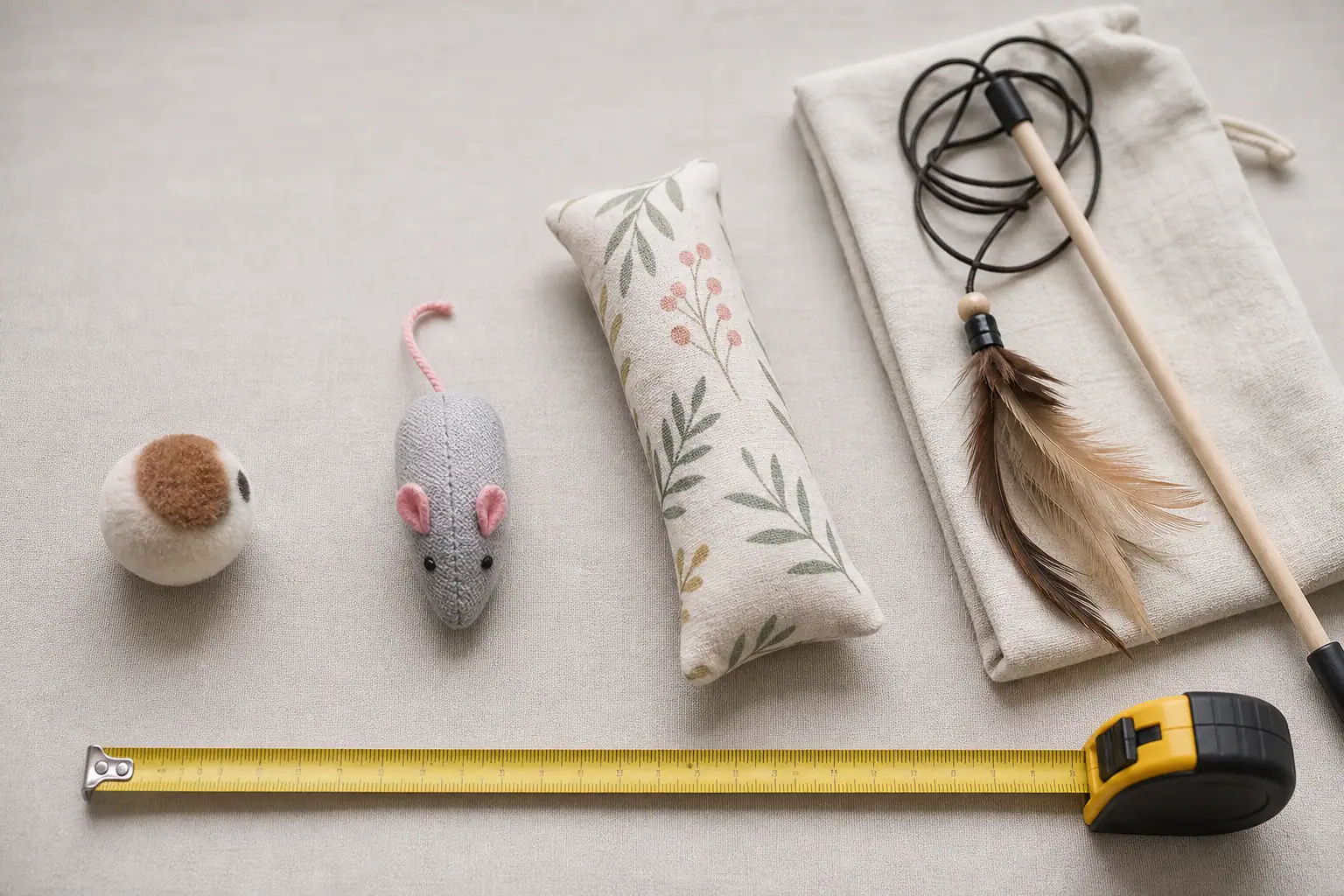
Think in terms of function:
- For batting: the toy should move easily without being so small that the cat can swallow it whole.
- For biting: the surface should be large enough to bite safely without loose eyes, bells, beads, feathers, or thin tails coming off.
- For kicking: the toy should be long enough for the cat to hug and rake without your hand becoming the target.
- For chasing: the toy should move like prey but not leave string, elastic, or ribbon available after play.
- For solo play: the toy should have fewer failure points than a supervised toy, because you will not be there to stop chewing or ingestion.
For a broader durability framework, see Titan Claws’ guide to durable cat toys. If you are shopping for a young cat, the kitten toys guide gives age-by-age safety notes.