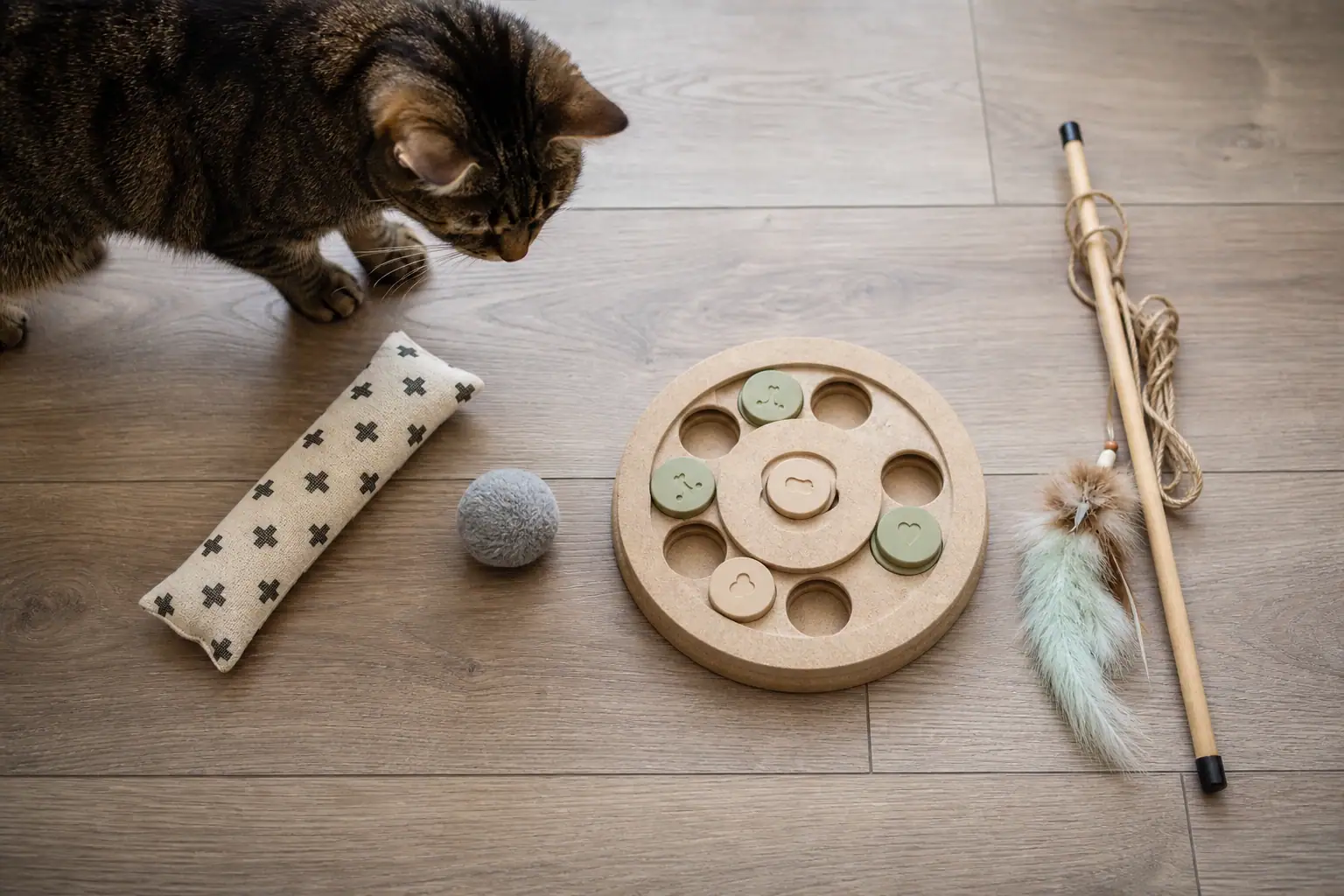
Cute cat toys are worth buying when they are more than cute. The best ones match how your cat actually plays: stalking, chasing, pouncing, biting, kicking, carrying, and sometimes trying to shred the toy apart. A toy can be pastel, funny, handmade, or shaped like a tiny food item and still be a smart choice, but only if the materials, size, seams, and loose parts make sense for your cat.
For Titan Claws readers, the useful question is not “what looks adorable in a product photo?” It is “what will still be safe after my cat gets excited?” This guide shows how to choose cute cat toys for real play, especially if your cat chews hard, destroys plush toys, or gets bored with ordinary toy baskets.
What Cute Cat Toys Usually Get Right
The current search results for cute cat toys are dominated by boutique collections, marketplace pages, and roundups. They are good at showing styles: tiny plush fruit, felt mice, pastel balls, crinkle characters, floral wand lures, and toys that look tidy enough to leave in a living room.
That matters. Owners are more likely to rotate toys and keep play visible when the toys do not feel like clutter. A cute toy can also make a good gift, help a new adopter build a starter kit, or encourage short daily play sessions because the setup feels inviting instead of messy.
But most shopping pages stop too early. They rarely explain which toys are for supervised play, which are safer for solo batting, what to inspect after chewing, or when a cute detail becomes a hazard. That missing safety layer is where owners of rough-playing cats need to be stricter.
The Safety Test Before the Style Test
Before judging color, shape, or theme, check whether the toy is built for your cat’s mouth and paws. Cornell Feline Health Center notes that toys help cats exercise, problem-solve, and express natural stalking and pouncing behavior, but it also warns owners to avoid toys with small pieces or strand-like parts, such as feathers and string, that may detach and be swallowed.
Use this quick safety test before a cute toy goes into the rotation:
- Size: the toy should not fit fully inside your cat’s mouth, especially for solo play.
- Parts: avoid glued eyes, beads, bells, plastic noses, tiny charms, ribbon tails, and decorations your cat can chew off.
- Seams: look for tight stitching and a shape you can inspect after play.
- Stuffing: skip toys that shed fuzz or expose filling after a few bites.
- String: treat string, yarn, elastic, ribbon, and wand cords as supervised-play materials only.
- Texture: choose surfaces that are interesting without being brittle, sharp, or coated in mystery finishes.
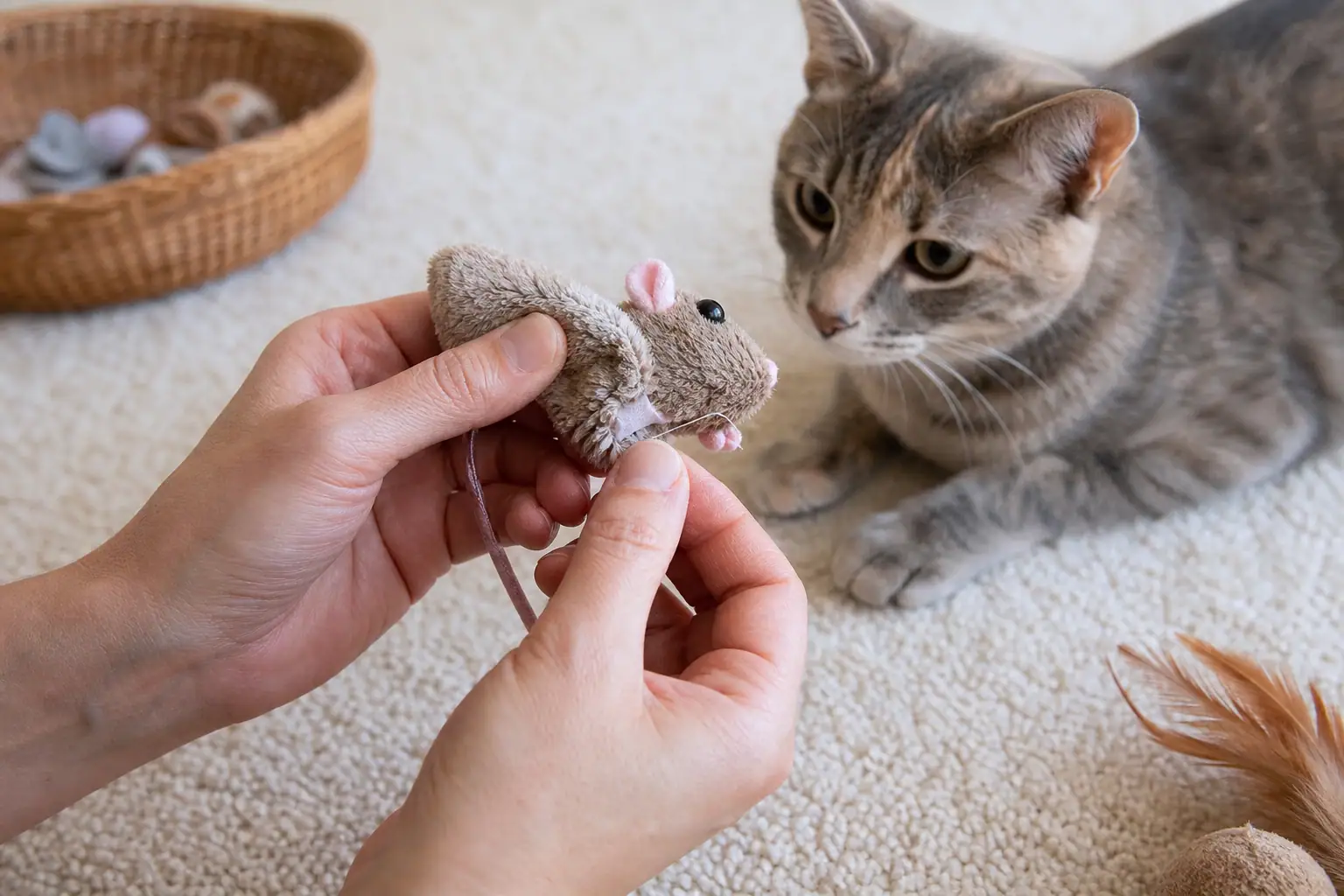
Texas A&M veterinary guidance gives a simple sizing rule that applies well to cat toys: a toy should not be small enough to swallow or fit whole into the mouth, and it should not be so large that the animal cannot chew or handle it comfortably. For cats that destroy toys, the same source advises regular inspection because even safer toys can break down under enough play pressure.
Best Cute Toy Types by Play Style
A cute toy works better when it has a job. Instead of buying one mixed bag and hoping your cat likes it, choose toys by the behavior you want to encourage.
For cats who carry and kick
Look for small-to-medium fabric kickers with reinforced seams and no hard decorations. Cute food shapes, little monsters, or animal silhouettes can work if the toy is long enough for hugging and back-foot kicking. If your cat clamps down and bunny-kicks hard, read Titan Claws’ guide to durable cat toys before buying another soft plush.
For cats who chase
Lightweight balls, soft skitter toys, and crinkle toys can be cute without being complicated. Choose pieces that move easily but are too large to swallow. Avoid brittle plastic balls with removable bells if your cat bites instead of just bats.
For cats who stalk and pounce
Wand toys are excellent for making a cute lure behave like prey. The AAFP/ISFM environmental needs guidelines recommend play that lets cats mimic predatory behavior, including chasing, catching, pouncing, and manipulating toys with paws or mouth. The important rule: put wand toys away after the session. String and elastic are not floor toys.
If your cat loves lures, compare formats in Titan Claws’ guides to cat feather toys and cat toys on sticks. Feathers and cords can be useful, but they need supervision and inspection.
For cats who solve and forage
Puzzle toys and treat feeders do not have to look industrial. Cute puzzle trays, treat balls, and foraging mats can be useful if they are easy to clean and do not have small removable caps. Start simple. A puzzle that frustrates the cat is not enrichment; it is just furniture.
Cute Does Not Mean Safe for Unsupervised Play
The biggest mistake is treating every cute toy as a leave-out toy. Some toys are interactive tools. Some are solo batting toys. Some are gift-box filler that should never be used by a rough player without changes or supervision.
Use three groups:
- Leave-out toys: simple, larger-than-mouth toys with no string, no loose decorations, no batteries, and no easily exposed stuffing.
- Supervised toys: wands, feather lures, elastic cords, ribbon toys, and anything your cat tries to chew apart.
- Photo-only or discard toys: tiny novelty pieces, toys with glued parts, loose sequins, small bells, wire, brittle plastic, or stuffing that appears immediately.
This does not mean your home has to be boring. It means the toy’s risk level decides where it lives. A cute wand can hang in a closet between sessions. A cute kicker can stay out if it survives inspections. A tiny decorative toy can be skipped completely if your cat treats it like prey to swallow.