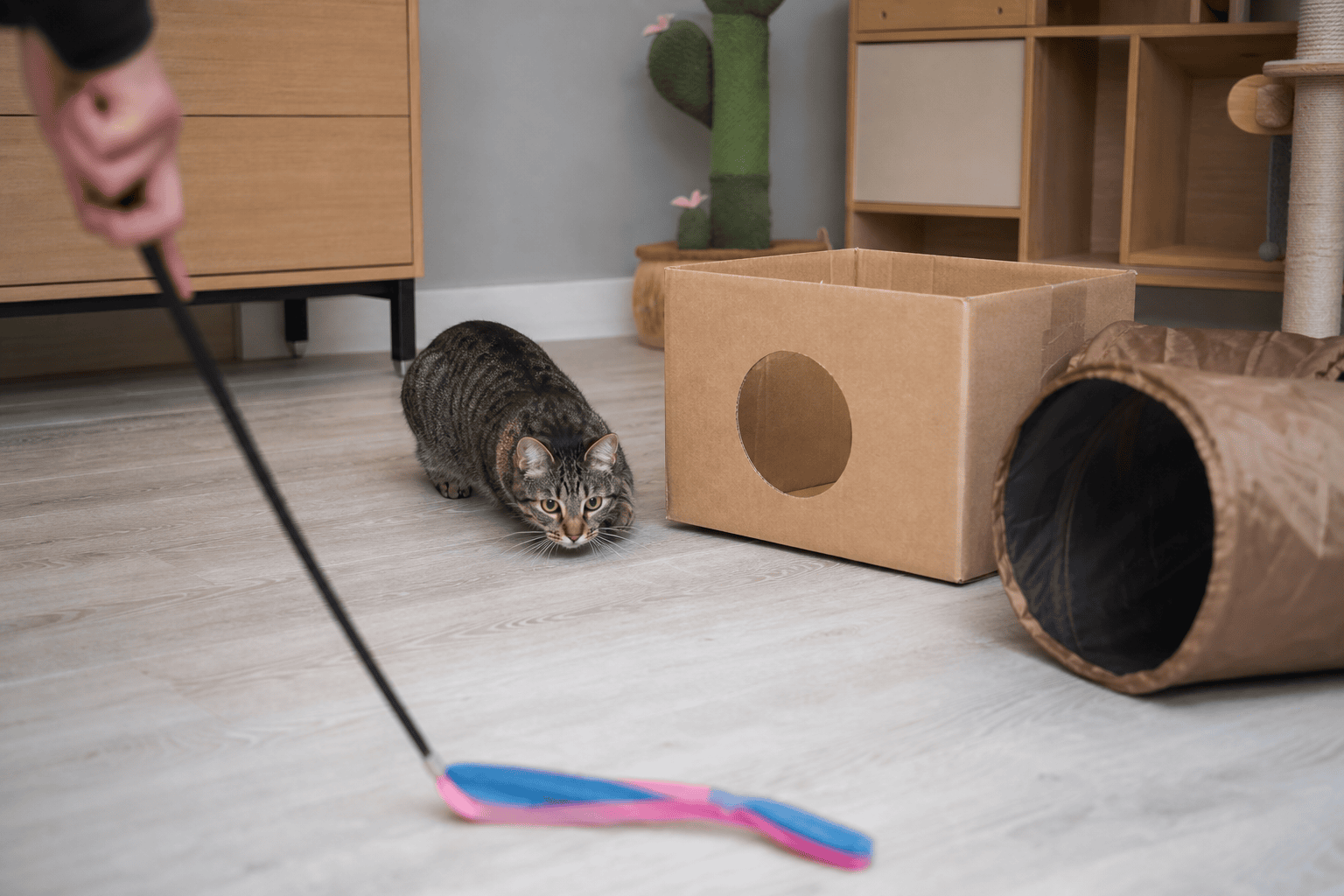
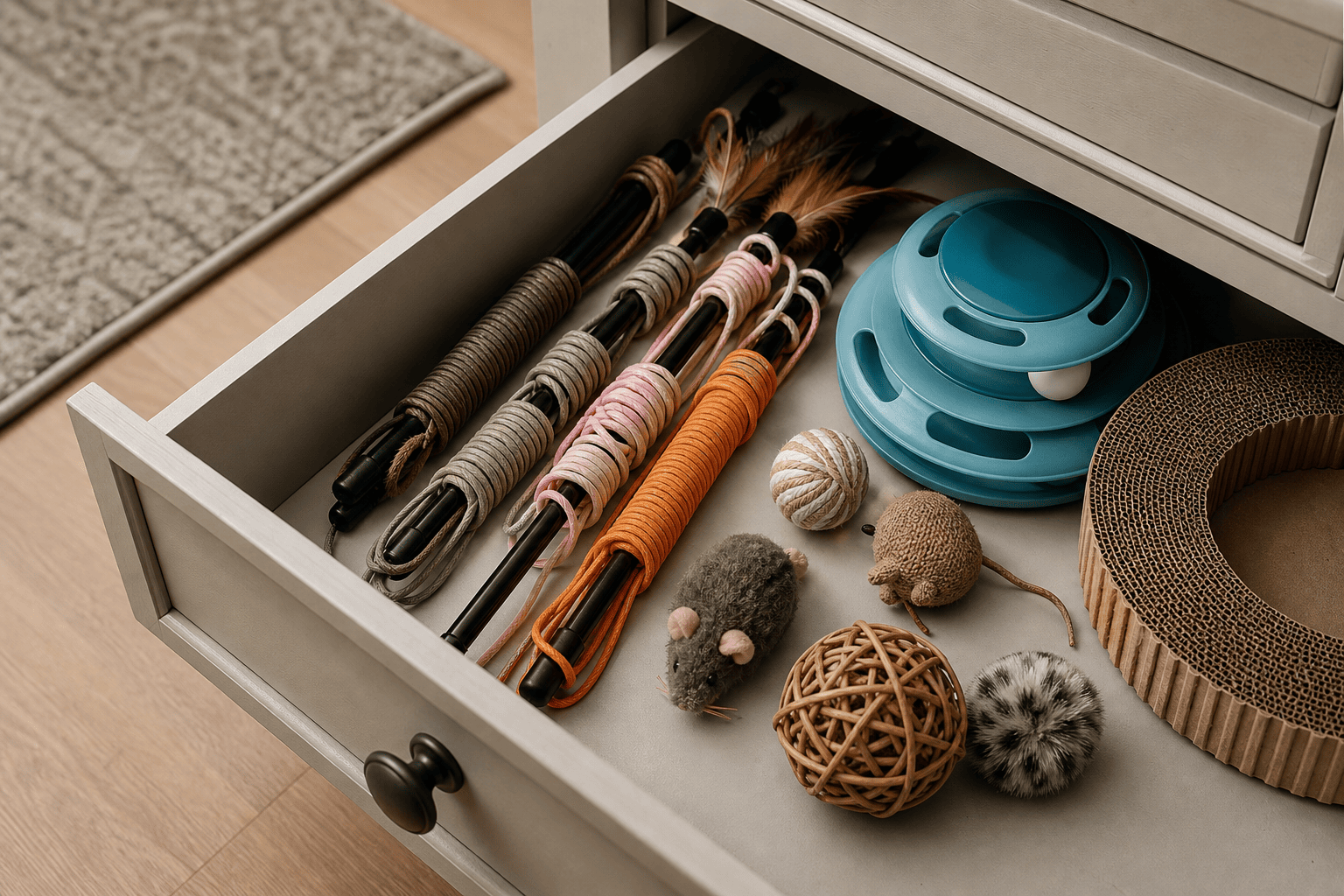
A cat toy on a stick is usually a wand, teaser, or fishing-pole style toy: a handle with a string, wire, ribbon, feather, plush lure, fabric strip, or interchangeable attachment at the end. It can be one of the best toys for indoor cats because it lets you create prey-like movement from a safe distance. It can also be one of the easiest toys to misuse if it is left out, frays, or has small parts your cat can chew off.
The right approach is simple: use wand toys for supervised play, choose attachments that match how your cat bites and pulls, let your cat catch the lure during the game, inspect the toy after every hard session, and store it where your cat cannot chew the string. For Titan Claws readers with rough players, that last part matters. A stick toy is not a set-it-and-forget-it toy. It is play equipment.
Why Cats Like Toys on Sticks
Wand toys work because they let you act like prey. A good stick toy can skim across the floor like a mouse, flutter behind a chair like a bird, dart around a cardboard box, or disappear under a towel edge. That movement gives your cat a chance to stalk, chase, pounce, grab, bite, and kick without targeting your hands.
Veterinary behavior guidance supports this kind of play. The AAFP and ISFM feline environmental needs guidelines recommend opportunities for play and predatory behavior, including owner-led play, toys, and food puzzles. Their play examples include moving a rod or wand so the toy mimics flying or ground prey, then letting the cat catch it.
That catch is not optional for many cats. If the lure always escapes, some cats get frustrated, over-aroused, or start redirecting onto ankles, hands, or another pet. A better session includes a chase, a real capture, a brief bite-and-kick moment, and a calm finish.
What Current Search Results Get Right and Miss
Most results for “cat toy on stick” are shopping pages. They are useful for comparing feathers, retractable poles, replacement lures, clips, and prices, but they usually do not help you decide what is safe for your specific cat. A product grid cannot see whether your cat chews string, swallows feathers, snaps elastic, cracks plastic, or drags the wand under the bed.
Chewy’s wand toy category gives the basic definition well: wand toys have a handle and dangling toy, such as feathers, strings, or plush critters, and they mimic prey movements. Some specialty brands, including Repounce’s Forever Stick, compete around longer-lasting handles and replaceable setups. Those details can help, but handle durability is only one part of the decision.
The stronger buying question is: what happens when my cat catches it hard? For a gentle swatter, many feather teasers are fine under supervision. For a cat that clamps down, twists, and tries to eat the cord, you need stricter rules: shorter sessions, tougher lures, fewer tiny attachments, careful storage, and fast replacement when wear appears.
How to Choose a Better Cat Toy on a Stick
Start with your cat’s failure pattern. Durable does not mean impossible to break. It means the toy should fail visibly, slowly, and in a way you can catch before your cat swallows pieces.
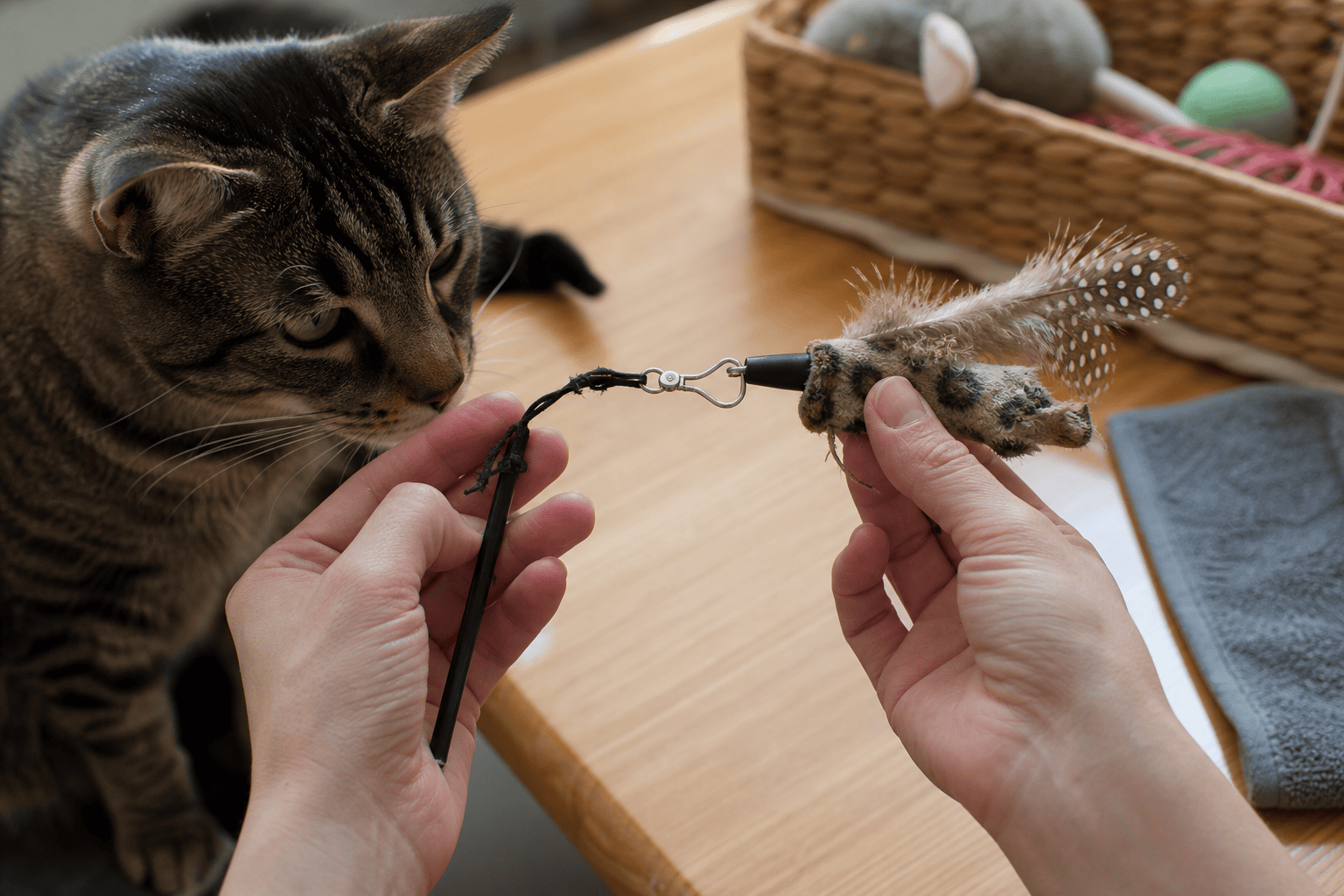
- For cats that chew string: avoid thin elastic, yarn, ribbon, and long loose cords. Choose a wand with a heavier cord, short fabric lure, or clip-on attachment you can remove and store.
- For cats that shred feathers: use feathers only during close supervision, or switch to fabric, fleece, canvas, or a larger plush lure without glued decorations.
- For cats that pull hard: look for a solid handle, secure connection point, and replaceable lure. Retire the toy when the clip bends, knot loosens, or cord sheath frays.
- For cats that leap: choose a longer wand so your hand stays away, and play in a room without sharp furniture edges, breakables, or unstable shelves.
- For kittens: keep the toy lightweight, avoid high jumps, and focus on short sessions. Growing cats do not need big aerial moves to get value from play.
Cornell Feline Health Center advises avoiding toys with small pieces or linear strand-like parts, such as feathers and string, that may separate when chewed and be ingested. That warning is especially relevant for stick toys because the exciting part of the toy is often a cord or feather attachment.