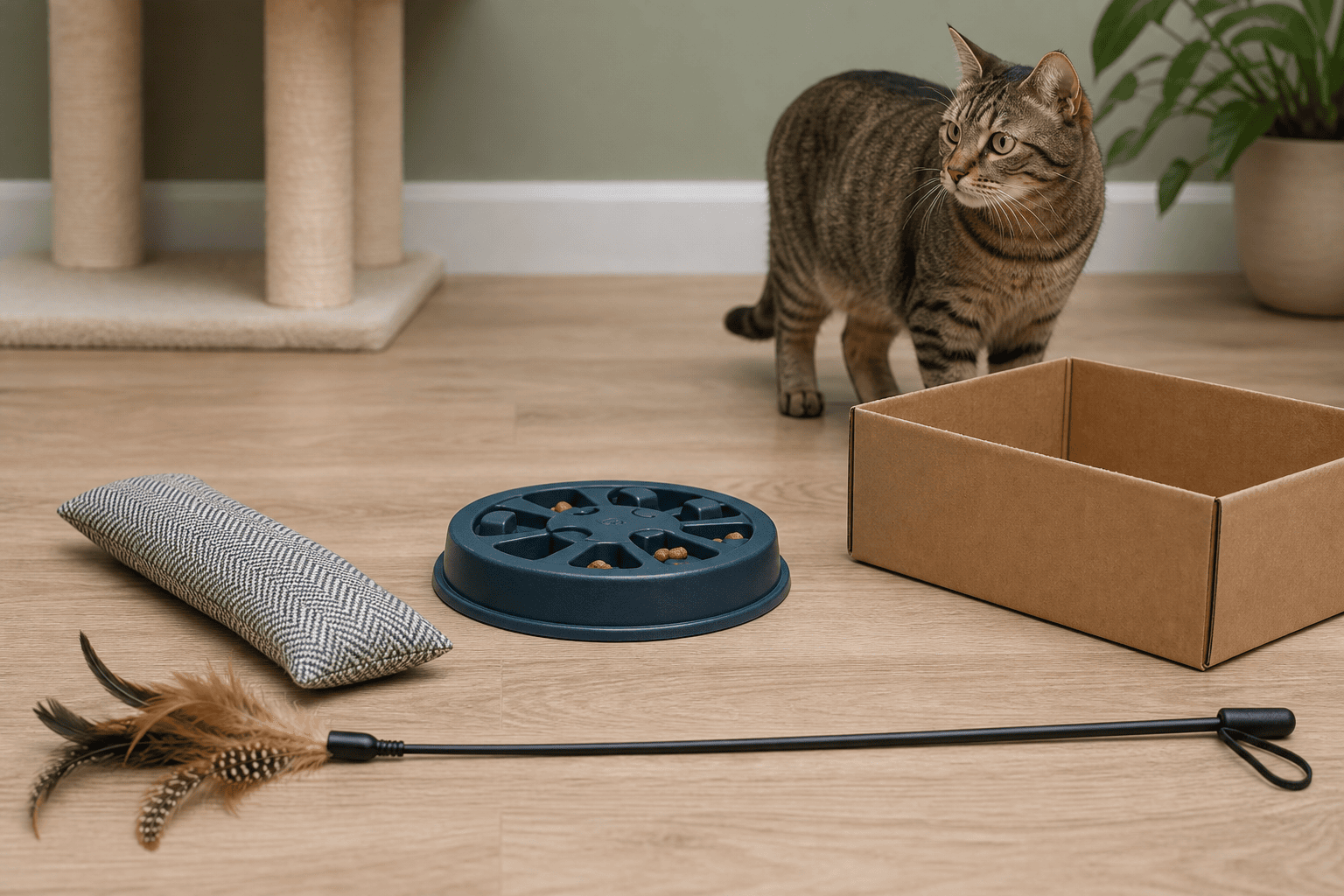
The Da Bird cat toy is a feather wand made for interactive chase play. Its appeal is simple: the feather attachment spins, flutters, and changes direction in a way many cats read as bird-like prey. For cats that ignore stiff teaser toys, that movement can be the difference between a bored glance and a full stalking, leaping, pouncing session.
For rough players, the honest answer is more careful: Da Bird can be an excellent supervised toy, but it is not a leave-out toy and it is not a chew toy. If your cat bites down, pulls feathers out, chews cord, or swallows toy pieces, use it as a short-session wand and inspect it after every hard play session.
The best use is a controlled hunt: make the lure flee, let your cat catch it, hand off a sturdier kicker if your cat wants to bite and rake, then store the feather wand where your cat cannot reach it. That gives you the value of the toy without pretending feathers, string, or clips are safe for unsupervised access.
What Is the Da Bird Cat Toy?
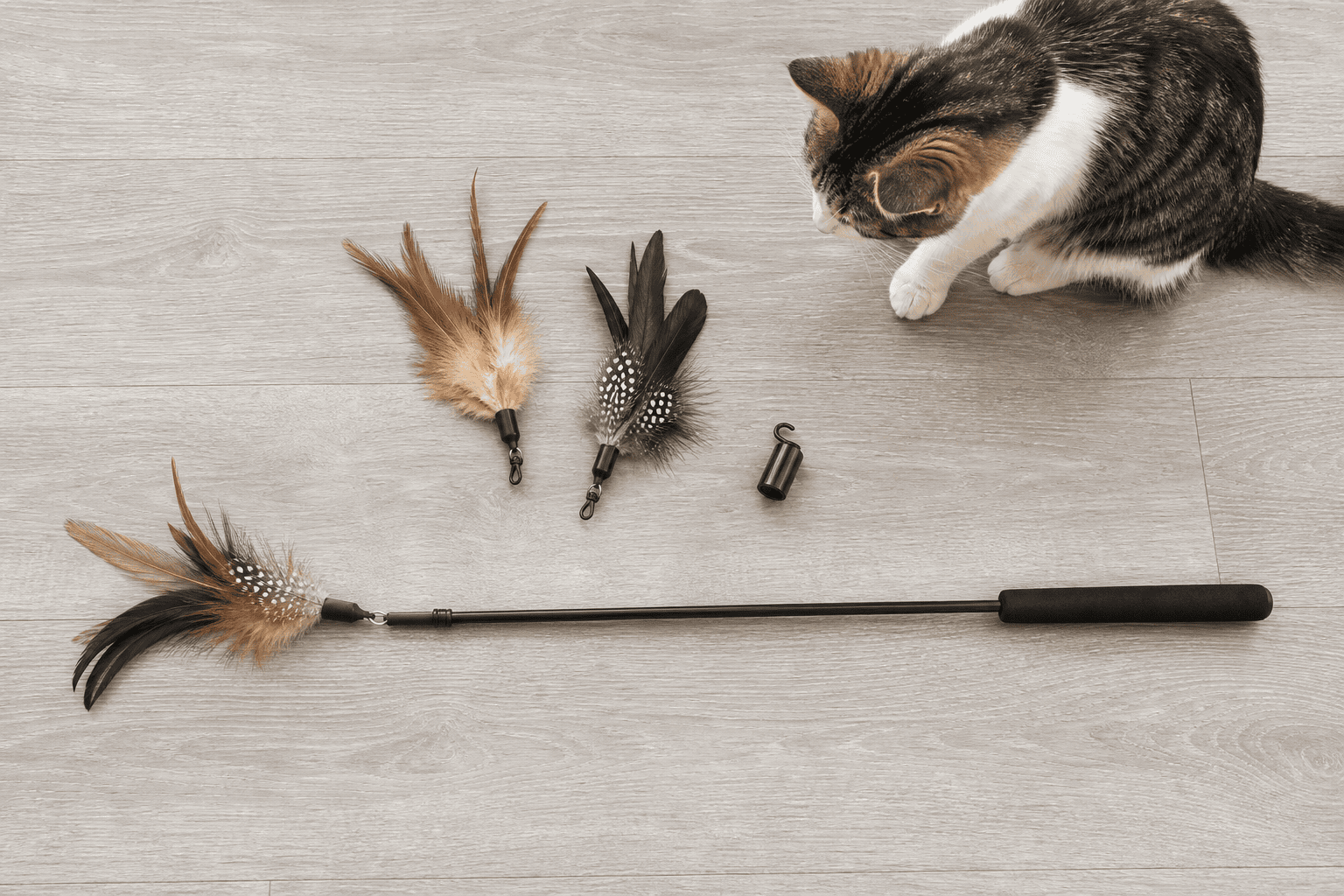
Da Bird is part of the Go Cat Feather Toys line. The official product page describes it as an interactive cat toy with real feathers attached to a durable string, and the current options include standard or pull-apart rods plus guinea or turkey feathers. Go Cat also sells separate refills and related attachments, which matters because feather lures wear out faster than the wand itself.
That refill system is one reason owners search for Da Bird by name. If your cat loves the action but destroys the lure, replacing the feather end is usually more practical than buying an entirely new wand. It also lets you retire a damaged attachment before it becomes a swallowing risk.
Do not judge the toy only by price or popularity. Judge it by your cat’s failure pattern. A cat that chases and releases may get many sessions from a refill. A cat that pins, chews, and grinds feathers can damage one quickly. Both cats may love the toy, but they need different rules.
Why Cats Like Da Bird-Style Feather Wands
Good wand play lets a cat perform pieces of the predatory sequence: watch, stalk, chase, pounce, grab, bite, and recover. The AAFP and ISFM feline environmental needs guidelines recommend play that mimics flying or ground prey, including moving a wand in ways that resemble prey movement and letting the cat catch the toy at the end of the chase.
Da Bird works because the lure is light and responsive. When the handler moves the wand well, the feathers can swoop around furniture, pause near a hiding spot, flutter away, and drop behind an obstacle. That is more engaging than dangling the toy in the cat’s face.
The mistake is making every session an endless aerial sprint. Cats need the chance to stalk, miss, catch, and reset. If the toy never lands, some cats get frustrated. If it lands and stays in the mouth too long, feather-chewers may start dismantling it. A better session mixes short flights with controlled captures.
What Current Search Results Get Right and Miss
The current search results answer the buying question well. You can find the official Go Cat page, marketplace listings, retailer pages, refills, attachments, and owner discussions. That is useful if you already know you want the toy.
What many results do less well is help a specific owner decide whether Da Bird fits a cat that destroys toys. Product pages understandably focus on fun and prey-like motion. Retail listings focus on availability. Forum threads often share real owner experience, but they can be scattered: one cat loves it, another shreds the attachment, another ignores cheaper wands.
For Titan Claws readers, the useful question is not just “Is Da Bird good?” It is “How do I use a feather wand with a cat that plays hard without creating a feather, string, or cord hazard?”
Safety Rules for Da Bird and Feather Wand Toys
Cornell Feline Health Center advises avoiding toys with small pieces or linear strand-like parts such as feathers and string that may separate and be ingested, especially when chewed. That warning applies directly to feather wands. Vetstreet gives similar guidance: fishing-pole toys can be used with supervision, but they should be placed out of reach when play is over, and owners should be careful with strings, yarn, ribbons, feathers, and detachable plastic parts.
- Supervise every session: Da Bird is for owner-led play, not all-day floor access.
- Store it closed away: Put the wand, cord, clips, and feather refills in a drawer, closet, or sealed bin after play.
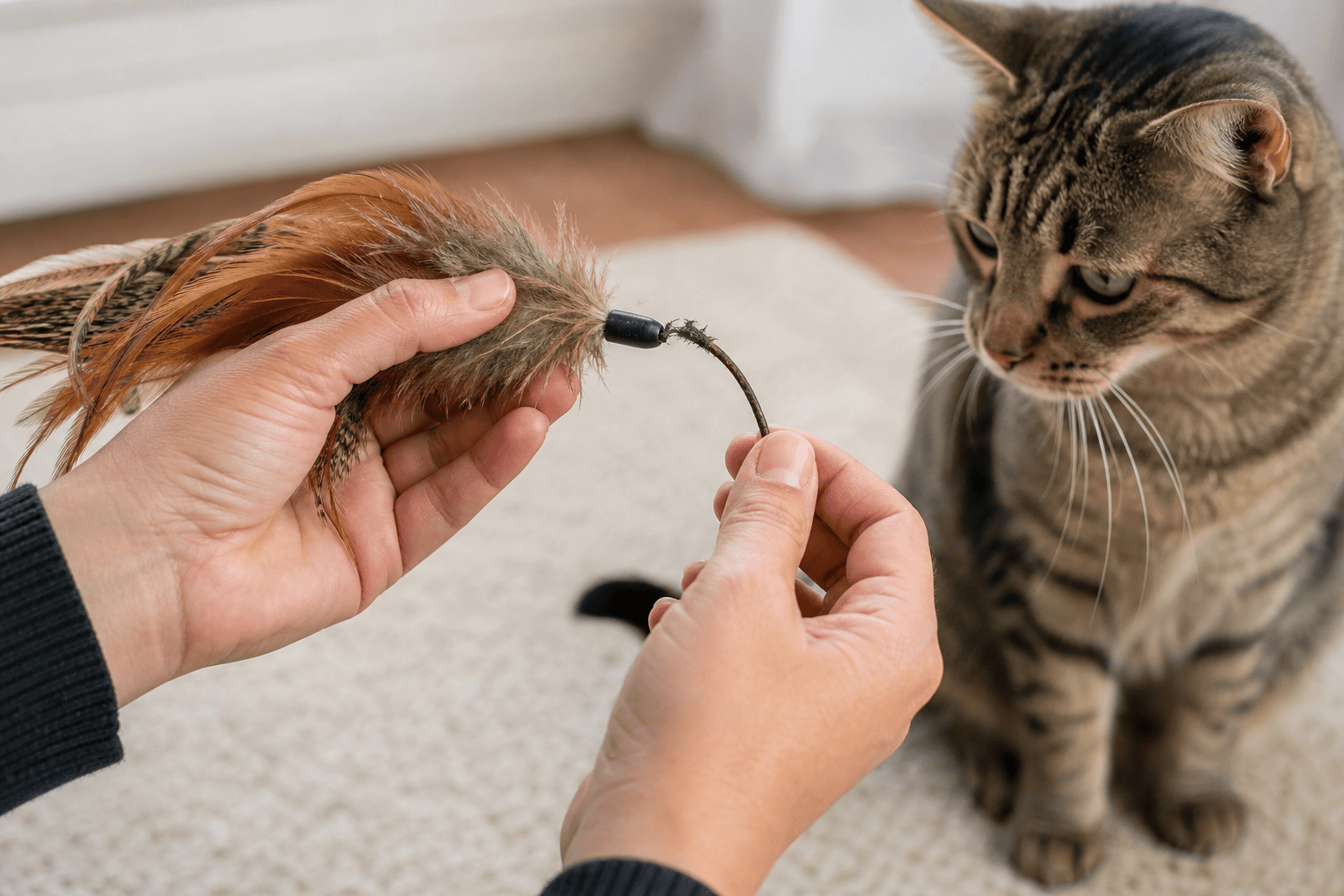
- Inspect before and after use: Look for loose feathers, a bent clip, frayed cord, exposed wire, bite-notched parts, cracked connectors, or feathers pulling free at the base.
- Retire damaged refills early: A favorite lure is not worth keeping once pieces can come off.
- Do not let your cat chew the cord: If your cat targets the string instead of the lure, shorten the session and switch to a sturdier toy.
- Keep play away from hazards: Avoid stairs, glass tables, unstable shelves, open fireplaces, hot stoves, blind cords, and rooms with fragile objects your cat may crash into.
If your cat swallows a feather, string, toy fragment, or unknown piece, call your veterinarian. Watch especially for vomiting, gagging, appetite loss, lethargy, belly pain, straining, repeated swallowing, or hiding. A wand toy is supposed to enrich the day, not create a medical gamble.