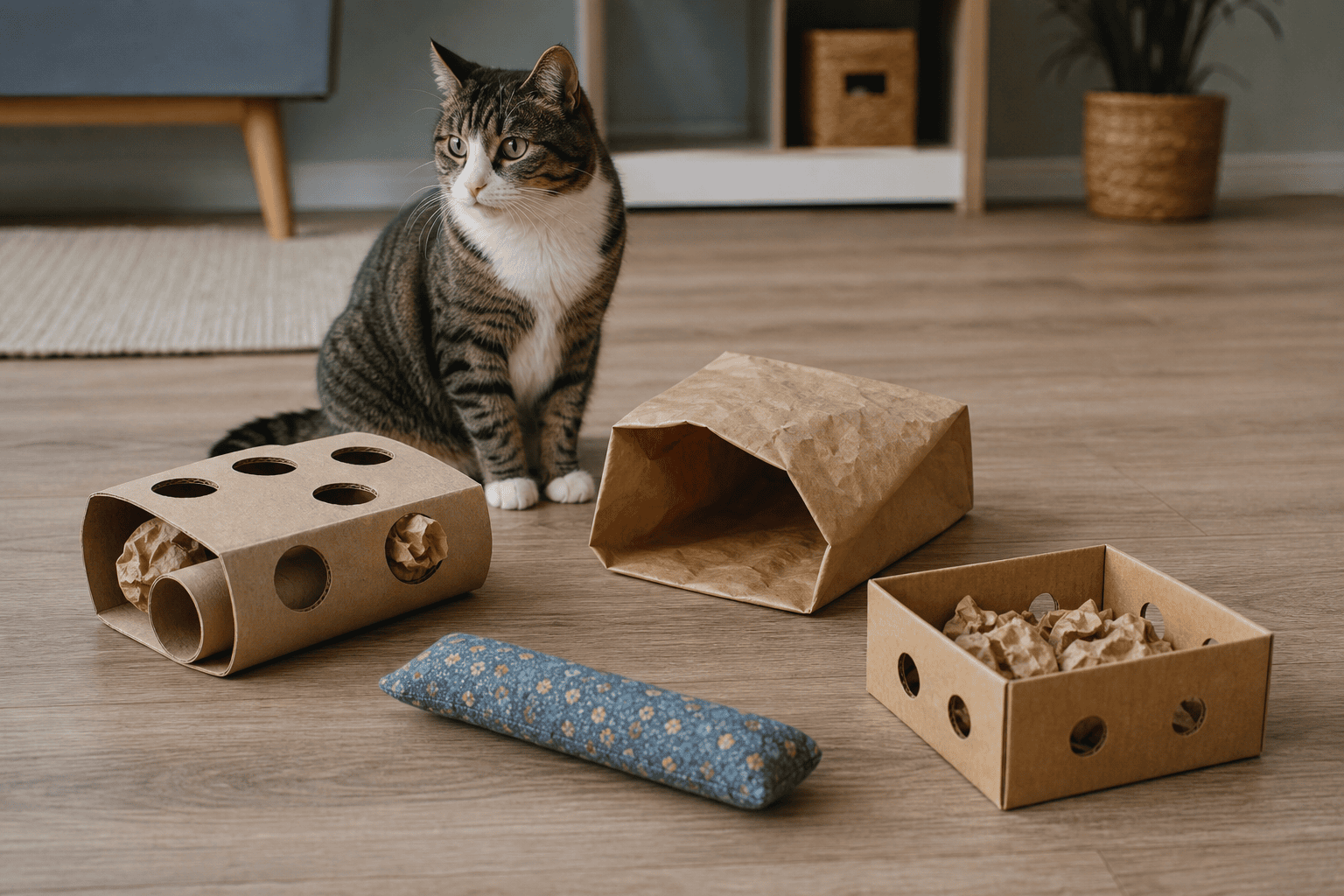
DIY cat toys can be simple, cheap, and genuinely useful: cardboard boxes, toilet paper rolls, paper bags with handles removed, washable fabric kickers, and food puzzles can all give indoor cats something to stalk, paw, chase, and solve. The catch is safety. A homemade toy is only a good toy if it matches how your cat actually plays and if you inspect it before small parts, string, stuffing, tape, or shredded cardboard become a swallowing risk.
For gentle cats, DIY toys are a great way to add variety without buying a new toy every week. For cats that chew, rabbit-kick, rip seams, or destroy ordinary toys, DIY projects need stricter rules: bigger pieces, fewer dangling parts, supervised sessions, and a clear retirement point.
What Makes a Good DIY Cat Toy?
A good homemade cat toy does one clear job. It may make food more interesting, give your cat something to pounce on, create a hiding-and-ambush setup, or provide a safe target for kicking. The best DIY toys are also easy to inspect. If you cannot tell whether a seam is opening, a knot is loosening, or a glued part is coming off, it is not a good unsupervised toy.
Useful DIY toys usually share a few traits:
- They are sized for your cat. Pieces should not be small enough to swallow or wedge in the mouth.
- They avoid loose decorations. Skip plastic eyes, bells, beads, sequins, staples, and fragile glued-on parts.
- They use simple materials. Cardboard, paper, clean cotton fabric, fleece, and washable socks are easier to judge than mystery plastics or brittle craft pieces.
- They support a real play sequence. Cats want to stalk, chase, pounce, grab, bite, kick, and finish the game.
- They can be retired quickly. If the toy starts shedding, tearing, or exposing stuffing, it should leave the rotation.
If your cat destroys store-bought toys, start with Titan Claws’ guide to chewy cat toys and the safety notes in safe cat chew toys. DIY toys can add enrichment, but rough players need materials and supervision chosen with chewing in mind.
The Safety Rules Before You Start
Most DIY cat toy articles list ideas. Fewer explain when those ideas should not be used. That is the important difference for cats that play hard.
Cornell Feline Health Center notes that toys encourage exercise and cognitive enrichment, but it also cautions owners to avoid small pieces and strand-like parts such as feathers or string that can separate and be ingested. VCA Animal Hospitals also warns that cats may swallow thread, yarn, rubber bands, paper, plant material, and small toys, and that string-like foreign bodies can become dangerous if they anchor in the mouth, stomach, or intestines.
- Use string only when you are holding the toy. Put wand toys and string toys away after play.
- Remove bag handles. Paper bags are fun, but handles can trap a head, leg, or body.
- Avoid rubber bands and hair ties. They are easy to chew and swallow.
- Skip staples and pins. Use folded cardboard, tight knots, or stitching instead.
- Be careful with tape. Tape can peel, collect hair, and become chewable. If tape is needed, keep it outside the chewing area and inspect it closely.
- Do not use essential oils. Cats groom themselves and are sensitive to many compounds people use for scent.
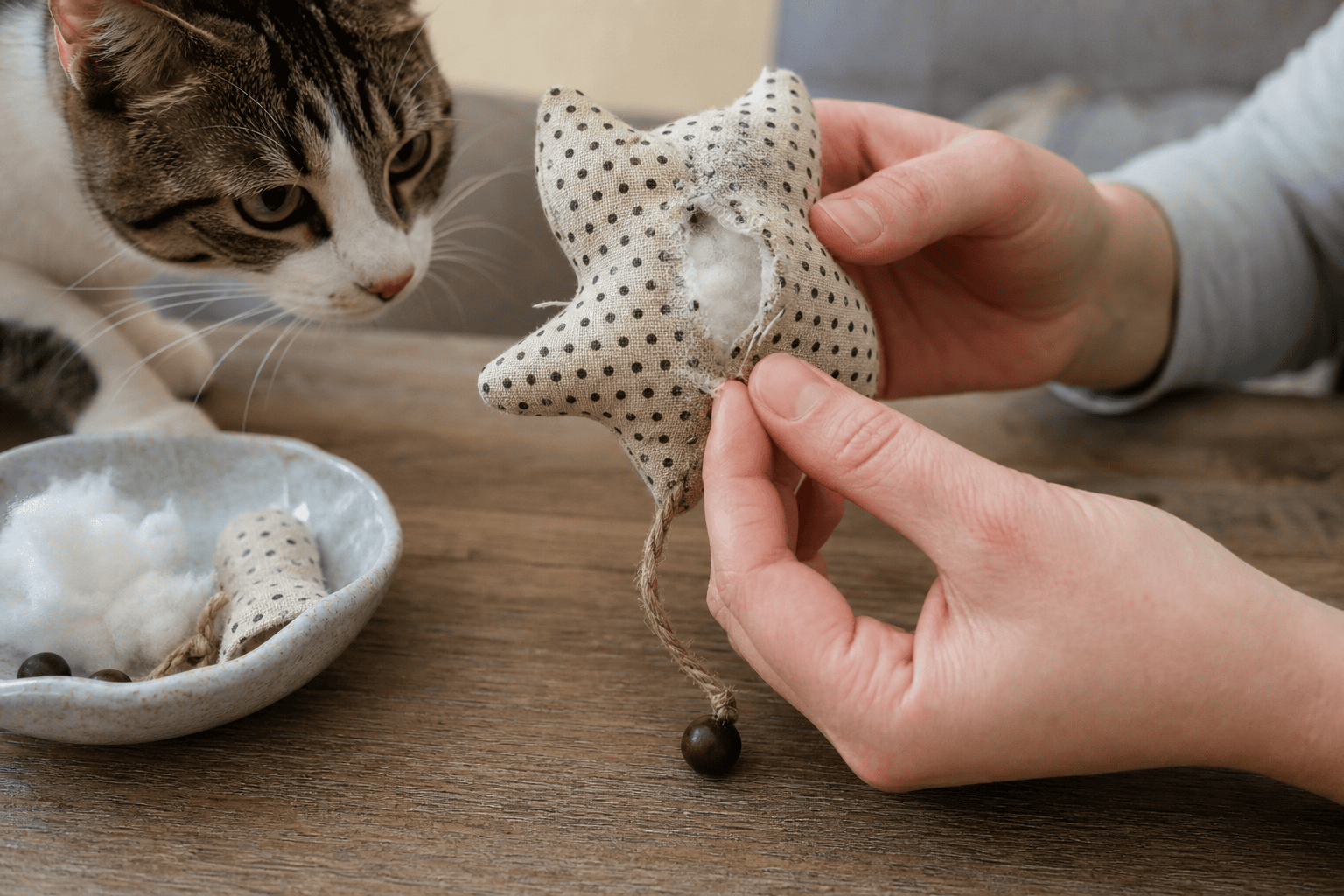
- Retire anything wet, dirty, frayed, sharp, or shredded. Homemade toys are supposed to be replaceable.
Easy DIY Cat Toys That Are Worth Making
These projects use common household materials and can be adjusted for gentle cats or rough players.
1. Toilet Paper Roll Treat Puzzle
Put a few pieces of kibble or dry treats inside an empty toilet paper roll, fold the ends loosely, and cut one or two holes large enough for food to fall out. Let your cat bat it around and work for the reward.
Best for: indoor cats that need slower feeding, puzzle enrichment, or solo pawing practice. Watch for: chewing the tube into small wet pieces. If your cat eats cardboard, use this only under supervision or skip it.
2. Cardboard Foraging Box
Place several toilet paper rolls upright in a shallow box, drop a few treats among the tubes, and let your cat reach, paw, and sniff. You can also crumple plain packing paper into loose balls and hide kibble between them.
Best for: cats that like searching more than sprinting. Watch for: tape, staples, sharp cut edges, or a cat that tries to chew and swallow the cardboard instead of pawing through it.
3. Paper Bag Ambush Tunnel
Use a plain paper grocery bag with the handles removed. Open it on its side and drop a toy just outside the entrance so your cat can stalk from cover. For extra stability, fold the opening once to keep it from collapsing.
Best for: stalkers and pouncers. Watch for: handles, glossy coatings, food residue, and cats that rip bags into chewable strips.
4. Fleece Kicker Roll
Roll a rectangle of fleece or sturdy cotton around a smaller fabric core, then stitch the long edge and both ends closed. Make it long enough for your cat to hug with the front paws and kick with the back feet. Catnip can be added if your cat responds well to it, but keep the fill modest and contained.
Best for: grabbers, kickers, and cats that need a better target than your hands. Watch for: loose seams, exposed filling, or fabric that pills and sheds under chewing.
5. Sock Crinkle Toy
Put a small amount of clean packing paper inside a washed sock, knot the open end tightly, and trim excess fabric if it creates a dangling strip. Keep it large enough that your cat cannot swallow it and simple enough to inspect.
Best for: cats that like sound and batting. Watch for: plastic bags, loose threads, and socks thin enough for teeth to puncture quickly. Avoid plastic grocery bag pieces inside the toy.
6. Wand-and-Catch Game
Tie a wide strip of fleece to a dowel or wand and use it only while you are actively playing. Drag it away from the cat, pause behind furniture, then end the chase by letting your cat catch a separate kicker toy or treat.
Best for: high-energy cats that need movement. Watch for: string chewing, elastic, feathers, and leaving the wand out after play. For more structured prey-play ideas, see cat toys for hunting and cat toys that move.