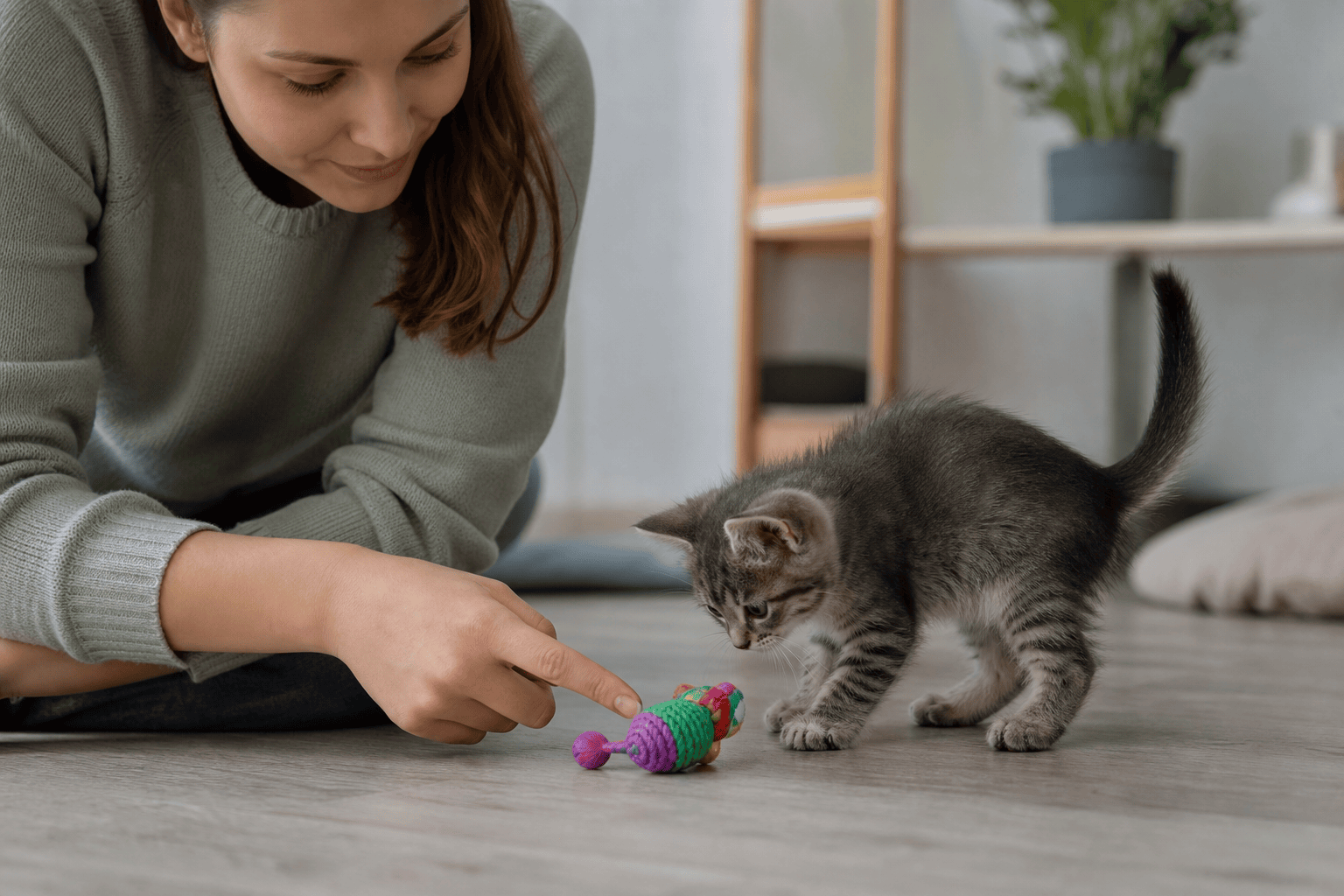
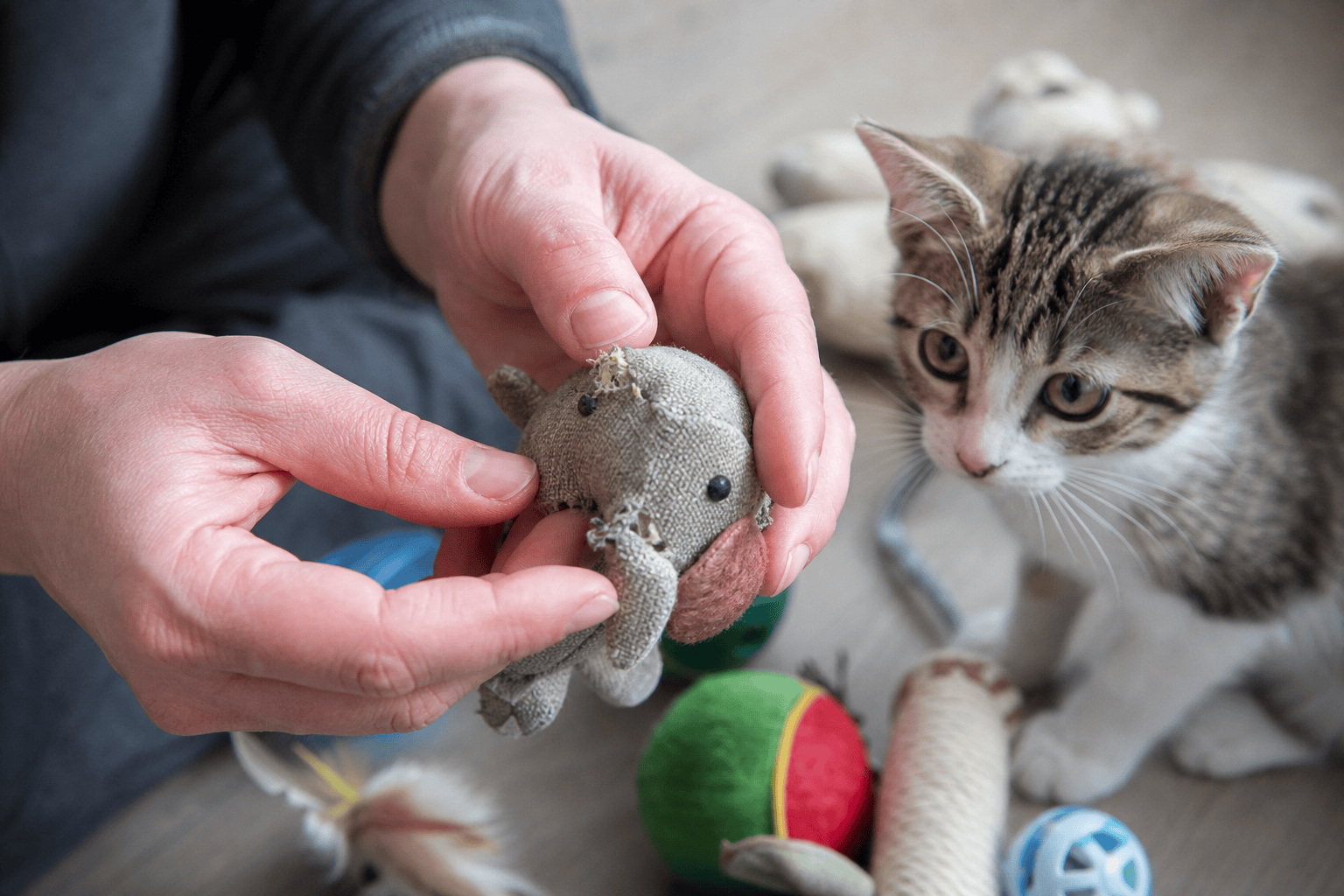
Kitten teething toys should be soft enough to protect new teeth, textured enough to satisfy chewing, and sturdy enough that your kitten cannot bite off pieces. The best options are usually kitten-specific chew toys, small durable plush toys with minimal add-ons, flexible rubber or fabric textures, and a clean damp cloth chilled until firm but not rock-hard.
The goal is not to stop chewing. Teething kittens need acceptable things to mouth while baby teeth loosen and adult teeth come in. Your job is to redirect teeth away from hands, cords, shoes, houseplants, and fragile toys toward chew targets you can supervise, inspect, clean, and retire before they fail.
When Do Kittens Start Teething?
Kittens grow two sets of teeth. PetMD’s kitten teething guide explains that baby teeth usually erupt through the first several weeks of life, and adult teeth begin replacing them around 3 1/2 to 4 months. By about 5 to 7 months, most kittens have their full adult set.
Cornell Feline Health Center gives the same practical owner timeline: cats start with 26 deciduous teeth and end with 30 permanent teeth by about six months. That means the most noticeable home teething phase often lands right when a kitten is energetic, curious, and testing every object with their mouth.
Common signs include more chewing, drooling, mild gum irritation, dropped food, crankier handling, and sometimes finding a tiny baby tooth on the floor. VCA notes that swallowing baby teeth is common and usually harmless, and a small amount of red staining on a toy can be normal. Heavy bleeding, refusal to eat, swelling, broken teeth, bad odor, or obvious pain should be checked by a veterinarian.
What Makes a Good Kitten Teething Toy?
A good kitten teething toy has some give. If you cannot indent it slightly with a fingernail, it may be too hard for a kitten’s new teeth. VCA specifically warns owners to avoid extremely hard chews, including hard nylon, because they can risk tooth fracture. For Titan Claws readers, that distinction matters: durable does not mean hard enough to challenge a dog chew.
Look for toys that are sized for a kitten’s mouth without being swallowable. Flexible rubber, soft fabric, tightly stitched plush, textured mesh made for cats, and kitten-specific dental chew toys are better starting points than bones, antlers, hard plastic, brittle sticks, or toys built for adult power chewers.
- Soft but not shreddable: the toy should compress without tearing apart after a few bites.
- Texture variety: small ribs, woven fabric, nubs, or crinkle-free plush can help sore gums without sharp edges.
- Few attachments: skip glued eyes, bells, feather tufts, long tails, elastic, ribbons, and loose yarn.
- Easy inspection: you should be able to see seams, bite marks, missing parts, and stuffing leaks quickly.
- Washable surface: teething toys get wet, so choose materials you can clean and dry fully.
For a deeper durability filter, pair this guide with Titan Claws’ safe cat chew toys and toys for cats that chew guides. The kitten version of that advice is stricter on hardness, size, and supervision.
The Safest Teething Toy Types to Try First
Start with a small rotation instead of one magic toy. Teething pressure changes by day, and kittens may prefer different textures as incisors, canines, premolars, and molars come through.
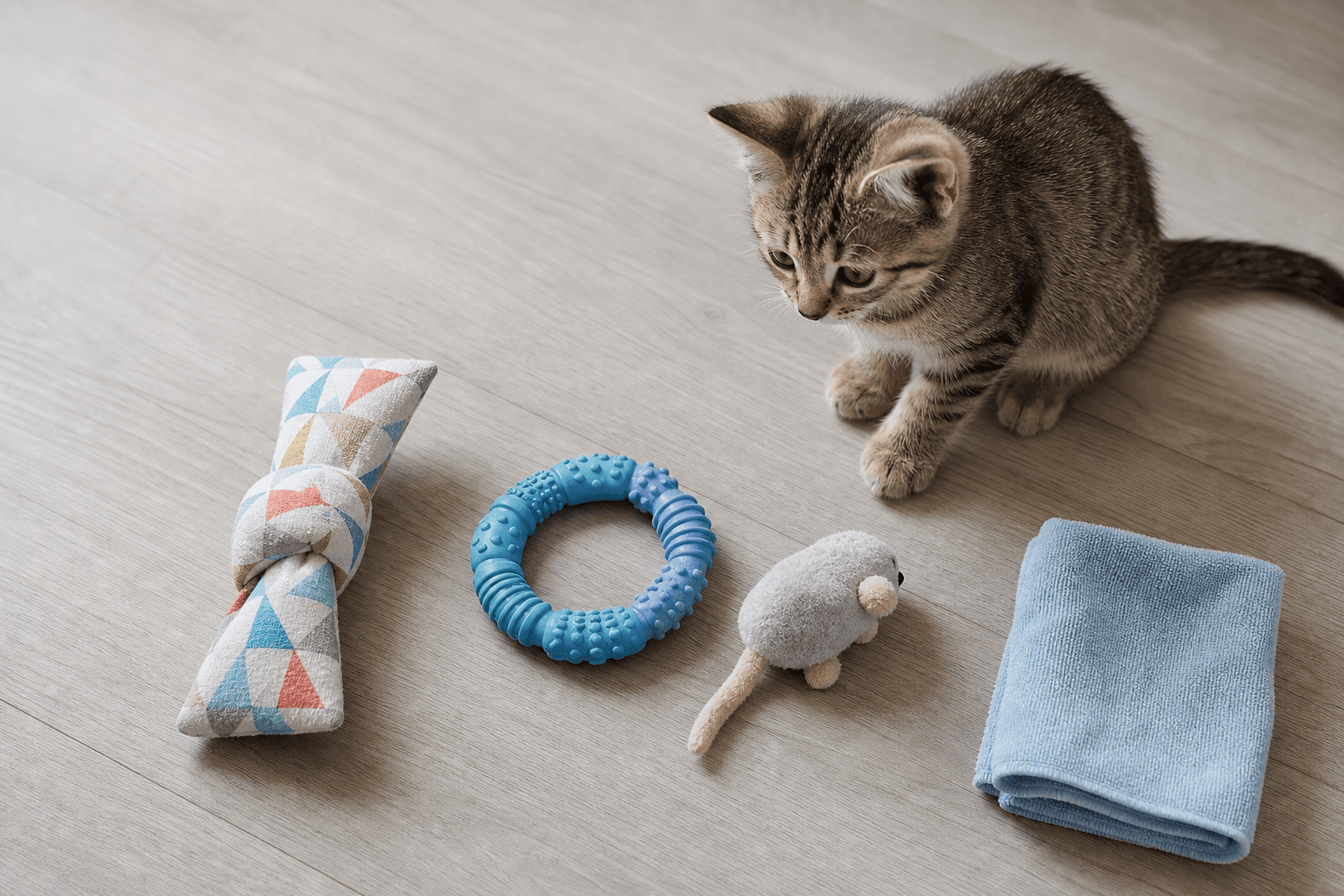
- Kitten dental chew toys: choose cat-specific designs with flexible texture and no small detachable pieces.
- Small fabric chew toys: tightly stitched fabric can work well if your kitten chews rather than tears and eats fibers.
- Soft plush toys: useful for kittens that want to mouth and wrestle, but avoid button eyes, whiskers, bells, and loose tails.
- Flexible rubber cat toys: good for some kittens if the material bends and the toy is too large to swallow.
- A chilled damp cloth: PetMD recommends a clean damp washcloth frozen until crunchy as a quick teething aid. Offer it under supervision and remove it when it warms, frays, or becomes a shred target.
Avoid giving dog chews by default. Some dog toys are too hard, too large, too flavored, or designed for jaw mechanics that do not match a kitten. If you use any non-cat product, ask your veterinarian first and supervise closely.