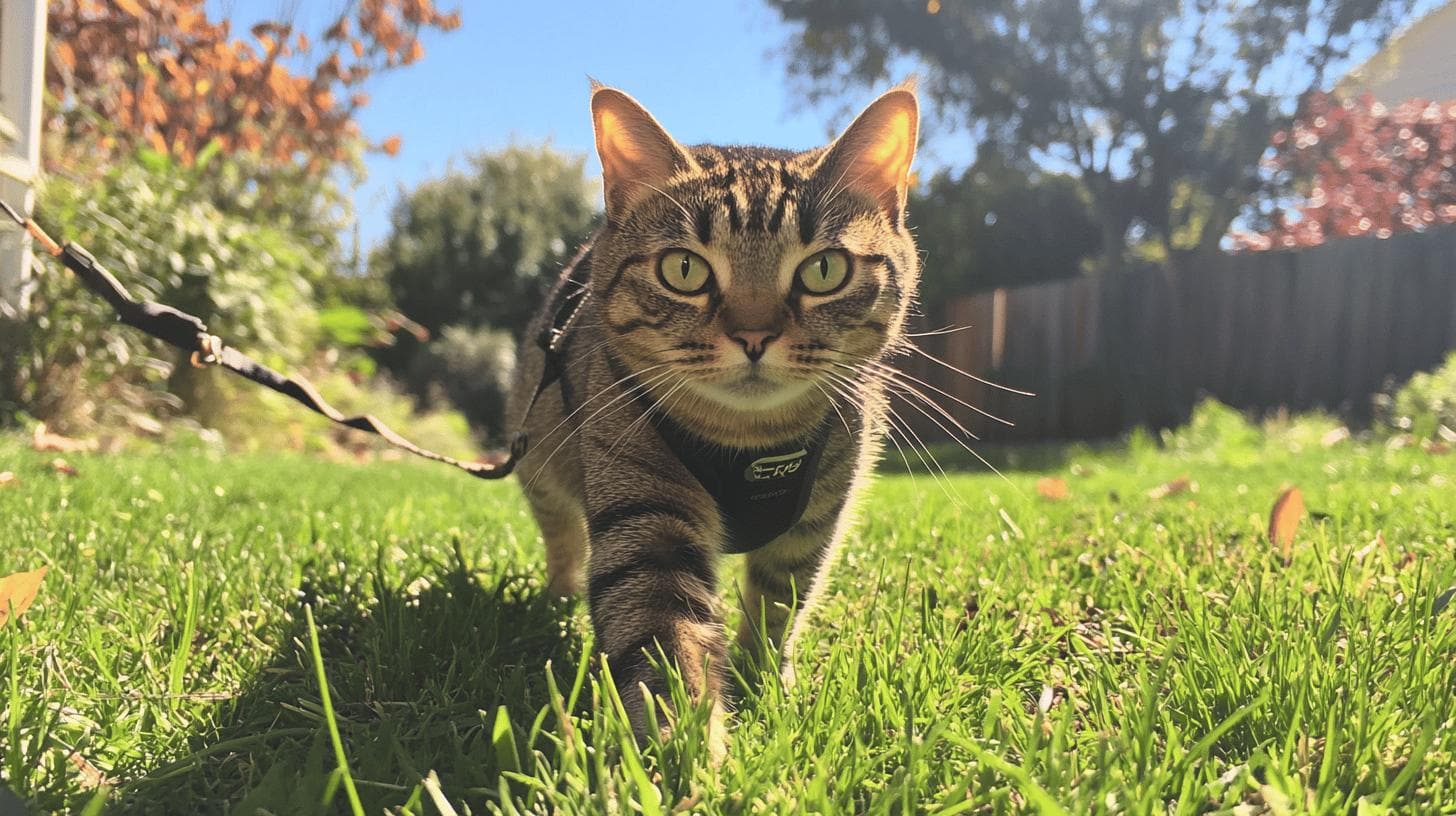
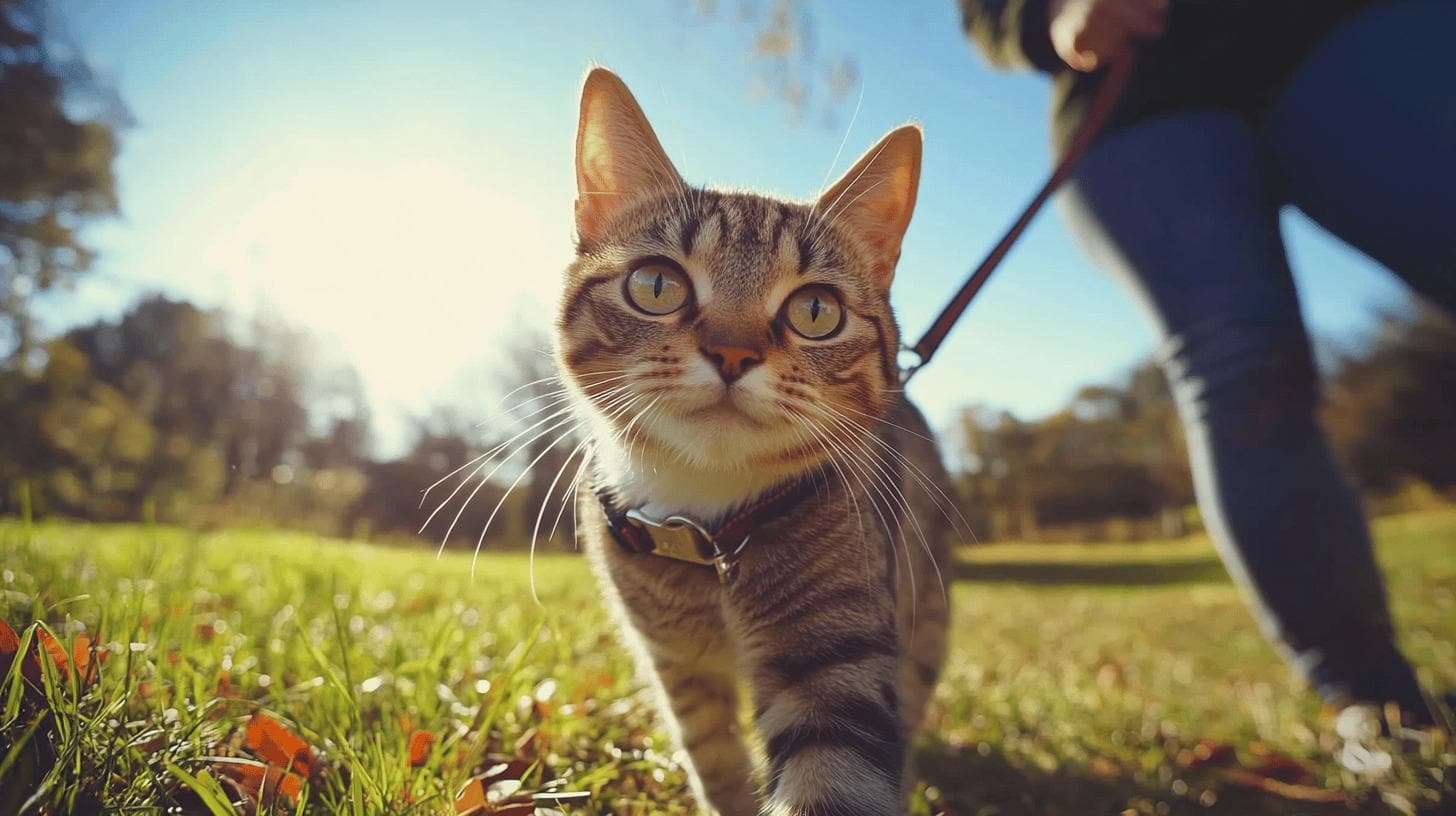
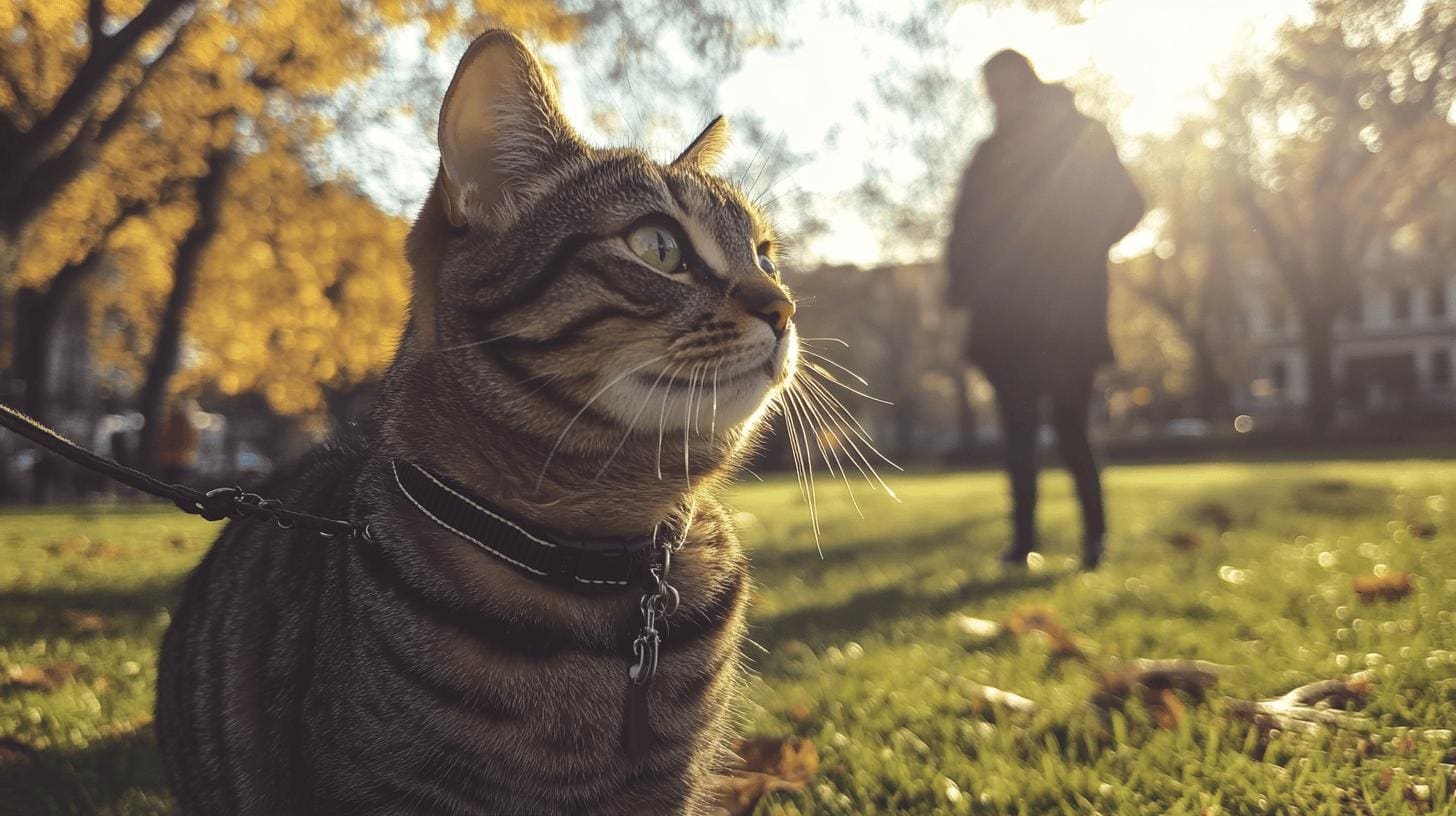
Think only dogs can enjoy a walk on a leash? Think again! Cats can join in on the leash-walking fun too, and it's easier than you might think. Training your cat to walk on a leash can open up a whole new world of exploration and bonding.
This journey builds trust between you and your furry friend while ensuring they stay safe. Ready to give it a try? I've got a step-by-step plan to help guide you and your cat on this exciting new adventure. Let's get started and make every walk an adventure!
Steps to Train a Cat on a Leash
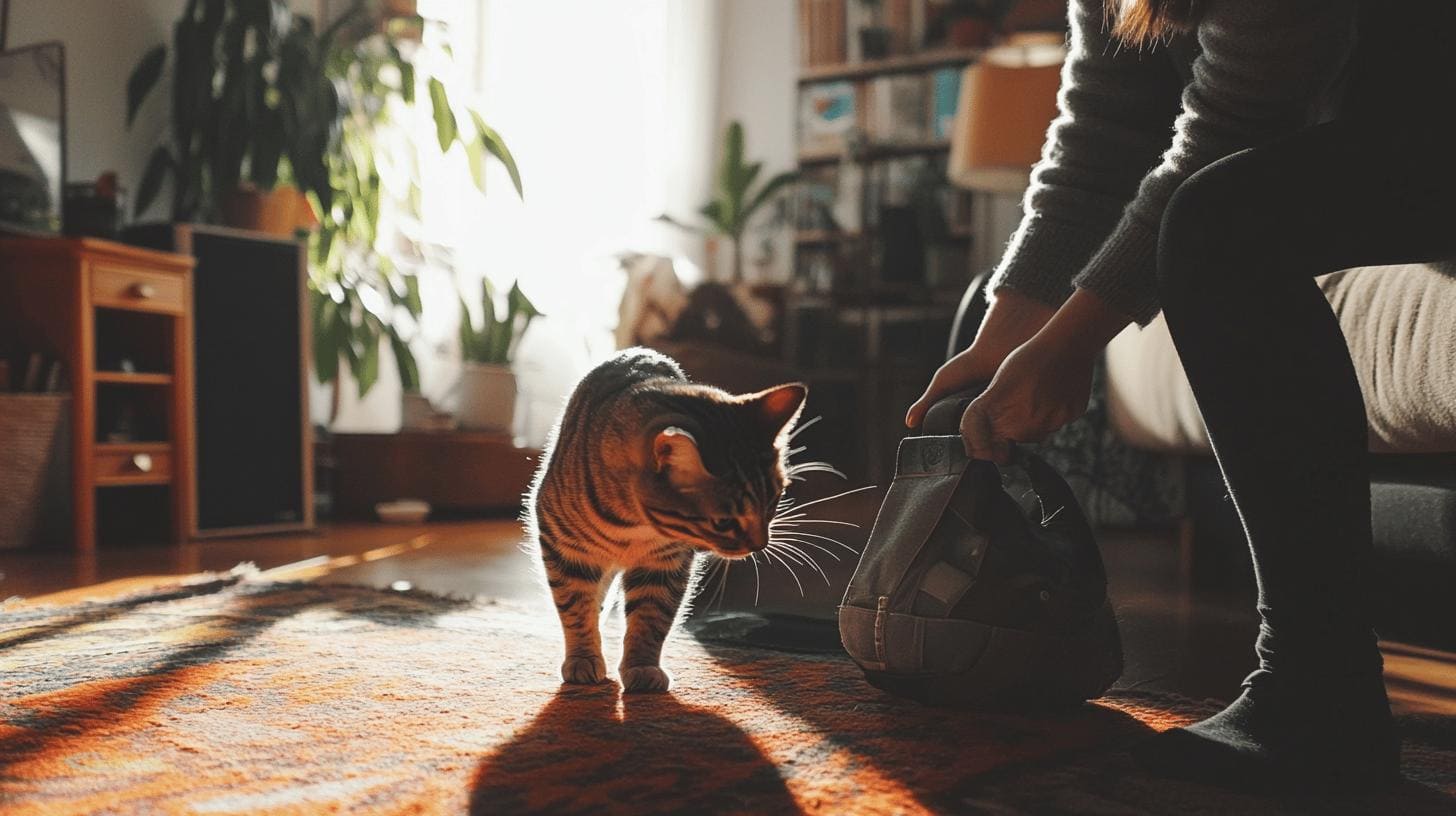
Training your cat to walk on a leash requires patience and consistency. It's a gradual process that builds confidence and trust between you and your feline friend.
Here's a step-by-step guide to help you get started:
-
Introduce the harness calmly.
Choose a time when your cat is relaxed. Place the harness near them and let them sniff it. This helps them get used to its presence. -
Allow the cat to explore the harness.
Let the harness sit where your cat spends time. Encourage them to investigate it on their own terms. -
Use treats to create positive associations.
Reward your cat with treats whenever they interact with the harness. This makes the harness seem like a good thing.
-
Attach the leash indoors and let it trail.
Once your cat is comfortable with the harness, attach the leash. Let it drag behind them indoors. This helps them get used to the weight and movement. -
Gradually transition to outdoor environments.
Start by opening a door to let your cat see outside. Then, step out with them. Keep these first outings short and calm. -
Encourage the cat with treats and praise.
Whenever your cat shows bravery or curiosity outside, reward them. Use treats and praise to reinforce good behavior.
Regular practice is key. Make this a routine part of your cat’s day. Over time, these steps will help your cat become more comfortable and confident on a leash.
Choosing the Right Cat Harness
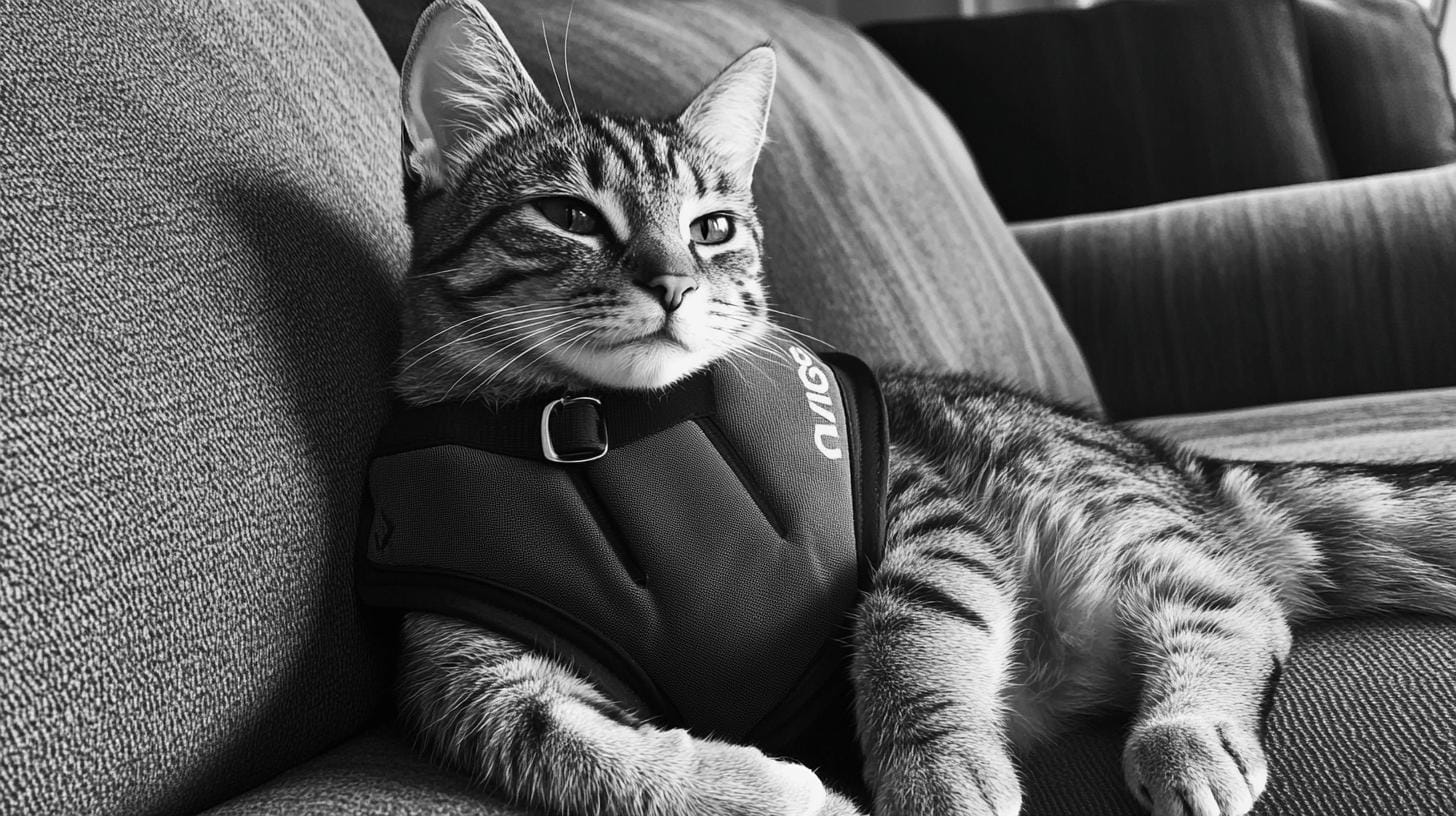
A well-fitted harness is vital for your cat's safety and comfort while exploring the outdoors. It must be snug enough to prevent escapes but comfortable enough for your cat to move freely.
Here are some popular harness styles to consider:
-
H-Style: This harness is lightweight and adjustable. It's great for cats that are used to wearing collars and need minimal restriction.
-
Vest: Known for comfort and security, vest harnesses distribute pressure across the cat's chest and back. They are ideal for cats that pull on the leash or need extra support.
-
Step-In: Easy to put on, these harnesses are perfect for cats that dislike having things slipped over their heads. They provide a secure fit by fastening around the body.
When choosing a harness, look for features like adjustability, which lets you tailor the fit to your cat's unique shape. The material should be soft, yet sturdy, to withstand the wear and tear of outdoor adventures.
"The True Adventurer" Cat Harness & Leash Set is a great choice that offers the right balance of security and comfort. It’s designed to prevent escapes while allowing your cat to enjoy their exploration without feeling restrained.
Selecting the right harness can make all the difference in your cat's leash training experience, ensuring they feel secure and happy as they explore the world outside.
Understanding Cat Behavior on a Leash
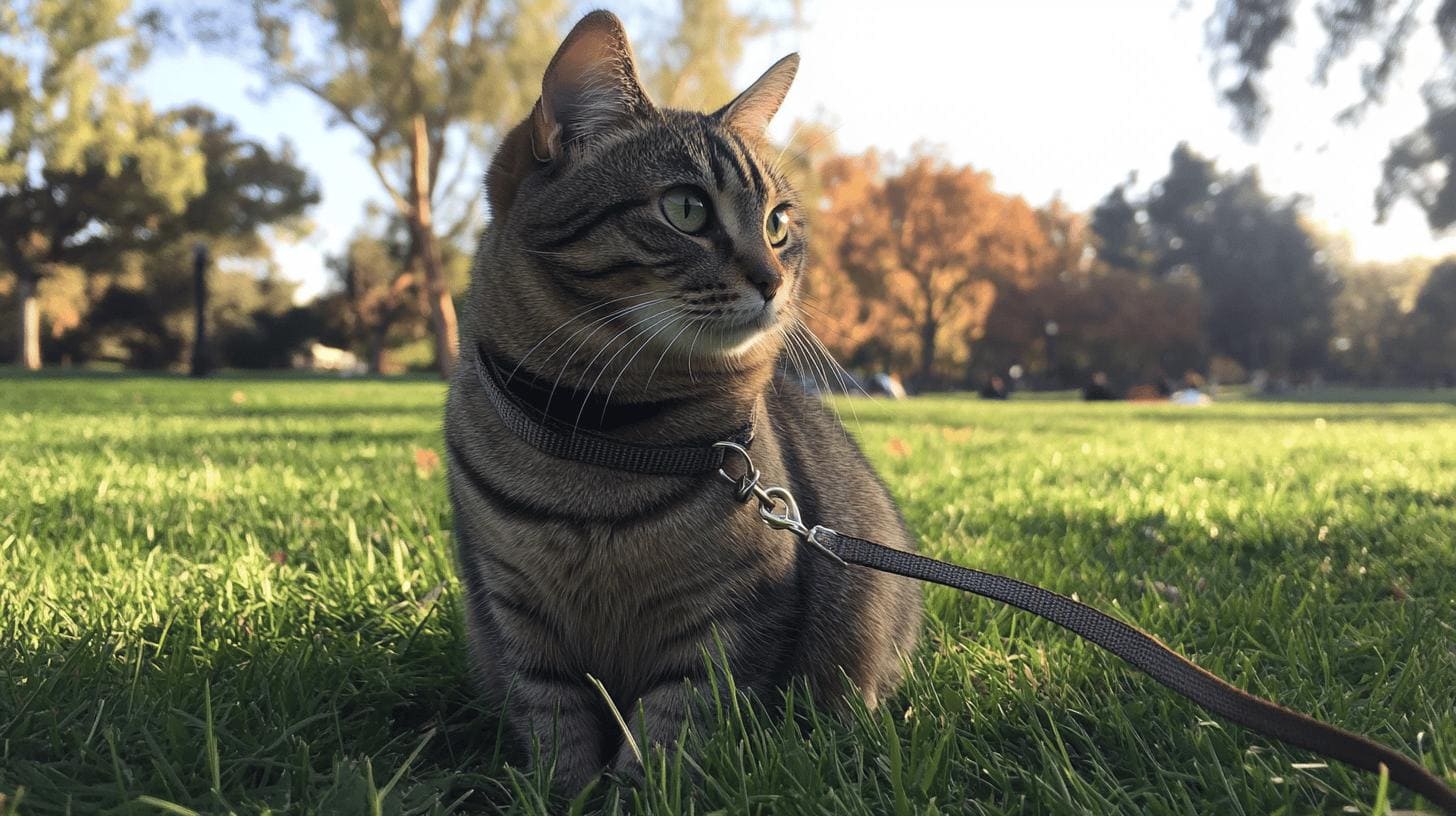
Walking a cat is different from walking a dog. Cats aren't inclined to follow their owners or stay on a straight path. Instead, they often wander, sit, or even lie down during walks. It's crucial to let them explore at their own pace.
Understanding your cat's body language helps interpret their comfort levels. Keep an eye on subtle cues like ear position, eye expression, and tail movement. These signals can tell you a lot about your cat's mood and comfort during leash training.
| Behavior | Interpretation |
|---|---|
| Sitting/Lying Down | Comfort or disinterest |
| Wandering | Curiosity or exploration |
| Tail Position | Indicator of mood |
Patience is key. Each cat will have their own preferences and comfort zones. Respect these individual differences and give your cat time to adjust to the new experience. This ensures a smooth and enjoyable leash training process for both you and your furry friend.