Is your cat keeping you up with their night owl antics? Cats often keep peculiar hours, driven by their crepuscular nature, chasing shadows and dreams while we try to snooze enrichment activities.com/how-to-train-a-cat-to-be-friendly/”>friendly behavior. Understanding these instincts might make you feel stuck in a never-ending battle for sleep, but don't worry.
By setting the right routine, you can teach your cat to enjoy restful nights alongside you. Dive into our guide to unlock the secrets of training your feline friend to sleep soundly during those precious nighttime hours, giving both of you blissful sleep!
Understanding Your Cat's Natural Sleep Patterns
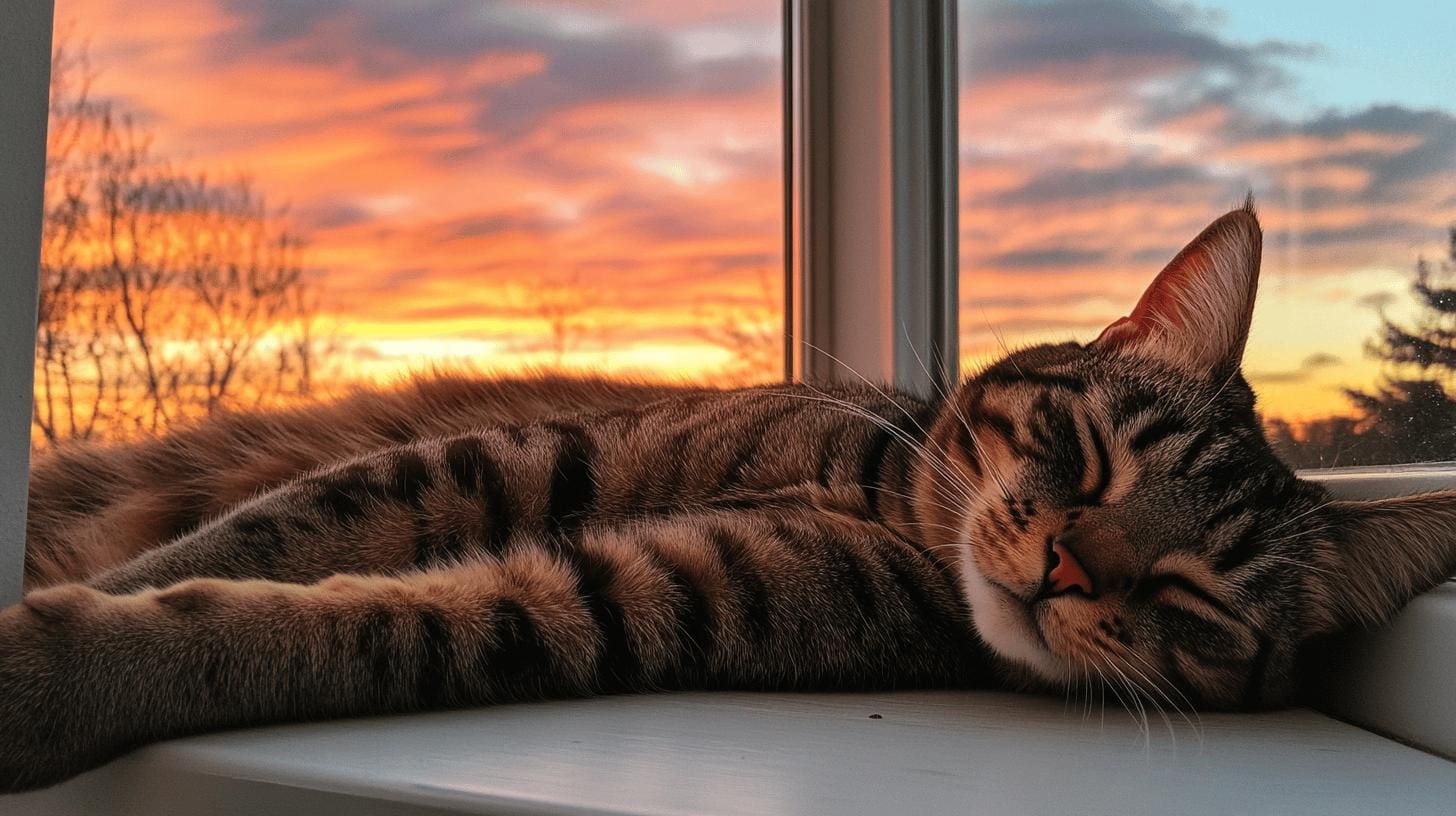
Cats are crepuscular animals. This means they are most active during the twilight hours of dawn and dusk. You might notice your cat full of energy early in the morning or just as the sun goes down. This behavior stems from their wild ancestors, who hunted at these times.
As a result, it’s common for cats to wake their owners around 6:00 am, ready to play or eat. However, if a cat begins waking up at 3:00 am or 4:00 am consistently, it might signal an issue needing attention. These nocturnal instincts can sometimes clash with human sleep schedules.
- Cats tend to be most active around dawn and dusk.
- Early morning wake-ups are typical for many cats.
- Cats may become restless and vocal during nighttime hours evening routines.
- Nighttime energy can disrupt human sleep schedules.
- Consistent early wake-ups might need a vet's attention.
If your cat's sleep disturbances are severe or they seem unusually restless or vocal at odd hours, it might be time to seek medical advice. Unusual sleep patterns could indicate underlying health issues like thyroid problems or cognitive dysfunction in older cats. Consulting a vet can help rule out any medical causes, ensuring your cat’s behavior is purely instinctual and not health-related.
Establishing a Cat Bedtime Routine
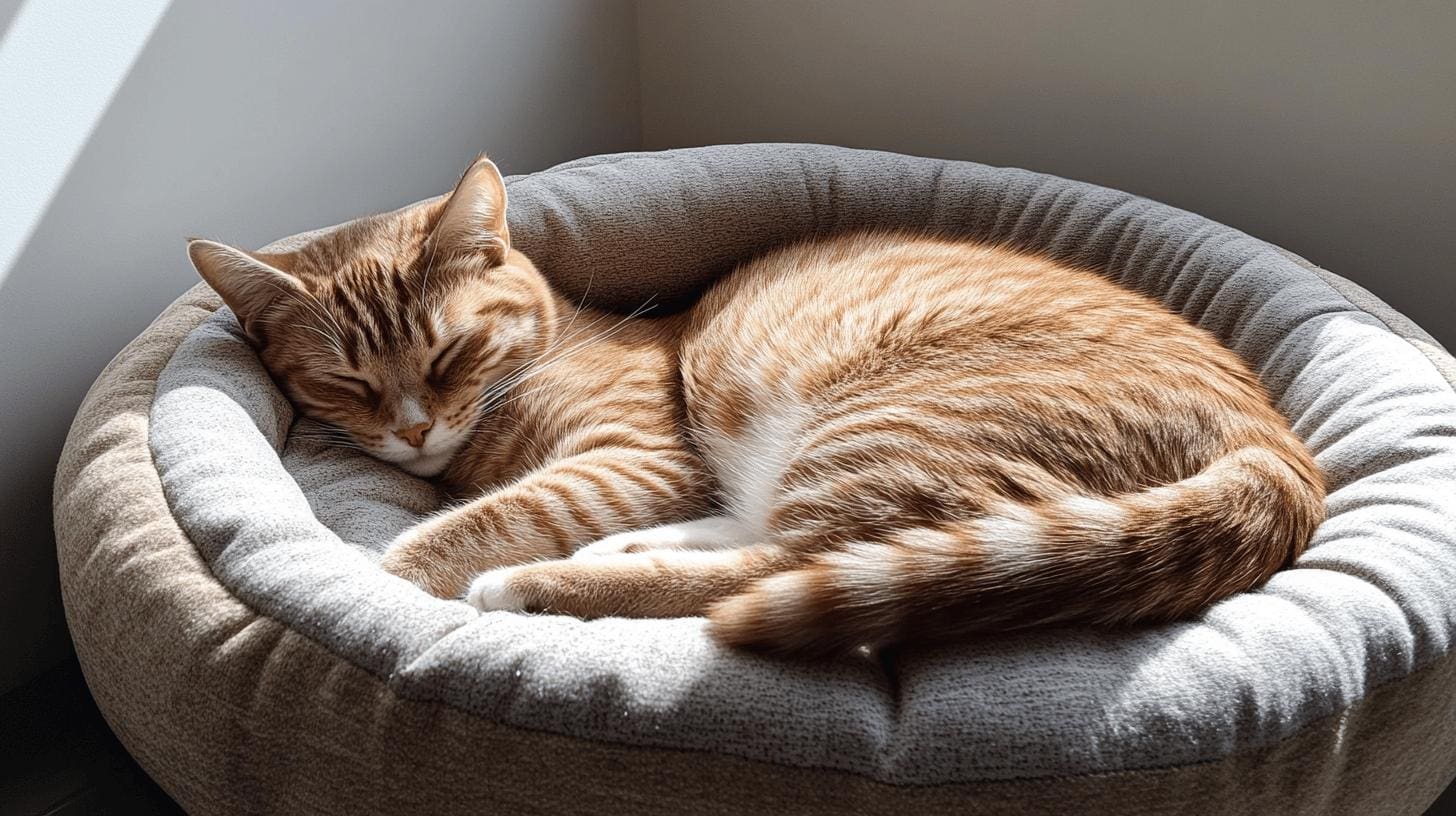
Consistency is key when training a cat to sleep through the night. Cats thrive on routine, and having a set schedule can make a world of difference. By sticking to specific times for feeding and play, you can help your cat understand when it's time to wind down for the evening.
This structured approach not only aids in developing good sleep habits but also reduces the chances of your cat waking you up at odd hours.
Setting meal schedules is a crucial part of establishing a bedtime routine. Unlike free-feeding, which allows cats to eat whenever they please, scheduled meals help regulate their energy levels. Aim to provide 2-4 meals a day, ensuring that any leftover food is removed after 20 minutes.
This prevents grazing and encourages your cat to eat at designated times. Feeding your cat a small meal before bedtime can help keep them satiated through the night, reducing the likelihood of early morning wake-ups. By aligning meal times with your schedule, you encourage your cat to adapt their sleep pattern to yours.
- Determine regular feeding times and stick to them daily.
- Remove uneaten food after 20 minutes to prevent grazing.
- Engage your cat in a play session before the last meal to tire them out.
- Offer a small snack before bedtime to keep them content overnight.
Patience and persistence are essential as your cat adjusts to their new routine. Changes won't happen overnight, and it may take a few weeks for your cat to fully adapt. Stay consistent with your approach, and gradually, you'll notice improvements in your cat's sleep habits. Remember, the effort you put into maintaining a routine will pay off in the form of a well-rested and happier cat.
Creating a Comfortable Sleep Environment for Cats
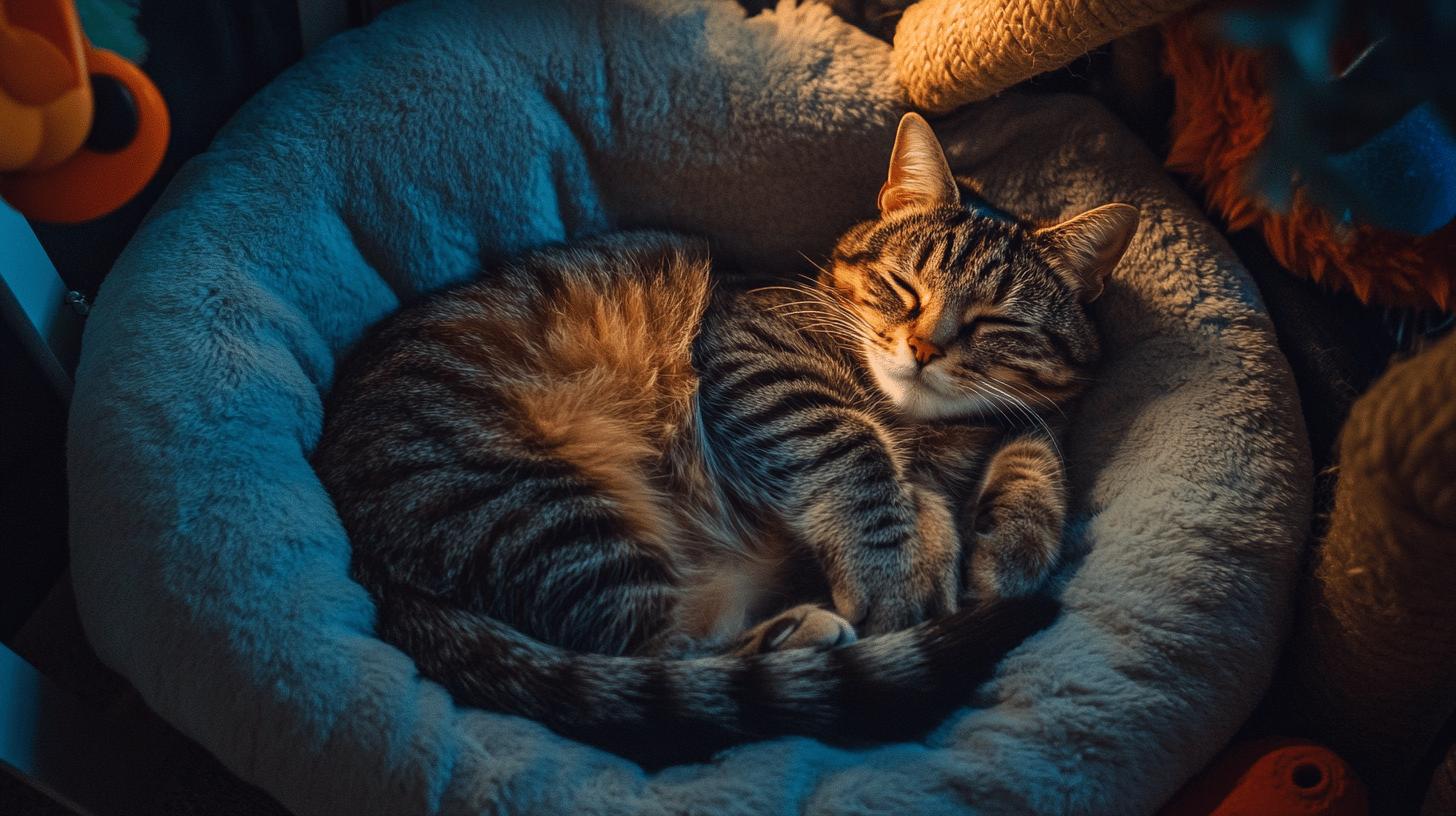
A quiet and cozy environment is key to helping your cat sleep through the night. Cats are sensitive to noise and light, which can disturb their rest. A dark, quiet space mimics their natural instincts to find a safe, calm place to sleep.
Consider placing their bed in a low-traffic area of your home where they won’t be disturbed. This helps them feel secure and reduces the likelihood of them waking up and wandering around at night.
Enriching your cat's environment with interactive elements plays an important role in their overall well-being and sleep patterns. Toys, scratching posts, and climbing spaces not only keep them entertained during the day but also help expend their energy.
This reduces their nocturnal activity, encouraging them to wind down at night. Ensure your cat engages with these items by rotating toys and introducing new elements to keep their interest piqued. An enriched environment contributes to a happier, more relaxed cat, which can lead to better sleep.
- Quiet space: Choose an area away from household noise.
- Darkness: Use curtains or shades to block out light.
- Cozy bedding: Provide a soft, comfortable bed for warmth.
Maintaining a stress-free environment further enhances your cat's ability to sleep well. Stress can cause restlessness and disrupt sleep patterns, so it's important to create a calm atmosphere. Keep their sleeping area clean and free from clutter.
Regularly check for any changes in their behavior that might indicate stress, and address these promptly. A peaceful environment supports not only better sleep but also contributes to your cat’s overall health and happiness.