Indoor Cat Grooming Tips: Brushing, Nails, Baths

Think indoor cats don’t need grooming? Think again. Mats, hairballs (small balls of swallowed fur), and overgrown nails can make indoor life itchy, painful, or just plain annoying for your cat. It’s not fancy, just regular care keeps them comfy.

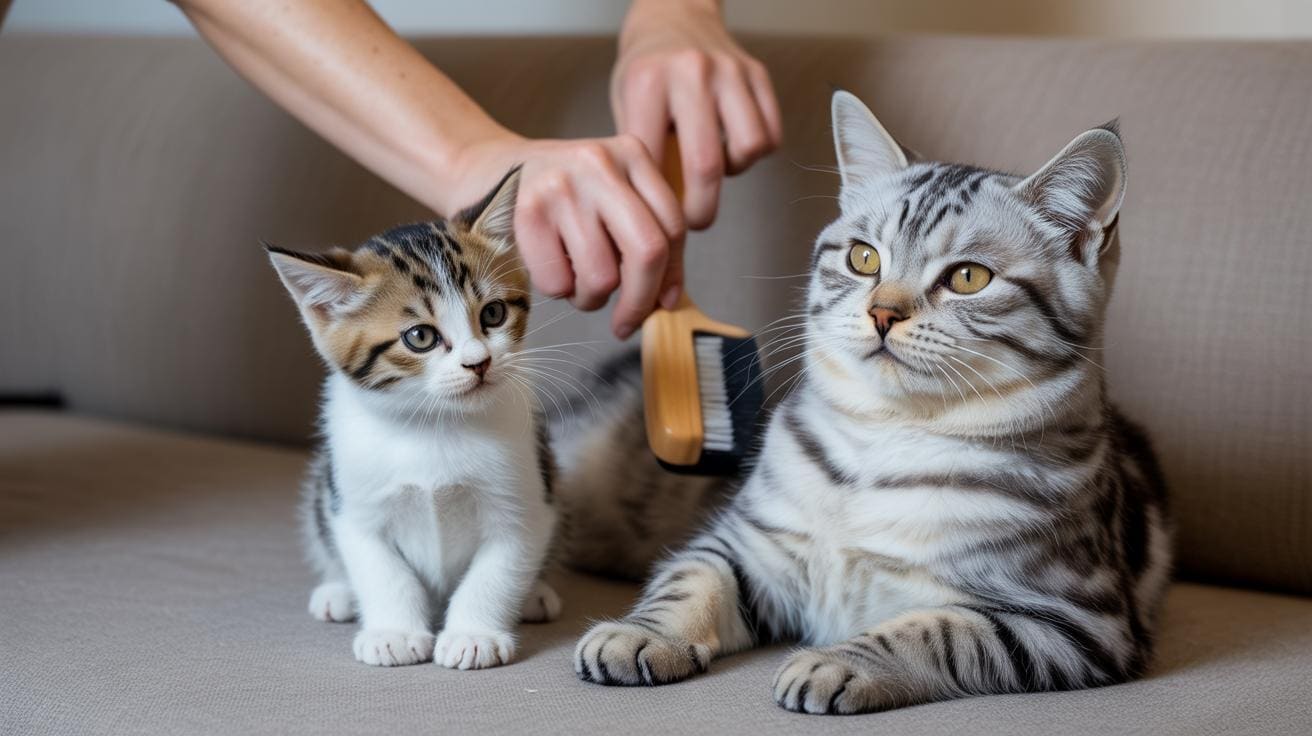
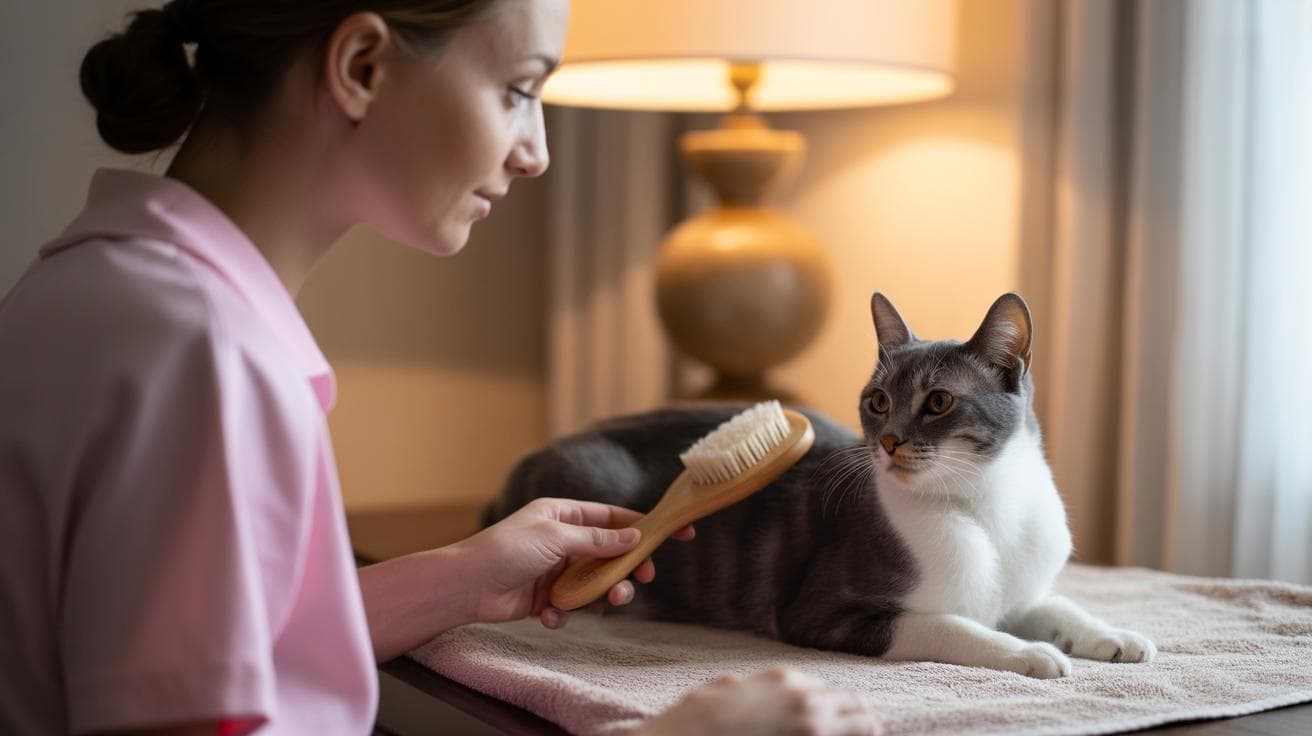
Short, steady sessions win. Five to ten minutes a few times a week keeps fur tidy and trust strong. Your cat’s whiskers might twitch as the brush slides by. Ever watched your kitty chase a sunbeam? That calm focus makes grooming easier.

These tips cover brushing (removing loose fur), safe nail trims (cutting just the sharp tip of the nail), quick baths (a short spot-clean wash), and dematting (removing tight mats of fur). I’ll keep the steps simple so you can fit them into even the busiest day.

Brushing: Use gentle, slow strokes. Start with the easy spots, praise and give a treat, then work toward the belly if they like it. Short sessions beat long struggles.

Nail trims: Only clip the clear tip, avoid the pink quick. If your cat freezes, stop and try again later. Finger-time with a soft scratch after can help them relax.

Quick baths: Warm water, a small amount of cat shampoo, and calm praise. Think spot-cleaning more than spa day. Towel dry and warm them up quick.

Dematting: For small tangles, tease them apart with your fingers or a dematting comb (a tool with wide teeth). For tight mats, use a mat splitter or see a pro, don’t tug hard, you can hurt the skin. Oops, make that: if it’s stubborn, get help.

I once watched Luna leap six feet for a feather toy and land like a tiny acrobat. That happy pounce makes the extra minutes totally worth it.

Worth every paw-print.

Quick-start grooming routine for indoor cats
- Quick-start grooming routine for indoor cats.jpg

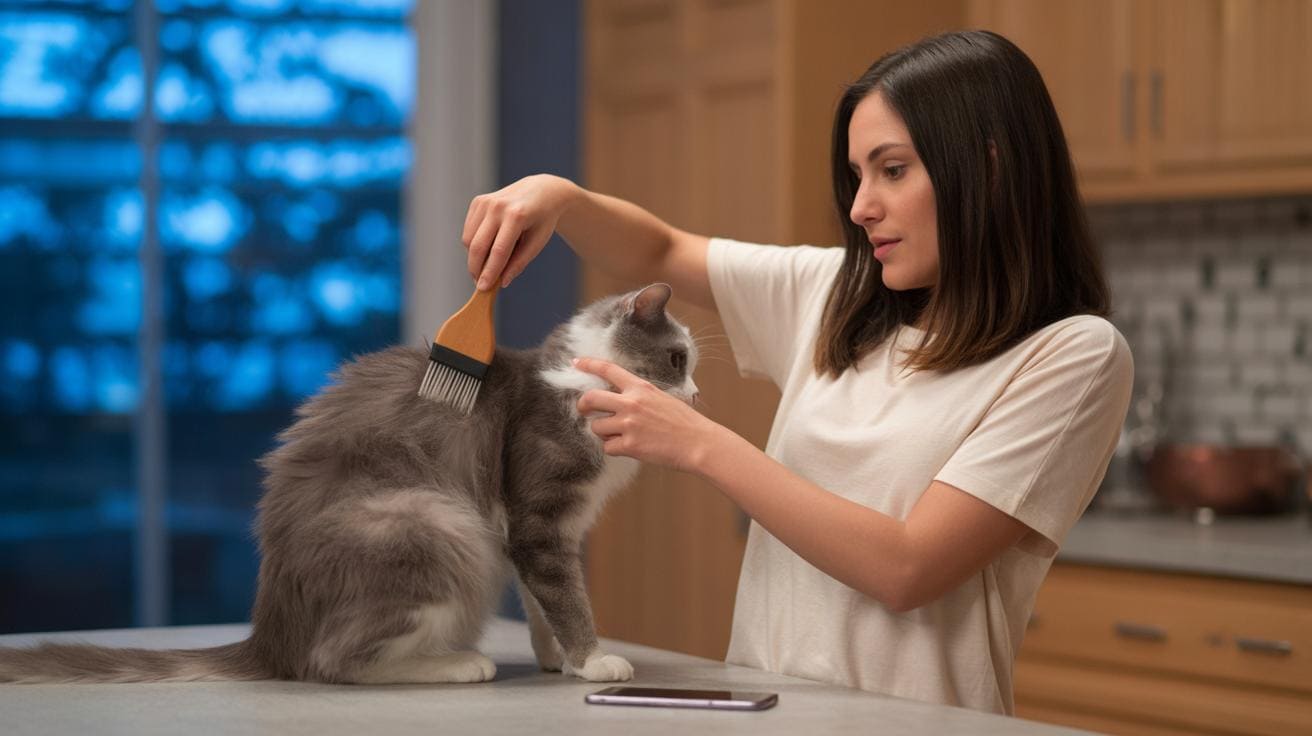
Short sessions win. Aim for 5 to 10 minutes per grooming stint and follow the checklist below. For technique and tools, see Brushing, Bathing, Nails, Dematting, and Shedding sections below. Dematting means removing tight mats of fur that can tug at the skin.

  • Brushing: 5 to 10 minutes, 3 to 4 times per week (daily if heavy shedding) (see Brushing section)
  • Ear check: once a week (see Bathing section)
  • Nails: trim every 2 to 3 weeks (see Nails section)
  • Spot baths / waterless wipes: as needed (see Bathing section)
  • Quick dental wipe or check: once a week
  • Watch for urgent red flags: infected or foul-smelling mats; sudden large patches of hair loss or new lumps; extreme panic or aggression that prevents safe handling

Keep an eye on how your cat reacts. If your cat freezes or panics, pause and try a calmer approach. You can split the routine into two short sessions if needed. Short, steady handling builds trust.

Quick grooming order (easy to remember)

  1. Brush the coat briefly
  2. Do a quick ear check
  3. Wipe eyes and face
  4. Check nails and trim if needed
  5. Inspect paw pads
  6. Do a quick dental wipe or apply gel
  7. Spot-clean dirty areas with a wipe
  8. Finish with a small reward

End on something nice. Give a small treat or 10 to 30 seconds of gentle petting to make the session feel positive. Keep your voice calm and soothing. If your cat tires, stop and try again later. Stick with the routine and it becomes second nature.

Tips and red flags

  • Use gentle strokes. Think slow, reassuring petting more than a scrubbing session.
  • If you smell a strong, bad odor from mats or see redness, that could mean infection. Get help from your vet.
  • Sudden big patches of hair loss or a new lump need a vet check. Really.
  • If your cat becomes aggressive or very distressed, back off and ask a pro for help.
Coat Type Basic Frequency Quick Note
Shorthair 2 to 3 times per week rubber glove (textured grooming glove)
Longhair daily or every other day de-tangle (brush to loosen knots)
Double coat / heavy shedder daily during seasonal shed undercoat rake (comb that pulls out loose underfur)
Kittens / Seniors short daily handling, 5 to 10 minutes adapt for mobility and comfort

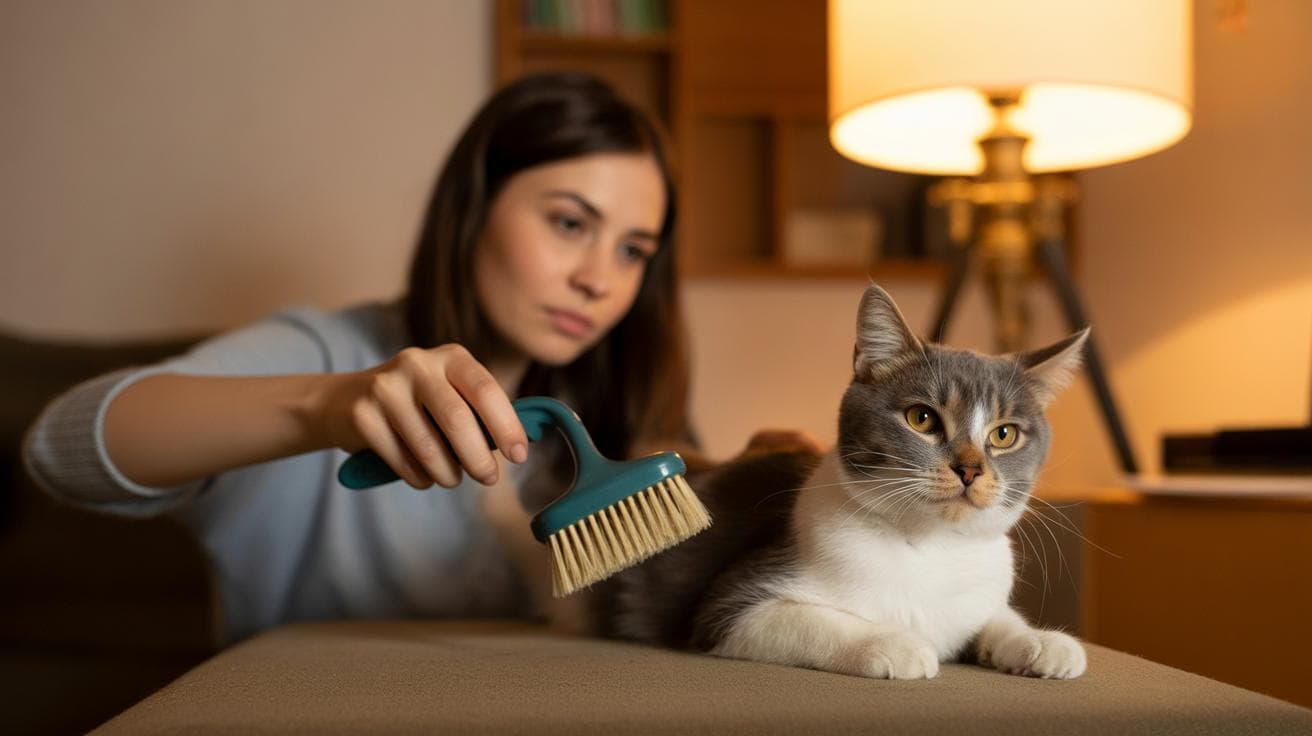
Brushing techniques and tool selection for indoor cat grooming
- Brushing techniques and tool selection for indoor cat grooming.jpg

Brushing is more than a quick tidy. It spreads your cat’s natural skin oils (the slick, protective layer their skin makes), lifts loose hair and flakes, and helps stop skin from getting irritated. Your cat’s whiskers will twitch as the brush glides , that little rhythm can be oddly soothing for both of you. Ever watched your kitty chase a rolling ball right after a good brush? Cute.

Pick tools by fur type and temperament. Here’s a simple guide to what each tool is, who it’s best for, and what it does.

Tool Best for What it does
Slicker brush (fine, bent wire bristles on a flat pad) Medium and long coats Teases out surface tangles and loose hair
Undercoat rake (comb with wide, deep teeth) Dense double coats Pulls loose inner fur and reduces undercoat bulk
De-shedding tool (tool that removes loose undercoat hair) Heavy shedders Efficiently removes thick undercoat hair
Rubber curry / grooming glove (rubber pad with soft nubs) Shorthaired or sensitive cats Lifts loose hair while massaging the skin
Metal fine-tooth comb (thin metal teeth) All coats Finds tiny mats and checks for debris
Soft bristle brush (gentle bristles) Kittens and shy cats Smooths and comforts without tugging
Pin brush (long pins) Long, silky coats Finishes and smooths after detangling
Dematting comb (wide-tooth) Stubborn tangles Work small sections carefully to break up mats

How often you brush depends on coat type. Shorthaired cats: 2 to 3 times a week. Longhaired cats: daily or every other day. Heavy shedders: daily during spring and summer because they’re shedding extra. For busy days, toss an unbreakable ball before you leave , that’s ten minutes of play and less loose hair later.

Technique matters. Use slow, gentle strokes in the direction the fur grows. It feels better for them. If you hit a tangle, hold the skin taut under the knot so you’re not pulling on skin, and work from the outer edges toward the base. If a mat’s too tight, don’t yank, try a dematting comb or ask your groomer or vet for help. I once watched Luna leap six feet for a feather toy right after I smoothed a stubborn knot, worth the patience.

Tool care is simple and important. Pull loose fur from brushes after each use. Wash bristle heads weekly with mild soap and water, then sanitize monthly and let everything air-dry fully. Clean tools last so you don’t rub old oils back onto fresh fur. Little effort, big difference.

Worth every paw-print.

Reducing shedding and preventing hairballs with an indoor cat grooming schedule
- Reducing shedding and preventing hairballs with an indoor cat grooming schedule.jpg

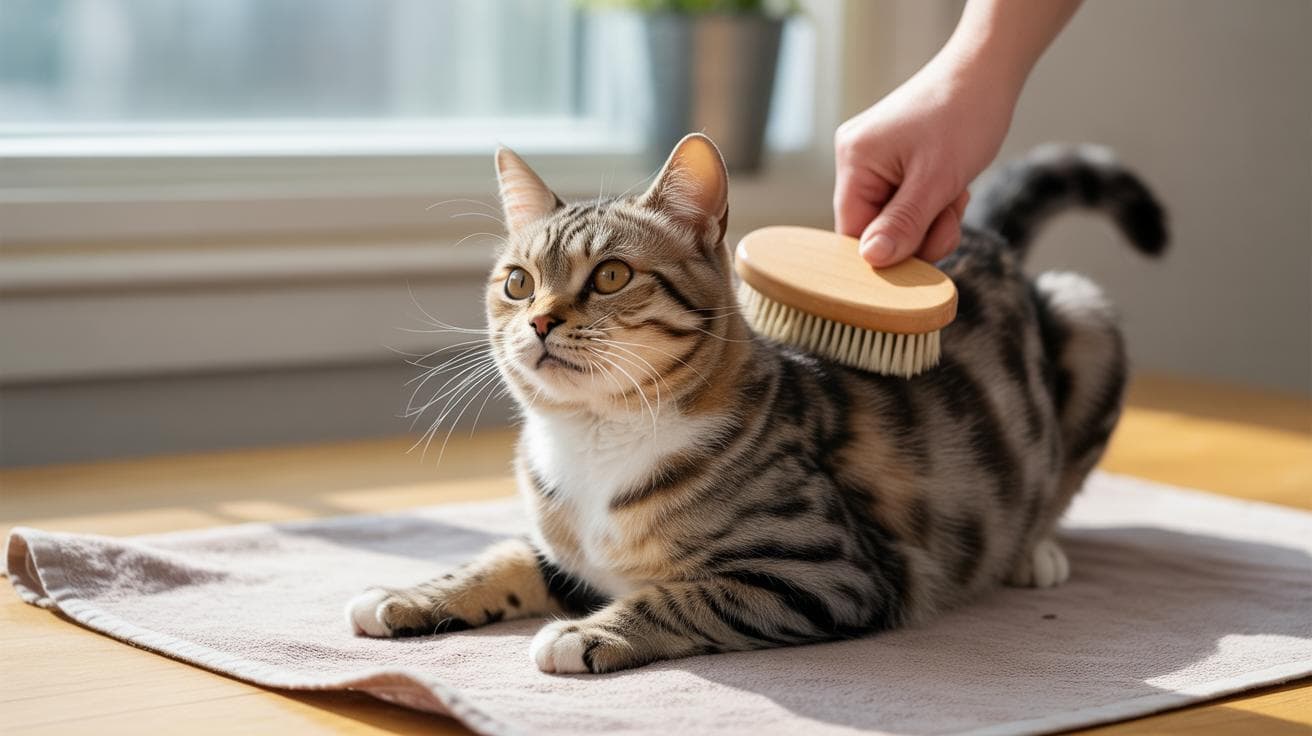
Many indoor cats bulk-shed in spring and summer when they lose thicker undercoats. Some breeds, though, shed steadily all year. That loose fur ends up in their mouths while they groom, which raises the chance of hairballs.

Increase brushing during peak-shed to catch loose hair before it’s swallowed. Short daily passes for longhair cats work wonders. Give extra attention to double coats (two-layer coats with a fluffy underfur and a coarser topcoat) so you pull out the loose underfur before your cat swallows it.

Food matters, too. High-quality protein and balanced fats help skin and fur stay healthy. Omega-3 and omega-6 fatty acids (essential fats that support skin and coat) often add shine and can cut down on excess shedding.

Between baths, use waterless shampoos (no-rinse foams or sprays) and moisturizing wipes (oatmeal, aloe, or chamomile blends) to lift dander and loose surface fur. They keep the coat fresher and reduce allergens, and your couch thanks you.

Task Frequency Purpose
Daily brushing (longhair / seasonal) Daily Remove loose hair and prevent mats (tangled clumps of fur)
Weekly full brush + ear, eye, nail spot check Weekly General coat care and quick health check
Biweekly nail trim Every 2 weeks Prevent overgrowth and snagging
Monthly tool cleaning + deeper dematting check Monthly Hygiene and early mat removal

Talk with your veterinarian before starting supplements so they can check for parasites, allergies, or thyroid problems that cause extra shedding. Keep a de-shedding tool (a comb designed to pull loose undercoat) handy during peak months and use waterless products for quick touch-ups between baths. Ever watched your kitty pounce on a rolling tuft of fur? Worth every paw-print.

Bathing indoor cats safely: how often, waterless options, and step-by-step technique
- Bathing indoor cats safely how often, waterless options, and step-by-step technique.jpg

Most indoor cats only need baths rarely. Only bathe when they’re visibly dirty, have fleas, need a medicated bath (shampoo your vet prescribes), or your vet asks. A good rule of thumb is every few months, not every week, unless there’s a medical reason.

If your cat hates water, try waterless options. Foaming waterless shampoos (no-rinse foam that lifts dirt) work great, and cleansing wipes with oatmeal, aloe, or chamomile (soothing plant extracts) are perfect for quick touch-ups. Think of it like dry shampoo for people , less stress, less drama, and still clean fur.

Step-by-step Bathing Procedure

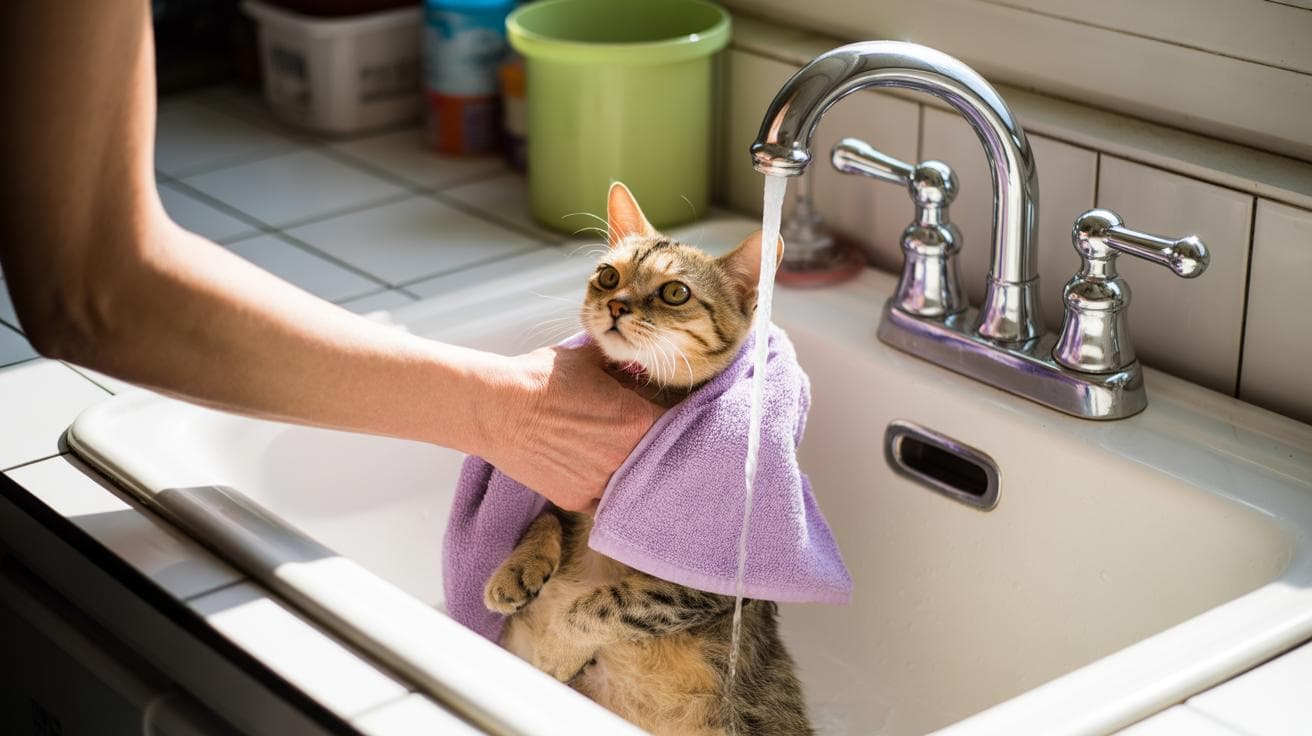
  1. Get everything ready first: warm, shallow water and a cat-safe shampoo (formulated for cats; never use dog or human shampoos). Put a towel down in the sink or tub for traction.
  2. Brush and trim loose tangles before you get wet. A gentle brush or a few careful snips around big knots makes the bath less pulling and much calmer.
  3. Be slow and calm. Hold your cat’s body securely, talk softly, and wet only the dirty spots at first instead of dunking the whole kitty. Small steps win trust.
  4. Rinse thoroughly with warm water, keeping soap away from the eyes and inner ears. Use a cup or a gentle sprayer on low pressure so it feels more like a warm rain than a storm.
  5. Towel-dry by blotting, not rubbing; that stops matting and hurts less. If your cat tolerates it, use a low, cool pet dryer (a low-heat blow dryer for pets) on a low setting, keeping it moving and held at a distance so it feels like a warm breeze.
  6. End on a positive note , a tiny treat or 10–30 seconds of gentle petting right away. That helps your cat remember bath time as not-so-bad.

For very nervous cats, try a towel wrap or swaddle: wrap them snugly like a burrito, leave the head free, and blot-dry through the fabric to lower stress. For chill cats, short dryer bursts work well. If your cat panics at any point, stop, breathe, and switch to waterless cleaning , there’s no shame in that, honestly.
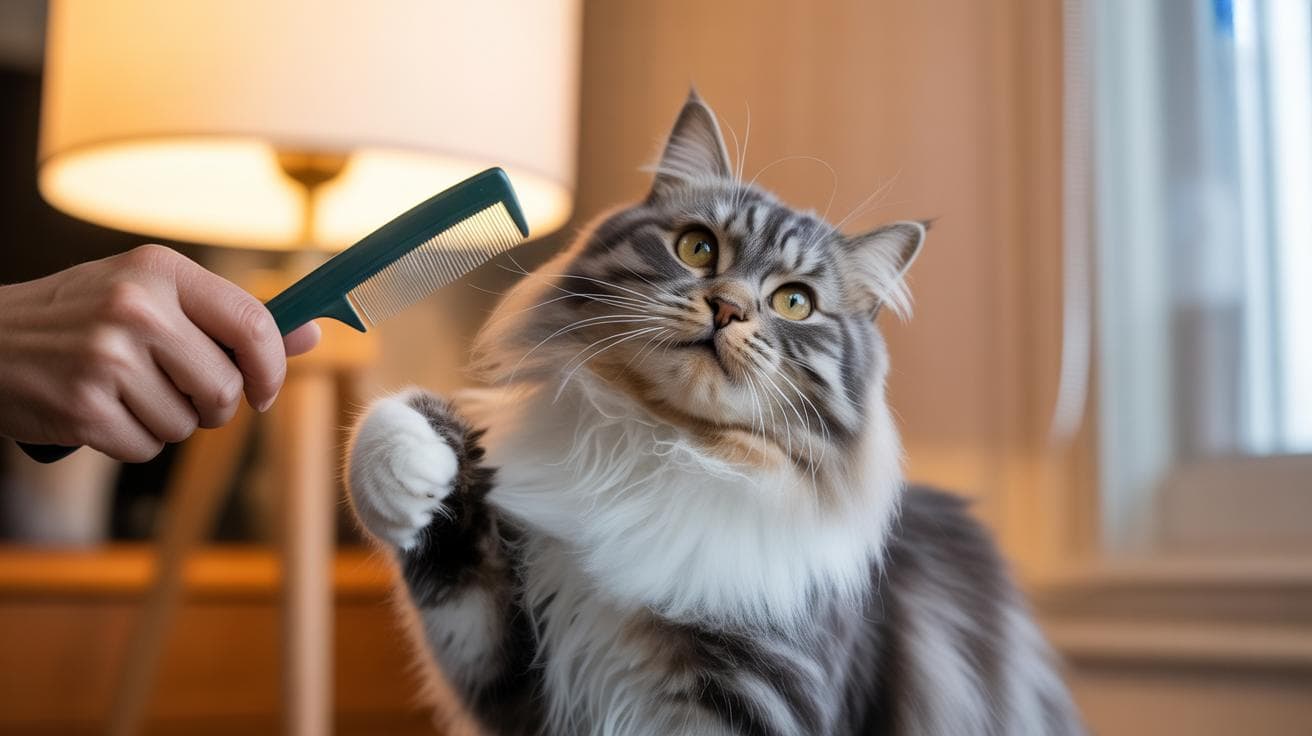
Nail trimming and paw care within indoor cat grooming tips

- Nail trimming and paw care within indoor cat grooming tips.jpg

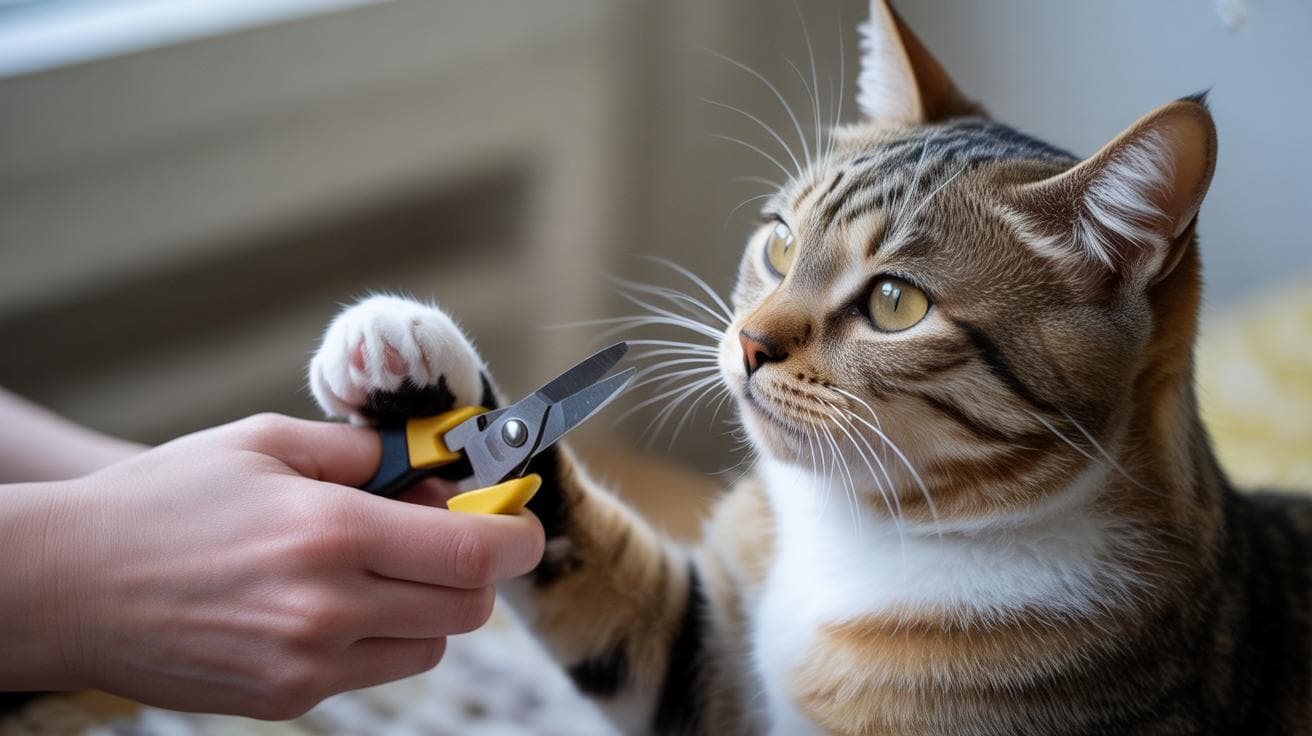
Trim nails every 2 to 3 weeks, or whenever the tips feel sharp when you run a fingertip across them. The quick (the pink part where blood vessels live) is what you want to avoid in light-colored nails. With dark nails you can’t see the quick, so just shave off the very sharp tip and be extra cautious. Short, regular trims save your couch, your curtains, and your cat from snagged paws. Worth every paw-print.

Pick a tool that fits your cat’s nails and your comfort level. Guillotine clippers (a small hole with a sliding blade that cuts like a tiny guillotine) work great for tiny nails. Scissor-style clippers (look and feel like mini scissors) handle thicker claws. Rotary grinders (a battery-powered file that sands nail edges) smooth out rough tips and are useful for anxious cats, but they make noise and vibrate, so take it slow and get your cat used to the sound first.

Get your cat used to paw handling in short, friendly bursts. Hold a paw gently each day and drop a tiny treat when you let go. Mimic the clipper sound with a piece of dry spaghetti or run the grinder near them for a few seconds, then reward calm behavior. Keep sessions under a few minutes. If your cat tenses up, stop and try again later, no pressure, just positive vibes. Ever watched your kitty chase shadows? This is the same slow, playful patience.

Two-person Nail Trimming Technique

One person comforts and holds: wrap the cat in a towel if needed, cradle the body to keep things steady, and speak softly. The other person trims quickly and calmly, doing one or two nails at a time, then hands over a treat. Timing and praise build calm behavior fast. If you accidentally cut the quick, press gentle pressure and apply styptic powder or cornstarch to stop minor bleeding. Call your vet if bleeding won’t stop or if you’re worried.

A tiny tip from me: try trimming after a nap when your cat is relaxed. It’s claw-tastic and much easier for both of you.

Removing mats and dematting safely as part of indoor cat grooming tips

- Removing mats and dematting safely as part of indoor cat grooming tips.jpg

Mats form when dead hair, skin oils, trapped moisture, and missed brushing let fur clump and knot. Left alone, mats tug at the skin, trap dirt and bacteria, make movement painful, and can hide sores or infections. Not comfy for any kitty.

Start with a calm look and feel. Is it a loose tangle you can tease apart, or a tight mat pressed to the skin? For small tangles, mist a detangling spray (a slip-making conditioner spray) and gently comb with a metal comb (thin metal teeth). Then follow with a slicker brush (fine bent-wire bristles) to smooth things out. Ever watched your cat freeze when you hit a sore spot? Hold the skin taut under the mat so you don’t pinch, and work from the outside toward the base.

For tougher mats, work in tiny sections and take breaks so your cat doesn’t freak out. If you must use scissors, use blunt-tipped scissors (rounded ends for safety) and cut only the loose outer fur, never angle the blade toward skin. Stop right away if your cat tenses, hisses, tries to bite, or if the skin looks red, swollen, or is bleeding. Better safe than sorry.

Prevention is kinder and faster than dematting. Keep a steady brushing routine for long coats, do short sanitary trims around the rear and belly for very furry cats, and check trouble spots each week, behind the ears, under the legs, the chest, and the tail base. Short, frequent sessions and treats make grooming less scary for shy cats. For busy days, a quick five-minute brush gives your cat mental and physical enrichment, and reduces matting later.

Dematting Tools and When to Get Help

  • Dematting rake (comb with curved teeth that reach under the topcoat)
  • Mat splitter (a tool that gently breaks large mats – use with caution)
  • Dematting comb (wide-tooth tool for nubbier tangles)
  • Blunt-tipped scissors (rounded ends for safety – only for confident owners)

Get professional grooming or veterinary help if mats cover about five percent or more of the body, sit tight against the skin, smell foul, drain, or make your cat limp or hide. Those situations often need sedation or careful clipping to keep your cat safe. If you’re unsure, call your groomer or vet, seriously, it’s worth the peace of mind. Worth every paw-print.

Grooming adjustments for kittens, seniors, and breed-specific indoor cats

- Grooming adjustments for kittens, seniors, and breed-specific indoor cats.jpg

Start grooming kittens at 6 to 8 weeks with tiny, friendly sessions. Keep them to 1 to 2 minutes several times a day and slowly build up to 5 to 10 minute sits. Let the kitten sniff a soft-bristle brush (soft nylon bristles, gentle plastic hairs) and gently handle their paws so nail trims and vet visits feel normal later. Use tiny treats and praise to make tools a positive thing, short, frequent exposure wins.

For senior cats, go slower and softer. Use cushioned surfaces so they don’t feel every hard edge, and keep sessions short to avoid tiring them out. Try grooming gloves (a rubber mitt with soft nubs for massaging) instead of stiff brushes so you’re petting more than tugging, and check paw pads and claws for overgrowth or tender spots. If mobility or arthritis (joint pain) limits stretching, split grooming into two brief passes instead of one long one.

Longhaired cats need daily brushing and frequent mat checks to stop painful tangles from forming, especially underfur (the soft dense layer under the topcoat) and belly areas. Shorthair cats do great with a rubber curry (a rubber brush with short teeth) or a grooming glove, plus a weekly deeper brush to catch loose hair before they swallow it. Gentle, regular handling helps both coat types accept trims, ear checks, and the whole routine, your cat won’t hate you for it, promise.

Flat-faced breeds, called brachycephalic (flat-faced cats like Persians with short noses), often need extra facial wiping for tear stains and careful watching of breathing during baths. Keep water and steam gentle and brief so they don’t get stressed. Heavily furry or obese cats who can’t reach sanitary areas may need small trims around the rear or belly; a lion trim (short body shave leaving a mane-like ruff) is something to ask a pro about so skin isn’t overexposed or overheated. When you’re unsure, call your groomer or vet and make a calm, cat-friendly plan.

Worth every paw-print.

Calming strategies, conditioning, and grooming environment setup for indoor cat grooming tips

- Calming strategies, conditioning, and grooming environment setup for indoor cat grooming tips.jpg

Pick a quiet, comfy spot with a soft surface so your cat feels safe, after play or a meal when they’re already mellow is ideal. Use a blanket or cushion so paws sink in a bit; that little comfort matters. Ever notice how your cat gets sleepy after dinner? That’s your chance.

Turn off noisy devices, shut the door, and warm the room a touch. Less startle means less struggle. Keep sessions short. Five to ten minutes is perfect, or split a session into two quick passes if your cat tires. Calm beats force, always.

Desensitize with tiny, frequent steps. Let your cat sniff brushes, clippers (electric trimmer), or the grinder (rotary nail file) first, then give a tiny treat for calm behavior. Play the clipper sound softly from across the room so it becomes familiar instead of scary. Try a towel swaddle (light towel wrap to gently limit movement) for nervous cats, or a grooming glove (rubber mitt with soft nubs) for shy or touch-sensitive kitties. Those gloves feel like petting, so they’re often a win.

Pheromone diffusers or sprays (plug-in or spray that mimics a cat calming scent) can help some cats. Put them out about 30 minutes before grooming so the room smells like home. Offer puzzle treats (treats hidden in a toy) or a small catnip toy after sessions to build good vibes. Break big jobs into short chunks, keep your voice soft, and reward calm. Worth every paw-print.

Desensitization Exercises

Days What to do
Day 1-3 Gentle handling and paw touching for a few seconds, then a tiny treat after each touch. Keep it brief and cheerful.
Day 4-5 Introduce the brush for 30-60 seconds while rewarding calm behavior. Let them explore the brush first with sniffing and soft pats.
Day 6-7 Do mock trims or run the grinder nearby for a few seconds, then praise and treat. Make the sounds normal, not scary.

Small notes: use soft praise, one treat at a time, and stop if your cat gets overwhelmed. Try again later. And hey, maybe toss a little catnip toy afterward and watch the pounce party. Claw-tastic progress.

Safety, signs that require a vet or professional groomer, and maintenance of grooming tools

- Safety, signs that require a vet or professional groomer, and maintenance of grooming tools.jpg

We moved the full list of urgent red flags into Quick-start under "Watch for urgent red flags." If you see any of those signs, stop grooming right away and call your vet. Seriously, don’t keep going.

Tool care is now part of the Brushing "Tool care" paragraph, and we cleaned up the routine so it’s easy to follow. After each session pull fur off brushes so they don’t get gummy. Wash bristle heads (the part with the brush hairs) weekly with mild soap and warm water, then let them air-dry. Sanitize tools once a month. Wipe clippers and scissors after every use so nothing sticky builds up.

Nail tool care moved into the Nail-trimming section. The rotary-grinder (battery-powered nail file) needs regular attention: keep it charged, swap dull bits, and store it somewhere dust-free. Replace worn parts as needed so it runs smooth and quiet. These quick steps save you headaches, and avoid sad, crunchy sounds when your cat nudges the grinder.

At-home first aid for nicks is folded into the Nail-trimming two-person technique subsection. If you nick a quick, apply firm pressure first. Use styptic powder (a clotting agent) or plain cornstarch to help stop bleeding. Call your vet if the bleeding won’t stop or the spot looks infected.

When to book a professional groomer? Look for big warning signs: dense mats close to the skin, mats covering large areas, a trim that needs sedation, complicated lion trims, or handling that feels unsafe for you or your cat. Those situations are best left to pros who have the right tools and experience.

Worth every paw-print.

Final Words

Jump right in: brush 5–10 minutes (3–4×/week), check ears weekly, trim nails every 2–3 weeks, spot-clean as needed, and watch the big red flags like infected mats (tangled fur), sudden hair loss, or new lumps.

Run the eight-step session checklist, keep treats ready, and split longer sessions if your cat tires.

See the Brushing, Bathing, Nails, Dematting, and Shedding sections for technique and product notes. Finish with a small treat and calm petting so grooming becomes a cozy habit. These indoor cat grooming tips help busy, multi-cat homes cut hairballs, lower stress, protect furniture, and bring more playful purrs into the day.

FAQ

Cat grooming FAQs

What are the best indoor cat grooming tips and how often should I groom my indoor cat?

The best indoor cat grooming tips are short, regular sessions: brush 5–10 minutes, 3–4×/week (daily during heavy shedding); check ears weekly; trim nails every 2–3 weeks; spot-bathe as needed.

How do I groom a cat that hates it and can I sedate my cat at home for grooming?

To groom a cat that hates it, use short desensitization sessions, treats, towel swaddles, pheromone spray, and a grooming glove (soft rubber glove). Never sedate at home – only a veterinarian should sedate safely.

What cat grooming tools should be in a basic grooming kit and how do I use clippers at home?

A basic cat grooming kit includes a slicker brush (fine wire pins), rubber curry or glove (massage), undercoat rake (removes loose underfur), metal comb, nail clippers or grinder (rotary file), clippers for trims, and waterless wipes.

What are the benefits of grooming and does my cat groom itself enough?

The benefits of grooming are healthier skin, fewer hairballs, fewer mats, and a stronger bond. Cats groom themselves, but indoor cats still need owner brushing, nail care, and help with stubborn mats.

What is the 3-3-3 rule for cats?

The 3-3-3 rule for cats means 3 days to adjust to new smells, 3 weeks to feel more settled and explore, and 3 months to be comfortable with your home and routine.

What are common cat grooming mistakes to avoid?

Common cat grooming mistakes are skipping regular brushing, cutting into the quick, forcing long sessions, using human or dog shampoos, pulling mats, and neglecting ear, eye, and dental checks.

What are the main types of cat grooming I should do?

The main types of cat grooming are brushing and de-shedding, dematting, bathing or waterless cleaning, nail trims, ear and eye care, and quick dental wipes or checks.

Author

  • Lucas Turner

    Lucas Turner is an urban photographer based in Chicago, Illinois, known for his captivating images that highlight the pulse of city life. With a unique perspective, he captures the vibrant contrasts between architecture, people, and the urban environment, telling stories through his lens.

    Outside of photography, Lucas enjoys coffee shop hopping, exploring the diverse cafes around the city. He finds that each coffee shop has its own vibe, offering a perfect setting for creativity to flow. As he often says, “A good cup of coffee and a new view always inspire my best work.”

    Lucas’s photography is a reflection of his love for the city’s energy and the quiet moments found within it.

    View all posts

Similar Posts