Think giving your cat a pill is impossible? It doesn’t have to feel like a wrestling match. With a calm voice, steady hands, and a simple plan you can get meds in without fur flying or guilt. Seriously, your cat and you can both stay relaxed.
This short guide covers what to do in an emergency, how to prep and position your cat, a couple of quick manual pilling methods, useful tools, easy alternatives, and what to watch for afterward. Keep it handy. Ever watched your kitty chase a shadow? Same focus, less chaos.
Emergency checklist:
- Stay calm. Your mood sets the tone.
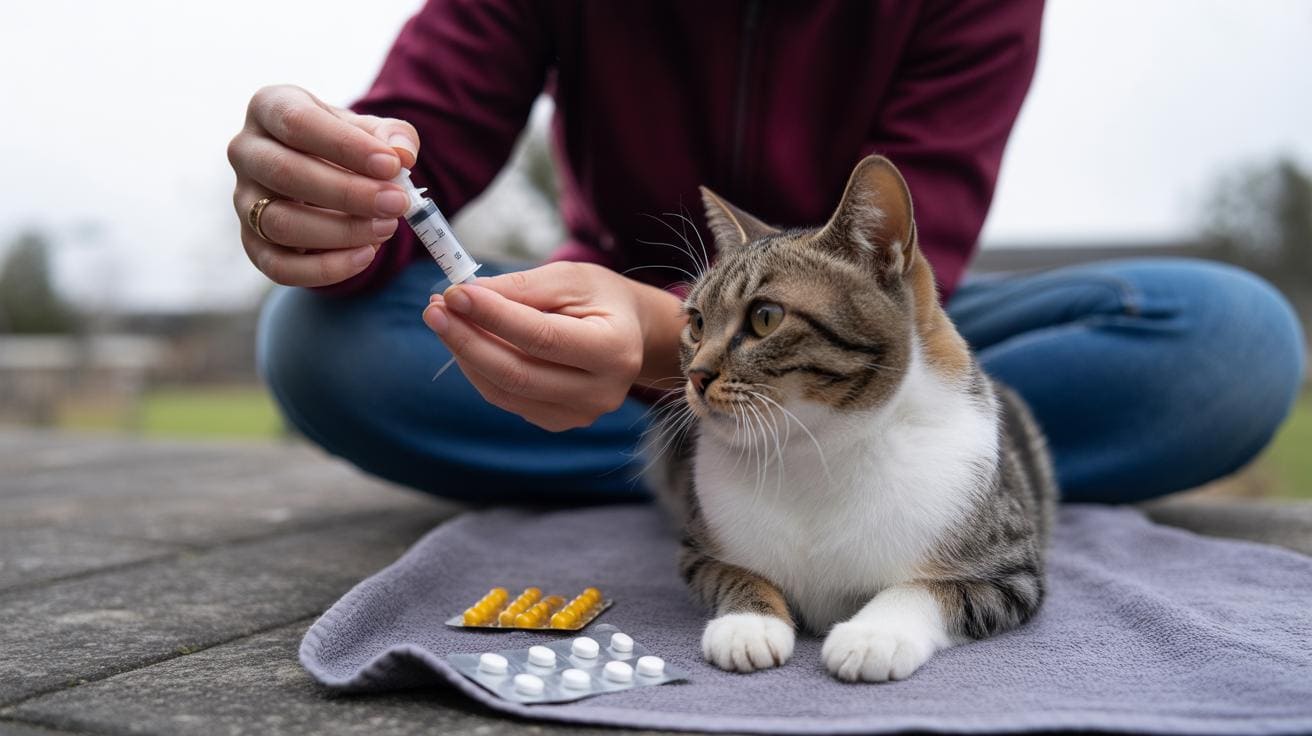
- Towel ready for a gentle burrito wrap (a snug towel wrap to keep paws tucked).
- Phone nearby for the vet’s number.
- A treat or small bit of wet food to positive reinforcement reward afterward.
How to prep and position:
Sit on the floor or a low chair so you’re steady. Put your cat on your lap facing away from you, or on a table with a towel under them. Use one hand to steady the head at the cheekbones and the other to hold the lower jaw gently. Keep your voice soft , whiskers will twitch, eyes will watch, and that calm helps.
Quick manual pilling methods:
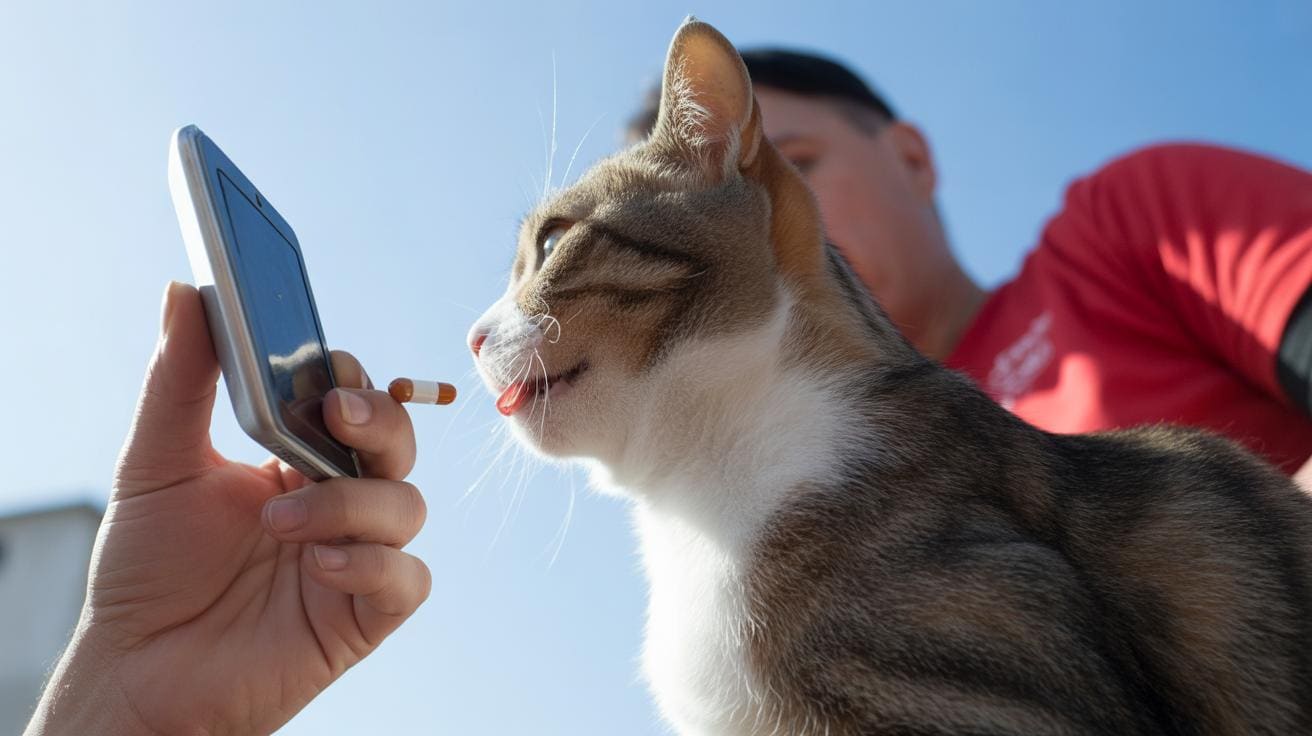
- The scoop-and-drop: Slip the pill to the back of the tongue and close the mouth, then stroke the throat to encourage swallowing. Aim quick and be gentle.
- The two-finger method: Hold the head top with thumb and forefinger, press the lower jaw down with two fingers, and place the pill at the base of the tongue. Close the mouth and stroke.
Practice with a treat first so it feels less scary.
Helpful tools:
- Pill popper (a small plastic plunger that places the pill at the back of the mouth). It’s like a tiny syringe for pills and keeps your fingers clear.
- Pill pockets (soft treats with a pouch for pills). They hide the taste and texture.
- Oral syringe (a medicine syringe without a needle for liquid meds). It helps you squirt liquid gently into the cheek pouch.
Try the tool that feels right for you and your cat.
Easy alternatives:
If pills are impossible, ask your vet about liquid medicine, which you can give with an oral syringe (a squirt tool); or transdermal gel (med applied to skin, usually the ear, that absorbs through skin) , vet approval required. Sometimes crushing the pill into wet food works, but only if the med is safe to mix. Always check with the vet first.
What to watch for afterward:
Make sure the cat actually swallowed , you’ll see a little lick or a soft paw to the mouth. Watch for coughing, gagging, or trouble breathing; if any of those happen, call the vet right away. Also look for vomiting or refusal to eat for a few hours.
A quick tip: follow a pill with a tiny tasty morsel or a lick of water so they learn it’s not all bad. And if you mess up, it’s okay. Try again calmly in a minute.
Worth every paw-print.
Need to give a pill now? Emergency checklist
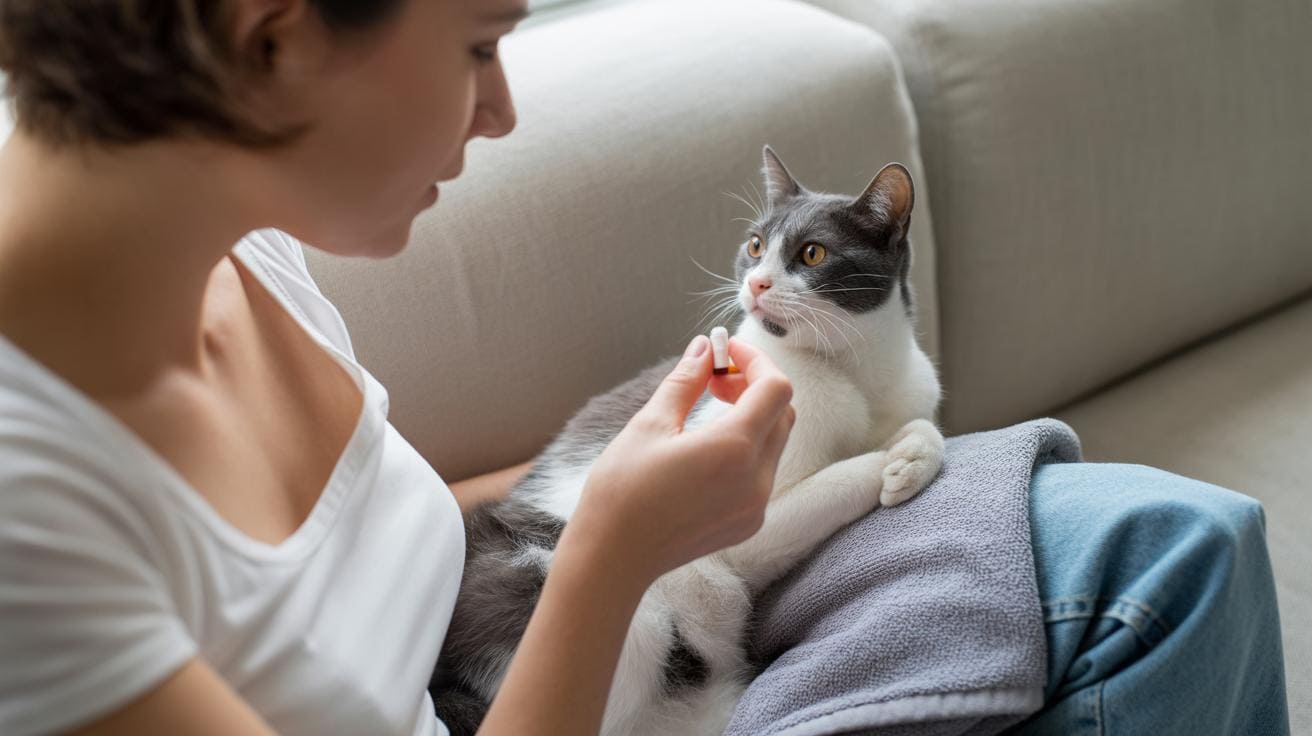
In a rush and nervous? Stay calm. A steady voice and gentle hands make all the difference when your cat needs a pill.
- Confirm the medication name and exact dose. Double-check the label and your vet’s instructions so you don’t guess.
- Gather your supplies: a towel (for gentle restraint), the pill, a pill popper (a small plunger tool to place pills in the back of the mouth), a syringe (oral syringe for liquids), and a treat (a tasty reward).
- Hold your cat briefly and calmly. Wrap the towel loosely if needed, support their body, steady their head, then give the pill, quick but gentle. Think of it like a tiny, focused cuddle.
- Make sure they swallow and are breathing normally. Watch the throat for a swallow, listen for steady breaths, and check that they relax afterward.
Watch closely for coughing, noisy breathing, repeated gagging, or blue gums. If you see any of those signs, get urgent veterinary help right away.
See Preparing [More detail], Positioning [More detail], Manual Pilling [More detail], Tools & Alternatives [More detail], Troubleshooting [More detail], Aftercare [More detail].
Preparing to give your cat a pill: vet checks, label reading, practice and calm setup
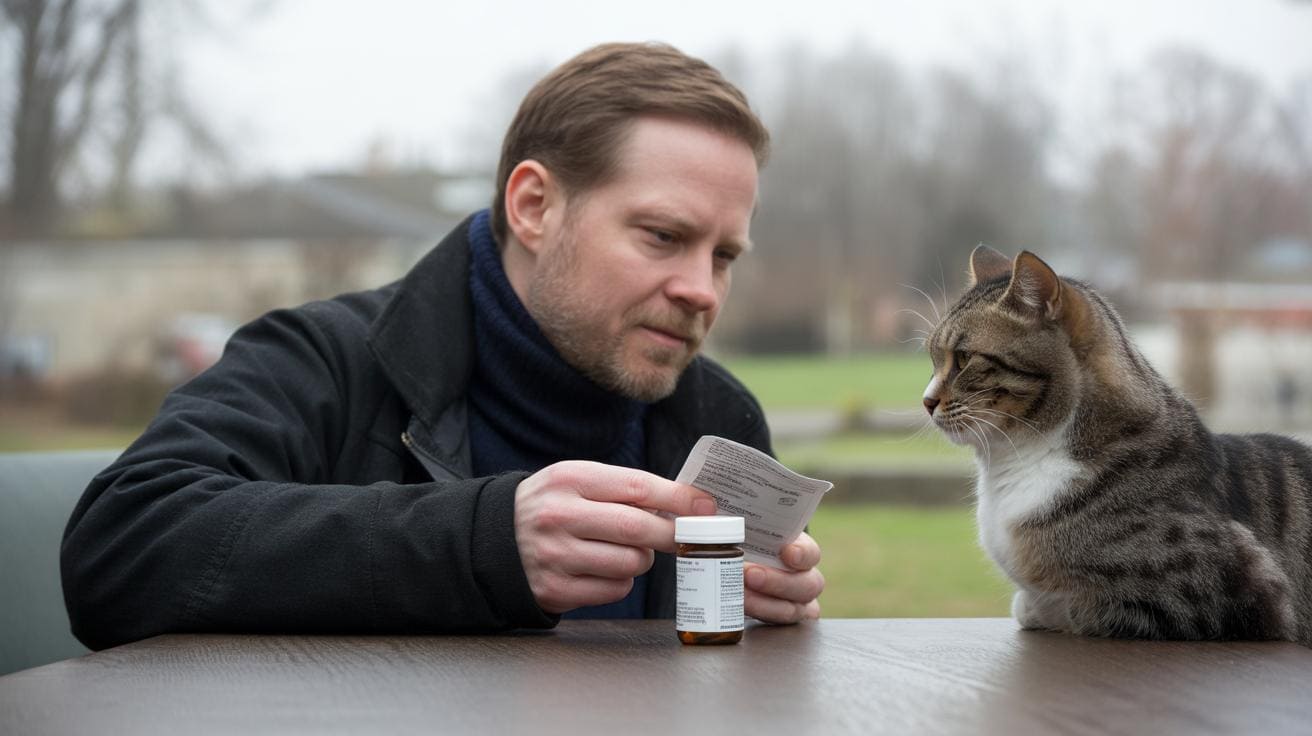
Before you try giving a pill, call the prescribing clinician and ask a few simple questions. Can the medication be crushed, mixed with food, swapped for a flavored version, or made as a compounded form (compounded = custom-made by a pharmacist)? Are there food interactions, does it need refrigeration, should you shake it before use, and is timing important? For a full supply list and formulation notes, see Tools & Alternatives. Ever wonder if you can hide it in tuna? Ask that too.
Read the prescription label like a short map. Look for dose (mg), frequency (how many times per day), and route (oral versus transdermal (applied to the skin)). Check storage temperature and any warnings about food or other drugs. If the label says "do not crush" or "give on an empty stomach," follow that and call the clinic if you’re unsure. Better to ask than to guess.
Practice the motions away from your cat so you’re calm and steady. Rehearse with a stuffed substitute or an empty pill popper, and practice drawing or dispensing with an oral syringe (a small plastic syringe for giving liquid meds). Pick a quiet, low-distraction room, lay out supplies, and have a helper nearby if you want one. I once practiced on a plush mouse and suddenly felt way less nervous. Worth every paw-print.
Positioning and restraint for giving a cat a pill: towel wrap, one-person and two-person methods

Good positioning keeps your cat safe and stops frantic squirming that leads to scratches, bites, or even accidental inhalation. Calm, steady handling makes the whole thing faster and makes your cat more likely to cooperate next time. Ever watched your kitty try to Houdini out of a blanket? Yep, this helps.
Towel wrap (burrito)
Fold a medium towel so it’s wide enough to cover the cat’s body but leave the head free. Place the cat near one short edge, pull the near side over the hind legs, then snug the far side across the shoulders so the legs are gently tucked, cozy, not tight. The towel limits kicking and scratching and gives you one small head opening to work with. You’ll feel the soft towel against their fur and know they can’t fling their paws at you.
One-person technique
Sit with the cat on your lap or across your knees so their spine rests against you for stability. Keep the body wrapped or tucked under an arm so only the head is exposed, then support the head near the temples (the sides of the head near the eyes) with your free hand, using gentle pressure not a squeeze. This keeps your fingers farther from the mouth and helps the cat stay calm while you work. It’s easier and calmer when their back is against you.
Two-person technique
One person’s job is to hold and comfort: wrap the cat and steady the torso, keeping a hand over the shoulders to prevent turning. The second person focuses on the pill: steady the head and place the medication. Talk through roles before you start so both people move in sync and the cat feels steady, not jostled. Teamwork makes it faster and less scary for everyone.
Protective gear and cautions
If your cat bites or you’re nervous, wear sturdy gloves (garden or leather gloves work) or use a thicker towel for extra padding. Don’t make scruffing a routine move unless a veterinarian has shown you how; scruffing (grabbing the loose skin at the back of the neck) can cause fear or injury when done wrong. And if it’s not happening calmly, stop and try again later or call your vet for tips.
Worth every paw-print.
How to Give a Cat a Pill: Step-by-Step Guide
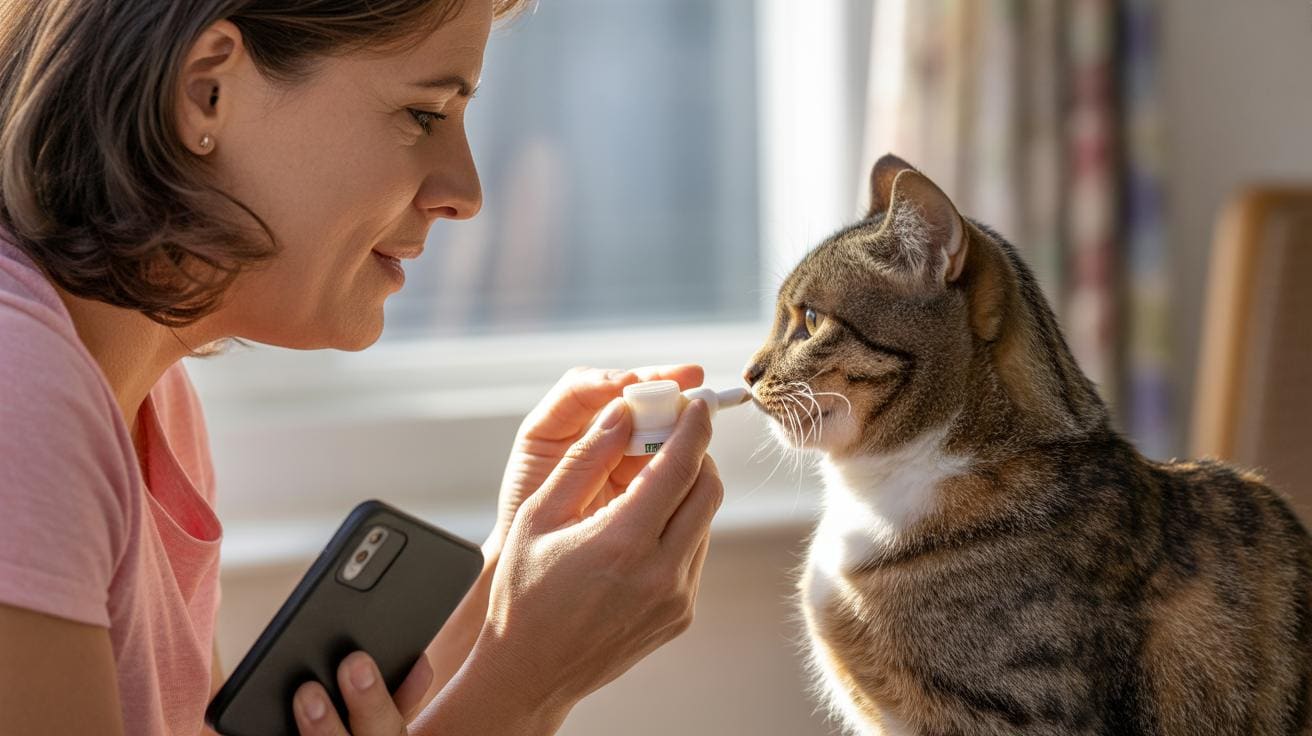
Start by supporting your cat’s head. Cradle the skull with one hand and tilt the muzzle up just a hair so the airway stays relaxed. This helps open the mouth safely without tugging or panicking them. Easy does it.
Use gentle pressure at the jaw hinge or under the lower jaw (mandible – the bottom part of the skull) with your thumb and forefinger to encourage a tiny gap. Don’t pry or yank. Think slow and patient, not forceful.
For placing the pill, slide it onto your fingertip or into a pill popper tool (a small plunger device that keeps your fingers farther from teeth). Aim to deposit the pill toward the back of the tongue, but stop before you push it into the throat. Keep your fingers flat and out of the bite zone to protect your hands. Follow any instructions your clinic gave you for tools.
After the pill is in, close the mouth and gently massage the throat for a few seconds to help swallowing. If your vet okayed a small sip of water, give a tiny amount at the side of the mouth from an oral syringe (a small plastic syringe for giving liquids) to encourage a swallow. Only do this when your vet approves.
For rules about trying again, how long to wait, and the urgent signs that need immediate care, see Troubleshooting.