
The short answer: a tiny accidental lick of diluted Dawn dish soap is unlikely to poison an otherwise healthy adult cat, but Dawn is not a cat shampoo and it is not harmless. Dishwashing liquid can irritate the mouth, stomach, eyes, and skin. Soap left on fur is especially concerning because a cat will groom it off and may inhale foamy material if vomiting occurs.
Do not use Dawn for routine baths or assume every Dawn formula is equivalent. If your cat has soap on their coat, rinse it away thoroughly. If they swallowed more than a trace amount, have persistent symptoms, or show any breathing difficulty, contact a veterinarian or animal poison service promptly. This guide offers first-aid context, not a diagnosis for an individual cat.
Is Dawn dish soap safe for cats?
Dawn is better described as low risk in a small, one-time exposure than simply “safe.” Liquid hand-dishwashing soaps contain surfactants—the ingredients that lift grease. The Merck Veterinary Manual says common anionic and nonionic detergents generally cause mild gastrointestinal irritation, with vomiting and diarrhea among the most common signs. Eye and mucous-membrane irritation can also occur.
That does not make a lick an automatic emergency, nor does it make Dawn appropriate for regular grooming. Dawn publishes a broad ingredient list that includes cleaning surfactants, fragrance, preservatives, solvents, and colorants used across its formulas. Those formulas are designed and labeled for dishwashing—not for a cat’s skin, coat, or inevitable grooming behavior.
Use this distinction
- One small lick of diluted suds: often causes no signs or temporary drooling or stomach upset, but observe closely.
- Soap left on the coat: rinse it off because grooming can turn a skin exposure into an ingestion exposure.
- A mouthful, concentrated product, or repeated vomiting: call your veterinarian or animal poison control for case-specific advice.
- Breathing trouble, collapse, blue or pale gums, or seizures: seek emergency veterinary care now.
What to do if your cat licked Dawn
Respond to what actually happened rather than relying on a blanket internet answer. Keep the bottle or take a clear photo of its front and ingredient label; the exact product, amount, time, and your cat’s weight and health all affect the advice.
- Remove access. Move the bottle, dishwater, soaked sponge, and any wet towels out of reach. Keep other pets away too.
- Clear external residue. If soap is on the paws or coat, rinse with clean lukewarm water. If there is only a tiny smear around the mouth, gently wipe it away with a damp cloth.
- Offer plain water. Let your cat drink if they want to, but do not force water by syringe. A stressed cat can inhale liquid.
- Do not induce vomiting. Foamy detergent can be inhaled into the lungs on the way back up. Merck specifically advises preventing vomiting after detergent, soap, or shampoo ingestion when possible.
- Watch closely. Note drooling, repeated lip-licking, pawing at the mouth, vomiting, diarrhea, coughing, noisy breathing, lethargy, or refusal to eat.
- Call when in doubt. Your veterinarian can assess the product and dose. In the United States, the ASPCA Animal Poison Control Center is available at 888-426-4435, and Pet Poison Helpline is available at 855-764-7661; consultation fees may apply.
Do not give milk, oil, salt, hydrogen peroxide, activated charcoal, or another home remedy unless a veterinarian or poison specialist tells you to do so for this specific exposure. Good treatment advice is product- and patient-specific.
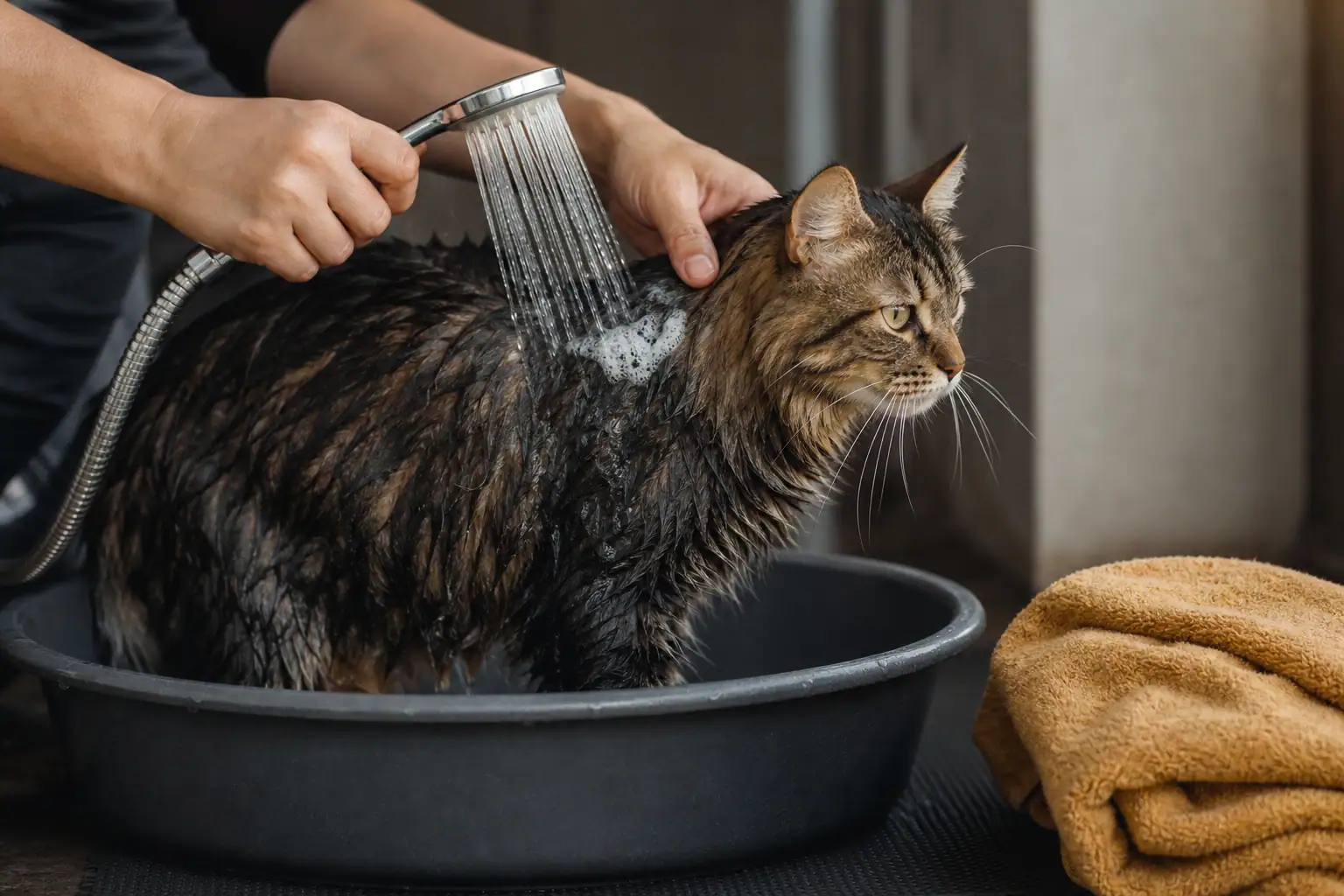
What if you already bathed your cat with Dawn?
Do not panic. The immediate priority is to remove the residue before your cat grooms.
- Rinse the entire soaped area with plenty of lukewarm water, keeping water out of the eyes, nose, and ears.
- Continue until the coat no longer feels slick and rubbing the wet fur produces no suds.
- Towel-dry your cat and keep them comfortably warm. Prevent licking until the coat is thoroughly rinsed.
- Check the skin over the next day for redness, itching, flaking, or unusual sensitivity.
- Call a veterinarian if the bath was meant to remove paint, oil, a pesticide, essential oil, or another chemical. The right decontamination method depends on the substance.
A single well-rinsed bath may cause nothing more than temporary dryness, but repeated use can strip oils from the coat and worsen irritation. For ordinary dirt, use a shampoo labeled for cats and follow its directions. Cats with wounds, skin disease, very young kittens, seniors, or medically fragile cats deserve veterinary advice before a full bath.
If Dawn got in the eyes
Flush the affected eye gently with lukewarm water or sterile saline for several minutes. Do not use eye drops intended to “get the red out.” Squinting, holding the eye closed, marked redness, cloudiness, or continued tearing warrants prompt veterinary assessment; eye injuries can deteriorate quickly.
