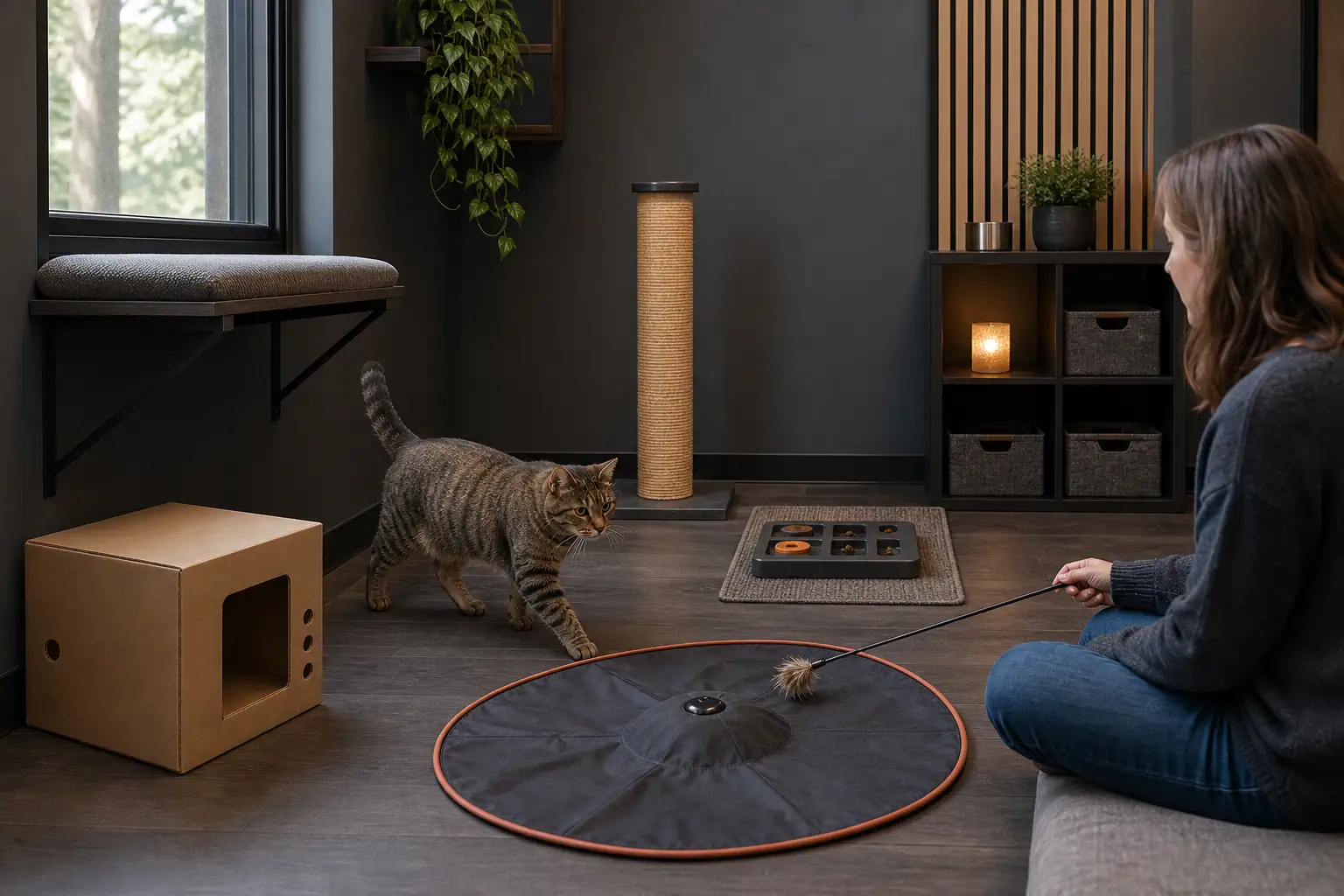
Cat enrichment means giving a cat safe opportunities to perform natural behaviors and make meaningful choices. It is more than buying toys. A useful enrichment setup lets a cat hide, climb, scratch, watch, sniff, search for food, stalk, chase, catch, and rest without being forced into constant activity.
Start small: create one secure perch or hiding place, offer one appropriate scratching surface, and schedule one or two short hunting-style play sessions. Add a simple food-search activity if it suits your cat’s diet. Watch what your cat chooses, then keep, move, simplify, or retire each activity based on that response.
What counts as cat enrichment?
Enrichment changes a cat’s environment or routine in a way that encourages species-typical behavior. A window perch supports watching and resting. A sturdy scratcher supports stretching, claw maintenance, and scent marking. A wand game supports stalking and capture. A puzzle feeder supports searching and manipulating. A familiar box supports hiding and observation.
The AAFP and ISFM feline environmental needs guidelines organize a healthy cat environment around five pillars: a safe place; multiple, separated key resources; opportunities for play and predatory behavior; positive, consistent human interaction; and respect for a cat’s sense of smell. That framework is more useful than treating enrichment as a shopping list.
Novelty can help, but novelty is not the goal by itself. Moving a favorite bed every day, starting a motorized toy beside a sleeping cat, or introducing several new scents at once may create uncertainty rather than interest. Predictability and choice form the base; small, reversible challenges sit on top.
Audit your home before adding more toys
Walk through the rooms your cat uses and score each area below as available, needs improvement, or missing. Fix missing basics before adding complicated puzzles.
| Need | What to look for | A practical improvement |
|---|---|---|
| Safety and retreat | A quiet place where the cat can hide or rest without being followed | Open a carrier, clear a shelf, or place a box with two exits in a calm room |
| Separated resources | Food, water, litter, scratching, play, and rest are not crowded into one station | Move one resource so the cat has choices and does not need to pass a rival cat |
| Vertical space | Stable, reachable perches with a safe route up and down | Clear a window ledge or anchor a cat tree that does not wobble |
| Scratching | At least one stable surface in the cat’s preferred angle and material | Put a tall vertical scratcher or wide horizontal pad near a resting or marking area |
| Hunting and play | Chances to watch, stalk, chase, catch, bite, and kick an appropriate target | Use a wand for the chase and finish with a large capture toy |
| Foraging | Some safe opportunity to search or work for part of a normal meal | Start with kibble in an open egg carton or wet food spread in a shallow textured feeder |
| Social choice | The cat can request, accept, or leave interaction | Pause during play or petting and continue only when the cat re-engages |
| Sensory comfort | Familiar scents remain; strong fragrance and unpredictable noise are limited | Keep familiar bedding and introduce new scent items one at a time |
In a multi-cat home, count access rather than objects. A single premium cat tree in a narrow hallway can be controlled by one cat. Several modest perches, water points, litter boxes, and resting areas on different routes often provide more real choice.
Match enrichment to the behavior your cat already offers
Your cat’s current behavior is the best starting brief. Do not begin with the product that looks most impressive; begin with what the cat repeatedly tries to do.
- Stalks ankles or ambushes from corners: schedule floor-level wand play before the usual ambush time. Move the lure away like prey, pause behind cover, allow frequent catches, and redirect the final grab to a long kicker. If attacks are frequent or painful, use the step-by-step plan in our cat play aggression guide.
- Climbs cabinets or watches from door tops: add a stable legal high route with more than one way down. Do not punish climbing while leaving no acceptable vertical option.
- Shreds small plush toys: choose a larger, densely constructed capture toy with minimal attachments, supervise the first sessions, and inspect after play. Our durable cat toy guide explains seams, fabrics, sizing, and retirement signs.
- Wakes people for food: try a measured food hunt or an easy puzzle using part of the normal daily ration. Start simple; do not make every meal difficult on day one.
- Scratches one sofa corner: place a stable scratcher beside that exact location and match the angle and texture. Reward investigation; move it gradually only after the cat uses it reliably.
- Watches birds for long periods: provide a secure perch and a way to leave the view. If outdoor cats at the window trigger crouching, tail lashing, spraying, or redirected aggression, block the lower sightline instead of calling the view enriching.
- Ignores toys left on the floor: rotate a small set and change how you animate it. Our cat enrichment activities guide has games for chase, forage, scent, climbing, and training.
A 2023 survey of 1,591 cat guardians found that a greater variety of games was associated with higher reported feline quality-of-life scores, while longer daily play and more games were associated with stronger guardian-reported relationships. The study on play and welfare shows associations, not proof that a particular schedule causes those outcomes, but it supports offering varied games and letting both cat and person initiate play.