Silica Packet Ingestion in Cats: Symptoms and Treatment

Think that little "do not eat" silica packet is harmless? I used to think so too, until I saw my cat bat one across the floor. Those packets usually contain silica gel (tiny beads that soak up moisture) and sometimes a moisture indicator like cobalt chloride (a color-changing chemical). They’re not candy. If your cat chews or swallows one, it can choke, cause a gut blockage, or in rare cases cause a chemical reaction. Ouch.

Watch for these signs right away:

  • Gagging, drooling, or pawing at the mouth.
  • Vomiting or repeated retching.
  • Not eating, weak or very sleepy.
  • Belly pain, bloating, or not passing stool.
  • Trouble breathing, wheeze, or coughing.

If you catch your cat with a packet in its mouth, try to remove it gently with your fingers only if it’s safe and easy to grab. Don’t shove your hand down the throat. Call your vet or an animal poison control line next and describe the packet (keep it or take a photo). Don’t make your cat vomit unless the vet tells you to. If your cat is having trouble breathing or seems in severe pain, go to an emergency clinic now.

What will the vet do? They’ll usually start by checking vitals and may take x-rays (radiographs) to see where the packet is. If it’s caught in the esophagus or stomach they might use an endoscopy (a thin camera with tools) to remove it. If there’s a blockage in the intestines, surgery could be needed. They’ll also give fluids, pain meds, and watch your kitty for signs of infection or internal damage. Most pets do fine with quick care.

Prevention is the easiest fix. Toss or tuck packets somewhere your cat can’t reach, or keep them up high right away. I learned that the hard way, my cat made it look like a toy, so now I stash them before I even set the box down. A few calm actions now can save a stressful vet visit later. Worth every paw-print.

Immediate steps after silica packet ingestion in cats
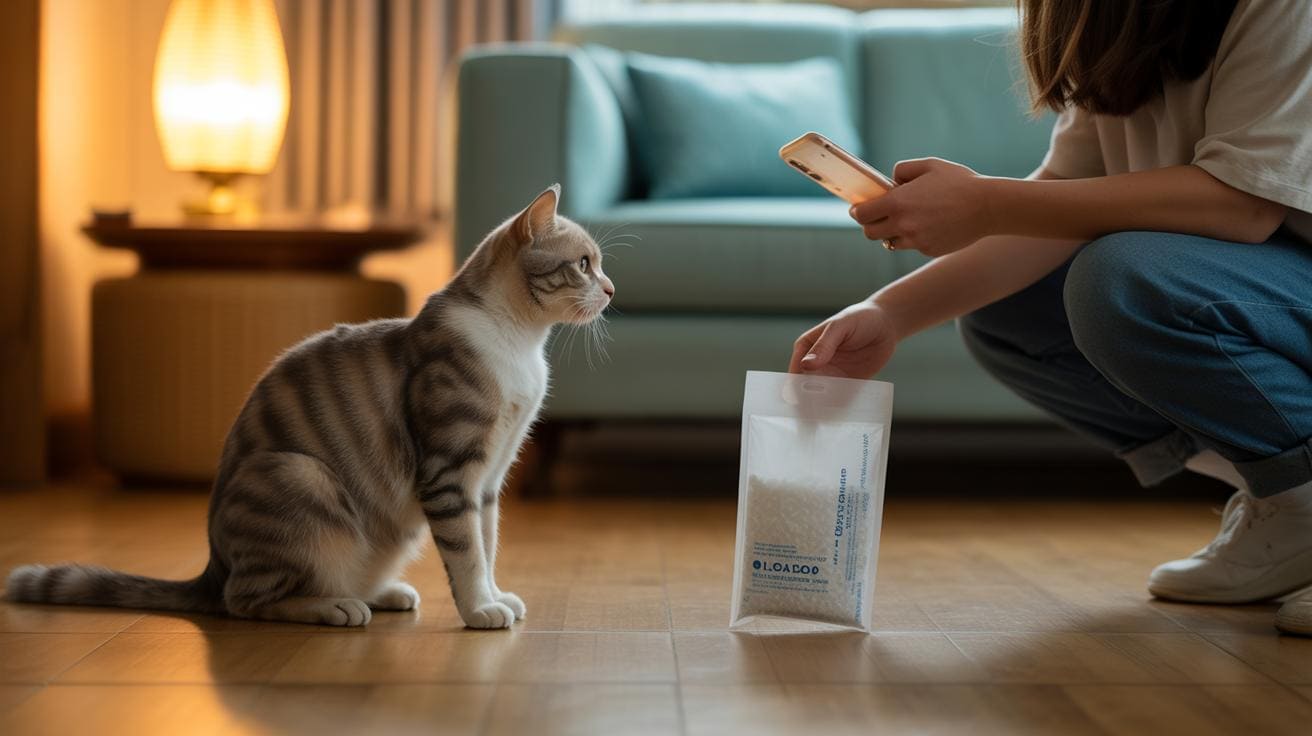
- Immediate steps after silica packet ingestion in cats.jpg

Silica gel (the tiny moisture-absorbing beads you find in packages) is usually not poisonous. Still, the big worry is choking or a gut blockage. Ever watched your cat bat at one like it's a toy? Yeah, cozy moment but also a trip to stay alert.

  1. Secure your cat so they don’t squirm away, and quickly check breathing and the airway.
  2. If it’s safe to do so, peek inside the mouth and gently remove any visible packet with gloved fingers or tweezers. Don’t push anything deeper.
  3. Don’t induce vomiting unless a veterinarian or a poison-control specialist (animal poison control hotline) tells you to.
  4. If your cat is alert and breathing normally, offer only very small sips of water. No force-feeding.
  5. If the cat is choking, having serious trouble breathing, or you can’t remove the packet, go straight to an emergency clinic now.
  6. Bring the packet and the original packaging with you to the clinic so staff can identify what was ingested and give clear poison-control guidance.

See 'Signs and timeline' and 'Home monitoring' for symptom details and what to document.

How silica packets and other desiccants differ: risks for cats
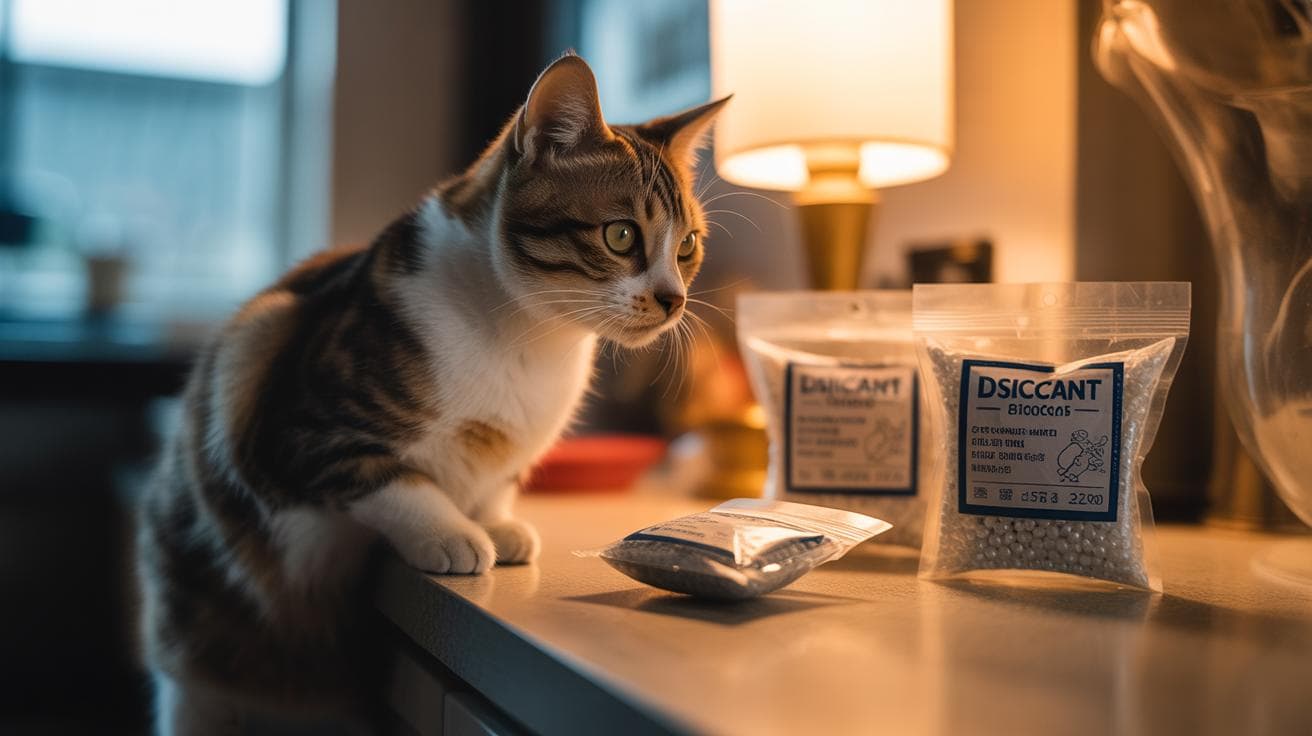
- How silica packets and other desiccants differ risks for cats.jpg

Most desiccants you find in packages come in three flavors: silica gel beads, moisture‑indicator beads, and superabsorbent polymers. Silica gel beads (tiny beads of a natural mineral, like very fine sand) are mostly inert. Moisture‑indicator beads are dye‑coated and sometimes contain cobalt chloride (a color‑changing chemical that can be toxic in large amounts). Superabsorbent packs use sodium polyacrylate (a polymer, a long‑chain plastic that soaks up liquid and swells). The biggest everyday danger is physical , choking or a gut blockage , while chemical problems only show up with some dyed or indicator products.

Desiccant Type Primary Composition Key Risk to Cats Typical Clinical Concern
Silica gel Silica beads (tiny mineral beads, like fine sand) Choking or mechanical blockage Visible foreign body; local mouth or gut irritation; low chemical toxicity
Moisture‑indicator beads Dye‑coated beads; sometimes cobalt chloride (color‑changing chemical) Chemical toxicity if a lot is swallowed; choking Possible systemic signs if large amounts of dye or metal are ingested
Sodium polyacrylate / superabsorbents Superabsorbent polymer (sodium polyacrylate, a swelling plastic) Expands when wet and can cause an obstruction Blockage risk; localized irritation; may swell inside the gut

If your cat eats one, quickly read and keep the packet label and bring it to the vet. Look for words like "moisture indicator," any chemical names such as "cobalt chloride," or "sodium polyacrylate," and note whether the stuff is beads or powder. Count how many packets could be missing and write down when it happened. That little paper strip that says "do not eat" actually helps your vet a lot, so snap a photo if you can and bring the packet to the appointment.

Watch your cat for signs like drooling, gagging, vomiting, tummy pain, or not wanting to eat. Some packs just cause mild irritation, but superabsorbent material can swell and block the gut, and large amounts of indicator dye or metals can cause real toxicity. If you’re unsure, call your vet or a pet poison hotline right away , quick action often makes the difference.

Silica Packet Ingestion in Cats: Symptoms and Treatment
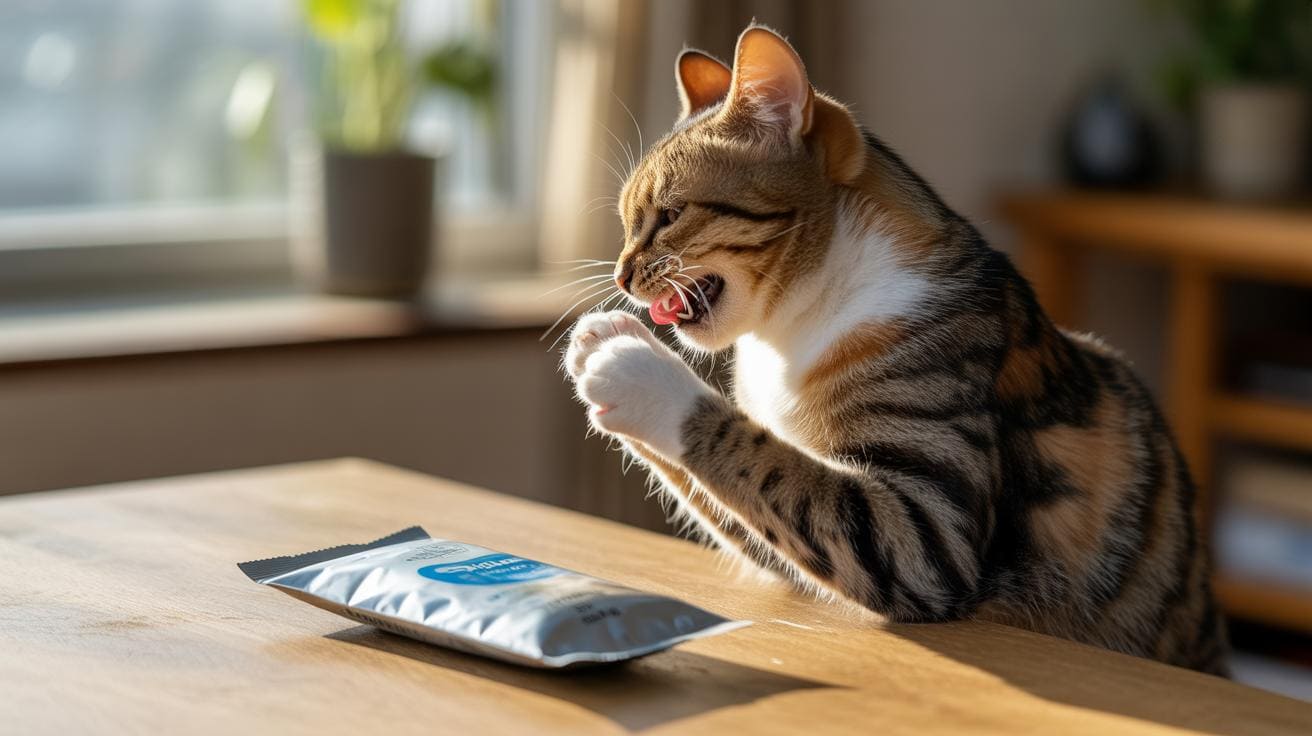
- Signs and timeline symptoms of silica packet ingestion in cats.jpg

If your cat mouths a silica packet, the first few minutes matter. You might see drooling, gagging, retching, coughing, or frantic pawing at the mouth. If you can safely look inside, you may see the packet or the tiny beads and be able to remove them right away. Use gloves or blunt tweezers and be very gentle so you don’t push anything deeper.

Quick note: silica gel (tiny beads that soak up moisture) is a desiccant (a drying agent). It’s usually not poisonous by itself, but the packet can block or irritate the mouth and throat. So those first actions, calm, careful, quick, can really help.

Over the next few hours watch for mild stomach signs. A single or occasional vomit, eating a little less, or a subtle tiredness are common. Jot down each vomiting episode – time and how often – before rushing to the car, especially if your cat looks bright and is breathing normally. Small sips of water and close observation are often fine at this stage.

But don’t ignore changes. From about 24 to 72 hours after swallowing, pay close attention. Repeated vomiting, a much lower appetite, noticeable lethargy, changes in stool, or a swollen belly are warning signs. Look for belly pain clues too – guarding, a hunched posture, or crying when you touch the tummy. Those trends point to mechanical problems like an obstruction or irritation that can get worse over hours to days and need a vet check.

Kittens, very small cats, or any case where several packets were swallowed are higher risk. Keep a close eye for 24-72 hours and log what you see. For help deciding when to move fast, see "When to seek veterinary care." For tips on what to record and how to check stools, see "Home monitoring."

When to seek veterinary care for silica packet ingestion in cats
- When to seek veterinary care for silica packet ingestion in cats.jpg

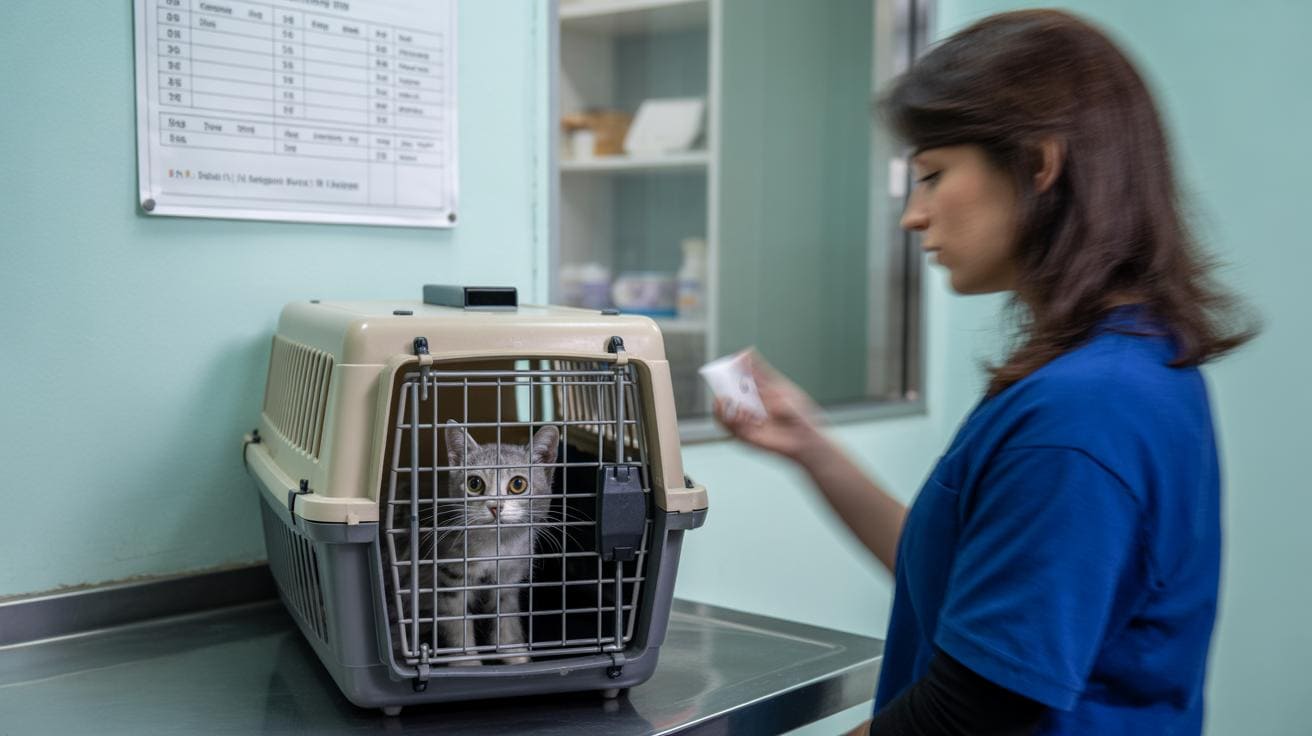
This tells you what to bring and when to go so the clinic can triage quickly. If you can, bring the packet or its label and be ready to answer a few quick questions the vet or poison-control line will ask. That helps them act fast and get your cat the right care.

What to tell the clinic or poison control:

  • Time of ingestion.
  • Packet label or listed ingredients (take a photo if you can).
  • How many packets or pieces were eaten.
  • Whether there were tiny beads, powder, or a spill.

Example you can say: "My cat ate one small silica packet at 9:15 AM. The packet says 'silica gel' (a drying material) and had tiny white beads."

If the packet has color-changing beads (moisture-indicator dyes, which change color when wet), or if it lists unfamiliar ingredients or superabsorbent polymers (materials that swell when wet), call poison control for chemical-specific advice before you travel. That guidance helps your vet decide the next steps.

Immediate steps

  • Call your clinic or the poison-control line right away and give them the details above. Follow their phone instructions.
  • Emergency signs that need immediate transport to an ER:
    • Severe breathing problems or open-mouth gasping. Transport now.
    • Repeated or ongoing vomiting over a short time. Transport now.
    • Unresponsive, very weak, or collapsed. Transport now.
    • Severe belly pain or obvious swelling of the abdomen. Transport now.
    • Visible bleeding (blood in vomit or dark, tarry stool). Transport now.
    • Choking or a packet visibly stuck in the mouth or throat that you cannot remove safely. Transport now.
  • Keep your cat calm and breathing steady during the ride. A towel can help them feel secure.

Home monitoring

If poison control or your vet says it’s okay to watch at home, that’s usually for a cat that had only a single brief vomit and is alert, breathing normally, and eating or drinking. Watch closely for 24 to 72 hours and call or head in right away if any of the emergency signs show up.

Quick aside: I once watched my roommate’s kitten nibble a packet, heart-stopping at first, but the vet said to watch and all was fine. Still, when in doubt, call. Better safe than sorry.

How veterinarians diagnose and treat silica packet ingestion in cats

- How veterinarians diagnose and treat silica packet ingestion in cats.jpg

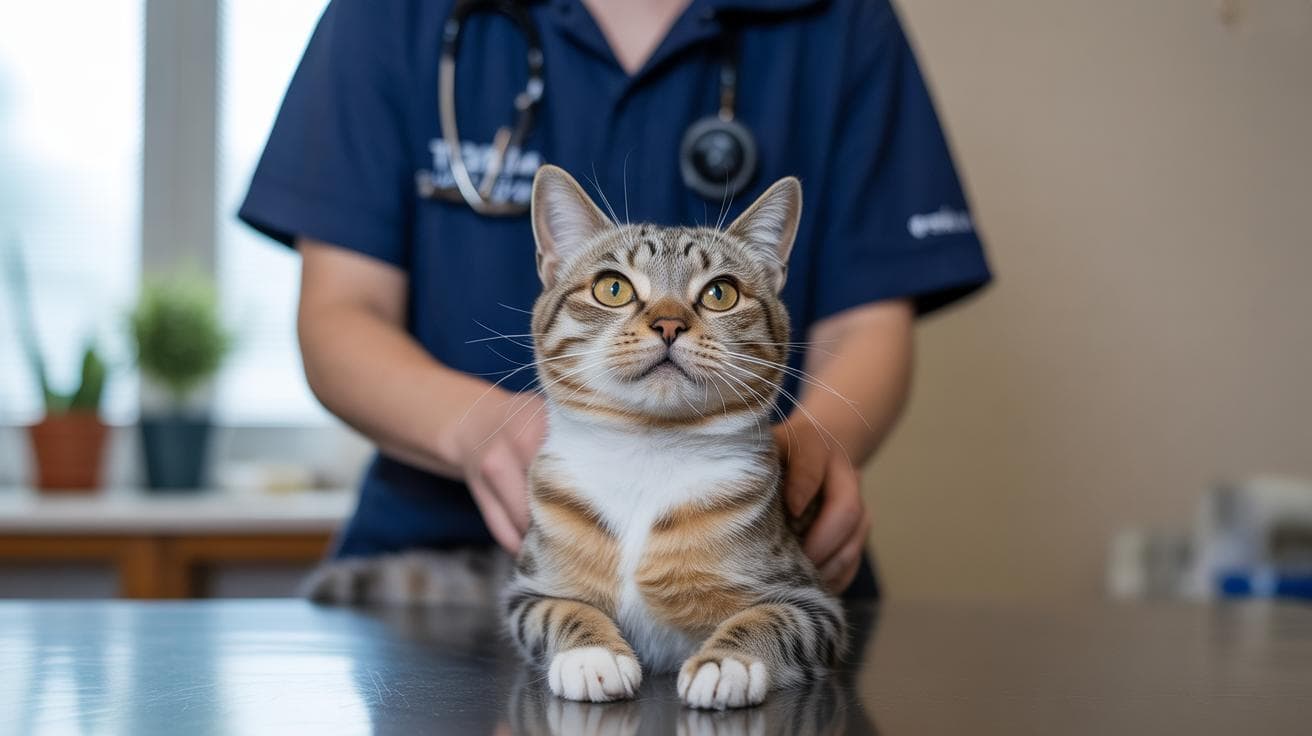
At triage the vet will ask a few quick questions: when the packet was eaten, what kind of packet it was, and how many were involved. Then they’ll do a focused exam to check breathing, temperature, and the belly. From there they pick tests to see if something is stuck or if complications are starting.

Diagnostics

The exam starts with careful abdominal palpation (gentle feeling of the belly to find lumps or pain). Bloodwork looks for dehydration and signs of inflammation. Imaging comes next. Radiographs (x-rays) are a common first step, but many silica packets are radiolucent (not easily seen on x-ray), so x-rays can be hit-or-miss. Ultrasound (sound-wave imaging, like a quick belly scan) helps find fluid, swelling, or a mass. If the pictures are unclear and the vet still worries, a CT scan (computed tomography, a detailed cross-sectional scan) can find hidden foreign bodies or signs of a hole in the gut. Vets watch for a visible packet, bowel gas patterns that hint at obstruction, free gas (air outside the gut that suggests a tear), and fluid that points to infection. Ever watched your kitty’s whiskers twitch while you press on their tummy? That little twitch can tell a lot.

Treatments

For stable cats, vets may choose conservative care: close observation at home or in the hospital, plus IV fluids (fluids given into a vein) to keep them hydrated. Anti-nausea medication like maropitant (an anti-vomit drug often called Cerenia) helps stop vomiting. Pain meds and antibiotics are added if there’s a lot of inflammation or a suspected perforation.

If the packet is reachable, endoscopic removal is often the best option. An endoscope is a thin, flexible tube with a camera and little grasping tools that lets the vet pull the packet out without cutting. It’s less invasive and cats usually recover faster. Surgery becomes necessary when the scope can’t reach the object, when the bowel is blocked, or when there’s a tear. Surgeons may do an enterotomy (a cut into the intestine) or a resection (remove the damaged section and sew the ends back together). After surgery, cats usually stay in the hospital for fluids and pain control. Worth every paw-print.

Recovery and outlook are usually good when treatment starts early. Many cats bounce back in a few days after endoscopy and in one to two weeks after routine surgery. Delays, packet type, where the packet is stuck, and whether there’s a perforation can make recovery longer and raise the risk of complications. So if you think your cat swallowed a silica packet, call your vet right away , faster action makes a big difference.

Silica Packet Ingestion in Cats: Symptoms and Treatment

- Home monitoring, follow-up exams, and what to document after ingestion.jpg

If your cat ate a silica packet, stay calm and watch them closely. Monitor for at least 24 hours. Many vets ask owners to keep an eye on their pet for 48 to 72 hours because stomach and bowel signs can show up later. It’s scary, but most of the time careful watching is all you need. Worth every paw-print.

What to note right away:

  • Time of ingestion (clock the minute).
  • Packet label or description , beads versus powder, any dye or polymer (polymer means a plastic-like material).
  • How many packets might be missing.
  • Vomiting: when it started and how often.
  • Stool color and texture , watch for blood or black, tarry stool (that can mean digested blood).
  • Appetite, peeing, activity level, and any home treatments you tried.
    These details help your vet and make follow-up checks way easier.

Checking the stool safely:
Don’t probe your cat’s rear. Instead, put on disposable gloves and use a scooper or paper towel to inspect freshly passed stool for beads or fragments. If you see anything odd, snap a photo next to a coin for scale. Photos are super helpful and, honestly, less gross than you expect.

Collecting a sample:
Drop a piece of fresh stool into a clean container, seal it, and label it with the date and time. Bring the sample and your photos to the clinic if your vet asks. That makes diagnosis faster.

When to call or go back to the vet:
Bring photos or a stool sample, or return for x-rays or other imaging if there’s no confirmed passage within 24 to 72 hours, if your cat’s signs get worse, or if your vet tells you to come in. Trust your gut. If your kitty seems dull, won’t eat, or is vomiting a lot, call your vet right away.

Ever watched your cat bat at an empty packet like it was a toy? Yeah, me too. Keep those packets out of reach and give your curious hunter safer toys instead.

Prevention: keeping silica packets away from cats and safer alternatives

- Prevention keeping silica packets away from cats and safer alternatives.jpg

Silica packets are drying packets (desiccants) that your cat might find oddly irresistible. Ever watched a cat paw at a crinkly packet like it’s a treasure? Yeah, don’t let that happen. Toss used packets into a sealed trash bin right away and keep that bin somewhere your cat can't reach, like a high cupboard or a locked closet. If the bin has a lid, shut it; if not, get one that does.

When new stuff arrives, put boxes and packages on a counter or table and close the lid. Don’t leave loose packaging or packets on the floor where curious paws can investigate. Supervise unboxing sessions when you can, and ask housemates or delivery folks to remove any packets before leaving parcels where cats hang out.

Make dry goods kitty-proof. Use airtight containers, zip-top bags, or sturdy plastic bins with lids to store things like bulk food, shoes, or tech. Store extra packets in a high cupboard or a closed closet, out of sight, out of paw’s reach. In multi-cat homes, don’t rely on one loose packet; swap them into a labeled, sealed container so one bold hunter can’t share them with the others.

Keep kitchen and recycling lids secured and take trash out often so packets aren’t left behind like tiny cat toys. A quick habit change, putting packets straight into a closed trash or storage jar, can save a vet visit and a lot of worry.

Safer desiccant options & labeling

Look for desiccants labeled non-toxic, and check ingredient names. Some moisture-indicator beads (tiny beads that change color when wet) and superabsorbent polymers (a long-chain plastic that soaks up liquid) carry different risks. Oxygen absorbers (packets that remove oxygen to keep food fresh) are another thing to stash well away from pets.

Consider reusable desiccant canisters you keep tucked in a cupboard. They do the same job without little loose packets rolling around. If you must keep packets nearby for a short time, tuck them into a closed jar or a drawer and put a clear label on it so every caregiver knows to remove them before a cat prowls.

Quick checklist:

  • Seal and stash used packets immediately.
  • Store spares high or locked up.
  • Swap loose packets for labeled containers or reusable canisters.
  • Read labels: non-toxic is best, and note ingredient names like polymers or moisture beads.

Worth every paw-print of effort. Your cat stays safe, and you get to keep your peace of mind.

Silica Packet Ingestion in Cats: Symptoms and Treatment

- Costs, prognosis, and questions to ask your veterinarian after silica packet ingestion in cats.jpg

Typical out-of-pocket ranges you might see:

  • Vet triage/visit: $75 to $200.
  • Radiographs (x-rays): $150 to $300.
  • Endoscopy (a thin camera tube with tiny grasping tools): $800 to $2,500 depending on clinic and region.
  • Abdominal surgery (opening the belly to remove a blockage): $1,500 to $5,000 or more depending on complexity and aftercare.

Prices change a lot by location and how involved the case is, so ask the clinic for a local estimate before any non-emergency procedures. It saves stress later. Ever tried to guess a vet bill while your cat gives you that innocent look? Yeah, don’t do that.

Prognosis is usually good when care starts quickly. Endoscopy often lets a cat bounce back in a few days. Surgery usually means one to two weeks of recovery, and sometimes longer if there was a tear or infection. Recovery is slower when treatment is delayed, when superabsorbent polymers (materials that swell and trap liquid) are involved, or when the packet caused a perforation or widespread infection. In truth, faster care usually means an easier recovery.

Questions to bring to the vet at intake and again at discharge:

  • Do we need imaging now, and which tests will you run? (Like x-rays or ultrasound.)
  • Can this be removed with endoscopy, or will surgery be needed?
  • What home signs mean I should return or go to an emergency clinic?
  • What is the expected recovery time, and what exact home-care steps will you give me?
  • How will pain be managed, and what medications will my cat need?
  • Can you provide a cost estimate for the likely plan (imaging, endoscopy, surgery) and payment options?

Worth every paw-print: getting the answers upfront helps you stay calm and lets your kitty heal with less fuss.

Final Words

In the action, stay calm and move fast: this post gave a six-step emergency checklist, showed how desiccants differ (silica gel (tiny drying beads)), covered minute-to-day symptoms, when to call poison control or the clinic, what vets may do, and how to watch and prevent repeats.

Follow the checklist, log times and stool, bring the packet and photos, and watch breathing and vomiting closely.

That quick action helps protect your cats and makes dealing with silica packet ingestion in cats: symptoms and treatment far less scary.

FAQ

Frequently Asked Questions

Will silica gel kill my cat?

Silica gel will usually not kill a cat. The beads are chemically inert; the main risks are choking or an intestinal blockage, especially in kittens or after large ingestion.

What to do if a cat eats a silica packet?

Secure the cat and check breathing. Remove a visible packet with gloved fingers or blunt tweezers only if it is safe to do so. Do not induce vomiting. Call your veterinarian or poison control for advice and seek emergency care if the cat is choking or having breathing trouble.

My cat ate silica gel beads — what symptoms may occur after ingestion of silica gel?

Immediate signs can include drooling, gagging, coughing, or a single episode of vomiting. Over hours to days watch for repeated vomiting, lethargy, poor appetite, abdominal pain, or changes in stool that could indicate an obstruction.

Is silica gel litter toxic to cats?

Silica gel litter is generally not chemically toxic. Dust can irritate, and swallowing clumps or large amounts can cause intestinal blockage. Monitor your cat and call your veterinarian if you notice concerning signs.

How fast can silica gel kill a dog?

Silica gel rarely causes rapid death. Beads alone seldom cause fatal poisoning, though choking or intestinal obstruction can be serious. Packets containing toxic dyes or certain polymers can cause rapid severe signs and need emergency care.

When should I call poison control for a cat that ate silica?

Call poison control if the packet lists dyes, cobalt chloride, or polymers like sodium polyacrylate; if multiple packets were swallowed; or if your veterinarian requests toxin-specific guidance.

Silica gel packets eaten by child

If a child eats silica gel, packets are usually not poisonous. Remove visible material, watch breathing and vomiting, and call poison control or seek care if there is breathing difficulty, repeated vomiting, or the packet lists dyes or unknown chemicals.

Author

  • Isabella Tiu

    Isabella Tiu is a transcriptionist from Calhoun, Florida, known for her sharp attention to detail and her commitment to providing accurate and efficient transcription services. With a passion for language and communication, she thrives on transforming spoken words into clear, readable content for her clients.

    When she's not working, Isabella enjoys hiking and camping, finding peace and inspiration in the beauty of the outdoors. She often says, “The best lessons are often learned in nature,” a philosophy she embraces both in her work and personal life.

    Isabella’s love for both her craft and the natural world reflects her belief in continuous learning and exploration.

    View all posts

Similar Posts