Did you know that not all fruits are safe for cats, and some can even be harmful? It’s surprising, given how beneficial fruits can be for humans. But if your cat shows interest in your fruit bowl, what’s safe to share?
This article will guide you on which fruits are safe for cats and how to offer them in moderation. You’ll learn about the benefits, preparation tips, and what precautions to take. Understanding this can enrich your cat’s diet while keeping them happy and healthy.
Safe Fruits for Cats to Eat and Moderation Guidelines
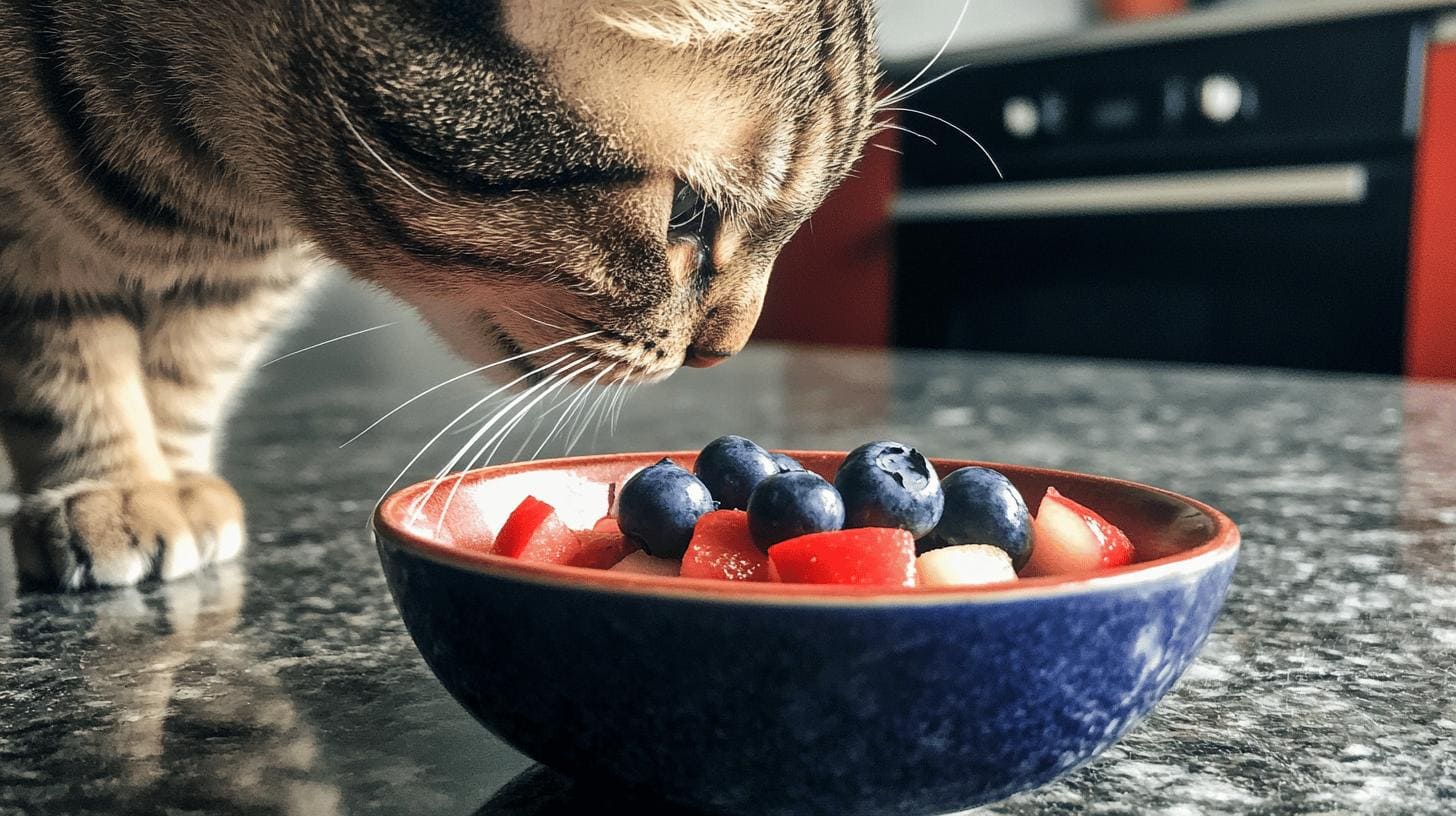
Cats are obligate carnivores, primarily relying on meat for their nutritional needs. Yet, they can occasionally enjoy some fruits as treats. Offering fruit can provide vitamins, antioxidants, and fiber that may benefit your cat’s health.
It’s crucial to serve these treats in moderation due to the high sugar content found in fruits. Too much sugar can lead to obesity and other health issues. By giving fruits in small amounts, you ensure that they remain a healthy supplement to your cat’s diet rather than a staple.
- Apples: Provide vitamins A and C. Remove the seeds and core, as they can be toxic. Serve in tiny slices.
- Bananas: Rich in potassium and fiber. Offer small chunks occasionally due to their high sugar content.
- Pears: Offer copper, vitamin K, and vitamin C. Remove the stem, core, and seeds. Serve in small pieces.
- Blueberries: High in antioxidants and low in calories. Give a few pieces at a time.
- Strawberries: Contain antioxidants and vitamins. Serve in moderation, cut into small bits.
- Raspberries: Provide vitamins A, B, C, and E. Limit to a few berries due to natural sugars.
- Cranberries: Safe and may promote urinary health. Avoid dried versions mixed with raisins.
- Watermelon: Hydrating and safe. Remove seeds and rind, offering small cubes.
Proper preparation of fruits is essential to ensure your cat’s safety. Always remove seeds, peels, and cores, as these parts can pose choking hazards or be toxic. Monitor how your cat reacts to these new treats. Each cat is different, and some may have sensitivities or adverse reactions. Start with small amounts and observe your cat for any signs of digestive upset. If any issues arise, consult with your veterinarian to determine the best course of action.
How to Introduce Fruit to Your Cat’s Diet

Consult your veterinarian before bringing new foods to your cat’s menu. Their advice is key to ensuring your cat’s health and safety. Introduce fruits gradually, starting with a tiny piece to see how your cat reacts. Use a step-by-step guide to help with this process. Begin by offering a small piece once a week, slowly increasing the frequency if your cat shows no adverse reactions.
- Remove seeds, cores, and peels to avoid any toxicity or choking hazards.
- Cut fruit into small, manageable pieces for easy consumption.
- Keep portion sizes small to manage sugar intake.
- Wash fruits thoroughly to remove pesticides or residues.
Watch your cat closely for any signs of digestive issues like vomiting or diarrhea. Each cat is different, so what works for one might not work for another. Keep your veterinarian informed of any dietary changes you make. Sharing your experiences and any concerns ensures your cat stays healthy while exploring new tastes.