
Ever watch your kitty circle the litter box like it’s melting hot lava, paws tapping the carpet? It might look like a silly game, but trust me, your furball isn’t clowning around.
But cats aren’t messing around. Most times it comes down to pain (urinary (pee-related) discomfort). You might see them wince with each little squat. Or maybe the box sits in a noisy corner where the vacuum echoes and their whiskers flare with stress. Or the litter feels rough and smells overpowering, making it seem more trap than throne.
Tracking down the cause can feel like detective work, oops let me rephrase that, like a full-on mystery hunt. But once you crack the case, your kitty will head straight for her box again with a happy pounce. Home sweet home again.
Ready to play hero? Let’s tackle these litter box headaches and bring back that purrfect routine fast.
Key Reasons Your Cat Won’t Use the Litter Box
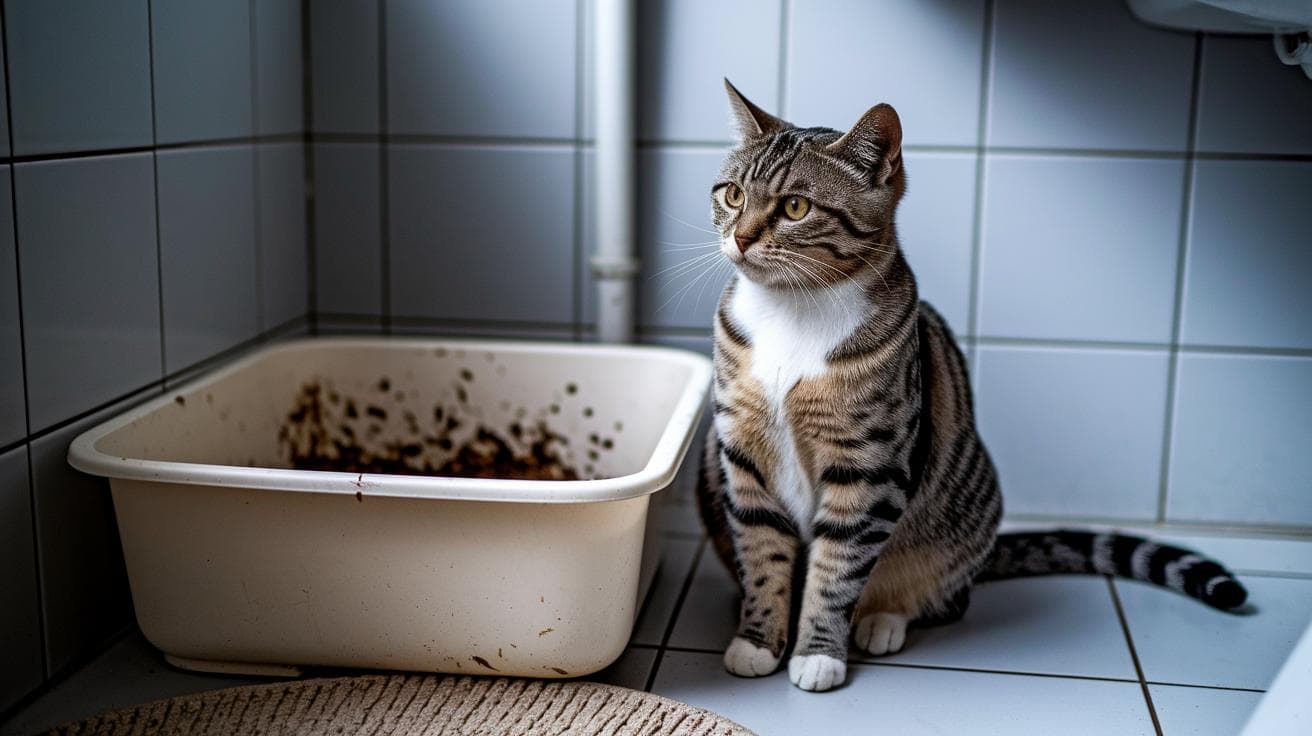
Ever wondered why your kitty turns its back on the litter box? Usually it’s one of three big things: pain, stress, or a setup that just isn’t right. Figuring out the real cause is half the battle.
Sometimes these reasons team up. A sore cat might pick up a bad habit. A nervous furball could avoid a box in a noisy hallway. Try changing one thing at a time to see what makes your cat purr.
- Pain or discomfort: UTIs (urinary tract infection), bladder stones (tiny hard minerals), or kidney disease (when kidneys don’t work right) can make bathroom time hurt.
- Stress: New furniture, loud noises, or squabbles with other pets can spook your cat.
- Dirty box blues: Scooping too rarely or skipping a deep clean can send them packing.
- Hard-to-reach spots: A box hidden behind a door or in a tight closet feels like a trap.
- Wrong litter or depth: If the litter smells odd or is piled too high (or barely there), it’s a no-go.
- Too few boxes: A good rule is one box per cat, plus one extra, trust me.
First step: visit the vet to rule out any medical issue. Once you’ve got the all-clear, make each box inviting. Fresh litter (scoop daily), a quiet corner, and an extra tray usually do the trick. Your cat’s whiskers will tell you it’s working.
Worth every paw-print.
Next: keep scooping, pick a calm spot, and add that spare tray. Soon your kitty will be back to business, and you’ll both be feline fine.
Medical Causes of Litter Box Refusal
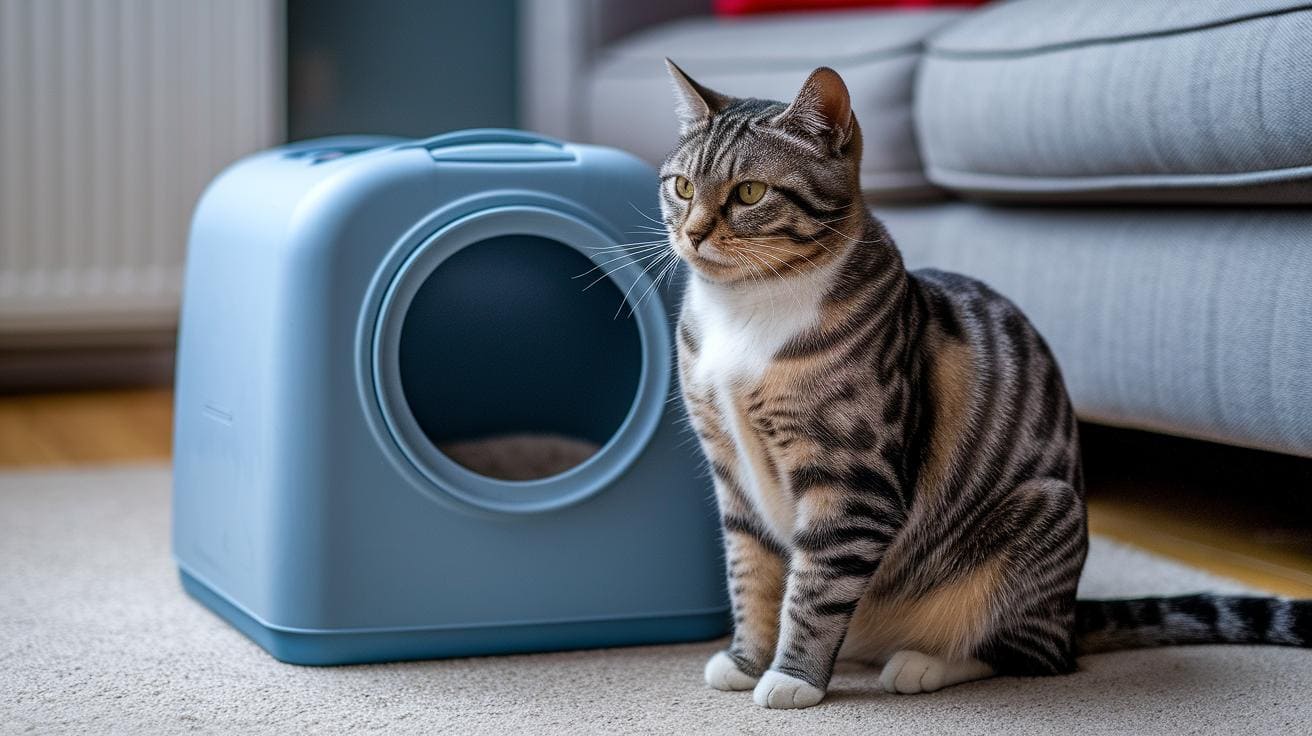
Ever seen your kitty avoid the litter box? It might be a UTI (urinary tract infection). When bacteria get cozy in the bladder lining, every pee can feel like, um, a mini horror show. You might spot blood in the urine, lots of squats, and nonstop rear grooming. Vets usually run a bladder culture (a test that grows any lurking bacteria) and check hydration. That shows what’s up and which antibiotic to pick.
Then there’s FLUTD (feline lower urinary tract disease). It’s basically a swollen bladder and urethra (the tube that carries urine). You could see vomiting or a cat that suddenly won’t eat. And early kidney damage? Toxins leak into the bloodstream, so your cat drinks water nonstop yet still ends up dehydrated. Simple bloodwork and a kidney panel paint the full picture.
Hard stools can join the party, too. Constipation makes your cat strain like we do when we skip fiber. Add a full bladder, and stepping into the box feels impossible. A fecal analysis (poop exam) and a quick hydration check help spot slow bowels or fluid needs.
And don’t forget arthritis in creaky hips. An older cat may see high walls as a towering obstacle. If your kitty hesitates or gives a soft meow, a vet pain assessment and mobility check can help. Sometimes anti-inflammatory meds or a low-entry box is all it takes to get your furball scooping again.
Worth every paw print.
Optimizing Your Cat’s Litter Box Environment
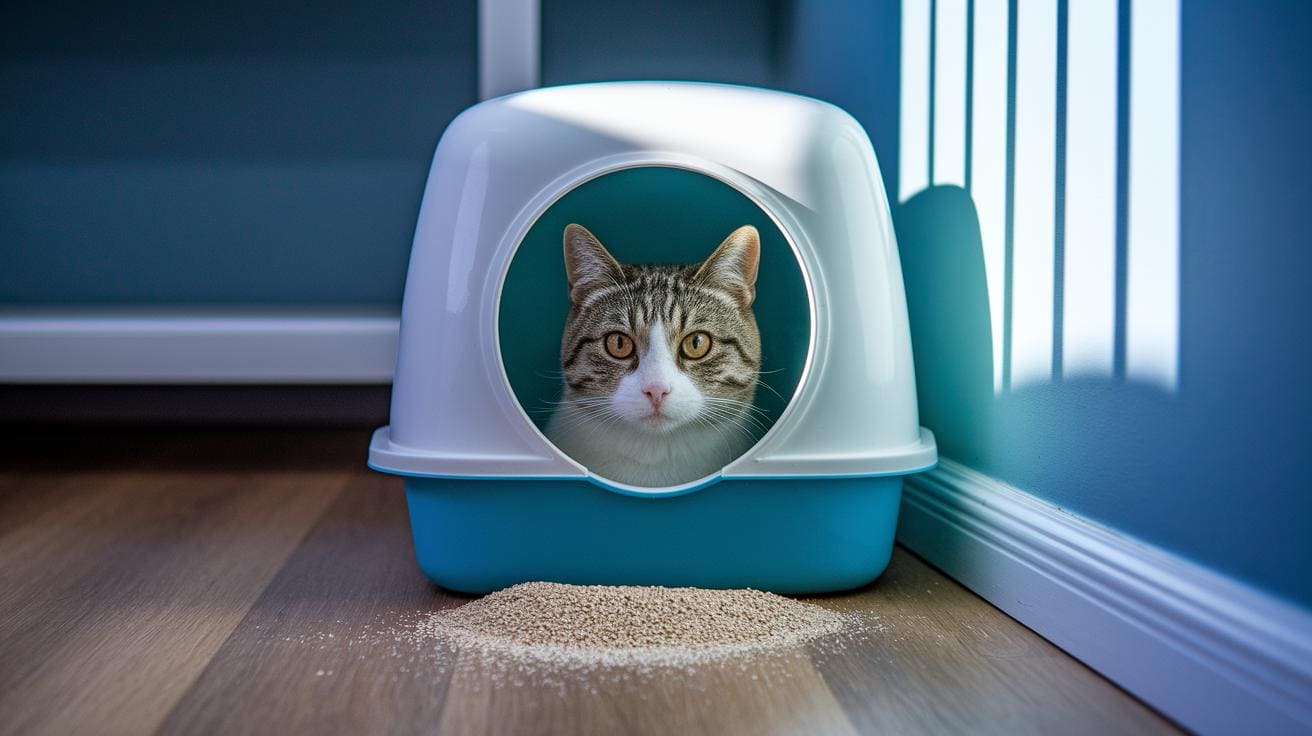
Your cat’s little privacy spot is like a royal throne, so it needs the right setup. Pick a quiet, low-traffic corner, maybe in a peaceful bathroom, where your kitty’s whiskers can twitch without distractions. Make sure there’s at least one and a half times your cat’s length for stepping in and turning around. Ever seen your cat freeze at a tight space? It’s no fun. Room to roam matters.
Cleanliness is key. Scoop daily (yep, every single day) to zap odors before they even think about settling in. Then give that box a gentle wash with mild soap and warm water once a week. It’s like a spa day for your cat’s litter.
Clumping litter (dirt that binds into solid bits) usually wins over non-clumping. It locks up waste into neat clumps that lift out in one go. Most cats tip their paws toward soft, unscented granules since they’re gentler on tender toes and skip the fake fragrances. You get odor control without chemicals your kitty will turn its nose up at.
Place your box away from noisy machines or busy spots. Shy cats need their peace. And, um, if you need more cleaning tricks, check out how to make a litter box not smell.
| Litter Box Aspect | Recommendation |
|---|---|
| Location | Quiet, low-traffic spot |
| Size | At least one and a half times your cat’s length |
| Litter Type | Unscented clumping (1–2 inches deep) |
| Cleaning | Daily scooping; weekly wash |
| Design | Open top or low entry for seniors |
A fresh, comfy litter station invites your kitty to keep things neat. Add a second box in another hush-hush corner and watch those off-target accidents vanish. Tiny tweaks make a big difference for your cat’s comfort and your happy home. Worth every paw-print.
Managing Litter Boxes in Multi-Cat Households
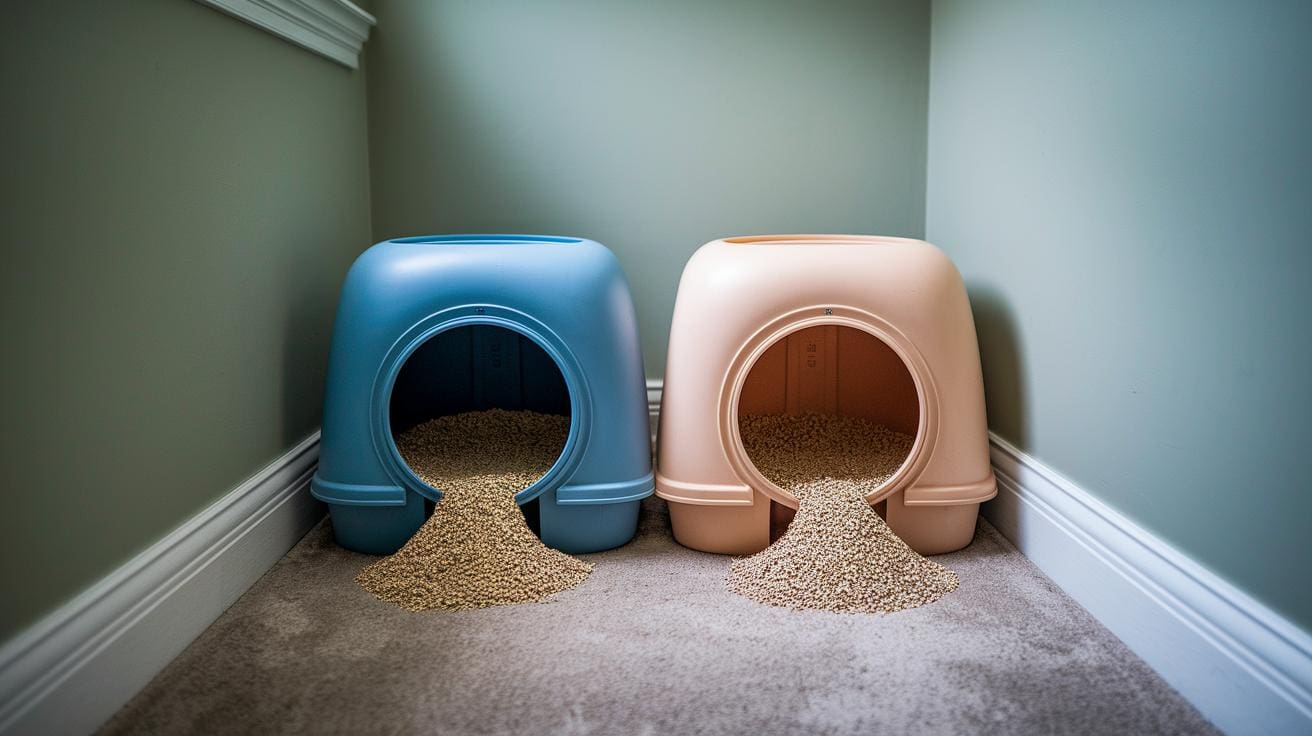
Distribute boxes across floors and rooms so each cat has easy access. In a two-level home with three cats, try two boxes upstairs and two downstairs. “If Whiskers naps on the top floor, she won’t dash down the stairs at midnight.”
- Space boxes at least 10 feet apart, never side by side.
- Tuck trays into quiet private nooks, under a low table, beside a closet entrance, or in a spare bedroom cubby.
- Avoid busy zones like laundry rooms or front-door corridors so shy cats feel safe.
| Cats | Home Layout | Example Distribution |
|---|---|---|
| 2 cats | Single story | 3 boxes spread across living room, bathroom, and bedroom |
| 3 cats | Two-level | 2 upstairs, 2 downstairs |
| 5 cats | Three-level | 2 top, 2 middle, 2 bottom |
Brief reminder: each floor needs its own extra box so no one has to wait in line.
Behavioral Solutions & Training for Litter Box Success
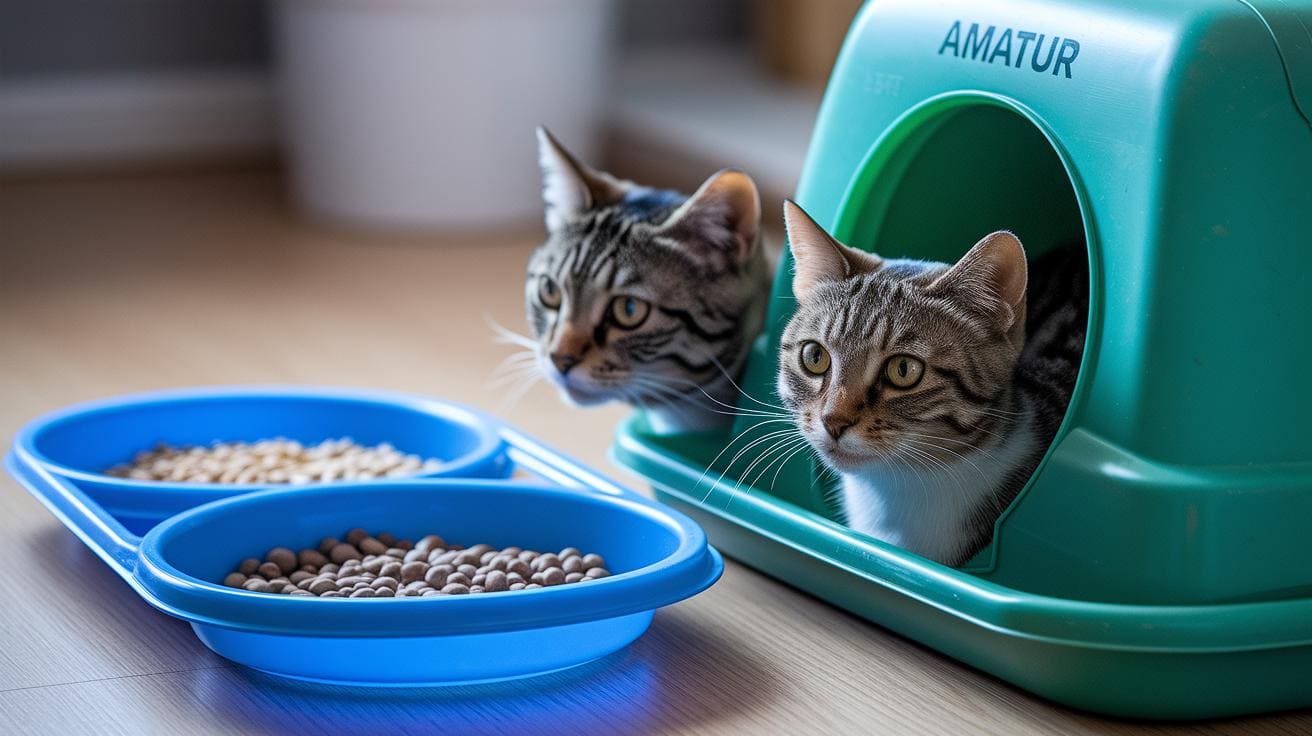
Ever move your couch and suddenly your cat starts spraying? Yep, cats mark territory when things feel shaky. A new dog or kitten can send your furball scrambling – it’s their way of saying “this is mine.”
In a house with more than one cat, tension can flare in a flash. One skittish kitty might pounce on a friend’s tail. Next thing you know, someone’s skipping the box.
Common stress triggers:
- Moving homes or moving furniture
- Bringing in a new pet or person
- Fights over food, toys, or cozy spots
- Mixed-up routines like feeding, playtime, or litter scooping
Training starts by turning the box into a safe zone, not a battle zone. Use treats and praise right after your cat hops in – that’s positive reinforcement. Pop in a pheromone diffuser (plug-in device that spreads calming cat scents) nearby to ease nerves. Then give kitty a short stay in a small room with the box – kinda like Confidence Camp for 24 to 48 hours.
Next, try clicker training (using a tiny clicker device) or a cheerful “yes” the moment your cat uses the box right. If an accident happens, stay calm, scoop the soiled bits into the tray, and reward any sniff or paw dip. Um, it’s way better than a lecture.
For a step-by-step guide on praise and cleanup, see how to stop a cat from peeing in the house.
Here’s a quick cheat sheet:
- Reward success: a treat, a soft pet, or a quiet “good job”
- Pheromone diffuser: plug in Feliway near the box to mellow moods
- Temporary confinement: small room with food, water, and one tray for 1-2 days
- Clicker or word marker: click or say “yes” at the right moment, move stray waste back to the box
Advanced Training for Kittens & Seniors
- Tiny kittens get cozy with just an inch of litter in a shallow tray
- Seniors love low-entry pans so stiff joints don’t ache
- Try putting a tray by feeding spots – snacks and potty breaks go paw in paw
Stick with it and be patient. Changing habits takes days or weeks. Celebrate each little win. Soon your furball will be back on track.
When to Seek Veterinary Assistance for Box Refusal
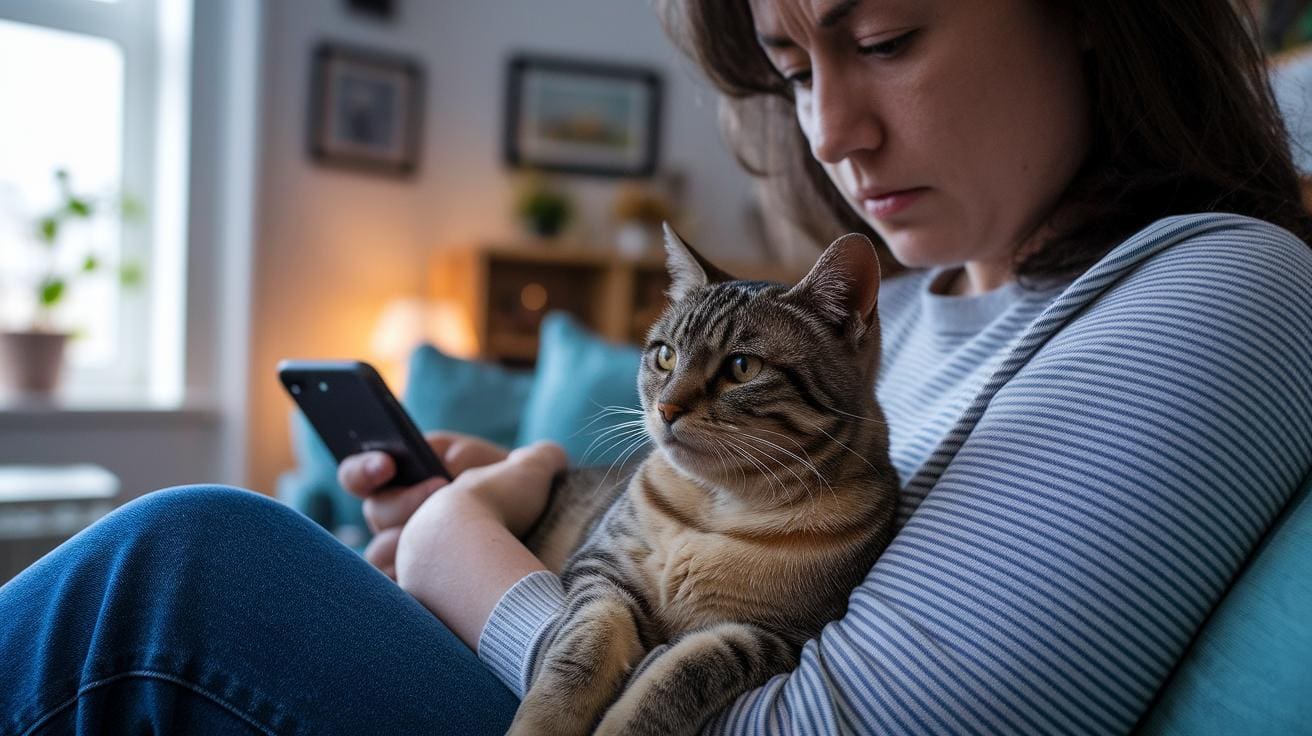
Oops, let me rephrase that… your cat has been skipping the litter box even after you’ve scrubbed it, moved it to a quiet corner, and offered tasty treats. When that happens, you might be looking at a health issue.
Ever watched your kitty circle and yowl outside the box? Then check for these warning signs:
- Blood in pee (a red or pink tint in their urine).
- Straining with no result – poor fur baby.
- Vocalizing during elimination – meows or yowls.
- Vomiting (tummy upset, tossing up food).
- Losing interest in dinner – loss of appetite.
- Sudden lethargy (extreme tiredness, very low energy).
See any of these? Call your vet right away. Getting an early check-up steers you to the right care fast.
Worth every paw-print.