Ever think your kitty is a heavyweight champ?
Maine Coon cats often tip the scales at 15 to 25 pounds (6.8 to 11 kg, a metric weight unit) once they’re full-grown. That might sound wild, but keeping them at the right weight at each stage helps them stay light on their paws and dodge joint aches.
Tracking their growth is like a check-up for cat fitness. Ever watch your kitty’s belly wiggle mid-leap? It builds strong muscles and sturdy bones (bone health, you know). And it sets the stage for pounce-ready play every day.
Next, we’ll share simple weight milestones for males and females, so you can see if your Maine Coon is on track. You’ll learn why a little number on the scale leads to endless claw-tastic adventures.
Worth every paw-print.
Typical Maine Coon Weight by Age and Gender
You might have noticed your Maine Coon kitten looks more like a furball on sturdier legs than other kittens. By the time they’re three months old, they’re already around 3–5 pounds (1.36–2.27 kg (kilograms)). They’re gentle giants in the making!
By six months, males jump to about 8–12 pounds (3.6–5.4 kg), while females usually land between 6–10 pounds (2.7–4.5 kg). That rapid growth means you’ll want to feed them protein (the building blocks for muscle) so they stay strong and spry.
At the one-year mark, most males tip the scales between 12 and 18 pounds (5.4–8.2 kg). Ever see your fluffy friend stretch before a grand leap? Females usually sit around 8–12 pounds (3.6–5.4 kg).
As adults (1–4 years), you’ll see males ranging from 15–25 pounds (6.8–11.3 kg) and females from 10–15 pounds (4.5–6.8 kg). Cases over 30 pounds (13.6 kg) are rare and often mean extra weight that can lead to health hiccups.
Worth every paw-print.
| Age | Male Weight Range | Female Weight Range |
|---|---|---|
| 0–3 months | 3–5 lb | 3–5 lb |
| 3–6 months | 8–12 lb | 6–10 lb |
| 6–12 months | 12–18 lb | 8–12 lb |
| Adult (1–4 years) | 15–25 lb | 10–15 lb |
Want to learn more about the largest domestic cat breed?
Growth Phases: Developmental Milestones & Care
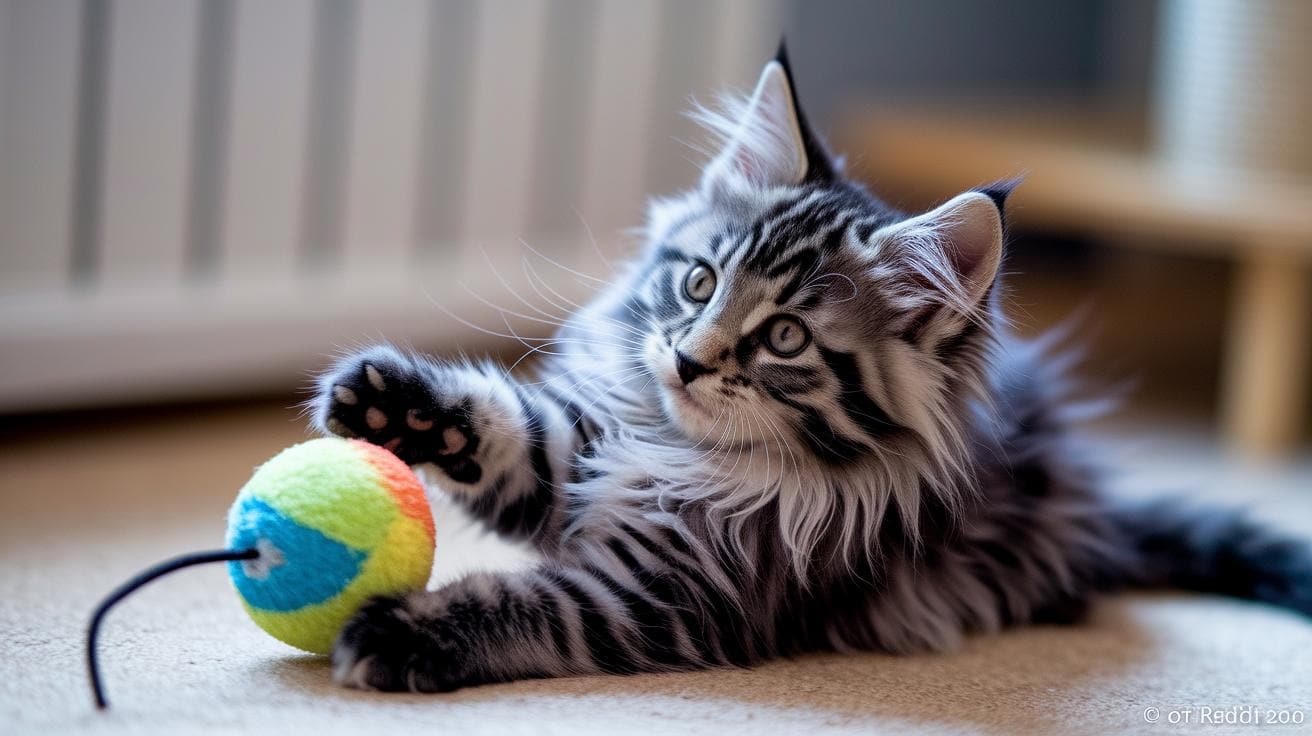
If you peeked at that weight table above, you probably saw how a Maine Coon’s size jumps every few months. Let’s take a closer look at each growth phase and what to watch for as your fluffy friend gets bigger.
In the neonatal stage (newborn phase, 0–2 months), kittens are busy growing organs and wiring up their brains. Their tiny hearts race and neural connections spark like little fireworks. Mom’s milk delivers antibodies, so scheduling those vet visits early is key to nailing solid developmental milestones. Ever watched your kitty twitch in her sleep? That’s all brain wiring in action.
From 2–6 months, your little tiger goes through rapid skeletal ossification (bone hardening). Think of it like your cat’s own construction crew laying down calcium and phosphorus from special kitten formula (kitten food with extra nutrients). Balanced protein helps build that legendary Maine Coon frame without stressing the joints. Playtime with a soft toy or a wiggly feather wand also encourages healthy bone growth.
Between 6–12 months, muscle mass kicks in and that sturdy frame starts to fill out. Daily play sessions and gentle climbing, like a lazy stroll up a scratching post, build lean strength. Keep an eye on food portions so your cat grows at just the right pace, matching the averages you saw earlier but not overshooting. Whoa. It’s like watching a mini panther in training.
By 1–4 years, your cat hits full maturity. Bone density peaks and energy levels even out, you’ll still see the zoomies, but maybe at 3 a.m. instead of noon. Keep calories steady to hold that ideal weight, and toss in joint-friendly treats (little bites with glucosamine) for good measure. Worth every paw-print.
Whenever you shift from one stage to the next, chat with your vet to fine-tune diet and playtime. That way you’ll ensure your Maine Coon stays feline fine, every step of the way.
Factors Influencing Maine Coon Cat Weight
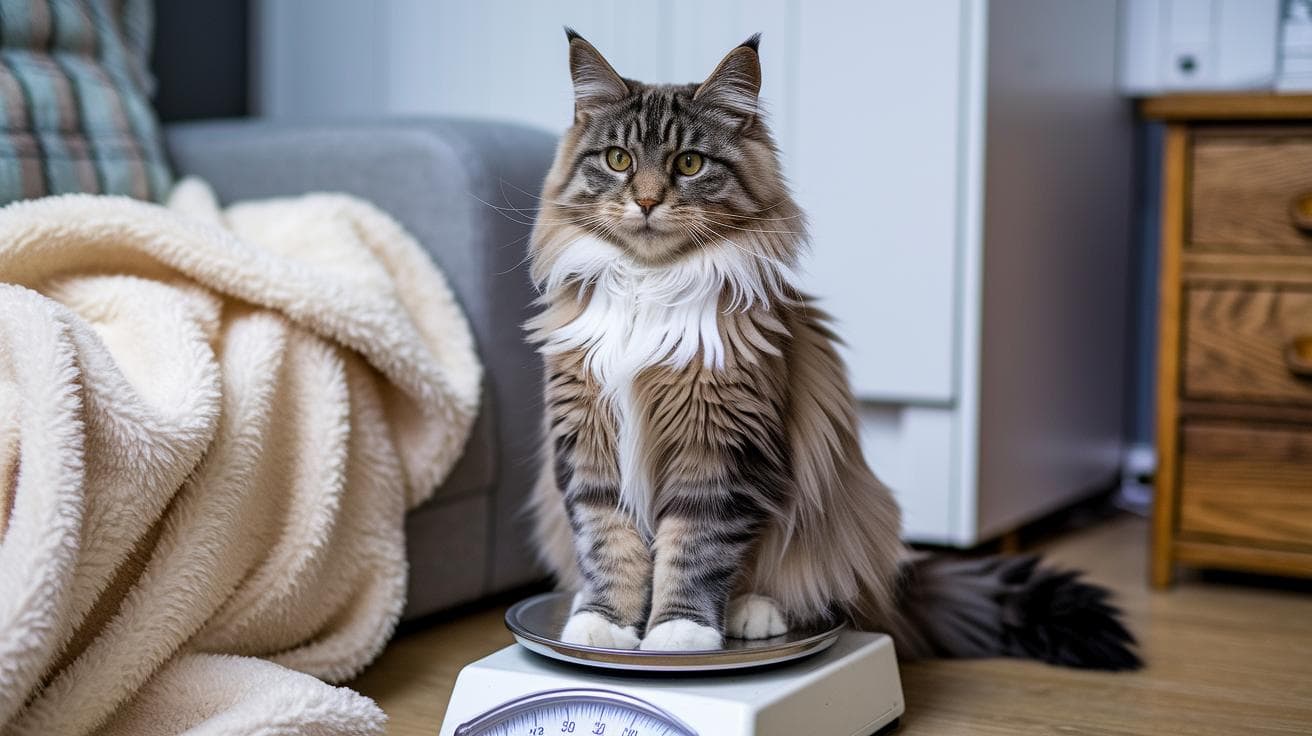
Genetic factors set the stage for how big your Maine Coon can grow. Think of that as your cat’s growth blueprint. Ever watched your kitty’s paws land with a gentle thud as it leaps? If both parents tip the scales at 18 pounds (big boys) or 12 pounds (princesses), their kittens usually follow suit. Mixed-breed kitties stay a tad smaller. Comparing your cat’s frame (bone structure) to the breed average helps you guess future size and hit those growth milestones.
But spaying or neutering before twelve months can nudge the scale down a bit. Growth hormones (the chemicals that tell your cat’s body to grow) drop earlier, trimming off a couple of pounds and shortening that final growth sprint. Wait past the first birthday and your cat gets more time to stretch out and pack on extra wiggles. Worth thinking about.
Nutrition and play shape your cat’s muscles and body fat too. High-protein diets (muscle-building nutrition) steer calories into lean muscle. Filler (cheap, low-nutrition carbs) can lead to a round belly and less claw-tastic bounce in every step.
Indoor cats might favor winter couch naps. Outdoor adventurers dive into summer zoomies. Those seasonal shifts and where your cat lives are environmental factors that tip the scale. A daily play session with a wand toy (think a fishing rod for cats) plus a seasonally tweaked meal plan keeps your Maine Coon balanced and happy!
Worth every paw-print.
Assessing Ideal Weight and Body Condition in Maine Coon Cats
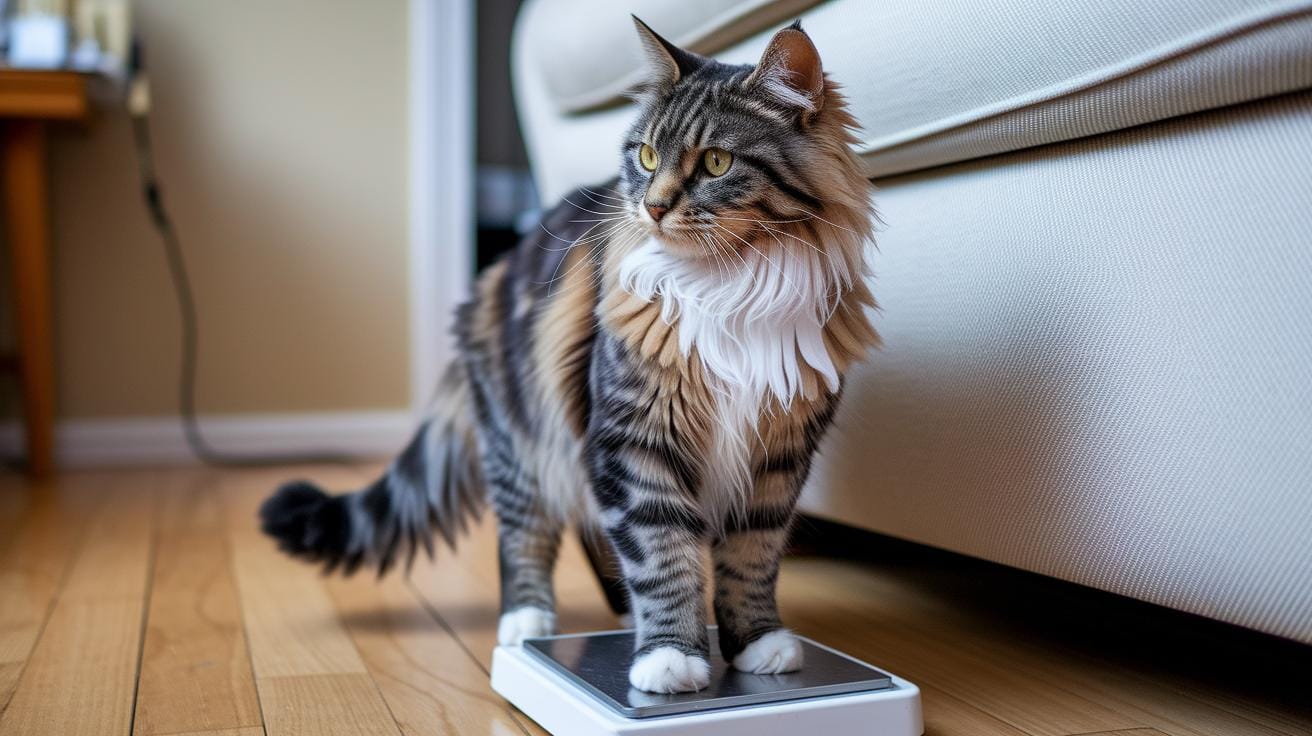
Let’s try a body condition score (a quick look-and-touch test) on your Maine Coon. First, peek at your cat from above. You should see a gentle waist tuck right behind the ribs – that soft hourglass shape means you’re in the sweet spot. No squeeze needed.
Next, use a gentle press to feel along the ribs, hips, and spine. You should sense bones under a thin fat layer (soft cushioning) – just enough to feel cozy, not buried or too pokey. If bones feel hidden or too sharp, tweak meals or play sessions. Remember, adult Maine Coon weight varies, so trust your hands more than a scale.
If your cat is underweight, shoulder blades or hip bones might poke out. They’ll feel bony when you press lightly. Kittens may lag behind average weight milestones if they lack muscle mass (strength-building tissue). If growth stalls, chat with your vet about extra protein boosts and gentle play breaks.
Overweight cats often sport a thick belly pad and no visible waist. They may struggle to groom their belly or back legs. Cats tipping over 25 pounds risk joint strain and diabetes. So cut treats, add claw-tastic play (think feather wands or rolling balls), and reassess that body score regularly.
Monitoring Maine Coon Weight at Home and Veterinary Checks
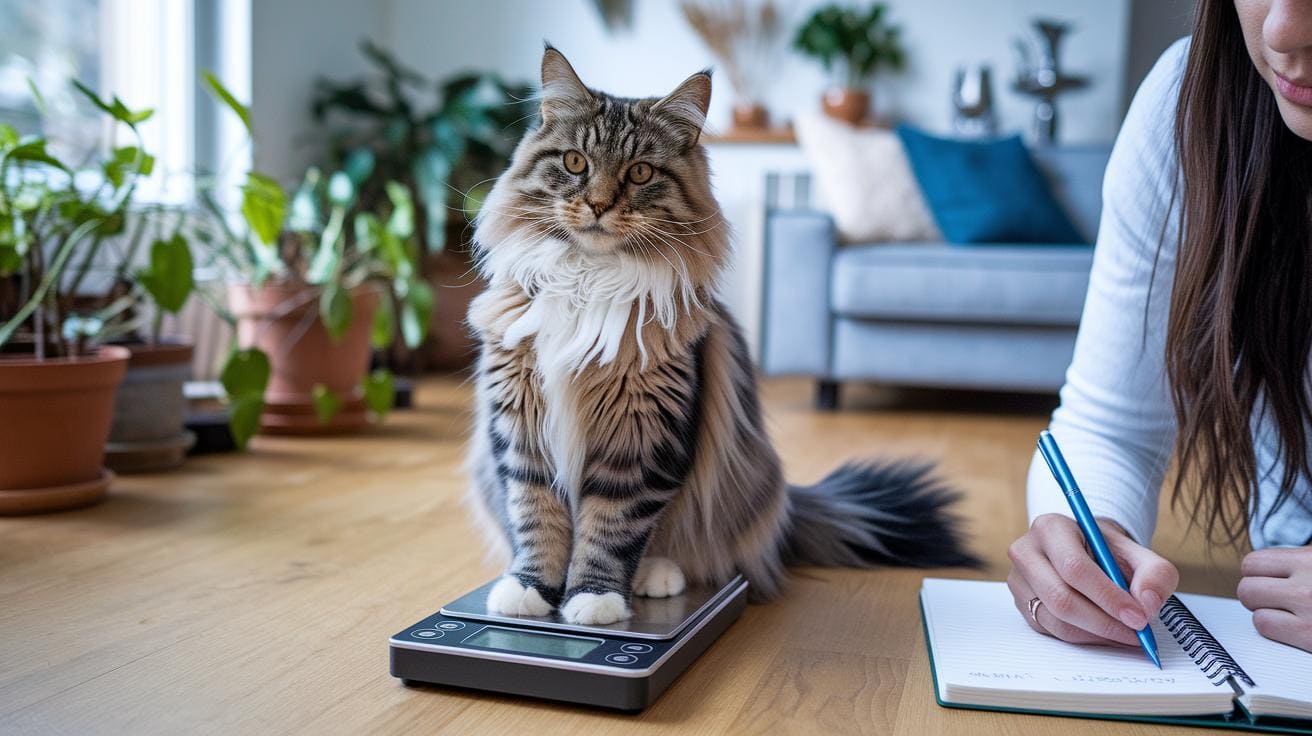
Ever tried weighing your Maine Coon at home? Timing really matters. For kittens, do a quick weekly weigh-in so you can track their steady growth. Adult cats only need a monthly check to match those weight-by-age charts. Simple. Crucial.
Here’s how it works:
• Grab a digital pet scale (a small scale for weighing pets) or a kitchen scale.
• Place your cat in a carrier – you might see their whiskers twitch as the scale clicks.
• Note the combined weight, then weigh the empty carrier.
• Subtract to reveal your cat’s true weight.
• Jot each number into a simple growth chart (think a quick notebook note or an easy table) so you catch any sneaky trends.
If you notice a leap or a dip in your cat’s weight, it’s vet time. The clinic uses a calibrated scale (a precise medical device) and might run a body-fat analysis (a check of fat versus muscle). That gives you the full health picture, not just the pounds. A quick chat during your checkup helps keep your Maine Coon in that purr-fect range.