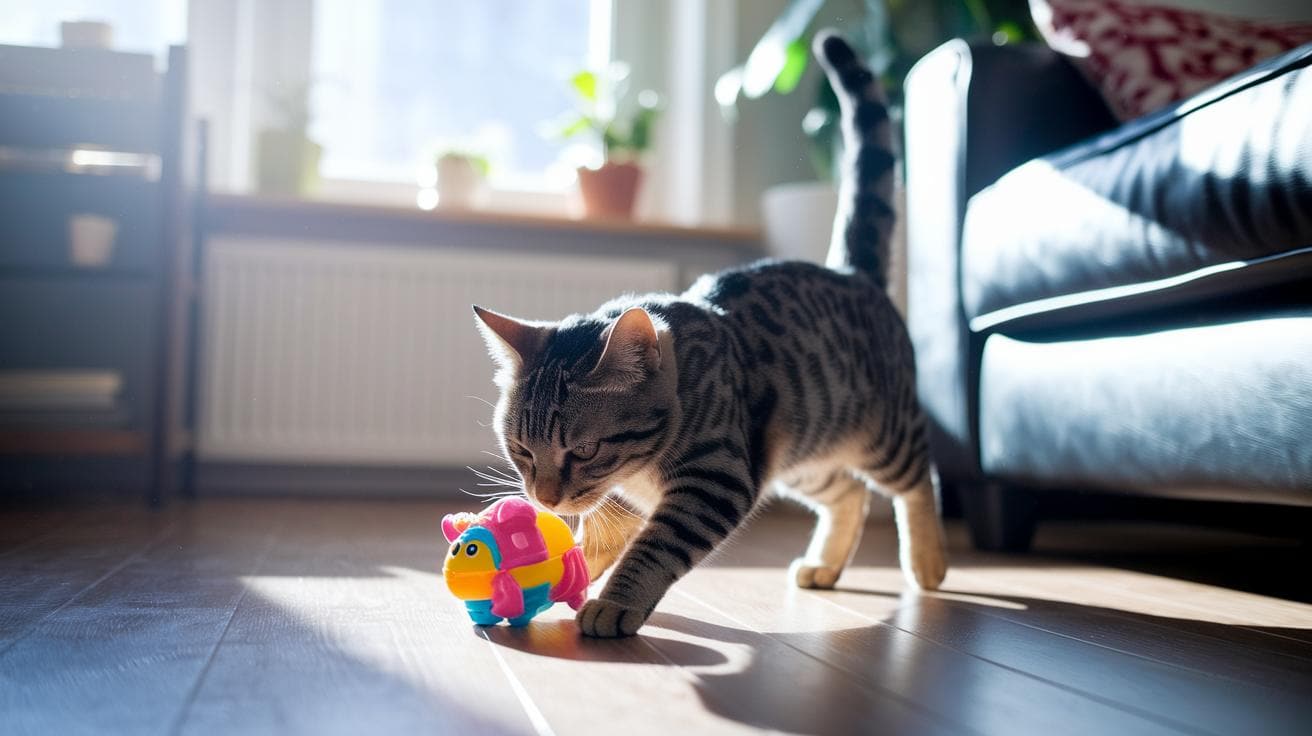
Think your kitty’s pouncing is just chaos? Think again. Those soft hops and tiny chirps aren’t random. They’re signs your cat feels confident and healthy.
See that slow tail wiggle? It’s your cat saying “I’m totally chill.” And that smooth, hunting-style leap? It’s pure joy. And it builds your bond. Really.
In this post you’ll spot the happy body-language cues that show your feline friend is thriving. Then you’ll learn how to jump in and have the most paw-some play sessions together.
Signs of Healthy Cat Play Behavior Spark Joy
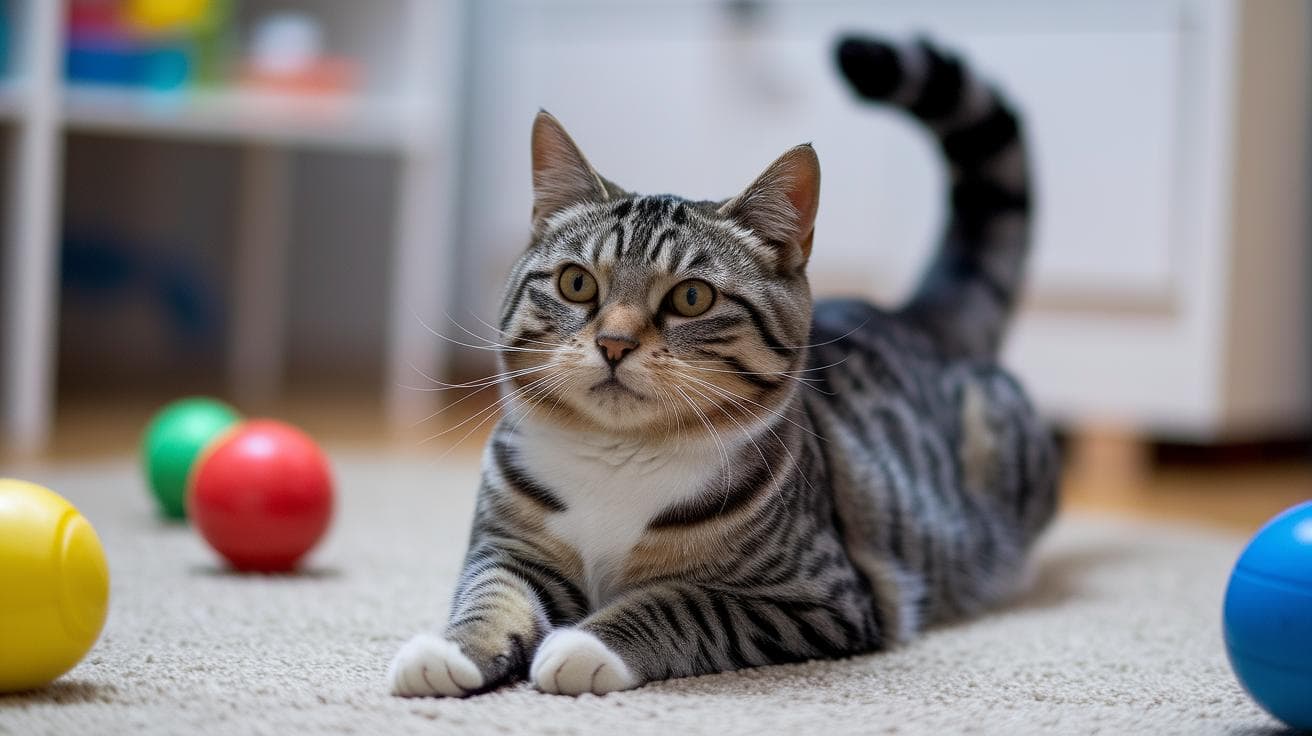
Ever watched your kitty chase shadows? These playful moves show your cat feels safe and joyfully engaged:
- A tail that waves slowly or hangs loose – no fluffing or whipping in sight.
- Quiet purrs or soft chirps – little meow-hums that say “I’m having fun.”
- Gentle, controlled pounces – your cat lands smoothly, not like a wild leap.
- Fair turn-taking stalking (quiet, sneaky tip-toe play) – each cat waits its turn before pouncing.
- Smooth, relaxed movements with no growls or hisses – just pure, friendly fun.
Worth every paw-print.
See Section 2 (“Deep Dive: Cat Body Language in Play”) for more detailed nuance.
Deep Dive: Cat Body Language in Play
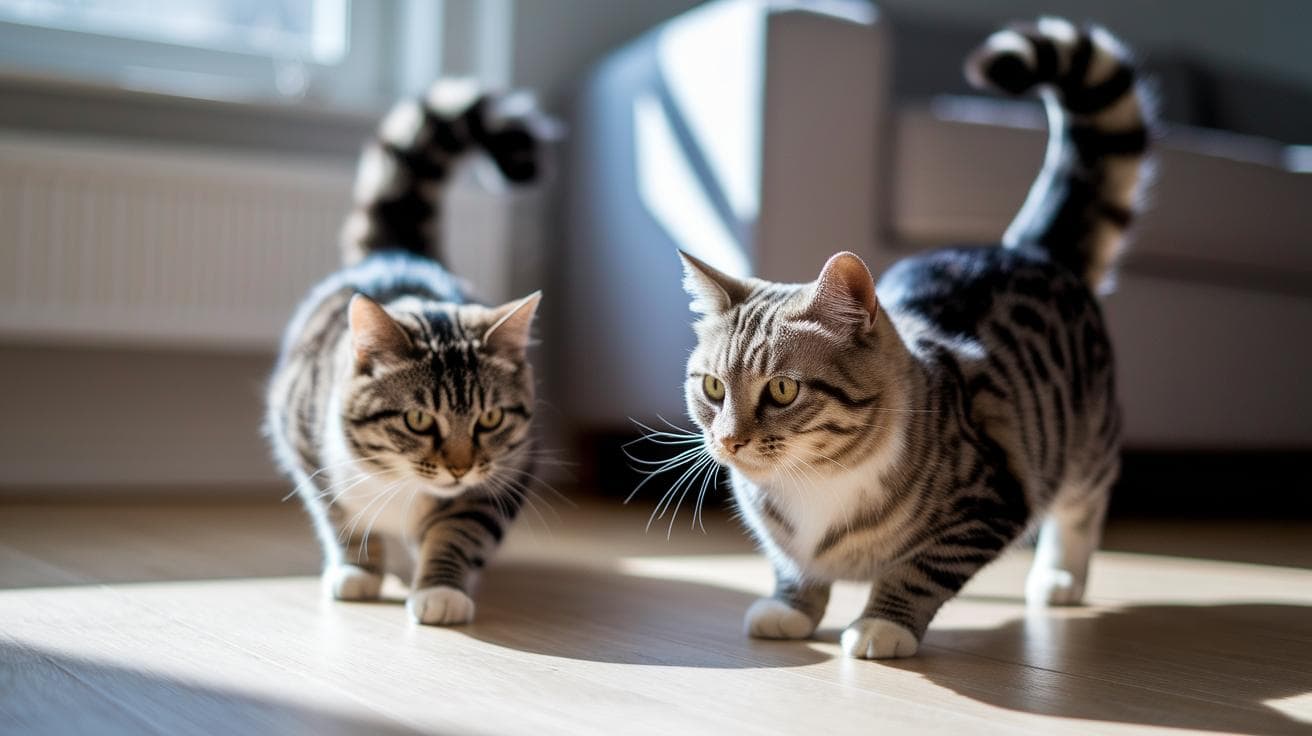
Your cat’s tail speaks volumes during play. A slight puff (a tiny raise of fur along the tail) shows joyful anticipation, like they’re gearing up for the next move. Rapid lashing, on the other hand, signals frustration or overstimulation, time for a quick break. Watch their ears too: forward for laser focus on the toy, gently back when they’re relaxed and giving consent for more play.
Stalking posture cats adopt is pure stealth mode. They lower their belly almost to the floor, align their head with the target, and inch forward on bent legs, ready to spring. Ever notice them pause mid-creep? That brief freeze and a quick eye lock with you or a playmate are play posture cues, a mutual “still good?” check. Then they dive back in, pounce, and keep the fun going.
Common Play Activities Reflecting Healthy Cat Behavior
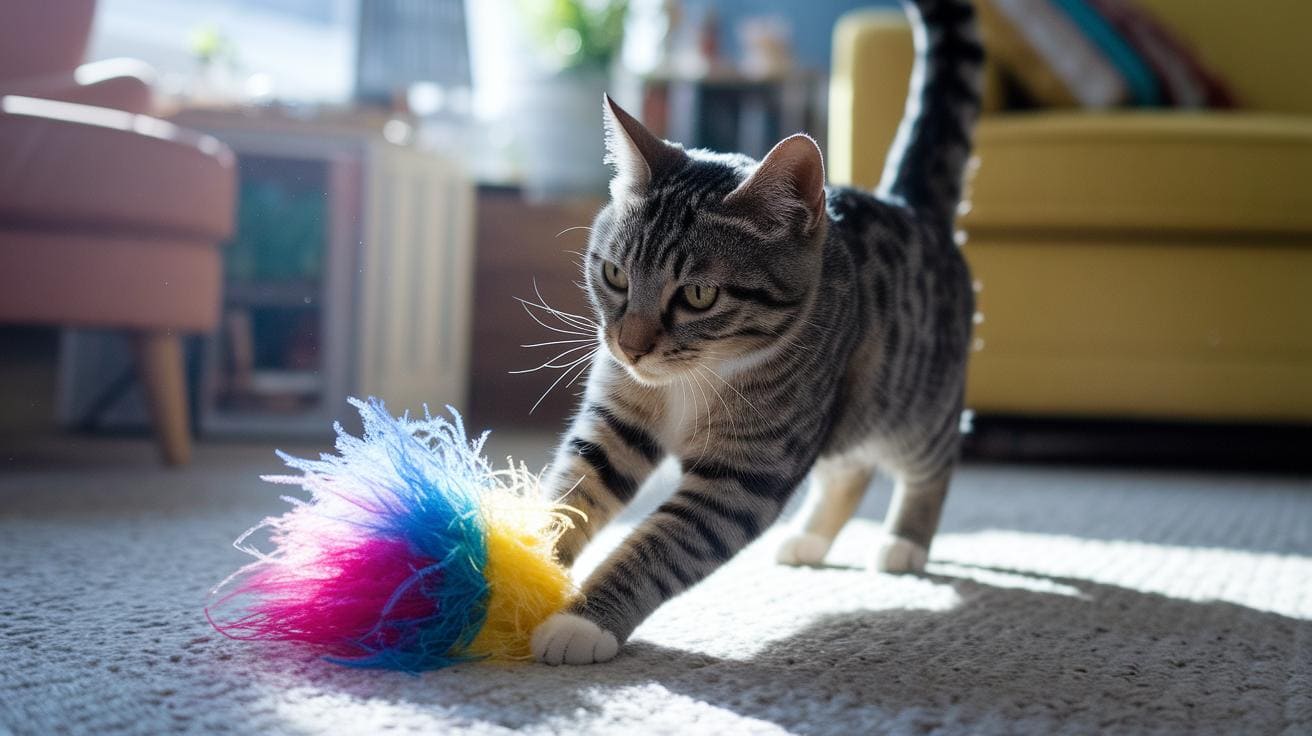
Ever watched your kitty crouch low before springing at a feather? Mixing up play keeps them sharp and taps into those ancient hunting moves left over from kittenhood. Uh, they’re gonna be feline fine. It’s like a little prey chase right in your living room, whiskers quivering and tail twitching.
- Pouncing on feather wands or string toys
- Playing chase with you or another cat
- Batting plush mice or soft balls with their paws (claws tucked in)
- Wrestling and kicking pillows or stuffed toys with their back legs
- Sneaking and hiding before a big leap
- Gentle kneading on blankets or cushions
- Zoomies (sudden bursts of wild running)
Letting your cat bounce around like this burns energy and makes their brain purr. Zoomies give them room to explore and shake off stress. Gentle kneads on a soft cushion? Totally calming. Mix in pouncing, chasing, wrestling and kneading and you get a cat who’s fit and paw-sitively happy, no boredom in sight.
Age-Appropriate Play Patterns and Energy Levels in Cats
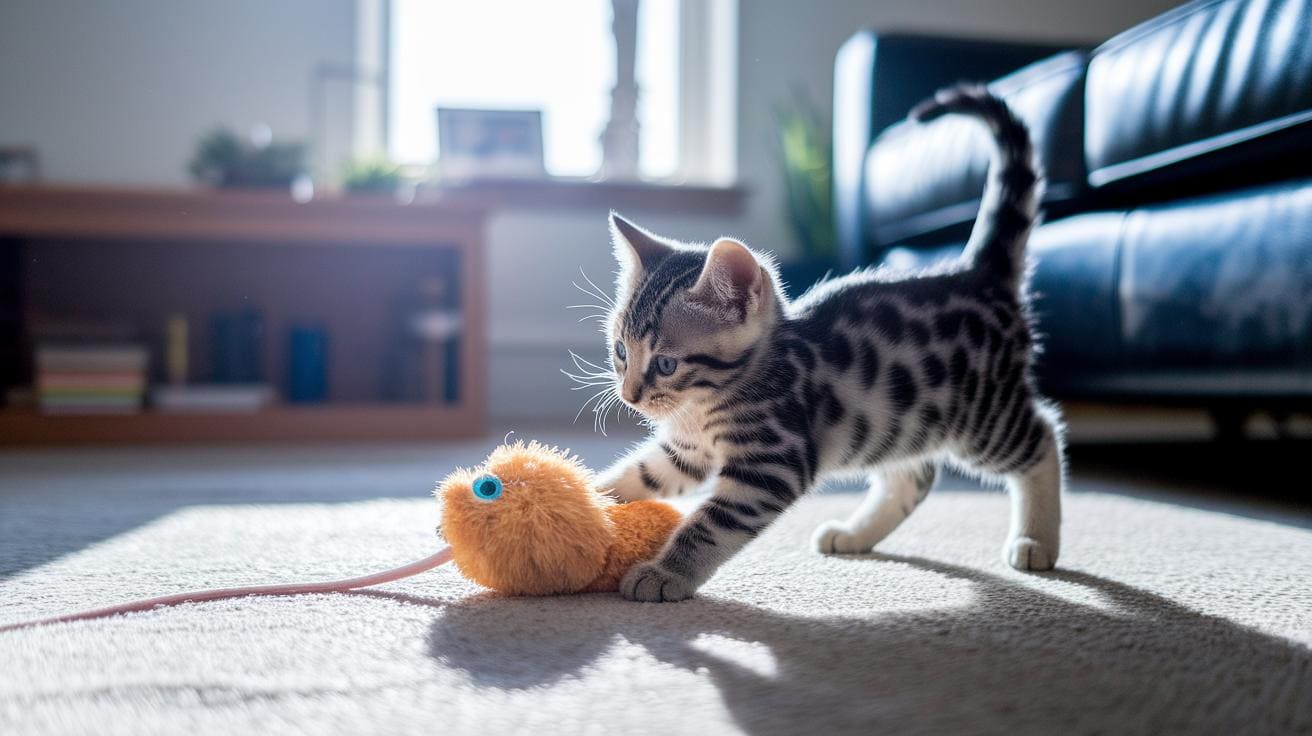
Cats at different ages bring their own play vibes! Kittens (under 1 year) move in short bursts, they wrestle, stalk, and pounce like tiny hunters. Their paws skitter across the carpet for 5 to 10 minutes at a time, about three to five times a day.
Adult cats (1 to 7 years) shift into more focused play. You’ll see them chasing feather teasers or batting at wand toys (think fishing rod for cats) for 10 to 15 minutes twice daily. Ever watched your kitty leap for feathers? It’s a thrill.
Senior cats (over 7 years) lean into gentler fun. They love low-impact batting or working puzzle feeders (toys that hide treats inside) for 5 to 8 minutes once or twice a day. Their whiskers still twitch, but at a slower pace, and it’s just as rewarding.
| Age Group | Play Duration | Common Play Moves |
|---|---|---|
| Kittens (<1 yr) | 5–10 min bursts, 3–5×/day | Wrestle, stalk siblings |
| Adults (1–7 yrs) | 10–15 min sessions, 2×/day | Chase, interactive games |
| Seniors (>7 yrs) | 5–8 min sessions, 1–2×/day | Low-impact batting, puzzle play |
Every cat’s battery recharges on its own schedule. By matching play length and frequency to your kitty’s age, you’ll dodge boredom and avoid the zoomies that come from too much excitement. Oops, almost forgot. You can tweak each session based on mood and energy. Keep those paws busy and spirits bright!
Creating a Safe Environment for Healthy Cat Play Behavior
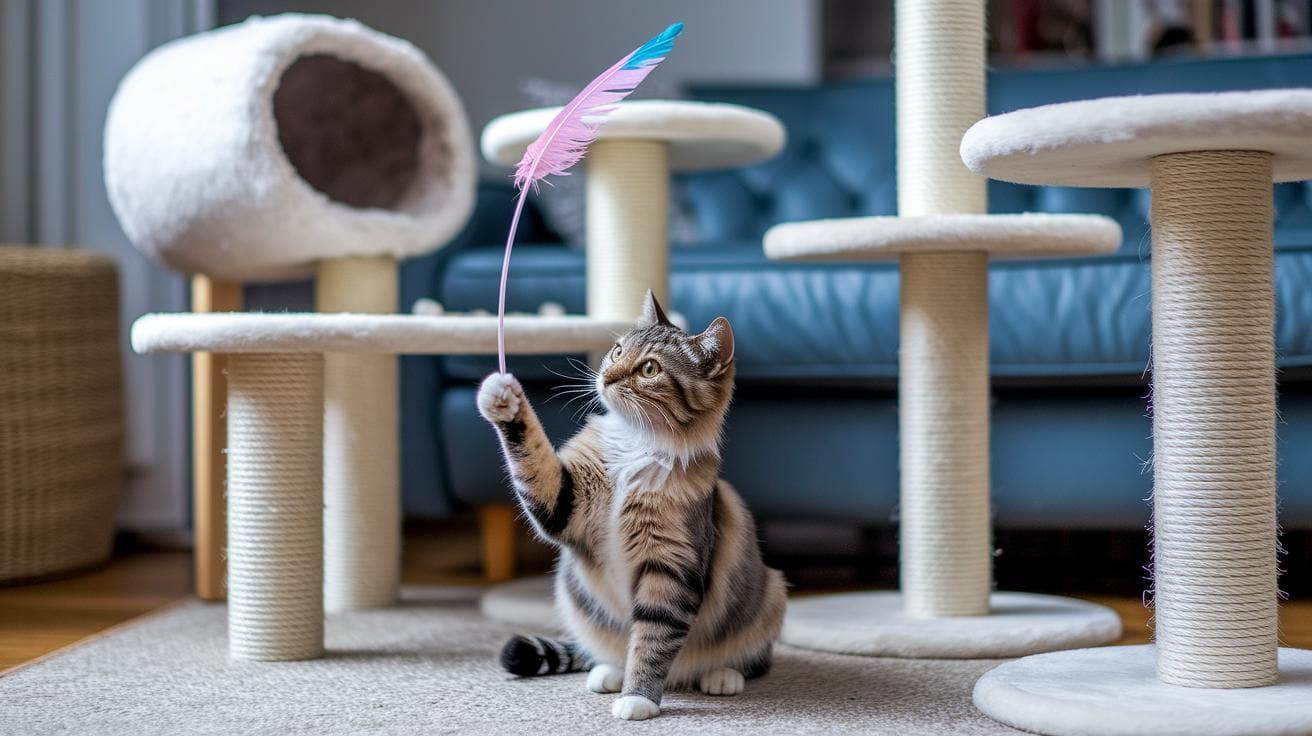
Let’s start by picking toys and play spots that make your cat feel feline fine. Feathery teaser wands (sticks topped with soft plumes that mimic a bird in flight) send your cat’s whiskers twitching in anticipation, and laser pointers spark that “I must catch it!” instinct. For bonding time and reflex sharpening, try the best interactive teaser wand for kittens – you can control the flutter, wiggle, or dart that keeps your kitty pouncing. Just make sure everything’s sturdy, non-toxic (safe if chewed or licked), and free of tiny bits they could swallow before setting up climbing shelves, a solid cat tree (a mini jungle gym), scratching posts, and cozy hideaways for pounce practice.
Next, keep playtime claw-tastic by swapping toys every week – new surprises mean no snooze-fest. Scatter puzzle feeders (treat puzzles) around the house so snack time feels like a game. Tuck extra water bowls or a spare litter box into quiet corners and map out a few escape routes for zoomies. These simple tweaks turn each room into a mini-wild playground, making your kitty’s day totally purrfect.
Distinguishing Healthy Play from Play-Related Aggression in Cats
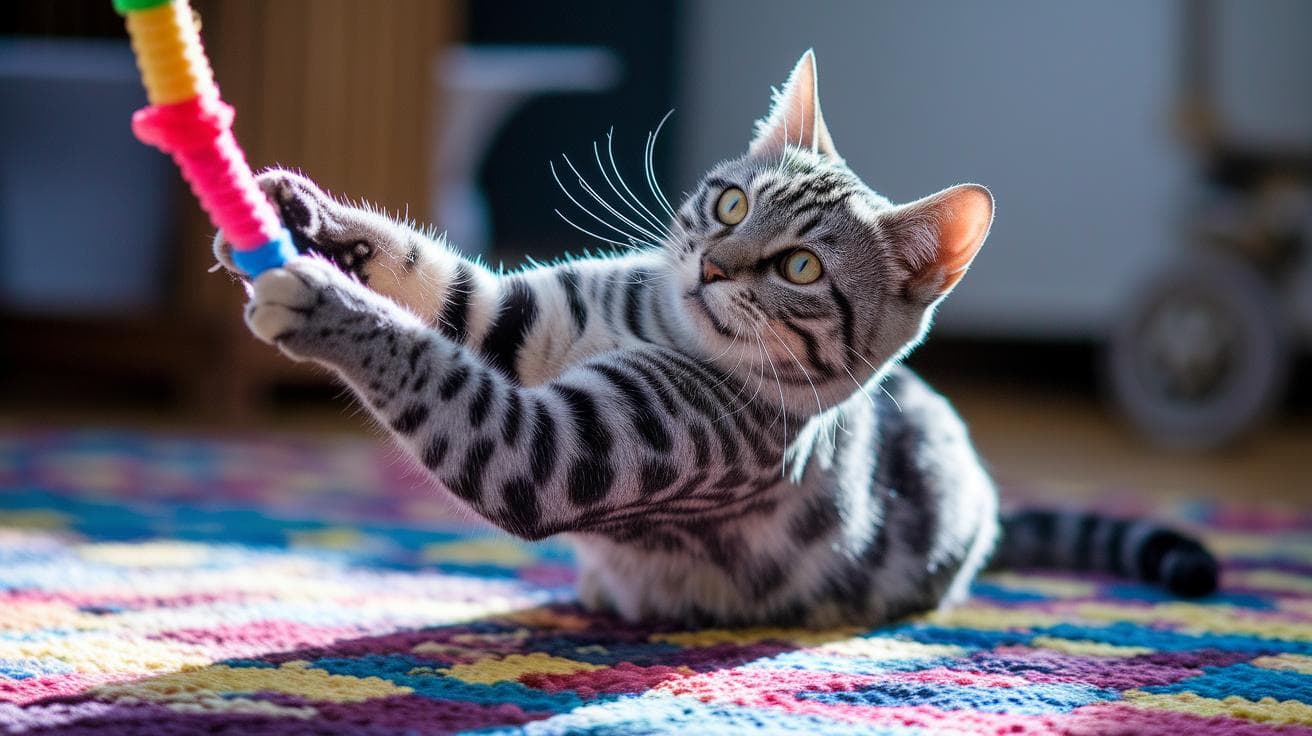
Signs of Healthy Cat Play
Gentler nibbling (tiny bites) and retracted claws signal your kitty’s consent. Paws land softly. Cats take turns chasing and biting with healthy bite inhibition (just enough to feel a nibble). Ears stay forward or slightly back, and short pauses let both cats check in before leaping again.
Deep Dive
When Play Turns Too Rough
A rigid back or stiff posture means your cat’s feeling tense. Flattened ears, low growls, or hisses mark a shift toward aggression. Extended claws digging in and forceful bites add to the warning signs. Intense staring or sudden leaps can flag overstimulation.
Creating a Safe Environment
Pause the fun when things get wild. Offer a soft plush toy or click your fingers to stop the chase. Wait a few seconds, then swap in a feather wand or treat puzzle. Time-outs and toy swaps cool down overstimulation so play stays safe and enjoyable.