Cats love to wrestle, but not every scuffle is play. Sometimes a pounce turns aggressive and can draw blood. Ever watched a friendly tumble go wrong? Yeah, it stings.
Look for hard bites, claws out, ears pinned tight (flattened against the head), or a frozen, stalking stare. Also listen for loud hissing, deep growls, or frantic yowls. If you spot those signs, pause play and separate them calmly. Don’t put your hands near their faces, slide a blanket, toss a pillow, or set a big box between them to break it up.
I’ll walk you through quick body-language clues, the sounds that matter, and easy, safe steps to step in so everyone stays okay. Think of it like learning cat-speak: read the signs fast and you’ll stop a fight before it starts.
Worth every paw-print.
How to Tell if Cat Play is Aggressive
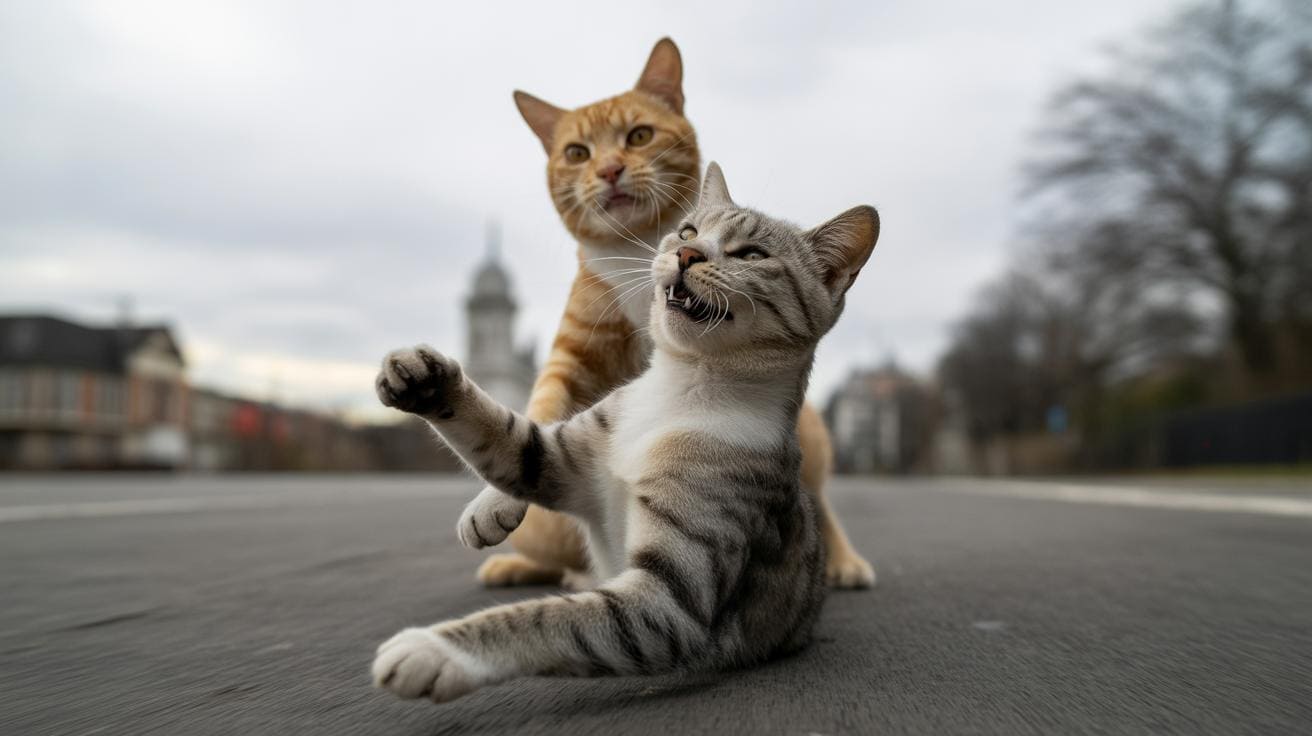
If one or both cats look tense and locked on each other, take a break from play right away. Stop them safely and don’t use your bare hands to separate them. Ever watched a friendly pounce turn sour? Yeah, that’s what we want to avoid.
- A hard bite that actually hurts or draws blood, not gentle mouthing (soft nibbling that’s normal in play).
- Repeated raking with claws out that tears skin or fur and causes wounds (raking means a back-and-forth scratch).
- Long growling, hissing, or loud yowling during the interaction, not the quick chirps or trills of play.
- A hard, fixed stare with a stiff, stalking body and no switching of roles between chaser and chased.
- Piloerection (raised hackles, fur standing up) along the back or tail, which shows fear or readiness to attack.
- Fast, violent tail-lashing that looks like an attack cue instead of an excited twitch.
- Ears pinned flat against the head and staying there, not just a quick flick.
- Very dilated pupils plus a tight, tense posture and focused, deliberate movements.
- A quick escalation to full-on aggression or a long, one-sided fight with no pauses or role changes.
If you spot any of these signs, act calmly. Don’t try to grab or hug them apart.
- Make a loud, sharp noise to break their focus, clap your hands or shake a can with coins in it.
- Put a sturdy barrier between them or toss a blanket over one cat, no hands. Use something that gives you distance.
- Close doors and separate them into different rooms. Give them quiet time, wait 20 to 60 minutes before reintroducing or checking on them.
Worth every paw-print: staying calm and using distance keeps you and your cats safe.
Cat Body Language: Reading Ears, Tail, Pupils and Posture for Aggressive Play
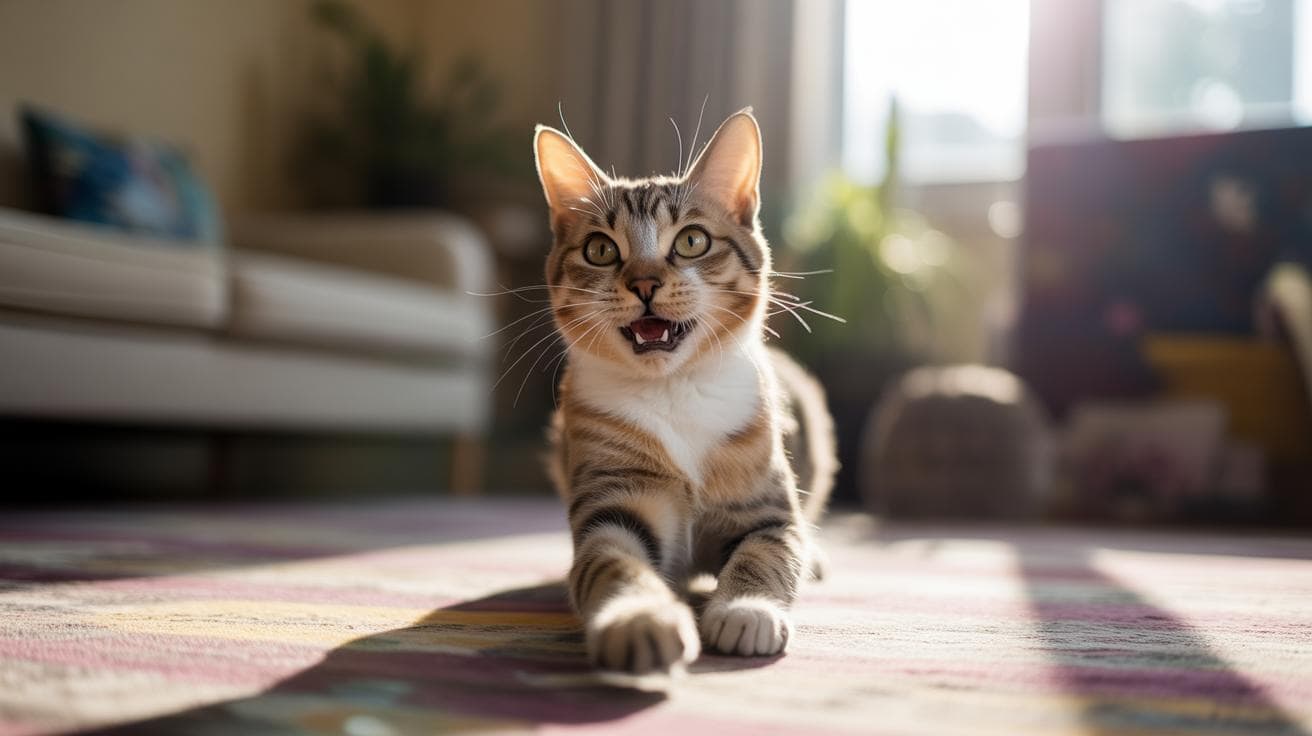
Posture and movement give you the fastest, clearest clues. A cat that rolls, pauses, swaps roles during a chase, or takes short back-and-forth bursts is usually playing and relaxed. If your cat stays locked-on, moves with tense, repeated strikes, or freezes before an approach, that’s risky tension. Think of posture as the stage that makes ear, tail, and pupil signals make sense.
Ears, tail, and pupils matter, but only when you read them with the whole body. Wide eyes can mean happy, bouncy excitement during play. Only when wide eyes come with a stiff, unmoving body should you sound the alarm. Tail twitches, quick ear swivels, and short breaks between chases fit a playful rhythm if the body is loose and wiggly.
Fur and how the cats interact add the final layer. Raised hackles, piloerection (raised fur), usually show fear or stress, especially with a stalking posture (body low and slow). Play tends to be short, turn-taking, and full of role changes; risky interactions go on longer, look one-sided, or escalate without pauses. Loose, wiggly, role switching points to play. Crouched, locked-on, stiff posture points to risk.
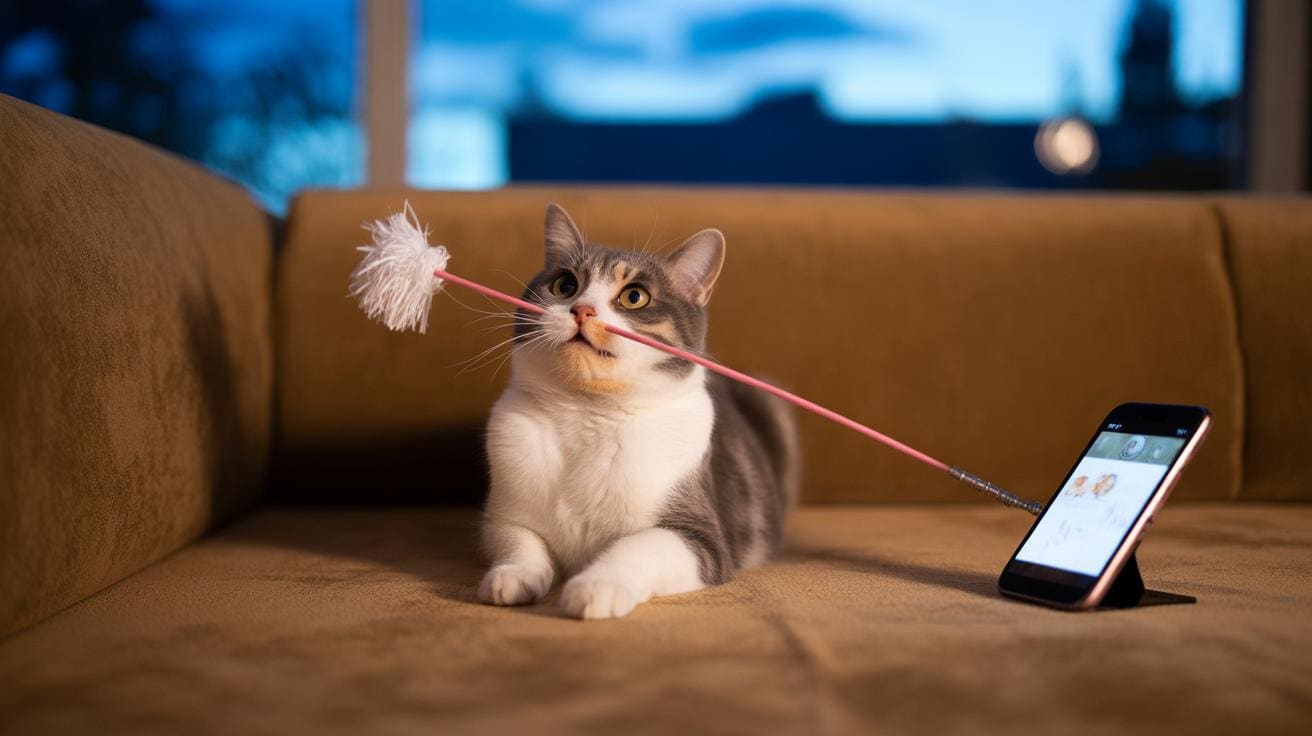
Ever watched your kitty’s whiskers twitch as a toy skitters across the floor? That little scene tells you a lot. I’ve seen cats go from playful topple to tense stalk in seconds, so read the full picture, not just one signal.
Worth every paw-print.
| What to watch | Play pattern | Risk pattern |
|---|---|---|
| Posture & movement | Rolling, pausing, short reciprocal bursts | Stiff stalking, locked-on stillness |
| Ears / Tail / Pupils | Quick ear swivels, light tail twitching, dilated pupils with loose body | Sustained rigid stare, violent tail lashing with tense body |
| Fur & interaction pattern | Role switching, brief exchanges, mutual chasing | Raised hackles (piloerection), one-sided attacks, prolonged escalation |
Vocalizations, Bites and Claws: Distinguishing Playful Versus Harmful Contact

Sounds and contact give you a lot of information in a single blink. Listen and look: vocal cues often tell you whether a romp is friendly or about to turn sour. Think of an intensity scale as your quick-scan tool, grouping chirps, hisses, gentle mouthing, and full-force bites so you can decide fast. Use it to know when to redirect play or when to stop completely.
Vocal signs usually line up with how rough contact will get. Chirps and trills mean curiosity and play. Sustained hissing, low growling, or loud yowling tend to match harmful contact. The main difference between a play bite and an aggressive bite is pressure and intent, soft nibbles in turn-taking versus hard chomps meant to hurt. Claws matter too: batting with claws sheathed is normal; raking (back-and-forth claw strikes) raises the chance of wounds. Ever watched your kitty chirp while chasing a laser? That’s the good stuff.
Here’s a simple six-level scale to guide you. I kept it short and practical.
-
Level 1 , Quiet chirps, light mouthing (gentle chewing): kitten-style nibble that doesn’t hurt. Response: keep playing, or switch to a soft plush toy to protect hands.
-
Level 2 , Short, sharp chatter or quick teeth clicks: mild arousal, no hard contact. Response: pause briefly and offer a wand toy or teaser; that refocuses energy.
-
Level 3 , Brief yelp or harder nibble: noticeable pressure, but the cat stops when the partner reacts. Response: stop play for a minute, then resume using a toy as the buffer.
-
Level 4 , Repeated rough bites or claws-out pats; raking may be visible: slipping into rougher play. Response: end the session and separate for a short break so everyone calms down.
-
Level 5 , Hissing or sustained low growl with forceful bite: this is an agonistic signal (a clear sign of hostility). Response: interrupt immediately with a firm noise, create distance, and don’t try to soothe by hand.
-
Level 6 , Injuring bite, sustained violent swipes, loud yowling: active aggression with real risk of harm. Response: safely separate, check for injuries, and follow first-aid steps or call your vet if needed.
Always use body language as your tie-breaker. If the sound or contact sits at a mid-level but the cat’s body looks tense, fixed, or tail-thumping, stop play now. If the body stays loose, ears forward, and they’re taking turns pouncing, it’s usually okay to continue but keep an eye out.
Small tip: when in doubt, redirect to a toy. Your hands will thank you, and your cat will still get all the fun. Worth every paw-print.
Age and Social Context: How Kittens, Adult Cats and Multi-Cat Dynamics Change Play Aggression
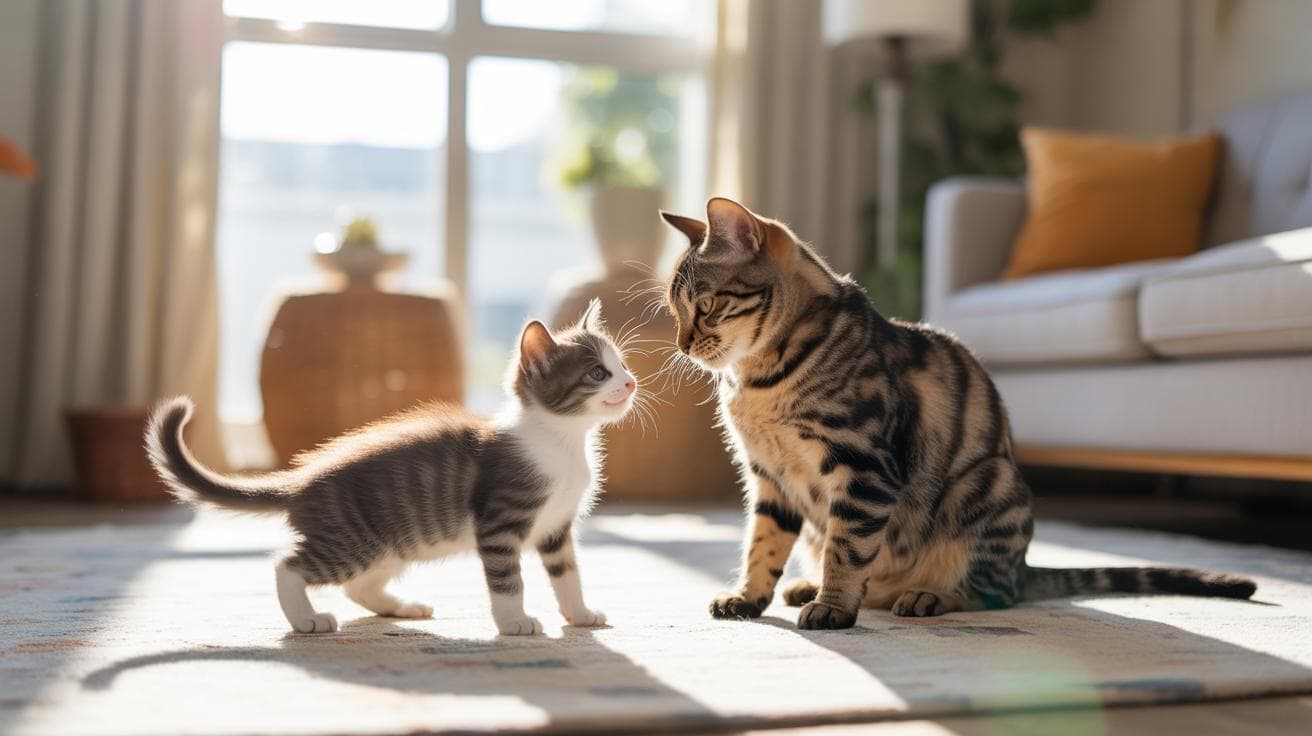
Kitten Play vs Adult Play
Kittens learn the rules of play by pouncing, chasing, and gentle mouthing. Those quick, soft nibbles and tiny struggles teach bite inhibition (learning to control how hard you bite) and socialization (learning safe play with people and other pets). Expect more tumble-and-rough behavior in the first weeks to months as they build motor skills and manners. Your kitten’s whiskers will twitch, their paws will bat the air, and it’s mostly harmless.
Adults can play more roughly. If a cat is intact (not spayed or neutered) or under-socialized (didn’t learn play rules early), or is stressed, play may be harder and less forgiving. Watch for signs like persistent hard bites, repeated clawed swipes, or one-sided sessions that last longer than a few exchanges. If the back-and-forth feel is gone, redirect to toys and pause the session. It helps to toss a wand toy or an unbreakable ball to break the intensity. Worth the paw-prints.
Multi-Cat Interactions and When Play Risks Escalation
In homes with several cats, wrestling without loud yowls is often normal feline play. But context matters. Past relationships, where resources are placed, and each cat’s temperament change the risk of things escalating. Pay attention over time: who wins, who hides, and whether cats take natural breaks.
Helpful fixes:
- Offer extra essentials , more food bowls, litter boxes, and comfy beds cut down resource competition (fighting over food, litter, or space).
- Spread out hiding spots and perches so cats can get away when they want space. Vertical space is gold.
- Make clear escape routes (easy paths to leave a tense spot) so no one feels trapped.
- Introduce newcomers slowly: scent swapping, short supervised visits, and gradual time together work best.
- Check for medical problems , underlying medical issues (hidden pain or illness) can make a calm cat suddenly snappy, so see your vet if behavior changes.
Keep watching patterns, not single moments. And hey, ever watched your cat suddenly pause mid-wrestle, clean a paw, then go back? That little reset is usually a good sign. If play looks mean rather than mutual, step in, give space, and try toys to shift the mood.