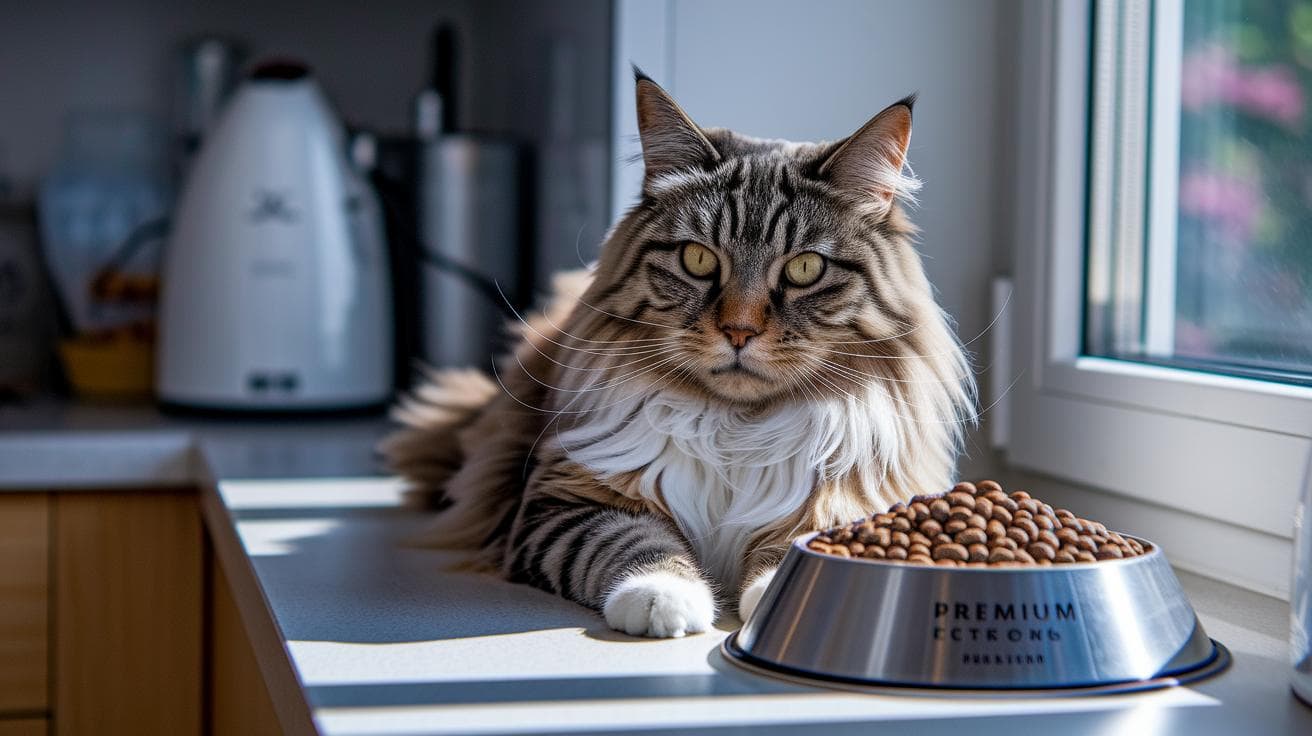
best food for maine coon Fuels Radiant Health

Ever watched your Maine Coon’s whiskers twitch at dinner time – then see them lose interest? Their fur can end up looking dull, like a rainy window pane on a drizzly day. It’s not your fault. Um, these gentle giants just need the right fuel (energy – what powers play time).

These big fluffballs burn tons of energy (fuel for play), so they need meals that match their size. Think of feeding them like giving a race car premium gas. My Maine Coon Luna zoomed so fast around the couch she cartwheeled – oops, maybe I’m exaggerating, but you get the idea!

In this guide, we’ll show you the purr-fect mix of protein (muscle-building stuff), healthy fats (for shiny fur and skin), and low-carb picks (fewer sugars). You’ll see how each ingredient helps your kitty grow powerful muscles and that signature glossy coat. Ready for endless purrs and playtime?

We’ll compare tasty human-grade pouches (ingredients fit for people) to budget-friendly cans. You’ll learn which options pack the most protein, healthy fats, and keep carbs low. No guessing! Just clear picks so your big fluffball stays playful and healthy.

Worth every paw-print.

Ready to fuel radiant health in your Maine Coon? Let’s dive in.

Best Food for Maine Coon Fuels Radiant Health
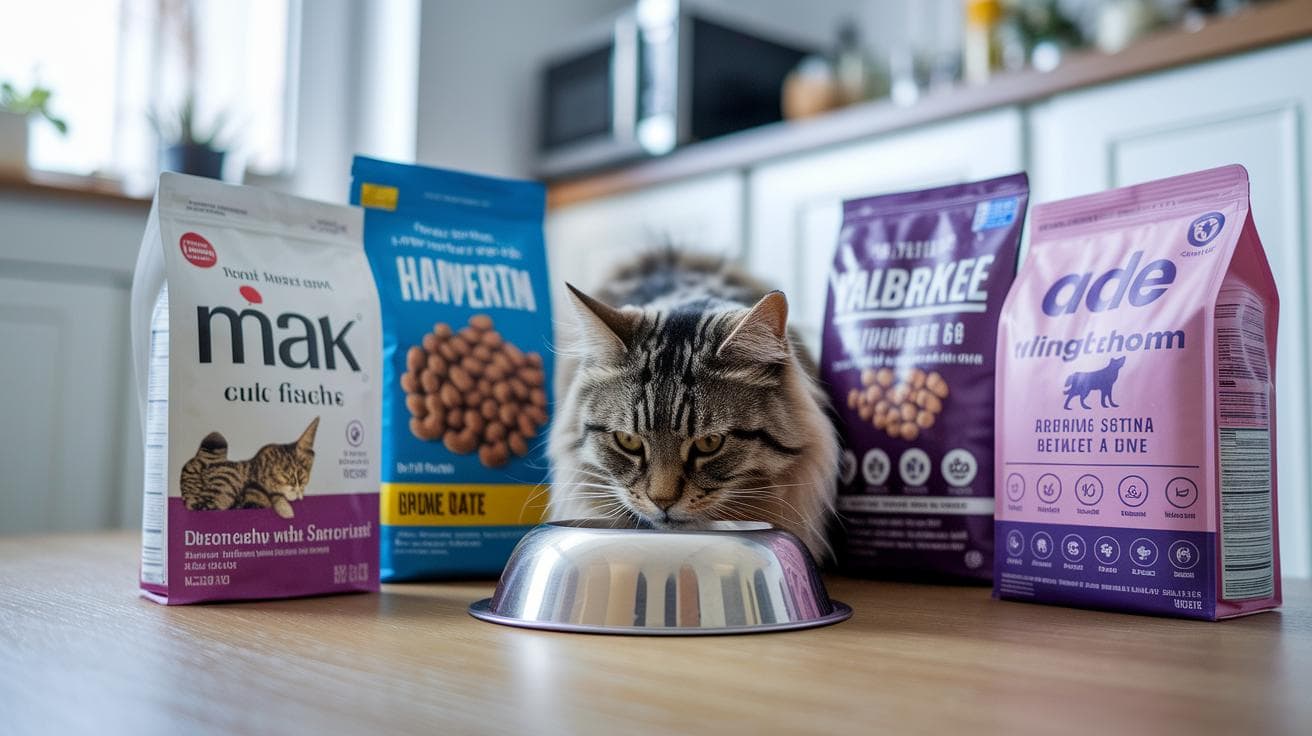
- Top-Rated Maine Coon Food Recommendations by Life Stage.jpg

Maine Coons thrive on meals packed with protein, a touch of fat, and low in carbs. Rotating two or three dry kibble brands with wet food or a bit of cooked plain chicken or turkey keeps meals fun and helps build strong muscles. Ever watched your big fluffball zoom after a treat? Keep their taste buds happy and their bodies toned.

  • Overall Best: Smalls Fresh Cat Food
    Smalls serves up human-grade ingredients and adds cod liver oil (rich in omega-3 fatty acids that help your cat’s coat gleam). It comes in fresh 5-ounce pouches made to fit your cat’s weight and play style. At about $4 a day, you’re feeding single-protein meals that your kitty will think are gourmet. Your cat’s whiskers will twitch in excitement.

  • Best Wet Food for Maine Coon Cats: Wild-Caught Pacific Salmon
    This wet food gives roughly 24 calories per ounce and packs omega-3s (healthy fats for skin and fur). Your cat will lap up the soft, salmon-rich gravy, and you’ll love the easy hydration. It runs about $4.80 a day, a little taste of the ocean that makes every meal feel like a treat.

  • Best Budget Wet Pick: Authority Chicken Canned
    Wait, this one’s wet too, but as a budget pick it can’t be beat. It blends chicken, chicken liver, and ocean fish for 33 calories per ounce. The soft, smooth texture is perfect for picky eaters or seniors. At just $2.07 a day, it’s an awesome deal that still makes whiskers wiggle.

  • Best Kitten Food for Maine Coon: Wellness CORE Kitten Formula
    Wellness CORE packs 36 calories per ounce in a creamy pâté full of turkey, chicken liver, and herring. It also adds DHA (a brain-and-eye booster) so your growing fluffball builds strong bones and sharp eyes. Think of it like a superfood smoothie for kittens.

  • Best Adult Cat Food for Maine Coon: Smalls Fresh Cat Food
    Once your cat hits adulthood, they need steady energy and muscle support. Smalls’ real-meat recipes have minimal fillers and healthy fats to fuel stalking, pouncing, and zoomies all day long.

  • Best Senior Cat Food for Maine Coon: Feline Natural Chicken & Venison
    This one adds green-lipped mussels (a joint-supporting shellfish), lean protein, and a safe calcium-to-phosphorus ratio to help older cats stay spry. At around $7.58 per day, it’s an investment in every gentle step and cozy nap.

Key Nutrient Requirements in the Maine Coon Diet
- Key Nutrient Requirements in the Maine Coon Diet.jpg

Your big fluffball needs about 36 to 45 grams of animal protein (meat-based protein) each day, which is about 4 grams per kilo of body weight. Think real-meat meals, chunks of chicken, turkey, or fish, not mystery “meals.” High-protein food builds strong muscles and keeps those whiskers twitching at dinner time. Your cat will be feline fine!

Keep fat at or below 20 percent of total calories. Fat isn’t just fuel. It helps your cat soak up vitamins and gives that coat a silken shine. Try adding omega-3 supplements (healthy fats from fish oil) and omega-6 fatty acids to boost skin repair and immune power.

Carbs should stay under 3 percent. Too much grain can pack on pounds and upset tummies. A low-filler, high-meat menu keeps your cat lean and spry. Then they’re always ready for zoomies or a cozy nap on your laptop.

Taurine is an amino acid (tiny proteins your cat needs) that you can’t skip. It helps protect vision and keeps hearts happy. Canned food usually has more taurine than dry kibble, so mix it up.

Gut health matters too. Probiotics (good bacteria) and prebiotics (fiber that feeds those bacteria) keep digestion running smoothly. Your Maine Coon will thank you with the softest purr.

Weighing Wet Food Versus Dry Food for Maine Coons
- Weighing Wet Food Versus Dry Food for Maine Coons.jpg

Wet food brings the moisture every cat craves. Picture juicy chunks that make your Maine Coon’s whiskers twitch as they lap up the gravy. That extra water helps fight dehydration, supports kidney health, and keeps the urinary tract purring with relief. Plus, canned meals pack in extra taurine (an essential amino acid), so your big fluffball’s heart and eyes stay in tip-top shape. Ever watched your kitty dive into a saucy bowl? Pure purr-fection.

Dry kibble shines in convenience. You can free-feed it while you’re at work and let your cat snack whenever hunger strikes. The crunchy bites act like tiny toothbrushes, scraping away plaque as they chew. It’s also more cost-effective per meal, though um, it does lean on carbs, too many can slow down your gentle giant and add extra pounds.

Mixing both formats gives you the best of each world. Start with a 50/50 split or try 70% wet, 30% dry if your furball’s picky. For bonus hydration, stir in a splash of warm water or a spoonful of low-sodium broth (no onion, please). Oops, almost forgot, this trick keeps dry food juicy and extra inviting.

In the end, it all comes down to variety, hydration, and health. Your Maine Coon will love the juicy textures and the satisfying crunch. And you’ll love knowing they’re getting balanced nutrition, one crunch and one lick at a time.

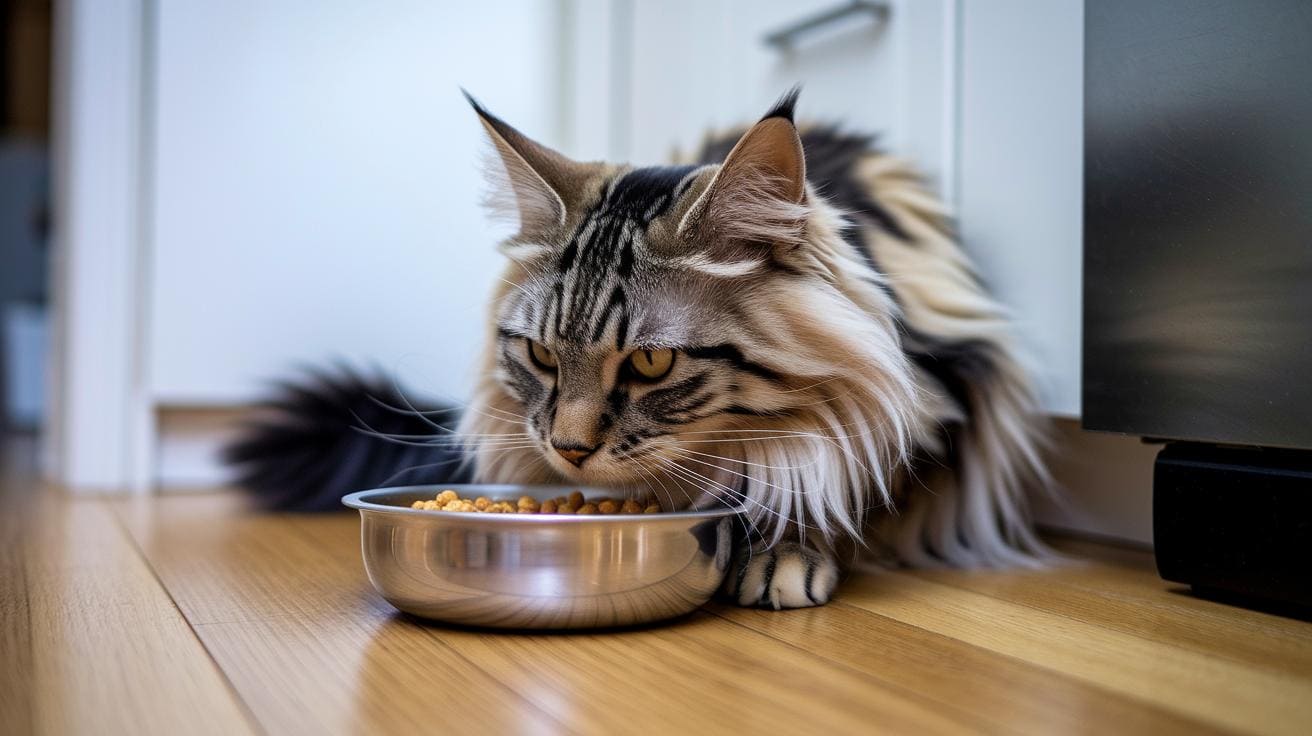
Maine Coon Feeding Chart and Portion Guidance
- Maine Coon Feeding Chart and Portion Guidance.jpg

Age/Stage Meals per Day Wet Food (g) Dry Food (g)
Kitten (2–6 months) 5 150 20 (spread through the day)
Junior (6–12 months) 4 180 30 (free-feed (leave food out all day) with monitoring)
Adult (1–7 years) 2 200–250 40–60 (free-feed (leave food out all day) balanced with wet)
Senior (7+ years) 2 180–220 30–50 (adjust for activity)

At about 4 weeks your kitten starts weaning (switching from mom’s milk to solid food). Mix a bit of wet kitten formula (soft, mushy kitten food) with warm water until it’s porridge-thin.

By 6 weeks you can cut back the water and offer soft chunks of kitten food.

At 8 weeks they’re purr-fectly ready for solid kitten formulas, time to watch those whiskers twitch as they dig in.

When your fur baby hits 8 to 12 months, you’ll shift to adult formula. Over 7 to 10 days, reduce the kitten food by about 25 percent every few days and add adult dry kibble (dry cat food). This gentle switch helps their tummy settle.

Easy, right?

If your cat weighs less or more than the average weight maine coon cat, tweak those portions up or down by 10 to 15 percent. Ever caught your Maine Coon giving you those big eyes at snack time?

Free-feeding (leave dry kibble out all day) gives them snack freedom, but keep an eye on total intake. Wet meals add hydration and stop your giant fluff from turning into a couch potato, or a runway model on a hunger strike.
Managing Allergies and Sensitive Stomachs in Maine Coons

- Managing Allergies and Sensitive Stomachs in Maine Coons.jpg

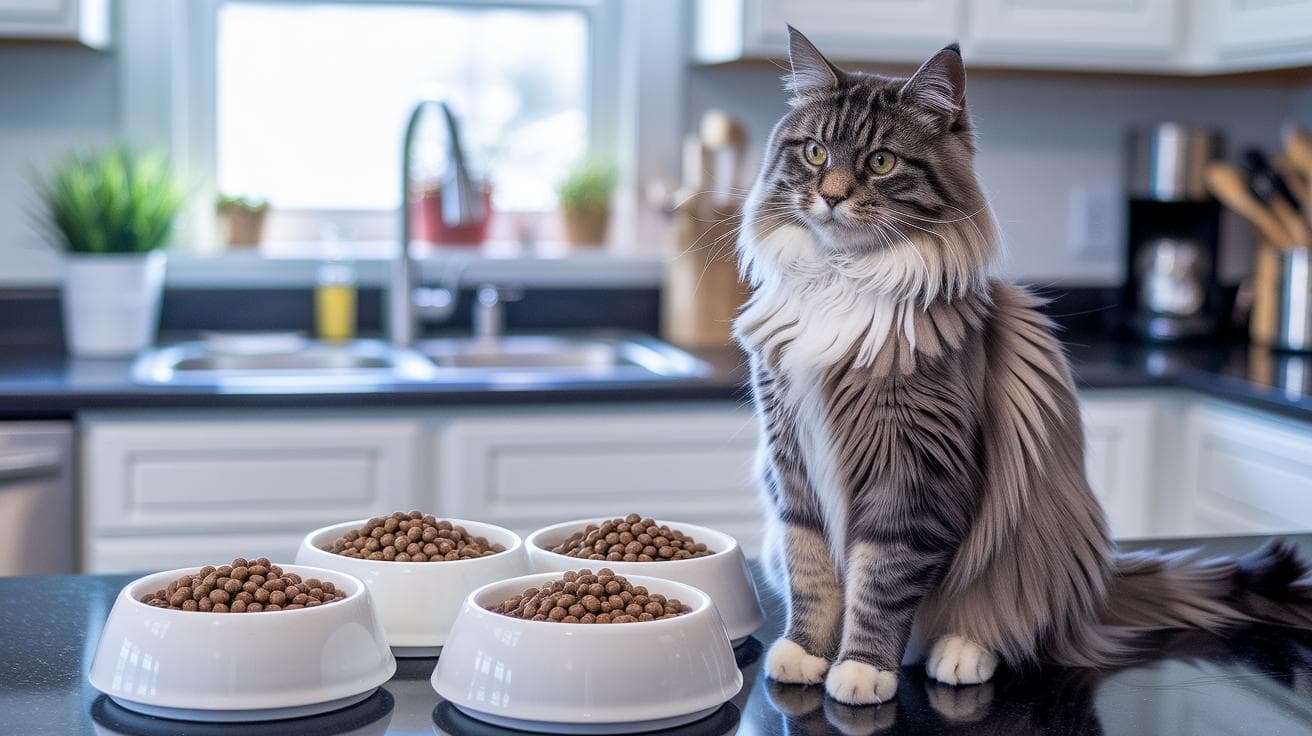
Have you ever noticed your Maine Coon scratching its paws or showing red spots after meals? Sometimes their big, luxurious fur can hide a sensitive tummy that reacts to common proteins – beef, chicken, or fish. You might hear the soft meow of discomfort or spot looser stools. It’s not claws for alarm – well, maybe just a little.

Let’s play detective with an elimination trial (a simple test to find out which food ingredient is the troublemaker).

  1. Pick a novel protein (one your cat’s never tried) like duck, rabbit, or kangaroo.
  2. Feed only that protein. Add one carb (rice or potato) if needed. Do this for 8 to 10 weeks – no treats or table scraps.
  3. Watch for fewer itches and firmer poops.
  4. Bring back one old protein at a time. See which one makes symptoms return.

You might also try a grain-free diet (no wheat, corn, or soy). Many cat foods for sensitive stomachs skip common allergens, drop artificial preservatives, and cut out fillers. These limited-ingredient recipes let you know exactly what’s in each bowl, so you can keep your cat feeling fine.

Once your fluffball’s tummy is back on track, rotate between two or three gentle recipes to keep things exciting. Ever seen your kitty go wild for a fresh flavor? This rotation also helps maintain tolerance over time.

Worth every paw-print.

Essential Supplements to Enhance Maine Coon Nutrition

- Essential Supplements to Enhance Maine Coon Nutrition.jpg

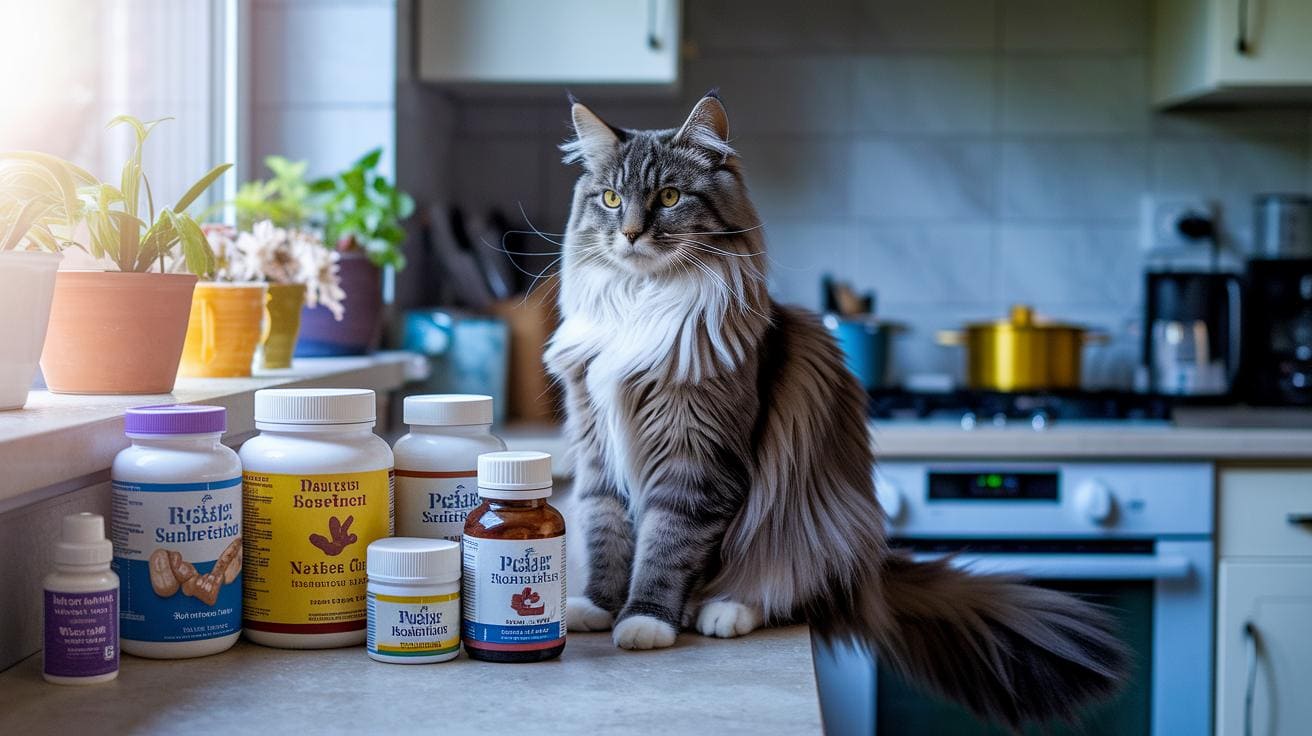
Your gentle giant lands from high perches and zooms around like a furry rocket. Ever watch your cat do a zoomie across the living room? That action puts a lot of stress on her joints.

Glucosamine (joint helper) and chondroitin (cartilage cushion) work like tiny shock absorbers. I once watched Luna leap six feet, land with a soft thud, then pounce again. These supplements help keep that spring in her step.

Bones need the right mix of minerals. A balanced calcium (bone-building mineral) and phosphorus (bone mineral) ratio keeps her bones strong without overloading her body. It’s like baking – too much salt or sugar ruins the cake.

Antioxidant-packed diets shine for immunity. Vitamins C and E (cell protectors) shield cells from wear and tear. Omega-3 fatty acids (fish oil goodness) calm inflammation and make her fur feel like silk. Your Maine Coon will look radiant and her immune system will hum along.

Senior kitties or those with heart issues or past cancers really benefit from these boosters. But um, always chat with your vet before adding anything new. They’ll tell you the right dose and timing. Your Maine Coon will say thanks with happy purrs and playful paws.

Budget-Friendly and Premium Brands for Maine Coon Nutrition

- Budget-Friendly and Premium Brands for Maine Coon Nutrition.jpg

Premium Versus Budget Options

Smalls Fresh Cat Food wears the premium crown. Each pouch is like a little feast, bursting with human-grade chicken (people could eat it) or turkey, it’s about $4 a day for a full meal. Open Farm dry kibble packs 37% protein (the muscle-building kind) and ethically sourced ingredients, running around $0.66 an ounce, perfect for sprinkling on wet food. Wellness CORE kitten and adult formulas come in creamy pâtés loaded with DHA (a brain-boosting fat) and omega-3s.

On the budget side, Authority Chicken canned food delivers 33 calories per ounce at about $2 a day. You’ll notice it leans on rice (a cheap grain) or gums (thickening agents) to keep costs down, but your Maine Coon won’t mind the extra fillers.

Alternative Formats: Freeze-Dried & Dehydrated

Freeze-dried cat food means raw ingredients flash-frozen then all moisture removed, tiny crunchy bites that lock in flavor and nutrients. Just add warm water until each chunk softens into a meaty treasure. Dehydrated food uses gentle low-temp drying (removing water without nuking nutrients) for a jerky-like texture. Both styles take up less space and pack more protein per ounce, so you scoop smaller portions that really pack a punch.

Homemade and Raw Diet Considerations

Cooking from scratch or trying a raw diet can feel rewarding, you mix meat, organs, and supplements yourself. But um, watch out for nutrient gaps (too much calcium (bone-building) and not enough taurine (a heart-health amino acid)) or bacterial contamination. A raw menu needs strict hygiene: chilled prep surfaces, gloves, fresh meat only. Commercial, AAFCO-approved products (animal feeding rule checks) guarantee every bite is balanced, no kitchen math or lab tests needed.

Reading Labels & Storing Safely

Label reading is like detective work. First, spot a whole-meat protein as the top ingredient: chicken breast, salmon fillets. Skip vague “protein meals” or grain fillers like corn or wheat. Then check the nutrient panel, look for over 35% protein in dry kibble and fat around 15–20%.

Seal open bags tight and pop wet pouches in the fridge after use. Store freeze-dried packs in a cool, dry spot and only rehydrate what your cat can finish in a few minutes, less waste, more happy paws.

Final Words

In the action, we highlighted life-stage favorites, from kitten formulas packed with DHA to joint-supporting senior blends.

Then we dove into key nutrients, balanced wet vs dry feeding, and a handy portion guide for every age.

We also tackled allergy-friendly and budget-wise options plus must-have supplements.

Here’s to happy purrs, healthy growth, and always finding the best food for maine coon.

FAQ

What’s the best food to feed a Maine Coon?

The best food to feed a Maine Coon features high-quality animal proteins, moderate healthy fats, and low carbs, rotating wet and dry formulas to support muscle, coat, and overall vitality.

What to feed a Maine Coon kitten?

Feeding a Maine Coon kitten means choosing growth formulas rich in protein and DHA—like Wellness CORE Kitten or Royal Canin Maine Coon Kitten—offering both small kibble and wet options for healthy development.

What not to feed a Maine Coon?

Owners should not feed Maine Coons chocolate, caffeine, alcohol, raw dough, onions, garlic, grapes, raisins, or high-carb fillers, as these can cause toxicity, digestive upset, or weight issues.

How much should a Maine Coon eat in a day?

A Maine Coon should eat around 200–250 grams of wet food or ½–¾ cup of dry food per day, adjusted for age, activity, and weight, split into multiple meals.

Do Maine Coons need raw food?

Maine Coons don’t need raw food; balanced commercial wet and dry diets meet their nutritional needs safely, while raw diets risk bacterial contamination and nutrient imbalances without veterinary guidance.

Is Royal Canin Maine Coon food good?

Royal Canin Maine Coon formulas provide balanced protein, joint-support nutrients, and unique kibble shapes for chewing, helping maintain bone health and reduce tartar buildup.

What is a Maine Coon feeding chart by age?

A Maine Coon feeding chart by age guides kitten meals (three to six daily until 12 months), adult portions (200–250 g wet or ½–¾ cup dry), and senior adjustments with reduced calories.

Related Articles

Author

  • Nathaniel Price is a retired construction manager turned LLM writer, where he combines his years of experience managing complex projects with his love for crafting precise, engaging content.

    His work thrives on meticulously researching and writing about all things related to cats, from behavior to care, ensuring that every piece is informative and well-researched.

    When he’s not writing, Nathaniel enjoys fishing, which offers him a peaceful escape. He also has a deep appreciation for nature, often reflecting on his belief that “happiness is found in the quiet moments.”

    View all posts

Similar Posts