Think Ragamuffins are just lazy lap cats? Think again. They’re like Velcro – following you from room to room, offering soft chirps, then suddenly exploding into short, joyful zooms before plopping onto your lap. You can feel the big, rumbling purr and the warm thud when they collapse into a nap.
They’re calm and super affectionate, but also delightfully goofy. Food is a huge motivator, so short training sessions stick easily, sit, come, even a little fetch if you try. Great for families, kids, or other mellow pets, though they do really want company. Ever watched one chase a shadow and then act like it was a personal triumph? So cute.
This post will walk you through their cuddle habits, play styles, grooming needs, and the health screens to ask breeders for. Ask about HCM (hypertrophic cardiomyopathy, thickening of the heart muscle) and PKD (polycystic kidney disease, fluid-filled cysts in the kidneys). You can request an echocardiogram (a heart ultrasound) for HCM and a renal ultrasound or genetic screening for PKD, um, actually genetic tests are common for some lines.
Worth every paw-print.
Ragamuffin cat temperament: Affection and Play

TL;DR: Ragamuffins are total love bugs. They’re calm, friendly, and not super hyper. Great with families and other pets, but they really want company. Before adopting, ask for screening for HCM (hypertrophic cardiomyopathy – a heart muscle disease) and PKD (polycystic kidney disease – cysts that can form in the kidneys).
Think of a Ragamuffin like a Velcro cat. They follow you from room to room, curl up on laps for long naps, make soft little chirps when they want attention, and knead like they’re massaging a pillow. They play in short, lively bursts – zoom, pounce, then flop back down. They’re food-motivated and pick up short training sessions easily, especially with treats and positive reinforcement.
They’re mellow company. Perfect if someone’s home a lot, or if you already have calm pets. For busy days, toss a durable toy before you leave and that’s ten minutes of safe fun. Ever watched a Ragamuffin stretch and gently bat a feather? Their moves are oddly graceful and totally charming.
Safety and health matter. Always ask breeders or rescues for documented HCM and PKD test results. If they can’t show proof, keep looking. HCM affects the heart and can be screened with an echo; PKD is usually checked with an ultrasound or genetic test. It’s quick to ask, and worth it.
Keep an eye on weight. Ragamuffins love food and can get chunky if you’re not watching portions. Portion control, measured meals, and a bit of daily play help a lot. My friend’s Ragamuffin once climbed a bookshelf for a treat – worth every paw-print.
Grooming and handling are easy. Their coat feels like a soft pillow but still needs regular brushing to cut down on loose fur. Learn basic body language so you know when they want pets or some alone time. Training? Short, tasty sessions are your best bet. Positive reinforcement works wonders.
If you’re ready for a cuddly, gentle companion, read the sections on body language, training, grooming, and the adoption checklist next. You’ll find practical tips for daily care, safety checks, and what to ask a breeder or shelter. Honestly, a Ragamuffin is one of those cats that makes a house feel like home.
Core Ragamuffin personality traits: observational examples, body language, and short anecdotes

Ragamuffins meet you with tiny chirps, slow head-butts, and soft kneading. Imagine warm little paws pushing into your lap, so soothing. They’re mostly calm, with short bursts of curiosity and play. Often they’ll drop a toy at your feet to ask for attention instead of demanding it. Cute, right?
| Body language & calm vs. stressed signals | Quick action plan |
|---|---|
Calm / content cues:
Stress cues:
|
Give space, lower your voice, and offer a high perch or a quiet room with familiar smells. Try a towel or blanket that smells like home. Keep movements slow until they relax. |
Affectionate behaviors (observational cues)
- Look for soft kneading, low-volume vocal requests, carrying a small toy to get your attention, and gentle head-butts.
- One cat I knew would drop a plush bunny beside the couch and stare until someone noticed. That was a tidy, unmistakable invite to cuddle. Ever seen that? Melt city.
Play and energy examples
- Play comes in short bursts: a minute or two of pouncing and batting at a feather wand or soft ball, then a long, relaxed nap.
- I once watched a kitten sprint for ten seconds, fling itself into a sunpatch, then snooze for an hour. Perfect little energy sprints.
- For busy days, toss a soft ball before you head out – that’s ten minutes of safe play and a happy cat.
Many Ragamuffins learn well with short, food-driven practice sessions and can pick up simple cues like sit or fetch. Oops, make that fetch in small steps, treat, praise, repeat.
For compatibility guidance, see the "Ragamuffin temperament with children, dogs, and other cats" section.
Ragamuffin temperament with children, dogs, and other cats

Ragamuffins are basically gentle giants. They are patient, cuddly, and usually happy to hang out with kids who chatter and snuggle. They take gentle roughhousing better than many breeds and will often stick close instead of dashing away. But because they trust easily, pushy kids or bossy animals can overwhelm them, so a little supervision goes a long way.
Start introductions slowly. Keep the new cat in a quiet room and swap bedding and toys so each animal can learn the other’s scent. Put the dog on a leash (a short lead to keep the dog close) or behind a baby gate (a simple barrier that blocks access) for short, supervised visits. Let the Ragamuffin come forward when it wants to, not the other way around.
Watch the body language like a hawk. Look for a tucked tail, flattened ears, hard staring, sudden hiding, or whiskers pulled back. If you see hissing, growling, or the cat stops eating, hit pause and give everyone space. If the resident cat starts swatting or chasing in an aggressive way, separate them and let things calm down before trying again.
Give your Ragamuffin easy escape routes and high perches (a cat tree or shelf works great) so it can back off without drama. Set up separate feeding spots if meals cause stress. Do short, supervised sessions every day for the first week, then increase the time they can see each other over 7 to 14 days. If all goes well, slowly expand supervised access the following week.
Keep an eye on eating, litter box use, and friendly behavior. If the new cat avoids others or eats less for more than a couple of days, slow the pace and offer quiet, private time. Worth every paw-print.
How Ragamuffin temperament changes across life stages
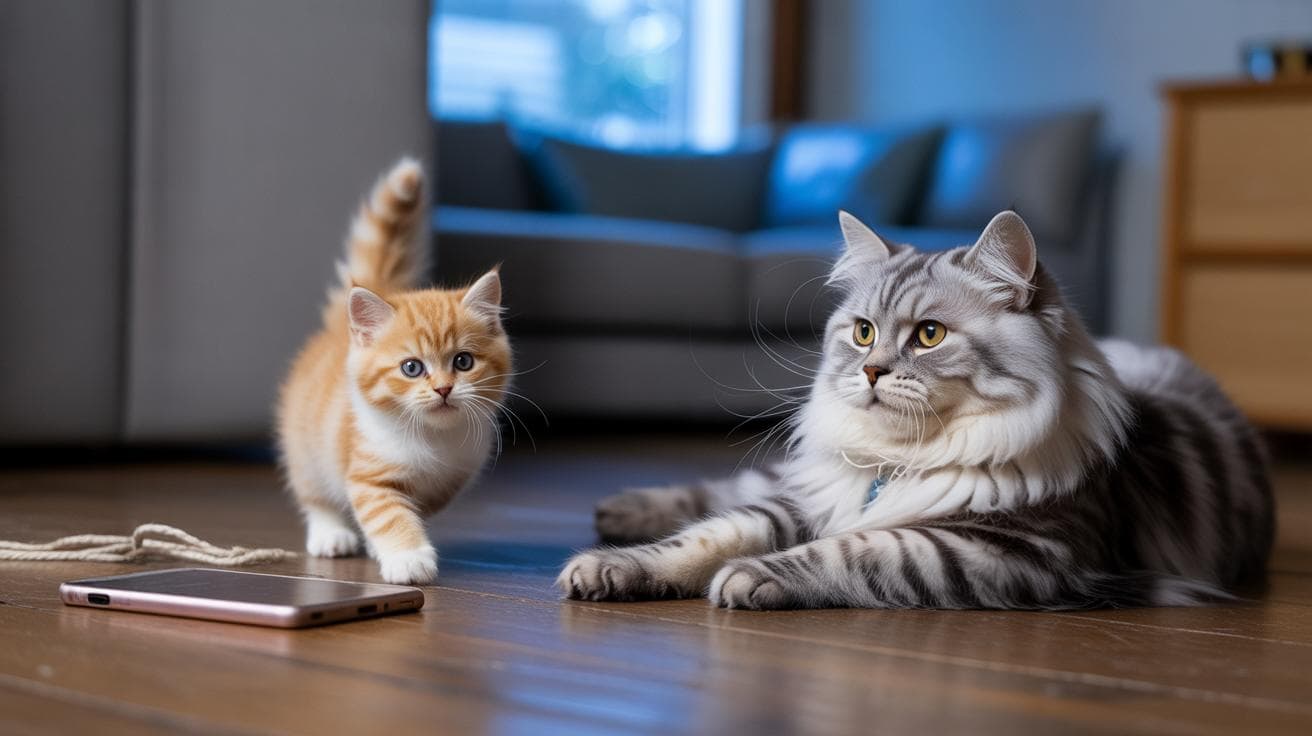
Ragamuffin kittens are tiny explorers with sudden bursts of zoomies. They sprint, pounce, stalk a tossed soft ball, and then flop into a deep, purring nap that seems to come out of nowhere. Their play is practice for hunting skills, lots of stalking, batting, and quick jumps, so you’ll notice their style shift week to week as coordination sharpens and curiosity runs the show. Ever watch your kitten’s whiskers twitch as a toy rolls across the floor? Cute, right.
By about three to four years, most Ragamuffins ease into a calmer, more predictable rhythm. They love long, cozy rest times broken up by short play sessions and one-on-one attention; energy usually reads low to moderate. Typical adult weights land around males up to roughly 20 pounds and females up to about 15 pounds. Their days tend to center on routine, cuddles, and a little food-motivated training (simple tricks for treats).
Senior Ragamuffins slow down even more and benefit from gentler activity and a watchful eye on weight. Swap high jumps for low climbs and soft, rolling toys, shorten play sessions, and trim portions if their activity drops. Keep movement easy on joints (joint-friendly = gentle on hips and knees) so they stay comfortable and mentally bright. I once watched a senior Ragamuffin happily bat a soft ball with slow, satisfied taps for a good ten minutes, small joys.
Worth every paw-print.