Think cats are aloof? Tonkinese will make you rethink that. They’re chatty, clingy, and acrobatic all at once. One minute they’re a warm lump on your lap, the next they’re chirping at a window bird like they’re telling secrets.
They crave company. Tonkinese are social and love to be where people are, not hidden away. They play hard too, zooming, leaping, and batting toys like tiny gymnasts. And their voice is a happy chitter, a mix of little meows and trills that sounds like a tiny conversation.
Who gets along best with a Tonkinese? Active families with playful kids, homes with tolerant dogs, or anyone who’s around a lot. Or get two cats, Tonkinese often prefer a feline friend to keep the chat going. If you work long hours and can’t come home for cuddle o’clock, they might get lonely.
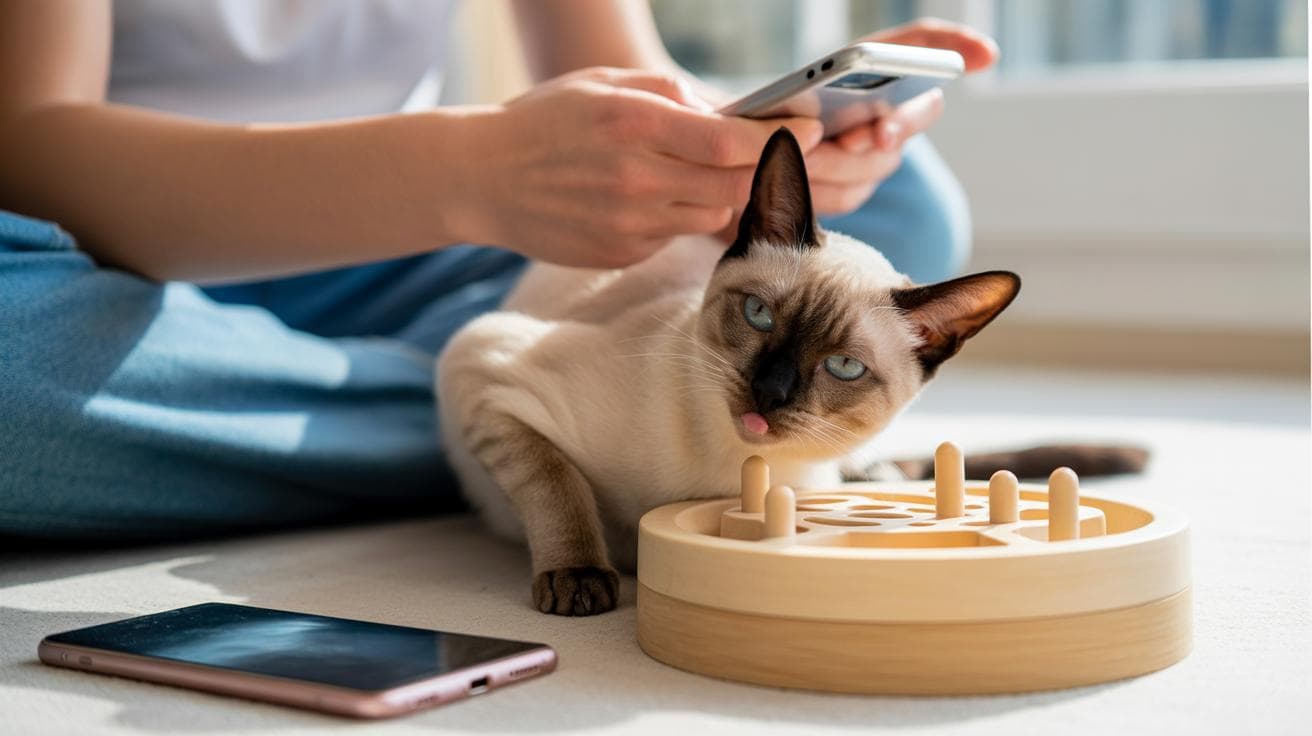
Daily play matters. Aim for a few short sessions each day, ten to fifteen minutes works wonders. Use a wand toy for high-energy chases and a small ball for fetch. Try a puzzle feeder (a toy that hides food so your cat has to “hunt” for it) to keep their brains busy and reduce naughty behavior.
Lap time is sacred. Make a comfy spot with a soft blanket and a low light, Tonkinese love warmth and gentle strokes. If they hop on and demand attention, go with it when you can; a little routine helps them feel secure.
Simple setups help a lot. Add a cat tree (a tall climbing post with perches) by a sunny window, rotate toys so things stay interesting, and put a safe hideaway where they can nap alone. Secure breakables and supervise rough play with kids or dogs.
Ever watched your kitty chatter at a bird and then do a perfect mid-air twist? It’s ridiculous and delightful. Keep them engaged, give them company, and you’ll cut down on trouble and double the joy.
Worth every paw-print.
Tonkinese Cat Personality: Traits and Compatibility
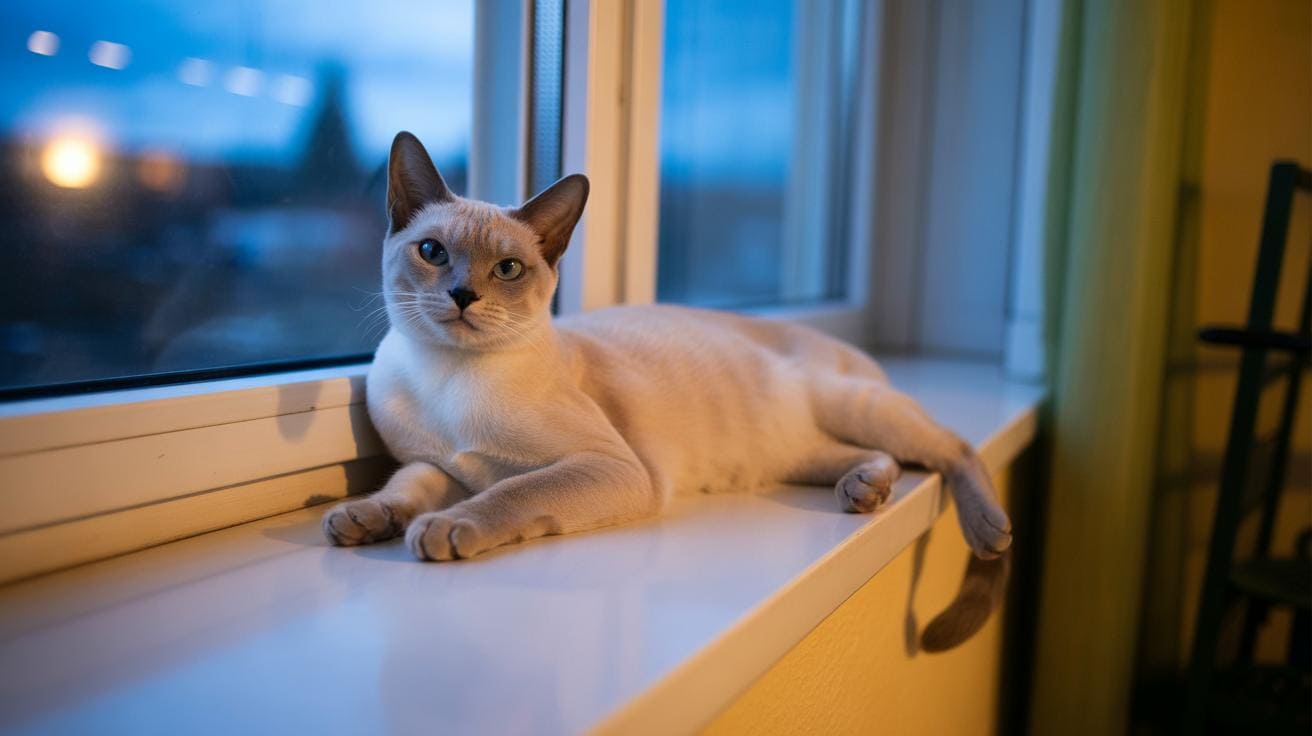
Tonkinese cats are social, snuggly, playful, talkative, and clever. They’ll curl up on your lap one minute and sprint across the room the next. Ever watched a Tonkinese chirp at a bird outside? It’s basically a tiny, furry conversation partner.
They do great with families, kids, and cat-friendly dogs. But they don’t love long stretches alone. Plan on regular human time or a second cat, plus several short play sessions each day to keep them happy.
- Weight: 6–12 lbs
- Length: up to about 28 inches including the tail (long and graceful)
- Color development: coat color usually finishes by around 16 months (coat tones deepen as they mature)
- Lifespan: about 10–16 years (how long they typically live)
Personality at a glance:
- Sociability: Craves company. Best if someone’s home often or there’s another pet to hang with.
- Affection: Loves close contact and laps. Expect lots of purrs and gentle head-butts.
- Activity: Needs daily play and vertical space like cat trees or shelves. Climbing makes them gleeful.
- Vocality: Very conversational, soft, chirp-like sounds rather than loud yowls.
- Intelligence: Quick study. They learn tricks fast, especially with food-based training (treats as rewards).
- Play style: Fetch, climbing, and puzzle toys keep them busy. Think of a teaser wand like a fishing rod for cats, so much fun.
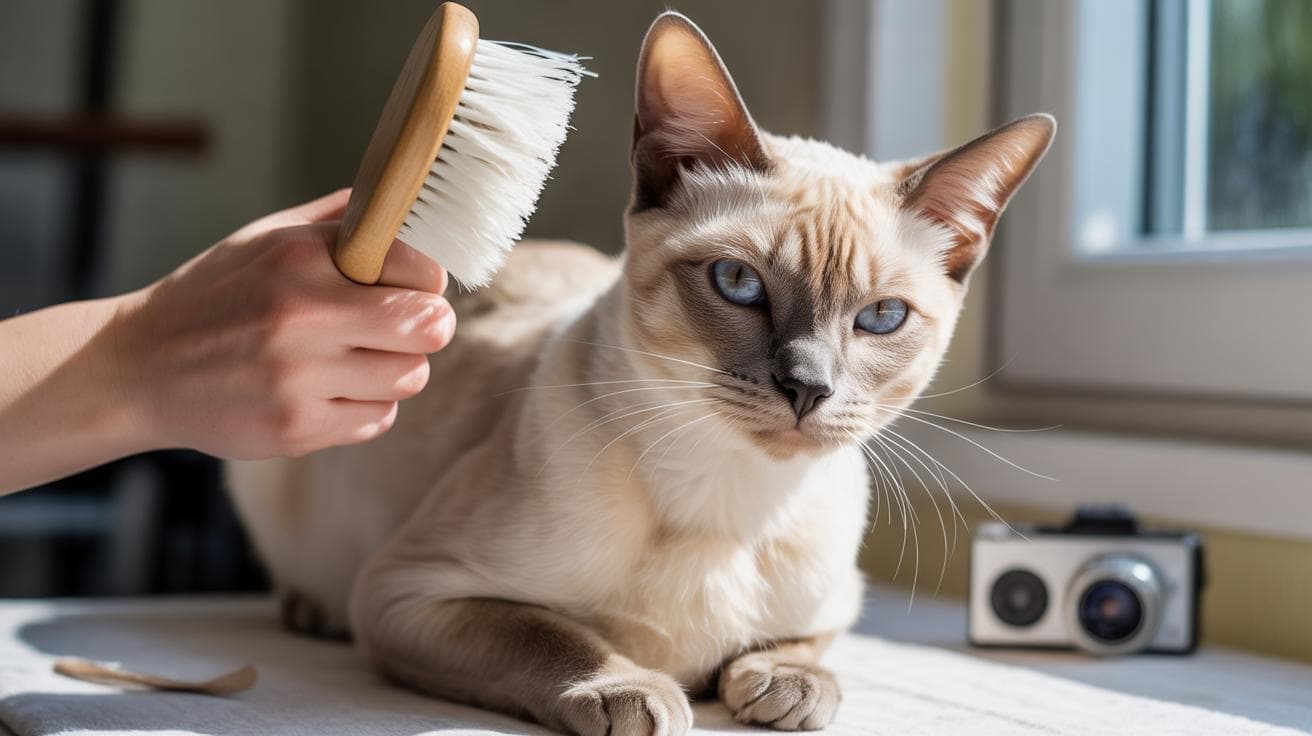
- Grooming: Low-maintenance coat (short and smooth). Weekly brushing keeps hair under control.
- Health watch: Keep an eye on dental health and urinary signs (frequent peeing, straining, or accidents).
Adoption note: If you’re away a lot, please consider a companion cat or a routine of interactive play sessions. Your Tonkinese will thank you with acrobatic pounces and nonstop cuddles. Worth every paw-print.
Social needs: implementation and risks
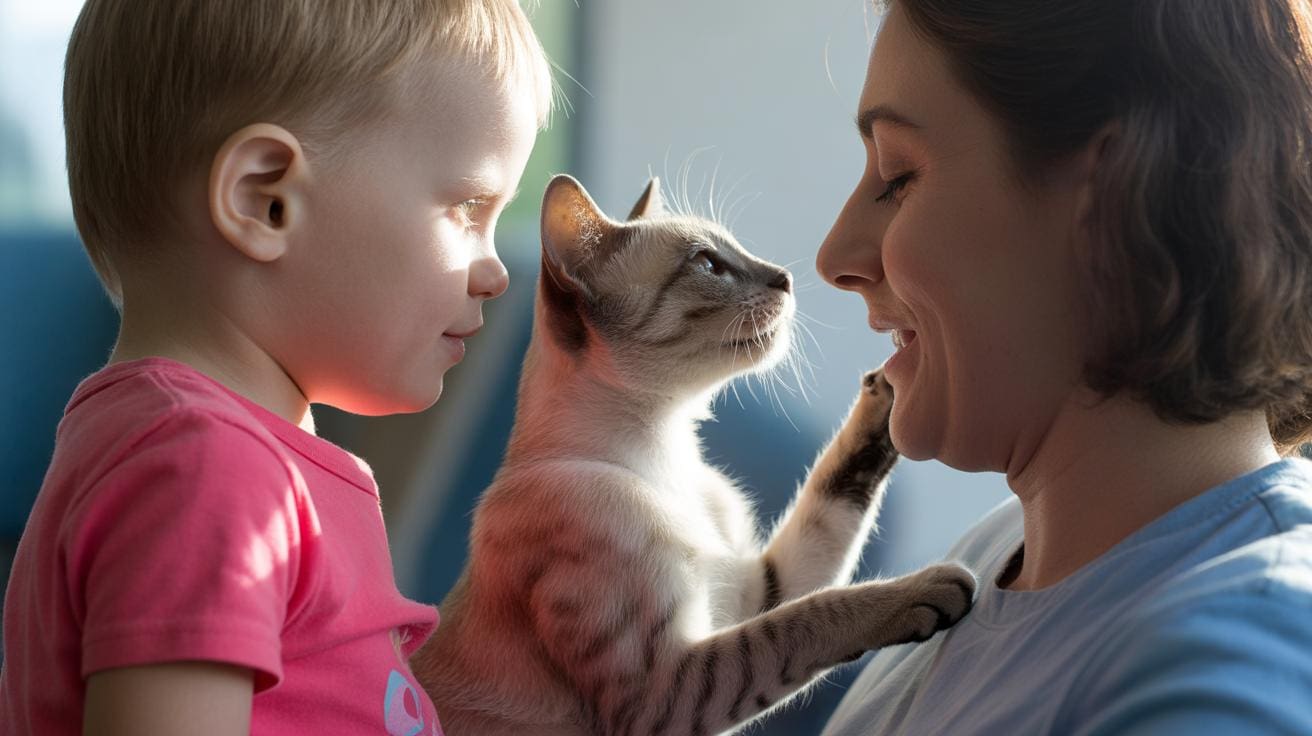
Tonkinese are social butterflies. They thrive on company, so regular human contact keeps them sharp and less likely to act out. Left alone, a Tonkinese can get clingy, start following you like a shadow, or get into mischief, soft mews at midnight, sudden zoomies, that sort of thing.
Introduce new people and pets slowly. Start with scent swapping (swap bedding so each animal gets the other’s smell), then move to short supervised visual meetings behind a gate (a baby gate or screen works great), and finally try brief play sessions in neutral territory (a room neither pet claims). Think of it like gentle speed-dating for pets. Build social windows into your day , two or three short play or cuddle blocks work well , and use a puzzle feeder (a food toy that makes your cat work for meals) or a pet sitter for longer absences. Pairing tip: a second Tonkinese or a playful, cat-friendly dog often cuts down on loneliness.
Kids and visitors need a quick lesson. Three simple steps: sit down, offer a treat, and show the right petting spots , stop if the cat flees. Supervise interactions during the first week and model calm voices and slow movements. Praise both kid and cat for calm exchanges with treats or gentle petting. Worth every minute.
Watch for trouble signs: louder attention-seeking like yowling or blocking doors, clinginess, redirected aggression, or hiding and loss of appetite during shaky introductions. If you see those, give your cat a quiet retreat, break play into short separate sessions, and slow the reintroduction pace. Pheromone diffusers (a plug-in calming cat scent) can help, and a quick vet consult is a smart move if stress keeps up.
Timeline for socializing your Tonkinese:
| When | What to do |
|---|---|
| Days 1–7 | Start scent swapping (bedding exchange) and short, calm handling sessions. Let the cat set the pace. |
| Weeks 2–6 | Supervised play, gentle exposure to household sounds and kids. Keep sessions short and positive. |
| Weeks 6–12 | Begin controlled introductions to other pets and try short group play in neutral rooms. |
| Weeks 12–16 | Extend social sessions, practice brief separations, and do short crate/car trips (carrier rides) so your Tonkinese learns everyday coping skills. |
A quick aside: ever watched your Tonk stalk a sunbeam with laser focus? It’s proof they love company and stimulation. Keep play predictable, praise calm behavior, and remember , slow and steady wins the purr.
Energy and training: activity plan and schedules
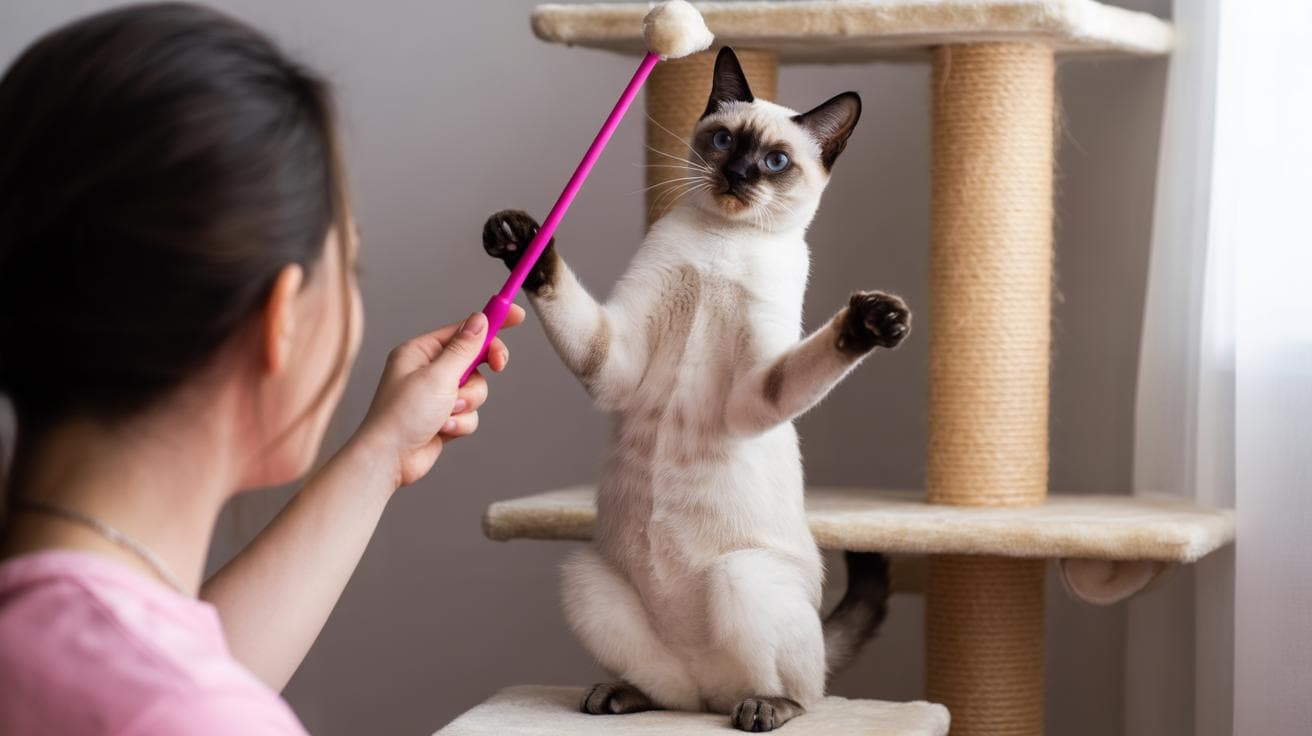
See Snapshot above. Tonkinese are lively and athletic; they do best with short bursts of play plus mental work so they don’t turn your house into a playground of mischief. Think sprinting zoomies, then a satisfied nap.
Training is food-motivated and clicker-friendly (clicker = small handheld device that makes a consistent click sound). Keep sessions short and tasty. Five to ten minutes of treats and praise will teach tricks, recall, and calm behavior without boring your cat. Ever watch a Tonkinese learn a trick in two treats? It’s oddly delightful.
Create vertical territory. A tall cat tree (sturdy climbing post), a shelf network, and sunny window perches give jumping and lookout options. Secure shelves to studs so they don’t wobble. Offer multiple scratch posts , sisal (a durable natural fiber used for scratching) is excellent , so your Tonkinese has clear spots to climb and sharpen claws.
- Interactive wand play: 2 × 10–15 minutes daily – perfect for chase instincts; swap attachments regularly so it stays novel.
- Puzzle feeder: one meal per day – a puzzle feeder (toy that makes your cat work for food) slows eating and gives mental work.
- Clicker/treat training: 5–10 minute sessions – teach sit, high-five, or target touches (touching a target with nose or paw).
- Fetch sessions: short tosses of soft, durable balls – repeat 3–8 throws per play.
- Tall cat tree + shelf network: daily access – jumping keeps muscles toned and joints happy.
- Treat-dispensing ball: roll-and-chase snack play (dispenses kibble when rolled) – great for solo enrichment.
- Hide-and-seek scent games: hide treats around the house – mental scavenger hunts that tap natural hunting drive.
- Supervised water curiosity play: drip faucet or shallow bowl exploration – short, novel fun for curious kitties.
- Rotating toy schedule: swap toys every 3–7 days – keeps interest high and prevents boredom.
- Short daily target-training practice: 2–5 minutes – quick focus work before meals helps calm excitement.
| Time | Activity | Duration |
|---|---|---|
| Morning | Puzzle feeder | 10 min |
| Midday | Short play or training session | 10 min |
| Evening | Interactive wand + fetch | 15–20 min |
Toys wear out. Frayed wands and loose stitching are a safety risk, so replace attachments every few months or as soon as you see damage (or try DIY replacement attachments for teaser wands). Match play intensity to your cat’s age and mobility. See Snapshot above for typical energy baselines.
Worth every paw-print.
Vocal and body language: decoding examples only
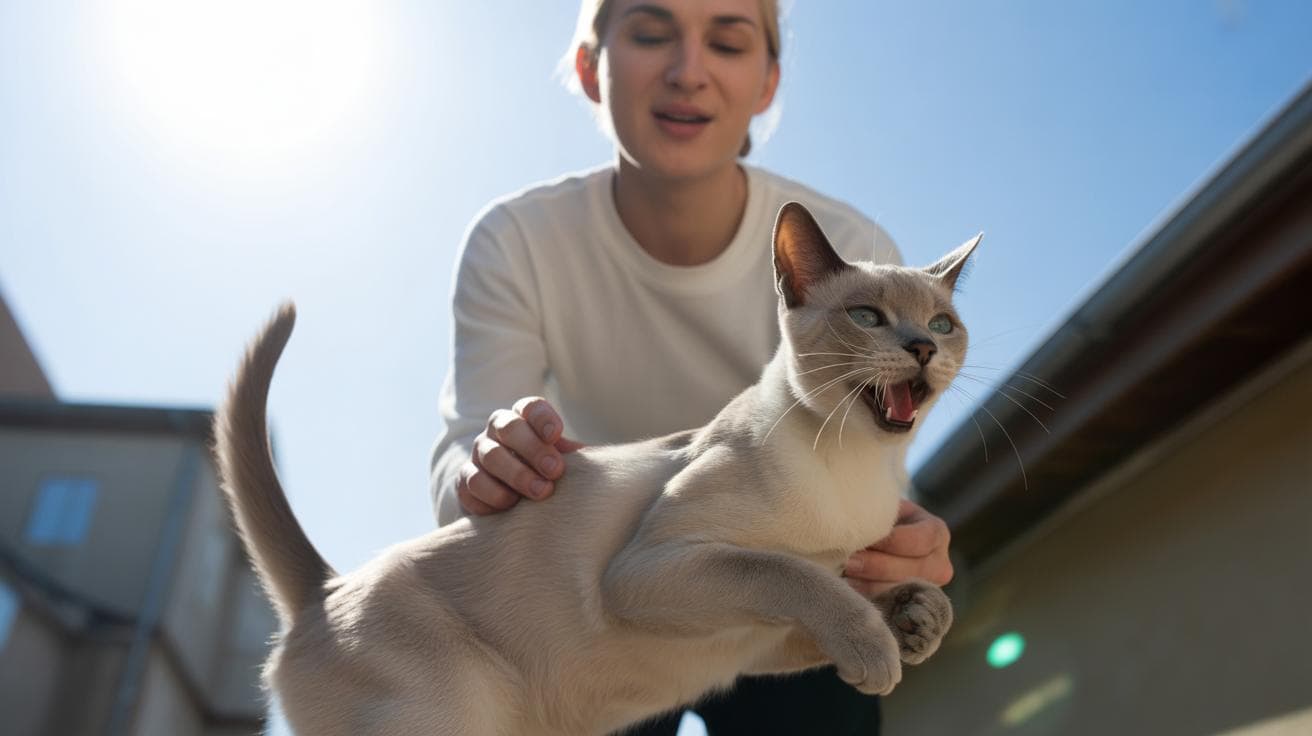
See the snapshot above. Tonkinese talk to their people with soft, chirp-like sounds that almost beg for a reply. They’re not yelling; they’re saying, I’m here, notice me.
Greeting chirps – a short, upbeat sound when you walk in the door. It usually comes with a tail held high and a happy weave between your legs. Think: tiny hello-bells.
Attention-request chirps – repeated trills (a rolling chirp sound) or quick chirps while pawing or rubbing to ask for play, pets, or food. Your cat might paw at your hand, chirp, then dart toward a toy to show you the plan.
Urgent or distressed vocal changes – louder, drawn-out cries or frantic mews (a thin, high-pitched meow) that don’t match their usual chatter. These are different. They can mean pain, fear, or a litter-box problem, so pay close attention.
Tail up – friendly and open. It’s a green light to approach and pet. Slow blink – a calm trust signal; blink back and you’ll share the moment. Flattened ears with a rigid tail – big red flags. Give space and quiet.
Scenario A: Greeting at the door. Your Tonkinese chirps, tail high, weaves between your legs, then nudges for pets. It’s warm, immediate, and so hard not to scoop them up.
Scenario B: Requesting play. The cat paws at your hand, gives a short chirp, then zips toward the toy to lead the session. It’s like they’re saying, Follow me.
If your cat’s voice or body language suddenly changes or stays off for a while, that could point to stress or a medical issue. Watch closely, and if things don’t improve, call your vet. Worth every paw-print of attention.