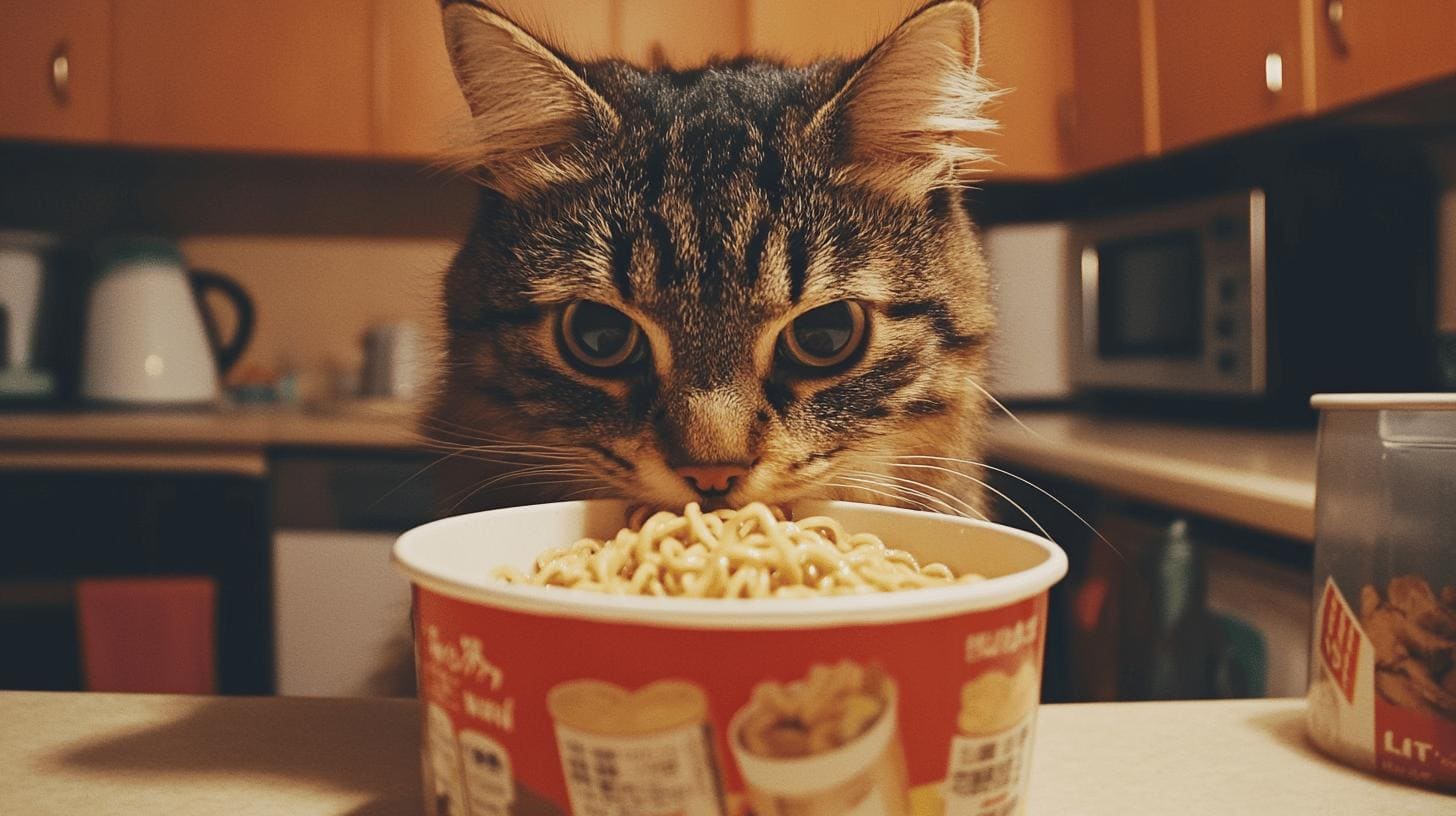
Can cats really eat instant noodles? This might sound like a funny question, but the answer is more serious than you think. Instant noodles might be a convenient meal for us, but they can be harmful to cats.
Packed with salt and other dangerous ingredients, they don't offer any nutritional value for felines. Cats need a diet rich in animal protein, not carbohydrates or harmful spices found in noodle packets. Let's explore why instant noodles are a risky choice and discover healthier options for your furry friend.
Can Cats Eat Instant Noodles?
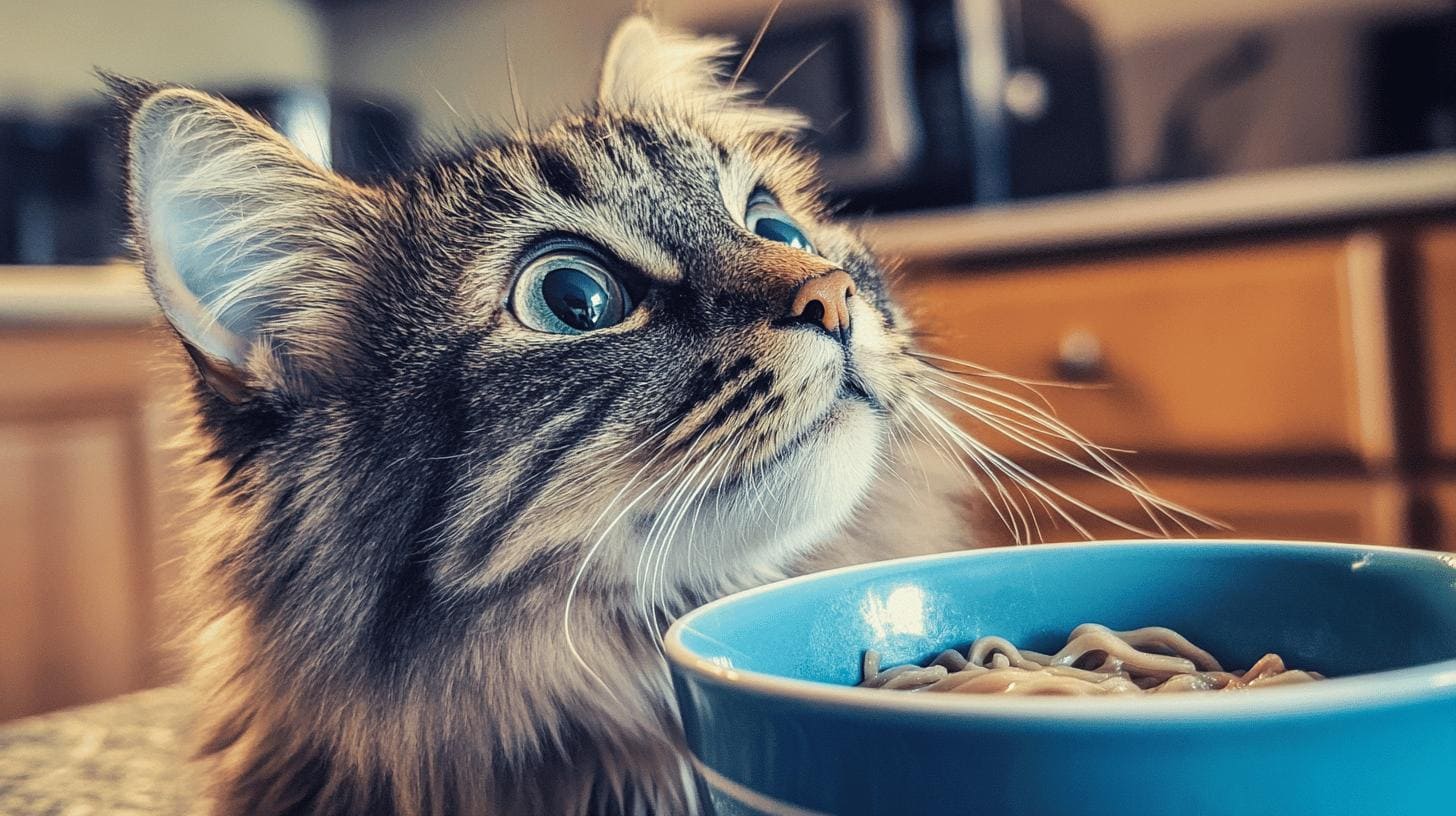
Instant noodles are not safe for cats. They contain high levels of carbohydrates and ingredients like wheat flour and salt, which can lead to weight gain and digestive issues for our feline friends. The lack of nutritional benefits makes noodles an unsuitable choice for a cat's diet.
Among the harmful elements in instant noodles, sodium stands out as a significant concern. Ramen noodles, in particular, have high sodium and fat content, which can be toxic for cats. Their bodies are not equipped to handle such high salt levels, which can result in severe health issues.
Seasoning packets that come with instant noodles often contain garlic, onions, and chives. These ingredients are toxic to cats, posing risks of anemia and other serious health problems. Additionally, preservatives like TBHQ found in ramen can lead to liver damage, as cats cannot effectively process these chemical additives.
Cats are obligate carnivores, meaning their diet should be primarily composed of protein from animal sources. They require a diet high in protein and low in carbohydrates. Carbohydrates in instant noodles are mainly fillers and do not support a cat's nutritional needs. High carbohydrate intake can contribute to obesity and diabetes in cats.
Veterinarians generally advise against feeding cats human food, especially items like instant noodles. The nutritional imbalance and potential health risks outweigh any perceived benefits. Instead, focus on a diet rich in animal protein to maintain your cat's health and well-being.
| Ingredient | Effect on Cats |
|---|---|
| Sodium | Can cause high blood pressure and toxicity |
| Carbohydrates | Lead to weight gain and diabetes |
| Garlic | Causes anemia and is highly toxic |
| Onions | Also causes anemia and health issues |
| Preservatives (TBHQ) | Potential liver damage |
In summary, while the convenience of instant noodles might tempt you to share a bite with your cat, it's crucial to prioritize their health. Consult with a veterinarian before introducing any human food into your cat's diet.
Health Risks and Symptoms After Consuming Instant Noodles
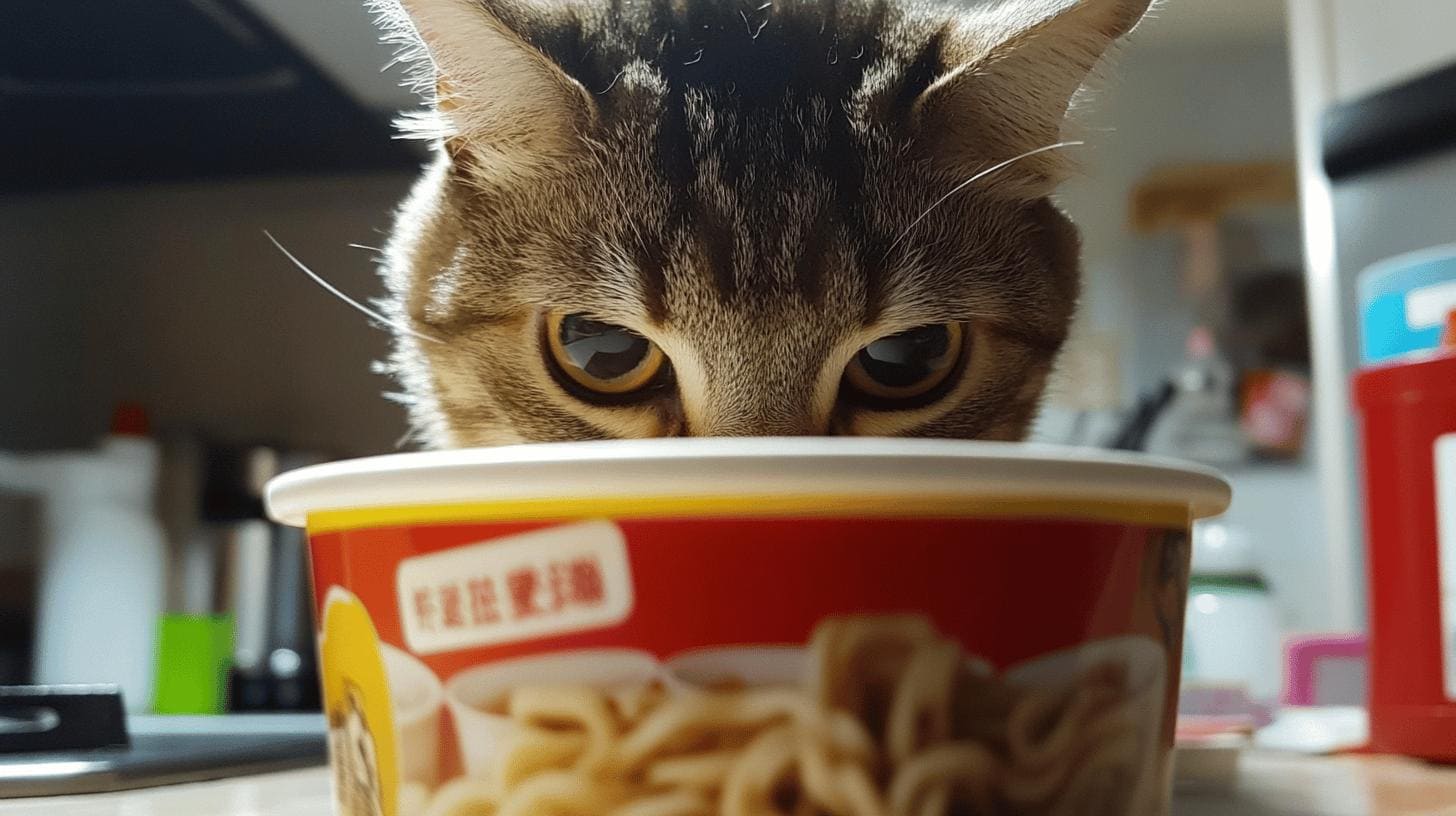
Instant noodles pose significant health risks to cats, particularly due to their high sodium content. Cats are sensitive to excessive sodium, which can lead to salt poisoning. Symptoms of salt poisoning to watch for include vomiting, diarrhea, and decreased appetite. These reactions indicate that a cat's body is struggling to cope with the sodium overload.
Another concern is the risk of choking and intestinal blockages from dry noodles. Their texture can be a choking hazard, especially if ingested raw. It's important to keep dry instant noodles out of reach to prevent these physical dangers.
If your cat accidentally consumes instant noodles, monitor its behavior closely. Symptoms such as lethargy, excessive thirst, incoordination, tremors, and seizures are signs of severe distress and require immediate veterinary attention.
- Vomiting
- Diarrhea
- Decreased appetite
- Lethargy
- Excessive thirst
- Incoordination
- Tremors
- Seizures
Acting quickly if these symptoms appear can help ensure your cat's safety and health.