Ever wondered if your cat can enjoy the tropical delight of lychee? While this juicy fruit might be a tasty snack for humans, cat owners often question its safety for their feline friends. You might be surprised to learn that lychee can be eaten by cats, but it’s not as straightforward as it seems.
There are crucial precautions you need to consider to make sure your cat stays safe. Let's explore expert advice and necessary steps to protect their health while allowing them to savor this exotic treat.
Can Cats Safely Eat Lychee?
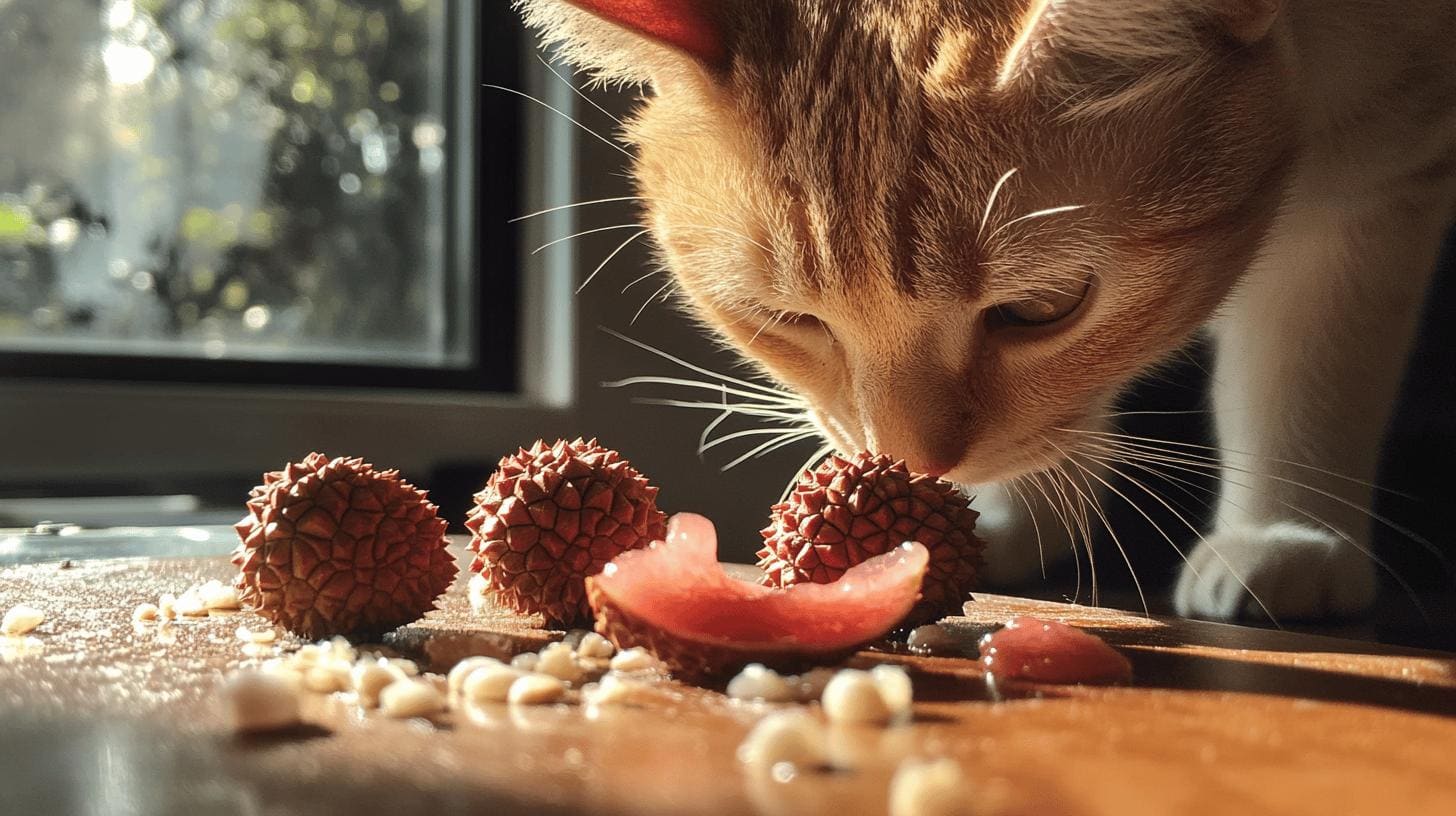
Cats can indeed eat lychee, but there are important precautions to take. This exotic fruit is non-toxic to cats, but it should only be consumed in small amounts. Before sharing lychee with your feline friend, make sure to remove the skin and seed.
The skin is tough and not easy for cats to chew, while the seed poses a choking hazard. Despite its safety, lychee should only be an occasional treat due to its high sugar content, which can contribute to obesity if overfed.
Let's look at some potential risks associated with feeding lychee to cats:
- Choking Hazards: The seed inside lychee is a choking risk and should always be removed.
- Digestive Issues: The skin is difficult to digest and can cause gastrointestinal discomfort.
- High Sugar Content: Excessive sugar can lead to weight gain and other health issues.
- Signs of Illness: Watch out for symptoms like vomiting or diarrhea after lychee consumption.
- Diabetes Concerns: Cats with diabetes need special consideration due to lychee's sugar levels.
Consulting a veterinarian is crucial before introducing lychee or any new food into a cat's diet. Vets can offer advice tailored to your cat's specific health needs, especially for those with conditions like diabetes. They can guide you on safe portion sizes and frequency to ensure your cat's health isn't compromised.
Moderation is key when it comes to feeding lychee to cats. Limit this treat to small amounts and infrequent occasions. Always keep an eye on your cat for any adverse reactions after eating lychee. If any symptoms like diarrhea or vomiting occur, discontinue feeding immediately and consult your vet.
Nutritional Content and Potential Benefits of Lychee for Cats

Lychee, with its juicy and flavorful profile, houses several nutrients that can be beneficial to cats, albeit not necessary for their diet. The fruit is rich in vitamin C and potassium, both of which play a role in overall health maintenance.
Vitamin C is known for its antioxidant properties, which can help with immune support, while potassium is essential for maintaining proper cellular functions. Additionally, lychee's water content is quite high, which can aid in keeping your cat hydrated.
| Nutrient | Potential Benefit |
|---|---|
| Vitamin C | Immune support and antioxidant properties |
| Potassium | Supports cellular functions and heart health |
| Water | Helps with hydration |
Despite these benefits, it's important to remember that cats are obligate carnivores. Their primary nutritional needs are met through meat, which provides the necessary proteins and amino acids.
While lychee can provide extra hydration and some fiber, these are not crucial for a cat's dietary requirements. If you choose to feed lychee to your cat, do so sparingly and as an occasional treat to prevent any digestive issues or health problems related to the fruit's sugar content.