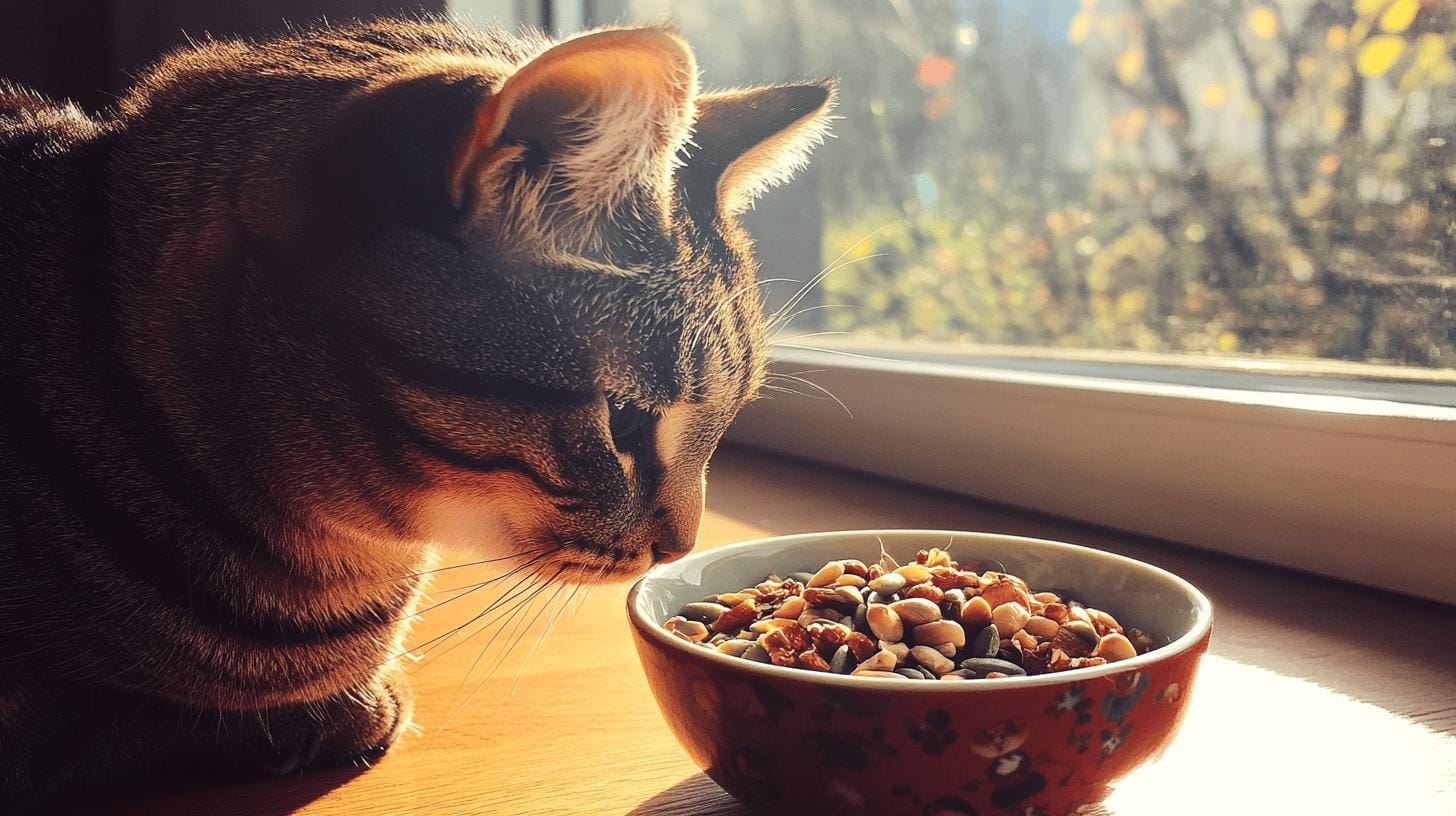
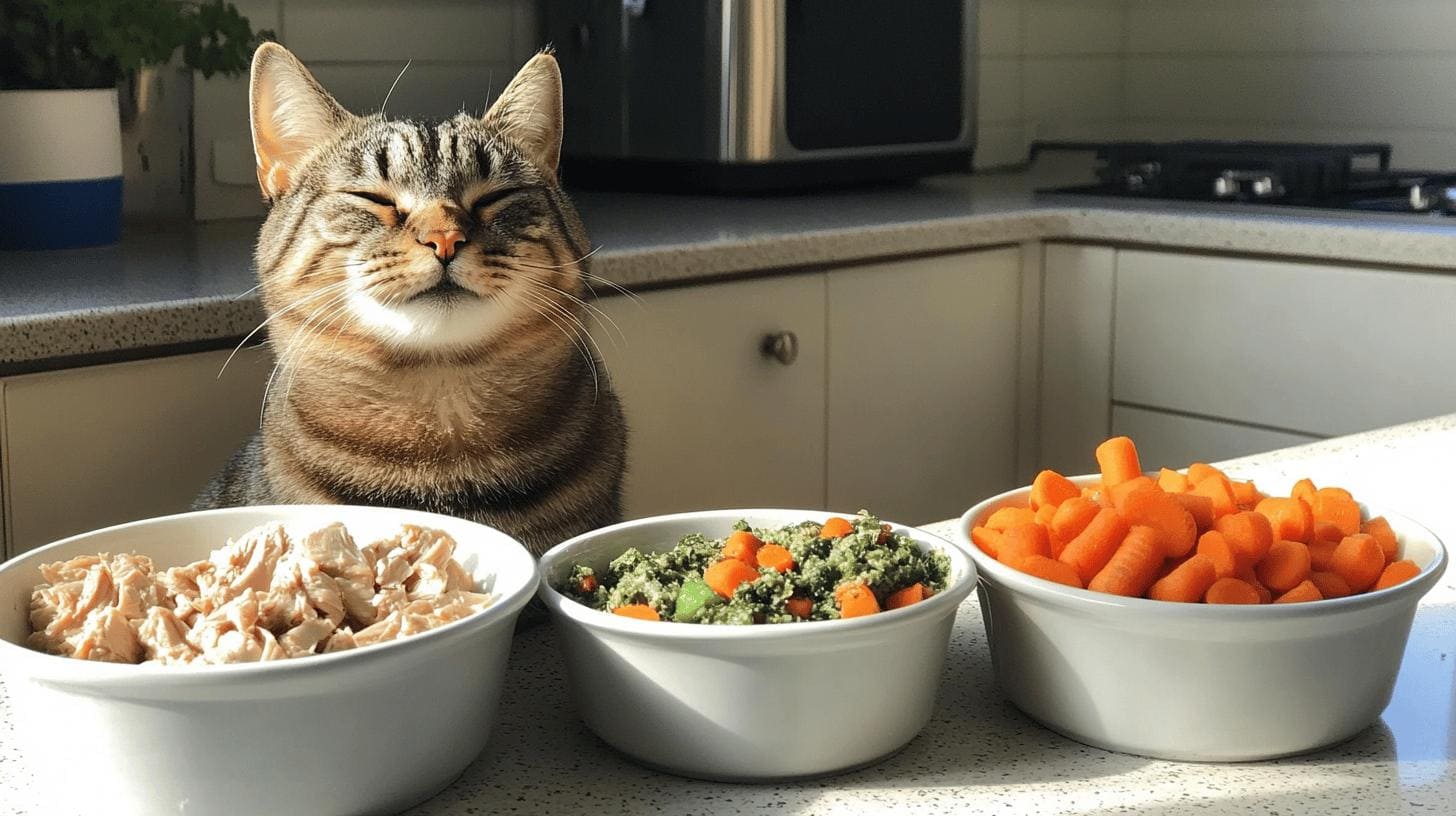
Are sunflower seeds a safe nibble for your cat, or could they be biting off more than they can chew? While sunflower seeds are non-toxic and may seem like a harmless treat, it’s crucial to understand the fine line between safety and excess. Discover how to balance offering these seeds without tipping the scales with too many calories. In this post, I will guide you through the safety of giving sunflower seeds to your cat and how to do so effectively, ensuring your furry friend stays happy and healthy.
Can Cats Safely Eat Sunflower Seeds?
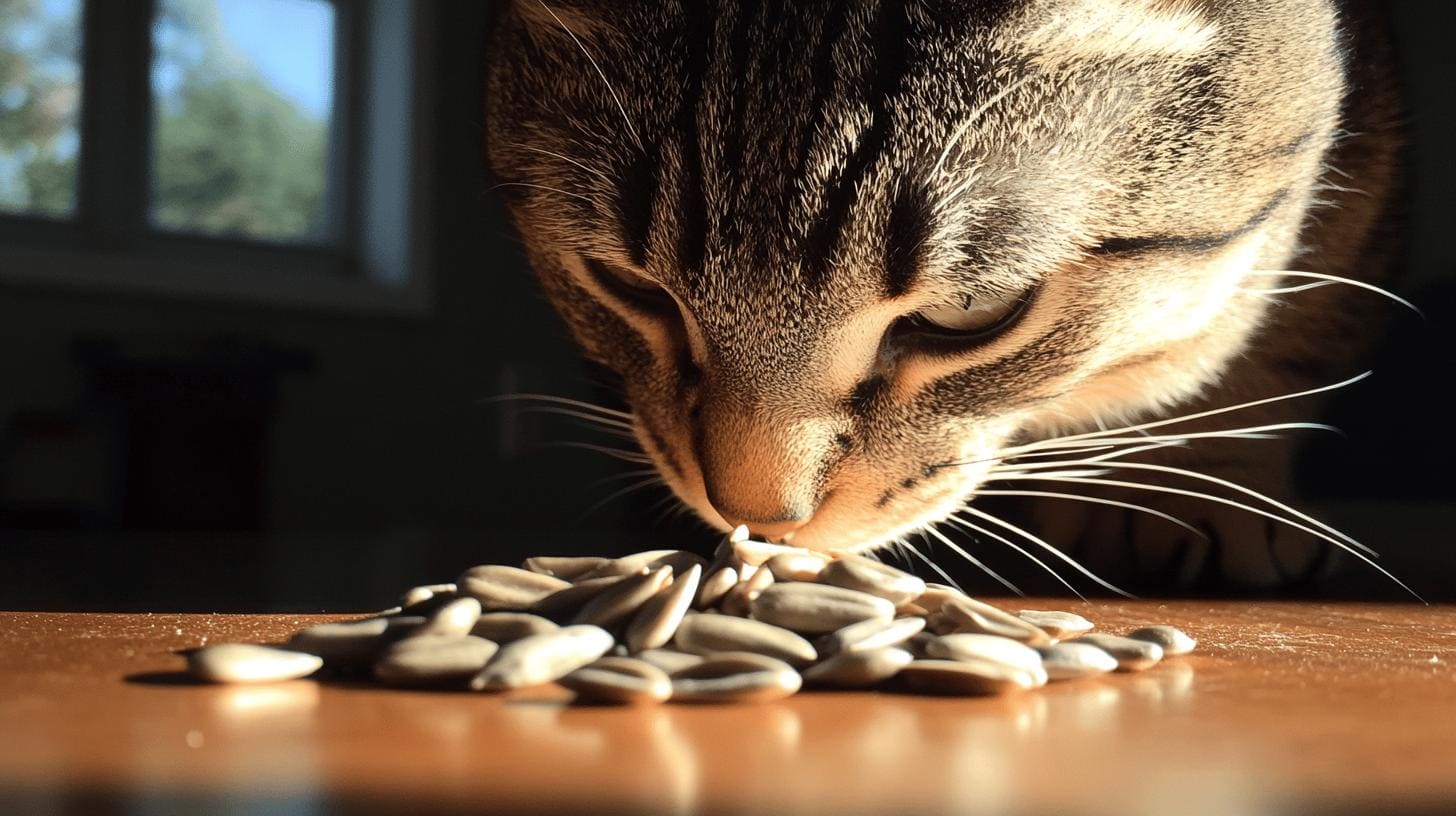
Cats can safely nibble on sunflower seeds as they are non-toxic according to the ASPCA. This makes sunflower seeds for cats a safe treat option, but we should still be cautious about sunflower seed consumption. While they are safe, the high-calorie content means moderation is key.
Sunflower seeds are calorie-dense, with a 30-gram serving packing in about 175 calories. For a 10-pound cat, that’s two-thirds of their daily caloric intake. Excessive consumption can lead to weight gain and other health issues. To avoid these problems, it’s best to offer sunflower seeds as an occasional treat rather than a regular part of their diet.
Here are some key points on safely feeding sunflower seeds to cats:
- Non-toxic confirmation: According to the ASPCA, sunflower seeds are non-toxic, making them safe for feline consumption.
- Moderation is crucial: Due to their high-calorie content, feed sunflower seeds sparingly to prevent weight issues.
- Plain and unsalted: Ensure the seeds are unsalted and plain. This avoids unnecessary sodium and flavor additives that aren’t beneficial for cats.
- Monitor for reactions: Keep an eye on your cat for any digestive discomfort after eating sunflower seeds. If any issues arise, consult your vet.
By following these guidelines, you can offer sunflower seeds as a safe and delightful treat for your feline friend.
Nutritional Benefits and Risks of Sunflower Seeds for Cats
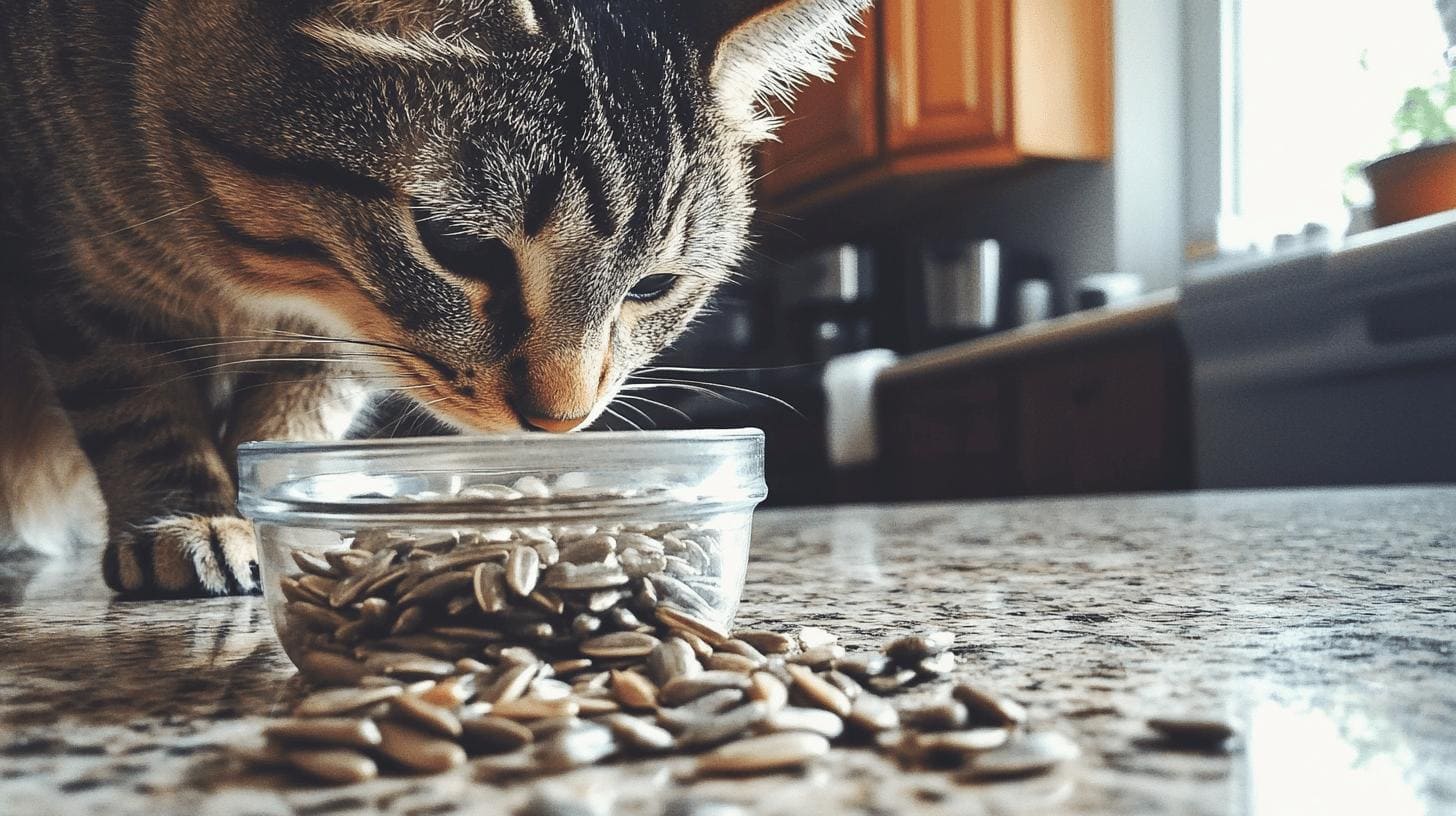
Sunflower seeds offer unique nutritional benefits that go beyond what’s already covered. They are rich in vitamin B6, which plays a crucial role in maintaining healthy brain function and red blood cell production in cats. The presence of magnesium supports muscle function and bone health, contributing to overall well-being.
These nutrients can enhance your cat’s diet in specific ways. Vitamin B6 aids in the synthesis of neurotransmitters, which are vital for neurological health. Magnesium contributes to the structural development of bones and helps in energy production. Copper, often found in sunflower seeds, supports the formation of collagen, aiding in the maintenance of healthy joints and skin elasticity.
While incorporating sunflower seeds into your cat’s diet can be beneficial, it’s important to be aware of possible risks associated with overconsumption:
- High calorie content can lead to weight gain.
- Potential digestive issues if too many seeds are consumed.
- Excessive fats can contribute to obesity.
- Choking hazards if seeds are not de-shelled.
- Imbalanced diet if seeds replace core dietary components.
Moderation remains crucial in introducing sunflower seeds to your cat’s diet. Stick to small, infrequent portions to prevent any adverse health effects. This way, sunflower seeds can serve as a nutritious supplement to your cat’s regular meals, supporting their health without compromising their dietary balance.
Guidelines for Feeding Sunflower Seeds to Cats
Portion control is essential when feeding sunflower seeds to your cat. Their high calorie content means that even a small serving, like a 30-gram portion with 175 calories, can take up a large part of a 10-pound cat’s daily calorie limit. This can help prevent unwanted weight gain.
Here are three steps for safe feeding:
- De-shell seeds before feeding. Shells can pose choking hazards.
- Limit to 1-5 kernels occasionally. This keeps the diet balanced without adding too many calories.
- Monitor for any adverse reactions. Look out for signs of digestive discomfort.
Introduce new treats with careful observation. Assess your cat’s reaction to eating sunflower seeds, noting any changes in behavior or digestion. If you have concerns or need guidance, consult your vet for personalized advice tailored to your cat’s dietary needs.