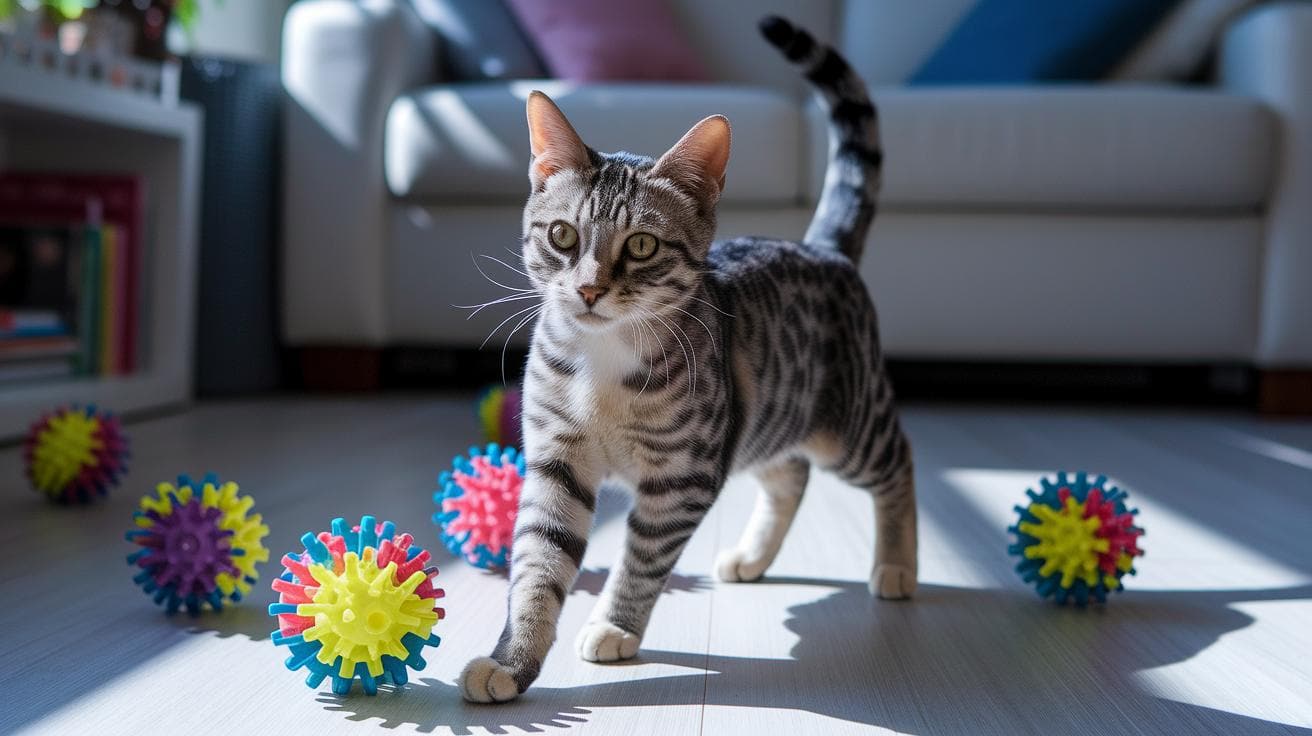
Cat body language during play Radiates Joyful Signals

Ever wondered if your cat’s tail is running its own talk show? It waves and twirls like a tiny host on stage.

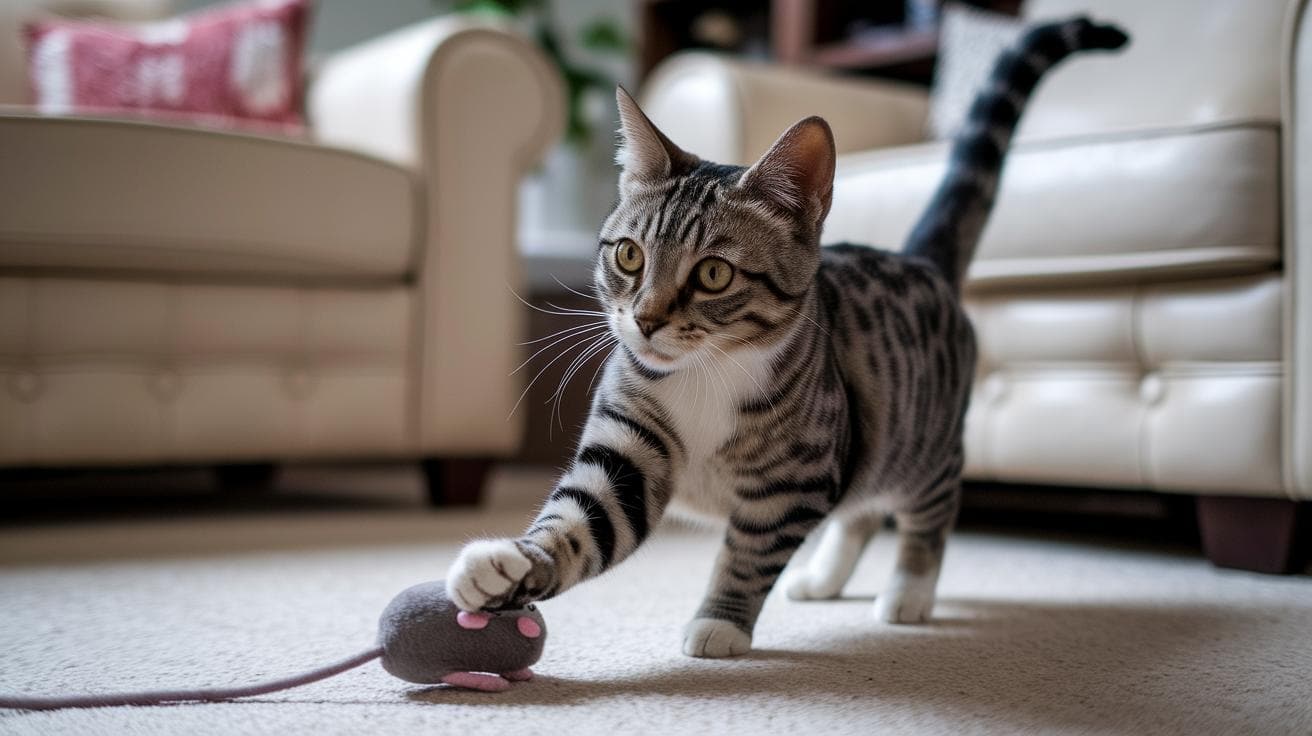
When whiskers (those sensitive touch-hairs) flutter and ears shift forward, your kitty is saying “time to play!” Ever watched them zero in on a toy mouse, you know?

We’re going to break down five playful signals. Tail flags. Ear shifts. A crouched stance. Happy chirps and trills. Gentle bite style.

You’ll pick up on your cat’s unspoken cues and share more pounces, gentle trills, and cozy snuggles. It’s like learning a secret language only you two speak.

Master these fun hints, and every play session becomes a joy fest for you and your feline friend.

Cat body language during play Radiates Joyful Signals
- Recognizing Playful vs Aggressive Cat Body Language.jpg

Ever noticed your cat chatting without a single meow? When they’re feeling playful, they talk in body signals: flagging their tail (like a tiny flag), tipping their ears, shifting their stance, trilling softly, and giving gentle nibbles. But if they get tense, those signals flip to stiff poses, low growls, wide eyes, quick pounces, and piloerection (fur standing on end).

Keep an eye on five simple spots, tail, ears, posture, sounds, and bite style, to know if your kitty wants to play or needs a breather. It’s like learning a secret cat code.

  • Tail held high and quivering shows curious play.
  • Rapid tail thumps warn of too much excitement.
  • Ears perked forward say “I’m ready to join.”
  • Ears flattened point to tension building.
  • Soft bites with tucked claws mean friendly fun.
  • Sharp bites with claws out signal “I’m done playing.”

Next, we’ll dive into each of those cues, tail dances, ear twitches, body stances, vocal hints, and bite pressure, in full detail.

Decoding Tail Signals in Cat Body Language During Play
- Decoding Tail Signals in Cat Body Language During Play.jpg

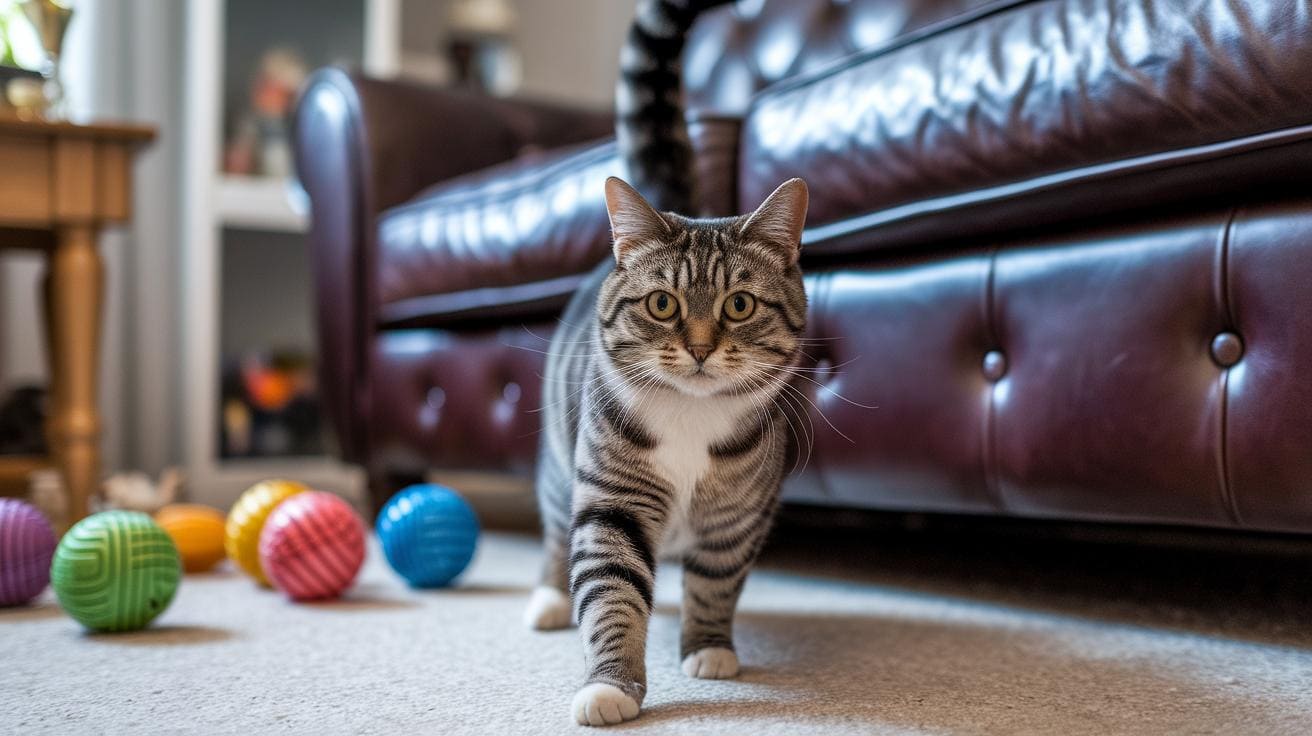
Ever see your cat greet you at the door with its tail held straight up? That proud vertical stick is basically your kitty saying, “I’m feline fine and ready for fun!”

When your cat’s tail base quivers like a tiny engine revving (a little tail shake to get you going), that’s a clear invite to chase. Tip twitching at the end of the tail shows your kitty is lining up a pounce, stalking mode on. Totally claw-some, you know?

A sudden side-to-side flick means your furball is alert or a bit annoyed, so watch for shifts in that tail. And when your cat gently wraps its tail around your wrist, that’s a warm trust hug, your kitty’s way of saying “you’ve got my heart.”

But if you spot vigorous thrashing, fur flying, tail slapping the floor, it’s time for a break. Give your kitty space to reset. Worth every paw-print.

Knowing these tail cues helps you tune into your cat’s energy. Next time play winds down, you’ll have the perfect toy or a soft snuggle ready.

Tail Position Meaning
Held straight up Confidence and happy greeting
Base quiver Invitation to play
Tip twitch Stalking or hunting focus
Side-to-side flick Alert or mild agitation
Tail wrap Bonding and trust
Vigorous thrash Overstimulation warning

Interpreting Ear, Eye, and Whisker Cues in Cat Body Language During Play
- Interpreting Ear, Eye, and Whisker Cues in Cat Body Language During Play.jpg

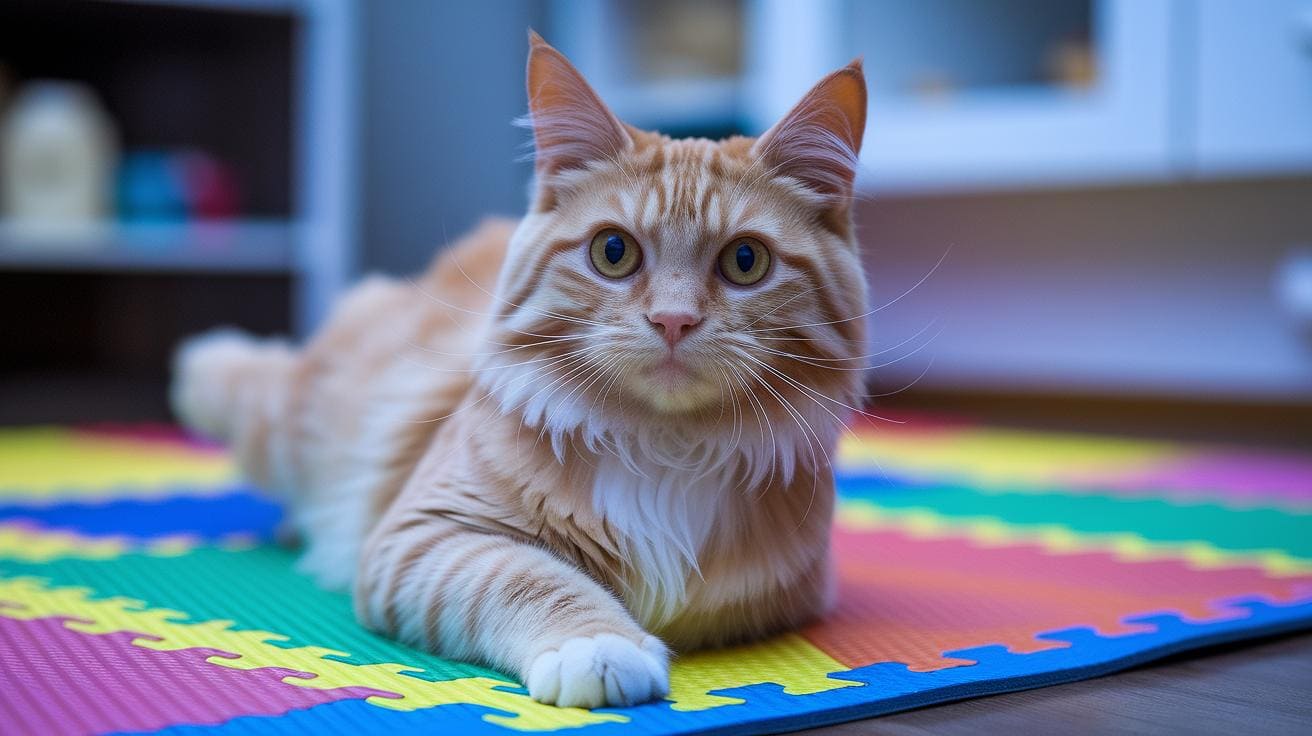
Ever wonder what your cat is thinking when you play? Cats don’t use words. They use their ears, eyes, and whiskers to chat. A tiny tilt of the ears can mean they’re ready to pounce. Watch those whiskers and pupils, too. If you catch these signals, you’ll join the fun without overstepping their paws, um, or scaring them off.

Ear Positions in Play

When your cat’s ears point forward, they’re curious and ready to chase. Think of their ears like a radar locking onto a feather wand. If the ears angle out to the side, they’re mildly interested, sort of like bird-watching through a window. But if the ears lie flat or tilt way back, that’s a warning. They might feel spooked or be close to a rough pounce.

Eye Signals During Play

Huge, round pupils mean your cat is all fired up, kind of like wearing zoom goggles. Slow, gentle blinks during a break say “I trust you.” That’s prime time for a soft pet or a quick cuddle before the next sprint. Really.

Whisker Movements in Play

When whiskers fan forward, your cat feels bold and curious, like antennae (feelers) on full alert. It’s perfect for hunting a tiny toy mouse. But whiskers pulled back tight against the cheeks mean play might be too intense. Time to switch to a gentler game or take a break.

Vocal and Paw Actions in Cat Body Language During Play
- Vocal and Paw Actions in Cat Body Language During Play.jpg

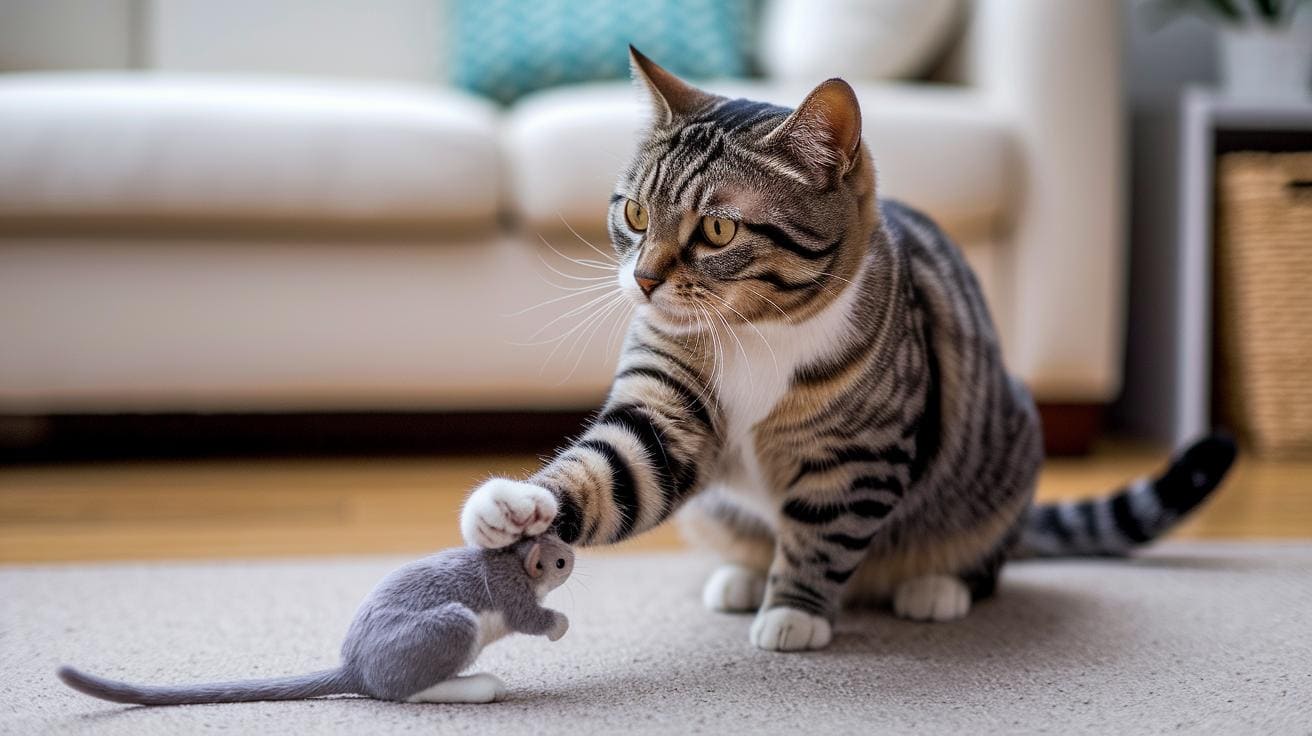
Um, ever noticed how your cat chats with their paws or the sweet trill that means “let’s go”? Oops, let me rephrase that. Cats tap, trill, and purr to say they want fun. Pay attention and you’ll hop in right as the game heats up.

  • Chirps and trills: little birdlike sounds packed with excitement. They say “playtime now!”
  • A string of meows: like a live concert telling you “I’m ready” or “don’t stop.”
  • Purring plus kneading (the push-pull paw motion): chill vibes and happy hearts.
  • Soft paw taps or gentle hand-bats: tag, you’re it, jump in!
  • Low, playful growls: pretend roars for a mock chase, not anger.
  • Gentle nibbles with claws tucked in: part of the game, not a warning.

Watching all those clues feels like reading a secret playbook. I once saw Luna freeze mid-bat when a sunbeam winked at her, it was adorable! If your cat suddenly pauses or shifts from purrs to a soft hiss, that’s your cue for a break. Switch toys or offer a quick chin scratch before diving back into feather-fishing or a gentle wrestling match.
Body Posture and Movement Patterns in Cat Body Language During Play

- Body Posture and Movement Patterns in Cat Body Language During Play.jpg

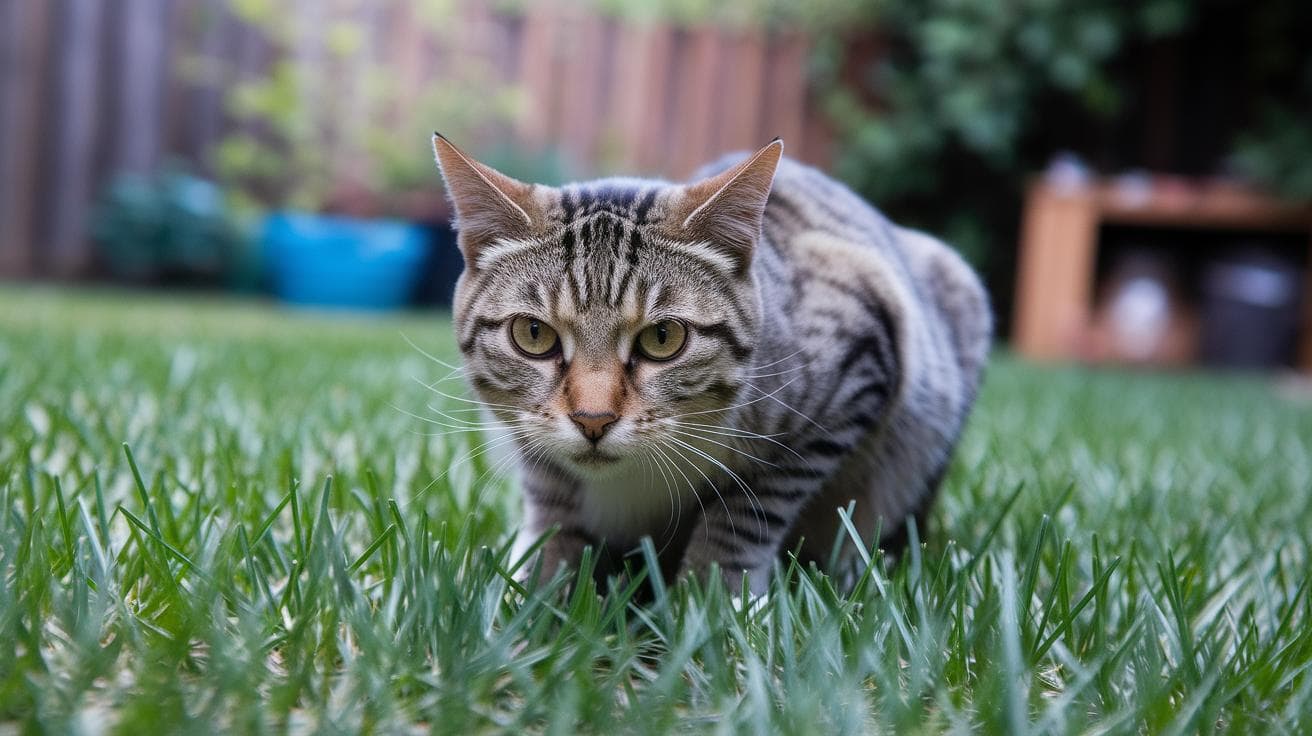
Ever seen your kitty crouch low, belly brushing the floor, shoulders dipping like a sneaky tank? They rock back and forth, eyes locked on a toy, in stalking mode as mini predators getting ready to pounce. Their back legs pump just a bit, tail tip flicks (quick tail movement), and that narrowed gaze means serious playtime. So much focus, right?

Then comes the freeze. Oops, let me rephrase that: mid-stalk, they stop – tail still, whiskers (those stiff hairs on their face) push forward, and muscles coil like springs. Um, it’s pure energy waiting to burst. Next moment, POW – they launch with their hind legs, a fuzzy blur of fur and claws (retracted, of course) as they tackle a feather wand or stuffed mouse.

After the big leap, many cats flop onto their backs, legs waving in the air like little flags. That belly-up move screams “wrestle with me!” but careful – there’s a Venus cat trap (haha) hiding a surprise swat if play ramps up too fast. When your cat flips over, peek at their face and shoulders: if they look soft and calm, go ahead with a gentle belly rub (just one). But if ears flatten or you see tension, switch to light paw taps or hit pause on play.

Interactive Toys and Enrichment for Clear Cat Body Language Feedback

- Interactive Toys and Enrichment for Clear Cat Body Language Feedback.jpg

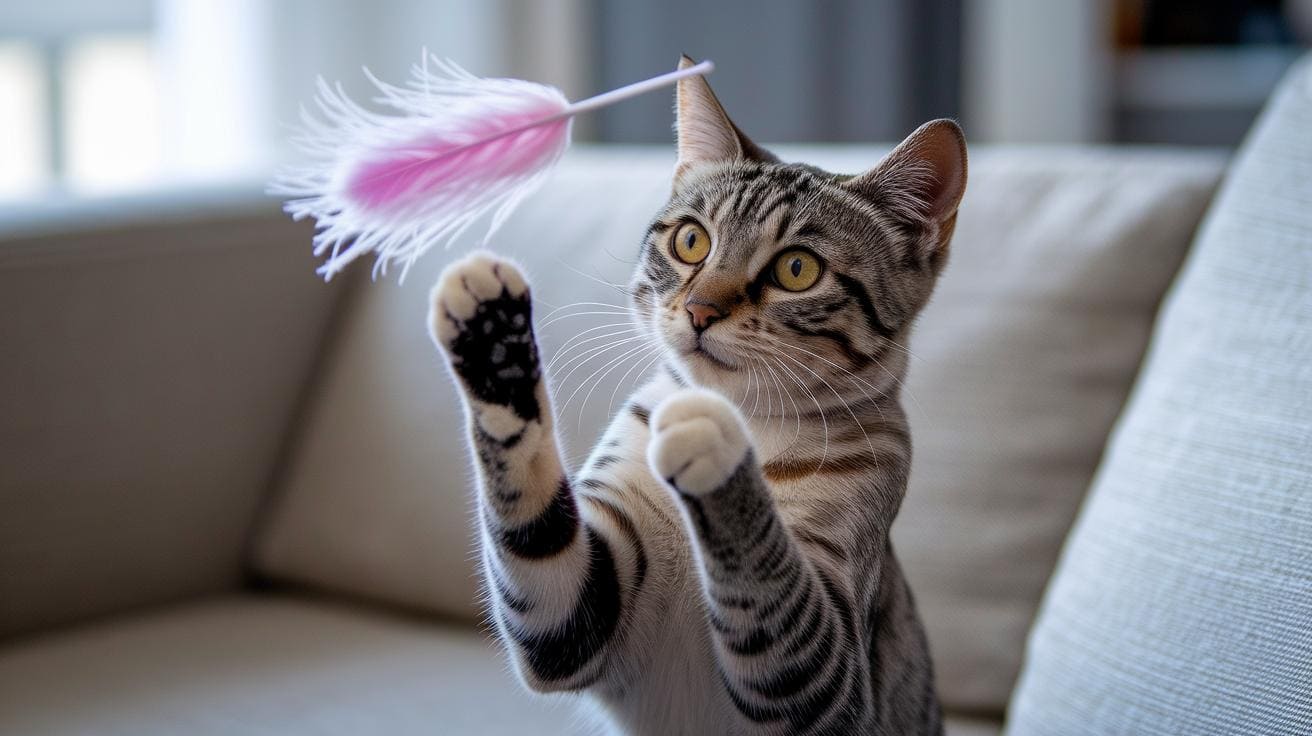
Ever waved a feather wand chase (a stick with feathery lure) and seen your kitty turn into a tiny tiger? Her body lowers, her tail quivers and her ears point forward like she is locking on real prey. It is magic.

Ever watched your cat chase that tiny red dot from a laser (a small light beam) and pounce before it moves? That simple game sparks crouch and pounce play every time. Her swift jumps and soft nibbles tell you when to cheer her on or slow down before she gets overstimulated.

Watching her wrestle a stuffed toy (a plush fighter) shows off her strength and technique. She grabs it with her front paws and kicks with her hind legs like a champ. Once my Luna took down a toy mouse in two seconds flat.

Some cats go wild for a squeaky plush mouse; others bat at a crinkly ball (a crunchy play ball). Swap toys every few days to keep the chase fresh.

Just grab a handful from a toy bin or stash some in a drawer, then surprise your furball with a new treasure to sniff out and tackle. It is a simple trick to beat boredom every time.

Create a safe play zone with open floor space and a soft rug for gentle landings. Add a high perch or cat tower (a multi-level climbing shelf) so she can watch before diving back in. You know, spy on her next move.

These small changes help her feel secure and confident. And that brings out more fun body language – soft mews, ear flicks and tail wraps.

Want wand options that last through endless feathery whirls? Check our durable cat teaser wand comparison to find the toughest teaser for your kitty’s pounce sessions.

Preventing Overstimulation and Redirecting Rough Play in Cat Body Language During Play

- Preventing Overstimulation and Redirecting Rough Play in Cat Body Language During Play.jpg

Playtime can go from fun to too much in a flash. Ever watched your kitty’s tail lash like a mini rope or their whiskers flattening (pressed tight to the cheeks)? If they suddenly hiss or go statue-still, that’s stress tapping you on the shoulder. So pause the game. Talk soft. Step back. Let them breathe.

Once your cat’s whiskers start to relax, it’s time to change things up. Try a crinkly ball (a ball that rustles like a snack bag) instead of a feathery wand, um, mix in a new texture for fresh excitement. I once watched Luna leap six feet after one, feline athleticism at its best.

This switch lets them chase without sharp swats. If they still pounce or bite too hard, give a short time-out behind a baby gate or in another room. That little break helps them learn gentle nibbles are the only way to play.

Next, make calm play awesome with rewards. Soft praise, a scratch behind the ears, or a tiny treat when they bat the toy gently goes a long way. Avoid scolding. Yelling can turn fun into fear. Instead, celebrate every moment your kitty keeps those claws tucked in or uses soft paws. Worth every paw-print.

For more tips on keeping play fun and safe, check out how to encourage interactive play in cats

Final Words

Spotting a high tail or a gentle quiver shows pure play, not stress. We dived into ear tilts, pupil dilation, whisker direction, play bites, and vocal chirps so you know the signs in real time.

We mapped stalking postures, rolling antics, interactive toy setups, and tips for cooling off over-enthused wrestlers. Next time a laser dot dances or a feather wand twirls, you’ll read their cues like a pro.

Keep celebrating each whisker twitch and pounce. Your insight into cat body language during play makes playtime paw-some.

FAQ

What does a playful cat’s body language look like?

A playful cat’s body language shows a high tail, forward ears, relaxed posture, and gentle batting or pouncing. Watch for a soft quivering tail tip and open body stance inviting interaction.

How can I tell if my cat is happy while playing?

You can tell if your cat is happy while playing by spotting a gently quivering tail, soft kneading with paws (pushing paws rhythmically), purring, and relaxed whiskers pointing forward in curiosity.

How can I tell if my cat is playing, overstimulated, or being aggressive?

Cats playing use light bites, soft paw taps, and a loose body. Overstimulation shows a whipping tail, flattened ears, and louder swipes. Aggression brings forceful bites and stiff posture with growls.

How do cats show play when interacting with humans versus other cats?

When interacting with humans, cats often wrap their tail around you, slow blink, and use gentle head nudges. With other cats, they pounce in crouch posture, wrestle gently, and use varied meows to invite chase.

Do male and female cats play differently?

Male and female cats follow the same play cues but may differ in intensity. Males often display more rough-and-tumble chasing while females might use precise, gentle batting and shorter stalking bursts.

What does it mean when a cat lies down during play?

A cat lying down during play may be inviting belly-up wrestling or catching its breath. Check for relaxed paws and a loose belly; if it tenses or swipes, it’s time to pause the game.

Is there a chart that shows cat body language during play?

A cat body language chart breaks signals into tail positions, ear placement, eye cues, whisker orientation, and vocal sounds. Use it to quickly decode playful invitations versus warning signs.

Where can I find video examples of cat body language during play?

You can find video examples of cat body language during play on pet behavior channels, dedicated Reddit forums like r/catbehavior, and educational clips showing tail, ear, and whisker signals in action.

Related Articles

Author

  • Nathaniel Price is a retired construction manager turned LLM writer, where he combines his years of experience managing complex projects with his love for crafting precise, engaging content.

    His work thrives on meticulously researching and writing about all things related to cats, from behavior to care, ensuring that every piece is informative and well-researched.

    When he’s not writing, Nathaniel enjoys fishing, which offers him a peaceful escape. He also has a deep appreciation for nature, often reflecting on his belief that “happiness is found in the quiet moments.”

    View all posts

Similar Posts