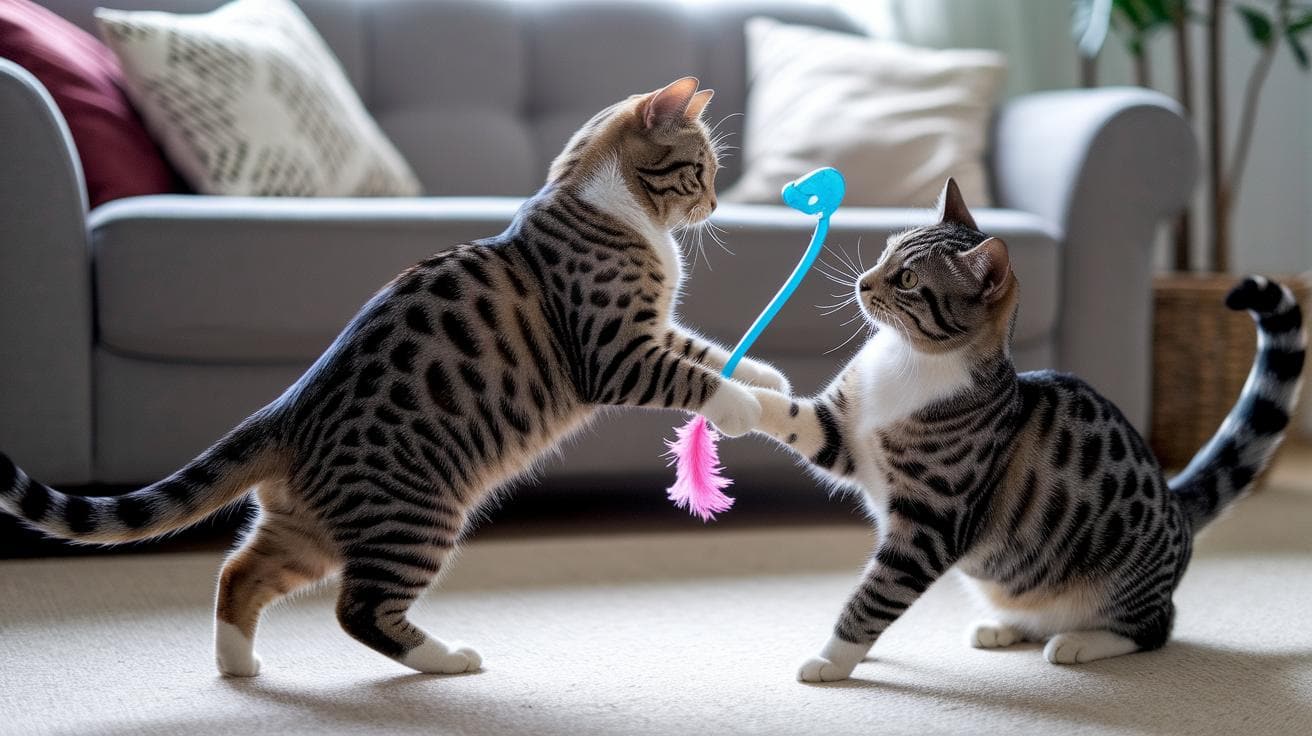
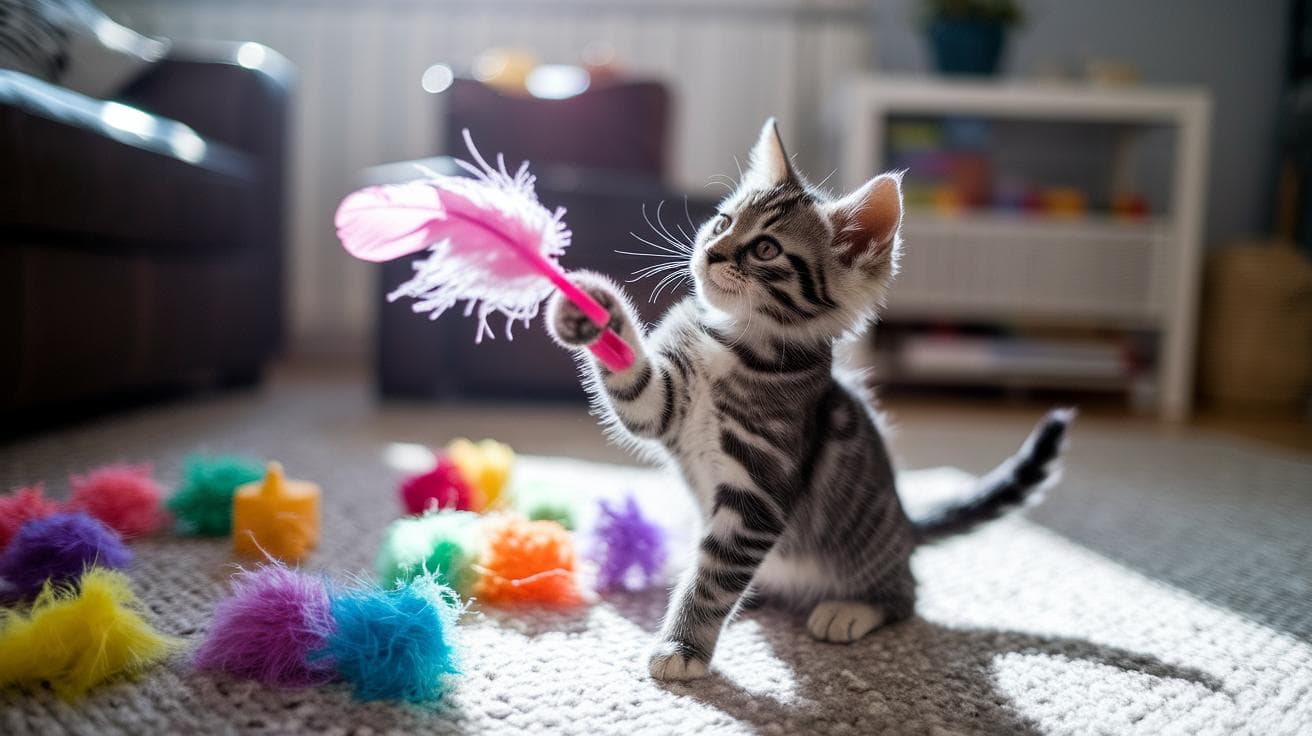
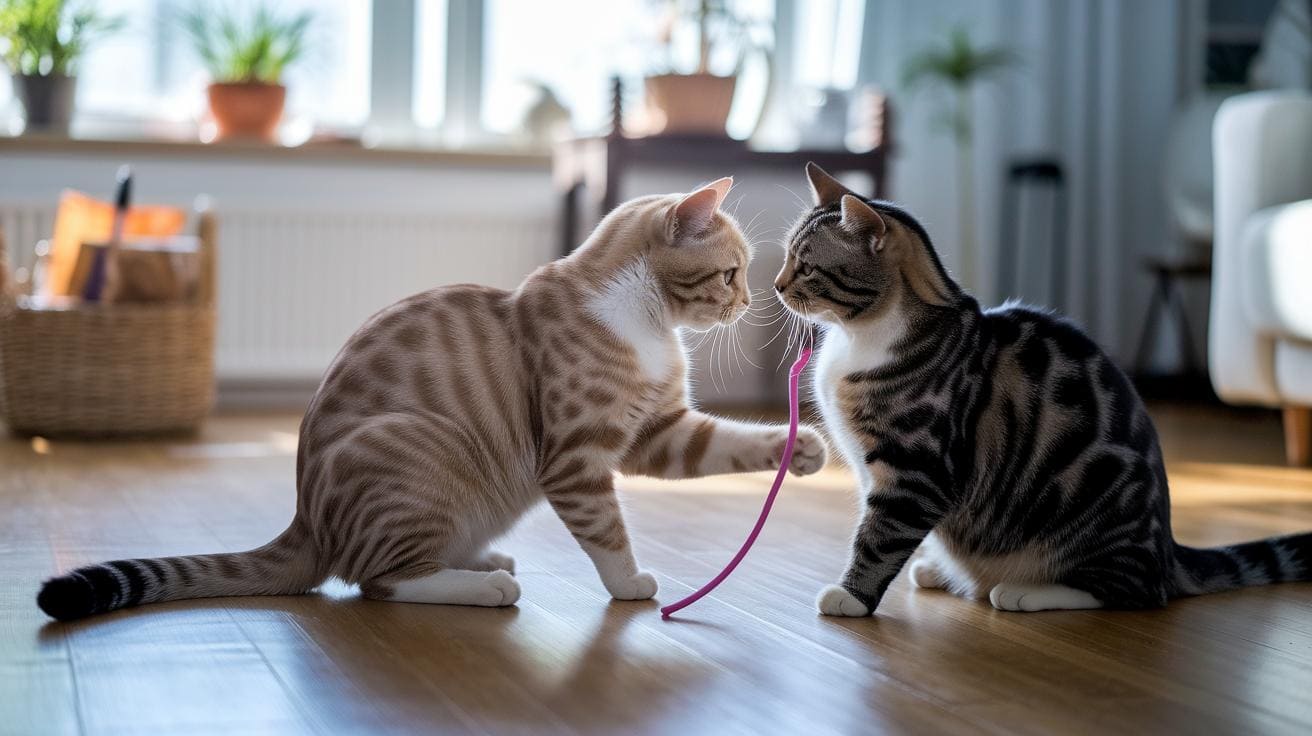
Think your kitty is just messing around? Sometimes she zips after a toy mouse and leaps like a little tiger, tapping into her inner hunter, that predatory play (hunting-style pounce). But then she might flop on her back and gently paw the toy, that’s social mode, when she’s asking for a buddy round. Spotting her mood helps you choose the right toy, keep her safe, and burn off that cat-ergy. Um, pretty cool!
Next, watch her stalking signals. When she lowers her belly to the floor and her whiskers twitch, she’s gearing up to pounce. A sudden dash across the room means chase time. Really.
For predator mode, reach for a feather wand (like a tiny fishing rod for cats) so she can leap, snap, and chase. For social play, toss a soft plush ball that makes a satisfying thud. I once watched Luna crouch behind the couch and then spring six feet in the air. Best toy ever! Tailoring playtime this way keeps your kitty purring and in tip-top shape.
Key Distinctions Between Predatory and Social Play in Cats
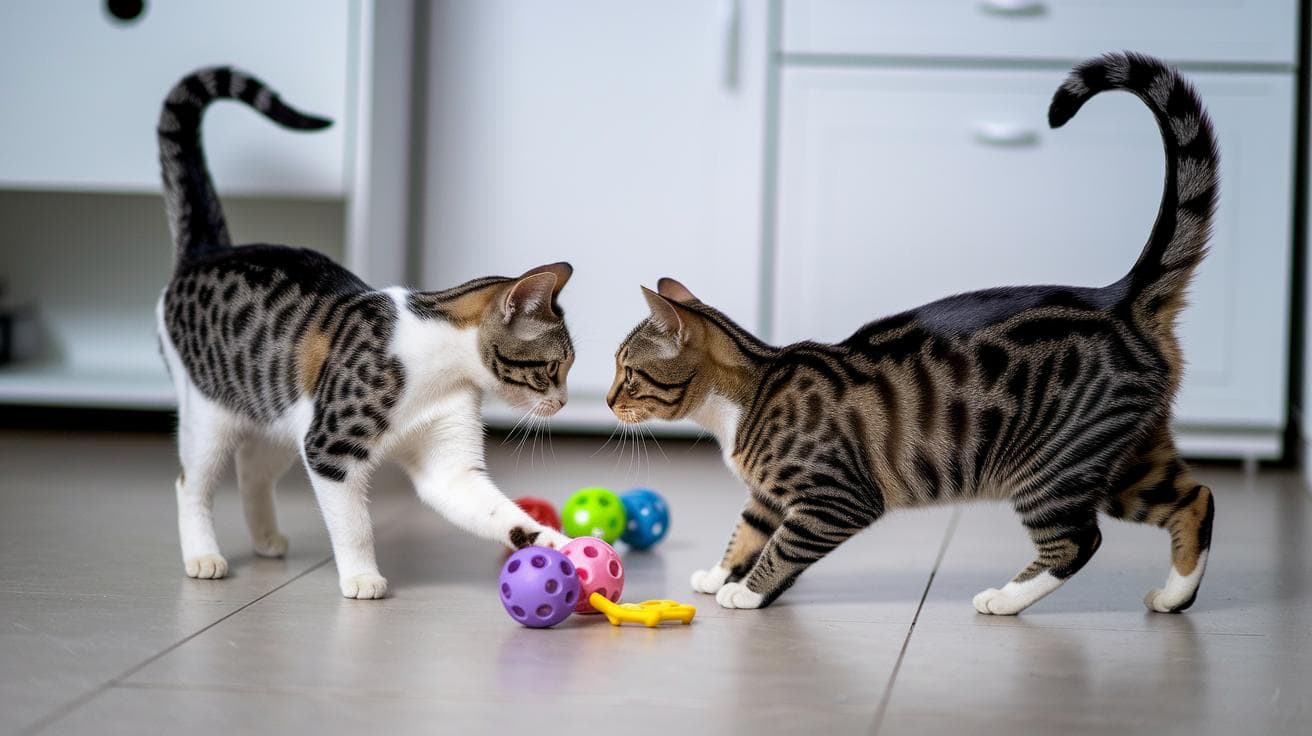
Ever watch your cat crouch low and lock eyes on a toy mouse? That’s predatory play. Your kitty lowers its belly, bursts into a fast dash, pounces, then “kills” the toy before settling in to munch on a treat or sink claws into a plush prey.
Social play feels more like a friendly wrestling match. You’ll see cats chase each other, roll around, bat at paws and pounce gently with claws tucked in. Spotting which game your cat picks helps you choose the perfect toy or playmate.
Predatory play follows a simple hunt: stare, stalk, sprint, pounce, kill, and eat, even if “eat” is just a bite of kibble or a quick nibble on a soft mouse. Skip that final snack and your kitty might feel teased, pacing around for more action.
Social play is all about turn taking and trust. Both cats pause, switch from chaser to chased, and keep claws sheathed. Gentle nips teach bite inhibition (how softly to bite) and build trust without nasty scratches. Those breaks and role swaps also set clear limits and stop play from speeding off the rails.
Knowing these cues lets you mix predatory and social fun to keep your cat happy and healthy. First, spark the hunt with a feather wand (think fishing rod for cats) or a motorized toy. When your cat goes in for the pounce, reward it with a grab-able toy. Then switch to a soft kicker toy (a long, snuggly pillow for kicking) or roll out a gentle wrestling session with you or a friendly feline.
Balance the thrill of the chase with cuddly team play. Your cat’s muscles stay strong, its mind stays sharp, and its whiskers twitch with delight, whether you’re entertaining a bouncy kitten or a laid-back senior.
Predatory Play: Cat Hunting Instincts in Action
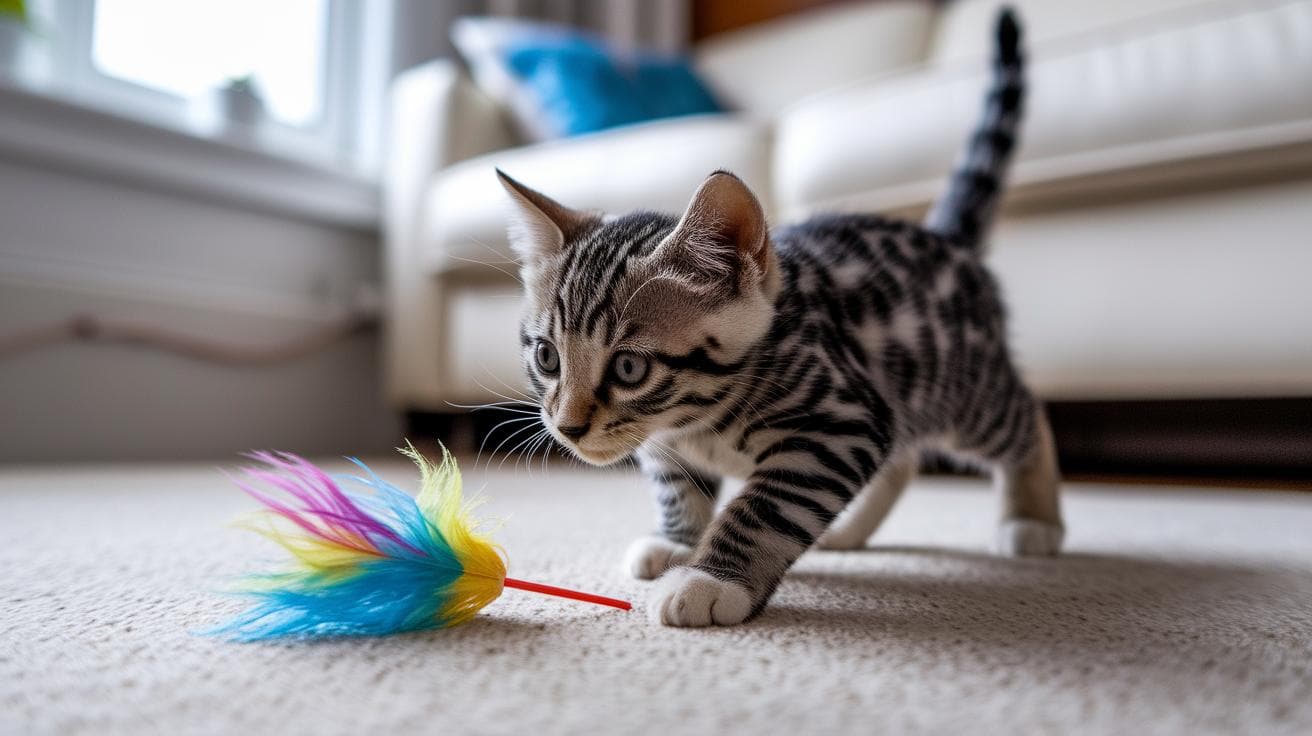
Cats have ancient hunter genes, so predatory play taps right into their wild side. Ever see your kitty crouch low, ready to pounce? It’s the same drill tiny wildcats used when stalking mice. That prey drive (hunt urge) was a survival trick long ago, wiring their brains to reward a good catch with a burst of feel-good chemicals.
In one play session you’ll spot the classic hunt moves. First is the stare – your cat’s eyes lock on the toy, firing up the visual cortex (the brain’s sight center) and flooding their mind with dopamine (happy chemical). Then comes the stalk, belly brushing the floor as silent paws creep forward.
Next up is the chase. Whoa – a sudden dash that gets your heart racing and your cat’s muscles humming. Finally the pounce. Claws out, target yanked close, even if “kill” just means biting a plush mouse. Toss the toy in erratic, twitchy ways to keep that hunt-fire burning.
Age and upbringing shape play style. Kittens four to sixteen weeks old practice wild, clumsy bursts – it’s how they nail down coordination. Adult cats still love mixing play and hunting skills but shift to short, sharp sessions to save energy. Indoor kitties may zoom around with pure joy, but they often miss the quiet finesse of outdoor siblings. So pick toys and times that match your cat’s stage, and you’ll see those primal instincts shine.
Social Play: Feline Social Behavior and Cooperative Interactions
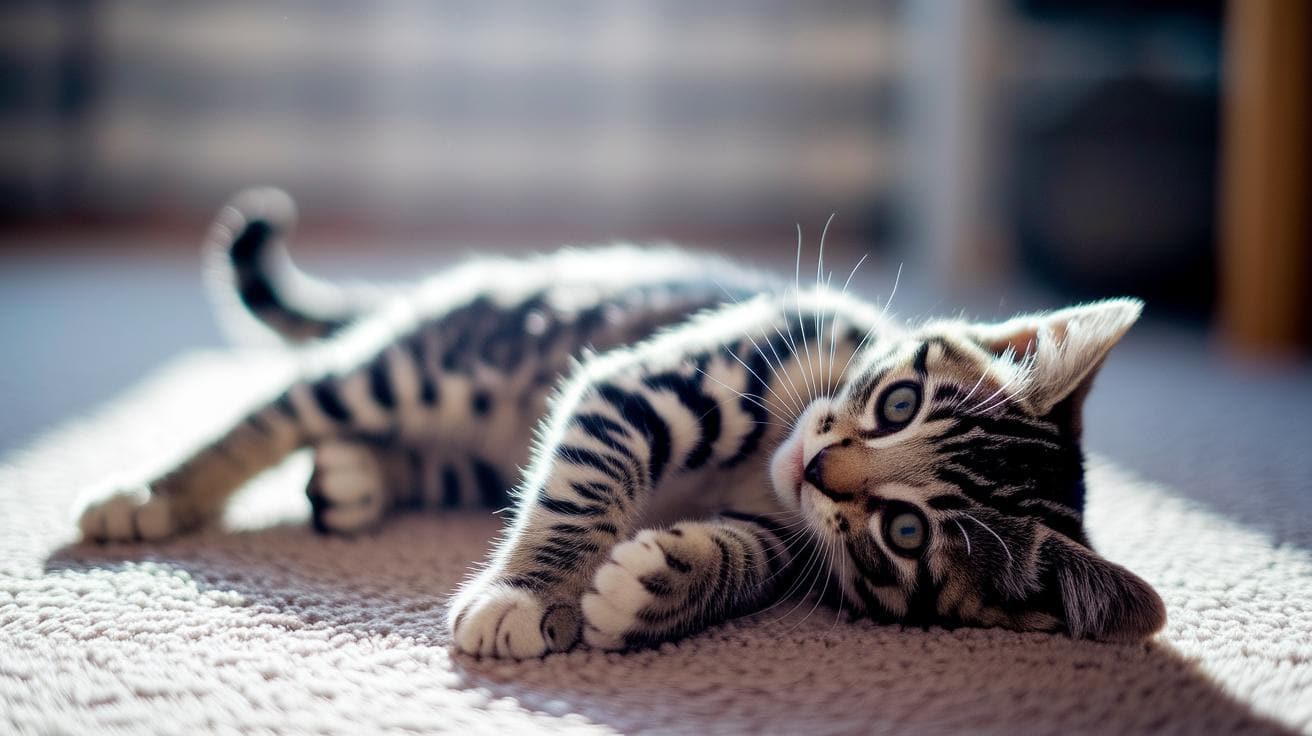
Kittens start little wrestling matches almost as soon as their eyes open, around three to four weeks old. You’ll spot tiny paws batting at each other, soft nibbles and gentle chases across the litter box. Their practice peaks between seven and fourteen weeks, when they work on bite inhibition (learning how softly to bite) and figure out play boundaries so no one ends up with a real ouch.
Littermates are the purr-fect play partners. Every tussle teaches them communication cues, tail flicks, ear twitches and body-posture signals. When one kitten stops and the other waits, they’re actually learning to take turns. These practice bouts help them gauge force, read each other’s signals and build trust. Skills they’ll use in every whisker-twitching friendship.
Group play often looks like a mini-meow hunting team. One little croucher becomes the stalker while another pounces in ambush. Then they swap roles so everyone gets a chance to lead the chase. You can jump in too, toss a soft ball, hide a toy under a blanket or wiggle a ribbon wand like a fish. Your involvement turns solo moves into cooperative games, boosting confidence and deepening your bond through shared playful teamwork.
Recognizing Overstimulation: Play Aggression vs Healthy Social Play
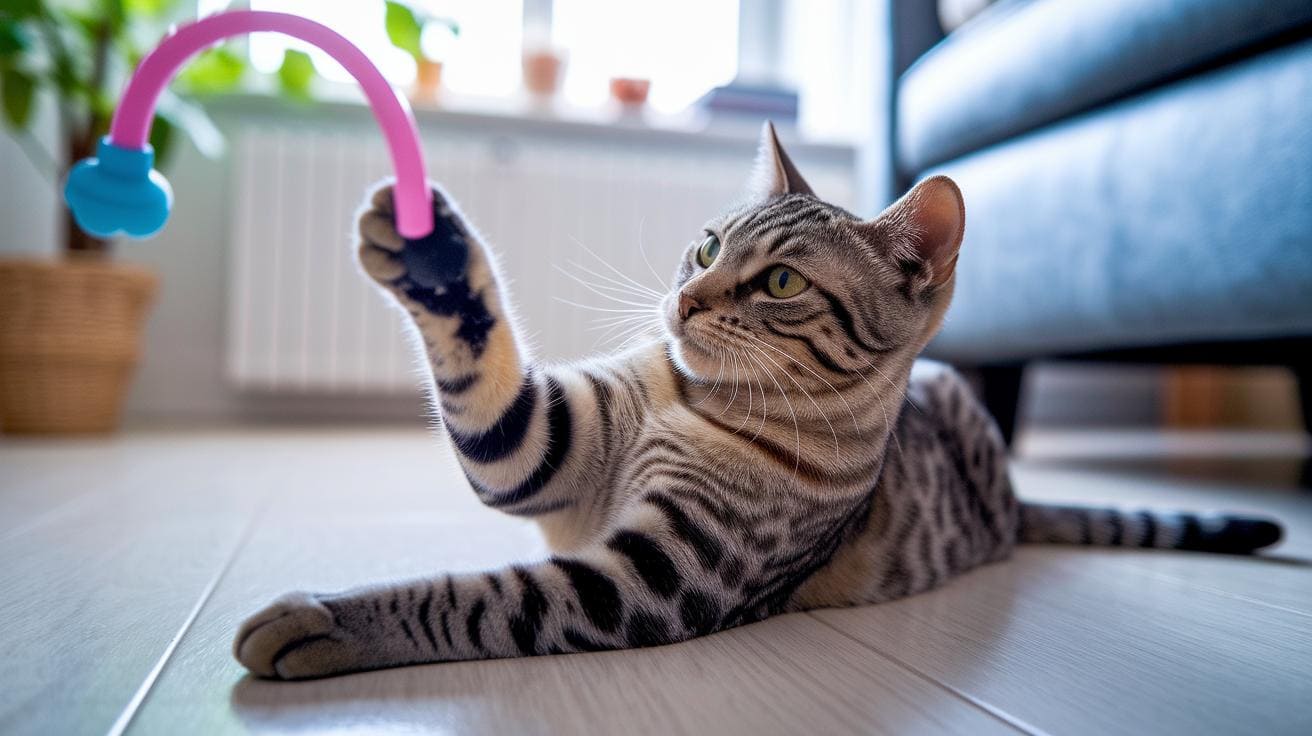
When play is healthy, it’s all soft paws and quick licks. You’ll see claws tucked in (kitty chooses not to scratch), wiggly bodies and friendly breaks that feel fun for everyone. Ever watched your cat take a breather, flop over and lick your hand? That’s the good stuff!
But sometimes your kitty’s hunting urge goes into overdrive. That’s when play aggression kicks in. You might notice teeth and claws out, ears flattened, and non-stop stalking like it’s the wild.
- Forceful bites that draw blood
- Claws fully out when pouncing
- Ears pressed back flat
- No friendly breaks, just go, go, go
- Stealthy stalking or sudden ambushes
So pause play the moment you spot these signs. Then swap to a feather wand (like a fishing rod for cats) to redirect that zoomies energy.
- Plan two 10 to 15 minute play sessions each day
- Offer a kicker toy (a soft, long toy for grabbing) when teeth start snapping
- Never use your hands as a teasing target
- Keep sessions short so your kitty doesn’t overheat
Cool things down by breaking up play, rotating toys, and sticking to a steady schedule. If your cat can’t switch back to gentle mode or rough play keeps popping up, reach out to your vet or a feline behavior expert for tailored tips. Worth every paw-print.