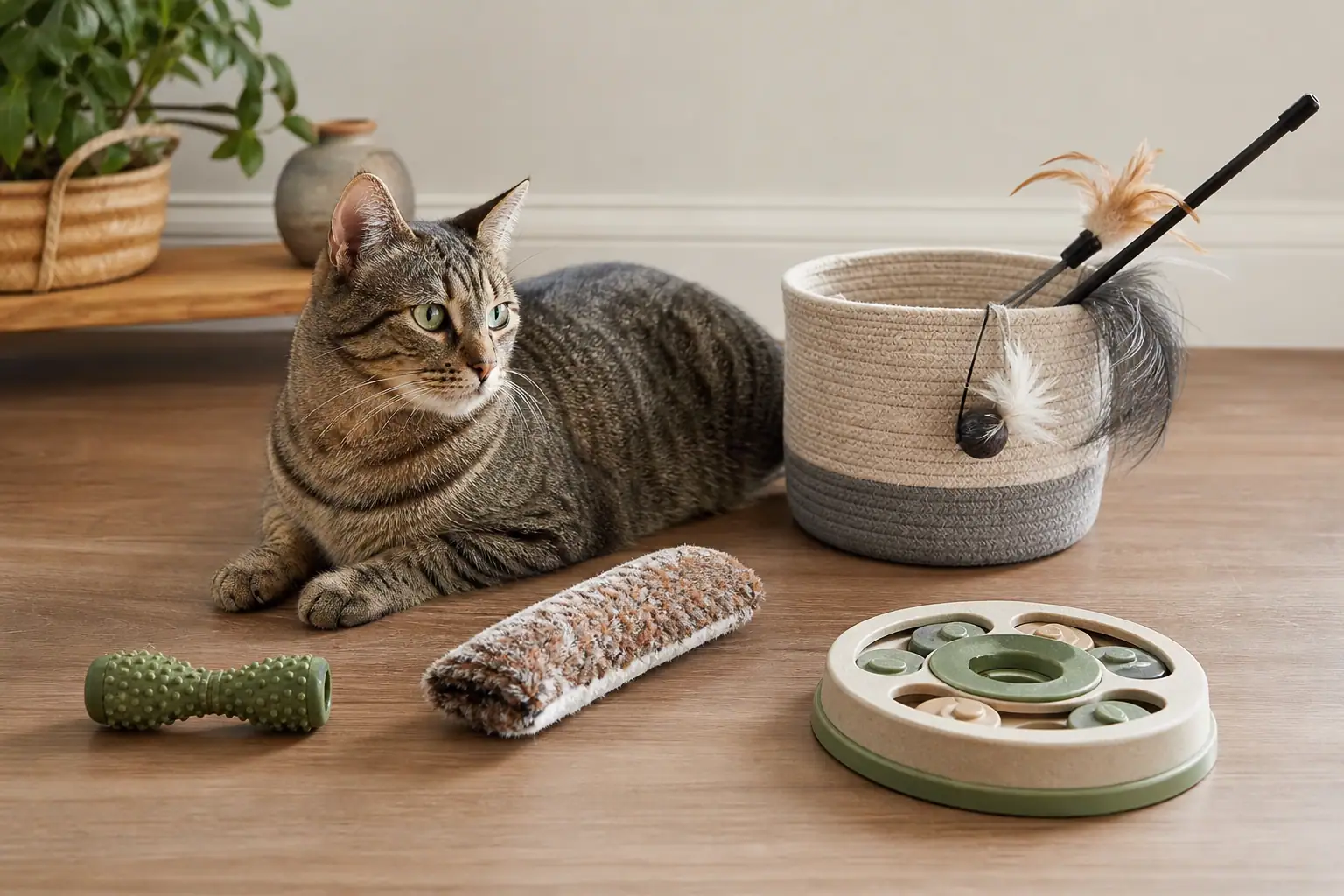
Cat chew toys for dental health can be useful, but they are not a substitute for tooth brushing, veterinary dental exams, or products with real oral-health evidence. The best way to think about them is simple: a good dental chew toy may add texture, chewing time, and enrichment. It should not be trusted to clean below the gumline, fix bad breath, remove heavy tartar, or solve dental pain.
For Titan Claws readers with rough players, the safety filter matters as much as the dental claim. Choose toys that are large enough, simple in construction, easy to inspect, and tough enough for your cat’s first supervised chewing sessions. Avoid any toy that sheds pieces, exposes stuffing, splinters, traps teeth, or depends on strings, feathers, glued decorations, or tiny parts to stay interesting.
Do Cat Dental Chew Toys Actually Work?
Some textured cat toys can rub against the outer surface of teeth while a cat bites them. That mechanical contact may help with soft debris on the parts of the tooth the toy actually reaches. The problem is that many cats chew only a few times, chew with one side of the mouth, or focus on carrying and batting rather than grinding. Even a motivated chewer will not evenly clean every tooth.
That is why dental chew toys should sit in the support category, not the treatment category. The American Veterinary Medical Association notes that many products claim to improve dental health, but not all are effective, and owners should talk with their veterinarian about dental products, treats, diets, and brushing. The Veterinary Oral Health Council maintains a list of accepted cat products that have earned its seal for plaque or tartar claims; most toy-style products sold as dental toys are not the same thing as a VOHC-accepted dental diet, treat, wipe, or oral-care product.
The practical answer: a dental chew toy can be worth using if it gives your cat a safe chewing outlet and supports a broader dental routine. It is a weak plan if it is the whole routine.
What Current Ranking Pages Miss
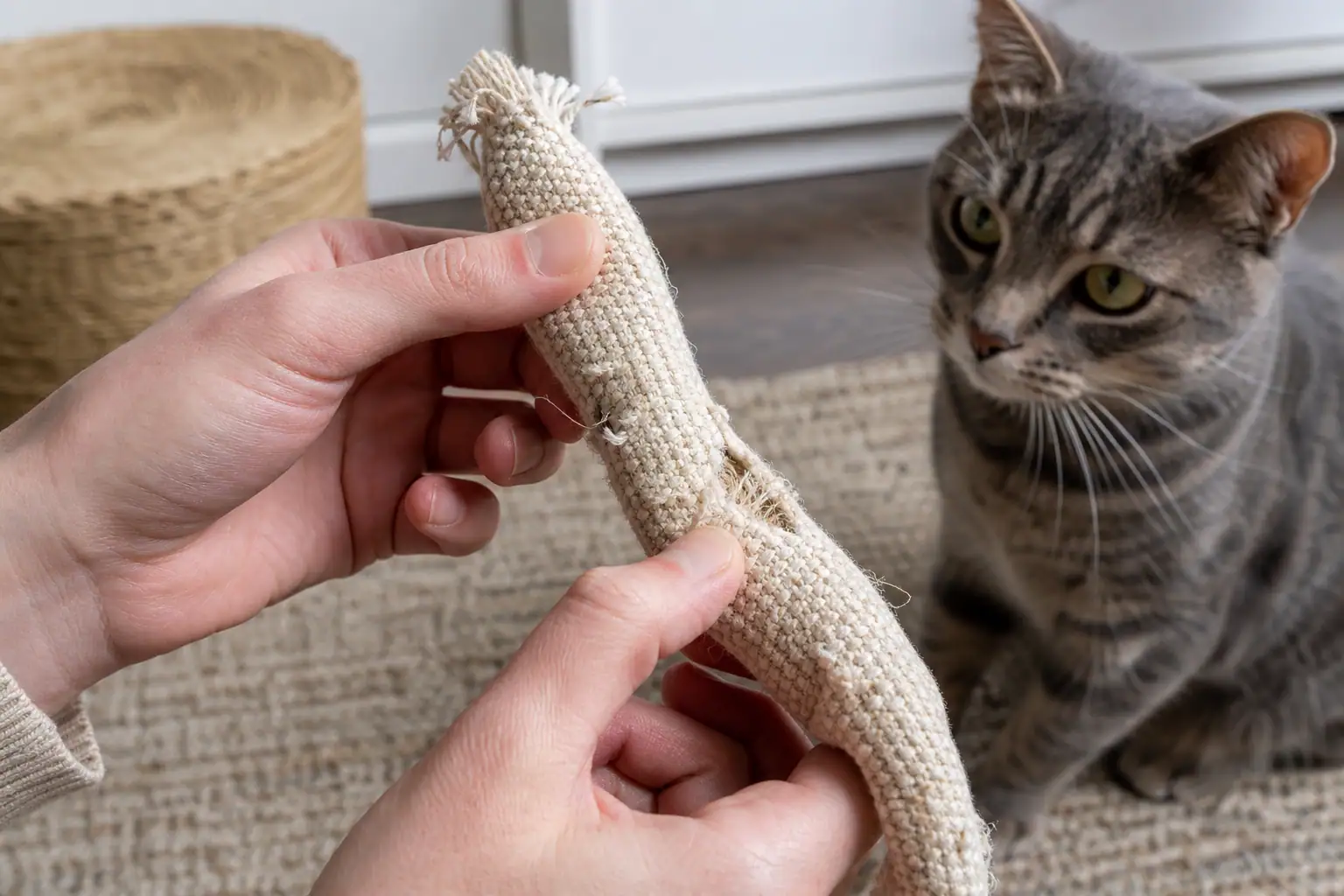
The search results for this topic lean heavily toward retailer categories, marketplaces, and short product lists. Those pages are useful for discovery, but many of them move too quickly from dental promise to shopping choice. A cat that gently mouths a mesh banana is a different risk profile from a cat that rips seams, pulls out stuffing, and eats loose parts.
A better buying decision starts with two questions:
- What dental job are you expecting? A chew toy may encourage chewing and surface abrasion. It should not replace brushing, veterinary exams, or treatment for dental disease.
- What damage does your cat create? If your cat punctures, shreds, peels, or swallows toy material, durability and inspection rules matter more than the word dental on the package.
If your cat destroys ordinary toys quickly, read the Titan Claws guide to durable cat toys before buying a dental-specific option. If the bigger issue is constant gnawing, our guide to cat chewing toys covers the broader behavior and safety picture.
Dental Toys vs. Dental Treats, Brushing, and Vet Care
Not every dental product works the same way. A toy is mainly an enrichment object. A dental treat is eaten and may be designed to abrade teeth as the cat bites through it. A dental diet uses kibble shape and texture to change chewing mechanics. Tooth brushing physically disrupts plaque at the gumline when the cat accepts it. A veterinary dental cleaning lets the mouth be examined and cleaned thoroughly, including areas owners cannot see.
For most homes, the hierarchy looks like this:
- Veterinary exam first if there are symptoms. Bad breath, drooling, pawing at the mouth, bleeding, loose teeth, refusal to eat hard food, or sudden chewing changes deserve a call to the vet.
- Brushing is the gold-standard home habit when possible. It takes training and patience, but it reaches the daily plaque problem more directly than toys.
- VOHC-accepted products are better evidence-based add-ons. Use them as directed and ask your vet which fit your cat’s health and diet.
- Dental chew toys are enrichment plus light support. They can encourage legal chewing, but they should be judged by safety, engagement, and damage resistance.
Cornell’s Feline Health Center lists warning signs such as bad breath, red or swollen gums, pawing at the mouth, and refusal to eat hard food in cats with dental problems. It also points out that cats may hide pain, which is one reason a toy should not be used to wait out a mouth problem.
How to Choose a Safer Dental Chew Toy
Start with the cat in front of you, not the packaging. Dental texture only helps if the toy survives use and the cat actually wants to chew it. For rough players, the safest options are usually boring-looking: fewer parts, fewer seams, fewer detachable details, and a shape you can inspect in seconds.
Use this filter before the first play session:
- Size: the toy should not fit entirely inside your cat’s mouth, and no part should be easy to swallow whole.
- Texture: mesh, ridges, woven fabric, or flexible rubber-like surfaces can create chewing interest, but they should not peel, splinter, or shed fibers under pressure.
- Construction: prefer one-piece designs, protected seams, reinforced stitching, or dense fabric over glued-on eyes, bells, beads, feathers, ribbons, and thin tails.
- Firmness: avoid very hard objects that could risk tooth damage and very brittle materials that crack into sharp edges.
- Cleanability: drool, catnip, treat dust, and moisture can weaken material. If it cannot be cleaned, it needs closer inspection and faster retirement.
- Use case: decide whether it is a supervised chew toy, a short-session toy, or a toy safe enough for limited solo access after several successful checks.