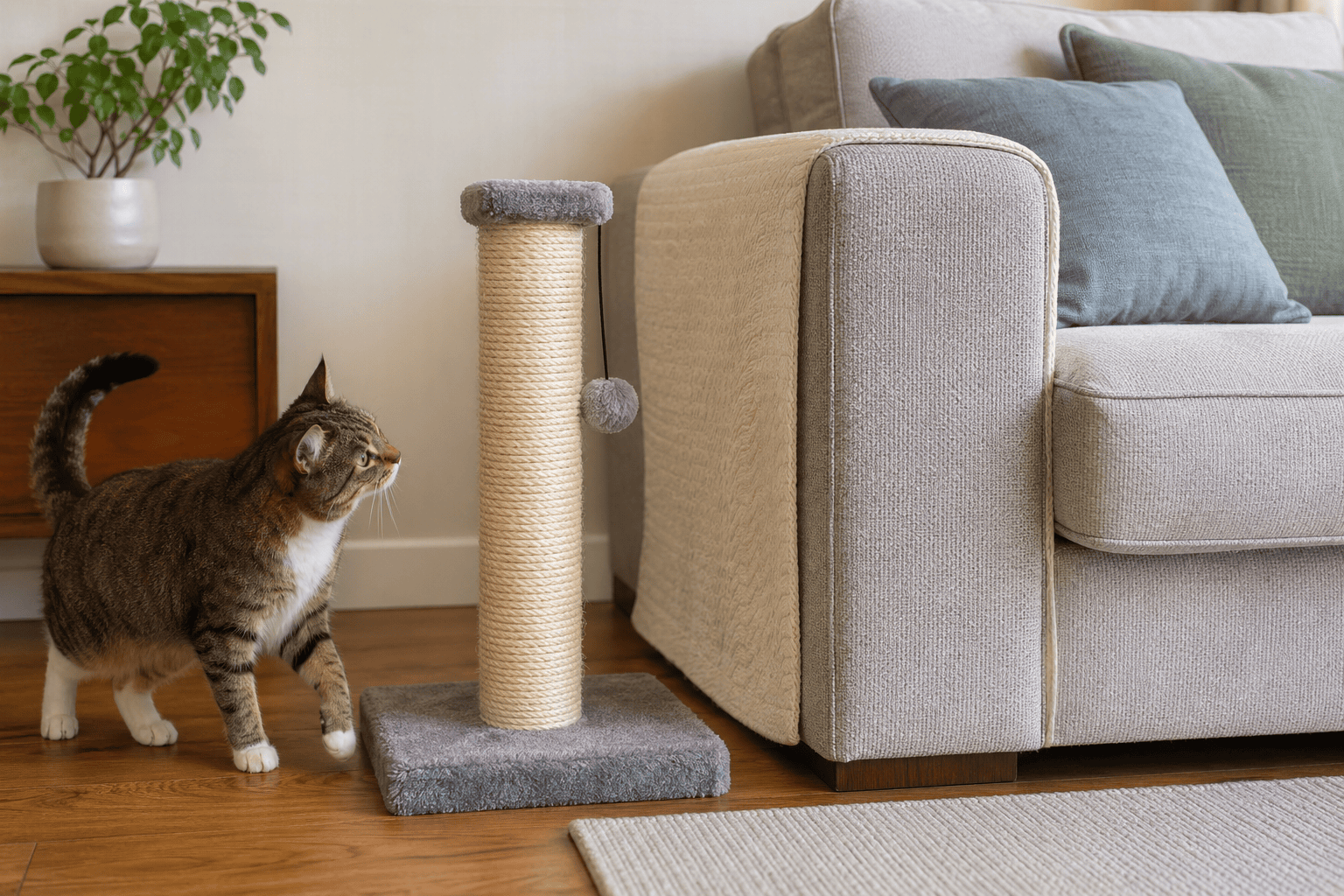
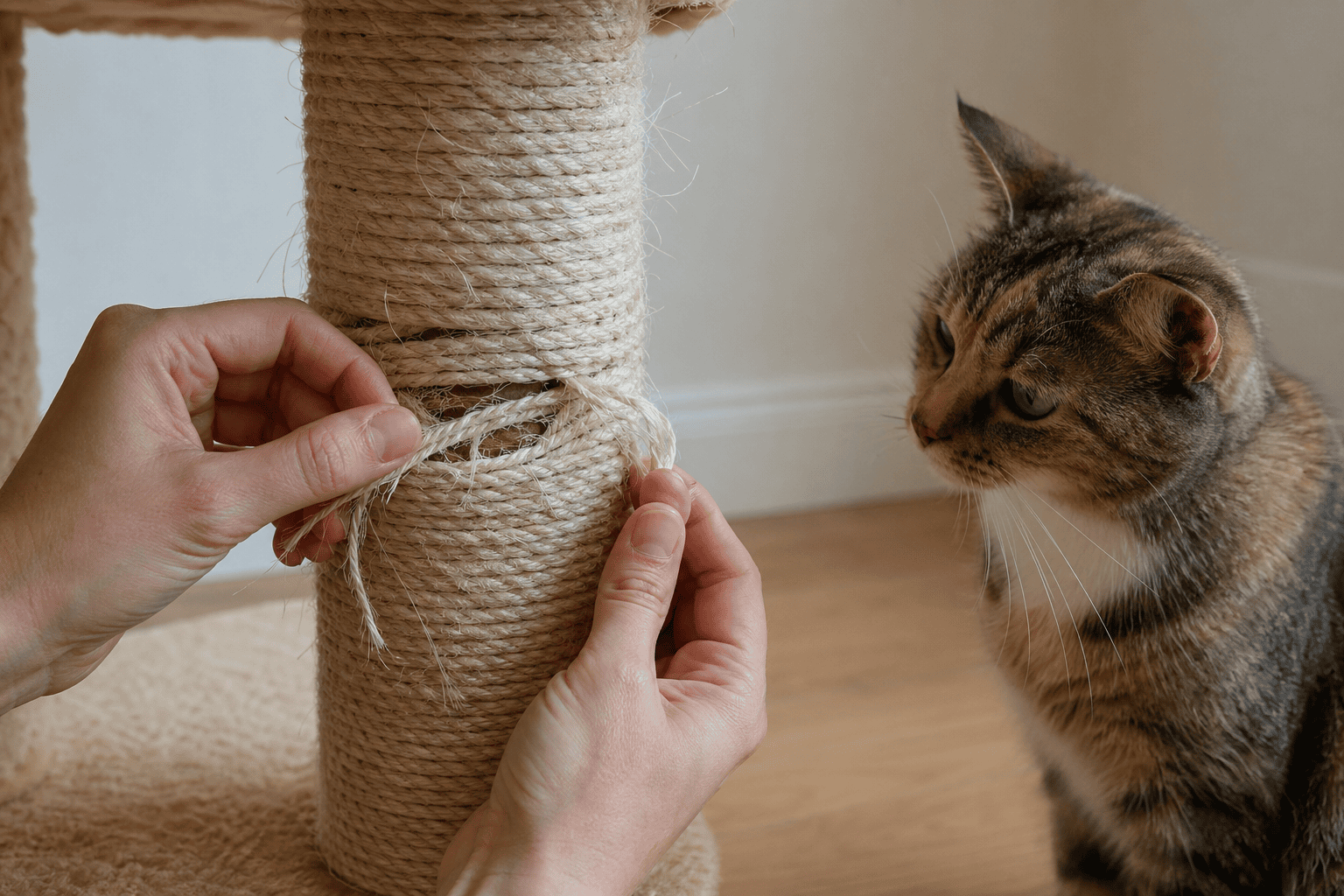
A good cat scratching post gives your cat a legal place to stretch, mark territory, maintain claws, and release energy without turning your sofa into the target. The best choice is not always the cutest post or the tallest cat tree. It is the post that matches how your cat already scratches: vertical or horizontal, rope or cardboard, carpet or wood, high stretch or low rake.
For cats that destroy ordinary toys, the scratching post also has a second job. It should absorb serious claw work while the rest of the play plan gives your cat safe outlets for chasing, biting, kicking, and carrying. A sturdy post helps with furniture damage, but it will not replace active play, toy rotation, and regular inspection.
Why Cats Need a Scratching Post
Scratching is normal cat behavior, not spite. Cornell Feline Health Center explains that cats scratch to mark territory with scent from paw glands, remove the outer claw sheath, and leave visible marks. The Cornell destructive behavior guide also points out that cats can be redirected to better scratching objects when owners match the cat’s preferences and use patience.
The AAFP and ISFM feline environmental needs guidelines include scratching areas among the key resources cats need in the home, along with feeding, water, resting, toileting, and play areas. In practical terms, a scratching post is not decor. It is part of the indoor cat’s territory map.
If a cat scratches furniture, carpet, door frames, or curtains, the goal is not to stop scratching. The goal is to make the approved scratching surface more satisfying than the forbidden one.
Start by Reading Your Cat’s Current Scratching Style
Before buying a cat scratching post, look at the damage your cat has already made. The pattern tells you what your cat is trying to do.
- Vertical scratches on sofa arms, curtains, or door trim: choose a tall, upright post or wall-mounted scratcher.
- Horizontal scratches on carpet or rugs: add a flat scratch pad, low board, or horizontal cardboard scratcher.
- Corner scratching: try a corner-mounted surface beside the target area.
- Deep claw marks in rough fabric: test sisal, woven fabric, or a sturdy nubby surface.
- Shredded cardboard everywhere: cardboard may be satisfying, but the cat may need a heavier-duty backup and closer cleanup.
This is where many product pages are thin. They show attractive scratching posts, prices, and materials, but they rarely help you diagnose why one cat ignores a post and another cat destroys it in a month. Your cat’s existing damage is better information than a generic bestseller list.
Height and Stability Matter More Than Style
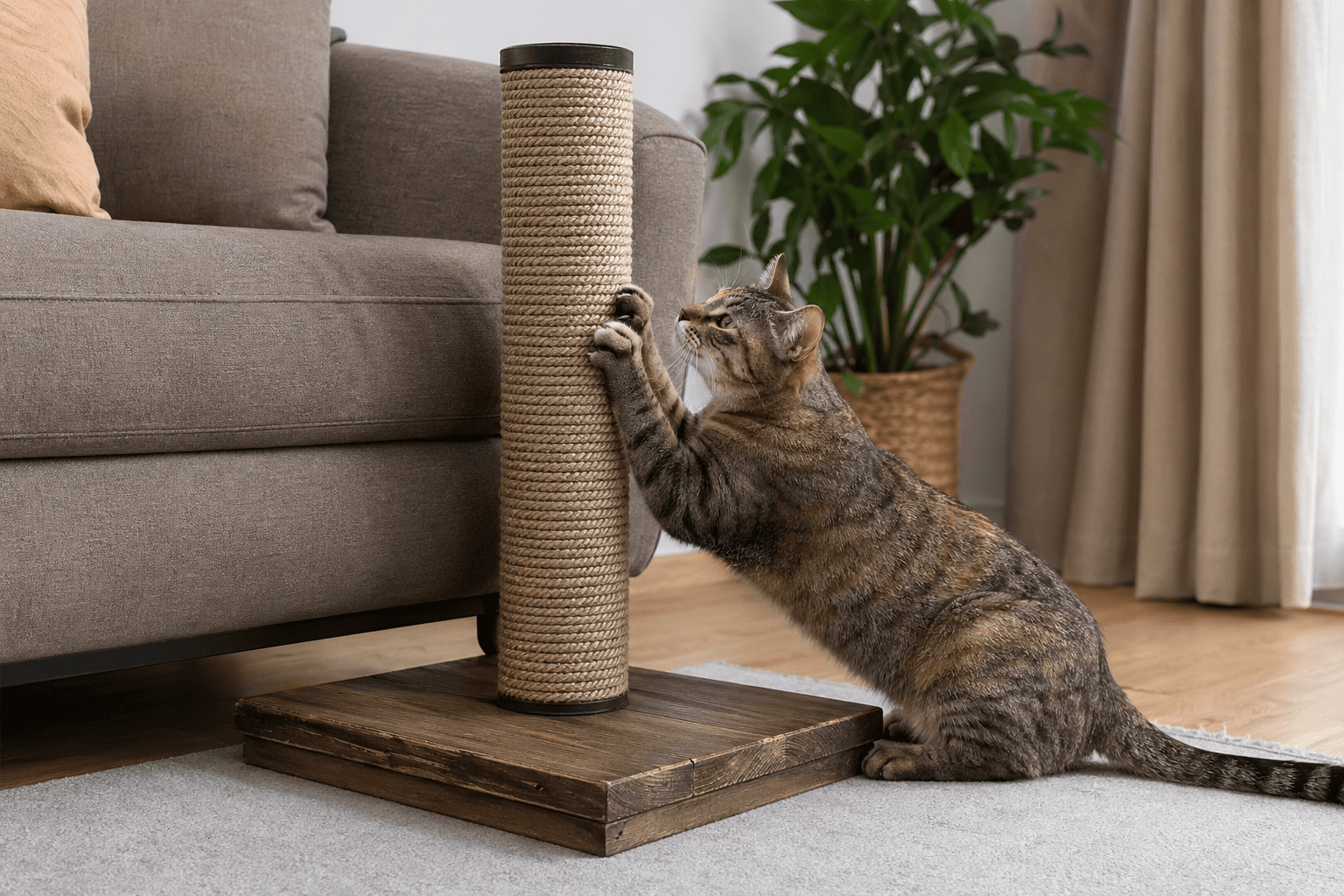
A vertical scratching post should let your cat stretch with the front legs extended. For many adult cats, that means a post around 30 inches tall or taller, and large cats may need more. A short post can work for kittens or low scratchers, but it often fails for cats that want the full body stretch they get from furniture.
Stability is just as important. If the post wobbles, slides, or tips the first time your cat digs in, your cat learns that the sofa is safer. Look for a wide, heavy base; wall attachment; a low center of gravity; or a cat tree that does not rock under your cat’s body weight. If you build a DIY cat scratching post, test it hard before calling it finished.
For rough players, avoid flimsy novelty posts with tiny bases, dangling pieces, lightweight cardboard towers, or thin tubes that twist under pressure. A scratching post for a powerful cat should feel boringly solid.
Choose the Right Scratching Surface
Common scratching surfaces include sisal rope, sisal fabric, corrugated cardboard, carpet, wood, and upholstery-style fabric. None is best for every cat. The right surface is the one your cat consistently chooses and can use safely.
- Sisal fabric: often grips well and may wear more evenly than rope on some posts.
- Sisal rope: popular and satisfying, but inspect for loose coils and long frays.
- Corrugated cardboard: inexpensive and loved by many cats, but messy and not ideal for cats that eat pieces.
- Carpet: useful for carpet scratchers, though it can confuse cats if it feels too much like household carpet.
- Wood: a good option for cats that like rough natural textures, especially in catios or supervised areas.
If your cat chews or swallows torn material, treat the scratcher like a toy safety issue. Remove loose rope, staples, tacks, tape, splinters, and chunks of cardboard. For cats that bite and pull, simple construction is safer than a post covered in trim, pom-poms, feathers, or glued-on decorations.