Think your cat is just "fluffy" and not overweight?
You’re not alone. About 61% of pet cats carry a few extra pounds, and that hidden weight often lives under all that soft fur. Ever watch your kitty tuck into a sunbeam and wonder if that belly is just fur or something more?
Weighing your cat is a good start, but a scale doesn’t tell the whole story. Use a simple weight chart (like a map for healthy size) and run your fingers lightly along your cat’s ribs. You should feel the ribs without pressing hard, with a thin layer of fat over them. Also check their BCS (body condition score, a 1-to-9 rating that helps you judge thinness versus chubbiness) for a clearer read.
This guide shows you how to read the weight chart, do a quick BCS check, and spot signs that it’s time to talk to your vet. That way your kitty stays playful, leaps for toys, and purrs longer.
Worth every paw-print.
Cat Weight Chart: Tell If Your Cat's Overweight
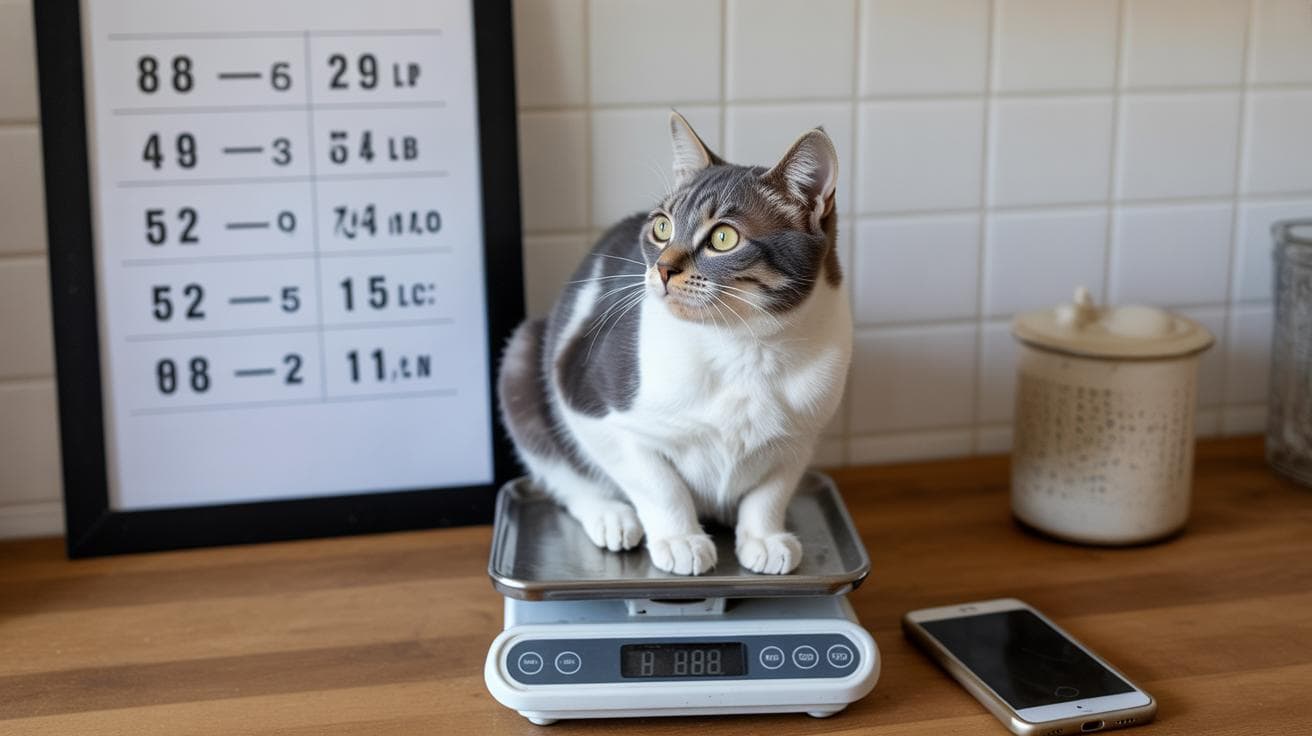
Weigh your cat and use the chart below as a quick check. If your cat is over the top range, more than 10% above its ideal weight, or has a BCS 6 or higher (BCS means body condition score), suspect overweight and read the BCS and vet sections next. Ever feel surprised by the number on the scale? You are not alone.
Body size changes a lot with skeletal frame (bone size), sex, age, and whether your cat is spayed or neutered (surgery to prevent breeding). Neutered cats often gain weight more easily. Most housecats fall around 8 to 12 lb (3.6 to 5.4 kg; kg means kilograms). Small breeds commonly weigh under about 8 lb (3.6 kg). Big breeds like Maine Coons can be healthy much heavier, often up to 20 to 25 lb (9.1 to 11.3 kg). About 61% of pet cats are overweight or obese, so don’t worry if the numbers shock you.
Weight by itself does not tell the whole story. Use the chart as a helpful starting point, then check body condition visually and feel your cat’s ribs (see the BCS section) and visit your veterinarian for a hands-on exam and guidance before starting any diet or exercise plan. That way you get a safe, tailored plan that works for your furry friend.
| Breed | Typical adult weight (lb) | Typical adult weight (kg) | Notes on build or age modifiers | When to suspect overweight |
|---|---|---|---|---|
| Small breeds | 4 to 8 lb | 1.8 to 3.6 kg | Delicate bones; reaches adult size sooner | Above 8 lb, more than 10% over ideal, or BCS 6 or higher (body condition score) |
| Average domestic shorthair | 8 to 12 lb | 3.6 to 5.4 kg | Most housecats; weight gain more likely after neuter | Above 12 lb, more than 10% over ideal, or BCS 6 or higher (body condition score) |
| Large breeds | 13 to 20 lb | 5.9 to 9.1 kg | Sturdier skeletons; males often heavier | Above 20 lb, more than 10% over ideal, or BCS 6 or higher (body condition score) |
| Maine Coon | 12 to 25 lb | 5.4 to 11.3 kg | Very large frame; many healthy Maine Coons reach 20 to 25 lb | Above 25 lb, more than 10% over typical for sex/age, or BCS 6 or higher (body condition score) |
| Siamese / Oriental | 6 to 10 lb | 2.7 to 4.5 kg | Slender build; extra fat shows quickly | Above 10 lb, more than 10% over ideal, or BCS 6 or higher (body condition score) |
| Mixed-breed average | 8 to 14 lb | 3.6 to 6.4 kg | Big variability; check bone size and frame | Above 14 lb, more than 10% over ideal, or BCS 6 or higher (body condition score) |
| Kittens (age bands) | 1 to 6 lb | 0.5 to 2.7 kg | Grows fast; use age-specific charts for accuracy | Weight above the age band or unusually rapid gain |
| Senior cat guideline | 8 to 12 lb | 3.6 to 5.4 kg | Watch for unexplained weight loss; body composition changes with age | Above 12 lb, more than 10% over ideal, or BCS 6 or higher (body condition score) |
Cat Body Condition Score (BCS) Explained: Read a BCS to Find Overweight Cats
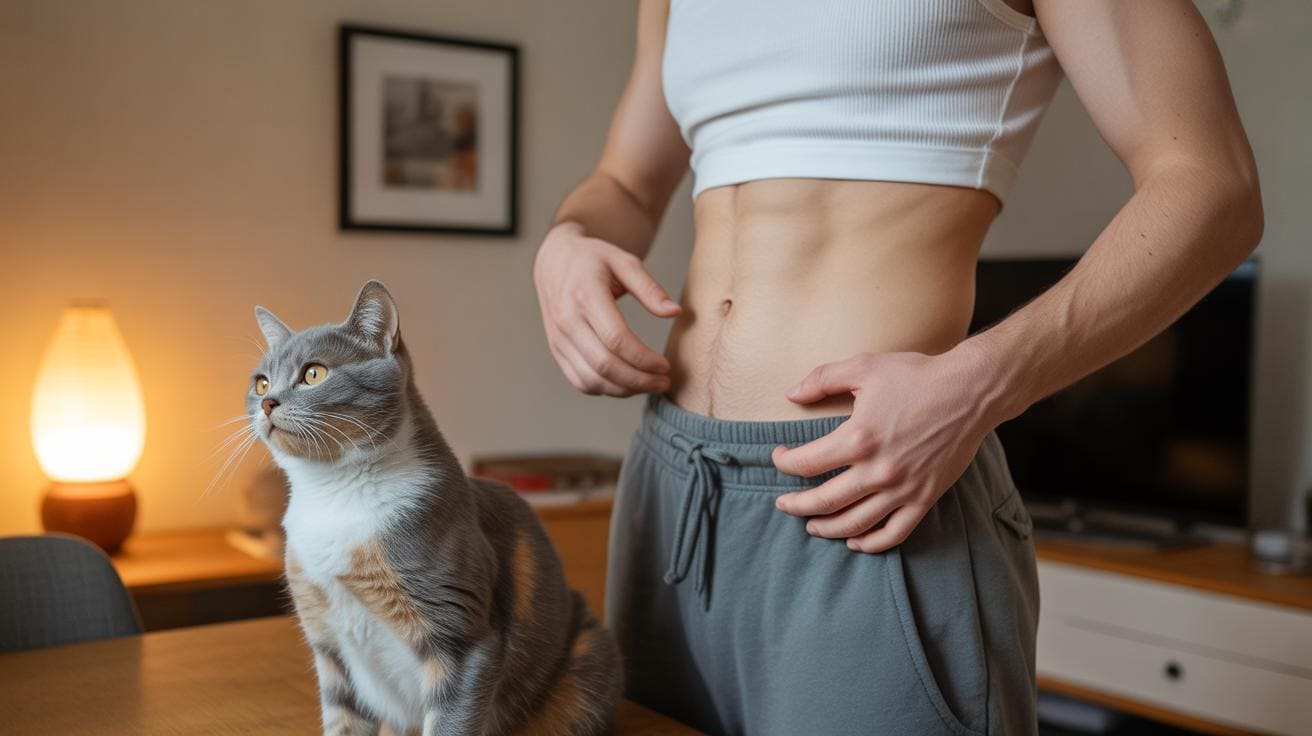
A body condition score (BCS) is a quick, hands-on way to judge how much fat and muscle your cat has (a simple physical fat-and-muscle check). Two common systems are used: a 1–5 scale where 3 is healthy, and a 1–9 scale where 4–5 is ideal. Use the harmonized thresholds: overweight means more than 10% above ideal weight, and obese means 20% or more above ideal weight. On the 1–9 scale, a score of 6 or higher flags overweight and 7 or higher points to obesity. On the 1–5 scale, 4 is overweight and 5 is obese.
Get hands-on by feeling and looking. At a healthy BCS you should be able to feel the ribs through a thin layer of fat – think of a soft glove over the ribs. From above, a clear waist is a good sign. From the side, a tucked belly looks healthy. If the waist bulges or you have to press hard to find ribs, that usually means extra fat. Long-haired cats hide their shape – try checking while bathing when the fur lies flat. Common fat spots are the inner legs, under the chin, and along the tailhead.
Ever watch your cat suddenly zoom and then flop? That tuck-and-pounce energy usually comes from a healthy weight. I once watched Luna leap so high she nearly took flight – worth every paw-print.
Visual and Palpation Steps
- Feel for ribs – ribs should be felt with a light fat covering, not buried.
- Check the waist from above – look for a slight indentation behind the ribs.
- View the belly from the side – a tucked belly suggests healthy weight; a sag or bulge suggests excess.
- Palpate spine and hips – feel these bones with your hands (palpate means to touch and examine). They should be noticeable but not sticking out sharply.
- Assess neck and chest fat – thick pads under the chin or at the base of the neck are warning signs.
BCS gives more context than a single number on the scale. If your cat scores in the overweight range (6 or higher on the 1–9 scale or 4 on the 1–5 scale) or you estimate your cat is over 10% above ideal weight, book a vet exam to confirm and get a safe plan. It’s nicer for everyone when our kitties feel lighter and feline fine.
How to Weigh a Cat at Home and Track Weight Using a Cat Weight Chart
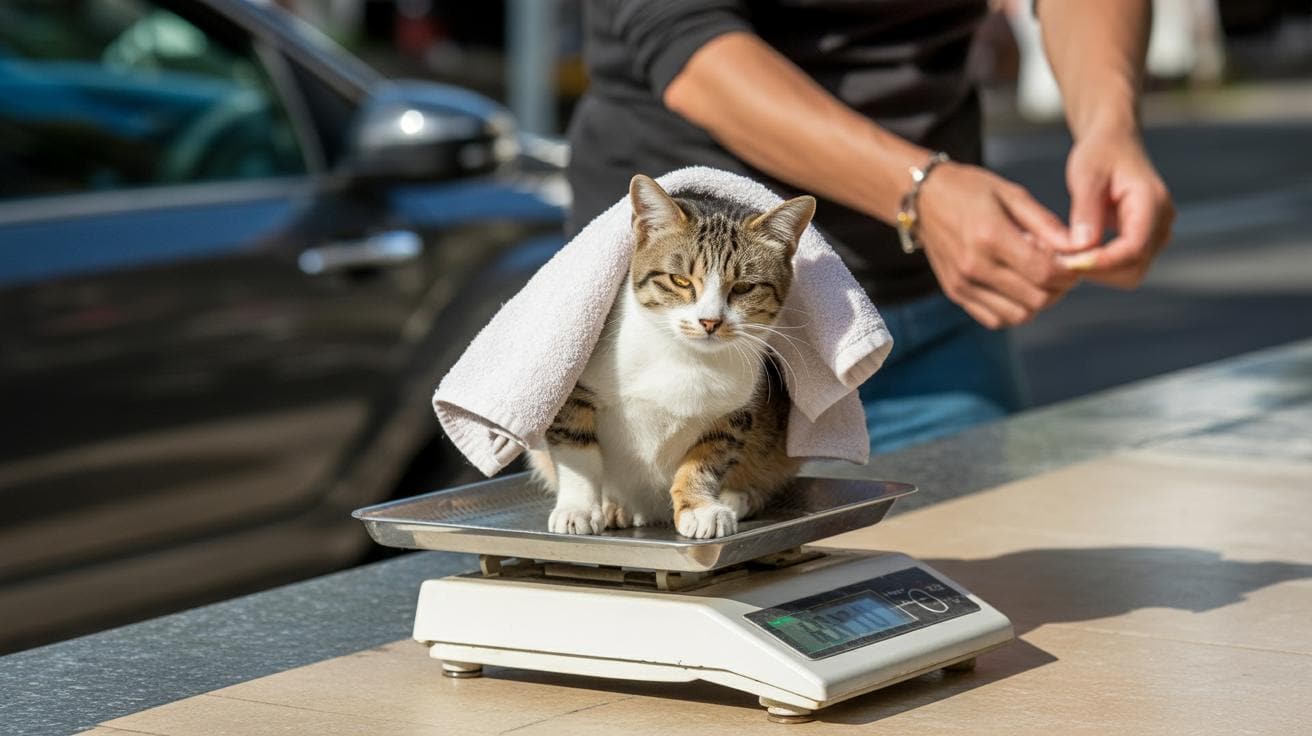
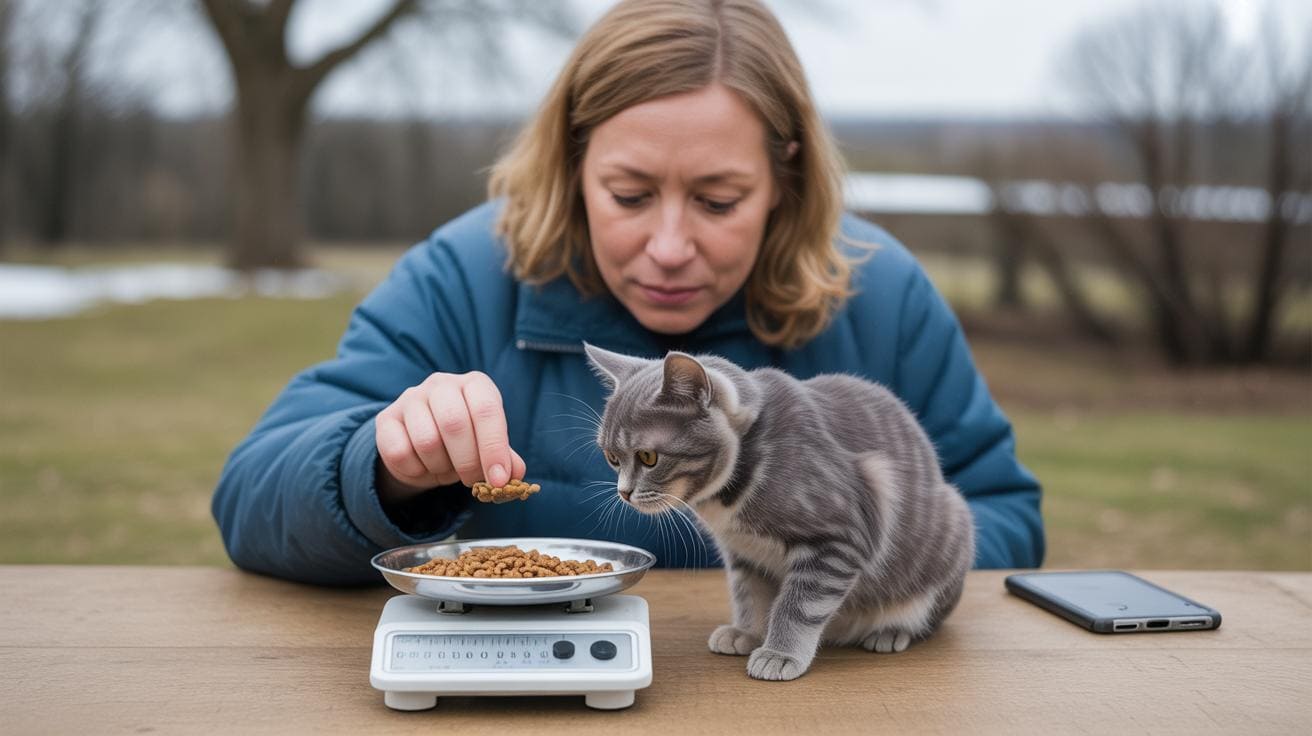
Start calm. Put your bathroom or kitchen scale on a flat, steady surface and weigh yourself first. Step off, then scoop up your cat and step back on the same scale. Subtract your weight from the combined number to get your cat’s weight (for example, you 150 lb, you plus cat 158 lb, cat = 8 lb). Small cats often give cleaner numbers on a baby scale (small scale for infants) or a digital pet scale (a scale made for animals).
If your cat hates being held, try the carrier method. Weigh the empty carrier, then weigh the carrier with your cat inside and subtract the carrier weight. Wrap nervous cats lightly in a towel, burrito-style, to help them feel secure and less likely to squirm. It really helps, and your cat might even start purring mid-weigh-in.
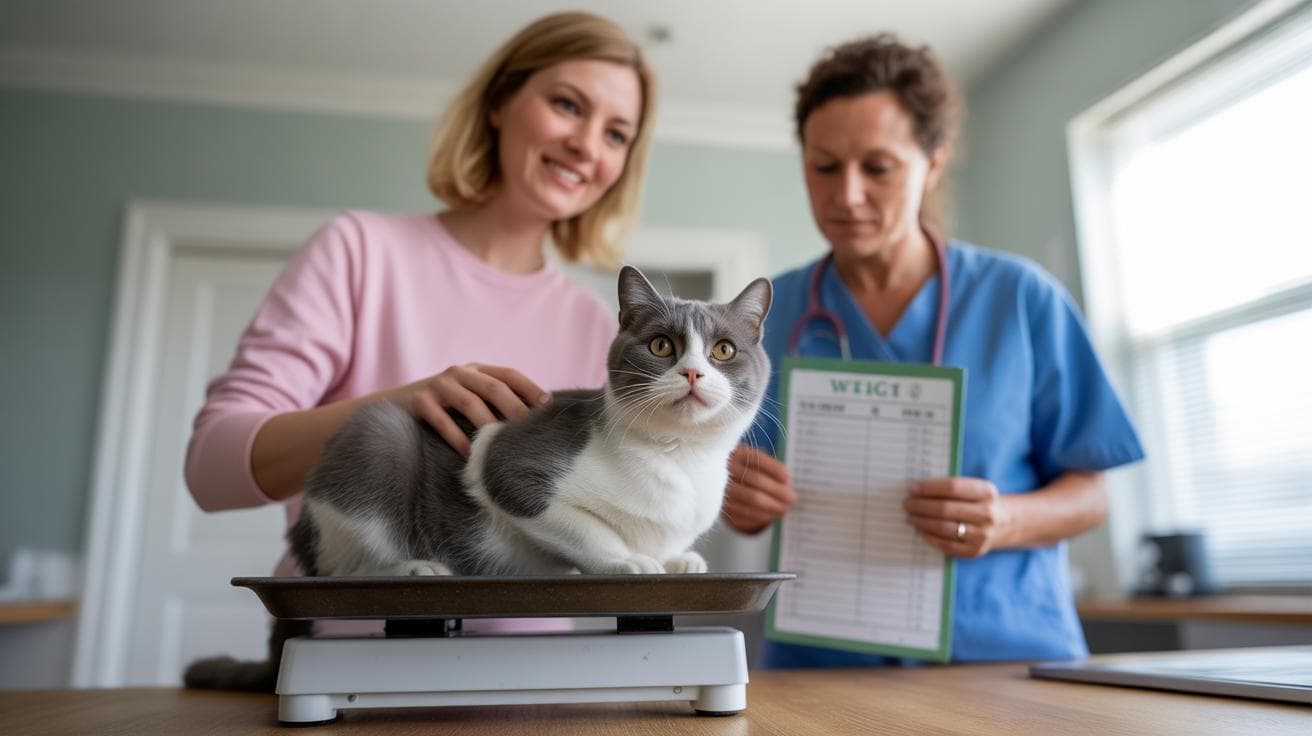
Weigh at the same time of day on the same scale for reliable tracking. Before breakfast or after a litter-box break usually works best. Weigh more often when you have a goal: weekly if you’re actively trying to lose or gain weight, monthly for routine checks. Use calming treats, a towel wrap, or the carrier method to reduce stress and get repeatable numbers. Record each reading and bring the series to your veterinarian when you want help or advice. Printable trackers, photo logs, and the fuller template table are available only in the "Monthly Cat Weight Chart Template" section.
Signs and Health Risks Shown on a Cat Weight Chart: How to Tell if Your Cat Is Overweight by Symptoms

Start with touch and sight. Run your hands along their ribs , if the ribs feel buried under soft fat, that’s a big clue. Look from above; if the waist is missing and the belly hangs past the hip line, your kitty is packing extra weight. Ever noticed little fat pads on the inner thighs, at the tail base, or under the chin and on the face? Those are giveaways.
For long-haired cats, press the fur flat during a bath or while brushing so you can see the shape beneath the coat. It helps a lot. My cat hides a pudge under fluff until I smoosh the fur and go, whoa.
Extra pounds do more than change a cat’s look. Overweight cats are more likely to get diabetes (when the body can’t control blood sugar), skin infections, sore joints that make jumping and cleaning harder, and more urinary tract problems. Studies show excess weight can cut a cat’s life by about five to ten years, so this is about more playtime and more quiet purrs, not just appearances.
Sudden weight changes are a red flag. Rapid weight loss, refusing food (anorexia), or extreme tiredness need immediate vet attention because things like kidney disease (when kidneys stop filtering waste), diabetes, hyperthyroidism (overactive thyroid), or cancer (uncontrolled cell growth) can be the cause. Ever watched your cat suddenly stop eating? Don’t wait. Call your vet and bring recent weights and notes on eating, litter box use, and activity , they’ll help figure out what’s wrong.
Simple checks make a big difference. Weigh your cat monthly, or use the vet’s scale if you don’t have one at home. Tip: weigh your carrier alone, then weigh it with your cat and subtract to get the cat’s weight. Track the numbers and jot down behavior changes.
Act early and you’ll likely save stress, money, and precious purr time. Worth every paw-print.
Calculating Ideal Weight from a Cat Weight Chart: Formulas and Worked Examples
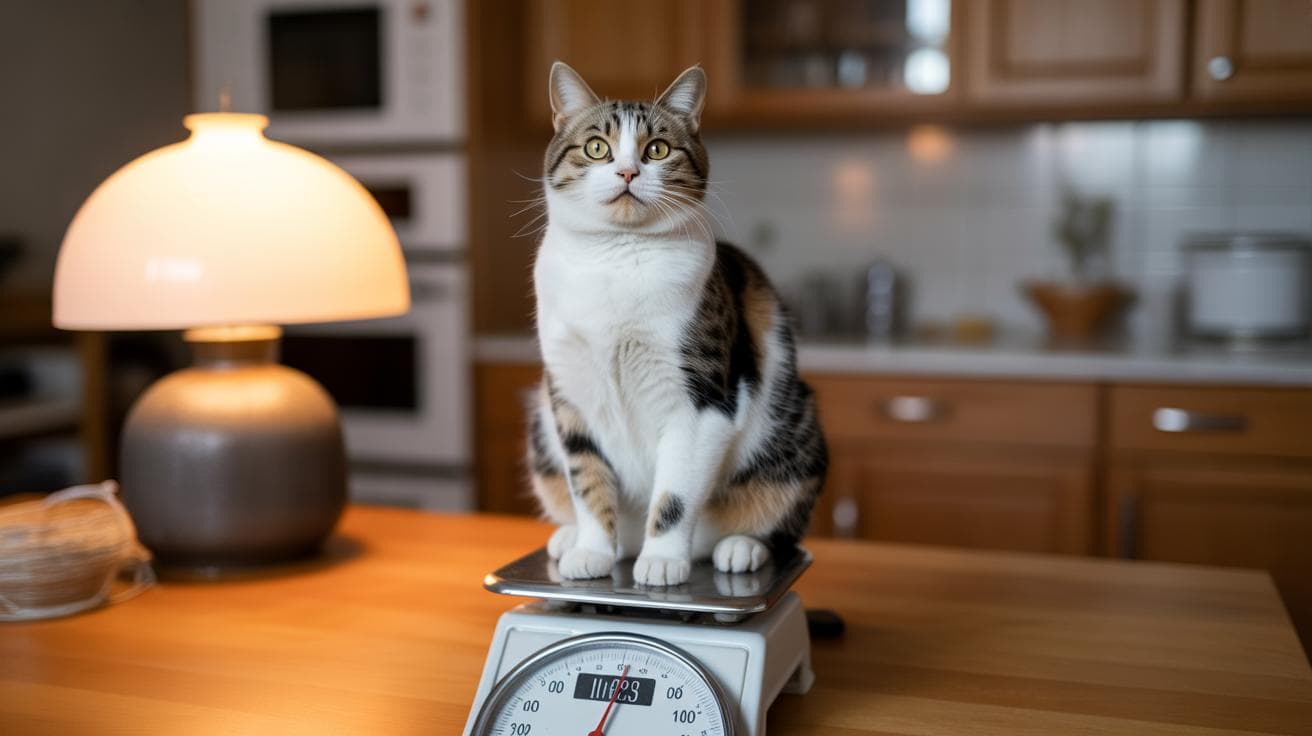
Here’s a simple, cat-friendly trick to find a target weight. Use this formula: Ideal weight = current weight × (1 − % overweight). First change the percent into a decimal (30% → 0.30), subtract that from 1, then multiply by your cat’s current weight. Easy, right? You’ll get a practical goal based on the cat weight chart instead of guessing.
For example, a 15 lb cat that's about 30% over ideal: 15 × (1 − 0.30) = 15 × 0.70 = 10.5 lb. Yep , that’s your target.
Numbers are helpful, but they don’t tell the whole story. Look at body condition and health checks too. Use these common thresholds when you read results: overweight means more than 10% above ideal, and obese means 20% or more above ideal. If your BCS (body condition score, a 1–9 scale that shows fat and muscle) is 6 or higher, assume your cat is more than 10% above ideal. Chat with your veterinarian about a safe weekly loss rate and a plan to monitor progress before you cut calories or ramp up activity , losing weight too fast can cause hepatic lipidosis (fatty liver disease), which is dangerous.
Example Calculations
Example 1 – 12 lb cat at 20% overweight:
20% → 0.20; Ideal = 12 × (1 − 0.20) = 12 × 0.80 = 9.6 lb.
Example 2 – 15 lb cat at 30% overweight:
30% → 0.30; Ideal = 15 × (1 − 0.30) = 15 × 0.70 = 10.5 lb.
Example 3 – 22 lb Maine Coon at 15% overweight:
15% → 0.15; Ideal = 22 × (1 − 0.15) = 22 × 0.85 = 18.7 lb.
Quick tips: weigh your cat on the same scale, at the same time of day, wearing the same amount of fluff. Ever watched your kitty’s whiskers twitch as the scale reads? Cute and useful. And, um, if you’re unsure, grab the vet , they’ll help set a safe plan and cheer your cat on.