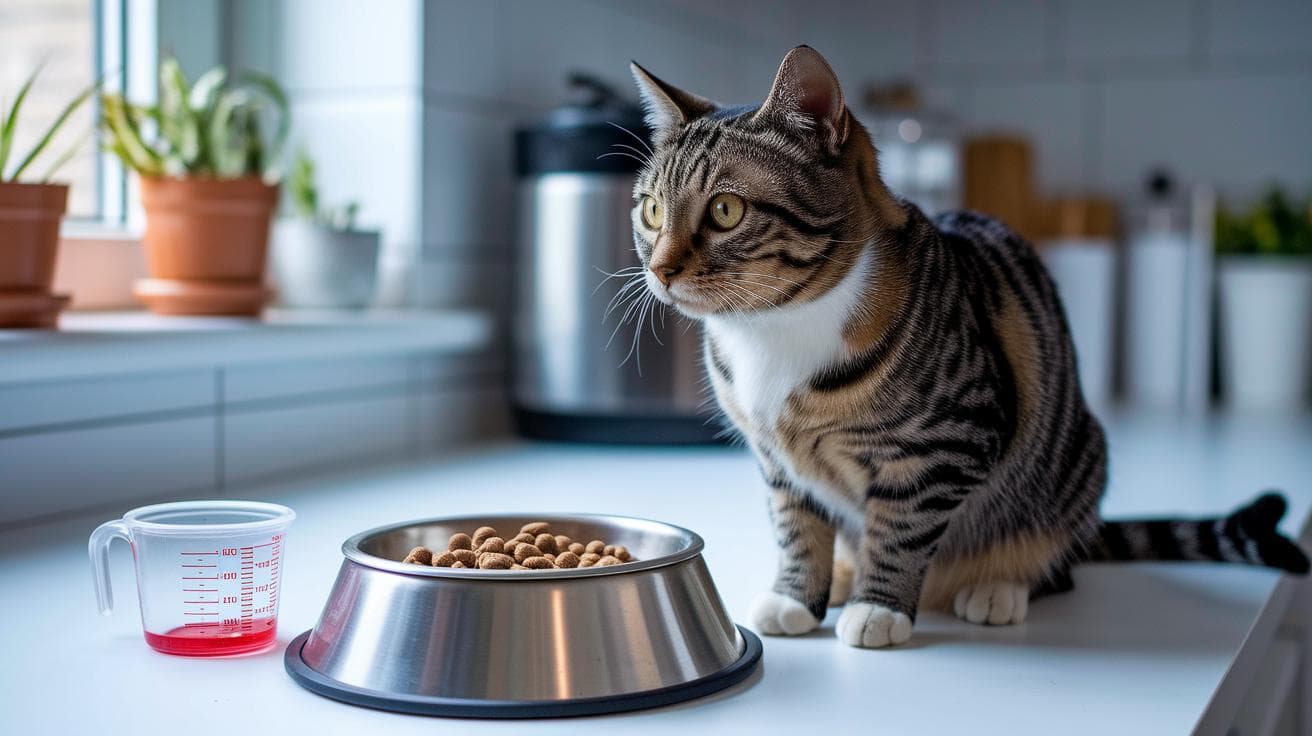
Ever poured wet food into a bowl and seen your cat give you that please-feed-me stare? Too much food and they’ll pack on the pounds. Too little and you’ll hear meows all night.
I once knocked a half-empty can onto the floor, wet food everywhere. Oops. That’s when I realized we all need a clear plan.
Here’s a quick trick, you know: feed 25 calories (tiny bits of energy) per pound (unit of weight) of your cat’s ideal size. So a 10-pound kitty needs 250 calories every day.
Most 3-ounce (small weight) cans hold about 60 calories each. Just divide the total (250 calories) by 60 to see how many cans to open. You’ll end up with about four cans for the day.
Split that between morning and dinner, and your cat’s tummy will thank you.
No more guesswork. Just happy purrs.
Worth every paw-print.
Calculate Your Cat’s Daily Wet Food Portions
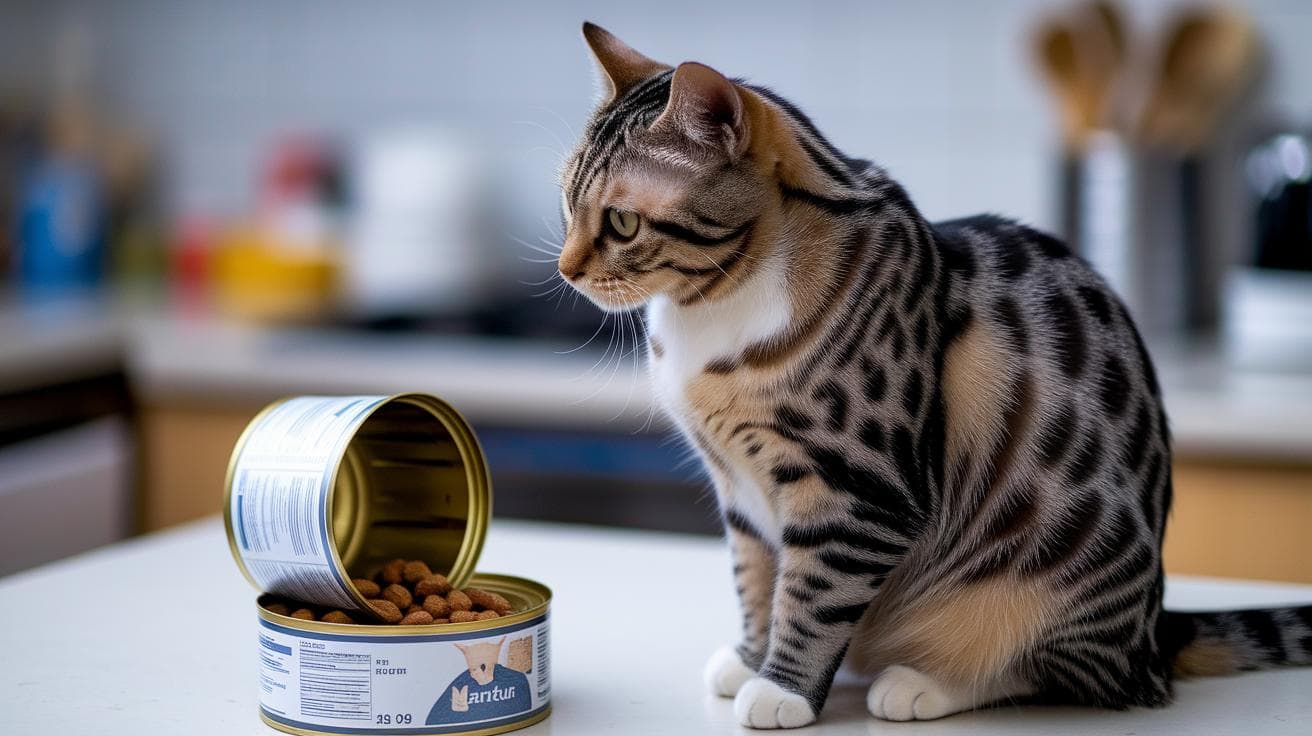
Have you ever stared at a can of wet food and thought, “How much does my kitty really need?” Ever watched your cat do that hopeful stare at dinner time? Here’s a quick, purr-fect formula: 25 calories per pound of your cat’s ideal weight. We’re using a standard 3-ounce can (3-oz can , about 90 calories each). Ready?
First, take your cat’s weight in pounds. Multiply by 25 to get total calories. Then divide by 90 to find out how many cans to open.
Here’s the math in action:
5-lb kitty: 5 × 25 = 125 calories, so 125 ÷ 90 ≈ 1.4 cans
10-lb floof: 10 × 25 = 250 calories, so 250 ÷ 90 ≈ 2.8 cans
15-lb jumper: 15 × 25 = 375 calories, so 375 ÷ 90 ≈ 4.2 cans
| Weight (lb) | Calories per Day | Cans per Day |
|---|---|---|
| 8 | 200 | 2.2 |
| 12 | 300 | 3.3 |
| 20 | 500 | 5.6 |
Decimals can feel messy, right? Try sharing one can across two or three meals or round to the nearest quarter-can. If your brand lists 100 calories per can instead of 90, just swap that number into (25 × weight) ÷ calories per can.
I once scribbled this on my fridge in bright pink marker, so much easier than guessing! You can do the same on a whiteboard or right in your phone’s notes app.
This cat feeding cheat sheet makes mealtime a breeze. No more underfeeding or overfeeding. Tweak numbers for your zoomie champ or your nap-lover. And divide the total into small dinners throughout the day.
Keep an eye on your cat’s weight and play level each week. For spot-on nutrition, explore vet recommended wet cat food and check in with your veterinarian before making big changes. Feed at the same times every day so your kitty learns the routine, no more surprise meow-concerts at 3 AM.
Key Factors Affecting Wet Food Portions for Cats
Every cat has its own quirks. Age, play style, and body condition decide how much wet food (moist cat food) they gobble. Ever watched your kitten zoom after a feather? Your older pal might be happy with just a few nibbles before curling up for a nap. Matching meals to your furball’s needs keeps them healthy and satisfied.
- Life stage: Kittens need 2–3 meals a day until about 40 weeks (around 9 months) because they burn energy quickly (metabolism). Senior cats slow down with age, so they do better with smaller, more frequent servings.
- Activity level: High-energy leapers might need extra calories. The couch-cuddler usually does fine on less.
- Reproductive status: Pregnant or nursing moms often need 25–50% more calories to keep up milk supply.
- Metabolic changes: Older cats burn fewer calories (their metabolism slows), so adjust portions as they age.
- Weight condition: Overweight cats do best with tighter, controlled portions. Underweight cats may benefit from calorie-rich recipes.
- Neuter status: Spayed or neutered kitties tend to need about 30% fewer calories, so scale back their meals.
Always check with your veterinarian to find the purrfect portion size for your cat’s life stage, energy level, and health goals.
Worth every purr.
Combining Wet and Dry: Adjusting Cat Food Portions

Hey, mixing your cat’s kibble (dry, crunchy biscuits) with pâté (smooth wet food) is all about matching calories so Fluffy hits her daily goal without overloading on one type. First, pick your wet-to-dry ratio, then swap bits of kibble for dollops of pâté to keep things balanced. You’ll see her whiskers twitch as the pâté slides into her bowl.
Wet-to-Dry Ratios
- 2:1 – Two spoonfuls of wet to one of dry. Great for extra hydration or picky eaters who need a nudge.
- 3:1 – Three parts wet to one part dry. Perfect when wet food is the main event but you still want some crunch.
- 1:1 – Equal wet and dry. A fun mix for cats that love variety.
- 1:2 – One part wet to two of dry. Handy if your kitty needs more calories or dental benefits from kibble.
How to Work Out the Portions
- Figure your cat’s calorie needs. Adult cats usually need about 25 cal per pound of body weight.
- Measure the dry food. If your cat needs 250 cal a day and each cup of kibble is 300 cal, you’d pour about ¾ cup for a 1:1 ratio.
- Convert the rest to cans. For a 3:1 ratio and an 8 lb cat at ~250 cal/day, ¼ cup dry is ~75 cal, so feed about ⅔ of a 90 cal can for the 175 cal wet portion.
- Tweak based on taste, health, or your vet’s advice. Boost wet food if she needs more water. Add more dry if her teeth need extra crunch.
I once tried a 2:1 mix with Luna, she gave me a side-eye at first, then dove in like it was feast time. Worth every paw-print.
Keep a simple chart or spreadsheet to swap portions easily. Then watch your kitty’s energy and appetite, and adjust as needed. And don’t forget to check with your vet if you’re ever unsure.
Scheduling Wet Meals: Frequency and Timing for Cats

I love feeding wet food twice a day – it’s easy and my kitty pounces on her bowl every time. Pâté (that soft, mashed-up meat) gives a cozy boost before you dash out. And the satisfying slurp makes you smile. If you’re feeding only wet meals, try three mini-servings – morning, midday, and evening – to mimic quick hunting sprints.
Free feeding wet food? Nope, that tends to go bad fast and can make your cat a little round around the middle. Ever left a bowl out and come back to sour puddles? Scheduled meals turn dinner into something your cat really looks forward to. And you can spot right away if they skip a meal or seem off.
Keep treats below 10% of your cat’s daily calories – bit of freeze-dried chicken (crunchy, bite-sized bits) counts, too. Jot down treat calories and tweak mealtime portions so you don’t overdo it.
Worth every paw-print.
For a plan that fits your cat’s age, health, and your busy life, chat with your vet. Together you’ll nail a routine that keeps those bellies full and tails happily twitching.
Measuring, Serving, and Storing Wet Cat Food

Keeping wet food fresh is all about safety and smell. Don’t leave a bowl of pâté or meaty chunks out for more than 30 to 60 minutes. Bacteria can sneak in fast. Better safe than sorry.
If Whiskers decides to nap instead of snack, scoop the leftovers into a sealed container (like a lidded plastic box) and pop it in the fridge at 37°F or below. Use it within three days so it never goes funky or stinky , trust me, I once forgot and the smell made me jump!
Serving cold food can feel like a surprise (literally). Let refrigerated cans rest on the counter for about 15 minutes, think of it as giving the meat time to warm up. You’ll see your cat’s whiskers twitch as that savory aroma drifts by. Ever catch them sniffing before they dive in? That’s them saying “just right.”
Good handling keeps waste low and fluffballs healthy. Unopened cans stay safe at room temperature in a cool, dark spot for up to two years, just check the label date. No need to hide them in the back of the closet.
For spot-on portions, grab a small scoop or try a timed dispenser (it’s like a mini vending machine for cats). These tools zap guesswork and stop kibble-crumb chaos. Busy morning? Set it up before you dash out and your kitty still gets a purrfect meal.