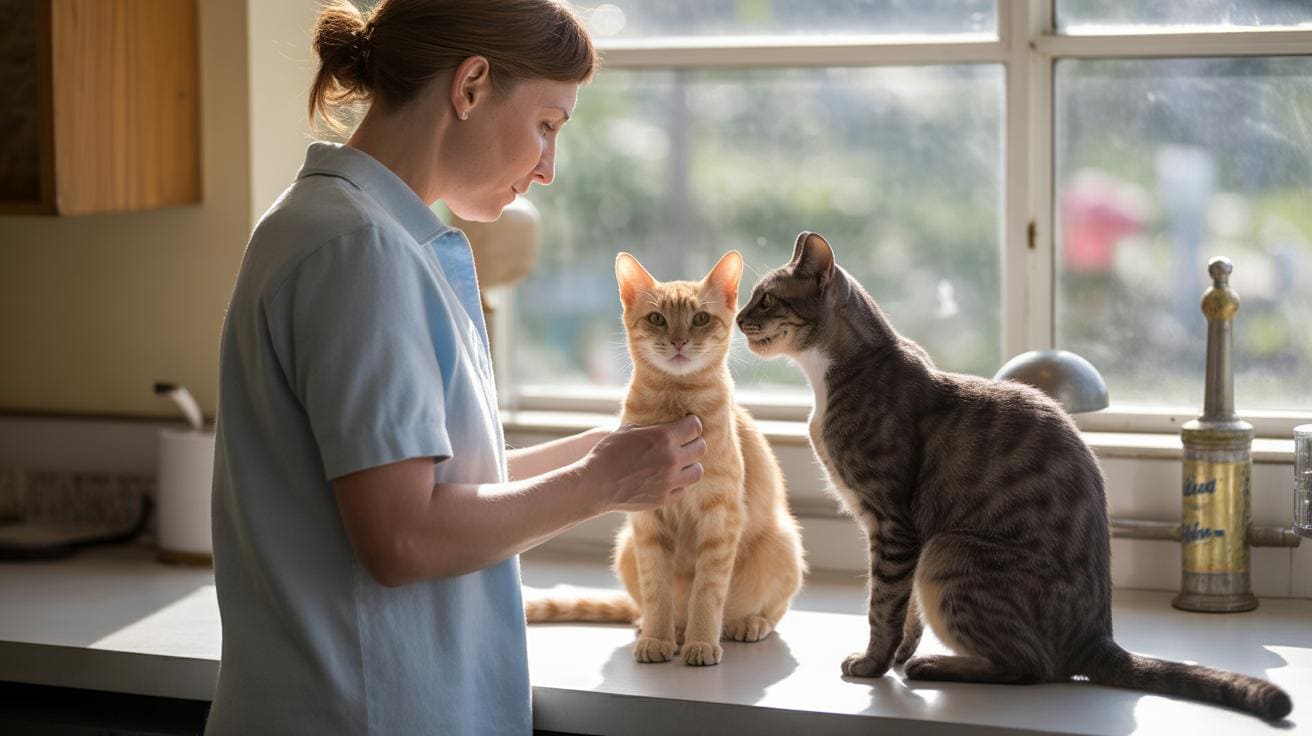
Sick of tiny paw prints on your toast and your cat treating the counter like a private VIP lounge? Cats love high spots and the smell of crumbs. Your kitty’s whiskers twitch, it inches closer, and before you know it there’s a paw on your plate. Ever watched a cat leap and thought, "Really?" Me too.
Here’s a short, humane 10-step plan with fast, practical moves you can try today. Clear away food and crumbs so the attraction disappears. Block the launch spots (those favorite jump or launch spots) so your cat has fewer easy paths up. Add a nearby perch or shelf so they still get height without the danger. Use a gentle marker-and-reward routine (marker: a short sound or word to mark good behavior, reward: a tiny treat) so your cat learns what you want. These steps help your cat stay safe, teach a new habit, and give you your kitchen back.
Worth every paw-print.
Quick-start: 10-step action plan
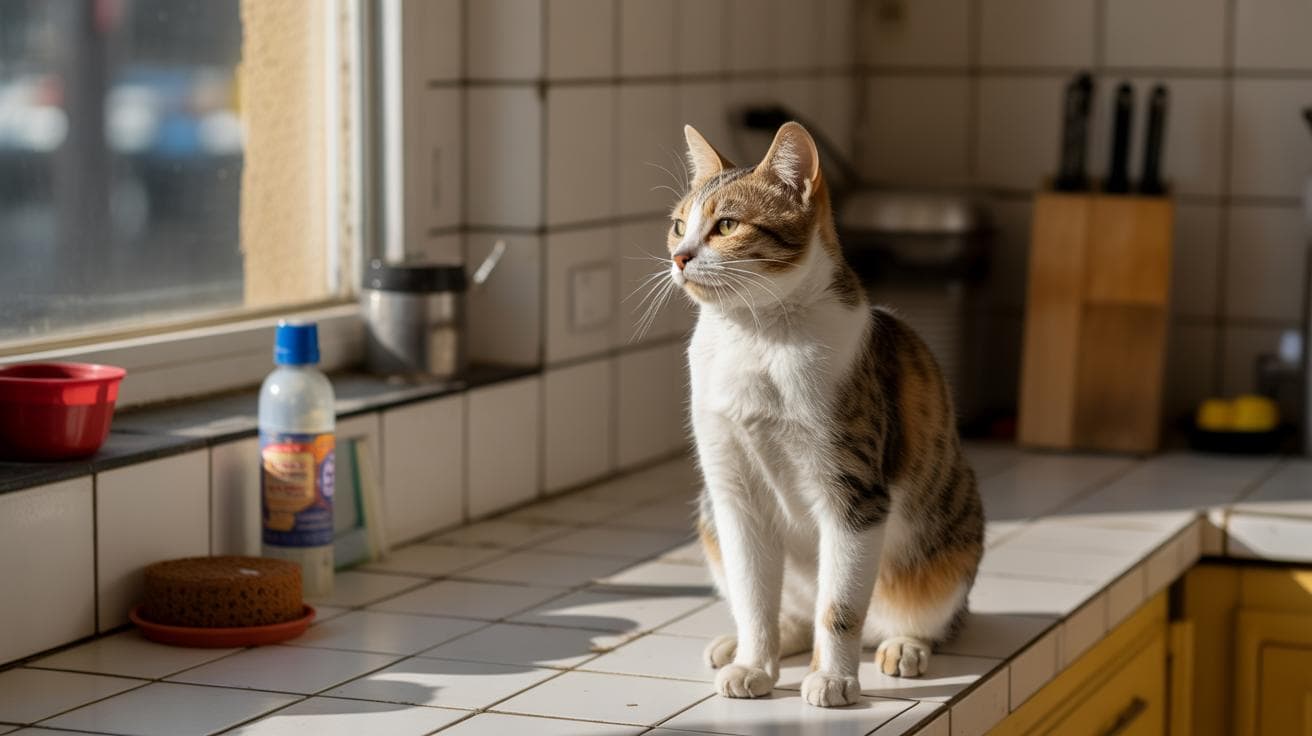
Use this quick starter plan when you want fast, humane steps to keep your cat off counters and safe. It’s simple, practical, and you can mix these ideas depending on your home.
-
Clear counters of food, crumbs, and dishes. Cats sniff and hunt, those crumbs are an invitation. (see Food management, feeders and schedules)
-
Remove or block boost points like chairs and stools. Boost points are the things cats jump from, so move them away or push them under the counter for a bit. (see Safe deterrents and counter-proofing)
-
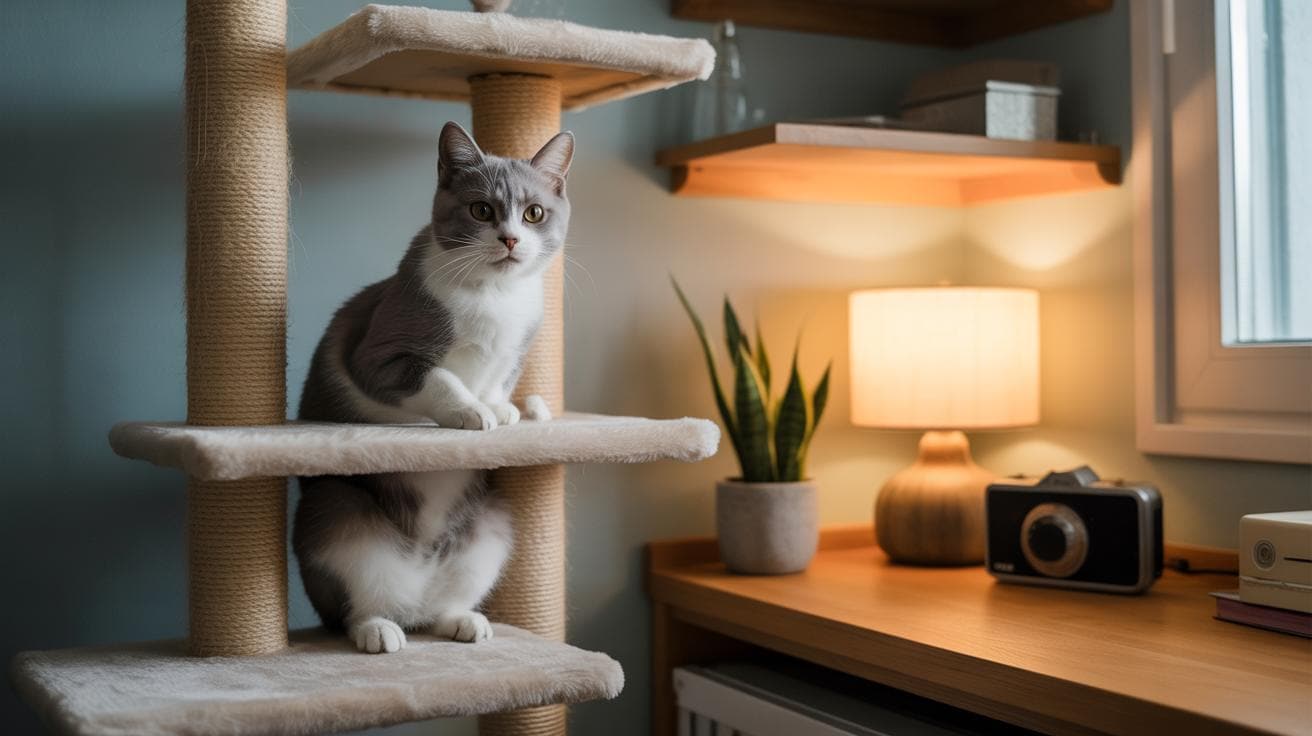
Put a stable perch or cat tree beside the counter as a nearby option. A perch or tree (tall climbing post or ledge) gives them the same height without the countertop chaos. Your cat may choose the perch when it wants the view. (see Provide alternatives: trees, shelves, perches)
-
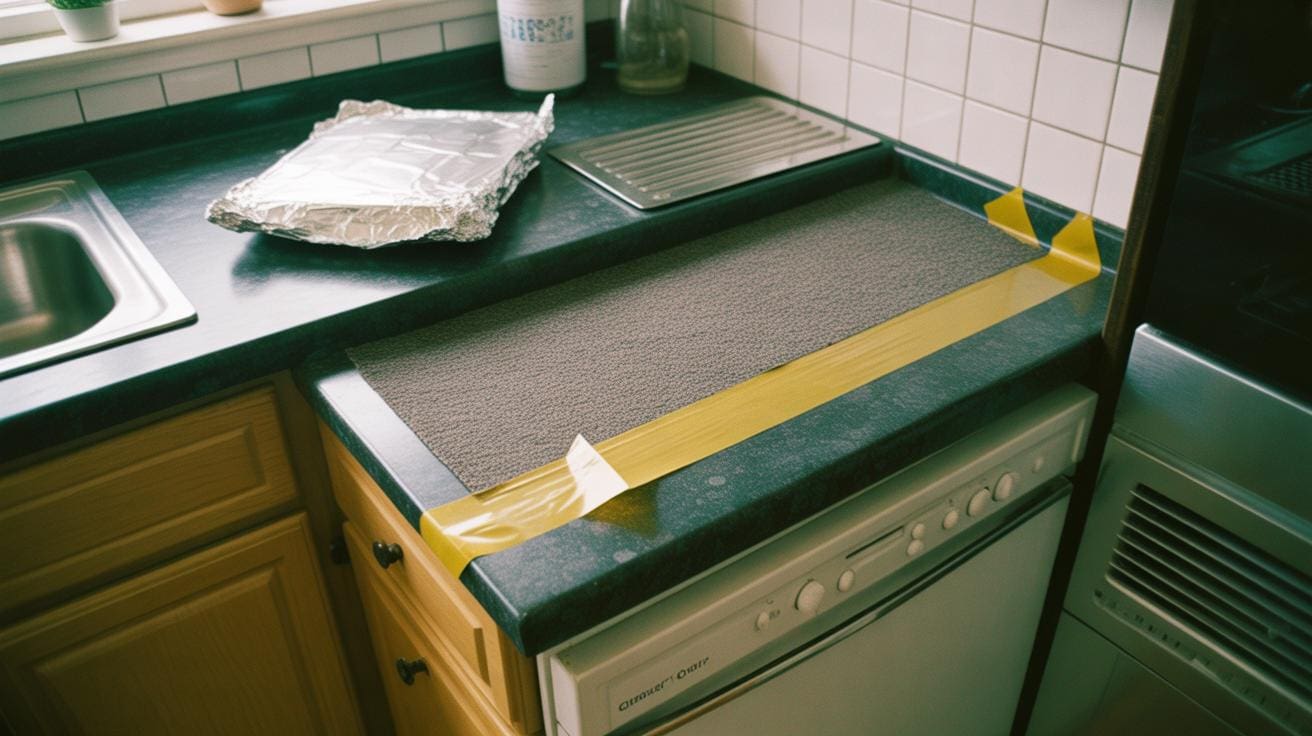
Try a temporary, humane deterrent on the counter edge for short-term training. Use crinkly aluminum foil (aluminum foil, the noisy, unpleasant feel under paws) or double-sided tape (sticky sensation cats dislike) only for a few days while you teach new habits. Don’t leave these forever. (see Safe deterrents and counter-proofing)
-
Start a simple "off" or "down" marker-and-reward routine when the cat hops off. A marker is a clicker or a single word, followed by a tiny treat, fast timing wins. Keep sessions short and consistent. (see Positive reinforcement methods)
-
Add extra daily play to cut boredom-driven jumping. Short, focused play (feather teaser, laser, or wand, think fishing rod for cats) tires them out and satisfies their chase instinct. Ten minutes before you leave can buy you peace. (see Provide alternatives and play protocols)
-
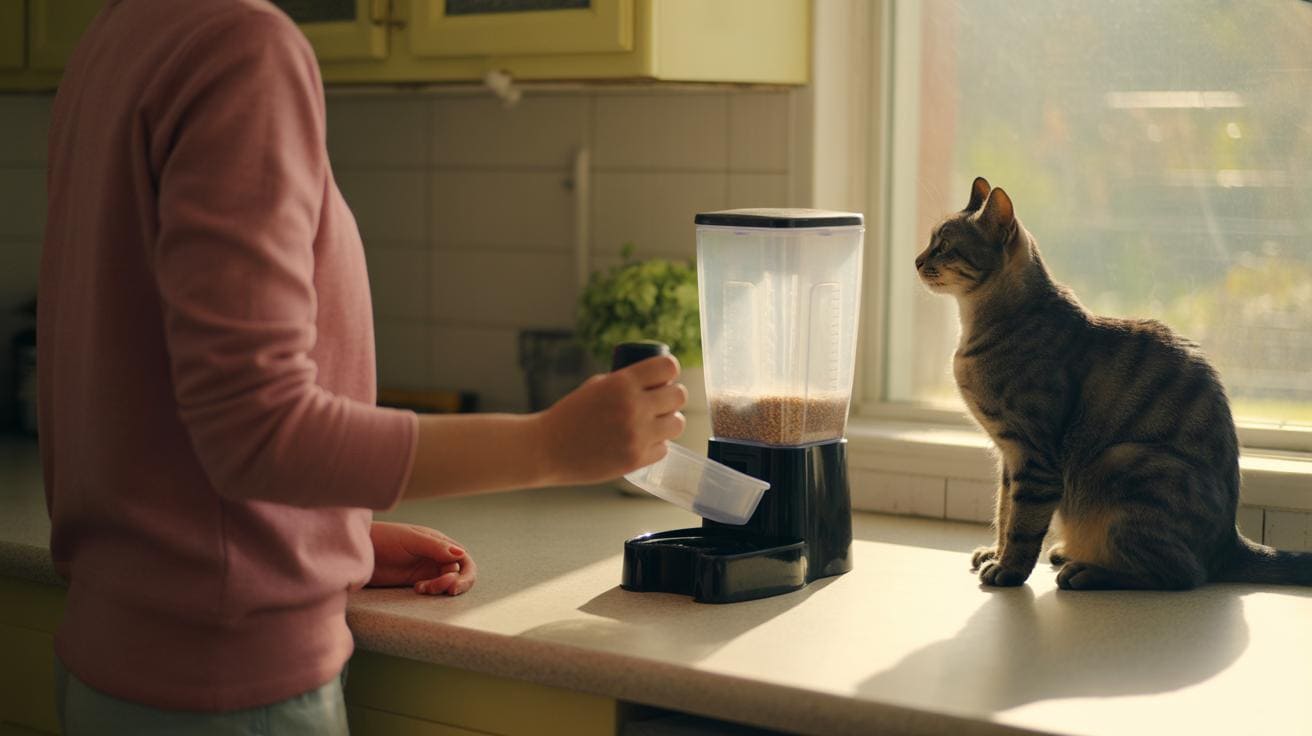
Use a timed feeder or puzzle feeder if food is the lure. A timed feeder (automatic food dispenser) or puzzle feeder (food-filled toy that makes cats work for meals) spreads meals and reduces counter-motivated scavenging. (see Food management, feeders and schedules)
-
Keep a quick weekly log of counter incidents and successful perch uses. Note time of day and what drew them up, this helps shape training and find patterns. One line per day is fine. (see Training kittens vs adult cats: tracking and shaping)
-
In multi-cat homes, run these steps for each cat and stagger training. Treat each cat’s motivations separately, and give shy cats quieter perch access while outgoing cats learn boundaries. (see Special cases: multi-cat households)
-
If the behavior appears sudden, extreme, or out of character, get a veterinary evaluation. A vet checkup (medical exam to rule out pain, thyroid issues, or stress) can catch problems that make cats act differently. (see Special cases: medical red flags)
Detailed operational steps, like exact session lengths, clicker timing, treat-fading plans, and calorie notes, live in the linked deep-dive sections; follow those protocols for the best results. Worth every paw-print.
Why cats jump on counters: causes you can address to stop counter-surfing

Counters are an easy high spot with great sightlines, warm patches, and lots of smells, so cats jump on counters to scout, nap, or spy on you. That elevated vantage satisfies their instinct to watch the room and feel safe. When a counter offers a better view than a window ledge or tree, it becomes irresistible.
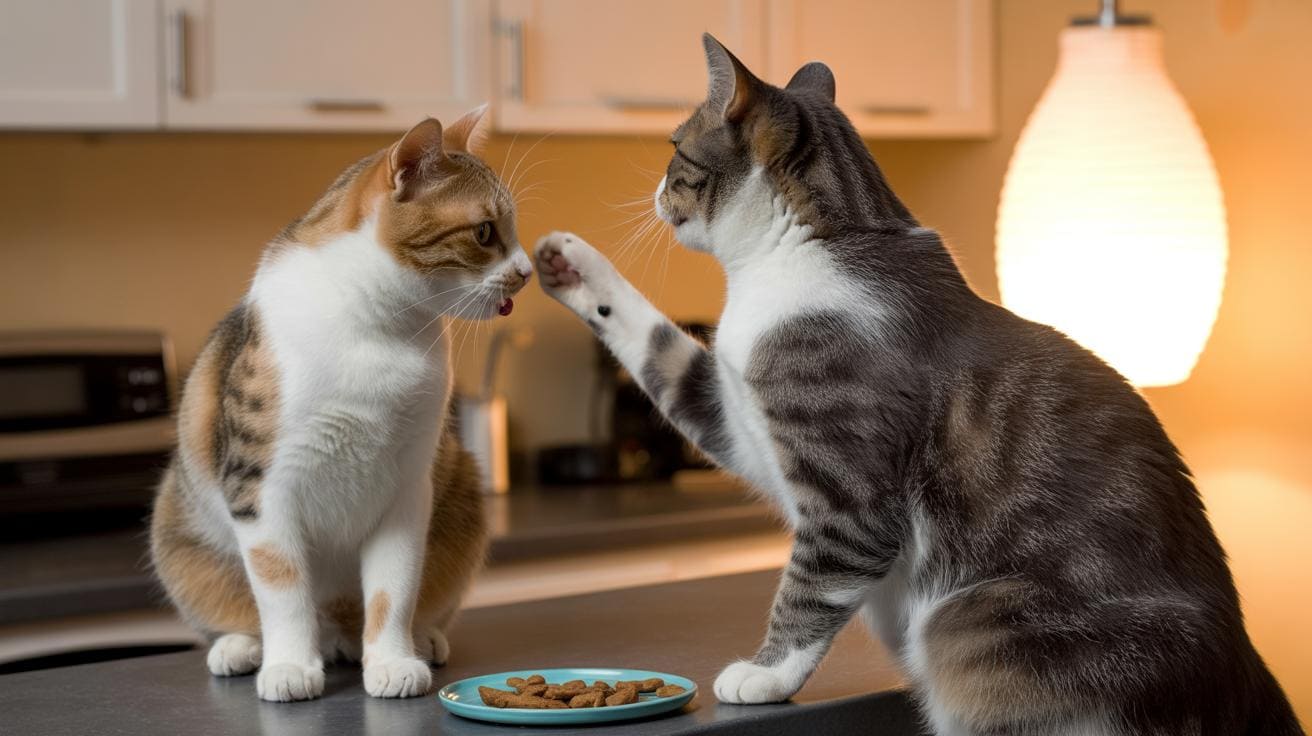
Smells and food are huge drivers. Leftover crumbs, a cooling plate, or a dropped grape tell a cat there might be a reward waiting, and people sometimes accidentally reinforce the habit by sharing bites or laughing. Counters also bring real hazards like hot pans, sharp knives, and toxic foods such as onion or chocolate (both can poison cats), so keeping them clear matters for safety.
A sudden jump in counter visits can be a red flag for health changes , more eating, more restlessness, or new routes onto counters may mean pain, dental trouble, or thyroid changes (thyroid gland shifts that speed up metabolism). If your cat starts counter-surfing out of the blue, a vet check is a smart move.
Not every leap is about snacks. Cats love heights for privacy and to monitor the action below; bored cats or ones craving attention might hop up just to get noticed. Even small things like a dripping faucet or running sink water can be a specific lure. Older cats or those with mobility pain will change how often or where they jump, so watch the pattern.
So how do you fix it? First, figure out why your cat is counter-surfing at home , food, height, boredom, attention, or medical reasons , then match the solution.
- Positive reinforcement: Reward your cat for using approved spots. Give treats, pets, or playtime when they choose a cat tree or window perch instead of the counter.
- Provide alternatives: Add a tall cat tree, a window shelf, or a padded perch (a comfy raised bed) so they get the view and warmth they want. Think of these like VIP seats just for them.
- Safe deterrents and counter-proofing: Remove temptations by clearing plates and crumbs. Try double-sided tape, a clean aluminum foil strip, or a motion-activated clacker (safe and humane) to make counters less fun.
- Food management and feeders: Store food in sealed containers and use puzzle feeders or scheduled feedings so food is predictable and not a counter mystery.
- Veterinary referral: If behavior changes suddenly or you see other signs like weight change, litter box issues, or pain, get a vet visit to rule out medical causes.
Ever watched your kitty leap up, whiskers forward, like they own the place? It’s normal. With a little detective work and a few new perches, you can keep them safe and off the countertops , and still give them their throne.
How to Train a Cat to Not Jump on Counters
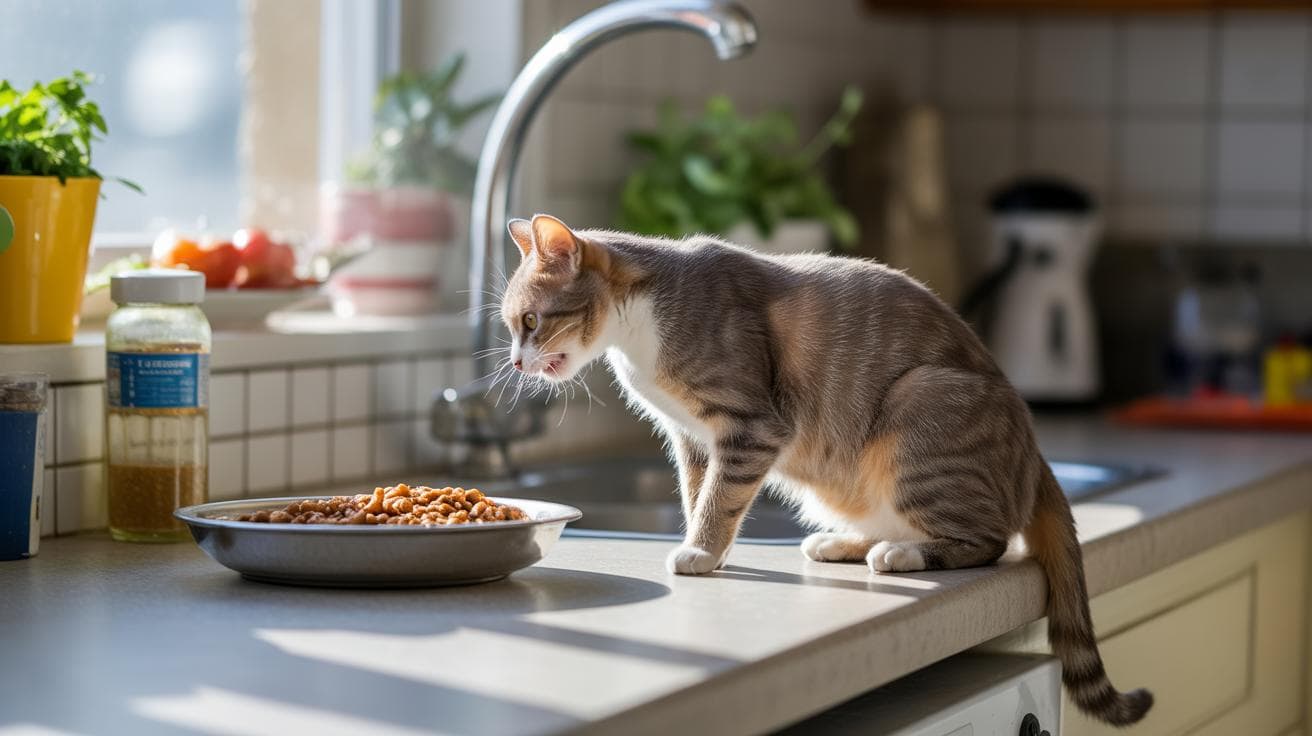
Positive reinforcement is the safest, most reliable way to teach "off" and "down." Below is a step-by-step marker-and-reward plan you can start today, plus schedules, treat notes, and quick fixes when things stall. Ready? Your cat might be too, once the treats show up.
Pairing the marker and creating the "off" response
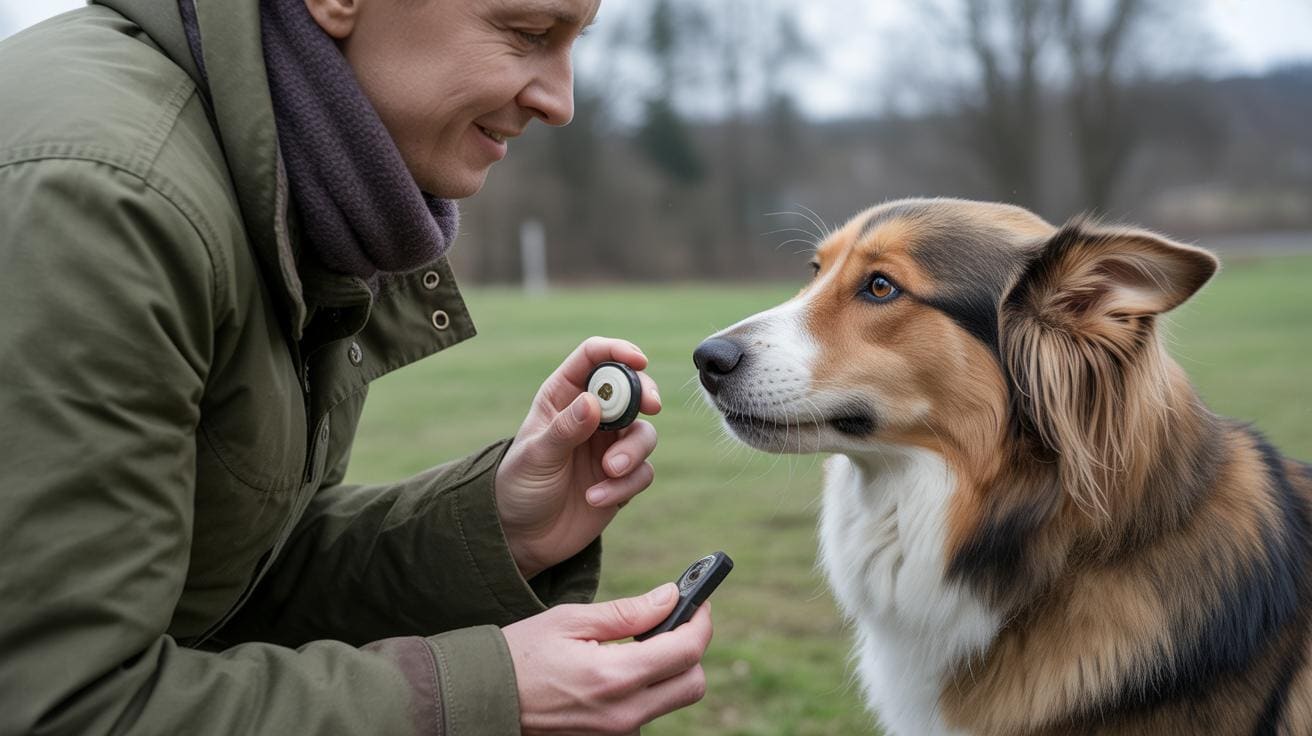
Pick a marker: a clicker (a small handheld device that makes a sharp click) or a short verbal word like "Yes!" The marker tells your cat the exact moment you want to reward.
Days 1-3: charge the marker by clicking or saying your word, then give a tiny treat within about one second. Do 20-30 pairings per short session, 2-3 sessions a day so the click predicts food fast.
Next, capture the first off behavior. When your kitty jumps down, mark the instant the paws touch the floor (that little satisfying thud), then reward and say a quick praise. If they don’t offer the move naturally, lure them with a target stick (a stick with a small ball tip cats touch with their nose) or hold a treat near the floor, mark the downward step, then reward. Keep sessions 3-5 minutes with 10-15 good reps early on. Film a few reps on your phone to check your timing, seriously, timing is everything.
Shaping and fading: session plans and reinforcement schedules
Beginner plan (weeks 1-2): continuous reinforcement. Reward every correct "off" so the connection is obvious. Run three short sessions each day: morning, midday, and evening. Aim for 10-20 reps total per day. Rest 15-30 seconds between reps so your cat stays interested.
Intermediate (weeks 3-4): start cutting food rewards. Switch to a mixed system, every 2nd or 3rd correct "off" gets a treat, others get a short play burst or petting. Replace some treats with 20-30 seconds of wand play (a teaser toy like a fishing rod for cats). Treat-size note: tiny bites work best, a pea-size piece of freeze-dried chicken is often 1-3 kcal. If weight is a worry, remove the same number of calories from meals that day rather than skipping rewards.
Advanced (weeks 5-8): move to intermittent reinforcement. Reward unpredictably, and use praise or play on non-food trials. By week 8 many cats will respond to a single food reward every few successes, plus petting or play sometimes.
Sample cue script: show the perch, say the cue ("off" or "down"), wait, mark the instant paws are down, then reward within about one second. Short and consistent words help learning.
Tools, product recommendations, and advanced techniques
Find a clicker that fits your hand and clicks crisply. Choose a verbal marker you can say in one comfortable breath. A lightweight target stick speeds shaping. Use a phone timer or apps to keep session lengths steady and to remind you to train a few times a day.
Treat picks: freeze-dried meat bits, tiny soft treats, or crushed high-value kibble. Non-food rewards: a 20-30 second high-energy chase with a wand, a quick lap of petting, or access to the window perch you want them to use. Advanced move: guide your cat from counter to perch with the target stick, then mark on the perch and reward there. Film short how-to clips of your sessions to spot timing slips or to show a trainer if you need help.
Troubleshooting checklist
- Marker comes too late: practice clicks and treats alone until the click predicts food instantly.
- Rewarding while cat is still on the counter: new rule, no reward unless all four paws are on the floor or on the approved perch, then mark.
- Inconsistent rules confuse cats: pick one cue and one reward plan and stick with it for at least two weeks.
- Cat avoids the kitchen after a training slip: reduce startling things and make the perch more inviting with treats and toys.
- Progress stalls despite good timing: check overall food access, add more short play sessions, and consider a vet check for hidden medical issues or a consult with a certified behaviorist.
Worth every paw-print.
Ever watched your kitty chase shadows while you sip coffee? Training like this gives you ten focused minutes of good behavior and your cat a safe, fun outlet. Oops, let me rephrase that, it's really a tiny routine that can change your whole kitchen vibe.
How to Train a Cat to Not Jump on Counters
Good alternatives work when they give your cat the same perks as a countertop: height, a clear view, a warm spot, and a front-row seat to the action. Put perches where people hang out, pick models with a wide base footprint (the floor space the tree needs), and anchor shelves to studs (vertical wall supports) or use rated anchors (anchoring = securely fastening to the wall; rated anchors are heavy-duty fasteners made for drywall).
Think of training like staging a royal takeover. Turn the new spot into your cat’s favorite throne by making it reliably rewarding. Start with tasty treats, short play bursts, and a clear cue word. Then shape the switch from counter to perch over about two weeks using a marker (clicker or a short word) and steady rewards.
Selecting and installing the right perch or tree
Choose a stable cat tree as a counter alternative. Look for a broad base, plywood (pressed wood board), or a solid-core post (a dense center post that won’t crush under claws), and a posted weight rating (how much load the product safely holds). Height rules of thumb: small cats 2–3 ft, average cats 4–6 ft, large breeds 6+ ft. For tall freestanding trees, pick a base at least 1.5 times the tree height in diameter so it won’t tip.
For wall shelves and window perches you need stud-mounted brackets or heavy-duty toggle anchors if you can’t find a stud (toggle anchors are strong fasteners that spread load behind drywall). Mounting steps: find a stud, mark bracket locations, pre-drill pilot holes (small starter holes), screw brackets into the studs, attach the shelf, and test it by pressing down and applying sideways force. For window perches choose models with a lip or a non-slip pad and check that the sill and fasteners will hold your cat’s weight before letting them up.
Training protocol to move from counter to perch
Days 1–3: bait the perch with treats and a favorite toy. Sit nearby and mark (click or say your marker) the instant your cat steps onto the perch, then reward. Keep sessions short and sweet.
Days 4–7: use a target stick or wand (think fishing rod for cats) to guide the cat off the counter and onto the perch. Mark on the perch and reward there. Start saying a cue word like “perch” or “tree” as you lure them up.
Days 8–10: fade the visible lure. Give the cue and wait a beat for your cat to move, then mark and reward when they do. Start rewarding intermittently rather than every single time.
Days 11–14: aim for independent use. Hide a tiny treat on the perch and only reward when the cat jumps up without a food lure. Measurable goal: perch used five times a day without a food lure. Practice template: three 3–5 minute sessions per day with 6–12 reps total.
Your cat’s whiskers will twitch as the treat rolls across the perch. Reward the behavior you want, and soon the perch becomes the obvious choice.
Play-based maintenance and toy rotation
Keep the perch exciting with short wand-toy sessions on or near it, and a puzzle toy sometimes topped with a few kibble pieces. Rotate toys every 3–7 days so the spot feels new. Mix high-speed wand chases with slow, reward-based play to keep motivation fresh. For texture swaps and new sounds try DIY replacement attachments for teaser wands. Short how-to videos of a wand session and a puzzle feeder on a perch help you copy success.
- Troubleshooting checklist:
- Perch wobbles: move it to floor level, re-anchor, or choose a heavier-base model.
- Perch in a dead spot: relocate it near where people sit or by the kitchen doorway.
- Cat ignores the perch: add hidden treats, do a brief wand session on the perch, and use a clear cue when rewarding.
Common setup mistakes are an unstable perch, placing it where no one hangs out, and never changing toys. Fix these by upgrading to a sturdier tree or anchoring shelves, moving the perch into view of your usual seating, and rotating toys and puzzles. If progress stalls, go back to the lure-and-mark steps and raise the perch’s immediate payoff with a timed puzzle or a short, exciting play burst on the spot.
Worth every paw-print.