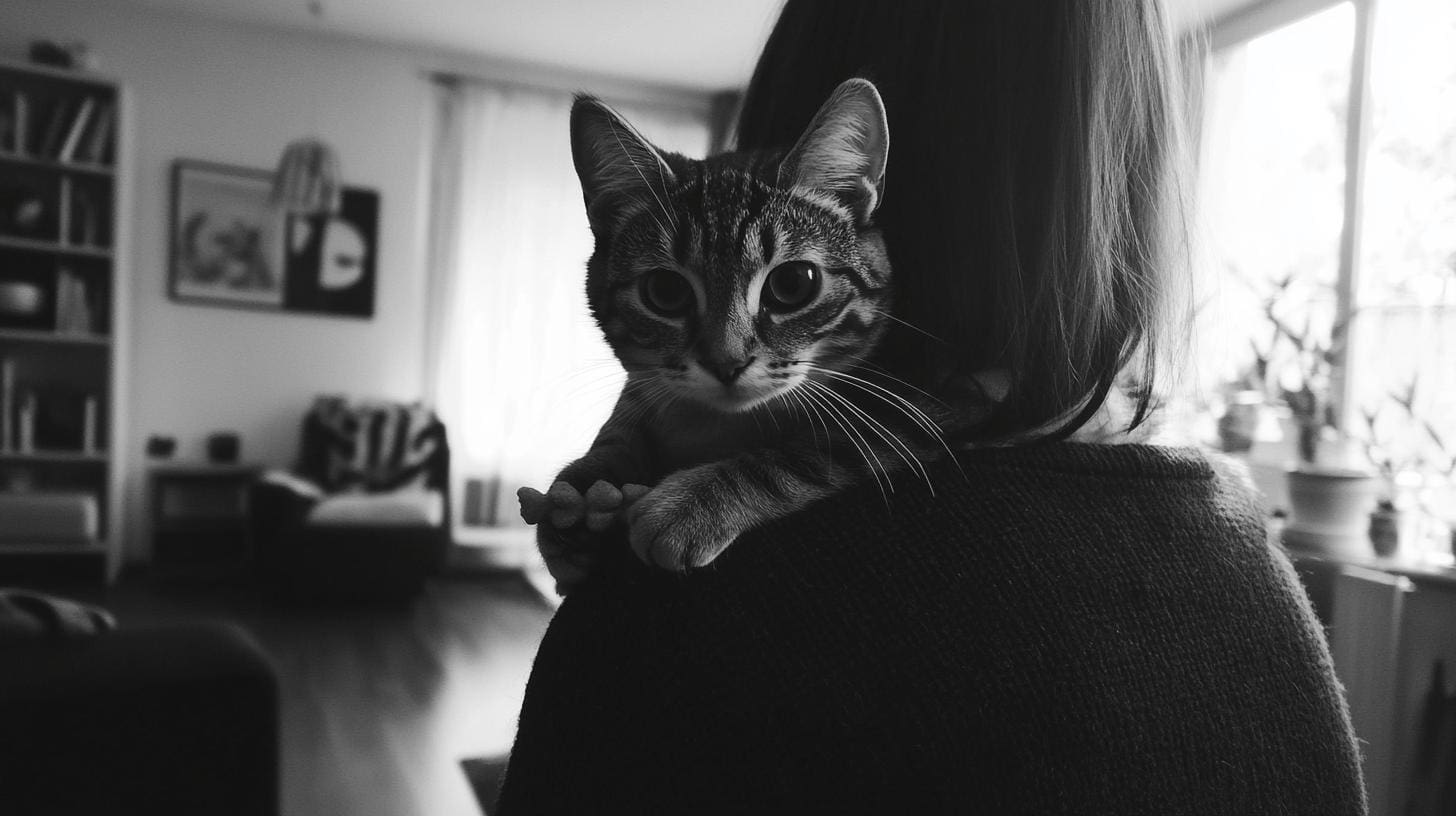
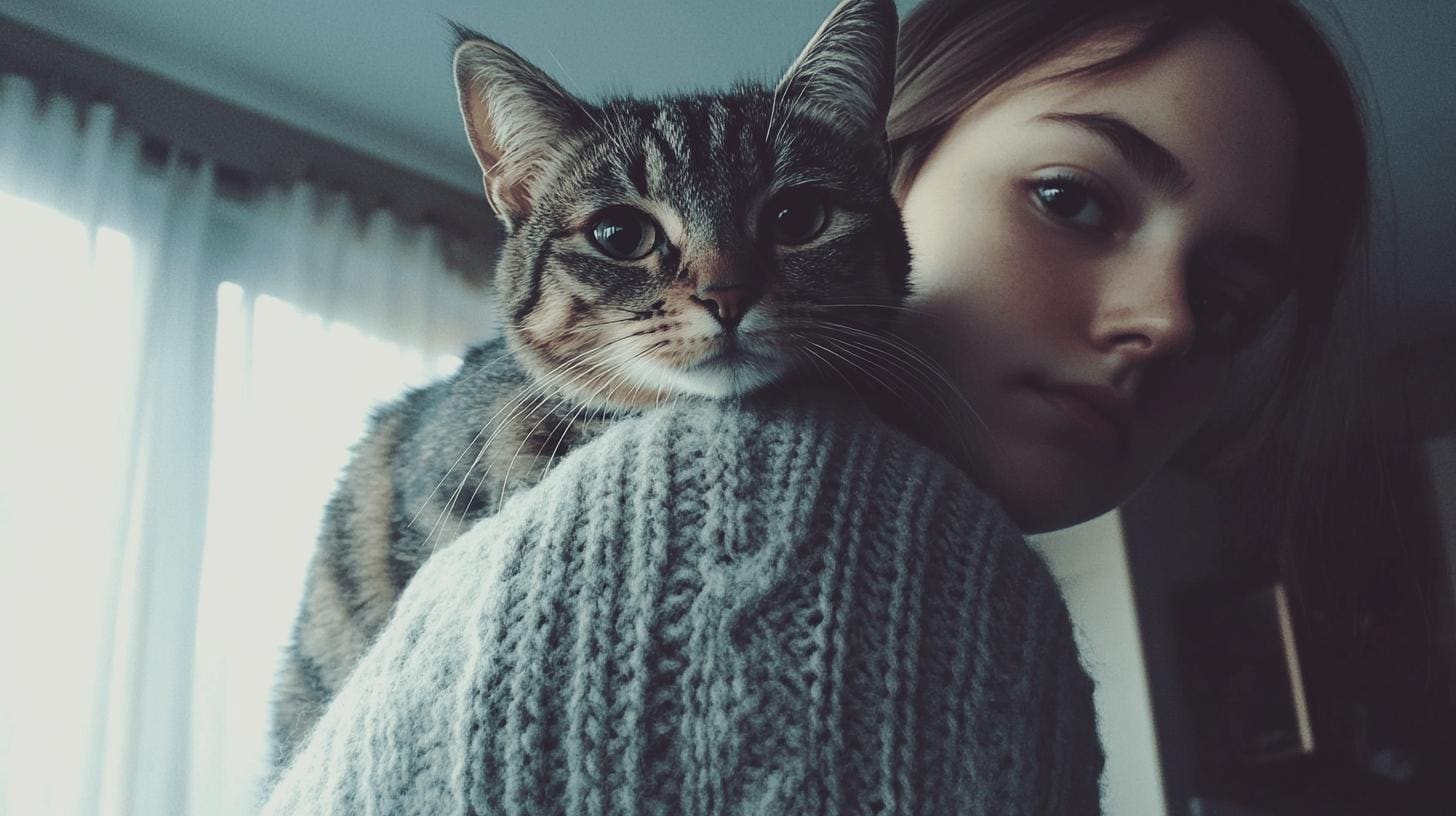
Ever thought about turning your shoulder into your cat’s favorite perch? Training a cat to sit on your shoulder can be an enjoyable experience interactive play. It’s all about making them comfortable and associating your shoulder with positive vibes. Start with feeding times to create happy memories on your shoulder. Slowly, encourage them to climb up with treats.
Use furniture as steps, guiding them with a wand or target stick. With patience and positive reinforcement, your cat will soon be happily perched, enjoying the view from your shoulder!
Training Your Cat to Sit on Your Shoulder: Step-by-Step Guide
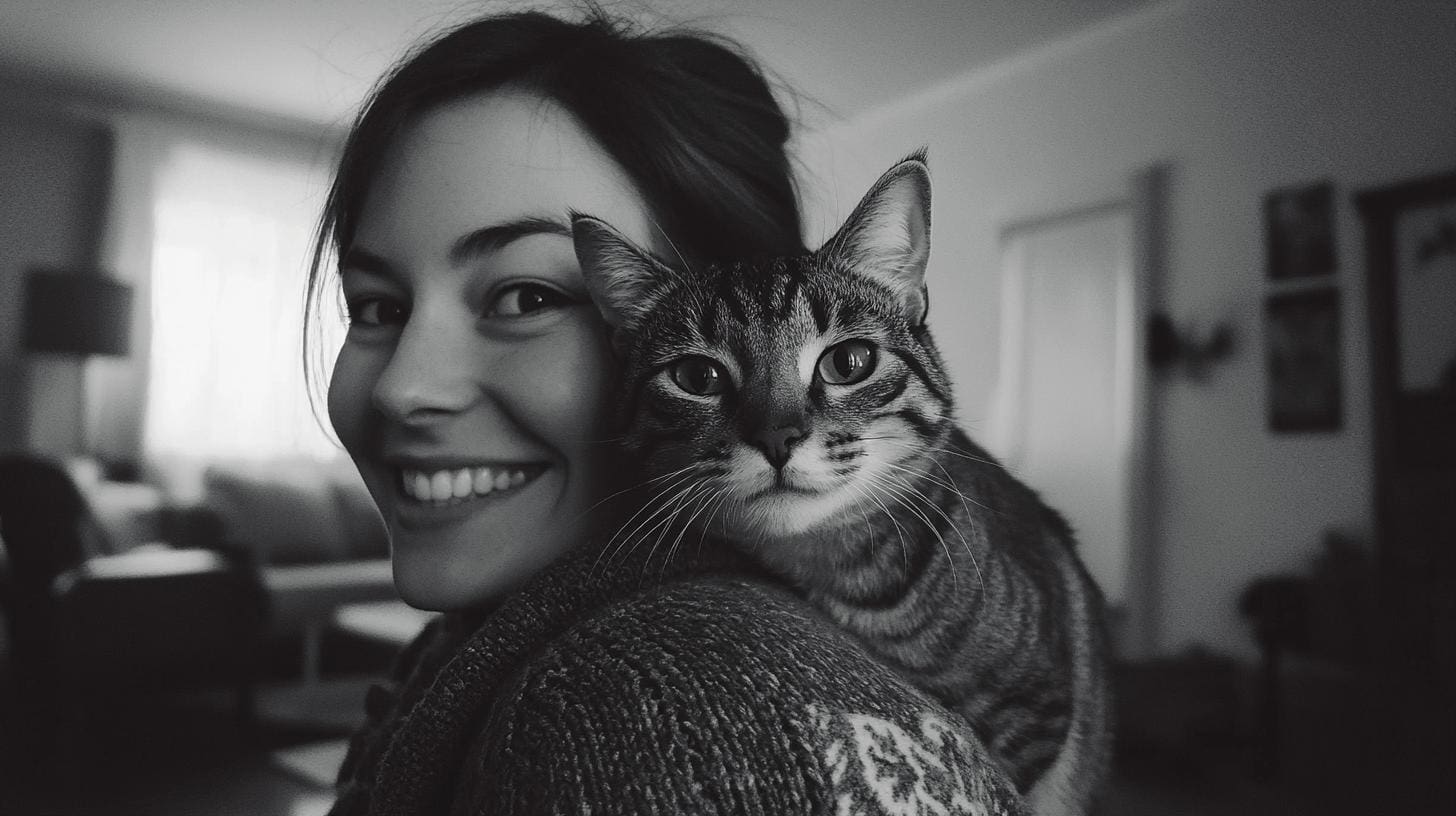
Start by making your cat comfortable with the idea of being on your shoulder. Positive reinforcement is key, and it’s important not to force them. Begin by using feeding times to make your shoulder a place of positive associations.
- Use feeding times to encourage your cat to place their paws on your shoulder. This creates a positive experience connected to food.
- Gradually get the cat to perch on your shoulder by using distractions like food. Hold a treat above your shoulder to encourage them to climb up.
- Train the cat to walk up to your shoulder by building a stair-like path. Use furniture or safe platforms to create a path for them to follow.
- Use a wand or target stick to teach your cat to jump onto your shoulder. Guide them with the stick and reward them once they reach your shoulder.
- Reinforce behaviors with a clicker and treats clicker training. Click when your cat performs the desired action, then immediately give them a treat.
Patience is crucial throughout this process. Cats might take time to become comfortable with new positions. Allow them to progress at their own pace without rushing. By consistently using positive reinforcement, your cat will learn to enjoy the experience of sitting on your shoulder.
Choosing the Right Environment for Shoulder Training
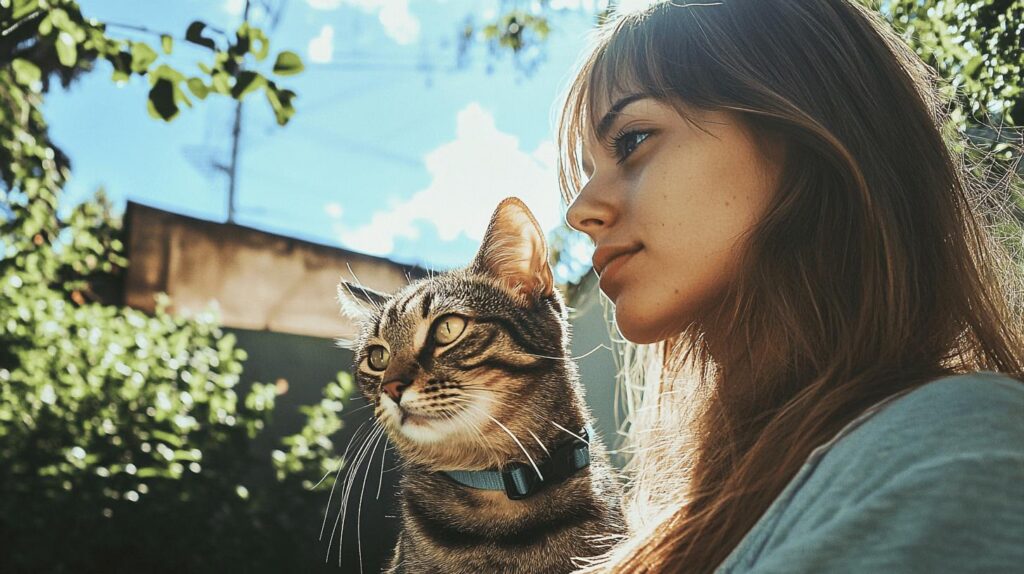 Cats are naturally inclined to seek high places. This helps them see further, a trait from their wild ancestors who needed to spot prey and predators. When training your cat to sit on your shoulder, use this preference to your advantage. Start by introducing them to elevated spaces in your home, like shelves or the top of furniture. These spots help your cat feel secure and allow them to get used to being off the ground.
A shoulder cat willingly sits on their human’s shoulder. This behavior often comes from a cat’s desire for height and vantage points. Recognizing these traits can help you set up the right environment. Start by assessing your cat’s comfort with heights. Some cats may enjoy the view from your shoulder, while others might prefer staying in a backpack or walking on their own. Understanding your cat’s personality is crucial in deciding how to proceed with training.
- Use a zipped-up backpack to simulate a high perch.
- Choose a quiet area free from distractions.
- Ensure the environment is safe for both you and your cat.
- Affection for high perches and curiosity about heights.
Creating a safe and trusting environment is vital for training success. A quiet area helps minimize distractions, allowing your cat to focus on the task. Safety should always be a priority. Remove any hazards from the area to prevent accidents. Trust-building is key, so give your cat time to explore and get comfortable with the surroundings before starting any new training activity.
Identifying and respecting your cat’s individual preferences makes training more effective. Some cats may naturally gravitate towards your shoulder, while others might need more encouragement. Pay attention to their body language and comfort levels. If your cat seems hesitant or anxious, take a step back and provide reassurance. Adjust the environment and training approach to fit your cat’s needs, ensuring a positive and rewarding experience for both of you.