
Can cats really enjoy exercise wheels like their canine counterparts on treadmills? It’s a question many cat owners ponder interactive play. While some may doubt it, using an exercise wheel can actually boost your cat’s physical well-being and provide mental stimulation, enhancing their playtime experience.
Imagine your feline friend zooming happily on the wheel, just like a mini athlete! In this guide, I’ll walk you through simple steps to get your cat running joyfully on their very own exercise wheel while keeping them safe and entertained. Let’s get started!
How to Train a Cat to Use an Exercise Wheel: A Step-by-Step Guide
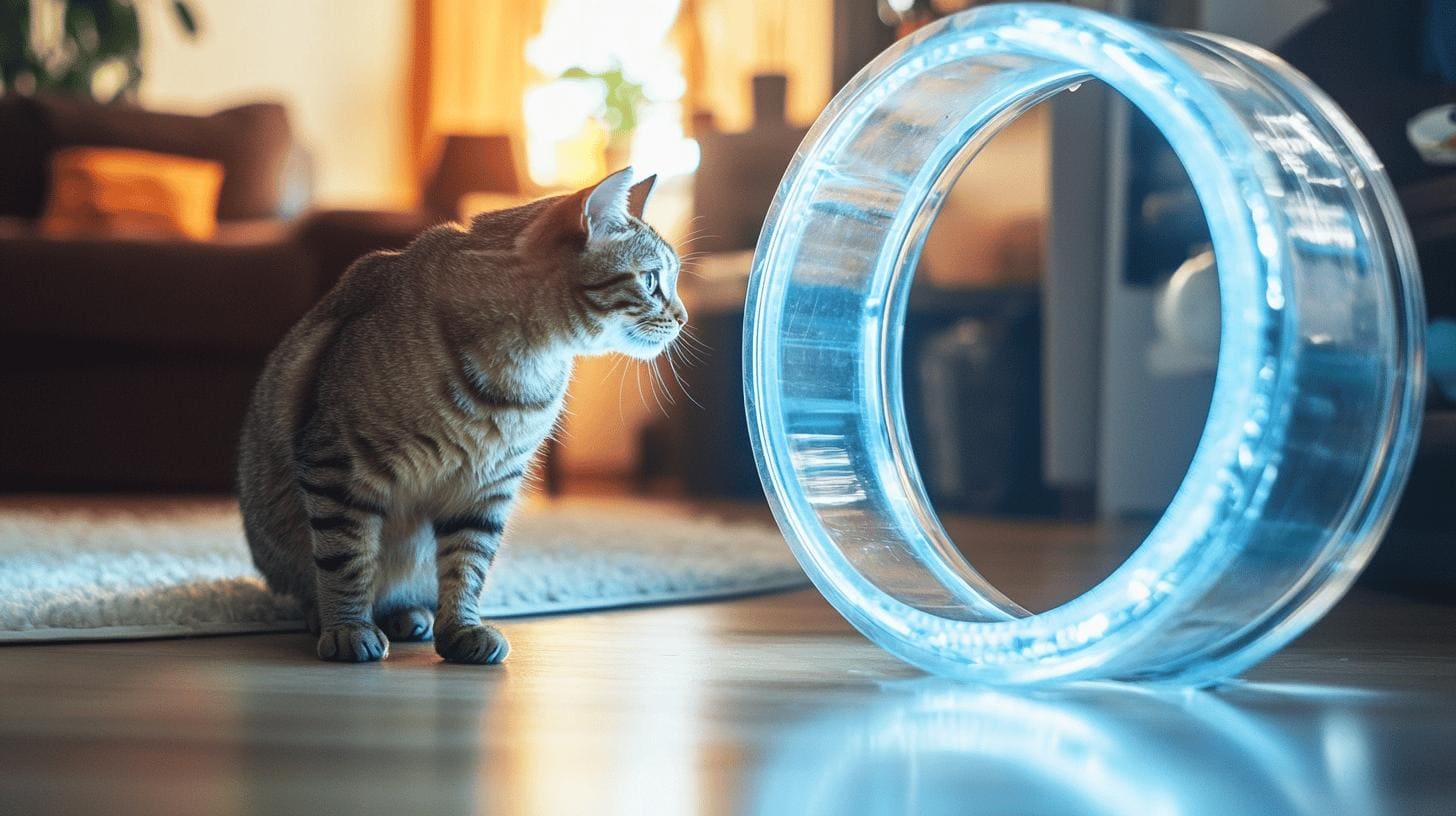
Introducing your cat to an exercise wheel can be an exciting endeavor. Start by placing the wheel in a familiar area where the cat spends a lot of time, like a playroom or near a window. This helps reduce anxiety and encourages curiosity.
Allow your cat to approach the wheel at their own pace. Avoid any sudden movements or loud noises that might startle them. The key is to let them sniff and explore the wheel freely, creating a positive first impression.
- Entice with Treats: Begin by placing a few treats near the wheel to draw their interest. Gradually create a trail leading up to and onto the wheel.
- Reward Interaction: Each time your cat sniffs or touches the wheel, reward them with a treat or praise. This positive reinforcement builds a favorable association.
- Encourage Exploration: Once your cat is comfortable around the wheel, place a treat or small toy on the wheel itself. This encourages them to step onto it.
- Introduce Movement: Gently turn the wheel by hand while your cat is on it, rewarding them for staying calm. This helps them get used to the wheel’s motion.
- Increase Wheel Time: As your cat becomes more comfortable, gradually extend the time they spend on the wheel. Always reward them for their progress.
| Safety Tip | Explanation |
|---|---|
| Monitor Sessions | Always supervise your cat during wheel sessions to ensure they don’t get scared or injured. |
| Check Stability | Ensure the wheel is stable and secure to prevent tipping while in use. |
| Avoid Overexertion | Limit initial sessions to prevent exhaustion, gradually increasing as the cat builds stamina. |
Consistency and patience are the backbone of successful training wheel training. Most cats can learn to use the wheel within one to two weeks, but some may take longer. Watch for changes in your cat’s behavior, such as increased confidence or eagerness to approach the wheel. This is a sign of progress. Keep the sessions positive and short, gradually extending them as your cat grows more comfortable. Remember, every cat is unique, so adjust your approach based on their responses and comfort level.
Selecting the Right Exercise Wheel for Your Cat
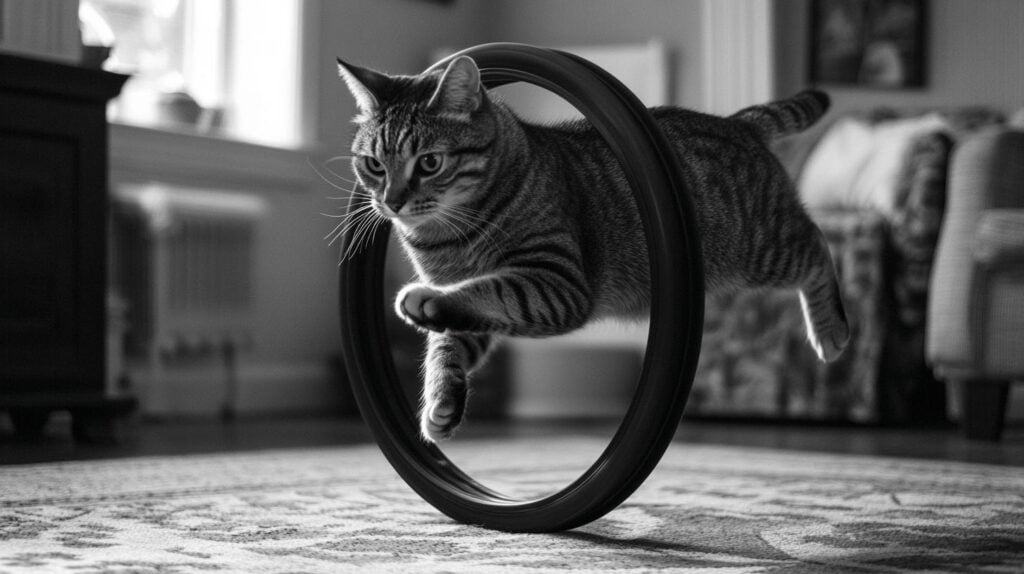
When choosing an exercise wheel for your cat, consider the size, stability, and ease of assembly. A wheel that matches your cat’s size ensures they can use it comfortably. Stability is crucial, as a wobbly wheel might scare your cat away. Look for designs that are easy to assemble so you can set it up quickly without hassle.
- One Fast Cat: Measures 48 inches high, 46 inches wide, and 11 inches deep. It’s known for safety and easy assembly.
- GoPet TreadWheel: Offers a durable build with a non-slip surface, though it requires more space.
- Cat in Motion Wheel: Compact and lightweight, ideal for smaller spaces.
Matching the wheel to your cat’s size and your home’s available space is key. A large wheel might not fit in a compact apartment, while a small wheel might not support a bigger cat. Consider your cat’s personality and physical needs when selecting the perfect wheel.
