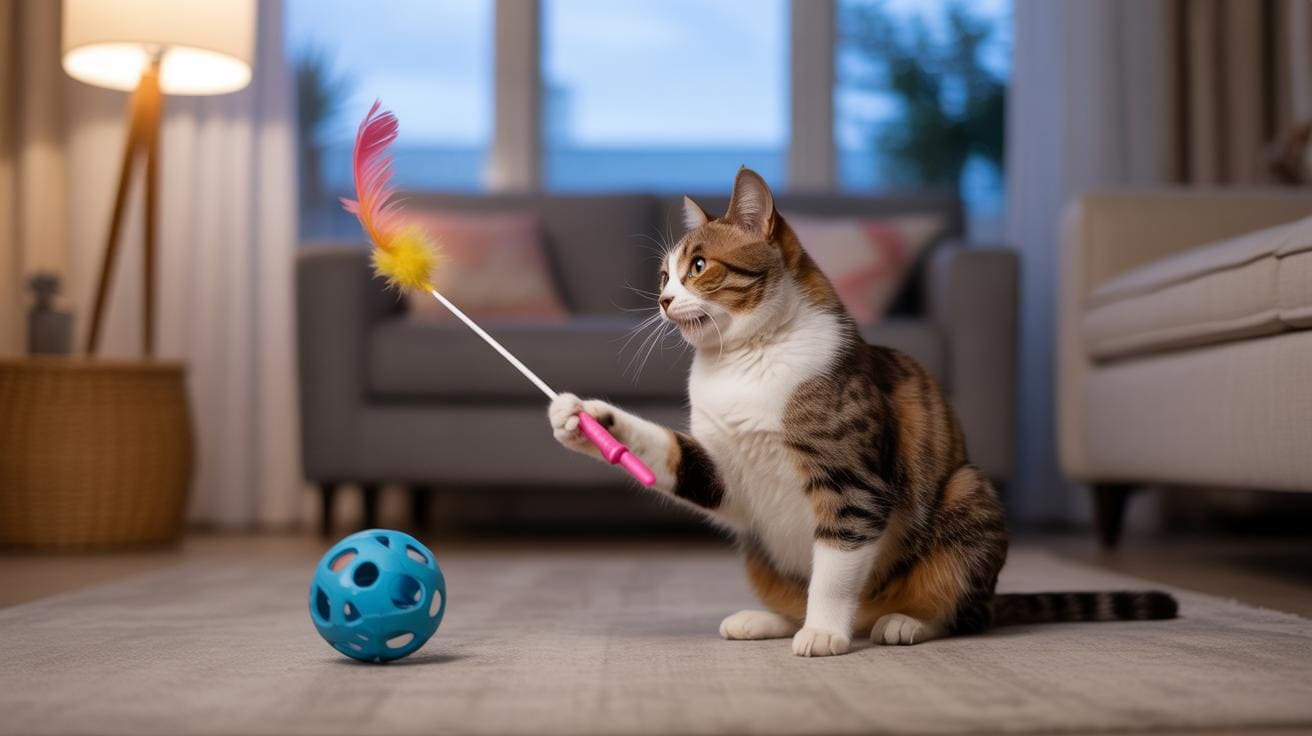
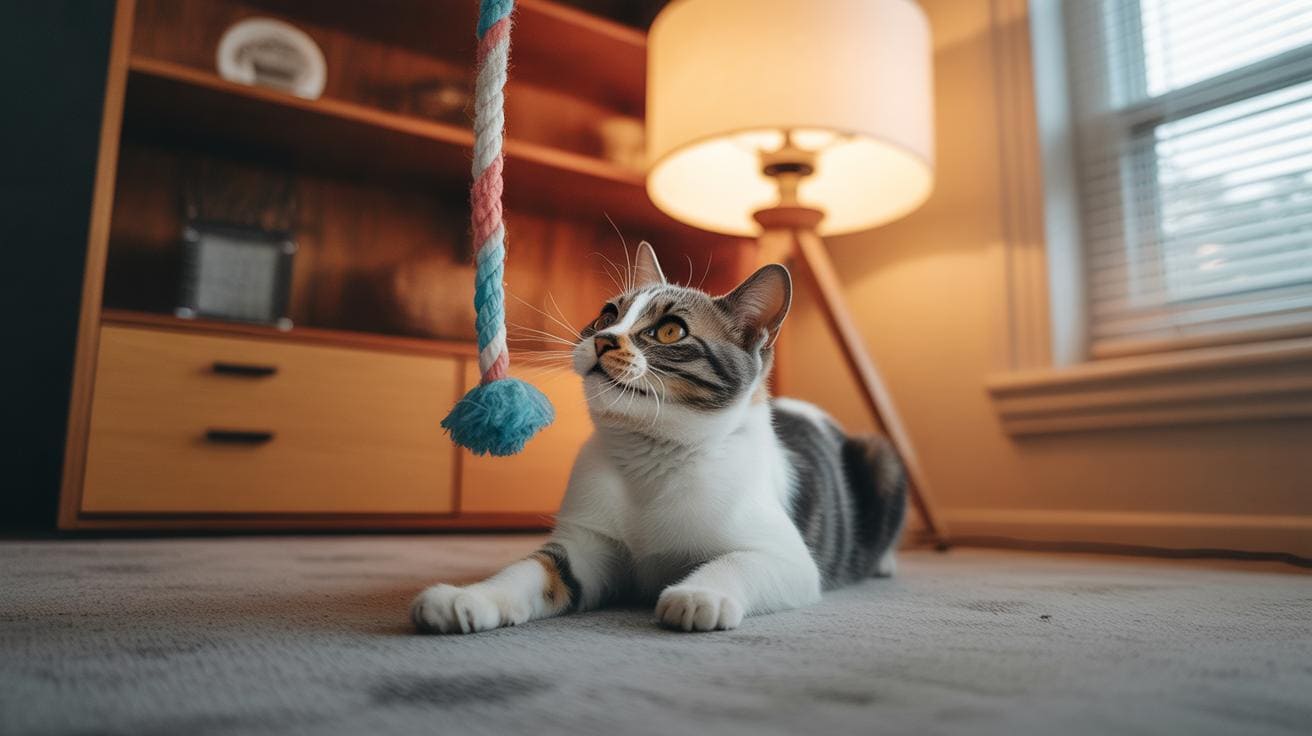
Think indoor cats don't need real workouts? Think again. Ever watched your kitty sprint from the couch to the kitchen for no reason? Those zoomies need an outlet, or boredom and extra pounds sneak up fast.
When energy has nowhere to go your cat gets restless. Toys get shredded, naps get excessive, and you end up chasing stray fur around the house. It’s not just silly behavior. It’s your cat asking for play time.
In this review we test interactive, unbreakable toys for indoor cats: exercise wheels (like a big hamster wheel for cats), motorized chase gadgets (battery-powered toys that drive themselves), and rechargeable rolling balls (USB for charging, USB means universal charging cable). We look at which toys match a kitten, a couch-loving adult, or a hard-chewing cat, and how much floor space each needs.
You’ll get clear pros and cons, safety tips about cords and tiny bits that could come off, and practical picks for busy people who want a happier, more active cat. Toss one of these out before you head to work and you’ll probably come home to a calmer, content kitty. Worth every paw-print.
Interactive unbreakable cat toys for indoor exercise: quick buy guide
One Fast Cat Exercise Wheel Gen 6 , full-speed indoor workouts for high-energy cats; supports up to 22 lb.
MayMaw Kitifish , rechargeable USB (universal serial bus for charging) wheeled toy with 7 fast modes, auto-reverse (it changes direction if it gets stuck) and a 5-minute inactivity shutoff; about 2 hour runtime.
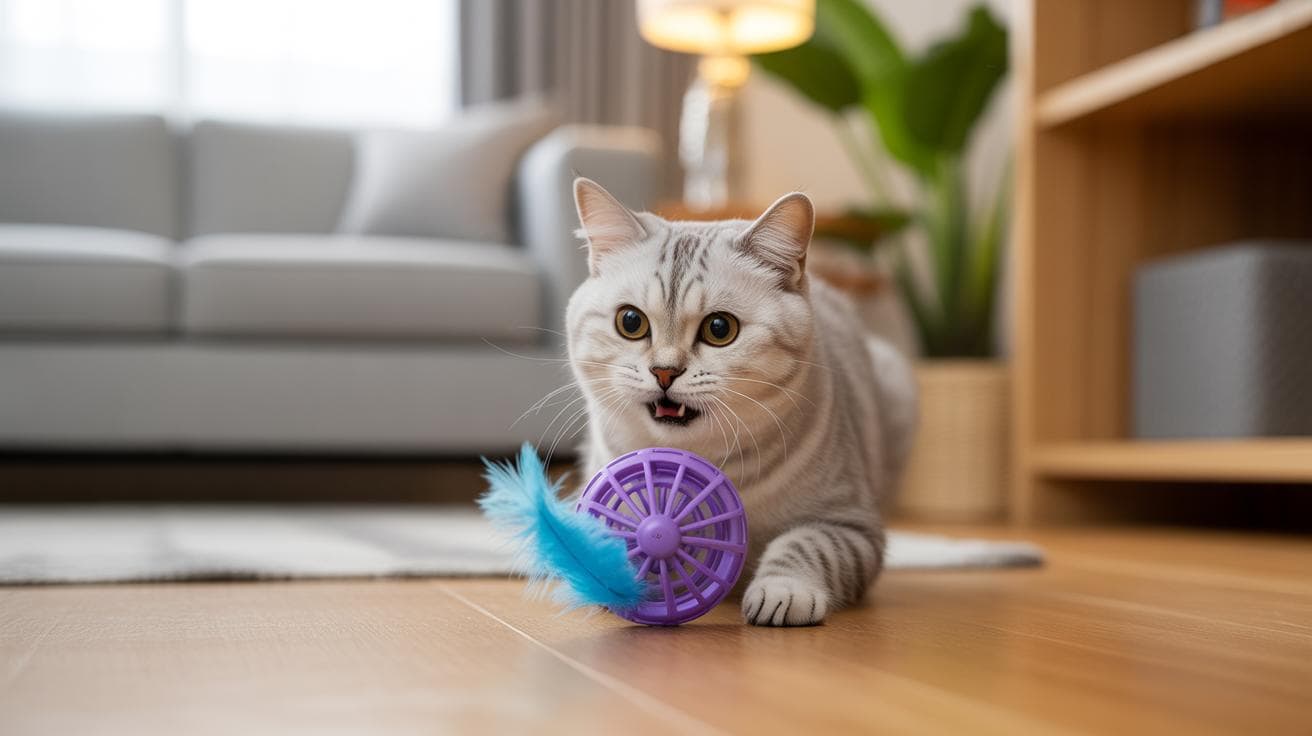
Rechargeable rolling ball with detachable magnetic (attaches with small magnets) feathers , USB recharge, about 2 hour runtime; self-play that rolls, lights up, and swaps feathers for washing.
Match the toy to your cat’s age, chewing tendency, how much floor space you have, and whether you want owner-led bonding or solo play. Ever watched your kitty chase a dot of light until they flap at nothing? That’s why finishing a laser session with a physical toy feels good to them. Watch for cord-chew risk on hanging toys, small detachable parts on motorized items, and toys that can wedge under furniture.
Quick safety checklist:
- Keep cords and long ribbons away from nibblers.
- Check motorized toys for small screws or bits that could come loose.
- Don’t let toys slip under couches where cats might get stuck chasing them.
- Trim frayed ribbons or swap attachments if they start to shred.
Toy types, pros and cons
- Wand and feather (owner-led) , Pros: amazing for jumping and back-leg strength. Con: ribbons can fray, so trim or change attachments.
- Motorized chase toys (self-play, battery or USB powered) , Pros: programmable patterns keep curious cats busy. Con: can disappear under furniture or have small parts.
- Laser (owner-led) , Pros: gets calorie-free sprints. Con: there’s no catch, so end play with a toy they can grab.
- Exercise wheel , Pros: steady cardio in a small footprint, great for zoomers. Con: pricey and not every cat will try it.
- Treat-dispensing puzzle , Pros: mental work and slow feeding. Con: can add calories if you overdo treats.
- Track-and-ball systems , Pros: great for households with multiple cats and usually sturdy. Con: watch for loose balls or clips.
- Hanging self-play (door-frame) , Pros: cheap and no batteries. Con: cord-chew risk and not ideal for senior cats.
How to use this guide
Pick a starter from the top three based on your space and your cat’s personality. Rotate play styles through the week so things stay fresh. Supervise new toys for the first few sessions. Aim for about 30 minutes of active play a day for most adult cats, split into short bursts. And offer fresh water after vigorous play.
A little bonus tip: try a short, timed play before you leave the house to give an anxious cat a safe way to burn energy. My cat once leapt six feet for a rolling ball and then snoozed like a loaf for hours. Worth every paw-print.
Interactive unbreakable cat toys for indoor exercise: play styles and best matches
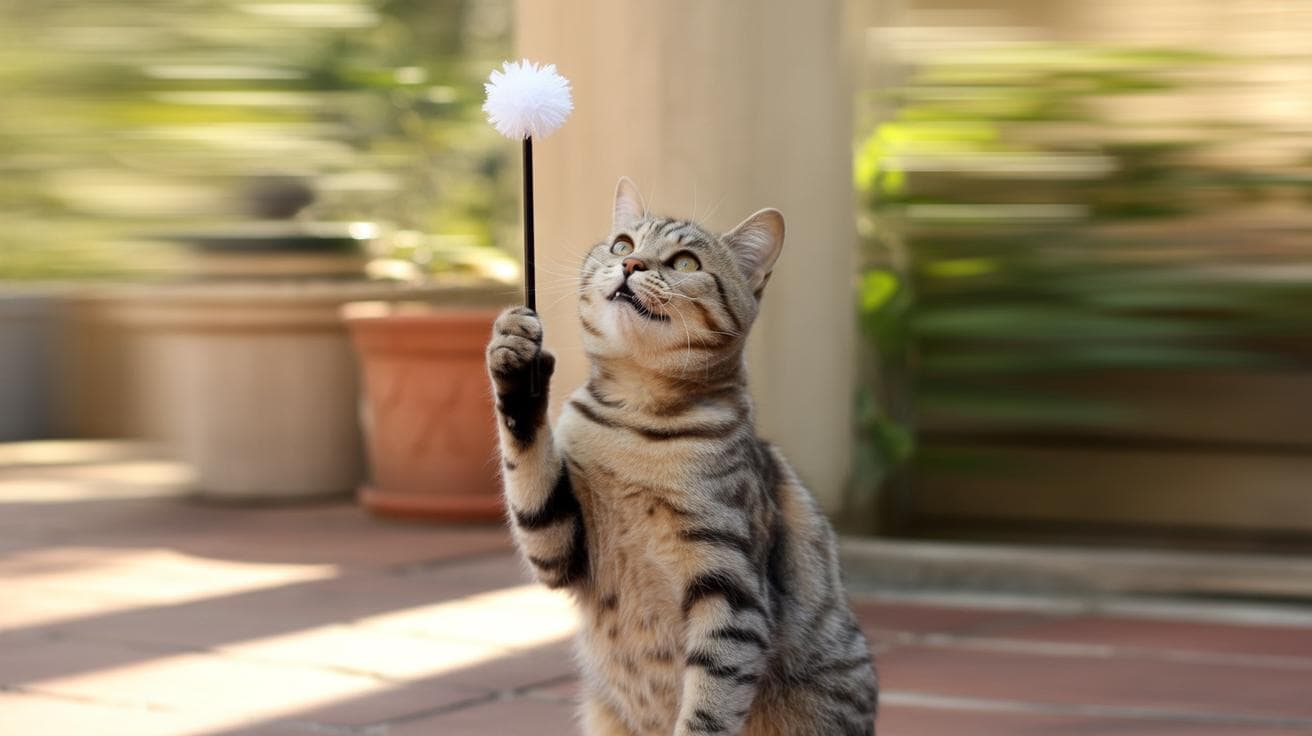
Think of play styles as simple lanes: pounce, stalk, chase, bat, and solve. Each toy usually fits one or two lanes, wands spark pounce and jumping, chase toys get them sprinting, puzzles make them think, and tunnels invite stalking and wrestle-time. Sound familiar? Good. Let’s match toys to moods.
-
Wand and feather – Owner-led jumping and back-leg strength. Wands are great for short, intense sessions where you control the pace. Trim frayed ribbons and swap plush lures often so nothing gets swallowed.
Buying tip: Kittens need soft, chew-safe pieces and short flutter sessions. Seniors like slow, low-impact motion and plush carry options. Aggressive chewers should avoid loose fabric unless reinforced with nylon (strong synthetic fabric) strips or stainless steel (metal resistant to rust) fittings. -
Motorized chase toy – Solo bursts of sprinting with random movement patterns and multiple speed modes. Look for low-noise motors and stable bases so the toy doesn’t skitter across the room.
Buying tip: Kittens enjoy unpredictable movement at gentler speeds. Big adults often want higher-speed settings and sturdier housings made from polymer (durable plastic-like material) or metal. If your cat chews, pick toys with reinforced housings. -
Laser – Human-led, calorie-free sprints that are instantly addictive. Always end a laser session by tossing a real, catchable toy so your cat tastes success (try a plush mouse or small ball).
Buying tip: Short, gentle laser sessions work for seniors. Kittens love the chase but pair the laser with physical rewards to avoid frustration. -
Puzzle / treat-dispensing – Slow-feeding and brain work rolled into one. These toys slow down gobblers and give clever cats a job; choose models with dishwasher-safe parts for easy cleanup.
Buying tip: Kittens need simpler puzzles that actually open for them. Seniors need low-effort openings. For chewers, opt for reinforced plastic (stiff plastic with extra strength) lids and strong polymer (durable plastic-like material) components. -
Track-and-ball system – Continuous batting and great multi-cat entertainment. Tracks that offer different speeds or ball types keep interest high.
Buying tip: Tiny kittens can get stuck on narrow tracks, so pick wider channels for small feet. Large adults need roomy tracks and hard-ball designs if chewing is an issue. Replaceable track pieces are a big win. -
Tunnel and wrestling toys – Ambush play and cozy hideouts in one. Look at tunnel diameter for big cats and choose crinkle textures if your cat loves rustle noises.
Buying tip: Kittens adore popping in and out. Seniors prefer softer, more stable tunnels. For chewers, go with heavy-gauge fabric or reinforced seams and check for chew-resistant trim. -
Exercise wheel – Sustained cardio for high-energy cats who love to run. Many wheels support up to 22 lb, so look for wide running surfaces for comfort.
Buying tip: Introduce the wheel slowly to kittens and keep speeds low for seniors. For chewers, choose chew-resistant trims and wheels with replaceable running surfaces. -
Hanging self-play – A fixed lure that your cat can swat at again and again. Avoid exposed cords and double-check the attachment strength so nothing falls.
Buying tip: Don’t use thin strings for kittens. Seniors may prefer lower-hanging, softer lures. Chewers do better with rubber (elastic, chew-resistant material) or reinforced attachments and easily swapped parts.
How to use this guide
Owner-led toys like wands and lasers build bonding and let you match intensity to your cat’s age and mood. Self-play gear (USB-rechargeable rolling balls and motorized snails) gives independent activity when you’re busy. Auto-off cycles commonly run 5 to 40 minutes, which helps with short attention spans and safety. Look for USB-rechargeable designs or easy battery access, and favor toys with replaceable parts so repairs are simple.
Safety and small-space / multi-cat checklist:
- Low-noise motors for less stress and better focus
- Separate feeding or treat zones to avoid squabbles
- Slim wheel footprints for narrow rooms or hallways
- Replaceable parts and easy repairs so toys last longer
Worth every paw-print.
Product comparison matrix: price, durability, materials, and best use cases for indoor exercise
This quick matrix lines up price, what toys are made of, and a durability score so you can compare tough interactive cat toys at a glance. Use the price vs durability notes to match your budget with how long a toy will last under real claw-and-chew play.
Think about your cat’s age, how much they chew, and how much floor space you have. If you’re eyeing big-ticket items like an exercise wheel, check for replaceable parts and clear warranty terms before you dive in.
| Product Type | Avg Price Range | Material / Durability Profile | Durability Score (1–5) | Best For | Key Caveats |
|---|---|---|---|---|---|
| MintCat Hanging | $ | Elastic cord (stretchy rubber), faux fur lure (soft synthetic hair), nylon strips (strong synthetic fiber) | 3 | Budget-minded self-play; no batteries needed | Cord-chew risk; not great for older cats with weak jaws |
| MayMaw Kitifish | $$ | Polymer housing (sturdy plastic), rubber wheels (grippy rubber), removable feathers (replaceable soft bits) | 4 | Small-space motorized bursts; rechargeable | May slip under low furniture; feathers need replacing over time |
| One Fast Cat Wheel Gen 6 | $$$–$$$$ | Composite frame (lightweight mixed-material shell), stainless reinforcement (rust-resistant metal), replaceable running surface (swap-in traction mat) | 5 | High-energy runners up to 22 lb | Pricey. And uh, not every cat will take to it right away |
| Cheerble Wicked Snail / motorized snail | $$ | Durable polymer shell (tough plastic), silicone bumpers (soft, rubber-like material), LED attractors (light features) | 4 | Short autonomous play sessions; good when you’re busy | Motor noise varies; has small removable parts |
| Kong Kitty Kong | $$ | Natural rubber (plant-based stretchy rubber), treat slots, cotton twill (woven fabric) inserts | 4 | Treat play, chewing and kicking sessions | Not motorized; treats add up in calories |
| Three-track mouse toy | $–$$ | Hard plastic tracks (rigid molded plastic), nylon strips, replaceable balls | 3 | Multi-cat batting and focused play | Loose balls or clips can wear out over time |
| Testing methodology used for scores: simulated chewing cycles, claw-abrasion runs, motor run-hours, and replaceable-part longevity checks. | |||||
When you’re spending more on gear like the One Fast Cat Wheel, look for a trial period, clear warranty coverage, and easy-to-find replacement parts so you’re not stuck if the running surface or motor needs fixing. Worth checking , and worth every paw-print if your cat takes to it.
Durability testing methodology
We tested every toy the same way: repeated simulated chewing, claw-abrasion runs, long motor runtime cycles, and we logged where parts failed or wore out. A score of 5 means the toy kept going through many chew and claw cycles plus motor hours, with only replaceable parts showing wear.
Safety and sizing for interactive unbreakable cat toys (kittens, adults, seniors)
Start by checking the product specs in the Product comparison matrix for weight limits and materials. The matrix header now includes a Materials & Mounting note that flags preferred non-toxic materials: natural rubber; food-grade silicone; reinforced polymer (a tough, plastic-like material). It also shows a mounting/suction load-rating column so you can scan safety at a glance. Example header text: "Materials & Mounting – natural rubber; food-grade silicone; reinforced polymer; mounting load: 5 kg (11 lb)."
Before you buy, look for cord length adjustability and real-world attachment notes from user tests. Those attachment notes tell you if a suction cup actually held up in a home, example: "Cord adjustability – elastic cord shortens from 24 in to 8 in"; "Attachment notes – suction held 4 kg in user tests." Small details like that save you a mess later.
We moved age- and chewer-specific buying tips into each toy-type's Buying tip bullets so you don’t read the same thing over and over. Quick examples you’ll see there: kittens , chew-safe soft lures ("soft silicone lure, kitten-safe"); seniors , low-vibration motors, short sessions, auto-off ("low-vibration motor, auto-off at 10 min"); aggressive chewers , nylon or stainless reinforcement ("nylon strips + stainless rivets"). Handy, right?
Multi-cat homes need a little extra care. Supervise new toys until you learn how your crew shares stuff, and set up separate treat or play zones if tension shows up. Also check that parts are replaceable or washable so you can swap out a worn cover instead of tossing the whole toy. Worth every paw-print.
Quick pre-use safety checklist:
- Non-toxic materials listed on the label (look for natural rubber; food-grade silicone; reinforced polymer) , example: "Made from food-grade silicone and reinforced polymer (a tough, plastic-like material)."
- No small or loose parts that could be swallowed
- Replaceable or washable components available ("washable cover; replaceable motor pack")
- Low motor noise and low-vibration specs plus auto-off present ("low-vibration motor; auto-off after 10 minutes")
- Cord length adjustable or chew-resistant design called out ("elastic cord shortens from 24 in to 8 in" or "chew-resistant braided cord")
- Secure mounting or suction load rating included in product specs (flag/column in the matrix) , example: "mounting load: 5 kg (11 lb)"