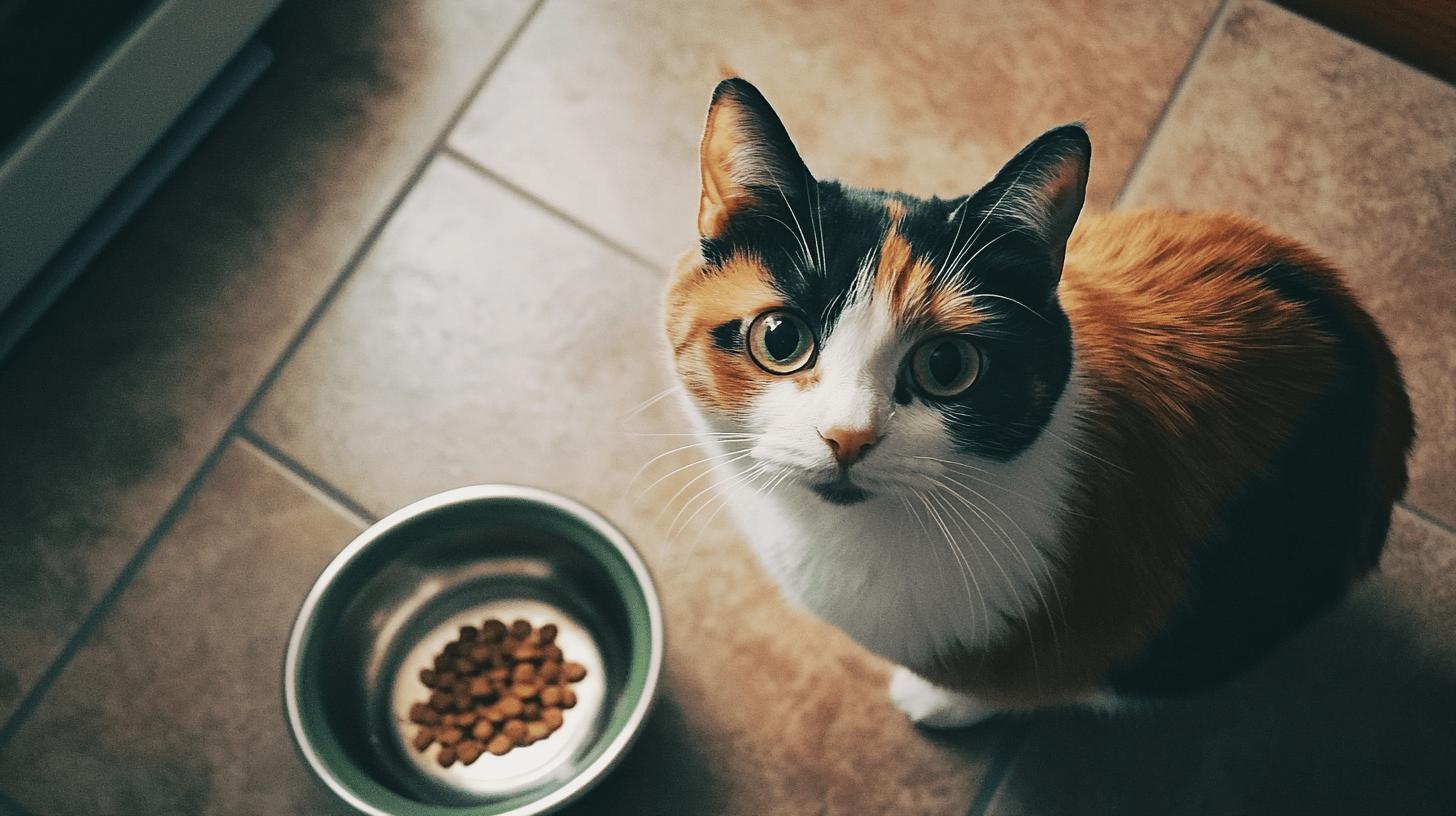
Ever wonder if cats can be trained like dogs using treats? The answer might surprise you. Yes, you can train your cat with treats and get amazing results. Using positive reinforcement, treats become powerful tools to encourage good behavior and obedience.
Think of it like teaching a toddler with candy – rewarding the right actions makes them eager to do it again. In this post, I’ll show you how to use treats effectively to train your cat, making playtime fun and safe while strengthening your bond. Let’s dive in and get your cat performing tricks!
Understanding Treat-Based Training for Cats

Positive reinforcement is a powerful tool in cat training. It involves rewarding cats for good behavior, creating a pattern of learning and obedience. This approach is effective because it taps into a cat’s natural desire for rewards, encouraging them to repeat the desired actions.
Treat-based training works well with cats because it ties the reward (a treat) directly to specific actions or commands. Timing is crucial here. You need to give the treat immediately after the desired behavior so the cat understands the connection. This method is all about consistency and rewarding the right actions.
Here’s how you can use treat-based training to address common cat behaviors:
- Sitting: Encourage your cat to sit by holding a treat above its head, moving it back over their ears, which naturally makes them sit.
- Staying: Reward your cat when it stays in place as commanded, gradually increasing the time before giving the treat.
- Using a Litter Box: Offer treats when your cat uses the litter box correctly, reinforcing this essential behavior.
- Coming When Called: Use treats to encourage your cat to come to you when you call its name.
- High Five: Teach your cat to give a high five by rewarding it when it touches your hand with its paw.
Using treats effectively requires understanding your cat’s preferences and maintaining regular, short training sessions. This builds a strong association between the treat and the desired behavior, making training a rewarding experience for both you and your cat.
Selecting the Right Treats for Cat Training
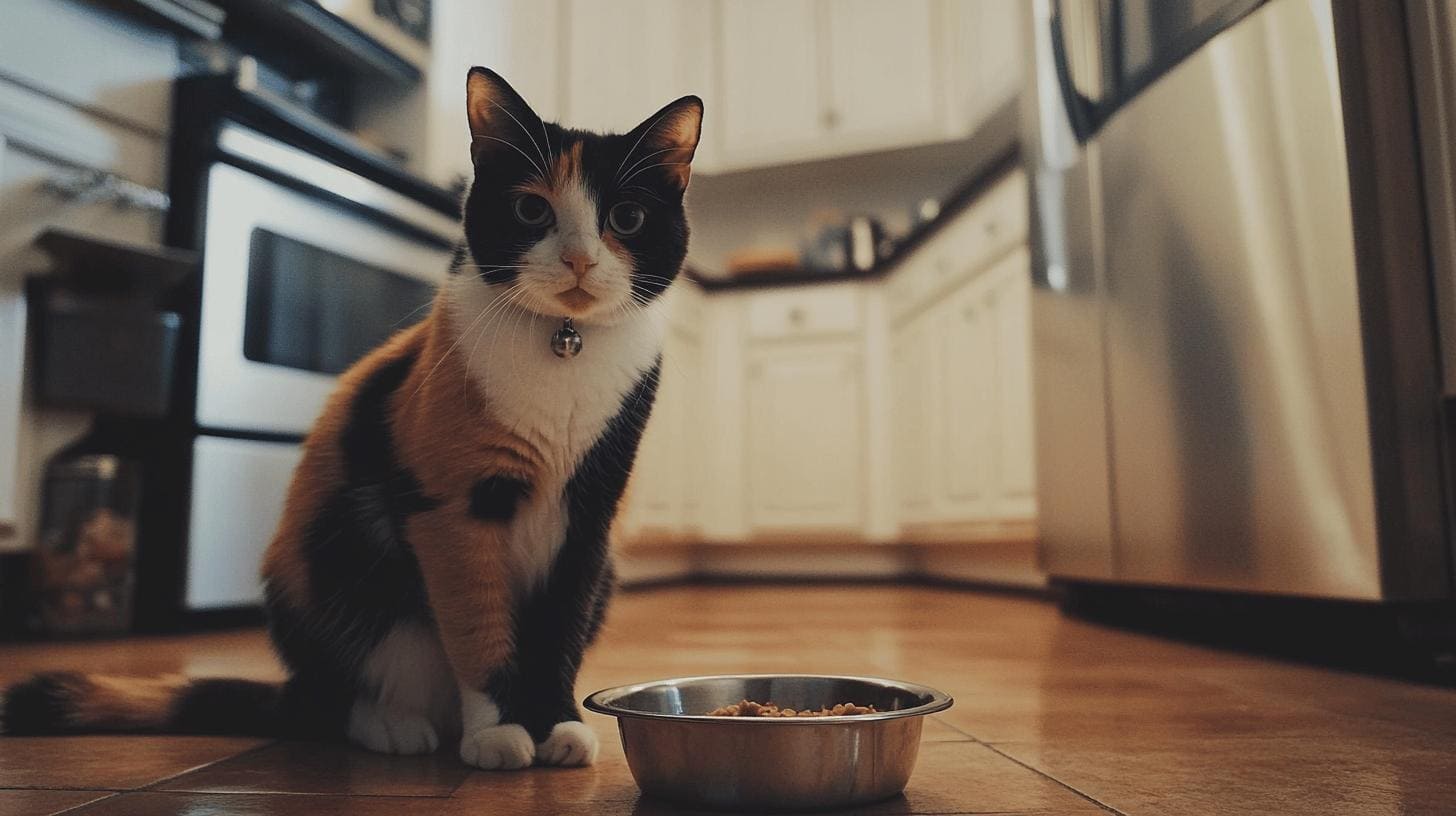
Choosing the right treats is key to successful cat training. High-value treats are the most effective, as they are flavorful and irresistible to your cat. These treats ensure that your cat stays motivated and engaged during training sessions.
Here are some suggested treat types that can motivate your cat:
- Freeze-dried meat: These treats are packed with flavor and nutrition.
- Lickable treats: Perfect for a quick and tasty reward.
- Soft treats: Easy to chew and digest, ideal for older cats.
- Raw meat: A natural and enticing option for many cats.
- Dehydrated fish: Strong aroma and taste, great for picky eaters.
When training, avoid overfeeding by breaking treats into smaller pieces. This approach not only prevents your cat from consuming too many calories but also extends the training session by allowing more opportunities for rewards.
Varying the texture of treats can also help keep your cat’s interest. By experimenting with different types, you can find what your cat loves best. Remember, keeping portions small and mixing up treat textures can make training more effective and enjoyable for both you and your cat.
Advanced Techniques for Training Cats with Treats
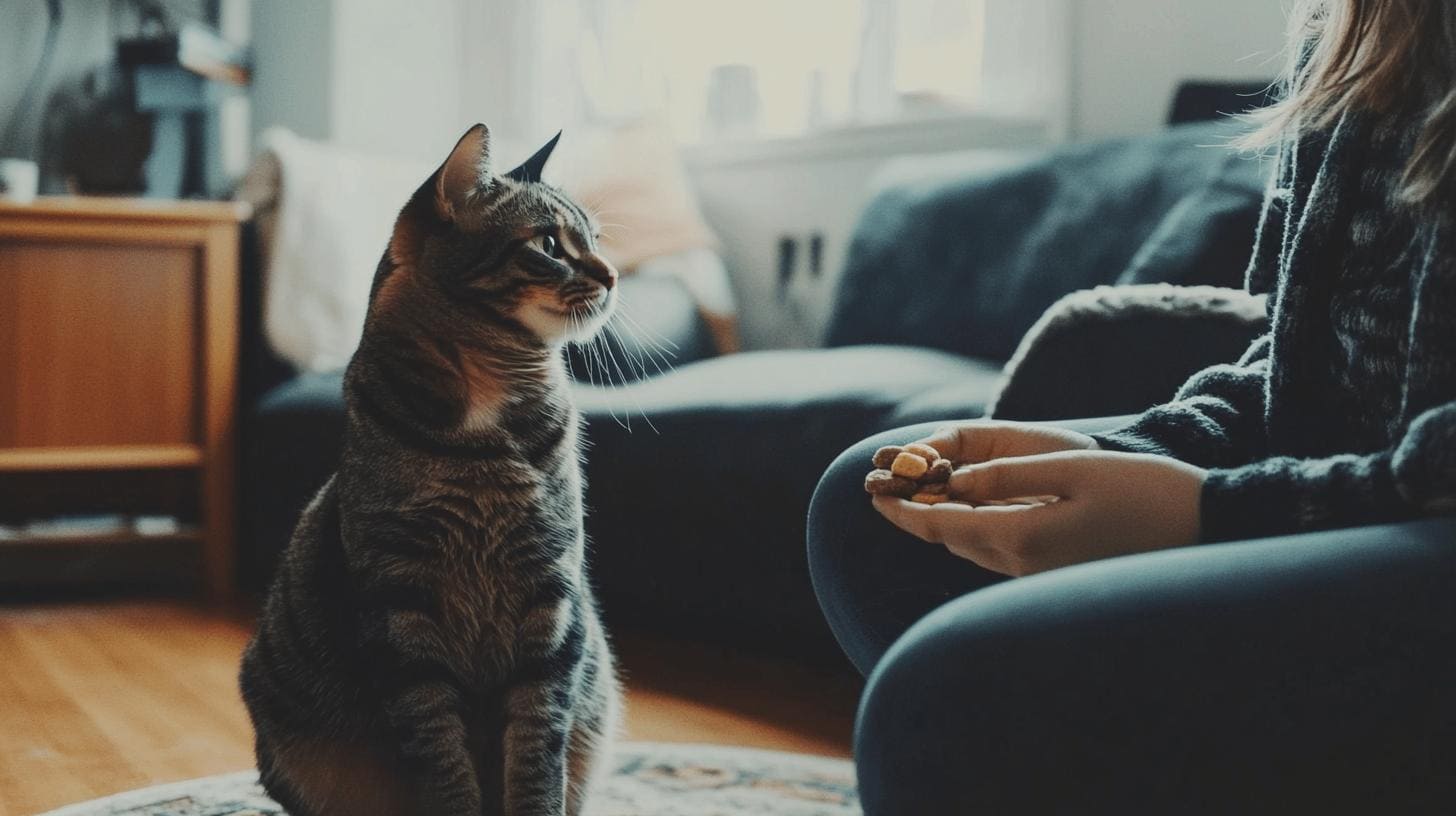
Training your cat with treats can be a rewarding experience for both of you. To enhance your training, let’s explore advanced techniques and troubleshoot common issues.
- Choose a Behavior to Train
Decide which behavior you want to teach your cat. This could be anything from sitting to coming when called. Focus on one behavior at a time to avoid confusion. - Use Clear Commands
Pick a simple, clear word or phrase for the command. Use it consistently every time you want your cat to perform the behavior. - Introduce the Treat
Show your cat the treat to get its attention. This will make your cat more eager to perform the behavior you want.
- Reward Immediately
As soon as your cat performs the desired action, give it the treat right away. This helps your cat understand exactly what it did to earn the reward. - Repeat and Reinforce
Practice regularly to reinforce the behavior. Repeat the command and reward process several times in each session. - Keep Sessions Short
Limit training sessions to a few minutes. Cats have short attention spans, so keeping sessions brief helps maintain their interest.
Troubleshooting Training Issues
- Cat Ignores Commands
If your cat ignores commands, try using a more enticing treat or changing the training environment to reduce distractions. - Slow Progress
Some cats take longer to learn. Be patient and adjust your expectations. Consider breaking the behavior into smaller, achievable steps. - Inconsistency
Ensure everyone in your home uses the same commands and rewards to avoid confusing your cat.
Consistency and patience are essential for successful training. Stick to a routine and be patient, as some cats may take longer to learn than others. By following these steps and maintaining a positive attitude, you’ll help your cat learn new behaviors while strengthening your bond.